
原油

Search documents
综述|多重因素共振 全球市场遭遇“黑色星期一”
Sou Hu Cai Jing· 2026-02-02 13:05
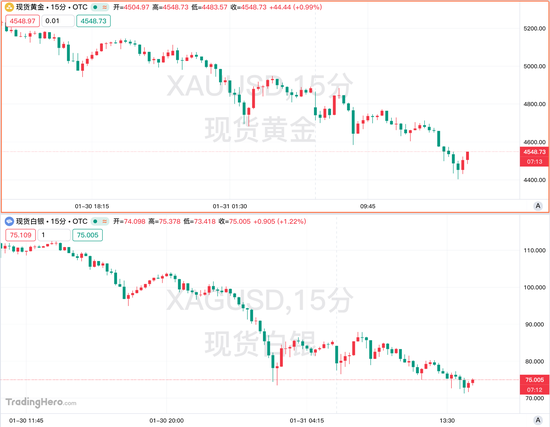
Group 1 - Global markets experienced a "Black Monday" on February 2 due to multiple factors including hawkish expectations from the Federal Reserve, technical adjustments, and concerns over high valuations in tech stocks [1][2] - Precious metals saw significant volatility, with gold futures dropping to $4423.2 per ounce, a decline of over 6%, and silver futures falling to $71.2 per ounce, down more than 9% [1][2] - The price of gold and silver experienced sharp declines after reaching historical highs, with silver prices down 40% from the peak on January 29 and gold prices down approximately 20% [1] Group 2 - The market's reaction to the nomination of Kevin Walsh as the next Fed Chair has led to strong hawkish expectations, contributing to the sell-off in precious metals [2] - The Chicago Mercantile Exchange's increase in metal futures margin requirements has further pressured the market, leading to forced liquidations and a domino effect across other assets [2] - The oil market also faced declines, with light crude oil futures dropping to $61.43 per barrel and Brent crude futures falling to $65.45 per barrel, both down over 5% from the previous day's close [2] Group 3 - Stock markets in South Korea and Indonesia faced significant declines, with the South Korean Composite Index dropping 5.26% and the Jakarta Composite Index also falling over 5% [3] - The Japanese stock market saw the Nikkei 225 index close down 1.25%, reflecting a broader trend of market reversal after a strong performance in January driven by AI investments [3] - Increased risk sentiment led to a drop in cryptocurrency prices, with Bitcoin falling below $75,000, indicating heightened market volatility [4] Group 4 - Market volatility is intensifying as investors reassess valuations in light of potential changes in monetary policy under Walsh's leadership, which may be influenced by President Trump's stance [4] - The uncertainty surrounding Walsh's potential policies is contributing to increased market fluctuations, as investors remain cautious [4]
多重因素共振 全球市场遭遇“黑色星期一”
Xin Lang Cai Jing· 2026-02-02 13:00
Group 1: Market Overview - Global markets experienced a "Black Monday" on February 2 due to multiple factors including hawkish expectations from the Federal Reserve, technical adjustment pressures, and concerns over high valuations in technology stocks [1][5] - Precious metals market saw significant volatility, with gold and silver prices dropping sharply after reaching historical highs [1][5] Group 2: Precious Metals - Gold futures on the New York Mercantile Exchange fell to $4423.2 per ounce, a decline of over 6% from the previous trading day, while silver futures dropped to $71.2 per ounce, down over 9% [1][5] - In the spot market, London gold prices fell to $4402.06 per ounce, a drop exceeding 10%, and silver prices fell to $71.312 per ounce, down over 16% [1][5] - The cumulative drop from the historical highs reached on January 29 was approximately 40% for silver and about 20% for gold [1][5] Group 3: Market Reactions - Analysts noted that the nomination of Kevin Warsh as the next Fed Chair by President Trump heightened hawkish expectations, leading to a significant pullback in precious metals [2][5] - The Chicago Mercantile Exchange's increase in metal futures margin requirements added further pressure to the market, as higher capital expenditures can reduce speculative participation and liquidity [2][6] Group 4: Oil Market - The price of light crude oil futures on the New York Mercantile Exchange dropped to $61.43 per barrel, while Brent crude futures fell to $65.45 per barrel, both down over 5% from the previous day [2][6] Group 5: Stock Market - The South Korean stock market faced a sharp decline, with the KOSPI index closing at 4949.67 points, down 5.26% and triggering temporary trading halts [3][6] - The Jakarta Composite Index in Indonesia also saw significant losses, dropping over 5% in early trading [3][6] - The Nikkei 225 in Japan closed down 1.25%, while the Tokyo Stock Exchange index fell by 0.85% [3][6] Group 6: Cryptocurrency - Bitcoin's price fell below $75,000 amid increasing risk sentiment in the market [4][7] - Market volatility has intensified following the recent highs in precious metals and stock markets, with investors reassessing valuations in light of potential Fed policy changes under Warsh's leadership [4][7]
懒人财知道:2月2日交易复盘笔记 非理性恐慌下的机会
Xin Lang Cai Jing· 2026-02-02 09:47
Group 1 - The overall market sentiment is cautious due to high volatility, with a focus on avoiding risky trades and maintaining discipline in trading strategies [3][4][21] - The commodity market is experiencing a significant downturn, with a broad decline observed in various sectors, particularly in precious metals and energy [5][21][22] - The strongest sector identified is the chemical sector, specifically in caustic soda and PVC, while the weakest sectors include precious metals, non-ferrous metals, and crude oil [6][22] Group 2 - The core strategy involves going long on the strongest sectors and shorting the weakest ones, with a focus on maintaining a light position in weak commodities to avoid potential losses [7][24] - Specific strategies executed include automatic exit from PVC positions upon market decline and avoiding deep losses in precious metals and crude oil [9][10][25][26] - Risk management has been emphasized through systematic market analysis and strict stop-loss measures, successfully avoiding significant losses in weak sectors [11][27][28] Group 3 - Market drivers include geopolitical tensions and changes in U.S. monetary policy expectations, which have led to a bearish sentiment in the market [13][29] - The analysis framework used has effectively captured signals of market weakness, although there is a need for improved strategies for strong sectors to adapt to sudden market changes [14][30] - Continuous monitoring of U.S. Federal Reserve policies and global geopolitical developments is necessary for dynamic adjustment of trading strategies [15][31]


黄金股大面积跌停,阿里、哔哩哔哩、快手、百度集体下跌,国际油价跳水
Mei Ri Jing Ji Xin Wen· 2026-02-02 09:45
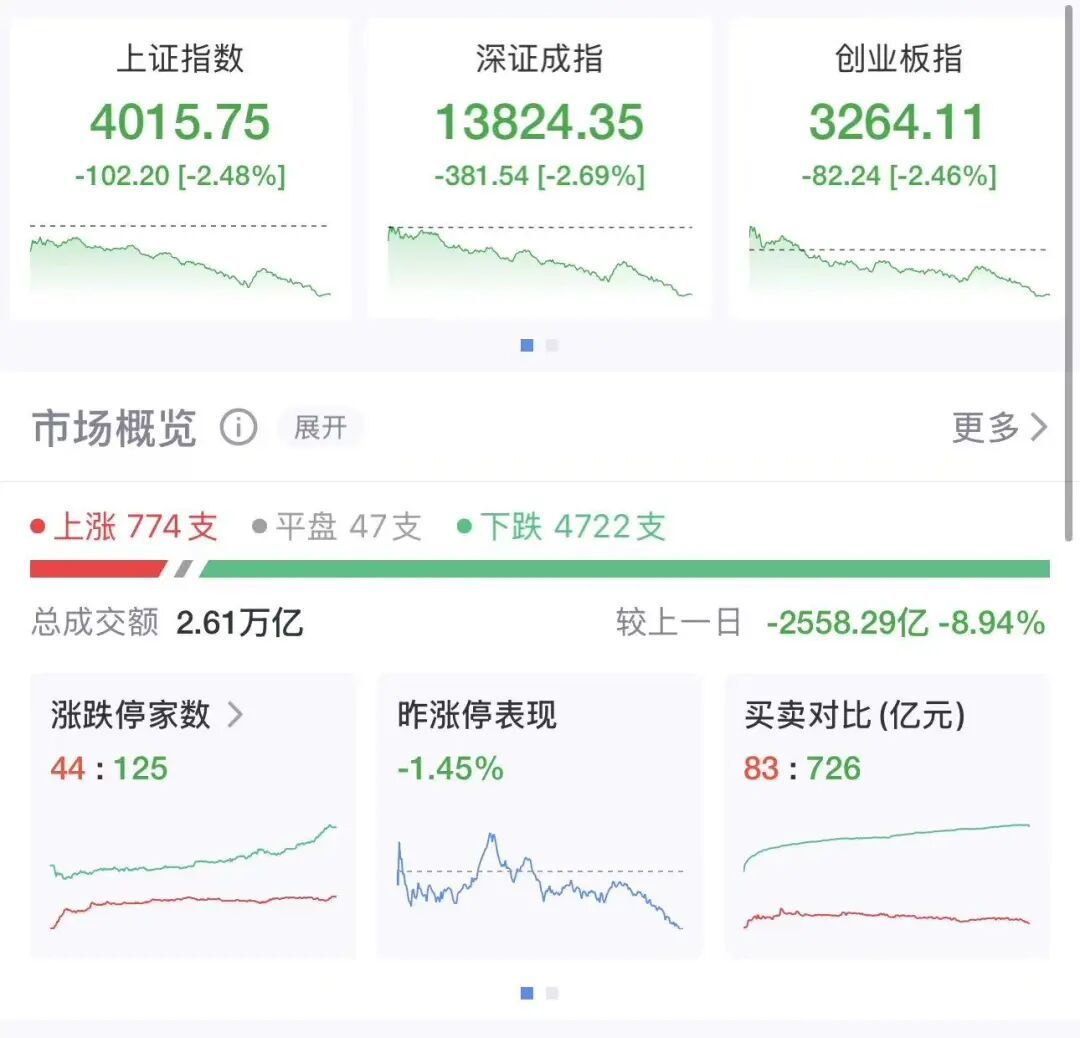
Market Overview - On February 2, the market experienced fluctuations with all three major indices falling over 2%, and the Sci-Tech 50 index dropping over 3%. The Shanghai Composite Index closed down 2.48%, the Shenzhen Component Index down 2.69%, and the ChiNext Index down 2.46% [1] - The total trading volume in A-shares was 2.61 trillion yuan, a decrease of 255.83 billion yuan compared to the previous trading day. Over 4,700 stocks in the market declined, with 125 stocks hitting the daily limit down [1] Sector Performance - The liquor sector showed resilience, with Huangtai Liquor achieving three consecutive trading limits, and Jinhuijiu hitting two limits in three days. Water Well Liquor also reached the daily limit up [3] - Conversely, the non-ferrous metals, oil and gas, chemicals, coal, and semiconductor sectors faced significant declines. The non-ferrous metals sector was particularly hard hit, with multiple gold stocks such as Zhaojin Gold and Sichuan Gold experiencing limit downs [3][5] - The oil and gas sector also suffered, with domestic crude oil and fuel futures contracts hitting the limit down, both dropping approximately 7%. Brent crude oil futures fell to $66 per barrel, down 4.67%, while WTI crude oil futures dropped below $62 per barrel, down 4.94% [5][6] Hong Kong Market - The Hong Kong stock market opened lower and continued to decline, with the Hang Seng Technology Index expanding its losses to 4% in the afternoon. The Hang Seng Index closed down 2.23%, and the Hang Seng Technology Index fell 3.36% [6][7] - The precious metals sector in Hong Kong also faced significant losses, with stocks like Shandong Gold and Chifeng Jilong Gold dropping over 12% [7] - The three major telecom operators in China collectively weakened, with China Unicom down over 6%, China Telecom down over 5%, and China Mobile down over 2%. This was influenced by an adjustment in the value-added tax rate for telecom services from 6% to 9%, which will impact the revenue and profits of these companies [7]




【社区调查】贵金属预判集体跑偏?重大事件精准踩点!
Xin Lang Cai Jing· 2026-02-02 09:25
4636人次激情投票,36张百元礼品卡+7份财经日历全部送出,新浪财经1月社区调查圆满收官!本次聚 焦四大资产价格和三大国际事件,吸引大批专业投资者和资深交易员的深度参与。用户看涨情绪直接冲 顶,资产价格预判集体跑偏,对国际大事的判断却精准度拉满! 四大资产预判:集体跑偏!贵金属看涨情绪上头 贵金属方面,伦敦金(现货黄金)一度飙升至5596.33美元/盎司的历史新高,但随后急转直下,月底最 终收报5860.39美元/盎司。伦敦银(现货白银)在1月29日创历史高位121.49美元/盎司后,在30日收跌 26.83%,报84.43美元/盎司。市场分析提出,黄金和白银冲高回落,可归结为投资者的"获利了结"离 场。在黄金和白银创下历史新高后,前期布局的多头兑现收益,叠加凯文·沃什提名出任下任美联储主 席,预期推动美元反弹,带动金价回调。 由于贵金属前期走势持续强劲,用户的看涨情绪普遍高涨。近8成参与调研的用户笃定金价能冲破 5200 美元/盎司大关,仅有8%少数派保持谨慎,押注金价在4800-5000美元区间波动。 点击进入投票 白银方面,7成用户认为白银将收于110以上,仅7%用户给出保守预测,认为白银将收于90美 ...
橡胶甲醇原油:利空因素主导,能化弱势下行
Bao Cheng Qi Huo· 2026-02-02 09:20
Report Industry Investment Rating - Not provided in the content Core Views of the Report - On Monday, the domestic Shanghai rubber futures contract 2605 showed a trend of shrinking volume, reducing positions, weak downward movement, and a significant decline. The price center dropped significantly to below 16,000 yuan/ton during the session, closing down 3.73% at 15,980 yuan/ton. The premium of the 5 - 9 month spread widened to 130 yuan/ton. Affected by the overall decline of the energy - chemical sector, it is expected that the rubber price will maintain a weak and volatile trend in the future [6]. - On Monday, the domestic methanol futures contract 2605 showed a trend of shrinking volume, reducing positions, weak downward movement, and a significant decline. The highest price reached 2,343 yuan/ton, and the lowest dropped to 2,243 yuan/ton, closing down 3.92% at 2,252 yuan/ton. The discount of the 5 - 9 month spread narrowed to 26 yuan/ton. Supported by the bearish atmosphere, methanol futures may maintain a weak and volatile trend [6]. - On Monday, the domestic crude oil futures contract 2603 showed a trend of weak volume, reducing positions, weak downward movement, and a significant decline. The highest price reached 485.6 yuan/barrel, and the lowest dropped to 449.0 yuan/barrel, closing down 7.02% at 449.0 yuan/barrel. As the geopolitical risks in the Middle East weakened and the hawkish expectations of the Federal Reserve increased, the crude oil premium significantly retracted, and the oil price started a short - term correction [6]. Summary by Relevant Catalogs 1. Industry Dynamics Rubber - As of January 25, 2026, the total inventory of natural rubber in bonded and general trade in Qingdao was 584,500 tons, a decrease of 400 tons or 0.07% from the previous period. The bonded area inventory was 94,500 tons, a decrease of 5.03%; the general trade inventory was 490,000 tons, an increase of 0.95%. The inbound rate of the bonded warehouse of the Qingdao natural rubber sample decreased by 6.73 percentage points, and the outbound rate increased by 2.65 percentage points; the inbound rate of the general trade warehouse increased by 0.06 percentage points, and the outbound rate increased by 1.41 percentage points [8]. - As of January 30, 2026, the capacity utilization rate of China's semi - steel tire sample enterprises was 74.32%, a month - on - month increase of 0.48 percentage points and a year - on - year increase of 59.86 percentage points; the capacity utilization rate of all - steel tire sample enterprises was 62.47%, a month - on - month decrease of 0.06 percentage points and a year - on - year increase of 50.96 percentage points. During the period, some semi - steel tire sample enterprises were supported by foreign trade orders, and the device production schedule increased slightly, supporting the capacity utilization rate of semi - steel tire sample enterprises; the shipment of all - steel tires was mediocre, and some enterprises still had production control, dragging down the capacity utilization rate to decline slightly [8]. - In 2025, the cumulative production and sales of automobiles reached 34.531 million and 34.4 million respectively, a year - on - year increase of 10.4% and 9.4%. The production and sales volume reached a new high, and the scale of production and sales has remained above 30 million for three consecutive years, ranking first in the world for 17 consecutive years. Among them, the cumulative production and sales of passenger cars reached 30.27 million and 30.103 million respectively, a year - on - year increase of 10.2% and 9.2%. The cumulative production and sales of Chinese commercial vehicles reached 4.261 million and 4.296 million respectively, a year - on - year increase of 12% and 10.9%. The production and sales returned to more than 4 million. In 2025, the annual automobile exports exceeded 7 million, reaching 7.098 million, a year - on - year increase of 21.1% [9]. - In December 2025, about 95,000 heavy - duty trucks were sold in the Chinese market, a month - on - month decrease of about 16% compared with November 2025 and an increase of about 13% compared with 84,200 in the same period last year. In total, in 2025, the total sales volume of the Chinese heavy - duty truck market reached a new high in the past four years, 1.137 million, a year - on - year increase of about 26% [9]. Methanol - As of the week of January 30, 2026, the average domestic methanol operating rate remained at 87.03%, a week - on - week increase of 1.35%, a month - on - month increase of 0.45%, and a significant increase of 10.22% compared with the same period last year. The average weekly methanol production in China reached 2.0378 million tons, a week - on - week increase of 28,800 tons, a month - on - month decrease of 13,300 tons, and a significant increase of 112,100 tons compared with 1.9257 million tons in the same period last year [10]. - As of the week of January 30, 2026, the domestic formaldehyde operating rate remained at 29.98%, a week - on - week decrease of 0.5%. Meanwhile, the dimethyl ether operating rate remained at 7.24%, a week - on - week increase of 1.45%. The acetic acid operating rate remained at 83.37%, a week - on - week decrease of 1.33%. The MTBE operating rate remained at 58.15%, a week - on - week increase of 0.01%. As of the week of January 30, 2026, the average operating load of domestic coal (methanol) to olefin plants was 76.53%, a week - on - week decrease of 1.47 percentage points and a month - on - month decrease of 4.79%. As of January 30, 2026, the futures market profit of domestic methanol to olefins was - 136 yuan/ton, a week - on - week increase of 102 yuan/ton and a month - on - month increase of 200 yuan/ton [10]. - As of the week of January 30, 2026, the port methanol inventory in East and South China remained at 993,800 tons, a week - on - week decrease of 26,100 tons, a month - on - month decrease of 174,800 tons, and a significant increase of 229,500 tons compared with the same period last year. As of the week of January 29, 2026, the total inland methanol inventory in China reached 454,200 tons, a week - on - week increase of 15,800 tons, a month - on - month increase of 50,100 tons, and a significant decrease of 119,200 tons compared with 573,400 tons in the same period last year [11]. Crude Oil - As of the week of January 23, 2026, the number of active oil rigs in the United States was 409, a week - on - week decrease of 1 and a decrease of 63 compared with the same period last year. As of the week of January 23, 2026, the daily average crude oil production in the United States was 13.696 million barrels, a week - on - week decrease of 36,000 barrels per day and a significant year - on - year increase of 456,000 barrels per day, at a historical high [11]. - As of the week of January 23, 2026, the commercial crude oil inventory in the United States (excluding strategic petroleum reserves) reached 423.8 million barrels, a week - on - week decrease of 2.295 million barrels and a significant increase of 8.628 million barrels compared with the same period last year. The crude oil inventory in Cushing, Oklahoma, reached 24.785 million barrels, a week - on - week decrease of 278,000 barrels; the strategic petroleum reserve (SPR) inventory reached 415 million barrels, a week - on - week increase of 515,000 barrels. The refinery operating rate in the United States remained at 90.9%, a week - on - week decrease of 2.4 percentage points, a month - on - month decrease of 3.8 percentage points, and a year - on - year increase of 7.4 percentage points [12]. - As of January 27, 2026, the average non - commercial net long positions in WTI crude oil were 96,982 contracts, a week - on - week increase of 18,190 contracts and a significant increase of 38,211 contracts or 65.02% compared with the December average of 58,771 contracts. On the other hand, as of January 27, 2026, the average net long positions of Brent crude oil futures funds were 217,962 contracts, a week - on - week increase of 12,191 contracts and a significant increase of 112,503 contracts or 106.68% compared with the December average of 105,459 contracts [12]. 2. Spot Price Table | Variety | Spot Price | Change from Previous Day | Futures Main Contract | Change from Previous Day | Basis | Change | | --- | --- | --- | --- | --- | --- | --- | | Shanghai Rubber | 15,900 yuan/ton | - 350 yuan/ton | 15,980 yuan/ton | - 380 yuan/ton | - 80 yuan/ton | + 30 yuan/ton | | Methanol | 2,255 yuan/ton | - 27 yuan/ton | 2,252 yuan/ton | - 68 yuan/ton | + 3 yuan/ton | - 41 yuan/ton | | Crude Oil | 453.0 yuan/barrel | - 0.1 yuan/barrel | 449.0 yuan/barrel | - 21.8 yuan/barrel | + 4.0 yuan/barrel | + 21.9 yuan/barrel | [14] 3. Related Charts - Rubber: The report provides charts on rubber basis, 5 - 9 month spread, SHFE rubber futures inventory, Qingdao bonded area rubber inventory, all - steel tire operating rate trend, and semi - steel tire operating rate trend [15][17][19] - Methanol: The report provides charts on methanol basis, 5 - 9 month spread, domestic port inventory, inland social inventory, methanol to olefin operating rate change, and coal - to - methanol cost accounting [27][29][31] - Crude Oil: The report provides charts on crude oil basis, SHFE crude oil futures inventory, US crude oil commercial inventory, US refinery operating rate, WTI crude oil net position change, and Brent crude oil net position change [39][40][42]
大类资产与基金周报:黄金冲高回落,商品基金涨幅4.75%
Tai Ping Yang Zheng Quan· 2026-02-02 07:35
Investment Rating - The report does not explicitly provide an investment rating for the industry. Core Insights - The report highlights that the commodity fund has recorded a significant increase of 4.75% this week, with gold experiencing a pullback after reaching a peak [16][49]. - The A-share market saw the Shanghai Composite Index close at 4117.95, reflecting a decline of 0.44%, while the Shenzhen Component Index and other indices experienced varying degrees of decline [3][8]. - In the bond market, the 1-year, 3-year, and 10-year government bond yields were reported at 1.30%, 1.40%, and 1.81%, respectively, with slight fluctuations in yields [25][26]. - The commodity market showed mixed results, with crude oil prices increasing by 6.60%, while other commodities like lithium carbonate and live pigs saw significant declines [30][31]. Summary by Sections 1. Major Asset Market Overview (1) Equity - The A-share market indices showed varied performance, with the Shanghai Composite Index down by 0.44% and significant declines in the Shenzhen Component and other indices [3][8]. - The petrochemical, communication, and coal sectors performed well, with increases of 7.95%, 5.83%, and 3.68%, respectively, while the military, electric equipment, and automotive sectors faced declines of -7.69%, -5.10%, and -5.08% [8][14]. (2) Bonds - The report indicates that the 1-year, 3-year, and 10-year government bond yields were 1.30%, 1.40%, and 1.81%, with changes of 1.80 basis points, -2.09 basis points, and -1.86 basis points, respectively [25][26]. - The credit spreads for 1-year AAA corporate bonds and local government bonds were 40.09 basis points and 39.36 basis points, showing slight decreases [25]. (3) Commodities - The commodity market saw crude oil prices rise by 6.60%, while other commodities like lithium carbonate and live pigs experienced declines of -18.52% and -1.36%, respectively [30][31]. - The South China index reported increases in various sectors, with the comprehensive index rising by 2.60% [34]. (4) Foreign Exchange - The report notes fluctuations in currency exchange rates against the RMB, with the US dollar depreciating by 0.22% and the euro appreciating by 1.30% [36][37]. 2. Fund Market Overview (1) New Fund Establishments - A total of 43 new funds were established this week, including 34 equity funds and 5 fixed-income plus funds, with notable large-scale funds such as Huabao Advantage Industry A at 57.77 billion [40][41]. (2) Fund Size and Quantity - As of January 30, 2026, there are 13,633 open-end public funds with a total size of 37.59 trillion, with equity funds making up the largest share [42][44]. (3) Performance Comparison - Commodity funds led the performance with a weekly increase of 4.75%, while gold and other precious metals showed mixed results [49][50].
贵金属转为失速暴跌:金银高位去杠杆,全球市场迎来压力测试
Xin Lang Cai Jing· 2026-02-02 07:17
Core Viewpoint - The precious metals market is experiencing a historic crash, with gold prices nearing $4,400 per ounce and silver prices dropping below $72 per ounce, erasing significant gains made throughout the year [1][3][15]. Market Performance - On the previous Friday, gold and silver prices plummeted, with silver falling 26% in less than 20 hours, marking the largest single-day drop in history, while gold dropped 9%, the worst performance since the 1980s [3][17]. - The domestic futures market also saw a "limit down" trend, with significant declines across various sectors, including energy and precious metals, where contracts for SC crude oil and fuel oil hit their limits with declines of 7.02% and 7.01% respectively [3][17]. Regulatory Changes - CME raised margin requirements for Comex gold and silver futures in response to the volatility, increasing gold margins from 6% to 8% and silver from 11% to 15%, effective February 2 [4][18]. - The Thailand Futures Exchange expanded its price limits for gold and silver futures due to significant price drops, allowing for greater fluctuations in trading [4][18]. Analyst Perspectives - Analysts suggest that the recent declines in precious metals are driven by a deleveraging process rather than a fundamental shift in market conditions, indicating a simultaneous sell-off of precious metals and risk assets [5][19]. - CBA commodity strategist Vivek Dhar noted that the market's reaction to Kevin Walsh's nomination as Fed Chair and the strengthening dollar has pressured precious metals, but he views the current drop as an adjustment rather than a fundamental change, maintaining a bullish outlook for gold prices in Q4 [7][21]. - CMC Markets' Christopher Forbes described the situation as a typical deleveraging phase, where previously accumulated leverage is being cleared, leading to a concentrated sell-off in liquid assets [8][22]. Market Dynamics - The rapid price changes in precious metals are seen as a result of position liquidation rather than a clean macro revaluation, with potential for further declines depending on whether forced selling continues [9][23]. - Analysts from Singapore's OCBC Bank highlighted that the ongoing decline reflects a combination of technical and emotional pressures, with sensitivity to dollar movements and Fed policy uncertainty exacerbating the situation [9][23]. Institutional Role - Increased trading activity from institutions has been noted, as they seek liquidity and manage positions amid heightened volatility, which has also impacted other markets like Bitcoin and equities [13][26]. - The volatility in gold and silver has triggered liquidity pressures and margin calls among institutional investors, contributing to broader market declines [13][26].
VIX指数失灵 恐慌转向大宗商品与汇率战场:黄金创80年代来最大单日跌幅、1999年来最大月度涨幅
Sou Hu Cai Jing· 2026-02-02 04:28
Group 1 - The global asset classes have shown significant divergence this year, with stock market volatility remaining low while volatility in precious metals, foreign exchange, and commodities has increased [1] - The Chicago Board Options Exchange Volatility Index (VIX) has not adequately reflected current macro-level risk signals, indicating a shift in market fear from equities to commodities and currencies [1] - Gold prices reached a historical high earlier this year but experienced the largest single-day drop since the 1980s last week, while the dollar's exchange rate saw its largest single-day decline since April [1] Group 2 - Despite concerns over an artificial intelligence stock bubble, core volatility has concentrated in non-equity areas, with gold and oil prices showing significant fluctuations [1][2] - The volatility in individual stocks has decreased overall market correlation, leading to a lower overall volatility index, as investors focus on earnings and the sustainability of AI trading [2] - The demand for gold ETFs has surged, with a growth of over $20 billion in the past eight months, although the safe-haven attribute of precious metals has weakened due to significant price fluctuations [2]
综合晨报-20260202
Guo Tou Qi Huo· 2026-02-02 03:10
Report Industry Investment Rating - Not provided in the content Core Viewpoints - The impact of the current US - Iran conflict on crude oil prices is more of a phased and pulsed nature rather than a trend [2] - After the correction of precious metals, they may enter a high - level consolidation phase [3] - Most commodities are affected by multiple factors such as geopolitical situations, supply - demand relationships, and market sentiment, showing different trends of volatility and consolidation [2][3] Summary by Commodity Categories Energy Crude Oil - The geopolitical premium brought by Iran's military exercise in the Strait of Hormuz has been mostly reversed. Brent and WTI crude oil fell to $67/barrel and $63/barrel respectively. The US - Iran conflict has a phased impact on oil prices [2] Fuel Oil & Low - sulfur Fuel Oil - Supported by geopolitical conflicts, fuel oil maintains a strong and volatile operation. The low - sulfur fuel oil may face pressure as the cold wave ends, and the overall supply shows a slight increase [22] Asphalt - Expected to follow the decline of crude oil. Supply pressure is limited, downstream consumption has improved, and the cracking spread is expected to be strong [23] Precious Metals - Precious metals experienced a historical - level adjustment on Friday. After the correction, they may enter a high - level consolidation phase [3] Base Metals Copper - The price of copper in the US market continues to fall towards the MA40 moving average. The overall global visible inventory of copper is high, and the price may be adjusted around the MA60 moving average around the Spring Festival [4] Aluminum - Affected by the decline of precious metals, the non - ferrous metals as a whole are weak. Pay attention to the support at 23,800 yuan. Also, pay attention to the impact of the US - Iran situation on the supply chain [5] Zinc - High zinc prices suppress downstream demand. In 2026, the supply of zinc will exceed demand. In the short - term, there is cost support, and the price may oscillate to form a top [8] Lead - The sentiment of the non - ferrous metal sector turns short. The price of lead oscillates in the range of 16,800 - 17,800 yuan/ton, and it is advisable to buy on dips near the cost [9] Nickel and Stainless Steel - The price of nickel drops from a high level. The downstream of stainless steel is cautious in purchasing, and the actual transaction is weak. The inventory of steel mills is low, and traders are willing to hold up prices [10] Tin - The price of tin is volatile. The inventory in Steel Union's warehouse has increased. The strategy of selling call options last week has achieved high returns [11] Aluminum Oxide - The operating capacity of domestic aluminum oxide remains high, and the market is in a state of significant oversupply. The cash - cost support is low, and the spot price needs large - scale production cuts to stabilize [7] Chemicals Polypropylene, Plastic, and Propylene - The decline of oil prices drags down the trading sentiment of the propylene market. The downstream is on the sidelines, and the trading volume of polyethylene is weak. The inventory of polypropylene is slightly low, and the supply of spot resources is tight [28] PVC and Caustic Soda - Affected by sentiment and exports, PVC shows a strong trend. The inventory of manufacturers decreases, and the social inventory increases. Caustic soda shows an oscillating and strong trend, but there is pressure due to high inventory [29] PX and PTA - Although oil prices are strong, the prices of PX and PTA decline. There are expectations of inventory accumulation around the Spring Festival. In the second quarter, there may be opportunities for long - position based on PX maintenance and polyester load - increasing expectations [30] Ethylene Glycol - The port inventory increases, and the price is blocked at 4,000. In the second quarter, there are expectations of centralized maintenance and demand recovery, but in the long - term, the price is under pressure [31] Short - fiber and Bottle Chips - The supply - demand pattern of short - fiber is good, but the downstream orders are weak. The processing margin of bottle chips has been repaired, but there is long - term capacity pressure [32] Agricultural Products Soybean and Soybean Meal - The net sales volume of new - season US soybeans has decreased significantly. Pay attention to the harvest of Brazilian soybeans, and the price may continue to oscillate at the bottom in the short - term [36] Soybean Oil and Palm Oil - The prices of soybean oil and palm oil decline. They are affected by macro factors and the overall commodity market atmosphere, and there are risks of volatility [37] Rapeseed and Rapeseed Oil - Before the sowing of new - season Canadian crops in late April, pay attention to the sowing area forecast data on March 5 and the weather in the sowing area. The price may return to the range - bound trend in the short - term [38] Corn - The overall grain - selling progress in the country has exceeded 50%. The price of Dalian corn futures may oscillate in the short - term [40] Livestock and Poultry Products - The price of live pigs may have a secondary bottom - seeking in the long - term. The price of eggs may strengthen after the Spring Festival. The short - term trend of cotton is oscillating, and the short - term sugar price faces pressure. The apple price oscillates, and the wood price runs at a low level. The pulp fundamentals are weak [41][42][43][44][45][46][47] Others Shipping - The market of the Container Freight Index (European Line) is strong last week. After the pre - holiday collection ends, the freight rate is expected to decline after the holiday. The impact of the Middle East conflict on the Red Sea shipping route needs further observation [21] Financial Futures - The A - share index futures decline, and the performance of treasury bond futures is differentiated. The A - share market needs to pay attention to the performance of sectors with performance support, and the treasury bond futures may oscillate in a box in the short - term [48][49]