
消费品

Search documents
广发证券:从加息周期步入降息周期 看好全球制造业投资上行
智通财经网· 2025-09-18 03:20
Group 1 - The global manufacturing investment is expected to rise, with a focus on overseas resource products, industrial goods, consumer goods in Europe and the US, and supply chain companies [1] - Resources with global pricing power include oil and gas, marine engineering, mining, and shipbuilding sectors [1] - Industrial goods with increasing overseas market share include engineering machinery, forklifts, and high-tech equipment [1] - Consumer goods, particularly hand tools in the US, showed significant performance during the last interest rate cut cycle [1] - Companies deeply involved in the global industrial supply chain are also highlighted as potential investment opportunities [1] Group 2 - The global PMI reached a 14-month high in August, with 18 out of 33 countries showing growth, particularly in Southeast Asia, Europe, and the US [2] - Germany's fiscal stimulus has significantly impacted its manufacturing sector, with the manufacturing PMI rising above the 50 mark for the first time in August [2] - The US is promoting manufacturing return through external tariffs and internal tax cuts, leading to increased construction spending, with a focus on traditional industries like metal manufacturing [2] Group 3 - US manufacturing inventory levels are at historical lows, initiating a replenishment cycle after 20 months of active destocking [3] - Retailers are leading the destocking process, which is now transitioning into a replenishment trend, positively affecting manufacturing and wholesale sectors [3] - Different sub-sectors of machinery are experiencing varying levels of expansion, with construction machinery showing the strongest recovery [3] - The recovery in industrial goods is expected to be resilient and sustainable, while consumer goods are more sensitive to interest rates and have a stronger recovery potential [3]

世界知识产权组织:中国在全球的创新力排名首次跻身前十
Xin Hua Cai Jing· 2025-09-17 09:31
Core Insights - The World Intellectual Property Organization (WIPO) released the 2025 Global Innovation Index (GII), showing that China has risen to 10th place globally, marking its first entry into the top ten [1] - The GII evaluates nearly 140 economies based on around 80 indicators, including R&D expenditure, venture capital transactions, high-tech exports, and intellectual property applications [1] - China maintains its leading position among middle-income economies and shows strong momentum in R&D spending, high-tech exports, and innovation output [1] Group 1: Global Rankings and Performance - The top ten most innovative economies in 2025 are Switzerland, Sweden, the United States, South Korea, Singapore, the United Kingdom, Finland, the Netherlands, Denmark, and China [1] - China has 24 global top 100 technology innovation clusters, leading the world for three consecutive years, with the "Shenzhen-Hong Kong-Guangzhou" cluster ranking first globally for the first time [1] Group 2: Regional Insights - Southeast Asia, East Asia, and Oceania continue to be the driving forces of global innovation, with six economies in the top 25 [2] - South Korea and Singapore lead in corporate R&D, education, and innovation infrastructure, while Japan and Hong Kong have also improved their rankings [2] Group 3: Future Innovation Indicators - R&D growth is projected to drop to its lowest level since 2010 in 2024 [3] - Due to high inflation, actual corporate R&D spending growth has slowed to 1%, significantly below the past decade's average of 4.6% [3] - Venture capital saw a rebound with a 7.7% increase in transaction volume in 2024, driven by significant deals in the U.S. and a surge in generative AI investments [3] - Technological advancements remain strong, with decreasing battery prices, improved supercomputer efficiency, and lower costs in genome sequencing [3] Group 4: Overall Innovation Landscape - The report titled "2025 Global Innovation Index: Innovation at a Crossroads" indicates that while innovation drives progress, it currently faces resistance [3] - R&D investment is losing momentum, and the decline in venture capital activity highlights the need for sustained upstream investment and funding support for innovation [3]
2025年上半年沙迦酋长国吸引FDI总额15亿美元,同比飙升361%
Shang Wu Bu Wang Zhan· 2025-09-17 04:21
Core Insights - Sharjah attracted 74 foreign direct investment (FDI) projects in the first half of 2025, marking a significant year-on-year increase of 57% [1] - The total FDI amount reached $1.5 billion, representing a staggering year-on-year growth of 361%, making it the strongest performer among all emirates in the UAE [1] Industry Performance - The consumer goods sector led the growth in foreign investment, with the number of projects increasing by 53% and capital investment rising by 188%, indicating a growing demand for new products and services [1] - The food and beverage sector saw a project number increase of 112%, reinforcing Sharjah's position as a regional hub for food safety and related industries [1] - The industrial equipment sector experienced a 100% increase in project numbers and a 45% rise in capital expenditure, highlighting advancements in Sharjah's manufacturing industry [1] Strategic Factors - The continuous growth in attracting investments is attributed to a clear strategic vision, an integrated policy framework supporting investment, economic and financial stability, advanced infrastructure, and a flexible regulatory environment [1]
世界知识产权组织报告显示 中国创新实力持续增强
Jing Ji Ri Bao· 2025-09-17 00:11
Group 1: Global Innovation Index Overview - The World Intellectual Property Organization released the 2025 Global Innovation Index Report, evaluating nearly 140 economies using around 80 indicators, including R&D expenditure, venture capital transactions, high-tech exports, and intellectual property applications [1] - Switzerland, Sweden, the United States, South Korea, and Singapore ranked highest in innovation index, while China made its first appearance in the top ten, indicating a continuous enhancement of its innovation capabilities [1][2] - Global R&D growth is projected to decline to 2.3% in 2025, down from 4.4% in 2023, with actual corporate R&D spending growth slowing to 1% due to persistent inflation [1] Group 2: China's Performance in Innovation - China ranked 10th in the 2025 Global Innovation Index, marking its first entry into the top ten [2] - In 2024, China ranked first globally in knowledge and technology output, surpassing the U.S. in R&D expenditure, and maintained the highest number of patent applications [2] - China has the largest number of innovation clusters globally, with 24 out of the top 100 located in China, and the Shenzhen-Hong Kong-Guangzhou cluster ranked first globally [2] Group 3: Emerging Economies in Innovation - Several middle-income economies have seen their rankings rise since 2013, becoming new forces in the global innovation system through investments in education, digital infrastructure, and industrial upgrades [3] - India ranked 38th, leading in the low-income group, while Turkey, Vietnam, and the Philippines also showed significant progress in high-tech manufacturing and knowledge output [3] - Countries like Saudi Arabia, Qatar, and Brazil have improved their rankings since 2019 by enhancing innovation infrastructure and fostering collaboration between government, enterprises, and academia [3]
稳健医疗ESG治理深化 绿色创新与责任担当共筑“百年稳健”
Zheng Quan Shi Bao· 2025-09-16 18:12
Core Viewpoint - The company has announced a comprehensive upgrade of its ESG (Environmental, Social, and Governance) strategy, aiming to integrate sustainability into its operations and create a positive cycle between value creation and social responsibility [2][11]. Group 1: ESG Strategy Overview - The company’s vision is to "care for health, cherish life, and protect the environment," structured around five pillars: "Guarding the Earth," "Product Leadership," "Employee Growth," "Community Promotion," and "Steady Governance" [2]. - The "Guarding the Earth" pillar focuses on climate change and carbon target management, promoting green manufacturing and circular economy exploration [2]. - "Product Leadership" emphasizes sustainable and high-quality products as core competitiveness, accelerating the application of green packaging and eco-friendly materials through innovation [2]. - The "Employee Growth" pillar highlights a people-oriented approach, enhancing human capital development and promoting diversity and employee welfare [2]. - "Community Promotion" prioritizes social value, expanding public welfare practices to improve medical accessibility [2]. - "Steady Governance" aims to strengthen business ethics, compliance management, and information security through a robust governance framework [2]. Group 2: Governance and Compliance - The company has optimized its governance structure, ensuring effective collaboration among the shareholders' meeting, board of directors, supervisory board, and management [3]. - The board consists of seven members, including three independent directors and three female directors, reflecting a commitment to gender balance and professional diversity [3]. - The company has established a pre-communication mechanism for major decisions, ensuring scientific and transparent decision-making [3]. - In 2024, the company will hold a board and supervisory board re-election, incorporating a free speech session for outgoing and incoming members to maintain governance culture [3]. Group 3: Investor Relations and Financial Performance - The company maintains a multi-dimensional communication mechanism with over 1,200 institutional investors, significantly exceeding industry peers in research coverage [4]. - In 2024, the company plans to implement a mid-term dividend for the first time, with an annual dividend rate reaching 54% [4]. - Cumulatively, dividends and share buybacks since listing have accounted for 100.3% of the net funds raised [5]. Group 4: Green Innovation and Sustainability - The company has integrated carbon strategies into its planning, aiming for peak carbon emissions and carbon neutrality [6]. - It has received national recognition for its green factory initiatives and has developed systematic plans for water resource management and waste management [6]. - The company emphasizes innovation in sustainable materials, launching new products that address consumer health and environmental concerns [7]. Group 5: Social Responsibility and Community Engagement - The company prioritizes social value over corporate value, actively engaging in community support and disaster response [9]. - It has initiated programs to support women's health and education, collaborating with organizations to provide health packages to underprivileged girls [10]. - The company promotes responsible supply chain management, ensuring environmental and social impact assessments for suppliers [11]. Group 6: Future Outlook - The company aims to embed ESG principles into its development DNA, positioning itself as a benchmark for ESG practices in the healthcare and consumer goods sectors [11]. - With ongoing international expansion and a commitment to green strategies, the company is expected to contribute significantly to the sustainable development of the global health industry [11].

稳健医疗上市五周年进化之路:从周期穿越者到全球领跑者
Zheng Quan Shi Bao· 2025-09-16 18:12
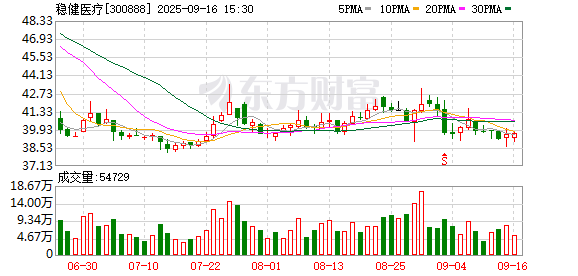
Core Insights - The company has transformed from being labeled as a "pandemic beneficiary stock" to a global health platform covering both medical and consumer sectors, demonstrating resilience against industry cyclicality [2][3] - In 2024, the company reported a revenue of 8.978 billion yuan, a year-on-year increase of 9.7%, with core business revenue growth of 18.6% after excluding high-volatility products [3][4] - The company has invested over 1.8 billion yuan in R&D, with a total of 986 patents granted, showcasing its commitment to innovation and technology [2][6][7] Financial Performance - The company has maintained a strong cash flow, returning 3.57 billion yuan to shareholders through dividends and share buybacks since its IPO, exceeding the net proceeds from its initial public offering [4][5] - The company has implemented six cash dividends totaling 2.613 billion yuan and has initiated mid-term dividends in 2024 and 2025, reflecting its financial stability and commitment to shareholder returns [4][5] Product and Market Development - The medical segment has seen significant growth, with high-end dressings and surgical consumables driving revenue, particularly a 193.5% increase in surgical consumables revenue in the first half of 2025 [3][6] - The consumer segment has also performed well, with core products like cotton soft towels and sanitary napkins showing year-on-year revenue growth of 19.5% and 67.6%, respectively [3][6] Technological Advancements - The company has established three R&D centers and a team of 1,360 researchers, focusing on a closed-loop system of basic research, scenario transformation, and brand guidance [6][7] - The company has developed proprietary technologies, such as the all-cotton water-jet non-woven fabric, and has participated in setting national standards, enhancing its industry position [6][7] Global Expansion - The acquisition of GRI Holdings in 2024 marks a shift in the company's global strategy from product export to localized manufacturing, sales, and service [10][11] - The overseas sales channels achieved a revenue of 1.43 billion yuan in the first half of 2025, a year-on-year increase of 81.3%, indicating strong international growth [10][11] Long-term Vision - The company emphasizes sustainable practices, collaborating with research institutions to develop cotton varieties, ensuring a continuous supply of high-quality raw materials [12][13] - The company's evolution reflects a shift from OEM to building its own brand, focusing on quality and social value over short-term profits [13][14]
美股周一收盘点评:全球各大中央银行本周决定利率政策,市场严阵以待
Sou Hu Cai Jing· 2025-09-15 23:13
Group 1: Federal Reserve and Market Reactions - The Federal Reserve meeting may act as a catalyst for a short-term strengthening of the US dollar, especially given its recent consolidation since early July [1] - Concerns arise that the meeting could trigger a "news sell-off" due to heightened market bubbles, potentially limiting upside and exacerbating downside trading [1] - The US 60/40 stock/bond portfolio has achieved its highest percentile return since April 8, indicating a fatigue in current stock and fixed income levels [1] Group 2: Market Performance - The US stock market is rising, led by technology stocks, with the Nasdaq index experiencing its best single-day gain in nearly two years [2] - The Stoxx Europe 600 index closed up 0.4%, with consumer goods and banking stocks performing well, while healthcare stocks lagged [2] Group 3: Bond Market Trends - US bond yields have decreased ahead of the Federal Reserve meeting [3] - European sovereign bond yields also fell, with strong demand for corporate bonds [4] - Investment-grade corporate bonds are at their highest level of technical overbought conditions since early 2020 [5] Group 4: Currency and Commodity Movements - The US dollar is declining, with Deutsche Bank noting that overseas investors are significantly reducing their dollar exposure while purchasing US stocks and bonds [6] - Gold prices are reaching new historical highs as the Federal Reserve is expected to lower interest rates [6] - Oil prices continue to rise as traders consider further sanctions on Russian oil in response to anticipated oversupply later this year [6]
三季度经济有望保持稳中有进发展态势
Zhong Guo Zheng Quan Bao· 2025-09-15 20:22
Economic Growth and Indicators - In August, the industrial added value above designated size increased by 5.2% year-on-year, while the total retail sales of consumer goods grew by 3.4% year-on-year. From January to August, fixed asset investment (excluding rural households) rose by 0.5% year-on-year [1] - The spokesperson from the National Bureau of Statistics indicated that the economic growth remains "stable," and emphasized the need for macro policies to support employment, enterprises, markets, and expectations, aiming for a steady and healthy economic development [1][4] Domestic Demand Expansion - The effects of policies aimed at expanding domestic demand are becoming evident, with the third batch of consumption upgrade policies being implemented, leading to a rapid increase in sales of related goods. In August, retail sales of household appliances, furniture, and cultural office supplies maintained double-digit growth [1][2] - The expansion of domestic demand is positively impacting production, with significant growth in sectors such as boiler and prime mover manufacturing (up 11.9%) and electric motor manufacturing (up 14.8%) in August [2] Private Investment Growth - The environment for private economic development is continuously improving, supported by a series of policies aimed at promoting private investment. In the high-tech sector, private investment in information services grew by 26.7% year-on-year, while professional technical services saw a 17.6% increase [3] - Private investment in infrastructure increased by 7.5% year-on-year from January to August, outpacing the overall infrastructure investment growth by 5.5 percentage points [3] Economic Outlook - The economic operation is expected to maintain a steady and progressive trend in the third quarter, supported by ongoing macro policies. The industrial and service sectors are showing rapid growth, with industrial output in July and August growing by 5.7% and 5.2% respectively [4] - The core Consumer Price Index (CPI) has been rising, with increases of 0.8% and 0.9% in July and August, indicating a continuous upward trend over four months [4]
固投增速下滑加快的逻辑
Xinda Securities· 2025-09-15 15:39
Group 1: Fixed Asset Investment Trends - Fixed asset investment growth has significantly declined, with a cumulative year-on-year increase of only 0.5% in the first eight months of 2025, falling short of market expectations by 0.8 percentage points[5] - The marginal decline in fixed investment growth accelerated in July and August, with both months experiencing a drop exceeding 1 percentage point[5] - The current level of fixed investment growth is at a historical low, positioned at the 1.9th percentile, marking the weakest performance since data collection began, excluding the first three quarters of 2020[6] Group 2: Investment Categories Analysis - All three major categories of fixed investment—manufacturing, infrastructure, and real estate—are experiencing downward trends, with infrastructure investment growth declining due to project implementation delays and adverse weather conditions[8] - Equipment purchase investment remains the only significant support for fixed investment, with a year-on-year growth of 14.4% in the first eight months of 2025, contributing 2.1 percentage points to overall fixed investment growth[8] - Construction and other investment categories are in negative territory, with construction investment down by 2.2% and other investments down by 0.9%[8] Group 3: Transition in Investment Types - The type of fixed investment is shifting from high-growth expansion projects to new construction, with expansion investments now entering negative growth at -5.6% year-on-year[9] - New construction investment, while currently the highest growth category, only increased by 6.7% year-on-year in the first seven months, indicating limited potential for acceleration[9] - The decline in high-growth expansion investments, coupled with insufficient new construction activity, is likely to exacerbate the decline in overall fixed investment growth[9] Group 4: Risks and Consumer Confidence - Consumer confidence recovery is slow, and the implementation of policies is not meeting expectations, posing risks to investment and consumption[24]
海口经济名场面系列:全球企业都青睐的海口,有什么魅力?
2 1 Shi Ji Jing Ji Bao Dao· 2025-09-15 11:02
Core Viewpoint - The development of Haikou as a Free Trade Port is accelerating, with various high-quality projects being implemented, driven by policy benefits and an upgraded open environment [2][8]. Economic Development - Haikou is experiencing a surge in economic activities as it approaches the full closure of the Free Trade Port, with significant investments and projects being established [2][8]. - The Haikou National High-tech Zone is focusing on green low-carbon manufacturing, particularly in the fields of new energy vehicles and biodegradable materials, attracting major companies like Taishan Sports Industry Group, which plans to invest over 1.2 billion yuan to establish a production base for high-end bicycles and sports equipment [2][3]. Policy and Investment Environment - The Free Trade Port policies are creating a competitive edge for Haikou, particularly in the area of offshore duty-free shopping, which is attracting numerous high-quality enterprises to the Haikou Comprehensive Bonded Zone [4][5]. - The Haikou Comprehensive Bonded Zone has seen a significant increase in project landing rates, with a 68.61% landing rate and a 60.71% commencement rate as of June 2025, reflecting a year-on-year increase of 6.37 and 8.91 percentage points respectively [3][6]. Innovation and Services - The Haikou National High-tech Zone is enhancing its industrial competitiveness through technological innovation and has introduced a comprehensive business environment system to support the biopharmaceutical industry [3][7]. - The introduction of streamlined services, such as the "one-stop" service system and the "免保衔接" service for duty-free enterprises, is improving operational efficiency and reducing logistics costs for businesses [7][8]. Future Outlook - Haikou is poised to continue its economic growth and attract global resources by optimizing its business environment and implementing innovative measures, laying a solid foundation for the full operation of the Free Trade Port [8].