消费

Search documents
光大期货:12月9日金融日报
Sou Hu Cai Jing· 2025-12-09 01:17
Market Overview - The market opened higher and saw the ChiNext Index rise over 3% during the day, closing with a gain of 2.6% [1] - The total trading volume exceeded 2 trillion, with over 3,400 stocks in the Shanghai, Shenzhen, and Beijing markets showing gains [1] - The Shanghai Composite Index rose by 0.54% and the Shenzhen Component Index increased by 1.39% [1] Economic and Sector Insights - The market is refocusing on fundamental logic as liquidity conditions since June have stabilized, with optimistic growth expectations for AI and technology sectors [1] - Hardware manufacturing in the tech sector is experiencing significant price increase expectations due to supply-demand mismatches, indicating strong mid-term profitability [1] - Traditional economic sectors, particularly consumption and cyclical themes, are still in a recovery phase, making it difficult for them to enter a bull market in the short term [1] International Market Dynamics - Overseas tech stocks show mixed expectations, with Nvidia providing strong earnings guidance while Google's upgraded model raises questions about the profitability of AI applications [1] - The upcoming change in the Federal Reserve chairmanship and potential unexpected interest rate cuts in 2026 could continue to support the tech sector [1] Bond Market Analysis - The 30-year bond futures contract fell by 0.29%, while the 10-year contract rose by 0.02% [2] - The People's Bank of China conducted a 122.3 billion yuan reverse repurchase operation with a stable interest rate of 1.4% [2] - The overall funding environment remains loose, but expectations for interest rate cuts are low, leading to a slight upward trend in bond yields [2] Precious Metals Market - Gold and silver prices in London showed weak fluctuations, with the gold-silver ratio around 72.2 [3] - The market is cautious ahead of the Federal Reserve's meeting, with a consensus forming around a potential rate cut in December [3] - There are concerns about technical pullback risks in silver, platinum, and palladium due to crowded long positions, which may lead to larger price adjustments compared to gold [3]
定调!重磅会议召开!
Jin Rong Shi Bao· 2025-12-08 13:35
Core Viewpoint - The Central Political Bureau of the Communist Party of China has set the tone for economic work in 2026, emphasizing "seeking progress while maintaining stability" and "improving quality and efficiency" as key principles for the upcoming economic strategy [1] Economic Performance - The macroeconomic resilience has exceeded market expectations, with high-tech manufacturing leading growth [2] - The total economic output is projected to reach approximately 140 trillion yuan this year [2] - The focus for 2026 will be on achieving qualitative improvements and reasonable quantitative growth while ensuring social stability and a good start to the 14th Five-Year Plan [2] Macroeconomic Policy - The meeting highlighted the continuation of a more proactive fiscal policy and moderately loose monetary policy, aiming to enhance macroeconomic governance effectiveness [3] - The fiscal deficit rate is expected to remain around 4%, with local government special bond issuance potentially increasing from 4.4 trillion yuan in 2025 to about 5 trillion yuan [3] - Monetary policy will seek a dynamic balance among multiple objectives, including stable growth and risk prevention [3] Domestic Market Development - The strategy emphasizes the need to build a strong domestic market to counter external uncertainties and enhance economic resilience [6] - Experts suggest that a consumption-oriented policy framework should be established, alongside reforms in income distribution and effective investment expansion [6] Innovation and Infrastructure - The focus on innovation and industrial development remains critical, with support for leading enterprises to form innovation alliances for national technological challenges [6] - There will be increased policy support for "new infrastructure" development, including communication networks and modern energy systems [6][7] Market Environment - A unified national market is essential for supporting technological innovation, with recommendations for optimizing institutional rules and protecting property rights [7] - Addressing "involution" competition is necessary to establish a healthy market order that promotes quality and fair pricing [7]
IPO全球领先、恒指大涨,港股成为“中国资产重估”关键枢纽
2 1 Shi Ji Jing Ji Bao Dao· 2025-12-08 12:37
Core Insights - The Hong Kong Stock Exchange (HKEX) is positioned as a key platform for Chinese enterprises to expand internationally, driven by institutional innovation and a unique investor structure [1][3]. Group 1: Market Dynamics - From 2014 to 2024, Hong Kong's IPO fundraising exceeded $300 billion, leading other major stock exchanges globally, reflecting changes in China's economic structure and capital flow [2]. - In the first eleven months of this year, 93 new companies listed on the Hong Kong stock market, raising nearly HKD 260 billion, maintaining the top position in global IPO fundraising [2]. - The Hang Seng Index rose by 34% in the first nine months, significantly outperforming major indices in Europe and the U.S. [2]. Group 2: Sector Performance - The Hang Seng Tech Index, which includes major tech companies like Tencent and Alibaba, increased by 44.7% in the first nine months, while the Hang Seng Biotech Index more than doubled, indicating strong investor interest in high-tech sectors [3]. - Over half of the new stock issuers this year have international business layouts, with funds raised aimed at overseas capacity building and supply chain expansion [3]. Group 3: Institutional Innovations - HKEX has implemented a "report and review" mechanism, eliminating waiting periods for listings, and has optimized approval processes to enhance market accessibility [4]. - The introduction of the "same share, different rights" structure in 2018 has attracted major tech firms back to the market, while the 18A chapter has opened pathways for biotech companies without revenue to list [4][5]. - The 2023 introduction of the 18C chapter further supports "specialized, refined, and innovative" enterprises, providing capital support for long-term R&D investments [5]. Group 4: Investor Structure - The Hong Kong market is predominantly driven by institutional investors, including international long-term funds and sovereign wealth funds, which focus on long-term holdings and in-depth research [6]. - The continuous inflow of southbound capital has created a unique liquidity cycle, combining international and domestic capital [6]. Group 5: A+H Listing Mechanism - The A+H listing mechanism has strengthened the synergy between the Hong Kong and mainland markets, with 14 A+H companies completing listings in the past year, including significant offerings over $1 billion [6]. - The diverse structure of issuers, including high-tech, biotech, and consumer sectors, contributes to the market's robust foundation [6].


图解丨南下资金连续7日净买入小米,共计62亿港元
Ge Long Hui A P P· 2025-12-08 10:32
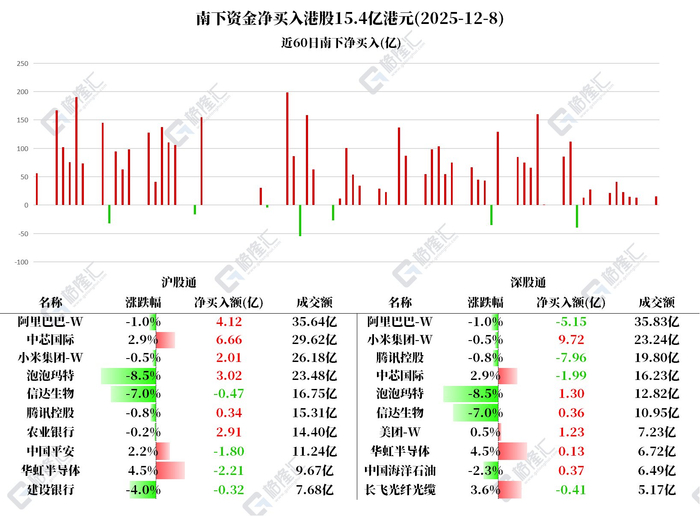
格隆汇12月8日|南下资金今日净买入港股15.4亿港元。其中: 净买入小米集团-W 11.73亿、中芯国际4.66亿、泡泡玛特4.32亿、农业银行2.91亿、美团-W 1.22亿; 净卖出腾讯控股7.62亿、华虹半导体2.08亿、中国平安1.8亿、阿里巴巴-W 1.03亿。 据统计,南下资金已连续8日净买入美团,共计30.1875亿港元;连续7日净买入小米,共计62.386亿港 元;连续5日净卖出腾讯,共计46.672亿港元;连续3日净卖出阿里,共计18.8075亿港元。(格隆汇) | | 沪股通 | | | 深股通 | | | | | --- | --- | --- | --- | --- | --- | --- | --- | | 名称 | 深跌幅 | 净买入额(亿) | 成交额 | 名称 | 涨跌幅 | 净买入额(亿) | 成交额 | | 阿里巴巴-W | -1.0% | 4.12 | 35.64亿 | 同代理-W | -1.0% | -5.15 | 35.83 Z | | 中心国际 | 2.906 | 6.66 | 29.62亿 | 小米集团-W | -0.5% | 9.72 | 23.24 L | ...


长城投研速递:跨年行情能见度有望提升
Sou Hu Cai Jing· 2025-12-08 09:46
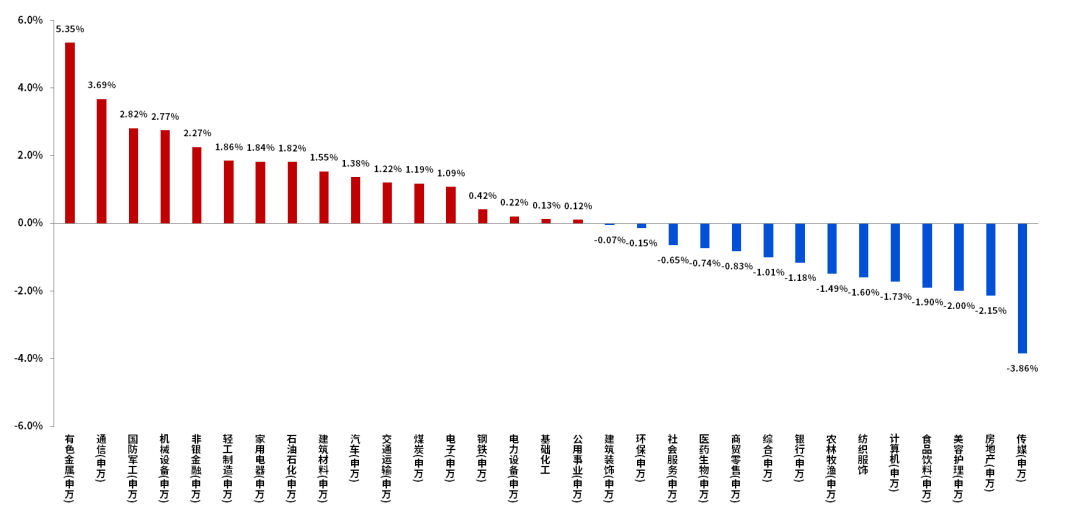
Policy Trends - Some leading brokerages are expected to benefit from the appropriate easing of capital space and leverage restrictions, which may strengthen the brokerage sector and further boost market sentiment [5][4] - The insurance sector is rebounding due to the adjustment of related business risk factors, with the non-bank sector likely to lead the market sentiment recovery during the year-end period [5][4] - The National Financial Regulatory Administration has announced adjustments to the risk factors for insurance companies' stock investments and overseas investment insurance, aiming to enhance long-term investment management capabilities [4][5] Overseas Macro - The U.S. job market is currently in a state of mild slowdown, with the ADP employment figure for November dropping significantly to -32,000, far below the expected 10,000 [6] - The likelihood of a rate cut by the Federal Reserve in December is approximately 87%, as high interest rates are suppressing employment in interest-sensitive sectors [6] Bond Market - After a rapid rise in long-term yields, the 30-10Y government bond yield spread has gradually returned to a historically reasonable range, indicating initial signs of value for allocation after a significant drop [7][15] - The central bank has continued to net withdraw funds, with a total net withdrawal of 848 billion yuan through reverse repos during the first week of December [7][9] Equity Market - The market style continues to favor resource products and AI, with non-bank sectors gaining momentum, particularly in commercial aerospace and robotics, which have strengthened the military and machinery sectors [16][21] - The Shanghai Composite Index rose by 0.37%, while the Shenzhen Component Index and the ChiNext Index increased by 1.26% and 1.86%, respectively [16] Investment Strategy - The company is optimistic about technology, brokerages, and consumer sectors as the market approaches the year-end offensive [2][22] - The upcoming Central Economic Work Conference is expected to lead to more proactive economic policies, with a focus on stabilizing the short-term macro economy and further easing monetary policy [22][24]
【公募基金】市场缩量上涨,宏观博弈临近——公募基金权益指数跟踪周报(2025.12.01-2025.12.05)
华宝财富魔方· 2025-12-08 09:33
Group 1 - The core viewpoint of the article highlights the recent trends in the A-share market, indicating a continuation of volume contraction and a rotation of themes, with market participants awaiting new guiding signals [3][11]. - The A-share market saw a slight increase in major indices, with the Shanghai Composite Index rising by 0.37%, the CSI 300 by 1.28%, and the ChiNext Index by 1.86%, indicating a stronger performance in growth styles compared to value styles [11]. - The average daily trading volume in the A-share market was 16,870 billion, showing a decrease compared to the previous week, reflecting a cautious market sentiment as it approaches significant policy meetings [11]. Group 2 - The non-bank financial sector is influenced by the recent notification from the financial regulatory authority, which aims to encourage insurance funds to invest more in specific equity assets by adjusting risk factors [4][12]. - The commercial aerospace sector has shown active performance due to recent event-driven catalysts, with significant developments in rocket launches and tests, suggesting a potential shift from emotional to logical investment strategies [4][12][13]. - Precious metals, particularly silver, have experienced a rapid price increase due to global liquidity recovery and supply-demand dynamics, with long-term trends expected to be influenced by the narrative of shrinking dollar credit [4][13]. Group 3 - The public fund market is undergoing a transformation with the introduction of new performance assessment guidelines aimed at correcting past issues of short-term incentives and soft accountability, promoting a focus on value creation and high-quality development [4][14]. - The guidelines emphasize a core assessment system based on investment returns, aiming to align the interests of fund managers with long-term returns for investors [14]. Group 4 - The active equity fund indices showed positive performance, with the Active Stock Fund Selection Index rising by 1.64% last week, achieving a cumulative excess return of 15.40% since inception [5]. - The Value Stock Fund Selection Index increased by 1.62%, with a cumulative excess return of 3.96% since inception, while the Balanced Stock Fund Selection Index rose by 1.00%, achieving a cumulative excess return of 9.27% [6][7]. - The Growth Stock Fund Selection Index saw a smaller increase of 0.64%, with a cumulative excess return of 13.45%, while the Pharmaceutical Stock Fund Selection Index decreased by 1.73%, but still recorded a cumulative excess return of 21.62% [8][9].

港股速报|大市低迷新股疯狂 卓越睿新上市首日猛涨
Mei Ri Jing Ji Xin Wen· 2025-12-08 08:57
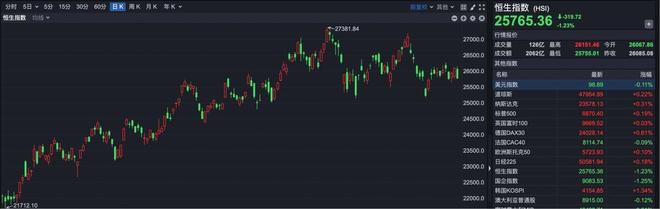
Market Overview - The Hong Kong stock market experienced a weak adjustment, with the Hang Seng Index closing at 25,765.36 points, down 319.72 points, a decline of 1.23% [1] - The Hang Seng Technology Index closed at 5,662.55 points, with a slight increase of 0.09 points [2] New Stock Performance - Two new stocks were listed today, showing significant performance differences.卓越睿新 (HK02687) initially had a moderate performance with a rise of less than 30%, but surged after 3 PM, ultimately closing with a gain of over 87% [4] - In contrast, 纳芯微 (HK02676) opened flat but remained in a state of decline throughout the day, closing with a drop of 4.31% [7] Company Insights - 卓越睿新 is a well-known Chinese higher education institution providing digital solutions for teaching, focusing on digital educational content and environments. It ranks second in the Chinese higher education digital market with a market share of 4.0% and first in the digital content production market with a share of 7.3% according to Frost & Sullivan [6] Stock Movements - Among the constituents of the Hang Seng Index, Baidu Group rose over 3%, Hua Hong Semiconductor increased over 4%, and SMIC gained over 2%. Conversely, Pop Mart fell over 8%, while Lao Pu Gold and Xinda Biopharmaceutical dropped over 6%. Banking stocks collectively declined, with China Construction Bank down over 4% and both China Merchants Bank and Industrial and Commercial Bank down over 3%. Chinese brokerage stocks saw gains, with Huatai Securities up over 4% [9] Market Outlook - Multiple institutions believe that the Hong Kong stock market is currently at a low valuation or in a positioning phase, with a positive outlook for 2026. Technology innovation, particularly in AI, and high-dividend assets are identified as two promising investment themes [11] - There are differing opinions among institutions; Huatai Securities suggests an early "spring rally" for the Hong Kong market, while Hua'an Fund indicates a preference for defensive dividend sectors as the year ends. Factors driving the market include corporate earnings, liquidity, and foreign investment [12]
时隔6个季度,日本经济再陷萎缩
Guo Ji Jin Rong Bao· 2025-12-08 08:34
Economic Contraction - Japan's real GDP annualized quarter-on-quarter rate contracted by 2.3% in Q3, worse than the initial estimate of a 1.8% decline and exceeding market expectations of a 2% contraction [1] - The economy has entered a contraction phase for the first time since Q1 2024, marking the fastest contraction since Q3 2023 [1] Private Consumption and Capital Expenditure - Real GDP, adjusted for inflation, shrank by 0.6% from July to September, more severe than the preliminary estimate of a 0.4% decline [2] - Private consumption, which accounts for over half of Japan's economy, slightly increased by 0.2%, surpassing the initial estimate of 0.1% [2] - Capital expenditure, a key indicator of private demand, decreased by 0.2%, contrasting sharply with the initial growth estimate of 1.0% [3] External Demand and Economic Stimulus - External demand (exports minus imports) reduced GDP by 0.2 percentage points, consistent with preliminary data [4] - The Japanese government has approved a comprehensive economic stimulus package worth approximately 21.3 trillion yen, with a significant portion allocated for direct financial support measures aimed at alleviating living costs [4] Inflation and Currency Concerns - Over 20,000 food items in Japan have seen price increases, with the core Consumer Price Index (CPI) rising for 49 consecutive months [4] - The depreciation of the yen has raised import costs, exacerbating inflationary pressures, leading to concerns about fiscal sustainability [5][6] Monetary Policy Outlook - The Bank of Japan is considering a policy shift, with market expectations for a potential interest rate hike increasing significantly [7] - The central bank's governor has indicated that any policy adjustments will be gradual to avoid economic shocks [8] - If interest rates are raised, it could significantly increase government borrowing costs, with Japan's government debt projected to reach 229.6% of GDP by 2025, the highest among developed economies [9]
当慢牛遇见结构市:如何应对2025年的盈利困境
Sou Hu Cai Jing· 2025-12-08 07:21
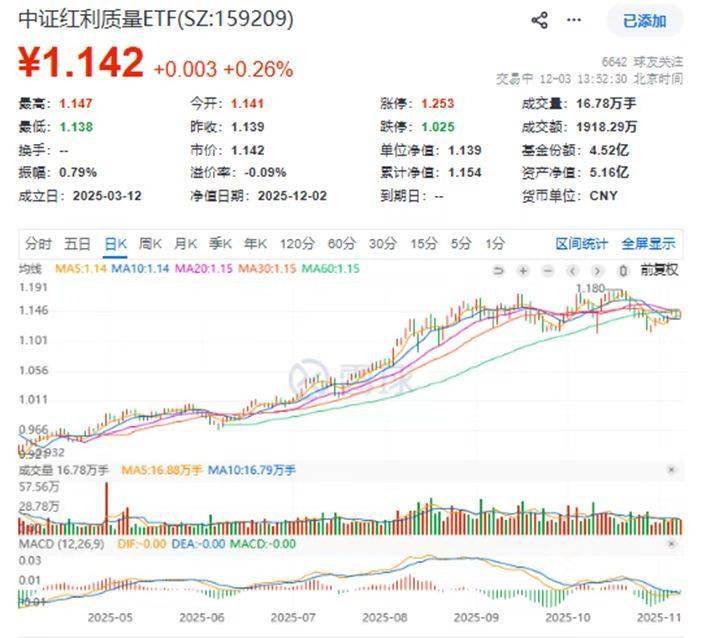
Group 1 - The core viewpoint of the articles highlights a disparity between perceived market performance and actual investor returns, indicating that many investors are experiencing negative returns despite a general market uptrend [1] - The trading data shows that the peak trading volume occurred in the third quarter, reaching 138 trillion yuan, which is close to the total of 160 trillion yuan in the first half of the year, suggesting that significant capital entered the market during high heat periods [1] - The consumer sector has shown negative growth throughout the year, emphasizing the harsh reality that following market trends often leads to losses for investors [1] Group 2 - A shift from "bull-bear thinking" to "rhythm thinking" is necessary, as the market is characterized by rapid rotation of hot stocks and volatile trading patterns [2] - The proposed strategy of "dividends as a shield, technology as a spear" has been validated, indicating that while holding dividend funds is stable, it lacks sufficient elasticity compared to technology stocks, which are more volatile [3] - The China Securities Dividend Quality ETF (159209) has demonstrated unique advantages, with a dividend yield of 3.88% providing downside protection and a return on equity (ROE) of 23.55% offering upside potential [3] Group 3 - Looking ahead to 2026, the rotation between dividends and technology will remain a key market theme, with the China Securities Dividend Quality ETF recommended as a core holding for balancing defensive and offensive strategies [5] - The current market has entered a phase of differentiation, making broad market rallies unlikely, thus necessitating more refined allocation strategies [5] - In this structural market, selecting the right tools is more important than timing, and balanced allocation is more prudent than taking excessive risks [5]
中融亚太:洞察行业投资机会
Sou Hu Cai Jing· 2025-12-08 05:49
Group 1: Investment Opportunities in New Energy - The new energy sector is experiencing structural opportunities, driven by global carbon neutrality goals, with strong growth resilience observed in the photovoltaic, energy storage, and electric vehicle industries [1] - The photovoltaic industry is shifting its focus from maximizing conversion efficiency to reducing levelized cost of electricity, with perovskite battery commercialization potentially reshaping the competitive landscape [1] - The energy storage sector is diversifying in technology routes, with flow batteries showing potential for long-duration storage applications and sodium-ion batteries gaining attention as a resource-constrained alternative [1] - The value focus in the electric vehicle supply chain is shifting from vehicle manufacturing to intelligent components and automotive-grade chips, marking the onset of the software-defined vehicle era [1] Group 2: Digital Economy and AI - The deepening development of the digital economy is creating new investment dimensions, with breakthroughs in artificial intelligence technology reshaping production methods and business models across various industries [3] - The rapid application of generative AI in vertical industries such as finance, healthcare, and manufacturing is creating urgent demands for intelligent transformation, favoring companies with industry know-how and technological implementation capabilities [3] - The industrial internet is becoming a key vehicle for the integration of the digital economy and the real economy, with platform development and data value extraction driving the transformation and upgrading of the manufacturing sector [3] - The cultivation of a data factor market is generating growth momentum for niche areas such as data security and privacy computing [3] Group 3: Consumer Market Trends - The structural upgrade and innovative transformation of the consumer market are giving rise to new investment opportunities, with a parallel development of high-end and cost-effective products under the trend of consumption stratification [3] - Emerging sectors such as health consumption, the silver economy, and national trend culture are showing robust vitality, with innovative business models that meet personalized and experiential demands continuously emerging [3] - Upgrades in flexible production and intelligent manufacturing are enhancing industry efficiency, while the globalization of cross-border e-commerce is creating new opportunities for Chinese brands to expand overseas [3] - The investment logic in the consumer sector is shifting from traffic-driven to value creation, with companies focusing on product strength and user experience expected to gain long-term development space [3] Group 4: Healthcare Industry Innovations - The healthcare industry is experiencing sustained growth driven by accelerated population aging and increased health awareness [4] - Differentiated R&D strategies in the innovative drug sector are yielding significant results, with therapies based on cutting-edge technologies like gene editing and cell therapy gradually moving towards clinical application [4] - The domestic substitution process in medical devices is accelerating, with a number of internationally competitive companies emerging in high-end imaging equipment and in vitro diagnostic reagents [4] - The modernization and internationalization of traditional Chinese medicine are encountering new opportunities, with the secondary development of classic formulas and the global dissemination of Chinese medicine culture opening new blue oceans for the industry [4] - Investment in the healthcare sector is evolving from single project investments to the construction of industrial ecosystems, with collaborative development of the innovation chain becoming key to enhancing investment value [4]