
免税

Search documents
近期消费系列重要政策解读专题电话会议
2025-12-22 01:45
近期消费系列重要政策解读专题电话会议 20251221 摘要 扩大内需是应对挑战的关键,措施包括提高中等收入群体就业、社保和 收入,以及完善职业技能教育体系。供给端则注重质量与效率,创新消 费业态与模式,服务消费成为新增长点。 消费行业负贝塔效应减弱,CPI 数据转正,餐饮和社会零售数据改善。 政策预期商品消费向服务消费倾斜,市场期待业绩估值双重弹性,2026 年或是业绩兑现窗口期。 海南自贸港封关遵循一线放开、二线管住、岛内自由原则。免税商品种 类大幅增加,离岛免税新政包括即购即提、新增国产品类及扩展适用人 群,利好中免公司。 中免公司销售数据持续改善,12 月封关首日销售额同比增长超 90%, 得益于旅游宣传和消费券发放。尽管毛利率较低,但连续增长的数据对 业绩有积极作用,值得关注。 家电板块受益于刺激消费政策,包括延续国补和以旧换新,并可能扩大 规模。政策推动绿色智能家电转型,提升能效标准,优化产业环境,利 好美的集团、海尔智家等企业。 Q&A 康养经济与服务消费成为经济新增长点,企业通过 IP 打造附加值,跨行 业融合。泰迪威尼授权业务表现出色,今年实收已达 10 亿元,预计明 年继续保持增长。 生猪 ...





大消费景气展望:基数与大促后增速放缓,期待明年政策发力
2025-12-22 01:45
Summary of Conference Call Records Industry Overview - **Consumer Sector Outlook**: The consumer sector is expected to face challenges in the first half of 2026 due to the tapering of the trade-in policy, which may lead to a slowdown in durable goods consumption. However, service consumption is showing strong internal momentum, with growth expected in sectors like elderly care and home services, which may receive more policy support [1][4][5]. Key Points and Arguments - **Consumer Data Trends**: In November 2025, retail sales growth fell to 1.3%, the lowest of the year, primarily due to the early Double Eleven promotions, the impact of the trade-in policy, and weakened consumer confidence due to falling housing prices [2][3]. - **Trade-in Policy Impact**: The decline in the trade-in policy is anticipated to negatively affect consumer spending in early 2026, particularly in durable goods like home appliances and automobiles, which are expected to see continued low growth [3][21]. - **Service Consumption Growth**: Service retail growth has increased from 4.9% at the beginning of the year to 5.4%, with significant contributions from education and dining sectors [4]. - **Investment Recommendations**: Focus on the AI industry and emerging sectors like pet economy and trendy toys. Real estate is expected to recover by 2026-2027, benefiting related industries [1][6][7]. Important but Overlooked Content - **High-End Consumption and Travel Chain**: The service sector in 2026 will focus on high-end consumption and travel, with recommendations for companies in the duty-free, hotel, aviation, and dining sectors, such as China Duty Free Group and hotel chains like Jin Jiang and Huazhu [7]. - **Overseas Expansion Opportunities**: Companies like Anker Innovations and Huakai 100 are recommended for their potential in overseas markets, despite current low stock prices [9][10]. - **Alcohol and Beverage Sector**: The alcohol sector is currently in a low season, but some brands are seeing price recovery due to channel control measures. The soft drink market is also expected to show potential growth despite current sales being slow [11][12][13]. - **Food and Beverage Trends**: The snack sector is seeing positive demand ahead of the Spring Festival, with health-oriented products like konjac and oats showing significant growth. Companies like Wancheng and Yanjinpuzi are highlighted for investment [12]. - **Investment in New Consumption Areas**: The new consumption sector is showing upward trends, particularly in the vaping and AI glasses markets, with companies like Smoore and Kangnai Optical recommended for their growth potential [16]. Conclusion - The consumer sector is navigating a complex landscape with both challenges and opportunities. The focus on service consumption, emerging sectors, and strategic investments in high-potential companies will be crucial for navigating the anticipated economic conditions in 2026.
港股异动 | 中国中免(01880)高开逾3% 海南封关首日离岛免税购物金额同比上涨61%
智通财经网· 2025-12-22 01:43
Core Viewpoint - China Duty Free Group (01880) saw a significant increase in stock price, rising by 3.68% to HKD 73.3, with a trading volume of HKD 3.775 million, following the launch of the Hainan Free Trade Port's full island closure on December 18 [1] Group 1: Sales Performance - On the first day of the full closure, Hainan's offshore duty-free shopping amounted to CNY 161 million, with 24,800 shoppers and 118,000 items sold, representing year-on-year increases of 61%, 53.1%, and 25.5% respectively [1] - Sanya reported impressive sales on the same day, achieving a duty-free sales total of CNY 118 million [1] Group 2: Market Outlook - Industrial analysts from Industrial Securities noted that the opening of new city duty-free stores in Q3 and Q4 will enhance customer flow through duty-free and taxable sales strategies [1] - The optimization of offshore duty-free policies, along with improvements in port and city duty-free regulations, is expected to expand store coverage, attract more customers, increase sales range and categories, and simplify certain approval processes, contributing to sales growth [1] - The current structure of the duty-free sector is relatively favorable, with fundamentals showing signs of recovery, and future policy benefits are anticipated to further stimulate growth [1]
中国中免高开逾3% 海南封关首日离岛免税购物金额同比上涨61%
Zhi Tong Cai Jing· 2025-12-22 01:33
Group 1 - China Duty Free Group (中国中免) opened over 3% higher, currently up 3.68% at HKD 73.3, with a trading volume of HKD 3.775 million [1] - On December 18, the Hainan Free Trade Port officially launched its full island closure, with duty-free shopping amounting to CNY 161 million, 24,800 shoppers, and 118,000 items sold, representing year-on-year increases of 61%, 53.1%, and 25.5% respectively [1] - Sanya's duty-free sales on the first day of the closure reached CNY 118 million, indicating strong performance in the region [1] Group 2 - Industrial analysis from Industrial Securities suggests that the opening of new city duty-free stores in Q3 and Q4 will enhance customer flow through duty-free and taxable sales, achieving comprehensive customer coverage [1] - The optimization of duty-free policies, including those for offshore and city stores, is expected to expand store coverage, broaden customer base, increase sales range and categories, and simplify certain approval processes, contributing to sales growth [1] - The current structure of the duty-free sector is relatively favorable, with fundamentals showing signs of recovery, and future policy benefits are anticipated to act as catalysts for growth [1]
港股早评:三大指数高开,自动驾驶概念股齐涨,免税龙头中国中免涨3.68%
Ge Long Hui· 2025-12-22 01:31
Group 1 - The global market has entered a "Christmas mode" this week, with Hong Kong's three major indices opening higher: Hang Seng Index up 0.41%, National Index up 0.49%, and Hang Seng Tech Index up 0.61% [1] - Major technology stocks mostly showed an upward trend, with Meituan rising by 1.46%. The first batch of L3 autonomous driving vehicles received approval, leading to a surge in autonomous driving concept stocks, with Pony.ai leading the charge, rising over 6% [1] - Duty-free leader China Duty Free Group increased by 3.68%, while airline, shipping, and gaming stocks mostly declined [1]
免税龙头中国中免总市值重返1700亿元,食品饮料ETF天弘(159736)上周五成交额近1800万元,机构:海南封关创造了潜在消费增量空间
2 1 Shi Ji Jing Ji Bao Dao· 2025-12-22 01:24
Group 1 - The food and beverage sector showed strong performance, with the China Securities Food and Beverage Index rising by 1.15% by the end of trading on December 19 [1] - The Tianhong Food and Beverage ETF (159736) experienced a trading volume of nearly 18 million yuan, with a premium/discount rate of 0.11% [1] - The agriculture sector also performed well, with the China Securities Agriculture Index increasing by 1.26% [1] Group 2 - The Tianhong Agriculture ETF (512620) has seen a net inflow of over 62 million yuan over five consecutive trading days, leading in net inflow days among similar products [1] - The Tianhong Food and Beverage ETF focuses on high-end and mid-range liquor leaders, as well as leading companies in beverages, dairy, seasonings, and beer [1] - The Tianhong Agriculture ETF covers sectors such as breeding and agricultural chemicals, including leading companies like Muyuan Foods and Wens Foodstuffs [1] Group 3 - Customs data revealed that China imported 560,000 tons of corn and corn flour in November, a year-on-year increase of 87.5%, and 250,000 tons of wheat and wheat flour, a year-on-year increase of 278.6% [2] - Citic Securities highlighted the potential for increased consumption due to the optimization of the offshore duty-free policy and the upcoming closure of Hainan, suggesting a focus on high-end consumption sectors [2] - Dongfang Securities noted that the white liquor industry is entering an "L-shaped bottom," with leading companies strengthening their "quasi-bond asset" attributes, indicating favorable stock price positions [2]
股市和汇率谁“错”了?
Sou Hu Cai Jing· 2025-12-22 00:24
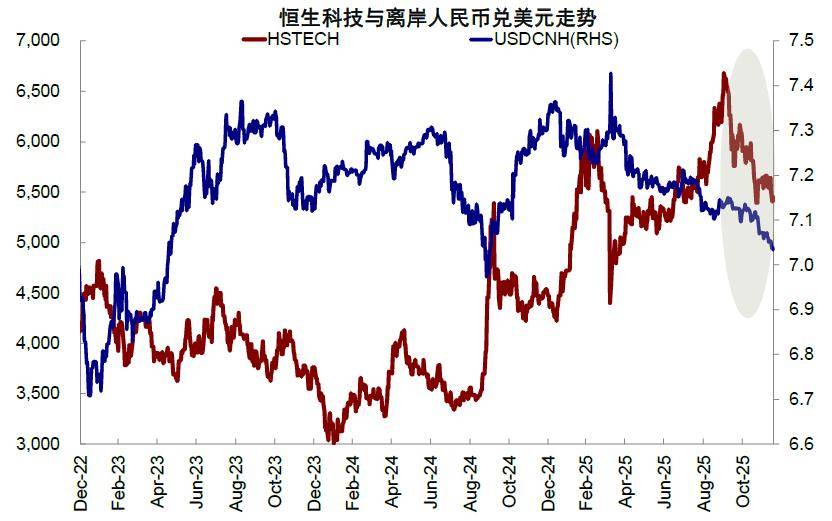
Group 1 - The recent phenomenon of a strong renminbi against the US dollar, appreciating by 1.3% since early October, contrasts with a declining stock market, particularly in Hong Kong where the Hang Seng Index has dropped 15% from its peak [1][4] - Historically, a strong currency correlates positively with stock market performance, as a stronger renminbi typically indicates foreign capital inflow and a favorable economic outlook [1][4] - The current divergence between currency strength and stock market weakness raises questions about whether the currency or the stock market is misaligned, with historical examples indicating that such divergences can occur [4][10] Group 2 - The relationship between the renminbi and the stock market has been predominantly positive, with recent divergence being rare and primarily driven by different underlying factors [8][18] - The renminbi's appreciation is attributed to a record trade surplus of $1.08 trillion and expectations of a weaker US dollar, while the stock market reflects weakening domestic demand and economic pressures [19][31] - The stock market's decline is linked to weak internal demand, with indicators such as PMI remaining below the growth line and fixed asset investment showing negative growth for three consecutive months [25][31] Group 3 - The recent strength of the renminbi is not primarily driven by foreign capital inflow, as evidenced by the stock market's decline and a lack of significant foreign investment in the bond market [19][21] - The central bank's intervention in the foreign exchange market appears to be diminishing, as indicated by changes in the onshore and offshore renminbi swap rates [26][27] - The divergence between the renminbi and the stock market may persist due to differing driving factors, with the potential for the renminbi to continue appreciating based on seasonal capital settlement and external economic conditions [30][32] Group 4 - The implications of a strong renminbi include potential benefits for import-dependent industries and sectors related to service trade, while negatively impacting exports and price pressures [42][49] - A sustained appreciation of the renminbi could lead to a temporary boost in market sentiment, particularly if it breaks key psychological levels, but the sustainability of this trend is uncertain without fundamental support [44][45] - The future trajectory of the renminbi and stock market will depend on the underlying economic fundamentals and whether fiscal policies can effectively stimulate growth [41][44]

十大券商策略:告别单一叙事!人民币升值指引三条配置线索
Zheng Quan Shi Bao Wang· 2025-12-22 00:12
Group 1 - The core viewpoint is that the market is beginning to focus on the potential for a sustained appreciation of the RMB, which could influence asset allocation strategies [1] - Approximately 19% of industries may see profit margin improvements due to RMB appreciation, leading to increased investor interest in these sectors [1] - Key sectors to watch under a strengthening RMB include aviation, gas, and paper industries driven by short-term muscle memory, as well as upstream resources, consumer goods, and services influenced by profit margin changes [1] Group 2 - The 2026 spring market is anticipated to be active, with a focus on non-mainstream sectors such as policy themes and high-dividend stocks, while the mainline structure (AI industry chain, cyclical stocks) may have limited upward potential [2] - A classic "cross-year-spring" market is forming, with significant institutional investors increasing their holdings in broad-based ETFs, indicating stable incremental capital for the market [3] - The A-share market is expected to resonate upward with global markets, driven by clear mid-term policy and liquidity expectations following the Federal Reserve's interest rate decisions [4] Group 3 - The current market is characterized by a narrow range of fluctuations, influenced by external factors such as U.S. AI bubble concerns and Japan's interest rate hikes, with a potential upward trend as investor sentiment improves [4] - The focus for A-share industry allocation includes dividend value, cyclical recovery, and thematic hotspots, particularly in metals, non-bank financials, and AI sectors [4] - The market is entering a critical window for cross-year layout, with attention on potential signals for a small rally around the New Year [5][6] Group 4 - The market is experiencing a structural trend change, with significant discrepancies in expectations for consumption, non-bank finance, and technology sectors as 2026 approaches [10][11] - Key investment themes include AI applications, commercial aerospace, and nuclear power, with a focus on sectors benefiting from domestic demand recovery and structural policy incentives [12] - The upcoming "15th Five-Year Plan" is expected to drive structural opportunities, particularly in AI, renewable energy, and quantum technology sectors [12]

十大券商一周策略:“春季躁动”行情积极因素累积,拥抱更具备确定性的“实物需求拉动”与“内需政策红利”
Sou Hu Cai Jing· 2025-12-21 23:57
Group 1 - The market is entering a critical window for cross-year layout, with expectations for A-shares to resonate upward with global markets by 2026, focusing on "technology + overseas expansion" as a continuing theme [1][2] - Current market conditions are characterized by narrow fluctuations, influenced by external factors such as concerns over the AI bubble in the US and interest rate hikes by the Bank of Japan [2][3] - Investor sentiment has recently dropped below 70, indicating a pessimistic outlook that may lead to a slight recovery in sentiment and upward market fluctuations [2] Group 2 - Industry allocation strategies include focusing on high dividend stocks, cyclical sectors, and thematic hotspots such as Hainan's duty-free shopping and nuclear power [2][4] - The anticipated "cross-year-spring" market rally is supported by early policy implementation and increased institutional investment in broad-based ETFs [4][5] - The potential for a structural outperformance in sectors like brokerage and technology is expected, driven by upcoming monetary policy changes and market liquidity improvements [7][8] Group 3 - The ongoing appreciation of the RMB is expected to influence asset allocation, with approximately 19% of industries likely to see profit margin improvements due to currency appreciation [3] - Key sectors benefiting from policy support include AI, aerospace, and innovative pharmaceuticals, while cyclical sectors like chemicals and energy metals may also see positive impacts [6][9] - The market is expected to experience a "spring rally" driven by favorable valuation levels, liquidity conditions, and catalysts that enhance risk appetite [6][12] Group 4 - The outlook for 2026 suggests a shift from a single narrative to a broader focus on physical demand and domestic policy benefits, with sectors like AI and consumer services poised for recovery [10][13] - Non-bank financials are highlighted as having significant earnings elasticity, while sectors like electric equipment and machinery are expected to benefit from AI investments and export demand [13][14] - The market is currently in a phase of adjustment before the anticipated cross-year rally, with a focus on structural opportunities aligned with policy directions and industry trends [11][14]
【十大券商一周策略】告别单一叙事!A股跨年行情+春季躁动或将拉开帷幕
Zheng Quan Shi Bao Wang· 2025-12-21 15:11
Group 1 - The core viewpoint is that a classic "cross-year-spring" market trend is brewing, with significant signals indicating its commencement [3] - Factors driving the appreciation of the RMB are increasing, and investors should adapt their asset allocation accordingly, focusing on industries that may benefit from this trend [1] - The market is expected to see a structural shift with a focus on cyclical sectors, particularly industrial metals, non-bank financials, and sectors related to domestic consumption [3][4] Group 2 - The investment strategy should consider three key clues: dividend value, layout of prosperous industries, and thematic hotspots [4] - The anticipated spring market in 2026 is expected to be driven by a combination of fundamental cyclical improvements and new technological trends [2] - The current market is characterized by a narrow range of fluctuations, influenced by external factors such as U.S. monetary policy and investor sentiment [4][6] Group 3 - The focus on AI and advanced manufacturing is expected to dominate the market, with a potential shift towards value and cyclical styles in the first half of 2026 [2] - The market is likely to experience a "value on stage, growth in action" dynamic, particularly as the Lunar New Year approaches [9] - There is a notable expectation for structural opportunities in sectors like AI, new energy, and controlled nuclear fusion, which are aligned with the "14th Five-Year Plan" [6][10]