动力电池

Search documents
动力电池行业竞争的守正与升维
Zhong Guo Qi Che Bao Wang· 2025-11-27 01:25
Core Insights - The collaboration between JD.com, GAC, and CATL focuses on the launch of the Aion UT Super, a battery-swapping vehicle priced under 100,000 yuan, marking a significant step towards commercializing the "battery separation" model in the private car market [2][4] - CATL's role as a key supplier in this partnership highlights the shift in the battery industry from pure technology competition to service upgrades and innovative business models [2][4] - The industry is experiencing a deep restructuring, with companies redefining core competitiveness through diverse innovation models, including the establishment of new sales channels via e-commerce platforms [2][4][5] Industry Trends - The partnership between CATL and JD.com aims to create a "Chocolate Battery" official direct sales channel, promoting the battery separation model and enhancing user experience through seamless online and offline services [3][4] - The competition in the battery industry is intensifying, pushing companies to explore niche markets and provide customized solutions rather than relying solely on price competition [3][4] - Emerging applications such as low-altitude economy, AI computing centers, humanoid robots, and electronic consumer products are becoming focal points for battery manufacturers [3][4] Strategic Collaborations - GAC and CATL have signed a comprehensive strategic cooperation agreement for long-term collaboration, focusing on smart chassis and battery rental services, aiming to create a synergistic ecosystem [5][6] - The industry is witnessing a trend of deepening joint ventures between automakers and battery manufacturers, which not only secures capacity and market share but also fosters a new "partner" model [5][6] Global Expansion and New Markets - The battery industry is shifting its focus from traditional automotive applications to new markets such as energy storage and robotics, with significant growth potential in these areas [7][8] - CATL and other companies are accelerating their overseas production efforts, with over 13 countries hosting manufacturing bases, aiming to enhance competitiveness and mitigate trade risks [9][10] Technological Innovations - The industry is on the verge of a breakthrough with solid-state battery technology, with several companies preparing for product validation and mass production [14][15] - The focus on zero-carbon transformation is becoming crucial, with companies like CATL implementing comprehensive carbon management systems and aiming for carbon neutrality across their value chains by 2035 [11][12] Future Outlook - The next 3-5 years will see the battery industry driven by technological innovation and market expansion, with performance metrics such as safety, energy density, and charging efficiency being critical for competitive positioning [15]



观车 · 论势 || 技术循序渐进,液态电池不过时
Zhong Guo Qi Che Bao Wang· 2025-11-27 01:25
Core Viewpoint - The commercialization timeline for solid-state batteries is uncertain, with experts predicting a range from 2027 to 2035 for various stages of market entry, while half-solid batteries are currently the focus of commercialization efforts [1][2][3] Group 1: Solid-State Battery Commercialization - Solid-state batteries are expected to face significant technical and cost challenges before achieving mass production, with industry consensus suggesting a timeline of 2032 to 2033 for commercial application [2][3] - Current predictions for solid-state battery commercialization vary, with some experts suggesting small-scale production could begin as early as 2027, while others believe large-scale commercialization may not occur until 2030 or later [2][3] Group 2: Half-Solid and Liquid Batteries - Half-solid batteries, referred to as "solid-liquid batteries," are seen as a transitional solution before solid-state batteries become mainstream, with a projected large-scale deployment window between 2025 and 2030 [3] - Liquid batteries are expected to maintain a significant market share, with projections indicating they will account for over 70% of the global power battery market at least until 2030, highlighting their ongoing relevance and potential for improvement [3][4] Group 3: Industry Dynamics and Consumer Perception - The industry warns against the over-hyping of solid-state batteries, which may lead to unhealthy market expectations and consumer misconceptions about the obsolescence of liquid batteries [1][3] - A multi-technology approach is deemed essential for the future of power batteries, with liquid, half-solid, and solid-state batteries expected to coexist and cater to different market segments [4]
A股AI硬件板块爆发,反弹还会持续吗?
Sou Hu Cai Jing· 2025-11-26 13:11
Group 1 - Nvidia's Q3 earnings report exceeded expectations, yet warnings about an AI bubble persist, with Michael Burry predicting Nvidia as a precursor to market downturns [1] - Global markets, including A-shares, have experienced declines due to concerns over the AI bubble, a retreat in Federal Reserve rate cut expectations, and cautious investor sentiment [1] - The fundamental factors supporting the current Chinese stock market and its potential for upward movement remain in question [1] Group 2 - The recent volatility in global markets highlights the nature of the current tech bull market, driven by grand narratives and abundant liquidity, suggesting that any downturn may be a temporary "interlude" in a larger trend [3] - The AI revolution continues to provide significant market imagination, and as long as this narrative remains unchallenged and macro liquidity does not tighten drastically, the current market enthusiasm may persist [3] - The real challenge lies in understanding the current phase where narrative outweighs reality, rather than predicting each adjustment's peak [3] Group 3 - Kweichow Moutai, a symbol of traditional consumer upgrades, faces competition from emerging tech companies like Cambrian, indicating a shift in market dynamics [5] - The decline in the wholesale price of Moutai, which has fallen below 1700 yuan, suggests potential further adjustments in response to market supply and demand changes [6] - The rise of companies like CATL in the battery sector reflects a broader market trend where tech stocks are replacing traditional consumer and real estate stocks as market leaders [8] Group 4 - The semiconductor industry is facing challenges despite the rise of AI, with the Netherlands' ASML grappling with its position in the global supply chain amid AI-related anxieties [10] - Domestic alternatives in the semiconductor sector, particularly in photoresists, are gaining attention as the market shifts towards local production capabilities [12] - The competition in the facial mask market is intensifying, with leading brands like敷尔佳 experiencing market share declines due to increased competition and changing consumer preferences [16]



乘联分会:11月1-23日全国乘用车市场零售138.4万辆 同比下降11%
Zhi Tong Cai Jing· 2025-11-26 10:13
Group 1: Retail Sales Performance - From November 1 to 23, the national retail sales of passenger cars reached 1.384 million units, a year-on-year decrease of 11% compared to the same period last year, and a 2% decline compared to the previous month. Cumulatively, retail sales for the year reached 20.64 million units, a year-on-year increase of 6% [1][4] - The average daily retail sales for the first week of November were 46,000 units, down 19% year-on-year and down 4% from the previous month [2] - The average daily retail sales for the second week of November were 67,000 units, down 9% year-on-year and down 7% from the previous month [3] Group 2: Wholesale Sales Performance - From November 1 to 23, the wholesale volume of passenger cars reached 1.69 million units, a year-on-year decrease of 8%, but an 8% increase compared to the previous month. Cumulatively, wholesale sales for the year reached 25.464 million units, a year-on-year increase of 11% [1][7] - The average daily wholesale volume for the first week of November was 52,000 units, down 22% year-on-year but up 48% from the previous month [5] - The average daily wholesale volume for the second week of November was 79,000 units, down 5% year-on-year and down 4% from the previous month [6] Group 3: New Energy Vehicle Market - From November 1 to 23, the retail sales of new energy vehicles reached 849,000 units, a year-on-year increase of 3% and an 8% increase compared to the previous month. Cumulatively, retail sales for the year reached 10.998 million units, a year-on-year increase of 20% [1] - The wholesale volume of new energy vehicles reached 995,000 units, a year-on-year increase of 4% and a 13% increase compared to the previous month. Cumulatively, wholesale sales for the year reached 13.051 million units, a year-on-year increase of 27% [1] Group 4: Inventory and Market Outlook - As of the end of October 2025, the inventory of passenger cars in the industry was 3.41 million units, an increase of 130,000 units from the previous month and an increase of 440,000 units from October 2024 [8] - The current inventory level supports an estimated sales period of 44 days, which is relatively moderate compared to previous years [8] - The market outlook for November shows a 64% optimism level among manufacturers, indicating a cautious but positive sentiment towards future sales [8] Group 5: Battery Market Analysis - In October, the total production of power and other batteries reached 171 GWh, a year-on-year increase of 49%. Cumulatively, the production from January to October was 1,293 GWh, a year-on-year increase of 45% [9] - The market for lithium batteries is characterized by strong competition, with CATL and BYD being the dominant players. The market share of lithium iron phosphate batteries has seen significant growth [11] Group 6: International Market Dynamics - In October 2025, the Russian automotive market saw sales of 183,000 units, a year-on-year decrease of 8% but a month-on-month increase of 35%. Cumulatively, sales from January to October reached 1.19 million units, a year-on-year decrease of 23% [12] - Chinese brands have significantly increased their market share in Russia, with local sales surpassing export volumes, indicating a successful strategy in navigating complex international relations [12]
工信部部长:推动人工智能等前沿技术研发和应用推广
Ren Min Ri Bao· 2025-11-26 09:40
Core Viewpoint - China's industrial development has made significant progress in recent years, with a focus on technological innovation leading the construction of a modern industrial system. The next steps involve promoting new industrialization vigorously [2][4]. Group 1: Achievements in Industrial Development - Since the 18th National Congress, China's industrialization has accelerated, with notable improvements in overall industrial strength, quality, efficiency, innovation, competitiveness, and risk resistance [2][3]. - China is the only country with all industrial categories recognized by the United Nations, boasting 41 major industrial categories and over 666 subcategories [3]. - In 2022, China's total industrial added value reached 40.16 trillion yuan, accounting for 33.2% of GDP, with manufacturing added value nearly doubling since 2012 [3]. - High-tech manufacturing's share of industrial added value increased from 9.4% in 2012 to 15.3% in the first three quarters of 2023 [3]. Group 2: Information and Communication Industry - China has built the world's largest and most advanced information and communication network, with 328.2 million 5G base stations [4]. - The country ranks second globally in computing power and leads in 5G standard essential patent declarations, holding 42% of the global share [4]. - The digital economy has become a significant market, with industrial internet applications integrated into 49 national economic categories [4]. Group 3: Industrial Economic Recovery - The industrial economy is showing signs of recovery, with a 4.3% year-on-year increase in industrial added value for large-scale industries in the first 11 months of last year [5]. - The government plans to implement a series of policies to support industrial growth, focusing on key regions and industries [5]. Group 4: Technological Innovation in Industry - China has become the second-largest R&D investor globally, with over 570 industrial enterprises in the top 2500 for R&D investment [6]. - The number of invention patent applications from industrial enterprises rose from 176,000 in 2012 to 555,000 in 2022 [6]. - The establishment of national manufacturing innovation centers and high-tech zones has fostered a robust innovation ecosystem [6]. Group 5: Modern Industrial System Construction - The focus is on strengthening and optimizing the manufacturing sector, with an emphasis on upgrading traditional industries and fostering new and emerging industries [8][9]. - The government aims to enhance the competitiveness of key industries such as rail transportation, new energy vehicles, and communication equipment [10][11]. Group 6: Enhancing Enterprise Competitiveness - The number of large-scale industrial enterprises increased from 344,000 in 2012 to 483,000 by the end of November 2023 [13]. - China has 142 companies in the Fortune Global 500, with 63 in manufacturing, and the revenue of the top 500 manufacturing companies reached 51.06 trillion yuan [13]. - The government plans to support the growth of small and medium-sized enterprises and promote their integration with larger enterprises [14][15].
专家:我国亟待加快构建安全、高效、绿色的动力电池运输体系
Zhong Guo Jin Rong Xin Xi Wang· 2025-11-26 07:53
Core Insights - The 2024-2025 Development Report on the Power Battery Transportation Industry highlights significant challenges in ensuring safe and efficient transportation of power batteries, necessitating the establishment of a robust logistics system in China [1][4]. Industry Overview - In 2024, China's new energy vehicle production and sales are projected to exceed 10 million units for the first time, with power battery installation reaching approximately 548.4 GWh, a year-on-year increase of 41.5% [1]. - The lithium-ion battery export volume is expected to reach 197.1 GWh in 2024, marking a 29.2% increase compared to the previous year [2]. - The total output value of the lithium battery industry in China is anticipated to surpass 1.2 trillion yuan, with a production volume of 826 GWh, reflecting a year-on-year growth of 22.4% [2]. Regional Development - Sichuan province has emerged as a significant hub for the power battery industry, achieving a production volume of 168.1 GWh in the first three quarters of 2024, which is a 49.2% increase year-on-year [2]. - Yibin, a key area in Sichuan, has attracted over 120 supporting projects in the power battery sector, with planned production capacity reaching 300 GWh [2]. Market Concentration - The market share of leading power battery companies is increasing, with six out of the top ten global battery manufacturers being Chinese, collectively holding over 60% of the market [3]. - CATL, the largest power battery producer globally, is expected to achieve a battery installation volume of 339.3 GWh in 2024, a 31.7% increase from 2023, with a market share of 37.9% [3]. Transportation Challenges - The primary mode of transportation for power batteries in China remains road transport, facing issues such as insufficient capacity and regulatory constraints [3][6]. - The logistics supply chain for power batteries is under pressure to enhance safety and efficiency, requiring improvements in transportation tools and organizational methods [3][4]. Regulatory Measures - A joint initiative by ten government departments aims to enhance the safety and service capabilities of power battery transportation by 2027, addressing key bottlenecks in the supply chain [4][5]. - New standards and regulations are being developed to improve safety and efficiency in the transportation of lithium batteries across various modes, including road, rail, air, and water [5][7]. Future Developments - The establishment of a safe, efficient, and green transportation system for power batteries is a priority, with significant logistics demand expected to rise alongside industry growth [6]. - The first large-scale trial of railway transportation for power batteries commenced in November 2024, marking a significant step in diversifying transportation methods [6][7]. - The development of a multi-modal transport system for power batteries is underway, with new standards and information-sharing platforms being established to facilitate efficient logistics [8].
10月锂电下游应用市场概况:汽车渗透率稳步爬升,储能订单饱满
鑫椤锂电· 2025-11-26 06:42
Core Insights - The article highlights the significant growth in the Chinese new energy vehicle (NEV) market, with production and sales reaching 1.772 million and 1.715 million units in October, representing year-on-year increases of 21.1% and 20% respectively [2] - The penetration of new energy vehicles in total vehicle sales has reached 51.6% in October, indicating a strong market trend [2] - Cumulative sales from January to October show a total of 13.015 million NEVs sold, with a year-on-year growth of 33.1% [2] NEV Market Performance - In October, domestic sales of NEVs were 1.459 million units, with a month-on-month increase of 5.6% and a year-on-year increase of 12.1% [2] - The breakdown of sales includes 1.377 million passenger NEVs (up 6% month-on-month, 10.3% year-on-year) and 82,000 commercial NEVs (down 0.5% month-on-month, up 52.4% year-on-year) [2] - Cumulative domestic sales for the first ten months reached 10.929 million units, with passenger NEVs at 10.28 million (up 24%) and commercial NEVs at 649,000 (up 60.2%) [2] Battery Industry Insights - In October, the domestic power battery installation volume was 84.1 GWh, showing a year-on-year growth of 42.1% [5] - The share of ternary batteries was 19.7% of the total installation, while lithium iron phosphate batteries accounted for 80.3% [5] - Cumulative power battery installation from January to October reached 578.0 GWh, with a year-on-year increase of 42.4% [5] Energy Storage Market - The domestic energy storage battery shipment in October was 59.9 GWh, reflecting a year-on-year growth of 67.6% [7] 3C Digital Market - In September, the domestic smartphone shipment was 27.931 million units, with a year-on-year increase of 10%, including 24.106 million 5G smartphones [9] Electric Tools Market - In October, the production of domestic electric tools reached 15.233 million units, with a year-on-year decrease of 8.87% [11] Future Market Trends - The Chinese NEV market is expected to maintain a certain level of growth, while the U.S. market may see a decline in electric vehicle penetration due to subsidy cancellations [14] - The European market is gradually increasing its penetration rate with the introduction of new models, and global energy storage demand is exceeding expectations, positively impacting battery and material sectors [14]

宜宾市翠屏区:坚持高质量发展主线 百强区进位实现“五连升”
Si Chuan Ri Bao· 2025-11-25 21:07
Economic Growth and Ranking - During the "14th Five-Year Plan" period, the regional GDP of Cuiping District is projected to grow from 104.658 billion yuan in 2020 to 161.630 billion yuan in 2024, maintaining the 5th position among county-level regions in the province and improving its national ranking from 68th to 53rd, marking five consecutive years of upward movement [2][3][4] Industrial Development - Cuiping District has established a "2+2+2" modern industrial system, featuring two trillion-level industrial clusters in liquor and power batteries, two traditional industries in equipment manufacturing and green food processing, and two emerging industries in digital economy and intelligent manufacturing [4][5] - The liquor industry has developed a complete industrial chain ecosystem, while the power battery sector has achieved significant growth, with 30 supporting enterprises in the Yangtze River Industrial Park [4][5] Infrastructure and Urban Development - The Cuiping Economic Development Zone is being developed as a new economic growth area, with the first batch of major projects launched and a focus on intelligent connected vehicles and smart manufacturing [5][6] - Urban expansion has been emphasized, with 300 key projects implemented and over 50 billion yuan invested, resulting in a new urban area of 6.22 square kilometers [6][7] Agricultural and Rural Development - The district has promoted a "5+2" characteristic agricultural industry, establishing seven modern agricultural parks, including a five-star and a four-star park [3][7] - Efforts have been made to protect arable land and enhance food security, with the establishment of urban-rural integration development pilot zones [7] Cultural and Tourism Development - Cuiping District has rich cultural resources, with significant efforts in cultural heritage protection and tourism development, leading to a 1.5 times increase in tourist reception to 38.6 million by 2024 and tourism revenue exceeding 120 billion yuan [8][9] - The district has been recognized as a national tourism city and has created several cultural landmarks, enhancing its tourism competitiveness [9]

宜宾零碳启示录
Tai Mei Ti A P P· 2025-11-25 10:44
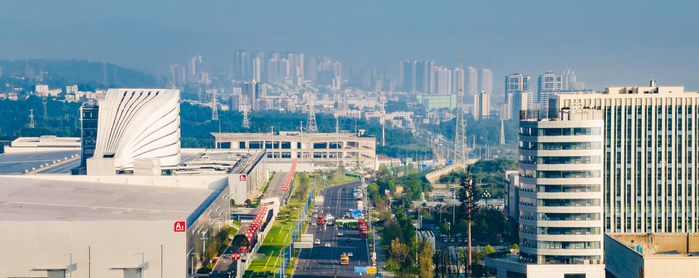
Core Viewpoint - The 2025 World Power Battery Conference highlighted the rapid growth of the power battery industry in Yibin, marking it as a significant player in the green energy sector and setting the stage for future developments in sustainable energy [2][5]. Group 1: Industry Development - Yibin has transitioned from traditional industries to a modern industrial system, establishing a "4+4+4" framework that includes power batteries, photovoltaics, and new energy storage [5][9]. - The power battery industry in Yibin has seen a dramatic increase in output value, rising from less than 2 billion yuan in 2020 to over 100 billion yuan in 2024 [9]. - The establishment of the Yibin High-tech Zero Carbon Industrial Park aims to create a green energy system and promote low-carbon industrial development through innovative strategies [5][10]. Group 2: Zero Carbon Initiatives - The concept of "zero carbon parks" was introduced in China to address climate change and promote sustainable industrial practices, with Yibin being a key participant in this initiative [6][10]. - Yibin's zero carbon park will focus on creating a closed-loop system for green energy, manufacturing, and application, with 26 projects already underway [10][12]. - The park aims to achieve significant reductions in carbon emissions and energy consumption, with targets set for 2027 including a 20.35% decrease in industrial energy consumption and a renewable energy utilization rate of 78.74% [14][15]. Group 3: Economic Impact - Yibin's GDP reached 275.37 billion yuan in the first three quarters of 2025, with a year-on-year growth of 5.3%, driven by significant increases in the industrial sector [19]. - The growth of the "new three" industries, including smart connected vehicles, crystalline silicon photovoltaics, and power batteries, has been particularly notable, with increases of 38.1%, 35.1%, and 21.1% respectively [19]. - The establishment of zero carbon parks is expected to enhance Yibin's attractiveness for investment, providing a competitive edge in the global market amid rising carbon tariffs [16][17].
宁德时代宜宾“三连签”
起点锂电· 2025-11-25 10:39
Core Viewpoint - The article highlights the strategic collaboration between CATL and Wuliangye Group, focusing on the development of a zero-carbon ecosystem and the promotion of electric transportation, which aims to enhance the green energy infrastructure and contribute to China's carbon neutrality goals [3][4][8]. Group 1: Strategic Collaboration - CATL and Wuliangye Group have established a strategic partnership to create a zero-carbon park, utilizing existing industrial parks for green energy infrastructure upgrades [3]. - The collaboration will prioritize the use of CATL's battery products in Wuliangye's logistics and transportation, including the exploration of battery swapping demonstration routes [4]. - Both companies aim to enhance battery material research and development, optimizing energy structures and promoting green production models in the traditional liquor industry [4][8]. Group 2: Zero-Carbon Initiatives - CATL has signed a strategic cooperation agreement with the Yibin Municipal Government to develop a "zero-carbon Yibin" initiative, focusing on zero-carbon industries, energy, cities, and intelligence [4][5]. - The plan includes establishing national-level zero-carbon park pilots and promoting energy-saving transformations in high-energy-consuming enterprises [4][7]. Group 3: Production Capacity and Technological Advancements - CATL's Yibin base is set to become the largest single production facility globally, with a planned capacity of 180 GWh by 2025 and a total capacity exceeding 300 GWh upon completion [7]. - The facility boasts a 95% automation level and aims to reduce average energy consumption by 52% compared to 2021 [7]. - CATL's Yibin base has been recognized as the world's first "zero-carbon factory" and a national intelligent manufacturing benchmark factory [7]. Group 4: Industry Impact and Future Outlook - The collaboration and initiatives in Yibin are expected to solidify CATL's leadership in the global battery industry while promoting Yibin as a model city for zero-carbon economy and green manufacturing [8]. - The strategic model of CATL, which integrates strategic goals, technological innovation, and ecological co-construction, is set to lead the industry towards a greener future and contribute to global carbon neutrality efforts [8].