
房地产行业

Search documents
个人买房满两年,出售免征增值税
Xin Lang Cai Jing· 2026-01-01 16:39
Group 1 - New regulations effective from January 1, 2026, aim to address public concerns and enhance development vitality, including subsidies for smart home products [1] - The new policy includes support for upgrading old equipment in various sectors such as elderly care and safety, as well as a focus on consumer goods trade-in programs for vehicles and home appliances [1] - The scope of subsidies for consumer goods has expanded to include digital and smart products, such as smartphones and smart home devices [1] Group 2 - Adjustments to housing loan rates will take effect on January 1, 2026, with a reduction of 0.25 percentage points for housing provident fund loans issued before May 8, 2025 [2] - The new rates for first-time homebuyers will be 2.1% for loans up to 5 years and 2.6% for loans over 5 years, while second-home loans will have rates starting at 2.525% [2] Group 3 - A new notification regarding kindergarten fee policies will be implemented on January 1, 2026, establishing government-guided pricing for non-profit kindergartens and market-regulated pricing for profit-oriented institutions [3] - The fee structure includes various charges such as education fees and accommodation fees, with specific guidelines for different types of kindergartens [3] Group 4 - New rules for the reduction of vehicle purchase tax for new energy vehicles will be in effect from January 1, 2026, allowing a 50% tax reduction with a maximum deduction of 15,000 yuan per vehicle [4] - The policy includes updated technical requirements for electric and hybrid vehicles to qualify for tax exemptions, emphasizing the need for certain electric range capabilities [4]
股市“四辩”︱重阳投资2026年投资策略报告
私募排排网· 2026-01-01 03:05
Core Viewpoint - In 2025, the Chinese stock market experienced a strong rebound, with the Shanghai Composite Index reaching a ten-year high, while the market structure showed significant differentiation. Looking ahead to 2026, the company aims to identify new opportunities through four debates: future debate, allocation debate, current debate, and strategy debate [3]. Future Debate - China is unlikely to follow Japan's path of economic stagnation, primarily due to its superior innovation capabilities and irreplaceability in the global market. The perception of the Chinese market has shifted from "uninvestable" to having "strategic allocation value" [5][10]. - The Chinese stock market's performance from 2021 to 2024 raised concerns about a potential "lost decade," similar to Japan's experience. However, the market's recovery in 2025 has led to a more optimistic outlook [10][11]. Current Debate - The anticipated capital expenditure in AI may not materialize as expected. While AI is seen as a significant technological revolution, the high profit margins and capital requirements in the industry present challenges for sustainable growth [21][29]. - The contradiction between massive capital expenditure and high profit margins in the AI industry could limit growth potential. The market's expectations for cloud service providers' capital expenditures are substantial, but achieving the necessary revenue growth poses a significant challenge [22][23][27]. Strategy Debate - The company maintains a positive outlook for the market in 2026 but advises investors to temper their return expectations. The focus will be on defensive strategies and seeking opportunities in technology and advanced manufacturing sectors, while also exploring contrarian investments in underappreciated sectors like consumption, military, and real estate [30][31]. - The company emphasizes the importance of rational and gradual asset reallocation in the current market environment, contrasting with previous market behaviors characterized by herd mentality [15][20]. Investment Focus Areas - The company is optimistic about the technology sector, particularly in AI applications and innovative pharmaceuticals, as well as advanced manufacturing, which has shown significant growth potential [32][33]. - In the consumer sector, despite a challenging environment, some leading companies have demonstrated resilience and growth, making them attractive for stable investment [33]. - The military sector is expected to benefit from ongoing geopolitical tensions, while the real estate market is viewed as having structural opportunities despite current challenges [34].


十大首席经济学家展望2026
第一财经· 2025-12-31 11:14
Global Economic Outlook - The global economic growth outlook for 2026 is influenced by increasing geopolitical competition, particularly in trade and innovation sectors like AI [8] - The dual circulation model in China is evolving, with internal economic supply improving while external demand shows new patterns, particularly in capital goods exports to emerging markets [8][9] - Key factors for promoting internal and external circulation include innovation development and boosting domestic demand, with fiscal expansion playing a crucial role [9] U.S. Monetary Policy - The Federal Reserve is expected to cut interest rates by a total of 50 basis points in January and April 2026, bringing the target range to 3.00%-3.25% due to a cooling labor market [11][12] - The Fed faces dual pressures from rising inflation and a weakening job market, with the unemployment rate projected to peak at 4.7% in Q2 2026 [12] Currency and Commodity Outlook - The U.S. dollar may continue to weaken in 2026, but factors such as the resilience of the gold market and the Fed's commitment to independence could mitigate this [15] - Gold prices are projected to rise to $4,900 per ounce by the end of 2026, driven by strong central bank demand and a favorable macroeconomic environment [17][18] U.S. Stock Market and AI Sector - The U.S. stock market, particularly tech stocks, is expected to continue its upward trajectory, supported by solid corporate earnings and favorable liquidity conditions [20][21] - The current AI boom is fundamentally different from past bubbles, with real demand and strategic capital expenditures driving growth, although volatility and sector differentiation are anticipated [22][23] China Economic Growth - China's economy is projected to grow around 5% in 2026, supported by a recovering global trade environment and diversified export markets [25][26] - Internal demand is expected to improve due to counter-cyclical policies aimed at stabilizing the real estate market and stimulating consumption [26][27] Fiscal and Monetary Policy in China - China's fiscal policy will become more proactive, with an expected increase in deficit and government debt issuance to support economic growth [33][34] - Monetary policy is anticipated to remain accommodative, with potential interest rate cuts and reserve requirement ratio reductions to enhance liquidity [30][29] Real Estate Market in China - The real estate market is still in a downward phase, with significant price declines and sales drops, but there is hope for stabilization in 2026 with appropriate policy support [36][37] - Long-term prospects for the real estate sector remain tied to urbanization and demographic trends, despite current challenges [38] A-Share Market Outlook - The A-share market is expected to stabilize around the 4,000-point mark, transitioning from a psychological barrier to a support level as market dynamics shift towards institutional investors [40][41] - The AI and technology sectors are seen as key drivers of market performance, with a focus on domestic innovation and application in various industries [42][43]

华源晨会精粹20251230-20251230
Hua Yuan Zheng Quan· 2025-12-30 12:13
Group 1: Fixed Income Market - The issuance of perpetual bonds (二永债) increased in November, with a total of 268.3 billion yuan issued, marking a month-on-month increase of 212.3 billion yuan and a year-on-year increase of 103.7 billion yuan [7][8] - Net financing for banks' perpetual bonds in the first eleven months of 2025 was primarily from state-owned banks, totaling 275 billion yuan, which is historically low due to high redemption levels [8][9] - The secondary market for perpetual bonds showed a downward trend in yields and credit spreads, with opportunities identified in AA+ rated bonds and above, particularly focusing on 5Y AAA-rated perpetual bonds [11][12] Group 2: Environmental Industry - The municipal environmental sector is expected to benefit from the expansion of insurance capital, with a focus on cash flow and dividend yield as key selection criteria for investment [13][14] - The growth of biofuels is anticipated due to intensified carbon reduction policies starting in 2025, with SAF (Sustainable Aviation Fuel) and UCO (Used Cooking Oil) prices expected to rise [15][16] - Recommendations include focusing on companies with positive cash flow and increasing dividend expectations, such as 兴蓉环境 and 光大环境 [14][15] Group 3: Real Estate Market - The real estate sector saw a 1.9% increase in the index, with new home sales in 42 key cities rising by 9.9% week-on-week, totaling 2.61 million square meters [19][20] - The Ministry of Housing and Urban-Rural Development outlined key tasks for 2026, including stabilizing the real estate market and promoting urban renewal [20][22] - Policy adjustments in major cities like Beijing and Shanghai aim to support housing demand, particularly for families with multiple children, and to enhance the overall housing supply [20][22] Group 4: Company Analysis - 桂冠电力 - 桂冠电力 plans to acquire 大唐西藏公司 and 大唐 ZDN公司 for 2.025 billion yuan, which includes clean energy assets in Tibet [24][25] - The acquisition is expected to solidify 桂冠电力's position in the hydropower sector and enhance its development rights in the Nu River basin [25][26] - The projected net profit for 桂冠电力 from 2025 to 2027 is estimated at 2.8 billion, 3 billion, and 3.2 billion yuan, with a maintained "buy" rating due to long-term investment value in the hydropower sector [25][26]

多部门发声,2026年要做这些事
财联社· 2025-12-29 11:43
Core Viewpoint - The article outlines the key tasks and changes planned for 2026 in various sectors, including finance, employment, consumption, investment, urban development, and technological innovation, as part of China's strategic planning for economic growth and stability. Group 1: Fiscal Policy - In 2026, a more proactive fiscal policy will be implemented, focusing on expanding fiscal expenditure, optimizing government bond tools, enhancing transfer payment efficiency, and improving expenditure structure [2][3] - The fiscal policy aims to promote resident employment and income growth by coordinating various funds to support job stability and entrepreneurship [3] Group 2: Consumption and Investment - The government will support consumption through initiatives like the "old for new" program, optimizing subsidy standards, and promoting service consumption [4] - Measures will be taken to stabilize investment, including increasing central budget investments and utilizing various government investment funds to enhance investment efficiency [5] Group 3: Urban Development - High-quality urban renewal will be prioritized, focusing on community improvements, public space enhancements, and safety projects [6] Group 4: Industry and Technology - There will be an emphasis on enhancing industrial technological innovation capabilities, addressing core technologies, and developing a national manufacturing trial service network [9] - The government plans to cultivate emerging and future industries, including AI, integrated circuits, and biotechnology, while supporting innovation in sectors like 6G technology [10] Group 5: Infrastructure and Energy - The construction of cross-regional and cross-basin transportation corridors will be advanced to support national strategic goals [11] - The energy sector will see an increase in renewable energy supply, with significant additions in wind and solar power capacity, and a focus on future energy industries like hydrogen and nuclear energy [12] Group 6: Social Welfare - The implementation of direct disbursement of maternity benefits to insured individuals will be pursued, along with expanding coverage for flexible employment and migrant workers [13] - The real estate market will be stabilized by utilizing existing housing stock for affordable housing and other social needs [14]

宏观经济周度高频前瞻报告:经济周周看:本周经济景气度延续回落-20251228
ZHESHANG SECURITIES· 2025-12-28 13:20
Economic Indicators - The GDP weekly high-frequency prosperity index as of December 27 is 4.9%, slightly up from the revised 4.8% of the previous week, indicating marginal economic growth improvement[1] - The industrial weekly prosperity index remains stable at 8.1%, while the service sector index has slightly decreased to 2.9%[7] - The construction sector shows a slight improvement in physical workload, with rebar apparent demand at 202.8 million tons, down from 208.6 million tons the previous week[7] Demand and Consumption - External demand remains the strongest variable, while consumer demand continues to show low-level fluctuations, with a consumer high-frequency index of 2.3%[18] - Real estate sales in 30 major cities decreased to 254.7 million square meters, a 1% week-on-week decline and a 41% year-on-year decline[46] - The container throughput for exports decreased to 620,100 TEUs, down from 658,900 TEUs the previous week, although the year-to-date growth is 5.45%[55] Price Trends - Consumer prices are generally stable, with agricultural product wholesale prices showing a slight decrease of 0.17% week-on-week[64] - The average wholesale price of pork is 17.51 yuan per kilogram, down 0.4% week-on-week, while the average price of six monitored fruits increased by 1.6%[71]
日经调查预测:2026中国经济增长4.5%
日经中文网· 2025-12-26 02:47
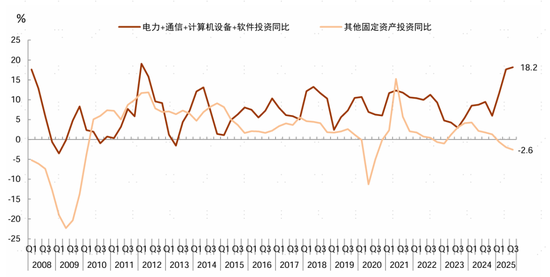
Economic Growth Forecast - The average GDP growth forecast for China in 2026 is 4.5%, with a range of 4.0% to 5.0%, which is an increase of 0.2 percentage points from the previous survey in September [2][8] - The average GDP growth forecast for 2025 is 4.9%, with nearly all economists believing that the government’s target of around 5% can be achieved [4][6] - The predicted year-on-year growth for Q4 2025 is 4.4%, which is a decrease of 0.4 percentage points from the previous quarter [4] Factors Influencing Economic Growth - The early export movements in 2025 due to U.S. tariff increases and consumer stimulus policies have positively impacted the economy [5] - Economists believe that the "better-than-expected performance" accumulated before September will absorb the final stage of slowdown [6] - The easing of trade tensions following the U.S.-China summit in October has been viewed as a positive factor for economic growth [8] Consumer Behavior and Domestic Demand - Consumer spending remains weak, with retail sales growth of only 1.3% year-on-year in November, marking six consecutive months of decline [8] - The real estate market continues to struggle, leading to a persistent downward trend in housing prices and a "negative wealth effect" that dampens consumer willingness to spend [9] Investment Trends - Fixed asset investment from January to November 2025 has decreased by 2.6% year-on-year, a larger decline than the 1.7% drop recorded from January to October [9] - There is a growing concern about the balance between reducing excess capacity and promoting innovation in key sectors like electric vehicles and solar panels [11] Currency Exchange Rate Predictions - The expected average exchange rate for the Chinese yuan against the U.S. dollar by the end of 2026 is 7.00 yuan, showing an appreciation from the previous forecast of 7.06 yuan [16] - The anticipated exchange rate for the end of 2027 is 6.98 yuan, with expectations of gradual appreciation due to uncertainties in the U.S. economy [16] Government Policy and Economic Strategy - The Chinese government is expected to announce its official economic growth target for 2026 at the National People's Congress in March, likely maintaining a target around 5% [12] - There is a cautious approach towards expanding fiscal deficits while still emphasizing the need to stimulate domestic demand [12][13] - Economists suggest that unconventional stimulus measures may be implemented if export growth slows significantly [14]

中国新增70位亿万富豪,为什么越来越像“工程师”?
Sou Hu Cai Jing· 2025-12-25 09:58
Group 1 - The core narrative of wealth creation in China has shifted from real estate to technology, with the emergence of new billionaires primarily from tech-related sectors rather than traditional real estate [2][3][4] - By 2025, China is expected to add 70 new billionaires, bringing the total to 470, with a significant portion of this growth driven by technology companies [3][8] - The wealth of billionaires in the global tech industry has increased by 23.8% to reach $3 trillion, with the tech sector leading all industries with a 198% growth since 2015 [7][8] Group 2 - The new generation of billionaires in China is predominantly self-made, with 98% having built their wealth through entrepreneurship rather than inheritance or real estate appreciation [8][12] - In contrast to the U.S., where many billionaires have inherited wealth, China's new billionaires are emerging from competitive market environments, indicating strong economic vitality [12][14] - The financial sector in China, while contributing to wealth creation, does not match the scale and historical depth of the U.S. financial market, suggesting room for growth in financial innovation and support for high-tech industries [16][19] Group 3 - Future wealth creation in China is expected to be driven by technology and innovation across various sectors, including AI, chips, and new manufacturing [17][18] - The transition from asset appreciation to technology and innovation as the primary sources of wealth indicates progress in China's economic development [19]

中金宏观:消费与AI投资推升美国经济增长
Xin Lang Cai Jing· 2025-12-24 11:21
Core Viewpoint - The US GDP for Q3 2025 increased at an annualized rate of 4.3%, exceeding market expectations, driven by strong consumer spending and AI-related equipment investment, while traditional sectors like construction and real estate continued to underperform, indicating a growing economic disparity [1][8]. Economic Growth - The actual GDP for Q3 2025 was 24.0 trillion USD, up from 23.8 trillion USD in Q2 2025, with a quarterly growth rate of 4.3%, surpassing the expected 3.3% and the previous quarter's 3.8% [1][8]. - Private consumption expenditure grew at an annualized rate of 3.5% in Q3, up from 2.5% in Q2, contributing 2.4 percentage points to GDP growth [1][8]. Consumer Spending - Strong consumer spending is likely linked to the wealth effect from rising asset prices, particularly in the stock market driven by AI themes, which has boosted consumer purchasing power [2][9]. - However, actual disposable income growth was zero in Q3, the lowest since Q2 2022, indicating that consumer spending is not primarily driven by wage income [2][9]. Investment Trends - Fixed asset investment growth slowed to an annualized rate of 1.0% in Q3, down from 4.0% in Q2, with equipment investment rising by 5.4%, particularly in computer equipment, which surged by approximately 44% [3][10]. - Traditional sectors such as construction and real estate saw declines of 6.3% and 5.1%, respectively, indicating that AI-related investments are the main driver of fixed asset investment growth [3][10]. Trade Balance - Exports exceeded expectations with an annualized growth of 8.8% in Q3, driven by a 64% increase in aircraft and engine exports, contributing nearly 30% to total export growth [4][11]. - Imports fell for two consecutive quarters, decreasing by 4.7% in Q3, suggesting a slowdown in import activity following earlier "import rushes" due to tariff factors [4][11]. Federal Reserve Outlook - The resilience of GDP data may suppress calls for short-term interest rate cuts, with expectations that the Federal Reserve will maintain rates in January 2026, with potential cuts not anticipated until March [4][11].
以“好房子”为抓手着力稳定房地产市场
2 1 Shi Ji Jing Ji Bao Dao· 2025-12-23 22:44
对于即将到来的2026年,也是"十五五"的开局之年,房地产行业将继续推动全面转向高质量发展。在这 方面,会议首先提出,要准确把握房地产市场供求关系的重大变化,看到我国新型城镇化仍在持续推 进,城市存量优化调整也有广阔空间,人民群众对"好房子"形成新期待,房地产仍有较大发展潜力。也 就是说,潜在的住房需求空间还很大,包括已进入城市的新市民、年轻人等无房户,未来还要进入城市 的农业转移人口,以及有房一族的改善型需求等。 比如,七普数据显示存量住房大约42%的房龄超过20年,且1~2房户型占比最大,改善型需求较为强 烈。不过,住房供求关系发生重大变化,即存量房规模大、基本居住需求得到满足以后,尽管潜在需求 空间大,但主要是对"好房子"的需求。 近日召开的全国住房城乡建设工作会议,在全面盘点2025年工作时指出,"好房子"建设起步成势。从内 容看,住建部年初提出的"好房子"三个抓手,即"立标准、强科技、抓项目"取得了积极成效。比如,新 的《住宅项目规范》正式实施,构建了"6633"(六不、六防、三省、三要)、"365"(三用、六优、五支撑) 等"好房子"的建造体系;指导行业领军企业发挥示范作用,以"揭榜挂帅"等推动5 ...