新零售

Search documents
增长超40%,不只是盒马赢麻了,零售业跑出了一个能赚钱的快公司
Sou Hu Cai Jing· 2026-01-01 20:27
Core Viewpoint - The letter from Hema's CEO emphasizes the importance of sustainable growth in the retail industry, highlighting that rapid expansion without profitability is not a viable long-term strategy. The focus is on achieving growth and profit through operational models and execution rather than relying on concepts or subsidies [4][15]. Group 1: Company Performance - Hema's overall revenue growth exceeded 40% year-on-year, with the company entering 40 new cities and opening over 200 new stores in 2025 [5][8]. - The company served over 100 million consumers through its two business models, Hema Fresh and Super Hema, indicating a significant market presence [11]. - Hema's GMV surpassed 750 billion yuan in the 2025 fiscal year, with expectations to exceed 1 trillion yuan by the end of the 2026 fiscal year [15]. Group 2: Strategic Focus - Hema is concentrating on two business models: Hema Fresh, which aims to replicate a successful model, and Super Hema, which focuses on optimizing its model [8]. - The company is committed to enhancing supply chain resilience, improving user experience, and increasing organizational efficiency as key strategic priorities [15]. - In 2025, 80% of new product development focused on core consumer needs, particularly in health foods and fresh solutions, reflecting a shift towards stable quality and repeat purchases [11]. Group 3: Industry Context - The retail industry is undergoing significant changes, with many companies struggling to maintain sustainable growth. Hema's approach of binding growth to profitability is seen as a potential new standard in the industry [4][15]. - The letter indicates that while there is still demand for offline retail, the sustainability of new store openings depends on maintaining stable customer repurchase rates and managing supply chain costs effectively [12]. - Hema's recent performance and strategic adjustments signal a broader industry trend towards efficiency and financial health, moving away from mere expansion [15].

这12只股票,1年就让1万本金滚到10亿收益!
Wind万得· 2025-12-31 07:05
Core Viewpoint - The A-share market may experience a 30% increase in the index by 2025, but individual accounts may remain flat due to concentrated investments in specific hot stocks each month rather than broad market gains [1]. Monthly Performance Summary - January: The robot sector surged, turning an initial investment of 10,000 into 18,400 due to the popularity of humanoid robots [3]. - February: The DeepSeek model led to a valuation increase in computing power, with returns reaching 46,200 from 10,000, marking a 150.97% increase [6]. - March: Chemical products saw price increases, with an investment growing to 158,200, reflecting a 135.41% rise [6]. - April: The new retail concept gained traction amid tariff disputes, with a notable stock rising by 117.1% [6]. - May: The military and pharmaceutical sectors alternated in popularity, with AI logistics becoming a new focus, resulting in a 157.28% increase [6]. - June: Military equipment stocks surged due to geopolitical tensions, with returns reaching 159.97% [6]. - July: The rumor of Zhiyuan's acquisition led to a dramatic rise in the humanoid robot sector, with a staggering 1,083.42% increase [6]. - August: AI chip companies reported improved earnings, and battery prices stabilized, leading to a 110.36% increase [6]. - September: The release of energy storage policies accelerated market growth, with returns of 153.52% [6]. - October: Regional policies boosted stocks, with a 99.44% increase [6]. - November: The focus shifted to defensive stocks amid market adjustments, with a 143.31% increase [6]. - December: The commercial aerospace sector concluded the year strongly, with a 104.83% increase [6]. Overall Investment Growth - An initial investment of 10,000 grew to 993 million over the year through strategic monthly trading [4].



祝贺!“瑞祥全球购”商标荣获“江苏省高知名商标证书”
Xin Lang Cai Jing· 2025-12-23 13:55
转自:扬子晚报 扬子晚报网12月23日讯(通讯员 李泓瑶 记者 万凌云 姜天圣)近日,总部位于镇江的瑞祥科技集团旗 下"瑞祥全球购",正式获授"江苏省高知名商标证书"。这一权威认证不仅标志着"瑞祥全球购"在品牌影 响力、市场认可度和消费者信赖度上迈上新台阶,更彰显出瑞祥科技集团在品牌建设与创新发展的持续 深耕。 "江苏省高知名商标"旨在表彰在本省具有较高知名度、美誉度与市场竞争力的商标。评定过程严格,综 合考量商标使用年限、市场占有率、行业地位、消费者认知及商标保护等多重维度。 "瑞祥全球购"获此殊荣,既是政府、行业与广大消费者对其品牌价值的高度认可,也是集团长期坚持品 质为本、创新服务、深度运营的成果体现。 瑞祥科技集团始终顺应新零售发展趋势,坚持以用户为中心,打造线上线下深度融合的智慧新零售平台 ——"瑞祥全球购",通过"多品类拓展、多渠道在线、多客群融合"的模式创新,实现了从线上到线下、 从通用到个性、从产品到生态的全链路升级,助力企业构建场景化、人性化、高效能的福利体系,为企 业持续发展注入强劲动力。 展望未来,瑞祥科技集团将以此荣誉为新的起点,不忘初心,持续推进技术创新与服务优化,赋能更多 企业构建 ...

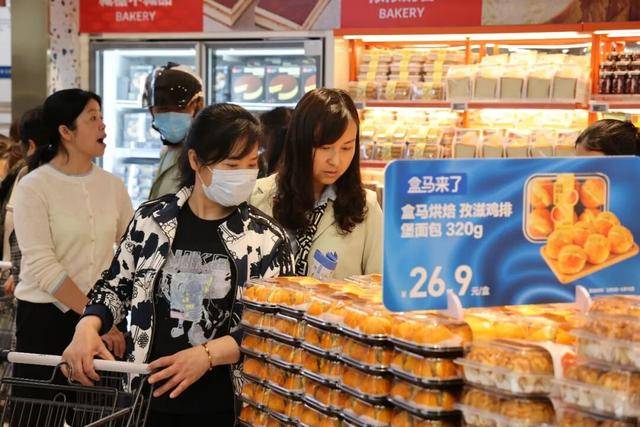
盒马换了新活法
3 6 Ke· 2025-12-23 09:55
Core Insights - Hema's journey over the past decade has been marked by both applause and skepticism, evolving from a "new retail" experiment to a critical survival and breakthrough challenge [2] - The company has faced significant strategic inconsistencies, leading to a lack of coherent direction in its business model [3][11] Business Model Exploration - Hema has explored over twelve different business formats since its inception, including high-end Hema Fresh, Hema X membership stores, community-focused Hema MINI, and discount-oriented Hema Outlet [5] - The "scattergun" approach to multiple business formats has consumed substantial resources and hindered the establishment of competitive barriers in any single format [5][12] Strategic Challenges - The closure of Hema X membership stores, which aimed to compete with Sam's Club and Costco, highlights the company's misalignment in understanding different business models [6][9] - Hema's operational costs have remained high due to its initial "new retail" model, which contrasts sharply with the cost-control focus of warehouse membership stores [8][9] Supply Chain Issues - Hema's attempt to use a unified supply chain for diverse business formats has led to product homogenization and pricing inconsistencies, undermining the perceived value of its membership offerings [12][13] - The company has struggled to develop a strong proprietary product line and supply chain barriers, unlike established competitors like Sam's Club [13] Strategic Shift - The new CEO, Yan Xiaolei, has initiated a strategic pivot towards focusing on Hema Fresh and Hema NB, targeting the lower-tier market [18][19] - This shift aims to leverage existing supply chain efficiencies and enhance market penetration in second to fourth-tier cities, with plans to open nearly 100 new stores by 2025 [18][19] Future Outlook - Hema's transition to the lower-tier market represents a critical recalibration of its strategy, emphasizing supply chain efficiency and ecological collaboration [21] - The success of this transformation will depend on Hema's ability to balance quality, reputation, and profitability while navigating a competitive landscape [21]

长城基金:积极布局跨年行情
Xin Lang Cai Jing· 2025-12-23 02:34
Group 1: A-Share Market Performance - The A-share market showed an overall upward trend amidst fluctuations, with strong performance in sectors such as retail, beauty care, and non-bank financials, driven by the "reward economy" concept [1][6] - New retail, spandex, and dairy industries performed well, while previously popular themes like nuclear fusion and Hainan Free Trade Zone experienced corrections, and technology growth faced adjustments [1][6] Group 2: Domestic Economic Indicators - The latest November economic data indicates signs of recovery in external demand and a rebound in price levels, although internal demand momentum remains insufficient [1][6] - The overall policy stance is focused on stability, with a need for targeted and structural policies to be implemented more quickly [1][6] - Key areas to monitor include indications of next year's policy direction from local two sessions, the potential increase in physical workload from policy financial tools, and the timing of potential policies related to real estate and service consumption subsidies [1][6] Group 3: U.S. Inflation Data - U.S. November inflation data significantly underperformed expectations, with CPI and core CPI year-on-year growth rates at 2.74% and 2.63%, respectively, both well below market forecasts and previous values [2][7] - The super core CPI growth rate for October-November dropped to its lowest since April 2021, influenced by factors such as government shutdowns leading to fiscal tightening and reduced demand [2][7] - The decline in inflation is attributed to multiple factors, including temporary disturbances from the Thanksgiving sales season and unsustainable negative growth in housing inflation [2][7] Group 4: Future Economic Outlook - Looking ahead, the U.S. economy may experience a phase of overheating in Q1 next year due to a combination of loose fiscal and monetary policies and seasonal factors [2][7] - The recent slowdown in economic activity may lead to an upward adjustment in market policy expectations, with a potential cross-year market rally beginning to take shape [2][7] - In the context of stable RMB exchange rates, expectations for the People's Bank of China to implement easing policies in 2026 are likely to rise [2][7] Group 5: Spring Market Trends - Historical patterns indicate that spring market rallies typically occur between December of the previous year and April of the following year, often characterized by a "large-cap platform, small-cap performance" style [3][8] - Given the recent deep market adjustments and expectations for increased policy support, the current period may represent an important window for positioning ahead of the upcoming spring market [3][8] - Investment strategies should focus on sectors aligned with industrial trends, particularly large-cap growth and value styles benefiting from insurance capital allocation [3][8]
A股开盘速递 | 创业板指数涨1.01% 商业航天板块涨幅居前
智通财经网· 2025-12-22 01:41
Group 1 - The A-share market opened higher, with the Shanghai Composite Index rising by 0.26% and the ChiNext Index increasing by 1.01%. Key sectors showing gains include commercial aerospace, optical modules, and Hainan free trade, while new retail, liquor, and weight loss drug sectors experienced declines [1] - Citic Securities highlights increasing factors for RMB appreciation, suggesting investors adapt asset allocation in a strengthening RMB environment. Key focus areas include sectors benefiting from short-term memory effects, profit margin changes, and policy shifts, such as aviation, gas, and paper industries [1] - Citic Securities identifies three lines of focus for investment: short-term memory-driven sectors, industries with high import dependency on raw materials and low export dependency, and sectors benefiting from potential monetary policy easing or relaxed foreign investment restrictions [1] Group 2 - Citic Jiantou reports that the A-share market is expected to resonate upward with global markets, influenced by external factors like US AI bubble concerns and Japan's interest rate hikes. Key investment themes include dividend value, cyclical layouts, and thematic hotspots [2] - Key sectors to focus on include non-ferrous metals (silver, copper, tin, tungsten), high-dividend Hong Kong stocks, non-bank financials, AI (liquid cooling, optical communication), new energy (energy storage, solid-state batteries), innovative pharmaceuticals, and banks [2] - Thematic hotspots include Hainan (duty-free), nuclear power, and winter tourism [2] Group 3 -招商证券 anticipates the onset of a cross-year market trend leading into spring, with signals indicating a classic "cross-year-spring" market is developing. Increased central budget investments are expected to accelerate, providing stable incremental capital to the market [3] - The focus is on cyclical sectors, particularly industrial metals, non-bank financials, and hotel aviation. Key areas of interest include domestic computing power, commercial aerospace, and controllable nuclear fusion [3]

大消费板块会成为行情新主线吗?|程大爷论市
Xin Lang Cai Jing· 2025-12-20 15:58
Core Viewpoint - The market is currently facing complex and variable news, leading to a dilemma for investors regarding whether to adopt a defensive or aggressive strategy for year-end positioning. The key to successful investment is maintaining a calm mindset and focusing on rational decision-making rather than succumbing to market anxiety [3][4]. Group 1: Market Analysis - The offshore RMB to USD exchange rate has risen to 7.03, approaching the critical level of 7, which may have significant implications for the market [3]. - The A-share large consumer sector has collectively surged, with new retail, food and beverage, and internet celebrity economy potentially becoming new market leaders [3]. - The insurance sector has seen a continuous valuation recovery since December, with China Ping An's stock price reaching a four-year high, indicating that the large financial sector still holds attractive valuation opportunities [3]. Group 2: Investment Strategy - Investors are advised to focus on five core areas for year-end positioning, emphasizing a strategy of "steady defense with moderate offense" [3]. - There is a need to rationally assess popular sectors, as many companies in high-flying areas like aerospace communication are still unprofitable, and the market may be overextending short-term value at the expense of long-term returns [4]. - Attention should be given to "undervalued sectors" that are showing signs of value recovery, as the market dynamics shift from extreme polarization to a more balanced approach [5][6]. Group 3: Trading Signals - Recent market trading volume has fluctuated between 1.5 trillion and 2 trillion, with 1.5 trillion seen as a potential low point for buying, while 1.7 trillion represents a balance point for market aggression and defense [6]. - The market's risk appetite is shifting, as recent stock surges have sparked speculative interest, which should be monitored as a risk preference indicator rather than a direct investment signal [7]. Group 4: Positioning and Asset Selection - The recommended strategy for year-end positioning is to maintain a 70% investment allocation, prioritizing defensive assets to mitigate risks associated with high volatility in the market [7]. - Focus should be on low-valuation large financial assets, well-adjusted technology stocks, and high-dividend low-volatility sectors, while being cautious of the diminishing influence of U.S. tech stock surges on A-share and Hong Kong stocks [7].

消费板块迎政策利好,商业百货掀涨停潮
Huan Qiu Wang· 2025-12-19 09:22
Group 1 - The core driver of the recent surge in the A-share consumer sector is the continuous release of supportive policy signals aimed at boosting domestic consumption [1][2] - The Ministry of Commerce and the Ministry of Finance have jointly issued a notice to implement "three new" pilot projects in 50 cities, emphasizing the importance of reform and innovation to stimulate market vitality [1][2] - The recent policy initiatives align with the central economic work conference's focus on expanding domestic demand and implementing actions to boost consumption [2] Group 2 - Analysts believe that the policy support for the consumer sector is likely to be sustained and may exceed expectations, with a focus on supply and demand policies by 2026 [4] - Specific sectors such as e-commerce integrated with AI, travel industry chains benefiting from policy stimulus, and new retail sectors advancing digital reforms are highlighted as promising investment opportunities [4][5] - The recent collective surge in the consumer sector is seen as a positive market response to the implementation of these policies, indicating a potential deep-seated change driven by policy guidance, technological advancement, and innovative business models [5]




迎密集政策利好!大消费板块上演涨停潮,能火多久?
Zheng Quan Shi Bao Wang· 2025-12-19 08:58
Core Viewpoint - The consumer sector in A-shares has experienced a significant rally, driven by favorable policies and market sentiment, with over 10 stocks hitting the daily limit up on December 19 [1][2]. Policy Support - The Ministry of Commerce and the Ministry of Finance have issued a notice to implement pilot programs for new consumption formats in 50 cities, aiming to boost consumption and enhance the supply of quality goods and services [2][3]. - The central economic work conference emphasized the importance of expanding domestic demand and implementing actions to stimulate consumption, including a plan for increasing residents' income and optimizing consumption policies [4][5]. Investment Opportunities - Analysts predict that the consumer sector will see significant policy support through 2026, with potential for unexpected growth in both supply and demand [5]. - The focus on new consumption areas is expected to shift towards sustainable business models and profitability, with trends in health, practicality, and emotional consumption emerging [5][6]. - Investment opportunities are identified in sectors such as e-commerce, instant retail, travel, and health-focused food products, which are likely to benefit from ongoing policy support and economic recovery [6].


刚刚!利好突袭,涨停潮!
天天基金网· 2025-12-19 08:24
Core Viewpoint - The consumer sector in A-shares has experienced a significant rally, driven by favorable policies and market sentiment, with over 10 stocks hitting the daily limit up on December 19 [2][3]. Policy Support - The Ministry of Commerce and the Ministry of Finance have issued a notice to initiate pilot programs for new consumption models in 50 cities, emphasizing the importance of these initiatives for boosting consumption and enhancing the supply of quality goods and services [3][4]. - The pilot programs aim to reform the consumption system and stimulate new business models, with a focus on integrating consumption promotion with improving people's livelihoods [3][4]. Economic Outlook - The Central Economic Work Conference has prioritized expanding domestic demand and implementing actions to boost consumption, including plans for increasing residents' income and optimizing policies to enhance consumer spending [6][7]. - Analysts expect that by 2026, there will be significant policy support for consumption, which could exceed expectations in both supply and demand [7]. Investment Opportunities - Investment firms are optimistic about the new consumption sectors, highlighting trends such as health-oriented products, practical consumption, and emotional spending, along with technological advancements and international market expansion [7][8]. - The food and beverage sector is identified as a core investment theme, particularly focusing on new product categories, with health food being a key area of interest for future investments [8].