
零售业

Search documents
绿茵盛宴燃动小城新春 湖北安陆“乡超”拉动消费超亿元
Chang Jiang Shang Bao· 2026-02-25 00:25
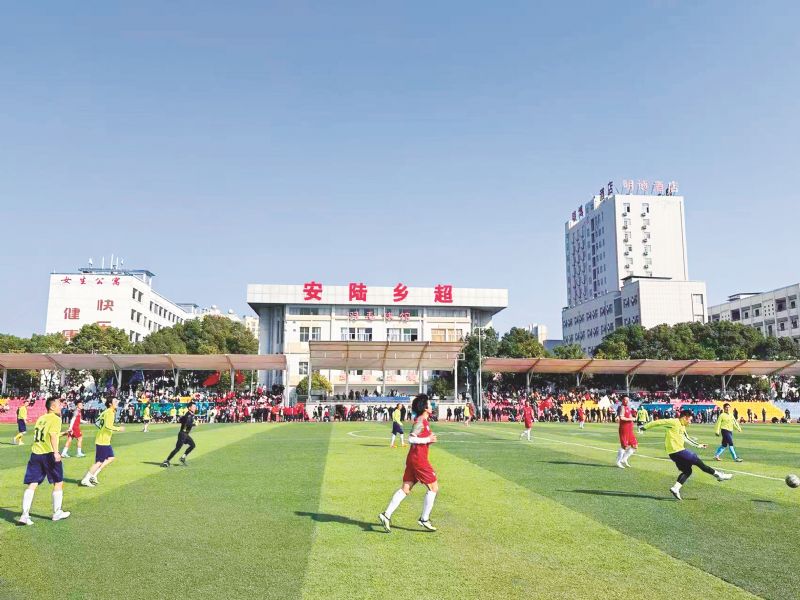
Core Viewpoint - The article highlights the growing popularity of the "乡超" (Rural Super League) in Anlu, showcasing its impact on local culture, community engagement, and economic development, particularly during the Spring Festival celebrations [4][5][6][8]. Group 1: Event Overview - The 2026 Anlu Rural Super League Spring Warm-up Match took place on February 20, attracting a large crowd and creating a festive atmosphere [5][6]. - The match featured local teams, with the Wang Yizhen team winning 3-2, emphasizing community participation and enthusiasm for football [6][7]. Group 2: Economic Impact - The event significantly boosted local consumption, generating over 50 million yuan in related spending on dining, accommodation, and shopping, with a total cultural and tourism consumption reaching 80 million yuan [7]. - The league has led to a 63.2% increase in the registration of local businesses, demonstrating a successful synergy between sports events and economic growth [7]. Group 3: Cultural Significance - Anlu has a rich football heritage, being recognized as a "Football Town" since 1985, and has a history of producing professional players [8]. - The "乡超" league serves as a platform to enhance Anlu's image, contributing to its recognition and reputation beyond traditional cultural markers [8].

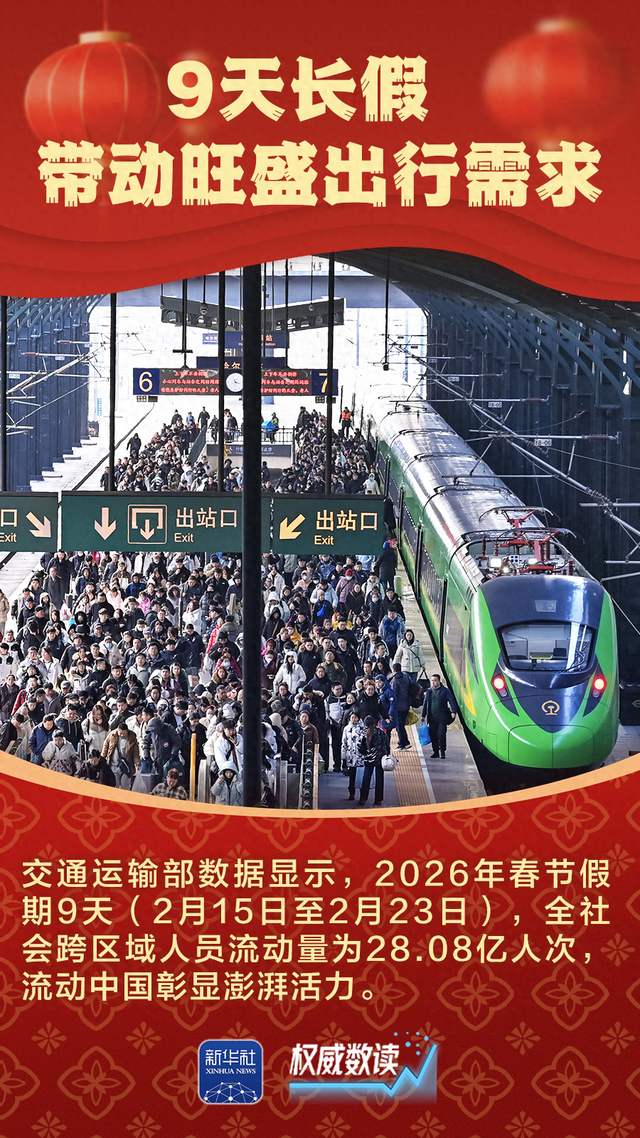
九组数据,感受万马奔腾的活力春节
Xin Lang Cai Jing· 2026-02-24 10:04
Group 1: Tourism and Travel - During the Spring Festival, Beijing received 19.84 million tourists, generating a total tourism expenditure of 33.14 billion yuan; Shanghai welcomed 21.67 million tourists with a total tourism consumption exceeding 25.6 billion yuan; Guangdong province received 86.59 million tourists, achieving a tourism income of 84.89 billion yuan [6] - Data from Meituan Travel indicates that during the Spring Festival, the booking volume for family tickets increased by 76% year-on-year, and the total consumption for group travel vacations rose by 79% [9] - According to Fliggy, the search popularity for traditional activities such as lantern festivals and temple fairs increased by 117% year-on-year, while travel searches including intangible cultural heritage experiences grew by over 60% [13] Group 2: Retail and Dining - Data from the Ministry of Commerce shows that during the first four days of the holiday, the average daily sales of key retail and dining enterprises nationwide increased by 8.6% compared to the same period in 2025 [17] - Douyin's data indicates that during the first seven days of the Spring Festival, the order volume for reunion dinner packages increased by over 210% year-on-year [17] Group 3: Consumer Trends - JD's data reveals that during the Spring Festival (from New Year's Eve to the fifth day), the user visits for robot products increased by over four times, and the search volume for "robots" grew by 25 times [20] - Sales of cosplay costumes, fun glasses, and plush toys increased by over two times year-on-year, while pet grooming services saw a growth of over four times [20] Group 4: Immigration and International Travel - During the Spring Festival holiday, border inspection agencies in China checked a total of 17.796 million inbound and outbound personnel, with an average of 1.977 million people per day, representing a year-on-year increase of 10.1% [21]
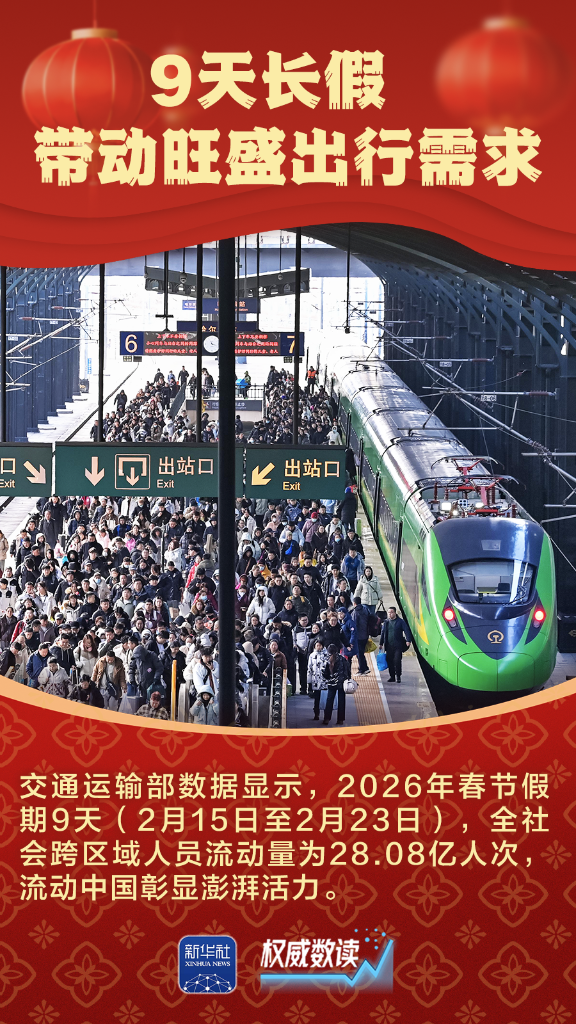
权威数读丨九组数据,感受万马奔腾的活力春节
Xin Hua Wang· 2026-02-24 09:36
Group 1: Consumer Trends - The Spring Festival holiday saw a significant increase in consumer activity, with a notable rise in travel and tourism, reflecting a vibrant market atmosphere [1][5] - Data from Meituan indicates a 76% year-on-year increase in family ticket bookings and a 79% rise in group travel spending during the holiday [7] - The popularity of traditional cultural activities surged, with searches for events like lantern festivals and temple fairs increasing by 117% compared to the previous year [8] Group 2: Travel and Transportation - The Ministry of Transport reported that during the 9-day Spring Festival holiday, there were 2.808 billion inter-regional trips made, showcasing robust mobility across the country [3] - National railways transported a total of 65.687 million tons of goods, while postal and express services recorded approximately 806 million packages collected and 630 million delivered [4] - The border inspection authorities processed 17.796 million inbound and outbound travelers, with a daily average of 1.977 million, marking a 10.1% increase from the previous year [14] Group 3: Retail and Dining - Major retail and dining enterprises reported an 8.6% increase in average daily sales during the first four days of the holiday compared to the same period in 2025 [9] - Douyin's data showed that orders for reunion dinner packages surged by over 210% during the first seven days of the holiday [9] Group 4: Technology and Innovation - JD's data revealed that user visits for robot products increased by over four times during the holiday, with a 25-fold increase in searches for "robots" [13] - Sales of cosplay costumes and novelty glasses, as well as pet grooming services, also saw significant growth, each increasing by over two times [13]
赚麻了!中国游客赴韩引爆“春节经济”
Di Yi Cai Jing· 2026-02-24 08:03
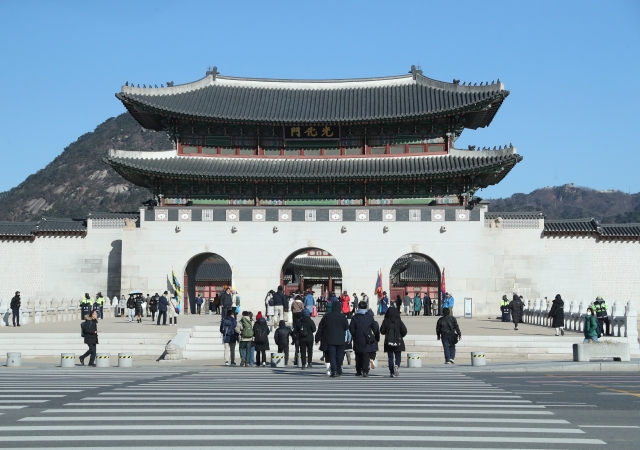
Group 1 - During the longest Spring Festival holiday, a significant influx of Chinese tourists to South Korea has led to record-high sales in duty-free shops, convenience stores, and beauty retail sectors [1][3] - The South Korean Ministry of Culture, Sports and Tourism predicted a 44% year-on-year increase in Chinese visitors during the holiday period, estimating around 190,000 visitors, with some market analysts projecting numbers could rise to between 230,000 and 250,000 [1][3] - The Bank of Korea noted that for every additional 1 million Chinese tourists, South Korea's economic growth could increase by 0.08 percentage points [1] Group 2 - Sales data from Lotte Duty Free indicated a 120% year-on-year increase in foreign customer sales during the Spring Festival promotional period, with sales from Chinese customers surging by 260%, marking the highest sales record for the holiday [3][4] - Convenience store GS25 reported a 99.5% year-on-year increase in sales to Chinese customers during the holiday, while Olive Young, a major beauty retail chain, also experienced significant growth in foreign customer sales [3][4] - The overall consumption by Chinese tourists during this period is estimated to reach approximately $330 million [4] Group 3 - The surge in Chinese tourists is attributed to new visa policies and increased flight availability, with a phased visa waiver policy for group tourists set to begin in September 2025 [5] - The number of flights between China and South Korea is expected to increase significantly, with passenger transport projected to reach over 10.86 million in 2025, a 22% increase from 2024 [5] - As of February 2026, flight capacity between China and South Korea has recovered to 97.2% of pre-pandemic levels, with a notable rise in cruise travel from China to South Korea [5] Group 4 - The trend of Chinese tourists has shifted from large group tours to more independent travel, with a wider variety of destinations being chosen beyond traditional spots like Jeju Island and Seoul [6] - The World Travel and Tourism Council (WTTC) forecasts that the tourism sector will contribute approximately 96.2 trillion won to South Korea's economy this year, accounting for 4.3% of the total economic output [6] - The tourism industry is currently assessing whether the "Spring Festival bonus" from Chinese tourists will continue throughout the year, with predictions suggesting that the number of Chinese visitors to South Korea could reach 6.15 million this year [6]
关税政策大调整:美国终止 IEEPA 关税,全球贸易再迎变数
Sou Hu Cai Jing· 2026-02-24 07:45
Core Viewpoint - The U.S. Customs and Border Protection (CBP) announced the termination of additional tariffs imposed under the International Emergency Economic Powers Act (IEEPA), marking a significant shift in U.S. trade policy following a Supreme Court ruling that deemed these tariffs legally unfounded [1][2]. Group 1: Tariff Termination Details - The termination affects seven presidential executive orders, including tariffs aimed at illegal drug imports, synthetic opioids from China, punitive tariffs on Venezuelan oil, and tariffs designed to address the U.S. trade deficit [2]. - The CBP will update its Automated Commercial Environment (ACE) system, rendering all HTSUS numbers applicable to IEEPA tariffs ineffective from February 24, 2026 [2]. - The adjustment only pertains to IEEPA measures and does not alter other core U.S. trade protection policies, such as Section 232 and Section 301 tariffs [2]. Group 2: New Tariff Measures - Following the Supreme Court ruling, the Trump administration quickly introduced a temporary 10% import tariff on all goods from all countries, which was later raised to 15% [3]. - This new tariff will apply to all trade partners, including those with existing bilateral agreements, disrupting previous trade negotiation frameworks [3]. - The administration aims to offset the revenue loss from the IEEPA tariff termination and maintain overall tariff income for 2026 [3]. Group 3: Impact on U.S. Economy and Trade - The termination of IEEPA tariffs is expected to alleviate cost pressures on U.S. businesses, potentially enhancing profit margins and leading to a temporary rise in stock market indices [4]. - However, the new 15% global tariff raises concerns for industries reliant on global supply chains, leading to increased costs [4]. - The issue of refunding over $130 billion in previously paid IEEPA tariffs has emerged, with many companies seeking reimbursement, which could lead to prolonged legal disputes [4]. Group 4: Implications for U.S.-China Trade - The termination of certain tariffs signals a potential easing of trade tensions between the U.S. and China, allowing for increased trade volumes in specific sectors [5]. - Despite this, the Section 301 tariffs on Chinese goods remain unchanged, limiting the scope for improvement in U.S.-China trade relations [5]. Group 5: Global Trade System Effects - The termination of IEEPA tariffs may lower trade barriers in some sectors, benefiting global trade flows, particularly in energy and chemicals [6]. - However, the introduction of new tariffs creates uncertainty, prompting other nations to consider retaliatory measures, which could disrupt global trade recovery [6]. - The adjustment reflects broader domestic political dynamics and the ongoing struggle between protectionism and globalization [6]. Group 6: Long-term Trade Outlook - The recent changes in U.S. tariff policy introduce both opportunities and challenges for global trade, necessitating enhanced bilateral and multilateral cooperation to mitigate the impacts of unilateral trade actions [7]. - The emphasis on economic globalization and adherence to global trade rules is crucial for sustainable trade development [7].
外国游客的访华行程正被重新定义—到中国,“中国购”
Ren Min Ri Bao· 2026-02-24 01:09
Core Insights - The article highlights the significant growth in foreign tourists engaging in shopping in China, with a projected increase of 305% in the number of tourists utilizing departure tax refunds by 2025, alongside a 95.9% increase in sales of tax-refunded goods and a 95.8% increase in tax refunds [1] Group 1: Shopping Trends - Foreign tourists are increasingly interested in technology products, with items like smart wristbands and Bluetooth earphones becoming popular choices [2] - The Huaqiangbei area in Shenzhen is recognized as a prime shopping destination for foreign tourists, showcasing a wide variety of tech products at competitive prices [3] - Yiwu, known as the "world supermarket," offers a one-stop shopping experience for foreign visitors, featuring a diverse range of products from DIY toys to smart home devices [4] Group 2: Cultural and Experiential Purchases - Traditional souvenirs are being modernized, with unique items reflecting Chinese culture gaining popularity among foreign tourists [5][6] - Tourists are increasingly seeking immersive cultural experiences, such as traditional photography and theatrical performances, enhancing their understanding of Chinese culture [7] Group 3: Tax Refund and Shopping Services - By November 2025, there will be 12,252 departure tax refund stores across China, with over 7,000 offering "immediate refund" services, indicating a robust support system for foreign shoppers [8] - The introduction of convenient services, such as multi-language guides and streamlined refund processes, has significantly improved the shopping experience for foreign tourists [9][10]
120个消费新场景实现销售额超46亿元 新潮涌动“马力十足”
Si Chuan Ri Bao· 2026-02-24 00:09
Core Viewpoint - The news highlights the vibrant consumer activity in Sichuan during the Spring Festival, driven by innovative consumption scenarios and supportive government policies, resulting in significant sales growth across various sectors. Group 1: Consumer Sales Performance - The monitored 411 retail enterprises in Sichuan achieved sales of 2.78 billion yuan, marking a year-on-year increase of 10.9% [4] - A total of 120 new consumption scenarios attracted over 56 million visitors, generating sales exceeding 4.6 billion yuan [4] - The province saw 1.181 million home appliances replaced under the old-for-new policy, with subsidies amounting to 660 million yuan, driving consumption of 4.53 billion yuan, reflecting year-on-year growth of 20%, 3%, and 33% respectively [7] Group 2: Consumer Engagement and Activities - Various regions in Sichuan launched special Spring Festival activities, enhancing consumer engagement through innovative scenarios [5] - Chengdu introduced themed events such as "Stories of China" and "Temple Fair + Lantern Fair," providing immersive shopping experiences [6] - Over 170 promotional activities were organized specifically for returning residents, with total discounts exceeding 100 million yuan [8] Group 3: Technology and New Trends - Technology-driven local specialties, including AI products, gained popularity during the Spring Festival, showcasing a unique aspect of consumer trends [9] - Chengdu's Tianfu International Airport welcomed over 60 international flights, ranking it among the top cities for inbound tourism in China [10] - The influx of foreign tourists contributed to a significant increase in consumption, with outbound visitors spending 31.088 billion yuan, a year-on-year rise of 14.05% [11]
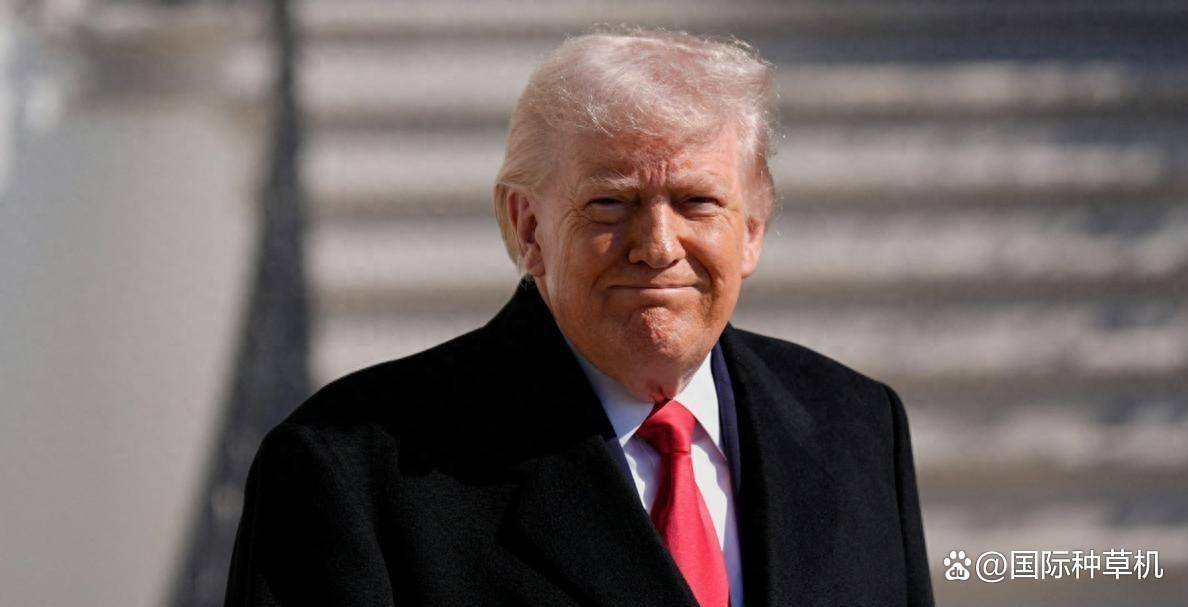
美国最高法院一锤定音,特朗普对等关税被判违法!1750亿美元退款风暴来袭,全球贸易一夜变天
Sou Hu Cai Jing· 2026-02-23 23:20
Core Viewpoint - The U.S. Supreme Court ruled that the president does not have the authority to impose tariffs without explicit congressional approval, leading to the termination of tariffs imposed under the International Emergency Economic Powers Act [2][5]. Group 1: Legal and Regulatory Changes - The Supreme Court's decision emphasized that the Constitution grants tax authority to Congress, and the law used by the Trump administration did not mention tariffs or taxes [2]. - The ruling invalidated tariffs that accounted for approximately 75% of the Trump administration's tariff revenue since 2025, including the "reciprocal tariffs" and "fentanyl tariffs" [2]. - Following the ruling, Trump announced a new executive order to impose a 10% import tariff on all countries, which was later increased to 15% [3][5]. Group 2: Financial Implications - The total amount collected from the invalidated tariffs was approximately $133 billion, with estimates suggesting refunds could reach up to $175 billion, exceeding the total budget of the U.S. Departments of Transportation and Justice for the fiscal year 2025 [5]. - The refund process is expected to be complex, involving over 300,000 importers and requiring verification of customs payment receipts [6]. Group 3: Impact on Trade Relations - The new 15% global tariff is based on a specific trade law with a time limit, contrasting with the previous emergency-based tariffs, and applies uniformly to all trade partners [6]. - This uniform approach may complicate existing agreements with allies like the UK, Japan, and the EU, which were based on the now-invalidated tariff structure [7]. - China's situation has changed, as the previous tariffs targeting Chinese goods have been lifted, but the overall effective tariff rate on Chinese imports could still range from 30% to 40% when considering existing tariffs [9]. Group 4: Political and Strategic Considerations - The Supreme Court's ruling represents a significant check on presidential power, indicating that trade policy will now require more legislative involvement [10]. - The next 150 days will be critical as the Trump administration seeks to extend the new tariffs and navigate the complexities of the legal and political landscape surrounding trade policy [10].
中兴商业:坚持品牌引领业态创新 强化优质消费服务供给
Zhong Guo Zheng Quan Bao· 2026-02-23 20:32
Core Viewpoint - The company is focusing on brand leadership and innovative business models to enhance its competitive edge and profitability in the retail sector, aiming to establish a new benchmark in retail development through a comprehensive marketing ecosystem and improved service strategies [1] Group 1: Brand and Business Model Innovation - The company is actively transforming its retail spaces to meet evolving consumer demands, with a recent renovation covering nearly 20,000 square meters and involving over 200 brands across key categories such as outdoor sports and high-end cosmetics [2][3] - The company is leveraging the trend of the "ice and snow economy" by establishing a high-end outdoor brand matrix, enhancing its brand structure and competitive advantage in the Northeast region [3] Group 2: Marketing Strategies - The company is implementing a multi-dimensional marketing strategy to attract diverse consumer groups, focusing on creating engaging experiences that drive foot traffic and sales [4][5] - A series of interactive events and activities have been organized to enhance brand visibility and consumer engagement, effectively turning the shopping experience into a social event [5] Group 3: Online and Offline Integration - The company has launched the "ZTE Building+" mini-program and initiated e-commerce live streaming, significantly increasing its online presence and customer engagement [6] - The integration of online and offline marketing efforts has resulted in a notable increase in customer traffic and engagement, with a 25% increase in in-store visits during promotional events [6] Group 4: Service Enhancement - The company is prioritizing service as a core competitive advantage, focusing on creating a warm and innovative consumer experience to build a unique brand barrier [7][8] - A comprehensive service system is being developed, including recognition programs for service excellence, to enhance the overall service quality and customer satisfaction [7][8]

中兴商业:坚持品牌引领业态创新强化优质消费服务供给
Zhong Guo Zheng Quan Bao· 2026-02-23 20:18
Core Viewpoint - The company is focusing on brand leadership and innovative business models to enhance its competitive edge and profitability in the retail sector, aiming to establish a new benchmark in retail development through a multi-dimensional marketing ecosystem and improved service strategies [1][2]. Group 1: Brand and Business Model Innovation - The company is committed to brand upgrades and retail innovation, exemplified by a recent market event that combined traditional culture with modern commerce, attracting significant public interest [1]. - A major renovation covering nearly 20,000 square meters has been implemented, involving adjustments to over 200 brands across key categories such as outdoor sports and high-end cosmetics, enhancing brand visibility and shopping efficiency [1][2]. - The company is strategically positioning itself to meet diverse consumer needs, ensuring both mass-market and niche preferences are addressed, thereby strengthening its brand structure and competitive advantage in the Northeast region [2]. Group 2: Marketing and Consumer Engagement - The company is leveraging a multi-faceted marketing approach to attract a wide range of consumers, focusing on creating engaging experiences that encourage social sharing and community interaction [3][4]. - Various unique events and activities have been organized, such as the "36th Zhongxing Fashion Festival" and other cultural exhibitions, which not only enhance the shopping experience but also promote the brand through social media [3]. - The company aims to transform consumer behavior from merely shopping to enjoying the experience, utilizing strategies like celebrity collaborations and cultural scene creation to drive foot traffic [3]. Group 3: Service Strategy and Customer Experience - The company emphasizes "service first" as a core competitive strategy, aiming to create a warm and engaging shopping environment that enhances customer loyalty and satisfaction [5][6]. - A comprehensive service system is being developed, focusing on training staff to become knowledgeable service consultants who can effectively meet customer needs [6]. - Innovative membership services and targeted marketing strategies are being implemented to enhance customer engagement and increase membership numbers and spending [6].