
农产品贸易

Search documents
阿根廷调整关税政策 油脂油料市场格局生变?
Qi Huo Ri Bao· 2025-09-24 00:20
Core Viewpoint - The recent adjustment of Argentina's export tax policy has led to a significant decline in domestic soybean product prices, with expectations of increased imports from Argentina affecting the market dynamics in China [1][2]. Group 1: Argentina's Export Tax Policy - On September 22, the Argentine government announced the cancellation of export tariffs on soybeans, grains, and their products until October 31, reducing soybean export tariffs from 26% to zero and those on soybean oil and meal from 24.5% to zero [1][2]. - The policy has a cap of $7 billion on the total tax exemption, which will be suspended once this limit is reached [1]. Group 2: Impact on Chinese Market - Analysts predict that the zero tariff on Argentine soybeans could lower the CNF price for November shipments to $2.00 per bushel, making it approximately $0.70 per bushel cheaper than Brazilian soybeans, translating to a cost reduction of about 200 yuan per ton [1][2]. - Following the announcement, Chinese oil mills have reportedly begun purchasing 10 to 15 shipments of Argentine soybeans [1]. Group 3: Changes in Import Dynamics - Historically, China has imported limited quantities of Argentine oil and meal, with almost no soybean meal imports and only a few thousand tons of soybean oil [2]. - The price advantage of Argentine soybeans may lead to a shift in China's import patterns, increasing competition in the South American oil and meal market and posing challenges to U.S. soybean production [2]. Group 4: Domestic Supply and Demand - As of mid-September, Argentina had exported 8.76 million tons of soybeans in 2025, significantly higher than the 4.5 million tons exported during the same period last year, with an expected additional export of 2 to 3 million tons by year-end [2]. - The domestic soybean market is experiencing a supply gap, with the expectation that increased imports of Argentine soybeans could fill this gap, particularly in the first quarter of 2026 [2][3]. Group 5: Market Outlook - The domestic soybean meal market is expected to remain under pressure due to high inventory levels and the anticipated increase in imports of Argentine soybeans and meal [4]. - Analysts suggest that the demand for soybean meal remains strong due to high livestock and poultry inventory levels, but the overall market may experience downward pressure on prices due to increased supply from domestic production and imports [4].
中美博弈大结局?美联储今年首次降息,订单清零,特朗普着急访华
Sou Hu Cai Jing· 2025-09-23 15:10
Group 1 - The U.S. Federal Reserve announced a 25 basis point interest rate cut on September 17, marking its first rate cut since 2025, which caused significant market reactions globally [1] - The ongoing U.S.-China trade tensions have escalated since February 2025, with multiple rounds of tariff increases and negotiations, leading to severe impacts on global stock markets [3] - Boeing has faced significant challenges as the Civil Aviation Administration of China has halted the acceptance of Boeing aircraft, resulting in a projected loss of $612 million in Q2 2025, despite a reduction from a $1.439 billion loss in the same period last year [5] Group 2 - The U.S. agricultural sector has been directly impacted, with China significantly reducing its purchases of U.S. soybeans and pork, including the cancellation of 12,000 tons of pork orders in just one week in April [5] - In contrast, countries like Brazil and Australia have rapidly increased their agricultural exports to China, filling the gap left by U.S. exports [7] - The Federal Reserve's interest rate cut signals economic pressure within the U.S., with over 90% of tariff costs being passed on to American importers and consumers, prompting major financial institutions to raise recession probability forecasts [7] Group 3 - For China, the Fed's rate cut is seen as a positive development, potentially easing economic pressures and providing more room for monetary policy adjustments [9] - The potential visit of former President Trump to China in late October could be a pivotal moment in U.S.-China relations, with discussions reportedly involving a delegation of CEOs [9][11] - China has emphasized the need for mutual cooperation and respect in negotiations, indicating that unilateral pressure tactics are ineffective and that a sustainable solution requires a balanced approach [11][13]



四川米象商贸有限公司成立 注册资本120万人民币
Sou Hu Cai Jing· 2025-09-23 08:19
Core Viewpoint - Sichuan Mixiang Trading Co., Ltd. has been established with a registered capital of 1.2 million RMB, indicating a new player in the agricultural products trading sector [1] Company Summary - The legal representative of Sichuan Mixiang Trading Co., Ltd. is Gao Xing [1] - The company has a registered capital of 1.2 million RMB [1] - The business scope includes wholesale and retail of edible agricultural products, initial processing of agricultural products, and sales of non-edible agricultural products [1] - The company is also involved in internet sales, food sales (only pre-packaged food), food additives sales, and food import and export [1] Industry Summary - The company operates in various sectors including agricultural product trading, logistics services, and conference and exhibition services [1] - It provides labor services (excluding labor dispatch) and warehouse equipment leasing services [1] - The company is authorized to conduct road cargo transportation for general quality goods weighing 4.5 tons or less, excluding network freight and hazardous goods [1]
阿根廷农产品出口暂时免税政策冲击下全球油粕市场普跌
Xin Hua Cai Jing· 2025-09-23 07:01
Core Viewpoint - Argentina's temporary suspension of export tariffs on agricultural products is expected to enhance the competitiveness of its soybeans, soybean oil, and soybean meal, putting additional pressure on the U.S. soybean market, which is already facing challenges due to reduced demand from China [2][4]. Group 1: Impact on Global Soybean Market - Argentina announced a temporary suspension of export tariffs on soybeans, soybean oil, soybean meal, corn, and wheat until October 31, with an estimated export value of $7 billion [2]. - The suspension will reduce export tariffs on Argentine soybeans from 26% to 0%, and on soybean oil from 24.5% to 0%, significantly increasing their competitiveness [2]. - The U.S. soybean market is under pressure as it faces heightened competition from Argentina, especially given the current lack of Chinese purchases [2][4]. Group 2: Domestic Market Reactions - The decline in U.S. soybean prices has led to a decrease in domestic import costs for soybeans, with the theoretical cost of imported U.S. soybeans dropping to 4,437 yuan, a decrease of 52 yuan [3]. - Domestic soybean meal prices have also been affected, with significant drops observed across various oilseed products, including a more than 4% decline in No. 2 yellow soybeans [1][3]. - Despite the negative impact, there are some supportive factors in the domestic market, such as increased trading volumes and price rebounds in soybean meal due to pre-holiday stockpiling [5][6]. Group 3: Future Market Outlook - The U.S. soybean crop is facing challenges, including lower quality ratings and slow harvesting progress, which may provide some support to prices [4]. - Analysts suggest that while the market is currently under pressure, the potential for a rebound exists due to seasonal factors and the possibility of reduced U.S. soybean yields [6]. - The overall supply-demand dynamics in the fourth quarter are expected to tighten, which could enhance cost support for soybean meal [6].

顽固要与中国对抗,要对华加征关税的加拿大,终于傻眼了
Sou Hu Cai Jing· 2025-09-23 05:24
Core Viewpoint - Canada's hardline stance towards China has backfired, leading to significant trade losses and a shift in agricultural supply chains, particularly in canola exports, which have been redirected to Australia [1][5]. Group 1: Trade Impacts - China has replaced Canada as a primary source of canola imports, with COFCO Group purchasing 540,000 tons from Australia, equivalent to one-third of Canada's previous export volume to China [1]. - The agricultural sector in Canada is facing a crisis, with canola stocks piling up due to reduced demand from China, highlighting the consequences of Canada's trade policies [1][2]. Group 2: Domestic Political Dynamics - The steel industry in Canada has seen a cost increase of 2 billion CAD due to tariffs on Chinese steel and aluminum, driven by strong lobbying from labor unions [2]. - Regional interest groups in provinces like Saskatchewan and Alberta, which produce 80% of Canada's canola, have influenced policies that ultimately hindered national economic interests [2]. Group 3: Broader Consequences - The deterioration of Canada-China relations has led to a 18% decline in Chinese student enrollment in Canada for 2023, indicating a reduction in educational cooperation [5]. - Research collaboration between Canada and China has decreased by 25%, further isolating Canada in international academic and scientific communities [5]. - Canada has been marginalized in international platforms like the China International Import Expo, contrasting sharply with countries like Australia that have benefited from pragmatic cooperation with China [7]. Group 4: Recommendations for Canada - Canada needs to develop an independent China policy that prioritizes its national interests rather than blindly following U.S. directives [9]. - Establishing a more balanced decision-making process that considers the interests of various industries and the public is essential for future policy formulation [9]. - Rebuilding mutual trust with China and restoring practical cooperation in agriculture, technology, and education is crucial for Canada to navigate out of the current trade impasse [9].

侨见海南自贸港:“回乡创业正当时”
Ren Min Ri Bao Hai Wai Ban· 2025-09-22 03:18
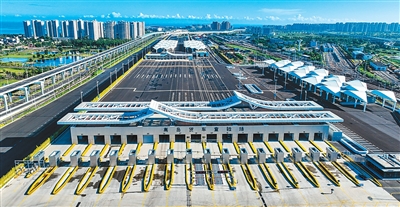
Core Insights - The Hainan Free Trade Port is set to officially launch its full island closure operation on December 18, 2025, presenting significant opportunities for overseas Chinese to return and start businesses [2][4] - The 2025 Overseas Chinese Youth Development Conference held in Haikou attracted nearly 400 representatives from over 30 countries, highlighting the growing interest among overseas Chinese youth in entrepreneurship in Hainan [2][3] Group 1: Investment Opportunities - Hainan's zero-tariff and tax exemption policies are significantly reducing operational costs for businesses, as exemplified by the establishment of a regional headquarters by a Malaysian entrepreneur to target Southeast Asian and European markets [2][3] - The "nanny-style" entrepreneurial services provided by Hainan, including one-stop services for company registration and policy consultation, are attracting more overseas Chinese to invest in the region [3][4] - The Hainan Free Trade Port's policies are expected to enhance international competitiveness for businesses, as indicated by plans from Australian and Thai entrepreneurs to expand their investments in Hainan [3][4] Group 2: Supportive Policies - Hainan is actively promoting various support policies for overseas Chinese and returning students, including tax incentives and rental discounts, to facilitate innovation and entrepreneurship [4] - The establishment of the Hainan Free Trade Port Overseas Chinese Innovation and Entrepreneurship Park has seen over 3,300 companies from various countries set up operations, indicating a robust entrepreneurial ecosystem [4]

共享机遇,共促未来,构建更为紧密的中国—东盟命运共同体
Ren Min Ri Bao· 2025-09-21 22:41
Group 1: Event Overview - The 22nd China-ASEAN Expo and China-ASEAN Business and Investment Summit concluded in Nanning, Guangxi, attracting 3,260 enterprises from 60 countries and regions, with a total attendance of 226,000, setting a new historical record [1] - Over 700 outcomes were achieved during the expo, including more than 500 signed economic and trade projects and over 270 results across multiple fields and formats [1] Group 2: Technological Innovations - The expo featured a dedicated AI pavilion covering 10,000 square meters, showcasing around 1,200 exhibits, with a trade turnover exceeding 140 million RMB [2] - Companies presented advanced AI applications, including real-time translation smart glasses and heavy-lift drones, indicating a strong interest in AI technology among attendees [2] Group 3: Cross-Border Cooperation - CuberAI showcased AI-driven cross-border logistics solutions, emphasizing the potential for AI applications in enhancing trade efficiency between ASEAN countries and China [3] - A total of 44 "AI+" projects were signed at the expo, spanning manufacturing, services, and agriculture sectors, highlighting the growing integration of AI in various industries [3] Group 4: Trade Agreements and Economic Integration - The China-ASEAN Free Trade Area 3.0 negotiations have been completed, aiming to elevate economic cooperation to new heights and solidify the foundation for regional economic integration [6] - The expo served as a platform for mutual economic needs, with significant participation from Chinese enterprises in infrastructure projects across ASEAN countries, totaling over 69 billion USD in contracts signed in the last five years [6] Group 5: Cultural Exchange and Future Cooperation - The expo featured cultural activities that fostered people-to-people connections, which are essential for strengthening economic and investment cooperation [7] - The focus on youth cooperation was highlighted, with initiatives aimed at investing in long-term relationships between ASEAN and China [8]

中国再向澳大利亚进口油菜籽,加拿大还不谈判,不会给时间了
Sou Hu Cai Jing· 2025-09-21 06:13
Core Viewpoint - The trade dispute between China and Canada over canola seeds is escalating, with China imposing a 73% deposit on imports, leading to a complete halt in canola seed imports from Canada, which typically exceeds 4 million tons annually [1][3]. Group 1: Trade Dynamics - China has begun to source canola seeds from Australia, ordering up to 9 ships, each carrying 60,000 tons, to compensate for the supply gap created by the halt in imports from Canada. This order represents 8% of China's total canola seed imports last year [3]. - The Canadian government is facing pressure from its domestic canola industry to negotiate with China, as the halt in exports has led to significant anxiety among producers [1][4]. Group 2: Political Context - Canadian Prime Minister's recent statements indicate a willingness to negotiate with China, but analysts believe that actual cancellation of tariffs is unlikely due to strong anti-China sentiments within Canadian politics [4]. - The Canadian government has been criticized for its approach to the trade dispute, with accusations of arrogance and shortsightedness, as it failed to recognize the seriousness of the situation until China sought alternative suppliers [5]. Group 3: Market Impact - The halt in canola seed exports has resulted in a loss of access to a $4.9 billion market for Canada, with an average loss of several thousand dollars per farmer in the western regions [5]. - Australia's improved relations with China and its logistical advantages position it as a strong alternative supplier, allowing China to diversify its sources and reduce reliance on a single supplier [5].

农产品:公司以培育优质单品为突破口,探索“单品贸易、市场与市场联营、商户与市场联营”发展路径
Zheng Quan Ri Bao Wang· 2025-09-19 09:41
Core Viewpoint - The company aims to enhance its market position by focusing on the cultivation of high-quality single products and exploring development paths such as "single product trade, market-to-market cooperation, and merchant-to-market cooperation" [1] Group 1 - The company emphasizes the importance of a unified national strategy to strengthen inter-market collaboration and integration within the supply chain [1] - The company is facilitating the sharing of high-quality vegetable and fruit resources across multiple markets [1] - The company is initiating self-operated loading and unloading transfer services and launching dedicated logistics transportation lines [1]
美关税压力下,东盟贸易商看好与中国合作
Huan Qiu Shi Bao· 2025-09-18 22:40
Group 1 - The 22nd China-ASEAN Expo is facilitating trade and cooperation between ASEAN countries and China amidst global challenges like unilateralism and protectionism [1][2] - Indonesian palm oil representatives express a desire to expand trade with China, highlighting China's market potential and stable supply chains as key advantages [1] - Other ASEAN representatives, including those from Thailand and Malaysia, emphasize the need for stable supply chains and the importance of diversifying market connections, particularly with China [2] Group 2 - The negotiations for the China-ASEAN Free Trade Area 3.0 have been completed, covering nine key areas including digital economy and supply chain connectivity [3] - Experts note that the 3.0 version of the free trade area will enhance supply chain resilience and broaden cooperation opportunities between Indonesia and China [3] - The 3.0 version is expected to boost trade and investment in the region, particularly in digital and low-carbon economies, while maintaining supply chain resilience [3]