
基础化工

Search documents
未知机构:开源化工日度数据跟踪反内卷产品跟踪各位领导这是1月20-20260121
未知机构· 2026-01-21 02:10
Summary of Key Points from Conference Call Records Industry Overview - The records primarily focus on the chemical industry, specifically tracking price changes and stock performance of chemical companies as of January 20. Key Financial Metrics - The Shanghai Composite Index reported at 4113.65, with a day-on-day change of -0.01% - Basic chemicals and petrochemicals reported at 7785.68 and 4841.91, with day-on-day changes of +0.35% and +2.58% respectively [1][1][1] Price Changes in Chemicals - Top five price increases in chemicals: - R125: +3.09% - R22: +2.94% - Niacinamide: +2.94% - Acrylic Acid: +2.7% - Propyl Acetate: +2.22% [1][1][1] - Price increases in anti-involution products: - Polyester Bottle Chips: +0.75% - Caprolactam: +0.54% [1][1][1] Price Spread Changes - Top five increases in price spreads: - Lithium Iron Phosphate: +52.62% - Anhydride: +38.41% - Rigid Polyether: +37.5% - Glyphosate: +29.24% - Phenol: +17.62% [1][1][1] Stock Performance of Chemical Companies - Top five stock price increases: - Jiangtian Chemical: +19.99% - Yida Co.: +11.96% - Runfeng Co.: +10.72% - Qicai Chemical: +10.71% - Hongmian Co.: +10.13% [1][1][1] Earnings Forecasts - **Oriental Tower**: Expected net profit for 2025 is between 1.08-1.27 billion, a year-on-year increase of 91.4%-125.07% [2][2][2] - **Batian Co.**: Expected net profit for 2025 is between 890-980 million, a year-on-year increase of 117.53%-139.53% [2][2][2] - **Kaisheng New Materials**: Expected net profit for 2025 is between 110-140 million, a year-on-year increase of 96.47%-150.06% [2][2][2] - **Qiaoyuan Co.**: Expected net profit for 2025 is between 226-256 million, a year-on-year increase of 51.51%-71.62% [2][2][2] - **Zhongshi Technology**: Expected net profit for 2025 is between 330-370 million, a year-on-year increase of 63.86%-83.73% [2][2][2] - **Changhua Chemical**: Expected net profit for 2025 is between 89-109 million, a year-on-year increase of 53.75%-87.91% [2][2][2] - **Xinjiang Tianye**: Expected net profit for 2025 is around -50 million, indicating a loss [2][2][2] - **Juheshun**: Expected net profit for 2025 is between 130-160 million, a year-on-year decrease of 47%-57% [2][2][2] Other Notable Announcements - **Huarun Materials**: Expected net loss for 2025 is between 85-115 million, a year-on-year reduction of 85.08%-79.81% [3][3][3] - **Huajin Co.**: Expected net loss for 2025 is between 1.6-1.9 billion, a year-on-year increase of 42.75%-32.02% [3][3][3] - **Xinghua Co.**: Expected net loss for 2025 is between 420-560 million [3][3][3] - **Baomo Co.**: Change in actual controller due to share transfer agreement [3][3][3] - **Nanjing Julong**: Plans to invest 30 million to establish a wholly-owned subsidiary for a 60,000-ton modified plastic production line [3][3][3] - **Jiangtian Chemical**: Plans to invest 49.8 million to establish a 60,000-ton acrylic acid project with a one-year construction period [3][3][3] Conclusion - The chemical industry shows a mix of positive earnings forecasts and significant stock price movements, alongside some companies projecting losses. The data indicates potential investment opportunities in companies with strong growth forecasts while highlighting risks in those expecting losses.




186家公司2025年业绩预增
Zheng Quan Shi Bao Wang· 2026-01-21 01:49
Summary of Key Points Core Viewpoint - A total of 584 companies have released their annual performance forecasts for 2025, with 186 companies expecting profit increases, representing 31.85% of the total. The overall proportion of companies reporting positive forecasts is 37.84% [1]. Performance Forecasts - Among the companies with positive forecasts, 96 expect a net profit increase of over 100%, while 93 anticipate an increase between 50% and 100% [1]. - The company with the highest expected net profit increase is Huisheng Biological, with a median increase of 1355.24%. Other notable companies include Zhongtai Co. and Nanguang Energy, with expected increases of 677.22% and 667.73%, respectively [1]. Industry Analysis - The sectors with the most companies expecting profit increases of over 100% include basic chemicals (15 companies), electronics (11 companies), and machinery (9 companies) [1]. - In terms of market segments, the companies expecting profit increases are distributed across the Main Board (55 companies), ChiNext (31 companies), Sci-Tech Innovation Board (8 companies), and Beijing Stock Exchange (2 companies) [1]. Stock Performance - Companies with expected profit increases have seen an average stock price increase of 11.96% this year, outperforming the Shanghai Composite Index [2]. - The stock with the highest increase is Jinhaitong, which has risen by 85.99% this year, followed by Baiwei Storage and Huisheng Biological, with increases of 65.85% and 51.91%, respectively [2]. Notable Companies and Their Forecasts - A table lists several companies with their expected net profit increases, latest closing prices, and year-to-date stock performance. For example, Huisheng Biological (1355.24% increase, closing price 31.49) and Zhongtai Co. (677.22% increase, closing price 33.14) are highlighted [2][3][4][5][6][7].



化工板块维持景气度,锰酸锂、电解液(磷酸铁锂)等产品涨幅居前
Zhong Guo Neng Yuan Wang· 2026-01-21 01:07
Group 1 - The basic chemical industry index closed at 4633.49 points this week, up 0.90% from last week, outperforming the CSI 300 index by 1.47% [1][2] - Among the sub-industries, 19 out of 25 sectors saw gains, while 6 sectors experienced declines. The leading sectors included coal chemical, carbon black, synthetic resin, paint and ink, and nitrogen fertilizer, with weekly increases of 3.82%, 2.70%, 2.49%, 2.46%, and 2.31% respectively [1][2] - The sectors that declined included modified plastics, titanium dioxide, and other rubber products, with weekly decreases of -3.78%, -2.85%, and -0.93% respectively [1][2] Group 2 - In the chemical sector, 261 out of 462 stocks rose this week, accounting for 56%, while 188 stocks fell, making up 41% [3] - The top ten stocks with the highest gains over the week included Bofei Electric, Qicai Chemical, Aladdin, and others, while the top ten stocks with the largest declines included ST Jiaao, Pulite, and Longgao shares [3] Group 3 - Among the 380 tracked chemical products, 89 saw price increases while 70 experienced price drops this week [4] - The top ten products with the highest price increases included lithium manganate, electrolyte (lithium iron phosphate), and industrial-grade lithium carbonate, while the top ten products with the largest price declines included vitamin VD3, lithium hexafluorophosphate, and NYMEX natural gas [4]
谨慎加仓?
第一财经· 2026-01-20 10:40
Market Overview - The A-share market shows a differentiated adjustment pattern, with the Shanghai Composite Index demonstrating resilience, regaining the 4100-point level, primarily driven by the real estate, banking, and oil sectors [4] - A total of 2231 stocks experienced an increase [5] - The market exhibited a clear divergence, with the real estate sector leading gains, while the TMT (Technology, Media, Telecommunications) sector and power equipment faced significant adjustments [6] Trading Activity - The total trading volume of both markets reached 1 trillion yuan, an increase of 2.56%, indicating a moderate increase in trading activity as funds shifted from previously popular sectors to those with lower valuations or solid fundamentals [7] - Institutional investors are reallocating their portfolios, selling off previously popular sectors like power equipment and telecommunications, and moving towards defensive sectors such as banking, construction, insurance, and real estate [9] Fund Flows - There was a net outflow of 68.4 billion yuan from major funds, while retail investors saw a net inflow [8] - Retail investors are absorbing the selling pressure and speculating on themes, with some funds flowing into short-term overbought stocks, partially offsetting the outflow from popular sectors like semiconductors and commercial aerospace [9] Investor Sentiment - As of January 20, 32.96% of investors increased their positions, while 20.13% reduced their holdings, with 46.91% remaining unchanged [12] - Retail investor sentiment is currently at 75.85% [10]


供需双底基本确立,化工行业周期拐点将至?,石化ETF(159731)成布局利器
Mei Ri Jing Ji Xin Wen· 2026-01-20 10:23
(责任编辑:张晓波 ) 【免责声明】本文仅代表作者本人观点,与和讯网无关。和讯网站对文中陈述、观点判断保持中立,不对所包含内容 的准确性、可靠性或完整性提供任何明示或暗示的保证。请读者仅作参考,并请自行承担全部责任。邮箱: news_center@staff.hexun.com 石化ETF(159731)及其联接基金(017855/017856)紧密跟踪中证石化产业指数,从申万一级行 业分布来看,基础化工行业占比为59.23%,石油石化行业占比为32.60%,"十五五"开局之年,行业将 进一步从"量"的扩张转向"质"的提升,加速周期反转,成长主线明确。 每日经济新闻 截至1月20日10点44分,石化ETF(159731)盘中现涨0.31%。持仓股中,三棵树、卫星化学、华峰 化学等涨幅居前。从资金净流入方面来看,石化ETF连续9个交易日获得资金净流入,合计"吸金"2.80 亿元。石化ETF最新份额达5.61亿份,最新规模达5.49亿元,均创成立以来新高。 银河证券认为,预计2026年Brent 原油价格运行区间为60-70美元/桶,成本端有望逐步止跌企稳。 2024年以来化工行业资本开支迎来负增长,随着"反内卷 ...
1月20日创业板高换手率股票(附名单)
Zheng Quan Shi Bao Wang· 2026-01-20 09:41
Market Performance - The ChiNext Index fell by 1.79%, closing at 3277.98 points, with a total trading volume of 709.27 billion yuan, a decrease of 5.791 billion yuan from the previous trading day [1] - Among the tradable ChiNext stocks, 377 stocks closed higher, with 14 stocks rising over 10%, while 991 stocks closed lower, including 7 stocks that fell over 10% [1] Turnover Rate - The average turnover rate for ChiNext stocks today was 5.01%, with 40 stocks having a turnover rate exceeding 20% [1] - The highest turnover rate was recorded by Blue Arrow Electronics at 46.83%, followed by Double杰 Electric at 46.79% [1] Sector Analysis - In terms of sector performance, the electronics industry had the most stocks with a turnover rate exceeding 20%, followed by power equipment and basic chemicals [2] Institutional Activity - Six high-turnover ChiNext stocks appeared on the Dragon and Tiger List, with institutional participation noted in several stocks, including Yunhan Chip City and Double杰 Electric [3] - Yunhan Chip City saw a net institutional buy of 26.86 million yuan, while Double杰 Electric experienced a net institutional sell of 10.56 million yuan [3] Capital Flow - Among high-turnover stocks, 19 stocks experienced net inflows of main funds, with the highest inflows seen in Sifangda, Doctor Glasses, and Tianlong Group [4] - Conversely, Tianyin Machinery, Shennong Agriculture, and Double杰 Electric had significant net outflows [4] Earnings Forecast - Six high-turnover stocks released earnings forecasts for 2025, with five stocks expecting profit increases and one stock expecting a profit [4] - The stock with the highest expected net profit growth is Chuanjin Nuo, with a projected net profit of 455 million yuan, representing a year-on-year increase of 158.44% [4]


A股尾盘,多股逆势拉升封板,6股获巨额资金抢筹
Zheng Quan Shi Bao· 2026-01-20 09:39
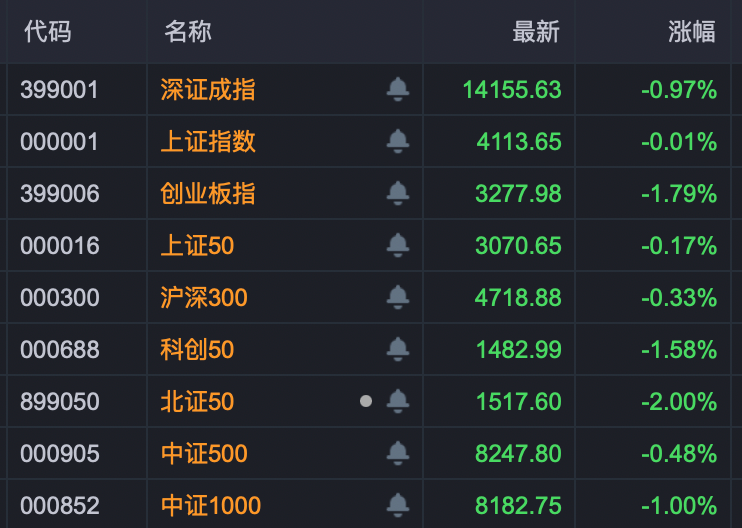
Market Overview - On January 20, the A-share market experienced fluctuations, with the Shanghai Composite Index barely holding above 4100 points and the ChiNext Index falling below 3300 points, while the Shenzhen Component, CSI 300, and CSI 500 all closed with small bearish candles. The market turnover reached 2.8 trillion yuan [1]. Index Performance - The Shenzhen Component Index closed at 14155.63, down 0.97% - The Shanghai Composite Index closed at 4113.65, down 0.01% - The ChiNext Index closed at 3277.98, down 1.79% - The CSI 300 Index closed at 4718.88, down 0.33% - The CSI 500 Index closed at 8247.80, down 0.48% [2]. Sector Performance - Chemical, precious metals, real estate, and aviation sectors showed the highest gains, while aerospace equipment, photovoltaic equipment, communication devices, and glass fiber sectors experienced the largest declines [2]. Fund Flow Analysis - The public utilities sector saw a net inflow of over 3.7 billion yuan, while the construction and decoration sector received over 3.6 billion yuan. Real estate, banking, basic chemicals, and building materials sectors each gained over 2 billion yuan in net inflows. Transportation and retail sectors also saw net inflows exceeding 1 billion yuan. Conversely, electronics, power equipment, communications, defense, and computer sectors experienced net outflows exceeding 10 billion yuan [3]. Notable Stocks - China XD Electric (601179) saw a net inflow of 1.561 billion yuan, with a price increase of 8.84% - Shanzhi High-Tech (000981) had a net inflow of 1.423 billion yuan, with a price increase of 6.69% - Zhejiang Wenhu (600986) had a net inflow of 1.318 billion yuan, with a price increase of 10.04% - China Power Construction (601669) had a net inflow of 1.305 billion yuan, with a price increase of 7.02% [4]. Market Outlook - According to Yingda Securities, the Shanghai Composite Index is expected to oscillate around the 4100-point mark, indicating a market cooling period. This does not suggest a deep correction but rather a healthy consolidation after rapid gains. Investors are advised to take profits on short-term high-flying stocks while looking for value opportunities in underperforming sectors with solid fundamentals [4]. Future Predictions - Zhongyin International predicts that by 2026, the core broad-based indices of the Chinese stock market may see an overall increase of over 40%, driven by nearly 20% profit growth and 20% valuation improvement. Key sectors expected to lead include technology manufacturing, biomedicine, national defense, and non-ferrous metals, while sectors like communications, internet, brokerage insurance, new consumption, and real estate may have potential for catch-up gains [5]. Commodity Trends - Precious metals stocks surged in the afternoon, with the sector index reversing from an early drop of over 3% to a gain of 3.5%, reaching a historical high. Notable stocks include Hunan Silver and Zhaojin Gold, which quickly hit the daily limit [5][6]. - International gold and silver prices continued to rise, with London spot gold surpassing $4700 per ounce, marking a historical high. The trend of central banks purchasing gold is expected to support gold prices amid ongoing geopolitical tensions [6]. Chemical Industry Insights - The chemical sector showed strong performance, with various sub-sectors like daily chemicals and petrochemicals experiencing significant gains. The recent global price surge in chemicals has been noted, with major companies like BASF and Dow increasing prices across multiple regions [7][9]. - Recent data indicates that chemical product prices have generally increased, with synthetic rubber seeing the highest rise of 11.7% [9].
如何从一二级市场联动寻找产业债交易信号?(行业篇)
Soochow Securities· 2026-01-20 09:28
Report Industry Investment Rating No information provided in the content. Core Viewpoints - The secondary - market trends of industrial bond sub - industries show a divergence in the correlation between primary and secondary markets. This divergence may be due to differences in supply among industries and differences in bond liquidity and trading popularity within each industry. If an industry has many issuing entities with strong willingness and ability to issue bonds and is in a good development trend, the probability of a synchronous resonance relationship between primary - market supply and secondary - market demand is relatively high, which can improve the accuracy of judging trading signals of narrowing spreads from daily net financing [1][14]. - Most industries have trading signals transmitted from primary - market supply to secondary - market demand, including comprehensive, non - ferrous metals, and others. Some industries show a stronger negative correlation between primary - market supply and secondary - market demand, such as comprehensive and non - ferrous metals. Some industries have a weak correlation between daily net financing and daily spreads, including communication and food and beverage [2][4]. Summary by Directory 1. Industrial Bond Sub - industries Show Divergence in Primary - Secondary Market Trend Correlation - **Research Method**: Classify industrial bond issuers by Shenwan primary industries, calculate the daily net financing and daily credit spreads of each sub - industry from January 1, 2025, to December 19, 2025, to observe the correlation between primary - market supply and secondary - market demand [12]. - **Divergence Performance**: Most industries have trading signals transmitted from primary - market supply to secondary - market demand, while some do not show this feature significantly [13]. - **Reasons for Divergence**: Differences in supply among industries are related to the number, size, and life - cycle stage of issuing entities. Differences in bond liquidity and trading popularity within industries are related to the scale of outstanding bonds, valuation levels, and event catalysts [14]. 1.1. Industries with Obvious Correlation - **Comprehensive Industry**: From January to March 2025, daily net financing decreased and daily spreads increased; from March to June, daily net financing increased and daily spreads decreased; from June to December, both were in a low - level oscillation [21]. - **Non - ferrous Metals Industry**: From January to July 2025, daily net financing increased and daily spreads decreased; from July to September, daily net financing decreased and daily spreads increased; from October to December, both were in a low - level oscillation [25]. - **Other Industries**: Similar analysis is conducted for industries such as pharmaceutical biology, social services, and others, with different trends in different time intervals [27][30][32]. - **Common Features**: These industries generally have a large scale of outstanding bonds and high institutional investor attention, which is conducive to the transmission of primary - market supply changes to secondary - market spread changes [3][87]. 1.2. Industries with General Correlation - **Industries Included**: Communication, food and beverage, and other industries have a weak correlation between daily net financing and daily spreads, and the linkage and transmission between primary - and secondary - market indicators are relatively weak [4][13]. - **Reasons**: These industries have low participation in the bond market, and their secondary - market trading demand is more affected by overall bond - market trends, industry risk premiums, and liquidity premiums. Different types of industries have specific reasons for the weak correlation [4][90][91].
844家公司公布最新股东户数
Zheng Quan Shi Bao Wang· 2026-01-20 09:24
Core Viewpoint - A total of 844 stocks reported their latest shareholder numbers as of January 10, with 331 stocks showing a decline compared to the previous period, indicating a trend of decreasing shareholder engagement in certain companies [1][3]. Group 1: Shareholder Numbers - 844 companies disclosed their shareholder numbers as of January 10, with 331 showing a decrease compared to December 31 [3]. - Among the stocks with a decline in shareholder numbers, 23 stocks experienced a drop of over 10% [3]. - The stock with the largest decline in shareholder numbers was Yaxiang Integration, which saw a decrease of 23.48% to 19,134 shareholders [3]. - Yidian Tianxia also reported a significant decline of 23.09%, with 71,862 shareholders [3]. Group 2: Stock Performance - The average increase for concentrated stocks since December 21 was 7.79%, outperforming the Shanghai Composite Index, which rose by 5.74% [2]. - 55% of concentrated stocks achieved excess returns relative to the market [2]. - Huazheng New Materials had the highest increase among stocks with a decline in shareholder numbers, rising by 59.72% since December 21 [2]. Group 3: Industry Insights - The concentrated stocks are primarily found in the machinery, basic chemicals, and automotive sectors, with 35, 33, and 28 stocks respectively [3]. - The latest concentrated stock performance shows significant gains, with notable increases from Yidian Tianxia (60.64%), Jingce Electronics (58.17%), and Yaxiang Integration (52.48%) [3].


基础化工行业资金流入榜:红宝丽、中毅达等净流入资金居前
Zheng Quan Shi Bao Wang· 2026-01-20 08:50
Market Overview - The Shanghai Composite Index fell by 0.01% on January 20, with 20 industries rising, led by the oil and petrochemical sector, which increased by 1.74%, and the building materials sector, which rose by 1.71% [1] - The basic chemical industry saw a rise of 1.15% [1] - The communication and defense industries experienced the largest declines, with drops of 3.23% and 2.87%, respectively [1] Capital Flow Analysis - The main capital outflow from the two markets totaled 95.723 billion yuan, with 11 industries experiencing net inflows [1] - The banking sector had the highest net inflow of 1.472 billion yuan, with a daily increase of 0.80% [1] - The real estate sector followed with a daily increase of 1.55% and a net inflow of 627 million yuan [1] - The power equipment industry had the largest net outflow, totaling 19.054 billion yuan, followed by the electronics industry with an outflow of 18.394 billion yuan [1] Basic Chemical Industry Performance - The basic chemical industry had a net inflow of 475 million yuan, with 236 out of 408 stocks rising, including 12 hitting the daily limit [2] - The top three stocks with the highest net inflow were Hongbaoli (3.38 billion yuan), Zhongyida (2.95 billion yuan), and Yanhai Co. (2.67 billion yuan) [2] - The stocks with the largest net outflow included Duofluor (3.20 billion yuan), Shenjian Co. (2.25 billion yuan), and Dongcai Technology (1.57 billion yuan) [2][4] Basic Chemical Industry Capital Inflow and Outflow Inflow Rankings - Hongbaoli: +9.96%, turnover rate 11.78%, net inflow 338.19 million yuan [2] - Zhongyida: +9.96%, turnover rate 11.59%, net inflow 294.70 million yuan [2] - Yanhai Co.: +1.94%, turnover rate 2.27%, net inflow 266.55 million yuan [2] Outflow Rankings - Duofluor: -4.63%, turnover rate 8.04%, net outflow -320.19 million yuan [4] - Shenjian Co.: -9.99%, turnover rate 28.21%, net outflow -224.89 million yuan [4] - Dongcai Technology: -6.68%, turnover rate 10.05%, net outflow -157.38 million yuan [4]


