有色金属冶炼

Search documents
金融期货早评-20251217
Nan Hua Qi Huo· 2025-12-17 02:24
Group 1: Financial Futures Report Industry Investment Rating Not mentioned Core View The Fed cut interest rates by 25 basis points in December, with a more dovish tone. The US employment market is cooling, and the domestic economy continues the "seeking progress while maintaining stability" policy. The RMB exchange rate is likely to be moderately stronger in the short term, but there are potential risks. The stock index is in a shrinking adjustment, and the bond market can be bullish in the medium - term [2][5][6]. Summary by Directory - **Macro**: The US unemployment rate reached a four - year high. Investment and consumption growth are expected to recover next year, and the real estate supply side should control incremental and revitalize inventory [1]. - **RMB Exchange Rate**: The on - shore RMB against the US dollar rose, and it is likely to be moderately stronger in the short term, supported by policies, exchange rate characteristics, and internal - external environment. However, there are potential risks such as high long - positions in the USD/HKD market and the impact of the Bank of Japan's interest - rate hike [3][5][6]. - **Stock Index**: The stock index fell collectively, and the US non - farm data had limited impact. The market is expected to stabilize and rebound after continuous adjustments, but the upward drive is insufficient [6][7]. - **Treasury Bonds**: The bond market is weak, but there is no need to be pessimistic from the fundamental perspective. Mid - term long positions can be held, and short - term trading should control positions [8]. - **Container Shipping to Europe**: The market is in a long - short tug - of war, with positive factors such as spot price increases and seasonal cargo volume, and negative factors such as the expectation of resuming navigation and future supply - demand pressure [9][10][11]. Group 2: Commodities Report Industry Investment Rating Not mentioned Core View The prices of precious metals are expected to rise in the medium - long term, with short - term high - level fluctuations. Base metals have different trends, and energy - chemical products are affected by various factors such as supply - demand, policies, and geopolitics [15][18][20]. Summary by Directory - **Precious Metals** - **Platinum & Palladium**: The prices rose at night, and are expected to be boosted by central bank gold purchases and investment demand in the medium - long term. Attention should be paid to the internal - external price difference [13][14][15]. - **Gold & Silver**: The prices were in high - level fluctuations. The US non - farm data had limited impact on the Fed's interest - rate cut expectation. Short - term high - level fluctuations are expected, and it is bullish in the medium - long term [16][17][18]. - **Base Metals** - **Copper**: The price was in high - level adjustment. The non - farm data had little impact, and it is necessary to wait for the recovery of trading volume to determine the trend [19][20]. - **Aluminum Industry Chain**: Aluminum is expected to be in shock - strengthening, alumina in weak operation, and cast aluminum alloy in shock - strengthening. The macro - drive is suspended, and the fundamentals are different [23][24]. - **Zinc**: The downstream receiving capacity is limited, and it is in weak operation, with short - term wide - range fluctuations expected [28]. - **Nickel & Stainless Steel**: The prices fell sharply due to market sentiment. The fundamentals of nickel are complex, and stainless steel is affected by export regulations [28][29]. - **Tin**: The price was in technical adjustment, and it is expected to be in wide - range fluctuations in the short term, with opportunities to enter the market on dips [30][31]. - **Lead**: The price was under pressure, and it is expected to fluctuate between 16700 - 17500 in the short term, with strong support around 16500 [36]. - **Energy - Chemical Products** - **Paper Pulp - Offset Paper**: The pulp spot price fell, and the price is expected to fluctuate in the short term. The offset paper is affected by the pulp price and supply [46][47][48]. - **Crude Oil**: The price hit a new low this year, and it is expected to be in weak fluctuations in the short term, with attention paid to EIA inventory [49][50]. - **LPG**: The price was stable while crude oil fell. The supply increased slightly, and the demand was stable [51][52]. - **PTA - PX**: There is no obvious upward drive, and it will fluctuate with the cost side. The downstream polyester demand is expected to be high in the short term, but the negative feedback will be transmitted in December [53][54][55]. - **MEG - Bottle Chips**: The supply negative feedback appears, and the price is under pressure in the long - term, with the short - term valuation fluctuating with the macro - sentiment [56][57]. - **Methanol**: Maintain the reverse spread strategy [59]. - **PP**: The cost side provides strong support, and the supply pressure may be relieved in January, with potential for a short - term rebound [60][61][62]. - **PE**: The supply is increasing while the demand is decreasing, and the upward space is limited. The PP supply - demand expectation is better than that of PE [63][64]. - **Pure Benzene - Styrene**: Pure benzene shows a near - weak and far - strong pattern, and styrene shows a near - strong and far - weak pattern [66]. - **Fuel Oil**: The high - sulfur fuel oil cracking is weak, and the low - sulfur fuel oil cracking is expected to rise [67][68]. - **Asphalt**: The bottom space is limited, and it is in shock in the short term, with attention paid to the winter - storage policy [69][70]. - **Rubber**: The price center is moving up in shock. Natural rubber is in a wide - range shock, and synthetic rubber is running strongly with limited upward space [73][74]. - **Urea**: The market is in the range between fundamentals and policies, with the 01 contract expected to continue to fluctuate [75][76]. - **Soda Ash & Caustic Soda**: Soda ash is waiting for new supply variables, glass is affected by cold - repair and inventory, and caustic soda is expected to be in weak fluctuations [76][77][78]. - **Log**: The price is in low - level shock, with high uncertainty in trading [79][80][81]. - **Propylene**: It is in shock, with a loose supply situation and unchanged supply - demand pressure [81][82]. Group 3: Agricultural Products Report Industry Investment Rating Not mentioned Core View The supply - demand situations of different agricultural products vary, with some having short - term pressure and others having long - term potential [84][86][89]. Summary by Directory - **Hogs**: The supply - demand in the peak season needs verification. The long - term can be bullish, but the short - term is based on fundamentals [83][84]. - **Oilseeds**: The outer market is weak, and the domestic soybean meal is in a positive spread in the short term. Wait for low - buying opportunities [85][86]. - **Oils**: The delay of the US biofuel policy makes the oils market weak [87]. - **Cotton**: The domestic downstream shows resilience, and it may rise in the medium - long term, with short - term pressure. Consider buying on dips [89]. - **Sugar**: The price is in weak decline [90][91]. - **Eggs**: The long - term egg - laying hen capacity is excessive, but there is a short - term rebound opportunity. Be cautious with long positions [92]. - **Apples**: The price stops falling and rebounds. Consider buying on dips [93][94]. - **Jujubes**: The new jujube harvest is almost completed. The short - term price may have limited downward space, and pay attention to downstream pre - holiday procurement [95].
银河期货每日早盘观察-20251217
Yin He Qi Huo· 2025-12-17 02:24
Report Industry Investment Rating The document does not provide information on the industry investment rating. Core Viewpoints of the Report The report offers a comprehensive analysis of various futures markets, including financial derivatives, agricultural products, black metals, non - ferrous metals, shipping, and energy chemicals. It assesses the current market situation, influencing factors, and provides corresponding trading strategies for each sector. [17][24][56] Summary by Relevant Catalogs Financial Derivatives - **Stock Index Futures**: After a significant decline, there may be a technical rebound, but the rebound without news support may have limited height. The trading strategy is to adopt a high - selling and low - buying approach in a volatile market, wait for the spread of the discount to widen for the IM/IC long 2603 + short ETF cash - and - carry arbitrage, and use the double - buying option strategy. [20][21] - **Treasury Bond Futures**: Different maturities show differentiated performance. In the short term, it is difficult to determine whether the bond market will turn bearish. The trading strategy is to stop the short positions of TS and TF contracts at low prices and wait and see for arbitrage. [22][23] Agricultural Products - **Protein Meal**: With large supply pressure from new crops, the price of US soybeans continues to decline. The international soybean market is in a pattern of abundant supply. The trading strategy is to wait and see, narrow the MRM spread, and sell the wide - straddle option strategy. [25][26] - **Sugar**: International sugar prices are oscillating at a low level, and domestic sugar prices are weak. The Brazilian sugar supply pressure will gradually ease, and the international sugar price may bottom - out and oscillate. The domestic sugar market may still maintain a weak trend in the short term. The trading strategy is to go long on the January contract and short on the May contract, and wait and see for options. [28][32] - **Oilseeds and Oils**: The overall trend is weakly oscillating. The trading strategy is to buy on dips after the price stops falling and stabilizes, and conduct high - selling and low - buying band operations, and wait and see for arbitrage and options. [34][35] - **Corn/Corn Starch**: The spot price has declined, and the futures price is oscillating at a high level. The trading strategy is to go long on the 03 contract on dips and establish long positions on the 07 contract at low prices, and wait and see for arbitrage and options. [37][38] - **Hogs**: The spot price is under pressure, and the futures price is oscillating. The trading strategy is to adopt a short - selling strategy, and wait and see for arbitrage and sell the wide - straddle option strategy. [39][40] - **Peanuts**: The spot price has declined, and the futures price is oscillating downward. The trading strategy is to short the 03 contract lightly at high prices, wait and see for arbitrage, and sell the pk603 - C - 8200 option. [41][43] - **Eggs**: The demand is average, and the price is stable with a slight decline. The trading strategy is to go long on the far - month contracts at low prices, wait and see for arbitrage and options. [44][46] - **Apples**: The demand is average, and the price is mainly stable. The trading strategy is to wait and see, go long on the January contract and short on the October contract, and wait and see for options. [48][50] - **Cotton - Cotton Yarn**: The sales of new cotton are good, and the price is oscillating strongly. The trading strategy is to go long on dips, wait and see for arbitrage and options. [52][54] Black Metals - **Steel**: The raw materials have stopped falling and stabilized, and the steel price is oscillating. The trading strategy is to expect the price to oscillate in a range and may rebound from the bottom in the short term, short the coil - coal ratio and the coil - rebar spread at high prices, and wait and see for options. [57][58] - **Coking Coal and Coke**: They are oscillating at the bottom. The trading strategy is to wait and see, as the current situation has priced in most of the negative factors, and pay attention to the change of trading logic. [60][61] - **Iron Ore**: Adopt a bearish approach. The current supply of iron ore is abundant, and the demand is weak, so the price is expected to run weakly at a high level. [62][65] - **Ferroalloys**: The cost is supported, but the demand is suppressed. The trading strategy is to expect the price to oscillate at the bottom, wait and see for arbitrage, and sell the out - of - the - money straddle option combination. [66][67] Non - Ferrous Metals - **Gold and Silver**: The US employment market is cooling down, but under the situation of multiple factors, they are oscillating at a high level. The trading strategy is to hold long positions for Shanghai gold and Shanghai silver, wait and see for arbitrage, and buy the out - of - the - money call option. [69][72] - **Platinum and Palladium**: The non - farm payroll data is lower than expected, and they are oscillating strongly. The trading strategy is to go long on platinum and palladium at low prices, and consider the long - platinum and short - palladium arbitrage. [74][76] - **Copper**: Buy after a full correction. The US employment data shows that the labor market is cooling down, and the copper price is expected to rise in the long term. [77][80] - **Alumina**: Be vigilant against the resurgence of the "anti - involution" sentiment. The fundamental situation is still under pressure. The trading strategy is to expect the price to oscillate at a low level, wait and see for arbitrage and options. [80][83] - **Electrolytic Aluminum**: There is uncertainty in the macro - economic outlook, and the price is oscillating with a reduction in positions. The trading strategy is to expect the price to oscillate after a correction, wait and see for arbitrage and options. [84][85] - **Cast Aluminum Alloy**: There is uncertainty in the macro - economic outlook this week. The trading strategy is to oscillate with the decline of the aluminum price, conduct the AD - AL spread convergence arbitrage during the decline of the aluminum price, and wait and see for options. [87][88] - **Zinc**: Pay attention to the magnitude of overseas warehouse delivery. The trading strategy is to wait and see, as the overseas delivery has put pressure on the price, and consider the long - domestic and short - overseas strategy when the export window may open intermittently. [89][92] - **Lead**: Pay attention to the change of inventory. The trading strategy is to partially stop the profit of the short positions and hold the rest, wait and see for arbitrage and options. [93][96] - **Nickel**: As a short - position variety, it continues to decline. The trading strategy is to expect the price to decline oscillatingly, wait and see for arbitrage, and sell the out - of - the - money call option. [97][98] - **Stainless Steel**: It follows the decline of the nickel price and oscillates weakly. The trading strategy is to expect the price to decline oscillatingly, and wait and see for arbitrage. [100][101] - **Industrial Silicon**: Sell on rallies. The trading strategy is to sell on rallies, go long on polysilicon and short on industrial silicon for arbitrage, and sell the out - of - the - money call option. [102][103] - **Polysilicon**: Buy on dips. The trading strategy is to hold long positions and buy on dips, go long on polysilicon and short on industrial silicon for arbitrage, and sell the put option. [104][104] - **Lithium Carbonate**: The impact of the mining license is limited, and pay attention to the inventory data. The trading strategy is to operate cautiously at a high level, wait and see for arbitrage, and sell the out - of - the - money call option of the 2605 contract when the price rises. [105][107] - **Tin**: Pay attention to the export data of Myanmar in November. The trading strategy is to pay attention to the export data of Myanmar in November and be vigilant against the change of macro - economic sentiment, and wait and see for options. [108][111] Shipping - **Container Shipping**: MSK tested the price of 2800 in the first week. The trading strategy is to partially stop the profit of the long positions of the EC2602 contract and hold the rest, and wait and see for arbitrage. [112][114] Energy and Chemicals - **Crude Oil**: The price is close to the annual low, and the geopolitical factor is still the focus. The trading strategy is to expect the price to oscillate, the domestic gasoline is neutral, the diesel is weak, and the oil price spread is weak, and wait and see for options. [116][117] - **Bitumen**: The oil price has dropped significantly, and there are still concerns about the raw materials. The trading strategy is to expect the price to oscillate and stabilize, and sell the out - of - the - money call option of the BU2602 contract. [119][121] - **Fuel Oil**: The high - sulfur fuel oil remains weak, and the supply of low - sulfur fuel oil is frequently disturbed by the change of devices. The trading strategy is to be bearish, the low - sulfur cracking spread is weak, the high - sulfur cracking spread is weak, and wait and see for options. [121][122] - **Natural Gas**: The downward trend of LNG remains unchanged, and HH continues to correct. The trading strategy is to buy the HH2602 contract, wait and see for arbitrage, and sell the TTF call option. [124][126] - **LPG**: It is slightly stronger than oil. The trading strategy is to short the 03 contract at high prices, wait and see for arbitrage and options. [127][128] - **PX and PTA**: The PX operating rate remains high, and there is still an expectation of PTA inventory accumulation. The trading strategy is to expect the price to oscillate weakly, conduct the reverse arbitrage for the PX3, 5 & PTA1, 5 contracts, and wait and see for options. [130][131] - **Benzene and Styrene**: The supply and demand of pure benzene are loose, and the basis of styrene is loosening. The trading strategy is to expect the price to oscillate weakly, wait and see for arbitrage, and sell the out - of - the - money call option. [133][134] - **Ethylene Glycol**: Some enterprises have reduced the operating load, and the price has rebounded slightly. The trading strategy is to expect the price to oscillate weakly, wait and see for arbitrage, and sell the out - of - the - money call option. [136][137] - **Short - Fiber**: The supply and demand are weak, and the price has declined. The trading strategy is to expect the price to oscillate, wait and see for arbitrage, and sell the out - of - the - money call option. [138][140] - **Bottle Chips**: The supply and demand are relatively loose. The trading strategy is to expect the price to oscillate weakly, wait and see for arbitrage, and sell the out - of - the - money call option. [141][142] - **Propylene**: The operating rate is rising, and the inventory is at a high level. The trading strategy is to short at high prices, wait and see for arbitrage, and sell the call option. [143][144] - **Plastic PP**: The electricity consumption of the rubber and plastic industry has decreased slightly month - on - month. The trading strategy is to hold long positions for the L main 2605 contract and try to go long on the PP main 2605 contract, wait and see for arbitrage, and wait and see for options. [146][148] - **Caustic Soda**: It shows an oscillating trend. The trading strategy is to expect the price to oscillate, wait and see for arbitrage, and wait and see for options. [149][151] - **PVC**: It rebounds from the bottom. The trading strategy is to expect the price to rebound from the bottom, wait and see for arbitrage, and wait and see for options. [152][153] - **Soda Ash**: The price oscillates after the contract roll - over. The trading strategy is to wait and see, as the short - term price is expected to be stable. [155][159] - **Glass**: The price oscillates. The trading strategy is to expect the price to oscillate, wait and see for arbitrage, and wait and see for options. [157][160] - **Methanol**: It oscillates widely. The trading strategy is to expect the price to oscillate, wait and see for arbitrage, and wait and see for options. [162][163] - **Urea**: India has tendered again. The trading strategy is to expect the price to oscillate in the short term and run weakly in the medium term, and wait and see for options. [165][166] - **Pulp**: The reality is weak, but the expectation is strong. Pay attention to the registration of warehouse receipts and the change of port inventory. The trading strategy is to hold the previous short positions, wait and see for arbitrage, and wait and see for options. [169][170] - **Logs**: The fundamental situation is weakening, the futures price is inverted, and pay attention to the registration of warehouse receipts. The trading strategy is to pay attention to the opportunity of going long on the 03 contract, gradually stop the profit of the 1 - 3 reverse arbitrage, and wait and see for options. [171][175] - **Offset Printing Paper**: The supply pressure remains high, and the transmission of high pulp price is less than expected. The trading strategy is to be bearish, wait and see for arbitrage, and sell the OP2602 - C - 4100 option. [176][178] - **Natural Rubber**: The accumulation of the main visible inventory has slowed down. The trading strategy is to try to short the RU main 05 contract lightly and hold long positions for the NR main 02 contract, wait and see for arbitrage, and wait and see for options. [179][182] - **Butadiene Rubber**: The fixed - asset investment in the domestic rubber and plastic industry continues to slow down. The trading strategy is to hold long positions for the BR main 02 contract, hold the BR2602 - NR2602 spread, and wait and see for options. [183][185]
韩国锌业美国冶炼厂计划遭遇股东抵制
Xin Lang Cai Jing· 2025-12-16 15:55
韩国锌业公司(Korea Zinc,KRX:010130)表示将通过一个获五角大楼支持的合资企业,在田纳西州 投资约74亿美元建设矿产综合设施,该合资企业还将购入公司10%股份;但因一大型股东团体试图阻止 新股发行,公司股价下跌。 责任编辑:张俊 SF065 韩国锌业公司(Korea Zinc,KRX:010130)表示将通过一个获五角大楼支持的合资企业,在田纳西州 投资约74亿美元建设矿产综合设施,该合资企业还将购入公司10%股份;但因一大型股东团体试图阻止 新股发行,公司股价下跌。 责任编辑:张俊 SF065 ...
五角大楼入股韩国冶炼厂
中国能源报· 2025-12-16 10:33
德赛说:"特朗普政府将继续利用我们掌握的一切工具,终结美国在关键矿产上的对外依 赖。" 报道提及,五角大楼没有立即回应置评请求。 根据美国商务部的数据,这一关键矿物冶炼和加工工厂年产量约为54万吨。 美国商务部表示,除冶炼厂外,美国还将优先获得韩国锌业公司在全球的产品。 据美国消费者新闻与商业频道网站1 2月15日援引路透社报道,美国国防部将与韩国锌业 公司合作,在田纳西州斥资74亿美元建造一座冶炼厂,并将获得该冶炼厂4 0%的股份。 报道称,韩国锌业公司将向美国政府和未透露姓名的美国战略投资者控制的合资企业出售 价值19亿美元的新股。 来源:参考消息 报道还称,白宫发言人库什·德赛15日在一份声明中说:"自上世纪70年代以来,美国就没 有建造过这样的大型锌冶炼厂,这一事实反映出数十年来糟糕的领导是如何危及我们的国 家和经济安全的。""感谢特朗普总统,现在这种情况正在发生改变,韩国锌业公司…… 在田纳西州进行了投资。" End 出品 | 中国能源报(c n e n e rg y) 编辑丨闫志强 欢迎分享给你的朋友! ...


下游采购意愿减弱 预计后市锌价格将转入高位震荡
Jin Tou Wang· 2025-12-16 09:03
Core Viewpoint - The zinc market is currently driven by macroeconomic benefits and tight fundamentals, maintaining a strong short-term trend, but there are risks of price increases due to weakened downstream purchasing intentions, leading to expectations of high-level fluctuations in the future [3]. Group 1: Zinc Prices - The market price for zinc ingots (Zn99.995) in Shanghai is reported at 23,230 CNY/ton, with variations in prices across different regions, such as 22,940 CNY/ton in Guangdong and 23,450 CNY/ton in Zhejiang [1]. - The closing price for the main zinc futures contract on December 16 is 23,030 CNY/ton, reflecting a decline of 1.62%, with a daily trading volume of 138,540 lots [1]. Group 2: LME Zinc Inventory - As of December 15, LME zinc inventory stands at 64,500 tons, an increase of 2,550 tons or 4.12% from the previous day, with a cumulative increase of 6,725 tons or 11.65% over the past week [2]. - In the last month, LME zinc inventory has increased by 25,500 tons, representing a significant rise of 65.43% [2]. Group 3: Shanghai Futures Exchange Inventory - On December 15, the Shanghai Futures Exchange reported a zinc inventory of 50,703 tons, a decrease of 579 tons from the previous trading day, with specific regional changes noted [2]. - Guangdong region shows a reduction of 378 tons, while Jiangsu region's inventory increased by 74 tons, and Tianjin region decreased by 275 tons [2]. Group 4: Market Analysis - Current market conditions suggest that while there are positive macroeconomic factors and tight supply, the rapid price increases may accumulate market risks, potentially limiting further upward movement in zinc prices [3]. - Key factors to monitor include the actual production cuts by smelters, the pace of inventory depletion, and changes in macroeconomic sentiment [3].
2025年12月16日:期货市场交易指引-20251216
Chang Jiang Qi Huo· 2025-12-16 01:57
Report Industry Investment Ratings - **Macro Finance**: Stocks are expected to have a medium - to long - term upward trend, with a short - term outlook of volatile operation; bonds are expected to trade sideways [1][5]. - **Black Building Materials**: Coking coal is suitable for short - term trading; rebar is for range trading; glass is recommended to be shorted on rallies [1][7][8]. - **Non - ferrous Metals**: Copper should be reduced on rallies and replenished when the price stabilizes at a low level; aluminum requires more observation; nickel is recommended to be observed or shorted on rallies; tin is for range trading; silver should be held in long positions with caution in opening new positions; gold is for range trading; lithium carbonate is expected to be in a relatively strong sideways movement [1][10][12][17]. - **Energy and Chemicals**: PVC, caustic soda, and soda ash are recommended for temporary observation; styrene, rubber, urea, and methanol are for range trading; polyolefins are expected to be in a relatively weak sideways movement [1][21][22][23]. - **Cotton and Textile Industry Chain**: Cotton and cotton yarn are expected to be in a relatively strong sideways movement; PTA is expected to move upward in a volatile manner; apples and jujubes are expected to be in a relatively weak sideways movement [1][30][32][33]. - **Agriculture and Animal Husbandry**: Pigs are recommended to be shorted on rallies for near - term contracts and bullish cautiously for far - term contracts; eggs have limited upside potential; corn should be chased with caution in the short term and hedged on rallies; soybean meal is for range trading, with a stronger view for near - term contracts and a weaker view for far - term contracts; oils are recommended to be shorted with caution [1][34][37][40]. Core Views - The market is influenced by multiple factors such as macro - policies, supply - demand relationships, and international situations. Different varieties show different trends and investment opportunities due to their own fundamentals and external factors. For example, the macro - financial market is affected by central bank policies and economic data; the black building materials market is affected by supply - demand relationships in the industry; the non - ferrous metals market is affected by global economic trends and supply - demand in the mining industry; the energy and chemicals market is affected by raw material prices and downstream demand; the cotton and textile industry chain is affected by global supply - demand and domestic consumption; the agriculture and animal husbandry market is affected by breeding cycles and supply - demand in the food market [5][7][10]. Summary by Category Macro Finance - **Stocks**: Influenced by factors such as Fed policies, domestic economic data, and technological developments, the market is expected to be volatile in the short term, with a medium - to long - term upward trend. It is recommended to buy on dips [5]. - **Bonds**: Affected by central bank policies and regulatory measures, the market is expected to trade sideways. The key lies in the actual buying power of year - end allocation funds and the guidance from important meetings [5]. Black Building Materials - **Coking Coal**: In a game between bearish realities and marginal support, it is recommended for short - term trading [7]. - **Rebar**: With low valuation and weak drivers, it is expected to be in a relatively weak sideways movement and suitable for range trading [7]. - **Glass**: With high inventory, weak demand, and increasing supply expectations, it is expected to be in a low - level weak movement before the Spring Festival, and it is recommended to be shorted on rallies [8][9]. Non - ferrous Metals - **Copper**: Supported by macro - easing expectations and long - term ore shortages, but with short - term over - rise risks, it is recommended to reduce positions on rallies and replenish when the price stabilizes at a low level [10]. - **Aluminum**: With factors such as changes in ore prices, production capacity adjustments, and weakening demand, it is recommended to reduce long positions or observe [12]. - **Nickel**: With an expected increase in supply and an oversupply pattern, it is recommended to observe or short on rallies [15]. - **Tin**: With tight supply and weak downstream consumption, it is recommended for range trading, and attention should be paid to supply and demand changes [17]. - **Silver and Gold**: Affected by Fed policies and economic data, they are expected to be in a relatively strong sideways movement. Silver is recommended to hold long positions with caution in opening new positions, and gold is for range trading [17][19]. - **Lithium Carbonate**: With supply disruptions and strong demand, it is expected to be in a relatively strong sideways movement, and attention should be paid to mine developments [19]. Energy and Chemicals - **PVC**: With high supply, weak demand, and low valuation, it is expected to be in a low - level sideways movement and suitable for range trading [21]. - **Caustic Soda**: With high inventory and uncertain supply - demand changes, it is recommended for temporary observation [22]. - **Styrene**: Affected by factors such as oil blending and supply - demand relationships, it is expected to be in a sideways movement and suitable for range trading [23]. - **Rubber**: Affected by supply shortages and inventory changes, it is expected to be in a sideways movement and suitable for range trading [23]. - **Urea**: With sufficient supply and stable demand and supply, it is expected to be in a sideways movement and suitable for range trading [25]. - **Methanol**: With supply recovery, high - level but fluctuating downstream demand, and inventory reduction, it is expected to be in a sideways movement and suitable for range trading [26]. - **Polyolefins**: With strong supply and weak demand, it is expected to be in a relatively weak sideways movement. PE is expected to be in a range - bound movement, and PP is expected to be in a relatively weak movement [28]. - **Soda Ash**: With supply overcapacity and cost support, it is recommended for temporary observation [30]. Cotton and Textile Industry Chain - **Cotton and Cotton Yarn**: Affected by global supply - demand and domestic sales, they are expected to be in a relatively strong sideways movement [30]. - **PTA**: Affected by oil prices and supply - demand relationships, it is expected to move upward in a volatile manner [32]. - **Apples and Jujubes**: With weak demand and supply - demand relationships, they are expected to be in a relatively weak sideways movement [32][33]. Agriculture and Animal Husbandry - **Pigs**: With short - term supply pressure and long - term capacity adjustment, near - term contracts are recommended to be shorted on rallies, and far - term contracts are bullish cautiously [34]. - **Eggs**: With sufficient supply and short - term balanced supply - demand, the upside is limited. Attention should be paid to long - term capacity changes [37]. - **Corn**: With short - term selling pressure and long - term demand recovery, it should be chased with caution in the short term and hedged on rallies [40]. - **Soybean Meal**: With different trends for near - and far - term contracts, it is for range trading, and spot enterprises can fix prices for the December - January basis [40]. - **Oils**: Affected by reports and supply - demand relationships, they are expected to be in a relatively weak sideways movement. It is recommended to be shorted with caution for soybean and palm oils [47].
11月经济数据增长继续放缓,股市跟随调整
Dong Zheng Qi Huo· 2025-12-16 01:17
1. Report Industry Investment Ratings No relevant content provided. 2. Core Views of the Report - The economic data growth in November continued to slow down, and the stock market adjusted accordingly. Weak economic data may prompt the acceleration of policy introduction, and attention should be paid to policy changes [2][23]. - The gold price fluctuated slightly and rose, approaching the previous high, with increased intraday volatility. The market is concerned about the upcoming US November non - farm payroll data, and the interest rate cut expectation is fully priced. The overall tone of the Fed officials' speeches is neutral [15]. - The US stock market is expected to fluctuate at a high level in the short term, with internal differences among Fed officials and concerns about the Fed's independence [21]. - The bond market is dominated by institutional behavior, and it is recommended to focus on the right - side long - buying opportunities [28]. - For various commodities, different trends and investment suggestions are presented based on their respective fundamentals, such as the supply and demand situation, production data, and policy factors [32][41][48]. 3. Summary by Directory 3.1 Financial News and Comments 3.1.1 Macro Strategy (Gold) - Trump believes the peace agreement is closer than ever. Gold price fluctuated slightly up, approaching the previous high, with increased intraday volatility. The market focuses on the US November non - farm payroll data, and the interest rate cut expectation is fully priced. Fed officials' speeches are neutral. It is not recommended to chase the high [14][15][16]. 3.1.2 Macro Strategy (US Stock Index Futures) - There are variables in the selection of the new Fed chairman, and internal differences among Fed officials are large. The US stock market is expected to fluctuate at a high level in the short term [17][21]. 3.1.3 Macro Strategy (Stock Index Futures) - The economic data in November continued to weaken, and the stock market adjusted. High - valuation and high - expectation stocks face upward pressure. It is recommended to evenly allocate long positions in various stock indexes [22][23][24]. 3.1.4 Macro Strategy (Treasury Bond Futures) - The economic data in November was weak. The bond market decline was dominated by institutional behavior. It is recommended to focus on the right - side long - buying opportunities [25][27][28]. 3.2 Commodity News and Comments 3.2.1 Agricultural Products (Soybean Meal) - The inventory of soybean meal in oil mills decreased. NOPA's crushing data was lower than expected, and the CBOT soybean was weak. Brazilian exports increased, and the sowing was basically completed. It is recommended to continue to pay attention to China's soybean procurement, state reserve trends, and South American weather [29][32]. 3.2.2 Agricultural Products (Corn Starch) - The theoretical profit of starch enterprises remained in a good state, and the CS - C futures spread strengthened slightly. It is expected that the rice - flour spread will continue to fluctuate [33][34]. 3.2.3 Agricultural Products (Corn) - The spot price was generally stable, and the futures price first fluctuated narrowly and then dived. It is recommended to short 03 and 05 contracts on rallies in the short and medium term and pay attention to the long - buying opportunities for 07 and 09 contracts at low prices in the long term [35][36]. 3.2.4 Black Metals (Rebar/Hot - Rolled Coil) - The steel price fluctuated. The building materials demand was weak, but it was not far beyond expectations. The manufacturing demand remained resilient. It is recommended to treat the steel price with a fluctuating mindset [37][41][42]. 3.2.5 Black Metals (Coking Coal/Coke) - The coking coal price in the Linfen market was weakly stable. The supply decreased, and the demand was weak. It is necessary to pay attention to whether subsequent replenishment can support the market [43][44][45]. 3.2.6 Agricultural Products (Soybean Oil/Rapeseed Oil/Palm Oil) - The export of Malaysian palm oil from December 1 - 15 decreased. The supply pressure of palm oil was obvious. It is recommended to wait for the supply pressure to ease and then consider long - buying [46][47][48]. 3.2.7 Non - Ferrous Metals (Alumina) - A large - scale mining enterprise in Guinea will resume production. The downstream inventory is high, and the supply surplus pressure remains. It is recommended to wait and see [49][50]. 3.2.8 Non - Ferrous Metals (Polysilicon) - The polysilicon capacity integration and acquisition platform was officially launched. It is expected that the spot price is difficult to fall. It is recommended to pay attention to the long - buying opportunities after the futures price is at a discount to the spot price [52][54]. 3.2.9 Non - Ferrous Metals (Industrial Silicon) - The power price in Yunnan in 2026 was announced. The inventory increased slightly. It is recommended to pay attention to the short - selling opportunities on rallies [55][56][57]. 3.2.10 Non - Ferrous Metals (Lead) - The LME lead price and the Shanghai lead price fluctuated and declined. The social inventory increased slightly. It is recommended to short on rallies in the short term [58][59]. 3.2.11 Non - Ferrous Metals (Zinc) - The LME zinc price fluctuated and declined. The domestic zinc demand increased, and the inventory decreased. It is recommended to buy on pullbacks, hold long - spread positions, and maintain the long - domestic and short - overseas strategy [60][63]. 3.2.12 Non - Ferrous Metals (Nickel) - The supply surplus of nickel is expected to increase. The short - term disk is expected to be weak at a low level. It is not recommended to chase the short. It is necessary to pay attention to the supply changes in Indonesia [64][66]. 3.2.13 Non - Ferrous Metals (Lithium Carbonate) - The price of lithium iron phosphate increased. The supply may increase after the resumption of production, and the demand may decline in the off - season. It is recommended to buy on pullbacks in the long term [67][69]. 3.2.14 Non - Ferrous Metals (Copper) - The macro - mid - term support for copper remains, but the short - term expected difference is significant. The short - term spot premium is expected to be under pressure. It is recommended to wait and see in the short term and buy on pullbacks in the mid - term [70][72]. 3.2.15 Non - Ferrous Metals (Tin) - The inventory of tin increased at home and abroad. The supply increased, and the demand was weak. It is expected that the tin price will fluctuate at a high level in the short term [74][75]. 3.2.16 Energy Chemicals (Crude Oil) - The oil price continued to decline. The concern about oversupply depressed the oil price. It is expected to be weakly fluctuating in the short term [76][77]. 3.2.17 Energy Chemicals (Asphalt) - The refinery inventory of asphalt increased, and the social inventory decreased. The supply increased, and the demand weakened. It is expected to be weakly fluctuating in the short term [78][79][80]. 3.2.18 Energy Chemicals (Methanol) - Two methanol plants in Iran stopped production. The short - term opportunity for methanol is limited, and it is recommended to wait and see [80][81]. 3.2.19 Energy Chemicals (PTA) - The PTA spot market negotiation was average, and the basis was strong. The supply - demand pattern improved in the medium - and long - term. It is recommended to buy on pullbacks in the medium - term [82][83]. 3.2.20 Energy Chemicals (Urea) - The urea price fluctuated weakly. It is necessary to pay attention to the demand for spring plowing and the new export quota policy [86][87]. 3.2.21 Energy Chemicals (Styrene) - The inventory of pure benzene in East China ports was stable. The pure benzene was in a bottom - grinding stage. It is recommended to pay attention to the long - buying opportunities for far - month contracts on panic selling [88][90]. 3.2.22 Energy Chemicals (PVC) - The PVC price rebounded. The supply remained high, and the demand was weak. It is necessary to pay attention to the supply - demand changes in 2026 [91][92].
国民经济延续稳中有进态势 新动能稳步成长
Zheng Quan Shi Bao· 2025-12-15 18:31
Economic Performance - In November, China's economy continued to show a steady and progressive development trend, characterized by stable production growth, expanded market sales, resilient foreign trade, stable employment and prices, and strong social welfare support [1] - The industrial added value above designated size increased by 4.8% year-on-year in November, while the service production index rose by 4.2% [1] - The total retail sales of consumer goods grew by 1.3% year-on-year, and the total import and export value increased by 4.1% [1] New Economic Drivers - The new economic drivers have been continuously strengthening, with high-tech manufacturing value-added increasing by 9.2% and digital product manufacturing value-added growing by 9.3% from January to November [1][2] - The production of industrial robots and integrated circuits saw significant increases of 29.2% and 10.6%, respectively [1] Consumption and Investment Trends - There has been a rapid growth in service consumption, particularly in cultural and sports services, with retail sales in these categories increasing by over 10% year-on-year [2] - However, fixed asset investment decreased by 2.6% year-on-year, indicating a widening decline, and the growth rate of total retail sales of consumer goods is also slowing down [3] Policy Outlook - The recent Central Economic Work Conference outlined comprehensive plans for economic work in 2026, emphasizing the need for increased counter-cyclical and cross-cyclical adjustments to promote qualitative and effective improvements in the economy [3]
韩国锌业将在美国投资74亿美元建设冶炼厂
Wen Hua Cai Jing· 2025-12-15 11:32
(文华综合 编辑:王丽君) 12月15日(周一),韩国锌业(Korea Zinc)宣布,计划在美国投资74亿美元建设一座冶炼厂,用于生产 关键金属和矿物。 韩国锌业称,美国政府要求该公司建设该设施,以应对全球供应链风险扩大以及美国对有色金属和战略 矿物需求增长的局面。 该冶炼厂计划生产锌、铅、铜等主要有色金属,金、银等贵金属,以及锑、锗、镓等战略矿物。公司表 示,该项目将于2027年至2029年间分阶段建设,随后逐步投入商业运营。 ...
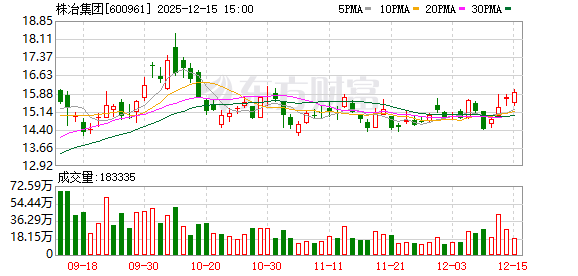
株冶集团:公司目前综合回收铟、锑、铋、碲等产品
Zheng Quan Ri Bao· 2025-12-15 10:12
Group 1 - The company, Zhuhai Group, is currently engaged in the comprehensive recovery of indium, antimony, bismuth, and tellurium products [2] - The company plans to focus on enhancing research and development efforts in lead-zinc smelting comprehensive recovery to further improve the recovery rate of valuable metals [2] - The company aims to leverage its resource integration advantages in the industry [2]