
TMT

Search documents
财信证券袁闯:积极因素逐步累积 经济高质量发展势头将进一步巩固
Zhong Zheng Wang· 2025-08-18 12:05
Core Viewpoint - The macroeconomic environment is showing steady improvement, with positive factors gradually increasing, indicating a trend towards high-quality economic development [1] Economic Performance - The actual GDP growth rate for the first half of the year reached 5.3%, reflecting a significant increase in confidence among social entities [1] - The wealth effect from the rise in A-shares this year has partially offset the downward pressure on housing prices, aiding in the gradual recovery of residents' balance sheets [1] Government Policy and Spending - Government spending remains robust, providing strong support for economic stabilization, with net financing of government bonds in social financing continuing to grow significantly [1] - The focus of government spending is directed towards consumption, infrastructure investment, and livelihood expenditures [1] Monetary Indicators - The M1 growth rate increased by 1.0 percentage points from the previous month to 5.6%, indicating improved liquidity in the economy [1] Policy Effects - The effects of the "Two New" policies and "anti-involution" policies are gradually becoming evident, with signs of marginal improvement in prices [1] - The core CPI rose by 0.8% year-on-year in July, the highest level since March 2024 [1] Sectoral Investment - There is a notable acceleration in the transition between old and new growth drivers, with high-intensity investment in emerging sectors such as aerospace and TMT (Technology, Media, and Telecommunications) [1]
港股科技ETF(513020)收涨超1.5%,市场聚焦估值修复与AI驱动逻辑
Mei Ri Jing Ji Xin Wen· 2025-08-18 07:37
Group 1 - The Hong Kong stock market is expected to benefit from the accelerated commercialization of AI and the continuous inflow of southbound funds, with clear signs of valuation recovery [1] - The AI technology and new consumption sectors have significant growth potential, and southbound funds are enhancing their marginal pricing power in the Hong Kong stock market, particularly in a low-interest-rate environment [1] - The overall market sentiment is positive, with the IT sector showing substantial gains, driven by rising expectations of interest rate cuts from the Federal Reserve [1] Group 2 - The Hong Kong Technology ETF (513020) tracks the Hong Kong Stock Connect Technology Index (931573), focusing on leading companies in the technology sector available through the Stock Connect [1] - The index emphasizes market capitalization, R&D intensity, and revenue growth quality in its constituent stock selection, covering TMT (Media, Computer, Internet, Electronics) and automotive industries [1] - Investors without stock accounts can consider the Cathay CSI Hong Kong Stock Connect Technology ETF Initiated Link A (015739) and Link C (015740) [1]
港股科技ETF(513020)涨超2.0%,市场关注AI与资金面驱动逻辑
Mei Ri Jing Ji Xin Wen· 2025-08-18 05:38
Group 1 - The Hong Kong stock market is expected to benefit from the accelerated commercialization of AI and the continuous inflow of southbound funds, with clear signs of valuation recovery [1] - The AI technology and new consumption sectors have significant growth potential, and the marginal pricing power of southbound funds in the Hong Kong market is increasing, particularly in a low-interest-rate environment [1] - The overall performance of the Hong Kong stock market has been strong recently, with the IT sector showing substantial gains, driven by improved market sentiment and rising expectations of interest rate cuts by the Federal Reserve [1] Group 2 - The Hong Kong Stock Connect Technology ETF (513020) tracks the Hong Kong Stock Connect Technology Index (931573), which selects leading companies in the TMT (Technology, Media, and Telecommunications) and automotive sectors [1] - The index focuses on companies with high market capitalization, significant R&D investment, and rapid revenue growth, covering sectors such as electronics and the internet to reflect the overall performance of technology companies listed in the Hong Kong Stock Connect [1] - Investors without stock accounts can consider the Cathay CSI Hong Kong Stock Connect Technology ETF Initiated Link A (015739) and Link C (015740) [1]
港股科技ETF(513020)上一交易日净流入超2.0亿元,南向资金或将助力科技板块上涨
Mei Ri Jing Ji Xin Wen· 2025-08-18 01:53
Group 1 - The core viewpoint is that the Hong Kong stock market is expected to benefit from the accelerated commercialization of AI and the continuous inflow of southbound funds, with clear signs of valuation recovery [1] - The AI technology and new consumption sectors have significant growth potential, and the marginal pricing power of southbound funds in the Hong Kong stock market is increasing, especially in a low-interest-rate environment [1] - The medium to long-term outlook for the Hong Kong stock market remains positive due to its valuation advantages and the trend of industrial transformation and upgrading, with the technology and consumption sectors likely to continue rising under dual support from policies and funds [1] Group 2 - The Hong Kong Technology ETF (513020) tracks the Hong Kong Stock Connect Technology Index (931573), focusing on TMT (including media, computers, internet, electronics) and the automotive industry, selecting large-cap technology leaders listed on the Hong Kong stock market [1] - Investors without stock accounts can consider the Cathay CSI Hong Kong Stock Connect Technology ETF Initiated Link A (015739) and Cathay CSI Hong Kong Stock Connect Technology ETF Initiated Link C (015740) [1]
7月份经济数据解读:积极因素逐步累积,结构性问题仍然明显
Caixin Securities· 2025-08-15 10:14
Report Industry Investment Rating No specific industry investment rating is provided in the report. Core Viewpoints of the Report - Positive factors for the economy are gradually accumulating, but structural issues remain evident. The full - year economic growth rate is likely to be high in the first half and low in the second half, yet the 5% annual target is achievable, and the momentum of high - quality economic development is expected to be further consolidated [6]. - Although the macro - economic data in July did not show an obvious turning point, positive factors are gradually piling up, which is conducive to the improvement of market risk appetite. Different investment suggestions are given for the equity, bond, and commodity markets [6]. Summary by Relevant Catalogs 1. 7 - month Economic Overview - Positive factors for the economy are increasing, including the potential repair of the household balance sheet, high - intensity government spending, increased capital activation, marginal improvement in prices, accelerated transformation of new and old drivers, and the likely passing of the period of greatest tariff disturbances [7]. - Some economic indicators need improvement, such as the continuous drag of the real estate sector, uncertainties in overseas demand, the need to consolidate endogenous economic momentum, and the obvious divergence between volume and price with profit growth yet to improve [8]. 2. Interpretation of 7 - month Economic Sub - item Data - Fixed - asset investment growth continued to decline. From January to July, the national fixed - asset investment (excluding rural households) increased by 1.6% year - on - year, with infrastructure, manufacturing, and real estate development investment showing different trends. High - tech investment remained prosperous [9]. - Consumption growth declined slightly. In July, the total retail sales of consumer goods increased by 3.7% year - on - year, with the growth rate falling by 1.1 percentage points compared to the previous value. The replacement of consumer goods provided some support [10]. - Exports still showed short - term resilience, but uncertainties were increasing. In July, China's export amount increased by 7.2% year - on - year in US dollars. However, the "export - rush" effect may lead to an "overdraft effect" in the second half of the year [11]. - Real estate sales continued to fluctuate at a low level. From January to July, the cumulative year - on - year decline in the sales area of commercial housing and the completion of real estate development investment both widened. Second - hand housing prices did not stop falling [12]. - The production side remained highly prosperous. In July, the value - added of industrial enterprises above the designated size increased by 5.7% year - on - year in real terms. Manufacturing was the core support, and new and old drivers were accelerating the transformation [13]. - There were marginal improvements in the July price data. The CPI was flat year - on - year and increased by 0.4% month - on - month. The PPI decreased by 0.2% month - on - month, with the decline narrowing [15][16]. - The structure of social financing remained poor. In July, the incremental social financing was 1.13 trillion yuan, with government bonds being the core support. The new RMB loans in the social financing caliber decreased, and the effective credit demand of residents and enterprises still needed improvement [17]. - The profit growth of industrial enterprises was significantly dragged down by prices. From January to June, the profits of industrial enterprises above the designated size decreased by 1.8%, contrasting with the 5.3% real GDP growth in the first half of the year [19]. 3. Future Economic Outlook - Policy - making will reasonably control the intensity and rhythm of policies and reserve some policy space. The necessity of introducing large - scale incremental policies in the second half of the year has decreased [20]. - The full - year economic growth rate is likely to be high in the first half and low in the second half. Investment may continue to decline at a low level, consumption still has some resilience, and exports need to be vigilant against the impact of tariffs and the "export - overdraft" effect [21]. 4. Investment Suggestions - Equity market: Maintain the view that the index will fluctuate strongly, the investment error - tolerance rate will increase, and actively participate in the A - share market. Focus on low - absorption rotation opportunities in high - prosperity sectors, such as the "anti - involution" direction, the Fed rate - cut direction, sectors with expected mid - year report outperformance, and the technology and self - controllable direction [22][23]. - Bond market: The macro - economic fundamentals do not currently support a bond - market reversal. The yield of 10 - year government bonds may fluctuate around 1.7%, waiting for clearer signals from the economic fundamentals and policies [24]. - Commodity market: The prices of relevant "anti - involution" varieties will enter a wide - range shock trend until the economic fundamentals give clear feedback signals [25].
是否入市?机会在哪?谁估值过高?牛市呼声中基金公司最新预判
Bei Ke Cai Jing· 2025-08-15 08:45
Core Viewpoint - The A-share market is experiencing a bullish trend, with significant increases in major indices and a surge in capital inflow, leading to optimistic forecasts from various fund companies regarding future market performance [2][4][8]. Market Performance - As of August 14, 2023, the Shanghai Composite Index, Shenzhen Component Index, and ChiNext Index have increased by 9.39%, 9.96%, and 15.32% respectively since the beginning of the year [8]. - The Shanghai Composite Index reached a year-high of 3700 points on August 14, 2023, with trading volume hitting a record 2.31 trillion yuan [7][8]. Capital Inflow - The A-share market has attracted substantial new capital, with net inflows into ETFs reaching 3774.6 billion yuan by August 14, 2023 [4][12]. Market Drivers - Key factors driving the strong market performance include government support, ample liquidity, continuous policy initiatives, and breakthroughs in various industries [9][14]. - The central government has implemented measures such as interest subsidies on personal consumption loans to stimulate demand [9]. Structural Differentiation - There is a notable structural differentiation in the market, with some sectors, particularly technology and growth sectors like semiconductors and TMT, showing high valuation levels, while others like pharmaceuticals and consumer sectors remain undervalued [10][11]. - The overall A-share market's price-to-earnings (P/E) ratio is around 21 times, with certain sectors exceeding 90% in valuation percentiles [10]. Investment Strategies - Fund companies suggest a barbell strategy combining stable dividend stocks and high-growth technology stocks to navigate market volatility [13]. - Focus areas for investment include industrial metals, aerospace and military sectors, and technology stocks in the Hong Kong market, driven by favorable policies and global demand [14][15].

Qorvo: The Defense Angle No One Sees
Seeking Alpha· 2025-08-14 16:57
Core Insights - Qorvo (NASDAQ: QRVO) has shown a price increase of over 12% in the last three months, trading in the $90 range, indicating a slow recovery for the stock [1] Company Performance - The stock has not been traditionally exciting for investors, but recent momentum suggests a potential shift in investor sentiment [1] Market Context - The article reflects on the author's extensive experience in the technology sector, particularly in navigating various market cycles, which may provide context for understanding Qorvo's current position [1]

沪指挑战3700点,2.3万亿成交额暗藏玄机,该加仓还是离场
2 1 Shi Ji Jing Ji Bao Dao· 2025-08-14 15:04
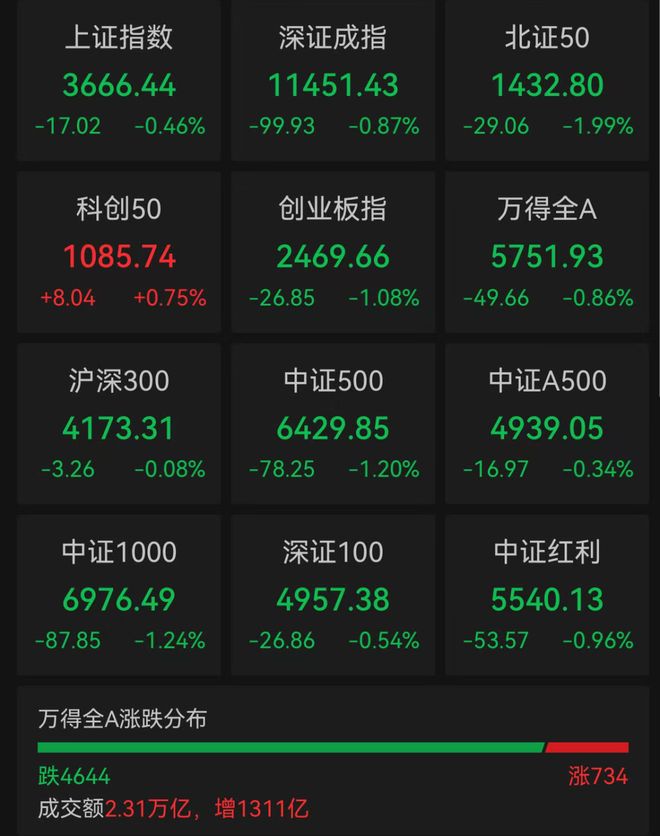
Core Viewpoint - The A-share market experienced a significant fluctuation on August 14, with the Shanghai Composite Index briefly surpassing the 3700-point mark before closing down 0.46% at 3666.44 points, indicating a mixed market sentiment despite increased trading volume [1][3][7]. Market Performance - The Shanghai Composite Index closed at 3666.44, down 0.46%, while the Shenzhen Component Index and the ChiNext Index fell by 0.87% and 1.08%, respectively [2][3]. - A total of 4600 stocks declined throughout the day, reflecting a broad market pullback [1][3]. Trading Volume - The total trading volume reached 2.31 trillion yuan, marking a year-to-date high and an increase of over 130 billion yuan compared to August 13 [3][7]. - This surge in trading volume indicates heightened market activity and investor interest [10]. Sector Performance - There was a notable divergence in sector performance, with sectors like humanoid robots and optical modules experiencing declines, while financial leaders showed resilience [3][8]. - Specific sectors such as stablecoins, insurance, digital currencies, and GPU indices saw gains of 4.21%, 2.64%, 1.66%, and 1.50%, respectively [7]. Market Sentiment and Future Outlook - Analysts suggest that the market may have entered a "slow bull" phase, driven by improved liquidity and a positive feedback loop from capital market policies [10][14]. - Institutions are divided on strategies, with some focusing on increasing exposure to undervalued sectors like consumption and technology, while others maintain a full or near-full position in growth stocks [12][13]. Investment Strategies - Investment strategies are evolving, with some institutions recommending a balanced approach to manage rapid sector rotations, particularly in high-growth areas like AI and innovative pharmaceuticals [18]. - The focus is on sectors with high earnings elasticity and those benefiting from increased retail participation, such as brokerage and insurance [18].
沪指挑战3700点,2.3万亿成交额暗藏玄机,该加仓还是离场
21世纪经济报道· 2025-08-14 14:46
Core Viewpoint - The A-share market experienced a significant fluctuation with the Shanghai Composite Index briefly surpassing 3700 points before closing lower, indicating a potential shift in market sentiment and the need for further analysis on the sustainability of the "slow bull" market trend [1][4][5]. Market Performance - On August 14, the Shanghai Composite Index closed at 3666.44 points, down 0.46%, while the Shenzhen Component Index and the ChiNext Index fell by 0.87% and 1.08% respectively, with over 4600 stocks declining throughout the day [1][2]. - The total trading volume reached 2.31 trillion yuan, marking a new high for the year and an increase of over 130 billion yuan compared to August 13 [3][4]. Sector Analysis - There was a notable divergence in sector performance, with sectors like humanoid robots and optical modules experiencing declines, while financial leaders showed resilience [3][4]. - The Wind indices for stable currency, insurance, digital currency, and GPU saw increases of 4.21%, 2.64%, 1.66%, and 1.50% respectively, while sectors such as cultivated diamonds and military information technology faced declines exceeding 3.6% [4]. Market Sentiment and Future Outlook - Analysts suggest that the market may need to consolidate around the 3700-point level, with a focus on maintaining trading volumes above 2 trillion yuan and continued policy support for consumption and technology sectors [5][6]. - The current market dynamics indicate a potential "slow bull" phase, driven by increased investor participation and a shift of household savings into the capital market [5][6]. Institutional Perspectives - Different institutions have varying strategies; some are reducing positions in overvalued stocks while increasing exposure to undervalued sectors like consumption and internet [8]. - Others maintain a full or near-full position, focusing on long-term holdings in sectors such as liquor, pharmaceuticals, and technology, indicating a belief in the continued growth potential of these areas [8]. Investment Strategies - Institutions recommend focusing on high-growth sectors with strong earnings potential, such as AI, innovative pharmaceuticals, and military technology, while also considering dividend-paying stocks for stability [12][14]. - The market is expected to experience increased volatility, and investors are advised to balance their portfolios to adapt to rapid sector rotations [12][14].

13-15年牛市的原因、过程和结构
Xinda Securities· 2025-08-14 11:12
Group 1 - The macroeconomic background during 2013-2015 showed a significant decline in economic growth and price indicators, leading to a liquidity-driven bull market despite unresolved issues [3][8][19] - The decline in PPI had a greater impact on policy and liquidity than on profitability, indicating a decoupling of stock market performance from earnings during the latter part of the bull market [3][19][23] - The influx of resident funds into the stock market was primarily through bank-securities transfers and margin financing, with a notable increase in public fund issuance in the first half of 2015 [3][41][51] Group 2 - The market performance from 2013 to 2015 was characterized by weak earnings but abundant funds, resulting in a significant bull market [3][36][41] - The stock market experienced a structural bull market in 2013, followed by a comprehensive bull market in 2014 despite worsening economic conditions [3][36][37] - The improvement in the supply-demand structure of the stock market was a fundamental driver of the bull market, aided by a decrease in IPOs and an increase in margin financing [3][55] Group 3 - The market style shifted from TMT to financial cycles and back to TMT, with small-cap stocks performing strongly in the early and late stages of the bull market [3][27][36] - The strongest performing sectors during the bull market included TMT, new consumption, and value stocks driven by themes like the Free Trade Zone and Belt and Road Initiative [3][27][36] Group 4 - The financial sector saw significant gains in the second half of 2014, attributed to a turning point in real estate policy and an influx of resident funds into undervalued cyclical stocks [3][36][39] - The opening of the Shanghai-Hong Kong Stock Connect and subsequent interest rate cuts contributed to the rapid rise of financial stocks in late 2014 [3][39][41] Group 5 - The growth of growth stocks during 2013-2015 was driven by the booming mobile internet sector, with public funds increasing their positions in sectors like electronics and media [3][5][21] - The rapid increase in new A-share accounts in 2014-2015 was facilitated by the development of internet finance and the relaxation of account opening restrictions [3][51][53]