
智能汽车

Search documents
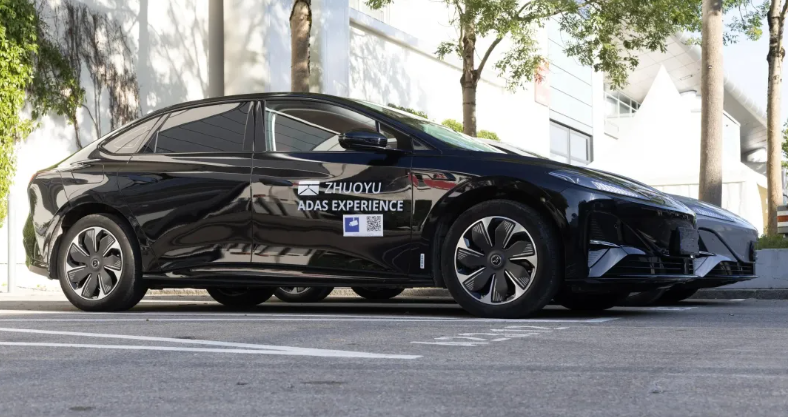
卓驭科技获中国一汽超36亿元战略投资,共推汽车智能化升级
Ju Chao Zi Xun· 2025-11-21 13:54
Core Insights - Zhuoyu Technology has officially announced a strategic investment exceeding 3.6 billion RMB from China FAW, resulting in a post-investment valuation surpassing 10 billion RMB [2] - The partnership aims to deepen collaboration in the intelligent driving sector while maintaining Zhuoyu's independent operational structure and management team [2] - The shareholder base of Zhuoyu has diversified, with notable investors including New Territory Technology Company Limited, Guotou Investment, BYD, and others, providing robust support for technology development and market expansion [2] Investment Details - The strategic investment will not interfere with Zhuoyu's daily operations, allowing for flexibility in technological innovation while leveraging China FAW's industrial resources [2] - The collaboration is built on a solid foundation established through a strategic cooperation agreement signed in April 2024, which initiated comprehensive cooperation between the two entities [3] Technological Advancements - Zhuoyu's core technology has been successfully applied on a large scale, with its "Chengxing Platform" and the world's first inertial three-eye vision system being integrated into several mainstream vehicle models, providing various advanced driving assistance features [3] - The investment is expected to enhance China FAW's core competitiveness in the intelligent driving field, aligning with its mission to control key technologies and establish a world-class automotive brand [3] Future Outlook - Zhuoyu's CEO emphasized the commitment to providing safe and convenient travel experiences, viewing the investment as recognition of the company's technological strength and growth potential [3] - The collaboration aims to integrate technology, brand, and capital advantages to promote the intelligent transformation of the automotive industry [3]


全面推进联合共创 阿维塔与华为战略合作进入新阶段
Zheng Quan Ri Bao Wang· 2025-11-21 13:46
Core Insights - The strategic partnership between Avita Technology and Huawei has entered a new phase, with a focus on deepening collaboration across various fields, including user insights, product definition, and integrated marketing [1] - Avita is the only brand within Huawei's QianKun system that has mass-produced vehicles, and both companies plan to launch 17 new products by 2030, covering sedans, SUVs, and MPVs [2] - Avita has established a strong capital bond with Huawei, having invested 11.5 billion yuan in October, acquiring a 10% stake in Huawei's Shenzhen Yingwang Intelligent Technology Co., further solidifying their partnership [3] Partnership Development - Avita and Huawei have upgraded their collaboration model from HI to HIPLUS, expanding their cooperation scope significantly [1] - The launch of the Avita models on Huawei's QianKun APP allows users to view and order vehicles directly, enhancing customer engagement [2] - The companies are working together on the "Smart Beauty Seven-Star" service plan to improve customer service standards and user experience [2] User Engagement and Recognition - The joint "Avita × Huawei QianKun Intelligent Driving City Open Competition" attracted participation from 24,000 users across 299 cities, showcasing the capabilities of QianKun Intelligent Driving [3] - Avita has delivered over 4,000 vehicles to Huawei employees, reflecting strong internal recognition of Avita's product quality and the deepening strategic trust between the two companies [3] - The collaboration has created a strong emotional connection between the brand and users, with both companies emphasizing a unified approach to achieving success in the smart automotive sector [3]
小米两天共斥资8亿回购:股价终于止跌回升 雷军公开智驾团队
Sou Hu Cai Jing· 2025-11-21 13:28
Core Viewpoint - Xiaomi has successfully reversed its stock price decline through significant share buybacks, demonstrating strong fundamentals and resilience against short-selling pressures [2][3][5]. Financial Performance - Xiaomi's revenue for Q3 2025 reached 113.12 billion yuan, a 22.3% increase from 92.5 billion yuan in the same period last year [3]. - The operating profit for the same quarter was 15.11 billion yuan, up 150.1% from 6.04 billion yuan year-on-year, with an operating profit margin of 13.4%, the highest in recent years [3]. Automotive Business - In Q3 2025, Xiaomi's smart electric vehicle revenue was 28.3 billion yuan, with an additional 700 million yuan from other related income, marking the first quarter of positive operating profit for its automotive and AI innovation segments [4]. - Xiaomi aims to deliver over 400,000 vehicles in 2025, having recently celebrated the production of its 500,000th vehicle, achieved in just over a year and seven months [16][18]. Market Response - Following a series of share buybacks totaling 800 million HKD, Xiaomi's stock price rose to 38.08 HKD, a 1% increase, and the company's market capitalization reached 991.7 billion HKD [3][5]. - The stock price recovery has alleviated some investor dissatisfaction towards CEO Lei Jun, especially in light of recent criticisms regarding the company's automotive strategy [5][15]. Strategic Initiatives - Xiaomi is investing over 7 billion yuan in AI research and development in 2025, with a focus on enhancing its autonomous driving capabilities [13]. - The company has assembled a core team of over 1,800 members for its smart driving division, including 108 PhDs, to drive innovation in this area [7][11].
华为乾崑合作车型明年将超80款
Zheng Quan Shi Bao Wang· 2025-11-21 11:22
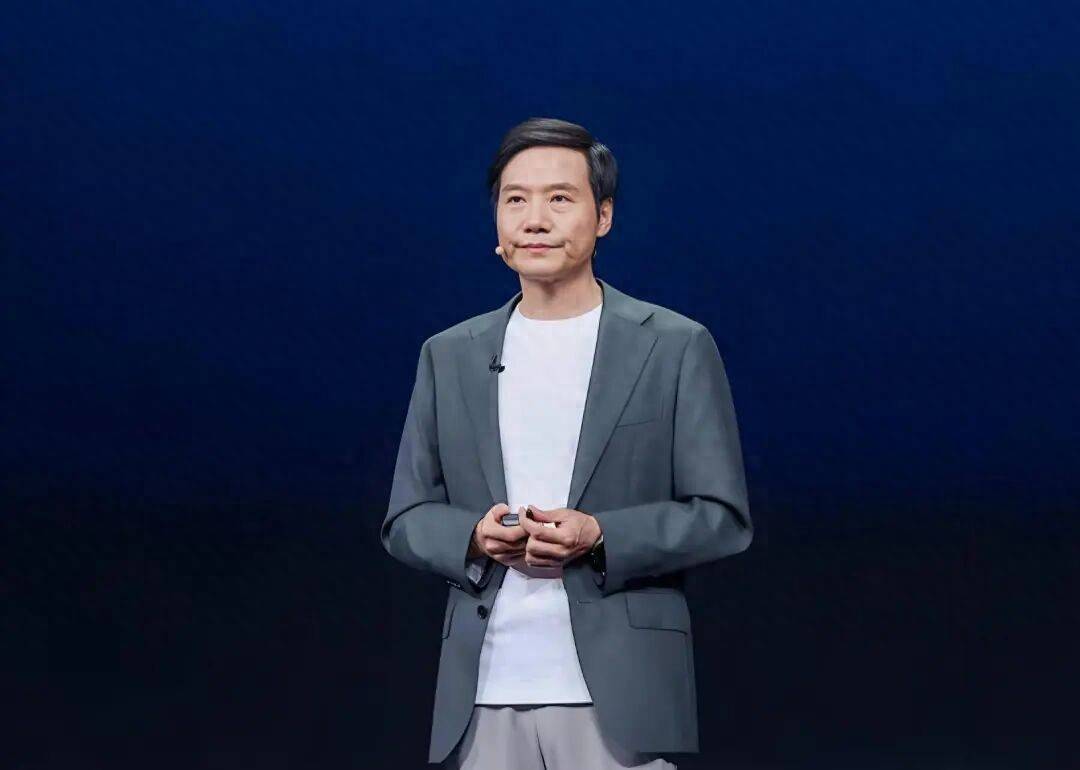
人民财讯11月21日电,11月21日,华为智能汽车解决方案BU CEO靳玉志在2025广州车展上表示,2026 年与华为乾崑合作的车型将超80款。 ...
阿维塔与华为开创“HI PLUS”模式 预计到2030年联合推出17款产品
Feng Huang Wang· 2025-11-21 11:07
Core Insights - The strategic partnership between Avita and Huawei has entered a new phase, upgrading the HI model to the HI PLUS co-creation model, expanding collaboration to user insights, product definition, and integrated marketing [1] Group 1: Partnership Details - Avita will become the first mass-production brand empowered by Huawei's QianKun Intelligent Driving ADS Level 3 solution and MoLA architecture under the HarmonyOS cockpit Level 3 technology [1] - Both companies plan to jointly launch 17 products by 2030, covering various vehicle types including sedans, SUVs, and MPVs [1] Group 2: Sales and Market Performance - Avita has achieved over 10,000 units in sales for eight consecutive months, with total sales exceeding 210,000 units [1] - Huawei employees have purchased more than 4,000 Avita vehicles to date [1] Group 3: Capital Investment - Avita has recently completed a 10% equity investment in Huawei's subsidiary, becoming its largest external shareholder [1] - Avita has entered the Huawei QianKun APP and initiated store image upgrades featuring the "Huawei QianKun Intelligent Driving" branding [1]
前瞻全球产业早报:我国首台套绿氢煤化工项目全面投运
Qian Zhan Wang· 2025-11-21 09:49
Group 1 - Guangdong aims to exceed 440 billion yuan in AI core industry scale by 2027, with a computing power scale surpassing 60 EFLOPS [2] - The digital economy's core industry added value is expected to account for over 16% of GDP by 2027, maintaining the top position in the country [2] - The plan includes the establishment of three internationally competitive trillion-level digital industry clusters and a data industry with an annual compound growth rate exceeding 15% [2] Group 2 - China's first green hydrogen coal chemical project has fully entered market operation, providing a replicable model for the green transformation of the coal chemical industry [3] - The project utilizes a "green electricity hydrogen production + excess electricity grid connection" collaborative model [3] Group 3 - The number of China-Europe freight trains has surpassed 3,500 this year, marking a historical high since the inception of the service in 2013 [4] - A freight train carrying 55 containers departed from Inner Mongolia, highlighting the increasing volume of trade through this route [4] Group 4 - Lenovo has signed agreements to secure long-term supply of key components amid rising prices and supply shortages [5][6] - The company emphasizes its strong relationships with suppliers to manage current supply challenges effectively [6] Group 5 - EVE Energy has signed a procurement framework agreement with Smoore International for the continuous supply of battery cells and other products until December 31, 2028 [7] Group 6 - Xiaomi has officially rolled out its 500,000th vehicle, setting a record for the fastest production of 500,000 units by a global new energy vehicle manufacturer in just 602 days [8] Group 7 - Meta's chief scientist Yann LeCun announced his departure to start a new venture focused on Advanced Machine Intelligence, aiming to revolutionize AI capabilities [12] Group 8 - The largest rare earth producer in the U.S. plans to build a refining plant in Saudi Arabia in partnership with the U.S. Department of Defense and a Saudi mining company [13] Group 9 - AMD, Cisco, and Saudi HUMAIN are forming a joint venture to deploy AI infrastructure, with plans to start operations in 2026 and reach up to 1 GW capacity by 2030 [15]
华为与车企合作造车新故事:“两境”在磨合中前进
Di Yi Cai Jing Zi Xun· 2025-11-21 09:36
Core Viewpoint - Huawei's automotive business unit (BU) has become a focal point at the 2025 Guangzhou Auto Show, particularly with its collaboration with Dongfeng Motor Group and GAC Group to create the "Two Realms" - Yijing and Qijing [1] Group 1: Collaboration Dynamics - The collaboration between Huawei and traditional automakers is marked by intense discussions and disagreements, which are seen as a natural part of the integration process [1][2] - Both teams often engage in heated debates over product details, but these disputes are aimed at enhancing product quality [1] - Huawei's CEO of Intelligent Automotive Solutions emphasized the importance of collaboration by suggesting that teams should take breaks to regroup and identify each other's strengths [1] Group 2: Strategic Importance - The partnership is crucial for traditional automakers as it represents a significant step towards electrification, intelligence, and premium transformation [1] - GAC Group's chairman highlighted the strategic importance of the Qijing project, stating it will be prioritized with concentrated resources for long-term development [1] Group 3: Collaboration Model - The collaboration model includes four key aspects: 1. Comprehensive cooperation throughout the product lifecycle, from initial project stages to marketing and ecosystem services [2] 2. Integration of Huawei's processes and methodologies with those of the automakers for deep collaboration [2] 3. Joint project teams with Huawei personnel embedded within the automakers to facilitate real-time adjustments [2] 4. Establishment of independent sales channels for both Yijing and Qijing, diverging from traditional and Huawei's existing channels [3] Group 4: Market Positioning and Product Plans - Yijing aims to create a diverse product matrix targeting various market segments, with its first model set to debut at the 2026 Beijing Auto Show [4] - Qijing plans to launch two models next year, both equipped with Huawei's L3 autonomous driving system, with the first model expected to be delivered by June [4] - The competition in the automotive market is intensifying, and both brands must differentiate themselves to avoid homogenization [4] Group 5: Competitive Landscape - There is ongoing market speculation regarding the similarities and differences between Huawei's "Two Realms" and "Five Realms" models, indicating a competitive dynamic within Huawei's automotive strategy [4]


华为乾崑生态大会发布“10分钟智驾生活圈” 携手途虎(09690)共拓智能汽车服务生态
智通财经网· 2025-11-21 09:30
Core Insights - Huawei's QianKun Intelligent Automotive Solutions announced the launch of multiple L3 autonomous driving tests and the introduction of the "Intelligent Cockpit L3" era during the "QianKun Ecology, Together for Passion" conference held on November 20, 2025, in Guangzhou [1] - Tuhu Car Maintenance is set to establish a deep collaboration with QianKun Intelligent Driving to create an intelligent automotive service network, enhancing data connectivity between Tuhu's store system and QianKun's autonomous driving cloud [1] Group 1 - The QianKun APP was officially launched, aiming to build a "10-minute QianKun Intelligent Driving Life Circle" with ecosystem partners [1] - Tuhu Car Maintenance's President, Hu Xiaodong, revealed that the collaboration will initially focus on the automatic car wash scenario, allowing vehicles to autonomously drive to service points for cleaning and return to parking spots, showcasing a future of seamless automotive services [1] - This innovative model reflects the trend towards intelligent automotive services, enhancing the customer experience by making car maintenance "worry-free, time-saving, and effortless" [1] Group 2 - Tuhu Car Maintenance has previously strengthened its service foundation through online reservations and intelligent scheduling, which will now be further enhanced by the integration of autonomous driving technology [1] - The partnership aims to create a real-time collaborative system across the "vehicle-cloud-store" ecosystem, promoting a more efficient automotive service experience [1]
华为乾崑生态大会发布“10分钟智驾生活圈” 携手途虎共拓智能汽车服务生态
Zhi Tong Cai Jing· 2025-11-21 08:27
Core Insights - Huawei's QianKun Intelligent Automotive Solutions announced the launch of multiple cities for high-speed L3 autonomous driving testing and the introduction of the "Intelligent Cabin L3" era with the release of the QianKun APP [1] Group 1: Huawei's Developments - Huawei's Intelligent Automotive Solutions BU CEO Jin Yuzhi announced the commencement of high-speed L3 autonomous driving testing in multiple cities [1] - The QianKun APP was officially launched, aiming to create a "10-minute QianKun intelligent driving lifestyle circle" in collaboration with ecosystem partners [1] Group 2: Partnership with Tuhu - Tuhu Car Maintenance will engage in deep cooperation with QianKun Intelligent Driving to build an intelligent automotive service network [1] - Tuhu's president Hu Xiaodong revealed that the collaboration will enable deep data integration between Tuhu's store system and QianKun's autonomous driving cloud, establishing a real-time collaborative system across vehicle, cloud, and store [1] Group 3: Innovative Service Model - The partnership will initially focus on the automatic car wash scenario, allowing vehicles to autonomously drive to service points for cleaning and return to parking spots without owner intervention [1] - This innovative model showcases the future of intelligent automotive services, enhancing the "worry-free, time-saving, and effort-saving" experience in car maintenance [1]
华为乾崑新“境”赋能中国汽车“智变”
Zhong Guo Qi Che Bao Wang· 2025-11-21 08:18
Core Insights - Huawei's commitment to not manufacturing cars but rather assisting automakers in creating high-quality vehicles is reiterated by the CEO of Huawei's Intelligent Automotive Solutions BU, Jin Yuzhi [2][10] - The launch of the "Qijing" high-end intelligent new energy brand in collaboration with GAC Group and the "Yijing" brand with Dongfeng signifies Huawei's strategic extension in response to evolving industry needs [3][5] - The relationship between Huawei's "Jing" and "Jie" series is clarified as complementary rather than competitive, addressing different market demands and collaboration scenarios [5][6] Market Dynamics - The Chinese automotive market remains a "blue ocean" with stable annual sales exceeding 20 million vehicles, yet only 2 million are expected to feature advanced driver-assistance systems (ADAS) by 2025, indicating significant growth potential [5][6] - The complexity of the smart automotive market necessitates a differentiated product matrix to cater to various consumer segments, from entry-level to luxury vehicles [5][6] Technological Collaboration - Both "Jing" and "Jie" series share core technologies from Huawei's ADS and Harmony cockpit, fostering a collaborative ecosystem that avoids internal competition [9][12] - Huawei's substantial R&D investment exceeding 50 billion since 2019, with over 10 billion allocated for 2024 alone, supports continuous technological advancement and cost-sharing among partners [12][18] Ecosystem Development - Huawei's approach emphasizes "complementarity rather than substitution," allowing automakers to retain their core competencies while benefiting from Huawei's technological expertise [11][20] - The establishment of a unified technical foundation and collaborative mechanisms within Huawei's ecosystem addresses industry challenges, promoting a shift from "scale leadership" to "technology leadership" [14][16] Consumer Impact - The integration of Huawei's OTA capabilities enhances vehicle value retention and user engagement, allowing for continuous feature updates and improved user experience [19][20] - The dual empowerment model of technology and ecosystem enables automakers to effectively reach target consumers, enhancing market penetration and brand recognition [13][20] Strategic Vision - Huawei's "not manufacturing cars" strategy is rooted in the understanding that the automotive industry requires multi-faceted collaboration for comprehensive upgrades across the supply chain [10][18] - The vision of "bringing intelligence to every vehicle" is supported by Huawei's commitment to fostering an open and win-win ecosystem, positioning the Chinese automotive industry for a more prominent role in the global smart mobility landscape [20]
