
创新药

Search documents
港股通创新药三连跌,什么原因?520880放量跌2.72%溢价高企!机构维持重点推荐
Xin Lang Cai Jing· 2026-01-19 11:42
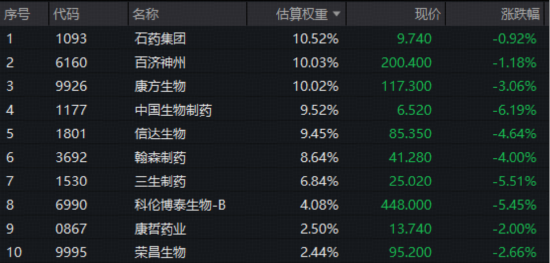
Market Overview - The Hong Kong stock market experienced a decline on January 19, with the Hang Seng Index falling by 0.76% [1] - The pharmaceutical sector faced significant losses, particularly in the innovative drug industry, with major stocks like Alibaba Health and others in the AI medical concept continuing to drop [1][10] Innovative Drug Sector Performance - The innovative drug sector saw a broad adjustment, with leading companies experiencing declines: China Biologic Products fell by 6.19%, CanSino Biologics by 3%, and others like Innovent Biologics and Hansoh Pharmaceutical dropped over 4% [1][13] - The Hong Kong Stock Connect Innovative Drug ETF (520880) fell by 2.72%, marking a three-day losing streak and losing both the 10-day and 60-day moving averages, with trading volume increasing by over 50% to 390 million HKD [11][12] Factors Influencing Market Sentiment - The adjustments in the innovative drug sector are attributed to the market digesting sentiments post the JPMorgan Healthcare Conference, which concluded on January 15, and a cautious outlook ahead of upcoming earnings forecasts for 2025 [4][15] - The market is currently in a phase of waiting for actual revenue and profit data, leading to a tendency to avoid uncertainty, particularly for companies that are not yet profitable or are in the early stages of commercialization [4][15] Future Outlook for Innovative Drug Sector - The innovative drug sector is expected to see significant earnings forecasts from leading companies in 2025, which could present opportunities for valuation recovery if results exceed expectations [5][16] - The sector's long-term fundamentals remain strong, with projections indicating that the total overseas licensing revenue for innovative drugs could reach 135.7 billion USD in 2025, reflecting global recognition of Chinese pharmaceutical R&D capabilities [16] - Continued policy support is anticipated, with the National Medical Products Administration expected to approve 76 innovative drugs in 2025, the highest globally, and ongoing optimization of the review and approval processes [16] Investment Strategy - The Hong Kong Stock Connect Innovative Drug ETF (520880) is positioned as a high-elasticity T+0 investment tool, focusing exclusively on innovative drug R&D companies [5][16] - The ETF's index features a significant concentration of leading companies, with the top ten holdings accounting for over 73% of the total weight, indicating a strong representation of the sector's core strengths [6][17]

创新药周报20260118:强生BCMA CD3 TCE特立妥单抗单药治疗2L MM III期成功
Huachuang Securities· 2026-01-19 10:30
Investment Rating - The report indicates a positive investment outlook for the innovative drug sector, particularly focusing on the advancements in T-cell engagers (TCE) for multiple myeloma (MM) treatment [1]. Core Insights - Johnson & Johnson's teclistamab has shown significant efficacy in the treatment of relapsed or refractory multiple myeloma (r/r MM), with a 71% reduction in disease progression or death risk and a 40% reduction in mortality risk compared to standard treatments [14][15]. - The report highlights the unmet medical needs in the MM treatment landscape, emphasizing the potential of TCE therapies targeting BCMA and GPRC5D to improve patient outcomes [9][10]. - The ongoing clinical trials and approvals for various TCE therapies, including teclistamab and talquetamab, are expected to reshape the treatment paradigm for MM, particularly in patients who have undergone multiple lines of therapy [28][34]. Summary by Sections Innovative Drug Focus - The report reviews the recent developments in innovative drugs, particularly in the context of TCE therapies for blood cancers, with a focus on their expanding applications beyond hematological malignancies [5][7]. TCE Therapy Developments - TCE therapies have gained traction in the treatment of MM, with several candidates achieving FDA approval for patients who have received multiple prior therapies. The overall response rates (ORR) for these therapies range from 60% to 74% [9][10]. - The report details the clinical trial results for teclistamab, which has been shown to significantly improve progression-free survival (PFS) and overall survival (OS) in r/r MM patients [14][21]. Market Potential - The report estimates that the sales for teclistamab in China could reach approximately $5.49 billion by 2024, indicating a strong market potential for TCE therapies in the region [6]. - The ongoing research and development efforts in TCE therapies are expected to address the significant unmet needs in the MM treatment landscape, with a focus on improving patient outcomes and survival rates [9][10].


医药生物行业周报:26年小核酸行业催化不断,持续看好产业链投资机会
China Post Securities· 2026-01-19 10:24
Investment Rating - The industry investment rating is "Outperform the Market" and is maintained [2] Core Views - The report highlights continuous catalysts in the small nucleic acid industry for 2026, with a focus on investment opportunities within the industry chain [5][19] - The report emphasizes the importance of clinical trial data releases and project advancements from major siRNA companies such as Alnylam, Arrowhead, and Wave Life Sciences [19][27] Summary by Sections Industry Overview - The closing index for the industry is at 8657.19, with a 52-week high of 9323.49 and a low of 6876.88 [2] Recent Market Performance - The A-share pharmaceutical and biotechnology sector declined by 0.68% from January 12 to January 16, 2026, underperforming the CSI 300 index by 0.11 percentage points and the ChiNext index by 1.68 percentage points [9][28] - Among the sub-sectors, the medical research outsourcing sector performed the best, increasing by 3.69%, while the vaccine sector saw a decline of 3.43% [10][28] Industry Insights and Investment Recommendations 1. **Innovative Drugs and Industry Chain**: The JPM conference reinforced the development logic of the industry, with increased merger and acquisition activity among multinational corporations (MNCs) and breakthroughs in domestic innovative drug companies. The report suggests focusing on companies with high certainty and relatively low business development (BD) disruption expectations, such as Innovent Biologics and others [11][30][31] 2. **Life Science Services**: The report sees stable recovery in overseas research and production outsourcing demand, with domestic Big Pharma's R&D spending increasing steadily. It recommends focusing on companies like WuXi AppTec and others [12][31] 3. **Medical Devices**: The report notes a potential turning point in the medical device sector, with improving performance from leading companies and a gradual reduction in the pressure from centralized procurement. It suggests monitoring companies like Mindray and others [13][34] 4. **Traditional Chinese Medicine**: The report highlights opportunities in basic drug policies and innovation-driven directions, recommending companies like Zhaoli Pharmaceutical and others [38][40] 5. **AI in Pharmaceuticals**: The report discusses the maturity of AI applications in pharmaceuticals, diagnostics, and medical services, identifying potential beneficiaries in various AI+medical sectors [42] Market Valuation - As of January 16, 2026, the overall valuation of the pharmaceutical sector is at 30.35, with a relative valuation premium of 124.45% over the CSI 300 index, indicating a slight increase from the previous week [48]
ETF收评 | 电网设备板块大爆发,电网设备ETF涨7.76%
Ge Long Hui· 2026-01-19 10:12
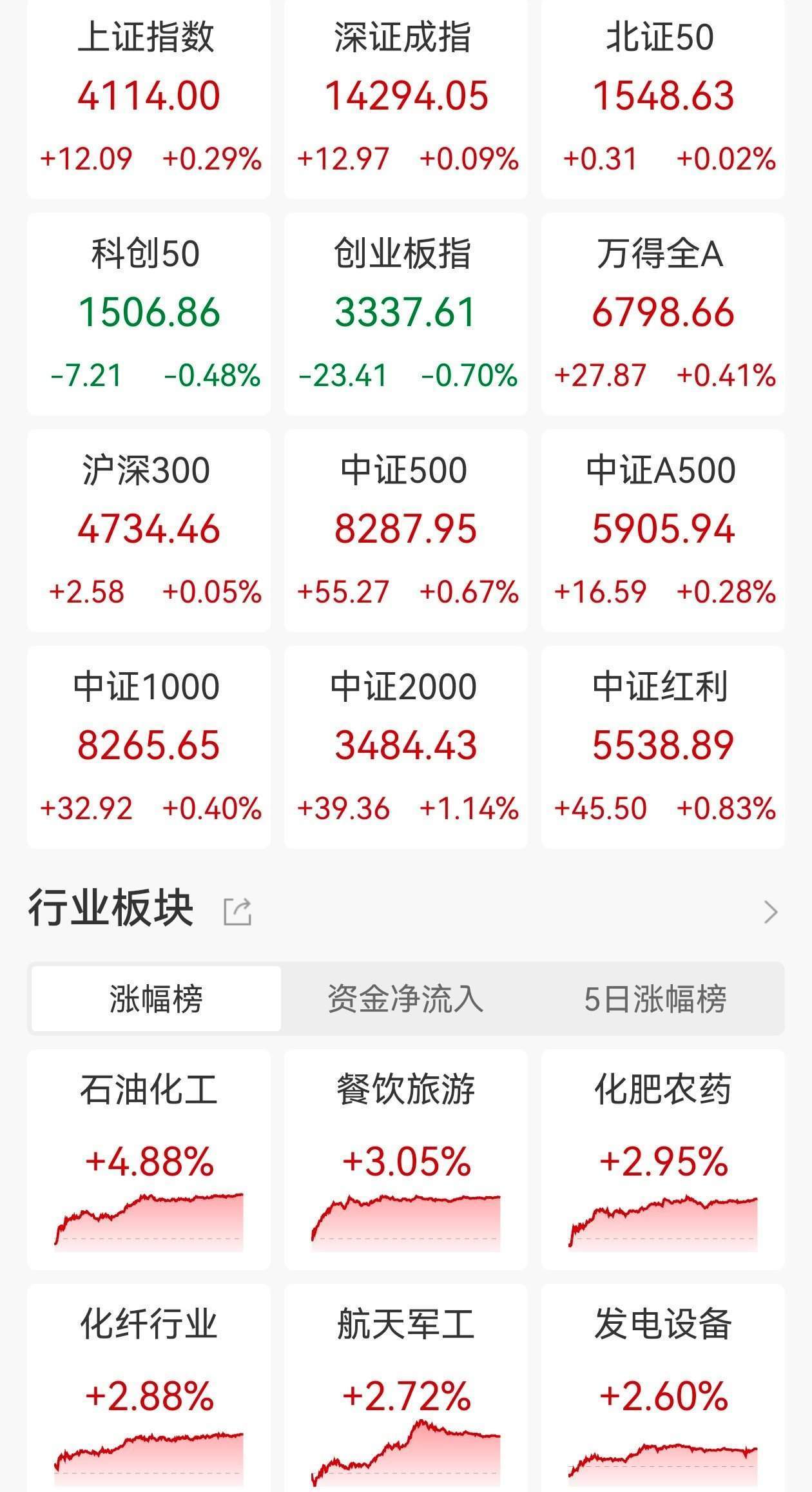
Market Performance - The A-share market showed mixed results, with the Shanghai Composite Index rising by 0.29% and the Shenzhen Component Index increasing by 0.09%, while the ChiNext Index fell by 0.7% [1] - The total trading volume across the three major markets reached 27,321 billion yuan, a decrease of 3,243 billion yuan compared to the previous day, with over 3,500 stocks gaining [1] Sector Performance - The top-performing sectors included precious metals, electric grid equipment, chemical industry, tourism and hotels, aerospace engines, airport shipping, and paper manufacturing [1] - Conversely, sectors that experienced declines included cultural media, AI mobile phones, computing power leasing, brain-computer interfaces, banking, and weight loss drugs [1] ETF Highlights - The electric grid concept ETFs saw significant gains, with Huaxia Fund's electric grid equipment ETF rising by 7.76%, Guotai Fund's electric grid ETF increasing by 7.18%, and GF Fund's electric grid ETF also up by 7.18% [1] - The photovoltaic sector performed well, with the leading photovoltaic ETF from GF rising by 5.16% [1] - The commercial aerospace sector rebounded, with Haitai Baichuan Fund's aerospace ETF and Wanjia Fund's aerospace ETF increasing by 5.16% and 3.76%, respectively [1] - The tourism sector also saw gains, with Fuguo Fund's tourism ETF and Huaxia Fund's tourism ETF rising by 4.43% and 4.37%, respectively [1] - The chemical sector was active, with the E Fund's chemical industry ETF increasing by 3.51% [1] Declining ETFs - The Sci-Tech 100 ETF enhanced index fund fell by 5% [2] - The semiconductor sector declined, with the Sci-Tech semiconductor ETF from Penghua dropping by 3.67% [2] - The Hong Kong stock innovation drug sector also saw a decline, with the Hong Kong Stock Connect innovation drug ETF falling by 3.24% [2]
热点跟不上?6 位大咖2026年配置思路大起底!
天天基金网· 2026-01-19 08:32
Core Insights - The article provides insights from various fund managers regarding investment opportunities and strategies for 2026, focusing on sectors like commercial aerospace, innovative pharmaceuticals, AI applications, and humanoid robotics [1][2]. Group 1: Commercial Aerospace - The commercial aerospace industry has transitioned from a conceptual phase to one focused on capacity and delivery, with predictions of China's operational satellites increasing from 100 to 10,000 [3]. - The industry is expected to experience rapid growth and volatility, similar to the telecommunications sector, with cost reduction being a reasonable strategy at this stage [3]. Group 2: Innovative Pharmaceuticals in Hong Kong - The innovative pharmaceutical sector in Hong Kong is anticipated to show significant changes starting in the second half of 2024, with an increase in licensing agreements and expectations of profitability for leading companies within 2-3 years [4]. - Institutional investments are expected to surge in 2025, with the current stock prices of Hong Kong-listed innovative pharmaceutical companies showing a notable discount compared to their A-share counterparts, indicating long-term investment potential [4]. Group 3: AI Applications - The AI application sector is moving into a "third phase," shifting from speculative hype to a focus on genuine profitability, emphasizing the importance of cost control for scalable AI solutions [5][6]. - Companies demonstrating clear profit release in their financial reports and those capable of effectively reducing costs are seen as key players in this sector [5]. Group 4: Technology in Hong Kong - Despite the competitive edge of Hong Kong tech giants like Alibaba and Tencent, their valuations remain significantly lower than global AI leaders, with the Hang Seng Tech Index trading at a P/E ratio of 24 compared to 36 for the Nasdaq 100 [7]. - Market optimism regarding the earnings outlook for these companies in 2026 supports the potential for valuation recovery [7]. Group 5: Humanoid Robotics - The humanoid robotics sector is characterized as a "long slope with thick snow," indicating steady growth opportunities both now and in the future [8]. - Key developments are expected in Q1 2026, including product launches and mass production from major players like Tesla, which may catalyze market activity [8]. Group 6: Asset Allocation Strategies for 2026 - The focus for 2026 should remain on technology investments while also considering consumer sectors driven by policy support for domestic demand [10]. - A "dumbbell" strategy combining technology and consumer sectors is recommended to balance portfolios and reduce volatility, with a focus on broad market indices and targeted investments in technology and consumer stocks [10]. Group 7: Micro-Cap Stocks and Quantitative Strategies - There are misconceptions about micro-cap stocks, particularly regarding their performance in low liquidity conditions, which do not always correlate with market indicators [11]. - A quantitative strategy that combines value investing with active quant methods aims to capture market opportunities quickly, especially in a volatile environment [12].

2026-01-19:26年小核酸行业催化不断,持续看好产业链投资机会
China Post Securities· 2026-01-19 08:24
Investment Rating - The industry investment rating is "Outperform" [2] Core Views - The report emphasizes the continuous catalysts in the small nucleic acid industry for 2026, highlighting the potential investment opportunities within the industry chain [5][19] - The report suggests a positive outlook for innovative drugs and the industry chain, with expectations of increased global participation from domestic innovative drug companies and the introduction of more innovative projects in 2026 [11][30] - The report identifies the medical device sector as a potential area for capital inflow, with signs of improvement in leading companies and a reduction in the pressure from centralized procurement [13][34] Summary by Sections Industry Overview - The closing index for the industry is at 8657.19, with a 52-week high of 9323.49 and a low of 6876.88 [2] Recent Market Performance - The A-share pharmaceutical and biotechnology sector fell by 0.68% from January 12 to January 16, 2026, underperforming the CSI 300 index by 0.11 percentage points [9][28] - The medical research outsourcing sector performed the best among sub-sectors, rising by 3.69%, while the vaccine sector declined by 3.43% [10][28] Innovative Drugs and Industry Chain - The JPM conference highlighted the strengthening of industry development logic, with increased merger and acquisition activity among multinational corporations and breakthroughs in domestic innovative drugs [11][30] - The report recommends focusing on companies with high certainty and relatively low disruption expectations, such as Innovent Biologics and others [11][30] Medical Devices - The report notes that the medical device sector is showing signs of improvement, with leading companies reporting better performance in Q3 [13][34] - The report suggests that the pressure from centralized procurement is decreasing, which may lead to valuation recovery [13][34] Small Nucleic Acid Drugs - The report highlights several key clinical trials and data readouts expected in 2026 from companies like Alnylam, Arrowhead, and Wave Life Sciences, indicating a significant focus on the weight loss and CNS fields [6][8][27] - The report encourages attention to domestic small nucleic acid-related companies and upstream industry chains [27] Investment Recommendations - The report suggests focusing on companies in the CXO and life science services sectors, as demand for overseas R&D and production outsourcing is expected to recover steadily [12][31] - It also highlights the potential for valuation re-evaluation opportunities in the biopharmaceutical sector, particularly for blood products and vaccines [32][33]
ETF收评 | A股分化成交缩量3243亿,电网设备板块大爆发,电网设备ETF涨7.76%,光伏龙头ETF涨5.16%,旅游ETF涨4%
Sou Hu Cai Jing· 2026-01-19 07:30
Market Overview - The A-share market showed mixed results, with the Shanghai Composite Index rising by 0.29% and the Shenzhen Component Index increasing by 0.09%, while the ChiNext Index fell by 0.7% [1] - The total trading volume across the Shanghai, Shenzhen, and Beijing markets was 27,321 billion yuan, a decrease of 3,243 billion yuan compared to the previous day [1] Sector Performance - The top-performing sectors included precious metals, electric grid equipment, chemical industry, tourism and hotels, aviation engines, airport transportation, and paper manufacturing [1] - Conversely, sectors that experienced declines included cultural media, AI mobile phones, computing power leasing, brain-computer interfaces, banking, and weight loss drugs [1] ETF Performance - The ultra-high voltage concept saw significant gains, with ETFs from Huaxia, Guotai, and GF rising by 7.76%, 7.18%, and 7.18% respectively [4] - The photovoltaic sector also performed well, with the leading photovoltaic ETF from GF increasing by 5.16% [4] - The commercial aerospace sector rebounded, with ETFs from Huatai and Wanji rising by 5.16% and 3.76% respectively [4] - The tourism sector saw ETFs from Fuguo and Huaxia increase by 4.43% and 4.37% respectively [4] - The chemical sector was active, with the ETF from Yifangda rising by 3.51% [4] - The Sci-Tech 100 ETF enhanced index fund fell by 5% [4] - The semiconductor sector declined, with the Penghua Sci-Tech semiconductor ETF dropping by 3.67%, and the Hong Kong innovation drug ETF falling by 3.24% [4]
核心是能够找到多少“预期差”!淡水泉赵军与陶冬最新对话,细谈2026年投资机会
Xin Lang Cai Jing· 2026-01-19 07:08
Core Insights - The dialogue between Zhao Jun and Tao Dong focuses on investment opportunities for 2026, highlighting a positive sentiment towards Chinese assets and a shift in market logic from valuation recovery to profit-driven growth [6][7][11]. Market Outlook - The sentiment towards Chinese assets is warming, with expectations for a "slow bull" market and more sustainable trends emerging [7][11]. - The market logic is shifting from valuation recovery to a focus on profit-driven growth, necessitating a more nuanced understanding of industry and company performance [7][11]. - The liquidity environment is seen as a significant supportive factor for the stock market, with potential inflows from both domestic and foreign investors [16][48]. Investment Opportunities - The concept of "expectation difference" is emphasized as a key opportunity in the next 6-12 months, particularly in low-attention assets that have not been fully recognized by the market [8][40][49]. - Key sectors for investment include AI, innovative pharmaceuticals, new consumption trends, and commodities, with a focus on structural opportunities and supply-demand constraints [8][40][55]. - The AI sector is highlighted for its potential, with a focus on domestic market opportunities and applications in various industries, including autonomous driving and robotics [50][51][52]. Structural Changes in Consumption - The consumption landscape is evolving, with new structural opportunities emerging as demographics shift, particularly among younger and older populations [56][58]. - The "new consumption" trend is characterized by a focus on sustainable growth drivers rather than mere volume increases, with an emphasis on understanding consumer behavior and market connections [57][58]. Challenges and Risks - The competitive landscape is marked by "involution" among Chinese enterprises, leading to price wars and constrained profitability, which the "anti-involution" policies aim to address [46][47]. - The market is experiencing a shift towards short-term perspectives in asset pricing, necessitating a focus on risk management and scenario planning [60][61].
核心是能够找到多少“预期差”!淡水泉赵军与陶冬最新对话,细谈2026年投资机会
聪明投资者· 2026-01-19 07:03
Core Viewpoint - The dialogue emphasizes a pragmatic and optimistic investment approach, focusing on identifying and leveraging "expectation gaps" in low-attention assets as key investment opportunities for 2026 [4][6]. Group 1: Market Outlook for 2026 - Investor sentiment towards Chinese assets is warming, with expectations for a "slow bull" market emerging as macroeconomic and geopolitical concerns become less pressing [5][9]. - The market logic is shifting from valuation recovery to profit-driven growth, necessitating a more nuanced understanding of industry and company performance [5][9]. - Liquidity is expected to be a significant supportive factor for the stock market, with both institutional and individual investors showing increased willingness to allocate funds to equities [13][14]. Group 2: Investment Opportunities - The focus for the next 6-12 months is on identifying "expectation gaps" in various sectors, particularly in low-attention assets that have not been fully recognized by the market [6][16]. - Key areas of interest include AI applications, innovative pharmaceuticals, and new consumer trends, with a particular emphasis on structural opportunities that arise from supply-demand constraints [7][22]. - The commodity bull market narrative is being driven by AI and material demand, with potential investment opportunities in mining and exploration sectors expected to yield significant returns [25]. Group 3: Consumer Trends - The concept of "new consumption" is evolving, with structural changes in consumer demographics and preferences creating new investment opportunities [27][28]. - The "people, place, and goods" framework is used to analyze consumption opportunities, highlighting the importance of understanding consumer behavior and market connections [28][29]. - Sustainable growth in consumer sectors is anticipated, particularly in areas that cater to younger and older demographics, as well as products that enhance personal satisfaction [30][31]. Group 4: Risk Management and Investment Strategy - The importance of recognizing crowded trades and consensus risks is emphasized, as these can lead to market volatility when expectations shift [32]. - Developing investment contingency plans and maintaining a proactive approach to market changes are crucial for navigating uncertainties [33]. - The company advocates for a team-based investment approach, leveraging diverse expertise to adapt to complex market scenarios [37].
港股科技ETF(513020)回调超1.6%,港股科技或将迎来“戴维斯三击”
Mei Ri Jing Ji Xin Wen· 2026-01-19 07:01
Core Viewpoint - The Hong Kong technology sector is expected to experience a "Davis Triple Play" by 2026, becoming one of the most elastic investment directions [1] Valuation and Investment Potential - Current valuations of the Hong Kong technology sector are lower than those of the A-share market, with the PE valuation nearing historical lower limits, indicating limited downside and potential for upside [1] - The sector is seen as having a high odds space for investment returns in the medium to long term [1] Shift in Capital Expenditure - As the return on investment for AI computing power declines, capital expenditure is anticipated to shift from upstream computing infrastructure to downstream AI applications, which are expected to have significantly higher elasticity in future market conditions [1] ETF and Index Performance - The Hong Kong Technology ETF (513020) tracks the Hong Kong Stock Connect Technology Index (931573), which includes core assets in sectors such as internet, innovative pharmaceuticals, and new energy vehicles [1] - The Hong Kong Stock Connect Technology Index has outperformed the Hang Seng Technology Index, with a cumulative return of 224.25% from the end of 2014 to the end of 2025, exceeding the Hang Seng Technology Index's return of 83.87% by over 140% [1]