
有色金属矿业

Search documents
供应扰动+地缘风险发酵,铂钯震荡偏强
Zhong Xin Qi Huo· 2026-01-22 01:27
Report Summary 1. Report Industry Investment Rating No specific industry investment rating is provided in the report. 2. Core Views - Due to supply disruptions and escalating geopolitical risks, platinum and palladium prices are expected to show a moderately strong and volatile trend. As of January 21, 2026, the closing price of the GFEX platinum main contract was 628.5 yuan/gram, with a 2.49% increase, and the closing price of the GFEX palladium main contract was 485.8 yuan/gram, with a 0.21% increase [2]. - Platinum: Supply disruptions and rising geopolitical risks will cause platinum prices to continue their moderately strong and volatile trend in the short term. In the future, supply in South Africa, the main supplier of platinum - group metals, still faces risks such as power supply and extreme weather. Demand in the platinum market is in a stage of structural expansion, and the "interest - rate cut + soft landing" combination will amplify the long - term price elasticity. Overall, platinum prices are expected to be moderately strong and volatile [3]. - Palladium: Although the long - term supply and demand of palladium tend to be loose, short - term spot shortages support prices. The price is expected to remain in a wide - range volatile pattern in the short term, and the price bottom has certain support with the Fed's re - entry into the interest - rate cut cycle [4]. 3. Summary by Related Content Platinum - **Current Situation**: As of January 21, 2026, the closing price of the GFEX platinum main contract was 628.5 yuan/gram, with a 2.49% increase [2]. - **Logic**: South African floods may affect production and supply. Geopolitical and trade frictions are intensifying, and factors such as the nomination of the new Fed chair and US tariff expectations on platinum and palladium are key market influencers. In the short term, platinum prices may continue their moderately strong and volatile trend, and investors can consider low - buying opportunities. In the future, South African supply faces power and weather risks, while demand in the platinum market is expanding [3]. - **Outlook**: Moderately strong and volatile. With a healthy supply - demand fundamental and positive macro - expectations, platinum prices are expected to be moderately strong and volatile [3]. Palladium - **Current Situation**: As of January 21, 2026, the closing price of the GFEX palladium main contract was 485.8 yuan/gram, with a 0.21% increase [2]. - **Logic**: The market's previous expectation of a 50% tariff on palladium from the US did not materialize, leading to a price correction. However, the US Department of Commerce's report on Russian - imported palladium is still pending, and the spot shortage continues to support prices. In the short term, palladium prices may remain in a wide - range volatile pattern, and investors are advised to trade cautiously and consider low - buying opportunities. Palladium demand shows significant structural pressure [4]. - **Outlook**: Volatile. Short - term spot shortages support palladium prices, but in the medium - to - long - term, weak fundamentals and low investment attributes will suppress prices [4]. Index Information - **Commodity Index**: On January 21, 2026, the comprehensive index, the commodity 20 index, and the industrial products index were 2427.72 (+0.56%), 2790.52 (+0.61%), and 2316.66 (+0.35%) respectively [50]. - **Plate Index**: On January 21, 2026, the non - ferrous metal index was 2810.63, with a daily increase of 0.61%, a 5 - day decrease of 1.54%, a 1 - month increase of 8.36%, and a year - to - date increase of 4.64% [52].
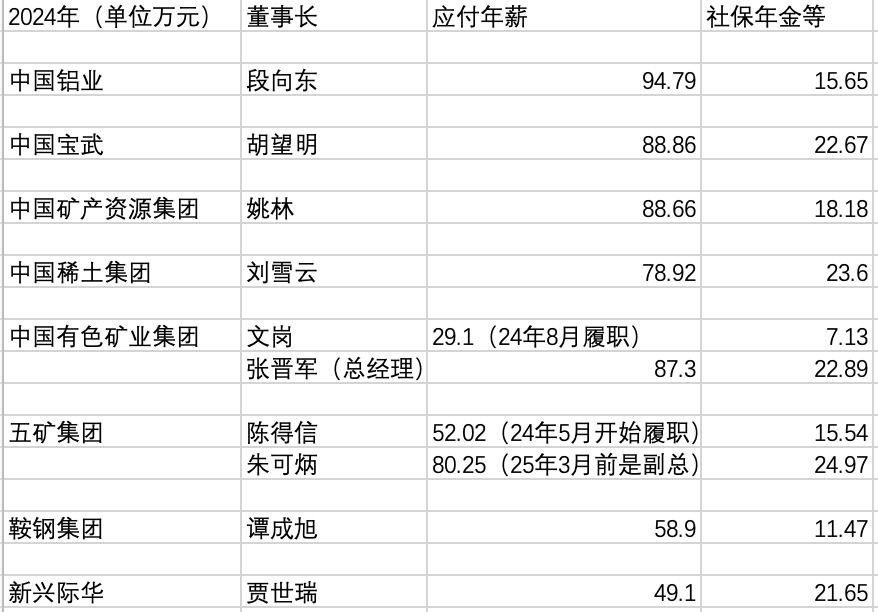
钢矿央企掌门人年薪最高差一倍
第一财经· 2026-01-20 09:28
Core Viewpoint - The article discusses the salary information of 87 central enterprise leaders for 2024, highlighting the differences in compensation between steel and non-ferrous metal mining enterprises, with a general decline in steel enterprise salaries and an increase in non-ferrous metal mining salaries [3][9]. Salary Overview - The pre-tax salary of central enterprise leaders consists of three parts: base salary, social insurance, enterprise annuity, supplementary medical insurance, and housing fund contributions, along with other monetary income [3]. - For 2024, the highest pre-tax salary among the eight steel and mining central enterprises is approximately 1.1 million yuan, including additional contributions [4]. - The highest base salary is for Duan Xiangdong, Chairman of China Aluminum Group, at 947,900 yuan, followed by Hu Wangming, Chairman of China Baowu Steel Group, at 888,600 yuan [5]. Year-on-Year Salary Changes - Compared to 2023, the salaries of steel enterprise leaders generally decreased, while those of non-ferrous metal mining leaders mostly increased [9]. - The lowest salary among the eight enterprises is for the Chairman of Xinxing Jihua Group at 491,000 yuan, which is about half of the highest salary in the non-ferrous sector [9]. Performance Impact on Salaries - The decline in steel enterprise salaries correlates with poor performance, as seen in Xinxing Jihua Group, which reported a loss of 4.228 billion yuan in 2024, a significant drop from a profit of 182 million yuan in 2023 [9]. - An analysis of Ansteel Group shows that its three listed companies experienced a decline in performance, with losses exceeding 100% compared to 2023 [10]. Non-Ferrous Metal Sector Performance - In contrast, the non-ferrous metal sector saw significant profit increases, with China Aluminum Group reporting a net profit of 12.4 billion yuan in 2024, a year-on-year increase of 85.38% [12]. - The overall profit for the non-ferrous metal industry is projected to reach around 420 billion yuan in 2024, reflecting a growth of over 10% [12]. Future Outlook - The steel industry is expected to improve in 2025, with profits projected to reach the best economic performance since 2022, driven by a recovery in production and pricing [10]. - The non-ferrous metal industry continues to thrive, with record profits reported in 2025, indicating a robust growth trajectory [13].

钢矿央企掌门人年薪最高差一倍,背后是业绩的加速分化
Di Yi Cai Jing· 2026-01-20 07:52
Group 1: Salary Trends - In 2024, the salaries of leaders in steel central enterprises generally decreased, while those in the non-ferrous metal mining sector mostly increased [1][4] - The highest salary among the eight central enterprises is held by the chairman of China Aluminum Corporation, Duan Xiangdong, at 947,900 yuan, followed by the chairman of China Baowu Steel Group, Hu Wangming, at 888,600 yuan [2][5] - The average salary for the eight steel and mining central enterprises' leaders did not exceed 1 million yuan, with the highest total salary including social insurance and other benefits being around 1.1 million yuan [1][2] Group 2: Performance and Salary Correlation - The salary of central enterprise leaders is closely linked to their performance, which explains the general increase in salaries for leaders in the non-ferrous metal mining sector [7] - China Aluminum Corporation reported a net profit of 12.4 billion yuan in 2024, a year-on-year increase of 85.38%, contributing to the rise in its leadership salaries [8] - The non-ferrous metal industry is projected to achieve a total profit of around 420 billion yuan in 2024, with a year-on-year growth of over 10% [9] Group 3: Industry Challenges - The steel industry faced a challenging operating environment in 2024, with major steel companies reporting a total profit of 45.7 billion yuan, a decline of 47.2% year-on-year [6] - The crude steel production in 2024 was 1.01 billion tons, down 1.7% year-on-year, and the domestic steel price index fell by 8.4% [6] - Despite the difficulties in 2024, the steel industry's performance is expected to improve in 2025, with a projected profit increase of 1.9 times in the first three quarters [6]




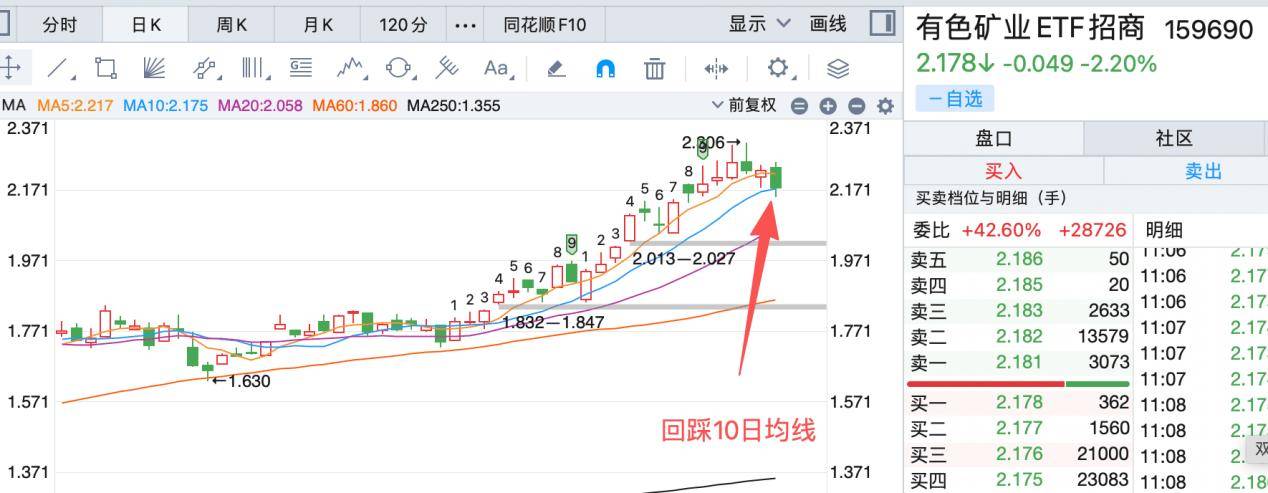
有色矿业回踩10日均线,休整还是熄火?
Sou Hu Cai Jing· 2026-01-20 03:40
Core Viewpoint - The non-ferrous metal sector, which has been one of the strongest tracks, has recently experienced a decline, with the non-ferrous metal mining ETF (159690) dropping over 3% before stabilizing around the 10-day moving average, indicating potential support at this level [1]. Group 1: Market Performance - The non-ferrous metal mining ETF has shown a significant increase of 117.91% over the past year, highlighting its strong investment value [6]. - The CSI Non-Ferrous Metal Mining Theme Index has led with an annual increase of 104.84% in 2025, outperforming other similar indices [6]. Group 2: Demand and Supply Dynamics - Strong demand is supported by data from the National Bureau of Statistics, indicating that China's cumulative production of electrolytic aluminum reached 45.02 million tons in 2025, a year-on-year increase of 2.4%, while the cumulative production of ten non-ferrous metals was 81.75 million tons, up 3.9% year-on-year [4]. - Supply constraints are evident as global copper mine capital expenditures have declined for five consecutive years, limiting supply elasticity, while emerging demands from new industries like renewable energy and AI continue to grow [4]. Group 3: Policy and Economic Environment - A joint policy document from eight departments outlines a growth plan for the non-ferrous metal industry, targeting an average annual growth of about 5% in industry value added from 2025 to 2026, providing a policy boost for industry expansion [5]. - The monetary environment is favorable, as the Federal Reserve enters a rate-cutting cycle, leading to a weaker dollar and reduced holding costs for non-ferrous metals [5].
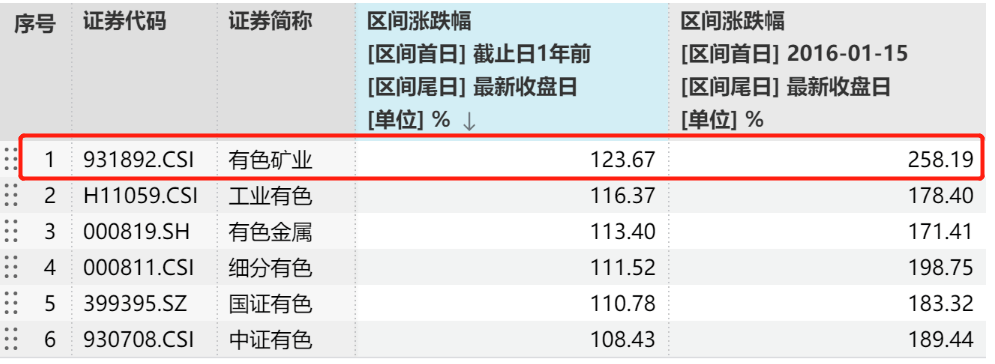
有色板块攻势不减,湖南白银领涨,有色矿业ETF(159690)盘中再创新高,连续四日吸金超6600万
Sou Hu Cai Jing· 2026-01-16 03:07
Core Viewpoint - The non-ferrous metal sector is experiencing a strong upward trend, with significant gains in various companies and ETFs, indicating a potential long-term investment opportunity in this strategic asset class [1] Group 1: Market Performance - On January 16, the non-ferrous metal sector continued to strengthen, with Hunan Silver rising over 6% and other companies like Chihong Zinc and Germanium, Jinchuan Group, Jiangxi Copper, Western Mining, and Zhongjin Lingnan also seeing gains [1] - The non-ferrous metal mining ETF (159690) increased by over 2%, reaching a new high since its listing, with a net inflow of over 66 million yuan in the past four days [1] Group 2: Investment Insights - Wang Ningyuan, the fund manager of the non-ferrous metal mining ETF, noted that the sector is undergoing a strategic asset reconstruction amid the cyclical changes in major commodities and international order, suggesting a long-term investment logic [1] - The ETF tracks the non-ferrous metal mining index, focusing on upstream resource products, with key metals like gold, copper, and aluminum accounting for nearly 60% of its weight [1] Group 3: Historical Performance - As of January 15, the non-ferrous metal mining index tracked by the ETF has seen a remarkable increase of 123.67% over the past year and a cumulative increase of 258.19% over the past decade, outperforming mainstream non-ferrous indices [1][2]

期铜从纪录高位回落,因美国关税担忧缓解且美元走强【1月15日LME收盘】
Wen Hua Cai Jing· 2026-01-16 01:07
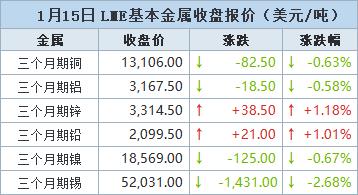
1月15日(周四),伦敦金属交易所(LME)期铜从纪录高位回落,因美元走强以及对美国可能对铜加 征关税的担忧有所缓解。 伦敦时间1月15日17:00(北京时间1月16日01:00),LME三个月期铜下跌82.5美元,或0.63%,收报每吨 13,106.0美元。 LME现货铜较三个月期铜升水已从周二的每吨约90美元降至约28美元,表明对金属的迫切需求有所减 少。 | | 1月15日 LIE基本金属收盘报价(美元/吨) | | | --- | --- | --- | | 金屋 | 收盘价 | 张跃 张跃帽 | | 三个月期铜 | | 13,106.00 ↓ -82.50 ↓ -0.63% | | 三个月期铝 | 3,167.50 | -18.50 -0.58% | | 三个月期锌 | 3.314.50 1 | +38.50 ↑ +1.18% | | 三个月期铅 | 2,099.50 1 | +21.00 ↑ +1.01% | | 三个月期镇 | 18,569.00 -125.00 -0.67% | | | 三个月期锡 | 52,031.00 -1,431.00 ↓ -2.68% | | 特朗普暂缓关键矿产关税, ...
有色金属的价值到底在哪里?上涨逻辑硬不硬?
Sou Hu Cai Jing· 2026-01-15 08:21
Group 1 - The core logic of the current surge in non-ferrous metals is driven by a combination of monetary system reconstruction, demand revolution, and supply constraints, which is expected to have a more sustained impact than the previous infrastructure-driven cycle in 2006 [4][5] - The demand for non-ferrous metals is being fueled by new engines such as renewable energy, AI, and high-end manufacturing, which are consuming metal resources at an annual growth rate of over 20% [3][4] - The geopolitical landscape is influencing resource countries to use mineral exports as leverage, leading to a significant reduction in global mining capital expenditure from 2020 to 2025, resulting in almost zero new capacity in 2026 [4] Group 2 - The supply-demand imbalance is evident, with LME copper inventory sufficient for only 1.5 days of global consumption and Shanghai aluminum inventory down 70% from its peak in 2025 [4] - The increasing use of copper in electric vehicles, AI data centers, and the growing demand for aluminum in renewable energy applications are key drivers of future demand [6] - Companies with resource self-sufficiency and technological barriers, such as Zijin Mining and Luoyang Molybdenum, are expected to enjoy excess profits, while those relying solely on processing may face cost pressures [6] Group 3 - The long-term bullish trend for copper, aluminum, and silver is expected to continue at least until 2027, despite short-term volatility [6] - Investment strategies should focus on sectors with supply shortages, such as copper, while avoiding those with oversupply, like aluminum and lithium [6] - Direct investment in resource-focused active funds is recommended, with top holdings including Yun Aluminum, Tianshan, and Zijin, to mitigate individual stock volatility [6]
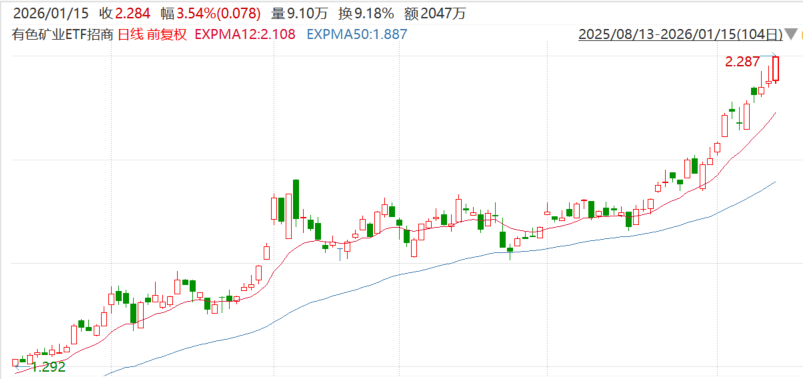
白银、战略金属全线走强!有色矿业ETF招商(159690)涨3.54%,机构:AI发展或引发金属“缺货潮”
Sou Hu Cai Jing· 2026-01-15 02:58
Group 1 - The core viewpoint of the articles highlights a strong performance in the non-ferrous metals sector, particularly in silver and minor metals, with significant price increases observed [1][3] - Major institutions have released bullish perspectives on non-ferrous metals, indicating a consensus on the sector's potential [3] - China International Capital Corporation (CICC) has identified non-ferrous and precious metals as the most favored sectors, citing a dual shortage in supply and demand [4] Group 2 - Goldman Sachs points out that the booming development of artificial intelligence and new energy industries may lead to a "shortage wave" for key metals such as copper, aluminum, cobalt, and rare earths [5] - Despite high gold prices in 2025, global central banks are expected to continue strategically increasing their gold reserves for asset diversification and security [5] - Tianfeng Securities emphasizes the need to update the understanding of precious and strategic metals, viewing them as essential choices in the current geopolitical landscape [7] Group 3 - The non-ferrous mining index has shown a ten-year annualized growth rate of 10.87%, with a significant increase of 104.84% in 2025, outperforming the broader non-ferrous metals industry index [9][11] - The profitability of the non-ferrous metals sector has been robust, with a year-on-year net profit growth of 41.43% in the first three quarters of 2025, and a further increase to 50.81% in the third quarter [13][14] - The non-ferrous mining index focuses on upstream resource products, with key metals like gold, copper, and aluminum making up nearly 60% of its weight, supported by long-term resource demand driven by energy transition and global monetary easing [15]
有色金属主题基金成机构“新宠”
Shang Hai Zheng Quan Bao· 2026-01-14 17:47
Core Viewpoint - The non-ferrous metal sector is becoming a focal point for institutional investment, with a significant increase in the number of themed funds and net subscriptions for ETFs in this category over the past year [1][2]. Group 1: Fund Activity - In the past week, seven non-ferrous metal themed funds have been reported, with several more in the pipeline for issuance [1]. - Over the past year, non-ferrous metal themed ETFs (excluding gold) have seen net subscriptions exceeding 51 billion yuan, with 15 ETFs currently having a total scale of nearly 80 billion yuan [1][2]. - As of January 1, 2025, the total scale of non-ferrous metal themed ETFs was approximately 8.08 billion yuan, which increased to 78.81 billion yuan by January 13, 2026 [2]. Group 2: Index Characteristics - There are multiple non-ferrous metal themed indices, each with different focuses, requiring investors to carefully select ETFs based on their characteristics [1]. - The CSI Shenwan Non-Ferrous Metal Index selects 50 listed companies from the non-ferrous metal and non-metal materials sectors [1]. - The CSI Industrial Non-Ferrous Metal Index focuses on 30 larger market cap companies involved in copper, aluminum, lead-zinc, and rare metals [1]. - The CSI Non-Ferrous Metal Mining Index selects 40 companies with non-ferrous metal mineral resource reserves [1]. Group 3: Market Trends and Drivers - The recent surge in the non-ferrous metal sector is attributed to various factors, including global monetary easing and increased demand from AI data centers for copper, silver, and rare metals [2]. - Supply constraints and regional imbalances in supply and demand, along with frequent mining accidents, contribute to uncertainties in the supply side [2]. - Long-term macroeconomic logic for non-ferrous metals remains intact, with a strategy of accumulating during market adjustments recommended [2]. Group 4: Future Outlook - The current demand for non-ferrous metals is driven by emerging fields such as AI computing and robotics, which have a higher price acceptance for commodities than previously expected [3]. - Despite the strong performance of the non-ferrous sector in 2025, expectations should be moderated for 2026, although the long-term resource cycle is still ongoing [3].

伊春 作风赋能生态城 实干擘画振兴图
Xin Lang Cai Jing· 2026-01-13 22:55
Group 1 - The core viewpoint of the articles emphasizes the transformation in I-chun City through ecological development and capability construction, leading to improved public services and enhanced quality of life for residents [1][8] - I-chun City has established a comprehensive tourism service system, integrating resources to provide over 2,000 emergency accommodation beds and free parking to address visitor needs during peak seasons [2][8] - The city has implemented a "no face-to-face approval" service for housing provident fund loans, reducing processing time from 480 minutes to just 2 minutes, showcasing significant efficiency improvements [3][8] Group 2 - I-chun City has formed specialized task forces to assist key enterprises like Luming Mining in overcoming bureaucratic hurdles, reducing land approval times from six months to just over three months [4][8] - The city has identified over 1,800 financing needs and assisted 1,621 enterprises in securing loans, demonstrating a proactive approach to addressing financing challenges for small and medium-sized enterprises [5][8] - A comprehensive research initiative has been launched, resulting in 967 research topics and 1,636 suggestions from local officials, which are being integrated into development strategies [6][8] Group 3 - I-chun City has adopted innovative governance practices, such as the "three police" collaborative mechanism for tourism safety, enhancing the overall security for visitors [7][8] - The city is focusing on targeted investment attraction, successfully introducing 19 projects with a total investment of 8.375 billion, reflecting a strategic approach to economic development [7][8] - The capability construction efforts are linked to ecological protection, industrial development, and public service improvements, creating a cohesive framework for sustainable growth [8]