稀土开采

Search documents
重染青绿展新颜——江西全面推进绿色矿山建设纪略
Zhong Guo Zi Ran Zi Yuan Bao· 2025-11-28 01:16
Core Viewpoint - Jiangxi Province is actively promoting green mining practices, transitioning from extensive mining to sustainable development, which has improved both environmental conditions and production efficiency [1][2][6] Group 1: Green Mining Development - Jiangxi has 593 mining sites, with 262 designated as green mines, including 35 national-level, 180 provincial-level, and 47 municipal-level [1] - The province has implemented the "Jiangxi Province Green Mining Management Measures (Trial)" and other regulations to clarify responsibilities and standardize assessments for green mining [2][3] - By May 2024, Jiangxi has established 60 new green mines, indicating steady progress in green mining initiatives [3] Group 2: Technological Innovation - The City Gate Mountain Copper Mine has improved copper recovery rates by 1.96% and sulfur recovery rates by 15.72% from 2017 to 2024 through technological advancements [3] - New technologies developed for ion-type rare earth mining have significantly reduced wastewater pollution and improved resource recovery rates [3] Group 3: Quality Control and Evaluation - A multi-departmental review system has been established to streamline the approval process for green mining applications, enhancing efficiency and consistency [4][5] - From 2021 to May 2023, 70 non-compliant mining enterprises were removed from the green mining list, reinforcing accountability [5] Group 4: Community Impact - Green mining initiatives have resolved conflicts between local communities and mining companies, improving local infrastructure and providing stable employment opportunities [6] - Legal agreements have been established to ensure compliance with green mining standards, preventing neglect of management [6] Group 5: Future Goals - By the end of 2028, 90% of large and 80% of medium-sized operating mines in Jiangxi are expected to meet green mining standards [6][7] - The provincial government emphasizes the need for continuous improvement and accountability in green mining practices [7]
财政部、税务总局:矿岩型稀土精矿按照轻稀土选矿产品征收资源税
Mei Ri Jing Ji Xin Wen· 2025-11-24 09:05
Core Viewpoint - The Ministry of Finance and the State Taxation Administration have issued a notice clarifying the implementation of resource tax policies related to rare earth mining, specifying the tax obligations for different types of rare earth products [1] Group 1: Taxation on Light Rare Earths - Taxpayers will be subject to resource tax on the mined light rare earth ores that undergo initial processing such as washing and selection, resulting in mineral-type rare earth concentrates, including fluorocarbon cerium concentrate, monazite concentrate, and mixed rare earth concentrates [1] Group 2: Taxation on Heavy Rare Earths - Taxpayers will also be required to pay resource tax on ion-type rare earth ores processed through ion exchange and other methods to produce rare earth solutions, rare earth carbonates, rare earth oxalates, and mixed rare earth oxides produced through calcination and oxidation processes [1]
贝森特吓唬中方:感恩节前必须恢复稀土供应,美国有的是报复手段
Sou Hu Cai Jing· 2025-11-24 04:11
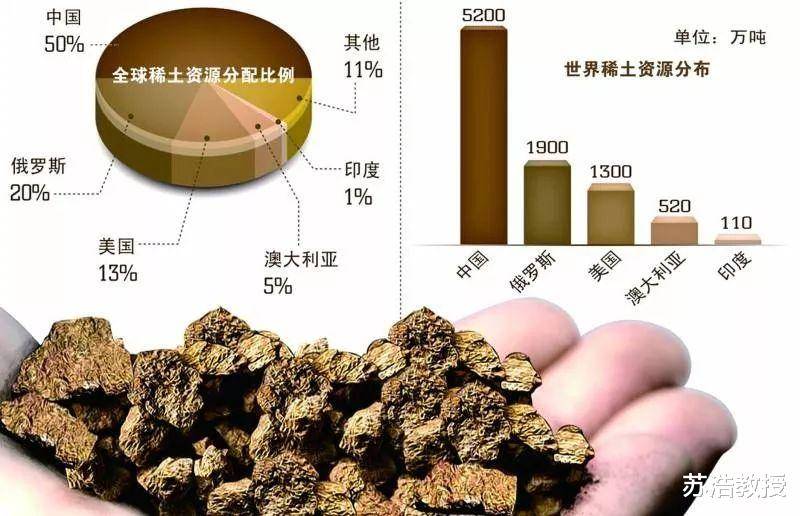
Core Insights - The urgency of the U.S. regarding rare earth exports from China has increased, with Treasury Secretary expressing hope for a supply agreement before Thanksgiving [1][3] - The U.S. believes that China should restore rare earth supply to the free flow status prior to April 4, but this may not be realistic without a comprehensive trade agreement [5][9] Group 1: U.S. Position and Actions - U.S. Treasury Secretary Becerra stated the desire to secure a rare earth supply agreement with China by the end of November [3] - Becerra warned of various retaliatory measures if China reneges on any agreement [3] - The U.S. has taken significant steps towards self-sufficiency in rare earths, but challenges remain in mining and refining capabilities [9] Group 2: China's Response and Market Dynamics - China is considering reopening rare earth exports under certain conditions, potentially limiting access to companies linked to the U.S. military [5] - China has recently resumed normal flow of rare earths by suspending export controls on key minerals [9] - Despite verbal concessions regarding U.S. soybean purchases, actual actions show ongoing discrepancies between the two nations [9] Group 3: Market Control and Dependency - China controls approximately 70% of global rare earth extraction and over 90% of processing capabilities, making it difficult for the U.S. to change this dependency in the short term [10] - The U.S. relied on imports for about 80% of its rare earth needs last year, with critical minerals like dysprosium and terbium almost entirely refined by China [10]

中方放开稀土出口,主动送上大礼,打出天大阳谋,美方已无选择
Sou Hu Cai Jing· 2025-11-10 21:44
Core Viewpoint - China's recent announcement to suspend export restrictions on key minerals such as gallium, germanium, antimony, and graphite from now until November 27, 2026, marks a strategic shift in the ongoing US-China competition [1] Group 1: Strategic Implications - The suspension of export restrictions is perceived as a tactical retreat that allows China to gain leverage, particularly in the semiconductor and renewable energy sectors, where gallium and germanium are critical [3] - The US is facing a strategic dilemma in the critical minerals sector, as domestic production is insufficient and relies heavily on Chinese technology for rare earth separation [3] - The timing of this announcement coincides with the US election cycle, presenting a challenge for the new government to choose between continued confrontation or pragmatic cooperation with China [5] Group 2: Global Supply Chain Dynamics - The global supply chain is undergoing significant restructuring, with countries like Australia and Canada ramping up mining efforts, yet lacking sufficient refining capacity [5] - China currently controls 95% of the global graphite refining capacity, making it difficult for other nations to quickly overcome this dominance [5] - The temporary lifting of export restrictions may deepen Western reliance on Chinese minerals, highlighting the dual-edged nature of supply chain weaponization [6] Group 3: Technological Advancements - The export suspension is seen as a strategic move to buy time for China's advancements in next-generation technologies, such as solid-state batteries and silicon carbide chips, which are on the verge of industrialization [6] - While the West focuses on rebuilding raw material supply chains, China is positioning itself for technological breakthroughs that could redefine industry standards [6]
异动盘点1110 | 航空股早盘走高,泡泡玛特涨超6%;稀土概念股普涨,简伯特大涨逾15.89%
贝塔投资智库· 2025-11-10 04:03
Group 1: Airline Sector - Major domestic airlines in China, including China Eastern Airlines, Air China, and China Southern Airlines, reported revenue growth and profitability for the third quarter of 2025, supported by summer travel and foreign exchange gains [1] - China Eastern Airlines (00670) rose by 4.65%, Air China (00753) increased by 6.31%, and China Southern Airlines (01055) gained 4.85% in early trading [1] Group 2: Infrastructure and Construction - China Liansu (02128) saw a rise of over 5.5% following the announcement of plans to construct and renovate over 700,000 kilometers of underground pipelines, with an investment demand exceeding 5 trillion yuan during the 14th Five-Year Plan [1] Group 3: Consumer Goods and Retail - Pop Mart (09992) surged over 6.64% as a report indicated a 245-250% increase in overall revenue for the third quarter of 2025, with domestic revenue growing by 185-190% and overseas revenue by 365-370% [1] - Wei Long (09985) increased by over 6.8% due to a Goldman Sachs report highlighting a favorable risk-reward profile after a 30% price correction since April [4] Group 4: Renewable Energy and Technology - Aidi New Energy (02623) rose by over 13.67% after announcing a change in control, with PIH becoming the new controlling shareholder [2] - Global energy storage battery shipments reached 428 GWh in the first nine months of 2025, marking a significant year-on-year increase of 90.7%, benefiting companies like Ruipu Lanjun (00666), which saw a nearly 8% rise [2] Group 5: Pharmaceuticals - Gilead Sciences-B (01672) increased by over 6.98% after being included in the MSCI Global Small Cap Index, effective November 24 [2] - Zhaoke Ophthalmology-B (06622) rose over 10.3% following a distribution agreement with a leading Indonesian pharmaceutical company for its innovative eye treatment [3] Group 6: Metals and Mining - Century Aluminum (CENX.US) reported a revenue of $632.2 million for Q3 2025, a 17.3% year-on-year increase, primarily driven by price increases in the Midwest [5] - Rare earth stocks saw significant gains, with MP Materials rising over 12.8% [5] Group 7: Technology and E-commerce - Airbnb (ABNB.US) reported Q3 2025 revenue of approximately $4.1 billion, a 10% year-on-year increase, with net profit around $1.4 billion [7] - Akamai (AKAM.US) saw a 14.71% increase after reporting a non-GAAP EPS of $1.86, exceeding market expectations [7]




日本首次从澳大利亚进口重稀土
中国能源报· 2025-10-31 11:05
Core Viewpoint - Japan has begun importing rare earth elements from Australia, marking its first acquisition of this critical resource from outside China, which is seen as a significant step towards diversifying supply sources for economic security [1][2]. Group 1: Import Details - Sojitz Corporation has started importing dysprosium and terbium from the Mount Weld mine in Australia, with these materials processed in Malaysia before being shipped to Japan [1]. - Lynas Rare Earths, the operator of the Mount Weld mine, received an investment of AUD 200 million (approximately RMB 930 million) from a joint venture established by Sojitz and the Japan Oil, Gas and Metals National Corporation (JOGMEC) in 2023 [1]. - Lynas will supply up to 65% of the dysprosium and terbium output from the mine, which corresponds to about 30% of Japan's market demand for these elements [1]. Group 2: Economic Security and Cost Implications - Japan views the diversification of supply sources outside of China as a key aspect of its economic security strategy, given that China currently accounts for nearly 70% of global rare earth production, with heavy rare earths almost entirely sourced from China [2]. - The cost of importing rare earths from Australia and the U.S. is expected to be significantly higher than sourcing directly from China, primarily due to the lower concentration of heavy rare earths in ores and the inefficiencies in mining and transportation [2]. - The price of the heavy rare earths imported by Sojitz from Australia is reported to be higher than that of Chinese products [2].

美股大幅高开 三大指数均创新高 大型科技股普遍走强
Ge Long Hui· 2025-10-27 13:35
Market Performance - The three major U.S. stock indices opened significantly higher, with the Dow Jones up 0.66%, the S&P 500 up 0.93%, and the Nasdaq Composite up 1.44%, all reaching new historical highs [1] Technology Sector - Major technology stocks showed strong performance, with Nvidia, Google, Broadcom, and AMD each rising approximately 2% [1] Rare Earth Stocks - Rare earth stocks experienced a collective decline, with United States Antimony down 15.9%, Critical Metals down 10.9%, USA Rare Earth down 7.1%, and American Resources down 7.1% [1] Mergers and Acquisitions - Avidity Biosciences surged 43.2% following Novartis's announcement of a $12 billion cash acquisition of the company [1] Partnerships and Collaborations - Lululemon Athletica increased by 4.6% after announcing a collaboration with the NFL and sports retailer Fanatics [1] - Baidu's stock rose 4.5%, as it holds the second-largest market share in China's AI cloud market [1] - WeRide continued its growth with a 5.1% increase, partnering with Uber to launch Robotaxi public operations in Riyadh [1]
稀土这张重要牌影响之大,让全世界明白过来,不能跟中国作对
Sou Hu Cai Jing· 2025-10-26 02:38
Core Insights - The article highlights the strategic importance of rare earth elements (REEs) for military applications, particularly for the U.S. Navy, which relies heavily on these materials for advanced weaponry and technology [1][5][10] - China holds a dominant position in the global rare earth market, controlling approximately 34% of the world's total reserves, which amounts to about 120 million tons [1][9] - The U.S. is currently facing challenges in its military production due to a lack of access to refined rare earth materials, which are essential for the manufacturing of advanced naval vessels and submarines [5][10] Group 1 - Rare earth elements are critical for military applications, with specific quantities required for U.S. naval vessels, such as 2.4 tons for an Arleigh Burke-class destroyer and 4.2 tons for a Virginia-class submarine [1][10] - Historically, China did not prioritize rare earth mining and processing, leading to a situation where the U.S. benefited from low-cost exports for military manufacturing [1][3] - The current landscape has shifted, with China now controlling the entire supply chain from mining to refining, making it difficult for other countries to compete [3][7] Group 2 - The U.S. is attempting to negotiate for increased rare earth exports from China, but China has implemented strict controls on exports to protect its resources and industry [5][9] - Germany has successfully navigated China's export regulations by agreeing to oversight and data sharing, demonstrating a potential model for cooperation [5][9] - The strategic management of rare earth exports by China serves as a significant leverage point in international relations, compelling countries to maintain cooperative ties with China for access to these critical materials [9][11] Group 3 - The U.S. military's reliance on rare earth elements exposes vulnerabilities in its supply chain, particularly as demand for advanced military equipment increases [7][10] - China's control over rare earth processing technology creates a barrier for other nations, as they cannot simply source raw materials without the capability to refine them [7][10] - The shift from passive resource exportation to active control over rare earth elements has transformed China's position into a powerful negotiating tool on the global stage [11]

果然,美国不行了,欧盟开始上了,对G7喊话:加一起,施压才有劲
Sou Hu Cai Jing· 2025-10-24 06:15
Core Viewpoint - The new Chinese regulations on rare earth exports have prompted strong reactions from the U.S. and the EU, with the U.S. threatening to impose 100% tariffs while the EU seeks a coordinated response among G7 nations to address the potential global supply issues caused by these regulations [1][2]. Group 1: New Regulations and Their Implications - China's new regulations require approval for the export of products containing more than 0.1% rare earth elements and mandate export licenses for foreign companies producing rare earth magnets or related technologies in China [2][4]. - The EU views these regulations as unreasonable and believes they have already impacted European businesses, prompting a push to reduce dependency on China and accelerate the development of rare earth production projects within G7 countries [2][4]. Group 2: Global Supply Chain Concerns - The EU officials assert that China's actions constitute economic coercion, severely damaging global supply chains, particularly affecting the production of electric vehicles, defense technologies, and consumer electronics [4][6]. - China controls over 90% of global rare earth metal and magnet production, leading to a situation where Western countries feel "choked" due to their reliance on Chinese supplies [4][6]. Group 3: Historical Context and Challenges - Historical attempts by the U.S. and Europe to develop their own rare earth resources have faced challenges due to high energy consumption, low added value, and lack of profitability, leading to a retreat from investment in this sector [6][7]. - The global rare earth consumption is only 230,000 tons annually, and the industry requires substantial government subsidies to remain viable, complicating long-term support for these projects in Western countries [6][7]. Group 4: G7 Coordination and Future Actions - G7 nations are discussing potential measures such as setting price floors or imposing taxes on Chinese exports to encourage more investment in rare earth projects [6][9]. - The urgency for a unified G7 response is emphasized, with plans for a video conference to align strategies against China's new regulations [9].

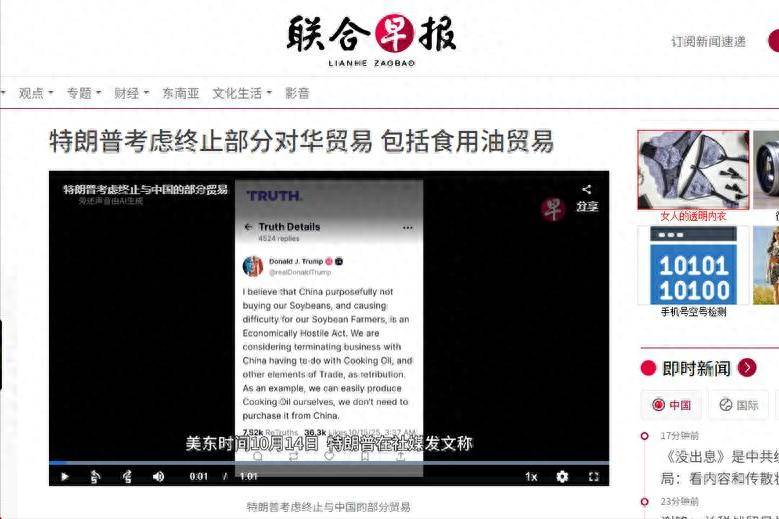
中国反制美国大豆,特朗普破防怒发小作文,引美国资本市场遭震荡
Sou Hu Cai Jing· 2025-10-19 15:06
Core Viewpoint - The recent adjustments in China's soybean procurement from the U.S. have caused significant concern for the Trump administration, leading to market volatility, highlighting the strategic depth of the ongoing U.S.-China trade conflict [1][3][21] Group 1: China's Countermeasures - China's countermeasures have been targeted, starting with special port fees on U.S. vessels, increasing operational costs for American shipping companies [3] - The introduction of rare earth export controls directly impacts U.S. high-end industries, as over 90% of U.S. rare earth needs are met through imports [3] - The combination of these measures has led to panic in the U.S., with significant market repercussions, including a chaotic stock market response [3][5] Group 2: U.S. Response and Market Implications - Trump's reaction to China's soybean procurement changes has been notably intense, indicating deeper implications beyond just agricultural interests [5][7] - The U.S. soybean market is currently facing an oversupply due to reduced Chinese purchases, disrupting the usual price signals in the futures market [13] - Speculation arises that Trump's family may be positioned to profit from these market fluctuations, suggesting a financial motive behind his public statements [13][19] Group 3: Broader Economic Impact - The ongoing trade conflict is not merely a dispute over agricultural products but reflects a broader struggle over industrial security and financial stability between the two nations [21] - Trump's public comments risk undermining the stability of U.S. financial markets, which are crucial for the credibility of the dollar [19] - The strategic nature of China's countermeasures demonstrates a calculated approach to target vulnerabilities in the U.S. economy, indicating a sophisticated level of economic warfare [21]