
金属矿业

Search documents
铜冠金源期货商品日报-20260206
Tong Guan Jin Yuan Qi Huo· 2026-02-06 02:07
1. Report Industry Investment Rating No relevant information provided. 2. Core Views of the Report - Overseas risk appetite declined, and A - shares fell with shrinking trading volume. The market is in a stage of rapid style switching, with short - term volatility likely to continue and mainly presenting structural opportunities. In the medium - to - long - term, it remains positive under policy expectations and fundamental support [2][3] - Precious metals are in a phased adjustment period, with the current adjustment not yet over [4][5] - Copper prices are expected to continue to adjust in the short term, affected by factors such as the weakening of the US employment market and the large - scale selling of silver by ETFs [6][7] - Aluminum prices are under pressure to oscillate and adjust due to factors like the easing of geopolitical situations and the accumulation of social inventories [8][9] - Alumina is oscillating as market participants are in a wait - and - see mode [10] - Cast aluminum follows the market to oscillate and adjust due to cost factors and the approaching Spring Festival [11] - Zinc prices continue to be under pressure, affected by factors such as increased market risk aversion and the approaching Spring Festival [12][13] - Lead prices are expected to oscillate weakly, with a lack of prominent supply - demand contradictions [14] - Tin prices are in an adjustment phase and are expected to continue to adjust in the short term [15] - Steel prices (螺卷) are expected to oscillate weakly in the short term, showing a pattern of weak supply and demand [16][17] - Iron ore is expected to oscillate weakly in the short term, with strong supply and weak demand [18] - Coking coal and coke are in a situation of weak supply and demand and are expected to continue to oscillate in the short term [19] - Soybean meal futures are expected to oscillate, affected by factors such as the export situation of soybeans and the approaching Spring Festival [20][21][22] - Palm oil is expected to oscillate and adjust in the short term, affected by factors such as the weakening of the US employment market and the supply of rapeseed oil [23] 3. Summary by Relevant Catalogs 3.1 Macro - Overseas: US employment at the beginning of the year shows more signs of weakness. The initial jobless claims rose to 231,000, and the JOLTS job openings in December dropped to 6.542 million, the lowest since September 2020. The European Central Bank kept its policy unchanged in February. Market risk appetite continued to contract, with US stocks falling, precious metals adjusting, and the US dollar index rising. The release of non - farm payroll data is postponed [2] - Domestic: A - shares fell with shrinking trading volume on Thursday. The market is in a stage of rapid style switching, with funds flowing to defensive sectors. ETF fund flows are divided, and margin trading balances continue to decline. The market is expected to continue to oscillate in the short term and be positive in the medium - to - long - term [3] 3.2 Precious Metals - COMEX gold futures fell 3.08% to $4,798.10 per ounce, and COMEX silver futures fell 16.64% to $70.35 per ounce. The decline is due to better - than - expected US employment data, hawkish remarks from Fed officials, and the increase in margin requirements by exchanges. The adjustment of precious metals is expected to last for a long time and exceed expectations [4][5] 3.3 Copper - Shanghai copper's main contract adjusted downward, and LME copper quickly adjusted to around $12,800. The domestic copper spot market's trading improved, and downstream enterprises entered the restocking cycle. The US employment market deterioration may affect economic growth, and the large - scale selling of silver by ETFs dragged down copper prices. The potential merger of two mining giants is postponed. Copper prices are expected to continue to adjust in the short term [6][7] 3.4 Aluminum - Shanghai aluminum's main contract closed at 23,380 yuan per ton, down 2.2%. LME aluminum closed at $3,026 per ton, down 1.08%. Aluminum social inventories are accelerating the process of accumulation, and with the approaching of the Spring Festival, consumption is weak. Aluminum prices are under pressure to oscillate and adjust [8][9] 3.5 Alumina - The main contract of alumina futures closed at 2,790 yuan per ton, down 0.78%. The spot price was flat. The supply side is observing the resumption of production of previously reduced - production capacity, and the demand side has sufficient inventory. Market participants are in a wait - and - see mode, and alumina is oscillating [10] 3.6 Cast Aluminum - The main contract of cast aluminum alloy futures closed at 21,915 yuan per ton, down 1.92%. The cost of scrap aluminum is affected by policies and price increases, and the market is inactive. With the approaching of the Spring Festival, the market is light, and cast aluminum follows the market to oscillate and adjust [11] 3.7 Zinc - Shanghai zinc's main contract oscillated weakly during the day and stabilized at night. LME zinc oscillated horizontally. The spot market's trading was poor, and social inventories increased. The increase in market risk aversion and the approaching of the Spring Festival led to zinc prices continuing to be under pressure, but the potential supply disruption of overseas zinc mines provided some support [12][13] 3.8 Lead - Shanghai lead's main contract oscillated weakly during the day and horizontally at night. LME lead oscillated weakly. The spot market's trading sentiment was weak, and social inventories increased. The supply and demand of lead are both weak, and lead prices are expected to oscillate weakly following the non - ferrous metal sector [14] 3.9 Tin - The main contract of tin futures continued to decline during the day and oscillated narrowly at night. LME tin oscillated weakly. The decline in market risk appetite and the approaching of the Spring Festival led to a decrease in funds, and the supply - demand support is weak. Tin prices are expected to continue to adjust in the short term [15] 3.10 Steel (螺卷) - Steel futures oscillated weakly. The spot market's trading volume decreased. The supply of steel decreased slightly, and the inventory increased. The apparent demand for rebar decreased significantly, and the hot - rolled coil data changed little. The steel market shows a pattern of weak supply and demand and is expected to oscillate weakly in the short term [16][17] 3.11 Iron Ore - Iron ore futures oscillated and adjusted. The spot market's trading rhythm slowed down, and the steel mills' pre - holiday restocking is coming to an end. The supply of iron ore increased, and the demand was weak. Iron ore prices are expected to oscillate weakly in the short term [18] 3.12 Coking Coal and Coke - Coking coal and coke futures oscillated and declined. Coking profits recovered, but production was still restricted by environmental protection policies. The supply of upstream coal mines tightened, and the downstream demand was weak. The market is in a situation of weak supply and demand and is expected to continue to oscillate in the short term [19] 3.13 Soybean and Rapeseed Meal - Soybean meal 05 contract rose 0.22%, and rapeseed meal 05 contract fell 0.58%. Brazil's soybean export in February is expected to be 11.42 million tons. The US soybean export sales are at a new low. The drought in Argentina is no longer a concern. The market is in a situation where the supply in the first quarter is expected to improve, and soybean meal futures are expected to oscillate in the short term [20][21][22] 3.14 Palm Oil - Palm oil 05 contract fell 1.35%. The decline in the US employment market and the increase in rapeseed oil supply led to a decline in the oil market. The MPOA expects a 14% decrease in Malaysia's palm oil production in January. Palm oil is expected to oscillate and adjust in the short term [23]
美国囤铜引发价格飙升,中国冷静应对打破预期
Sou Hu Cai Jing· 2026-02-06 00:12
Core Viewpoint - The article discusses the strategic competition between the U.S. and China over copper and silver, highlighting how the U.S. has hoarded copper to manipulate prices, while China has shifted focus to silver as a critical industrial resource, thereby redefining the dynamics of global supply chains and technological development. Group 1: Copper Hoarding by the U.S. - The U.S. has significantly increased its copper reserves, leading to a surge in global copper prices, which is seen as a strategic move to hinder China's green transition efforts [4][5][8] - The U.S. consumes only a small fraction of the world's copper but has stockpiled a substantial amount, indicating a deeper strategy beyond mere market behavior [3][4] - This hoarding has resulted in increased infrastructure costs in the U.S., undermining the Biden administration's green initiatives [8] Group 2: China's Strategic Shift to Silver - In response to U.S. actions, China has elevated silver to a strategic resource, implementing strict export controls that could disrupt global supply chains [13][14] - Silver is now recognized as essential in modern industries, particularly in high-tech applications, making it a critical component for advancements in solar energy and electric vehicles [11][12] - The price of silver in Shanghai has surged, reflecting the impact of China's new export policies on global markets [15] Group 3: Diverging Development Philosophies - The U.S. approach is characterized by a "blocking" strategy, attempting to maintain its dominance through resource control, which is seen as a short-term tactic [19][20] - Conversely, China is adopting an "opening" strategy, using the pain of increased costs to drive domestic innovation and reduce reliance on imported materials [20][22] - This strategic divergence suggests a potential bifurcation in global energy systems, with the U.S. favoring traditional high-cost materials and China pushing for innovative, cost-effective solutions [26]

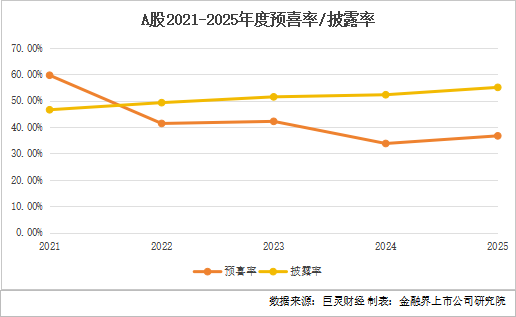
A股2025年业绩预告收官!券商、有色金属迎来红利期,地产、光伏承压,AI引领新质生产力
Jin Rong Jie· 2026-02-04 11:32
Core Viewpoint - The performance forecasts for A-share listed companies in 2025 reveal a clear picture of China's economic transition, with a notable divergence between industries, highlighting the shift from traditional reliance on factors to innovation-driven high-quality development [1][17]. Industry Performance Overview - As of January 30, 2026, 55.36% of A-share companies disclosed their 2025 performance forecasts, with a slight increase in the positive forecast rate to 36.08% from 33.38% in 2024, indicating a gradual recovery in profitability [1]. - The financial and non-ferrous metal sectors showed significant growth, while traditional industries like real estate and photovoltaics faced ongoing performance pressures [3][8]. Positive Forecasting Industries - The top five industries with the highest positive forecast rates in 2025 are non-bank financials (87.5%), non-ferrous metals (65.8%), beauty care (53.85%), automotive (53.68%), and public utilities (50.94%) [5][18]. - Non-bank financials benefited from a recovering capital market and improved investment returns, leading to a robust performance [5][18]. - The non-ferrous metals sector saw a profit increase driven by rising commodity prices and improved capacity release, with major companies like Zijin Mining and Luoyang Molybdenum reporting strong results [7][8]. Underperforming Industries - The real estate and photovoltaic sectors are experiencing significant challenges, with forecast rates below 20% for coal and real estate, indicating a deep adjustment phase [8][10]. - Major real estate companies, including Vanke and Greenland Holdings, are expected to report substantial losses, reflecting ongoing market difficulties [10][11]. New Growth Drivers - New productivity sectors, particularly in artificial intelligence, semiconductors, and high-end manufacturing, are witnessing explosive growth, becoming the core engine of A-share profitability [12][17]. - Companies like Cambricon are expected to report significant revenue growth, driven by increasing demand for AI applications [13][19]. Policy Support and Future Outlook - The government is enhancing support for new productivity sectors through policies promoting AI and digital technology integration, which is expected to sustain growth in these industries [19][20]. - Traditional industries are also encouraged to transform and upgrade, with a focus on high-quality development and overcoming transition challenges [19].






黄金重回5000美元!费率最低的黄金ETF华夏(518850)两日涨超8%,有色金属ETF基金(516650)年内净流入超百亿
Ge Long Hui· 2026-02-04 03:03
Core Viewpoint - Precious metals have rebounded strongly, with gold returning to the $5,000 mark, driven by geopolitical tensions and sustained demand from central banks and private investors [1] Group 1: Market Performance - Spot gold surged over 6% at the New York close, marking the largest single-day increase since November 2008, while spot silver rose over 10% [1] - In the Asian trading session, spot gold continued to rise by 2%, reaching $5,040 [1] - The gold ETF Huaxia increased by 3.66%, with a two-day gain exceeding 8%, while the non-ferrous metal ETF has seen a cumulative increase of nearly 7% year-to-date, with a net inflow of 10.3 billion yuan [1] Group 2: Demand Drivers - Analysts from multiple international investment banks indicate that the fundamental demand for gold remains unchanged, with global central banks purchasing gold and private investors increasing their gold holdings to diversify asset allocation [1] - Silver prices are supported by ongoing industrial production demand, leading to a positive outlook for both gold and silver price rebounds [1] Group 3: Related Products - The gold ETF Huaxia (518850) is highlighted as a low-cost investment tool, anchored to physical gold and supporting T+0 trading, with a net inflow of 3.3 billion yuan over the past 20 days [1] - The non-ferrous metal ETF (516650) tracks a diversified index of metals, with copper, aluminum, gold, rare earths, and lithium, where copper, aluminum, and gold together account for 61.29% of the index, the highest in the market [1] - The gold stock ETF (159562) tracks the SSH gold stock index, primarily consisting of gold and copper, and has seen a total net inflow of 5.28 billion yuan over the past 20 days [2]
集体跳水!美股爆发AI恐慌性抛售,英伟达市值一夜蒸发超8000亿元
Hua Xia Shi Bao· 2026-02-04 01:13
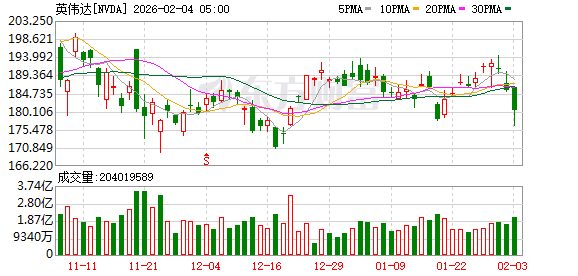
Market Overview - On February 3, the U.S. stock market experienced a decline across all three major indices, with the Nasdaq index dropping as much as 2.39% during the day. The S&P 500 index fell by 0.84% to 4,917.81 points, the Nasdaq composite index decreased by 1.43% to 23,255.19 points, and the Dow Jones Industrial Average dropped by 0.34% to 49,240.99 points. The Nasdaq index nearly erased its gains from the previous year [2]. Technology Sector Performance - Among the seven major U.S. tech companies, only Microsoft saw an increase, while Nvidia, Facebook, and Amazon all experienced declines exceeding 2%. Nvidia's stock fell by 2.84%, resulting in a market value loss of $128.1 billion (approximately 88.88 billion RMB) [2][3]. AI Impact on Software Stocks - The release of a new AI legal plugin by Anthropic triggered a sell-off in software stocks, affecting companies that may be replaced by AI. Legal software and data service companies were particularly impacted, with Thomson Reuters experiencing a drop of 20.7% during the day and closing down over 15%. The Wind U.S. Software Services Index fell by 4.10%, with most component stocks declining [5][4]. Broader Market Sentiment - Despite the significant declines in the software sector, most S&P 500 component stocks closed higher. FedEx continued its record rise, and Walmart became the first company to surpass a market capitalization of $1 trillion. Analysts noted that the market is experiencing turbulence beneath a seemingly calm surface, with investors concerned about U.S. corporate spending on AI while also hoping for broader economic growth to drive market performance [5]. Gold Market Reaction - Following the stock market downturn, international gold prices rebounded, with COMEX gold futures nearing $5,000 per ounce. The U.S. metals sector saw gains, with Southern Copper rising over 11% and AngloGold increasing by more than 6% [5]. Geopolitical Concerns - Ray Dalio, founder of Bridgewater Associates, warned of a potential "capital war" amid escalating geopolitical tensions and high market volatility. He emphasized that despite recent historical sell-offs in precious metals, gold remains the best place to store funds [6].

荷兰国际:欧盟对俄金属禁令将加剧供应紧张
Xin Lang Cai Jing· 2026-02-03 09:31
Core Viewpoint - The European Union is considering a ban on imports of platinum and copper from Russia, which would tighten market supply further [1] Group 1: Market Impact - The potential ban would primarily affect MMC Norilsk Nickel, Russia's largest mining company, which has not been sanctioned due to its critical position in the global supply chain [1] - The metal markets are already experiencing tight supply conditions, and any loss of Russian metal supply would exacerbate this supply tightness [1]
金属价格大涨 南非英帕拉铂业下半年利润激增400%
Ge Long Hui A P P· 2026-02-03 09:12
Core Viewpoint - Impala Platinum Holdings Limited expects a significant profit increase of approximately 400% in the second half of the year, driven by rising metal prices [1] Financial Performance - The company anticipates earnings between 91 billion rand (approximately 7.74 billion USD) and 94.5 billion rand [1] - The average selling price of the company's products has "significantly increased," contributing to the improved performance [1] Metal Price Trends - Platinum prices nearly doubled in the six months ending December, while palladium prices rose by about 66% [1] - Both metals are expected to continue rising until early 2026, although there was a recent overall decline in precious metals, reversing much of the gains made this year [1]
中辉有色观点-20260203
Zhong Hui Qi Huo· 2026-02-03 05:50
金银:国内情绪性跌势远大于外部 中辉有色观点 | I | 1000 - 1000 6 1 | | | 15 2 | | --- | --- | --- | --- | --- | | | | 11 | No | 1 | | 中辉有色观点 | | | | --- | --- | --- | | 品种 | 核心观点 | 主要逻辑 | | 黄金 | | 市场关注交易情绪层面,早已超买和超高的 VIX 指数情绪被浇灭,金银飞流直下三 | | | 等待降波 | 千尺。基本面短期对盘面影响不大,中长期地缘秩序重塑,不确定性持续存在,央 | | ★ | | 行继续买黄金,长期战略配置价值不变。本周关注调整幅度 | | | | 此前提示白银交易太过于拥挤,这一天回来,近日调整甚是惨烈。尽管长期理由仍 | | 白银 | 等待企稳 | 然存在供需缺口连续 5 年,全球大财政均对白银长期有利),但是短期市场会沉浸 | | ★★ | | 在悲观情绪中,保持关注。 | | | | 美国制造业 PMI 超预期,提振市场风险偏好,但随着长假临近,中下游需求疲软叠 | | 铜 | 长线持有 | 加投机多头获利了结意愿强烈,短期建议降低仓位控 ...
未知机构:金沙中国涨38此前澳门1月博彩毛收入达2263亿澳门元同比增长24-20260203
未知机构· 2026-02-03 02:20
Summary of Key Points from the Conference Call Industry Overview - The gaming and entertainment sector in Macau showed a significant rebound with January gross gaming revenue reaching 22.63 billion MOP, reflecting a year-on-year increase of 24% and a month-on-month increase of 8% [1][2][3] - The metal sector experienced weakness, with Zijin Mining falling by 6.63%, although there were signs of buying interest at lower prices [1][2][3] Company-Specific Insights - **Sands China**: - Stock increased by 3.8% following the positive gaming revenue data from Macau, indicating a recovery in a sector that had previously underperformed since the beginning of the year [1][2][3] - **China Mengniu Dairy**: - Stock rose by 1.3%, supported by southbound capital, which accounted for approximately 10% of the trading volume [1][2][3] - **BYD**: - Stock declined by 7.8% after reporting sales of 210,051 new energy vehicles in January, which represented a year-on-year decrease of 30.11% [1][2][3] Additional Observations - The positive gaming revenue data from Macau has sparked a rebound in the gaming sector, which had been lagging at the start of the year [1][2][3] - The performance of the metal sector, particularly with Zijin Mining, indicates potential volatility and investor interest in bargain opportunities [1][2][3]
未知机构:香港恒生指数HSI下跌223受资源股拖累走低贵金属在亚洲交易时段持-20260203
未知机构· 2026-02-03 01:55
Summary of Conference Call Notes Industry Overview - The Hang Seng Index (HSI) declined by 2.23%, primarily dragged down by resource stocks and weak performance in precious metals during the Asian trading session [1][1] - The Hang Seng Technology Index (HSTECH) fell by 3.4%, indicating significant pressure on the technology sector [2][2] Key Company Insights - **Sands China (1926)**: - Stock increased by 4.1% following a report that Macau's gross gaming revenue for January reached 22.63 billion MOP, representing a year-on-year growth of 24% and a month-on-month increase of 8% [2][2] - **China Mengniu Dairy (2319)**: - Stock rose by 1.2%, supported by southbound capital, which accounted for approximately 10% of its trading volume [2][2] - **BYD (1211)**: - Stock decreased by 6.9% due to disappointing electric vehicle sales, indicating a slowdown in the growth of the Chinese electric vehicle market [3][3] - **NIO (9866)**: - Stock fell by 4.5% as part of the broader decline in electric vehicle manufacturers [3][3] - **Xpeng Motors (9868)**: - Stock dropped by 6.8%, reflecting the same market pressures as other EV companies [3][3] - **Li Auto (2015)**: - Stock decreased by 2.3%, also impacted by the disappointing sales figures [3][3] Additional Insights - The technology sector is viewed as a lagging segment this year, but there are signs of recovery following the optimistic January data release [2][2] - Weak metal prices contributed to declines in mining companies, with Zijin Mining (2899) down by 5.6% and Zijin Gold (2259) down by 7.9% [3][3]