消费

Search documents
3M八年同行进博, 以科技之力共创绿色未来
Di Yi Cai Jing· 2025-11-06 01:34
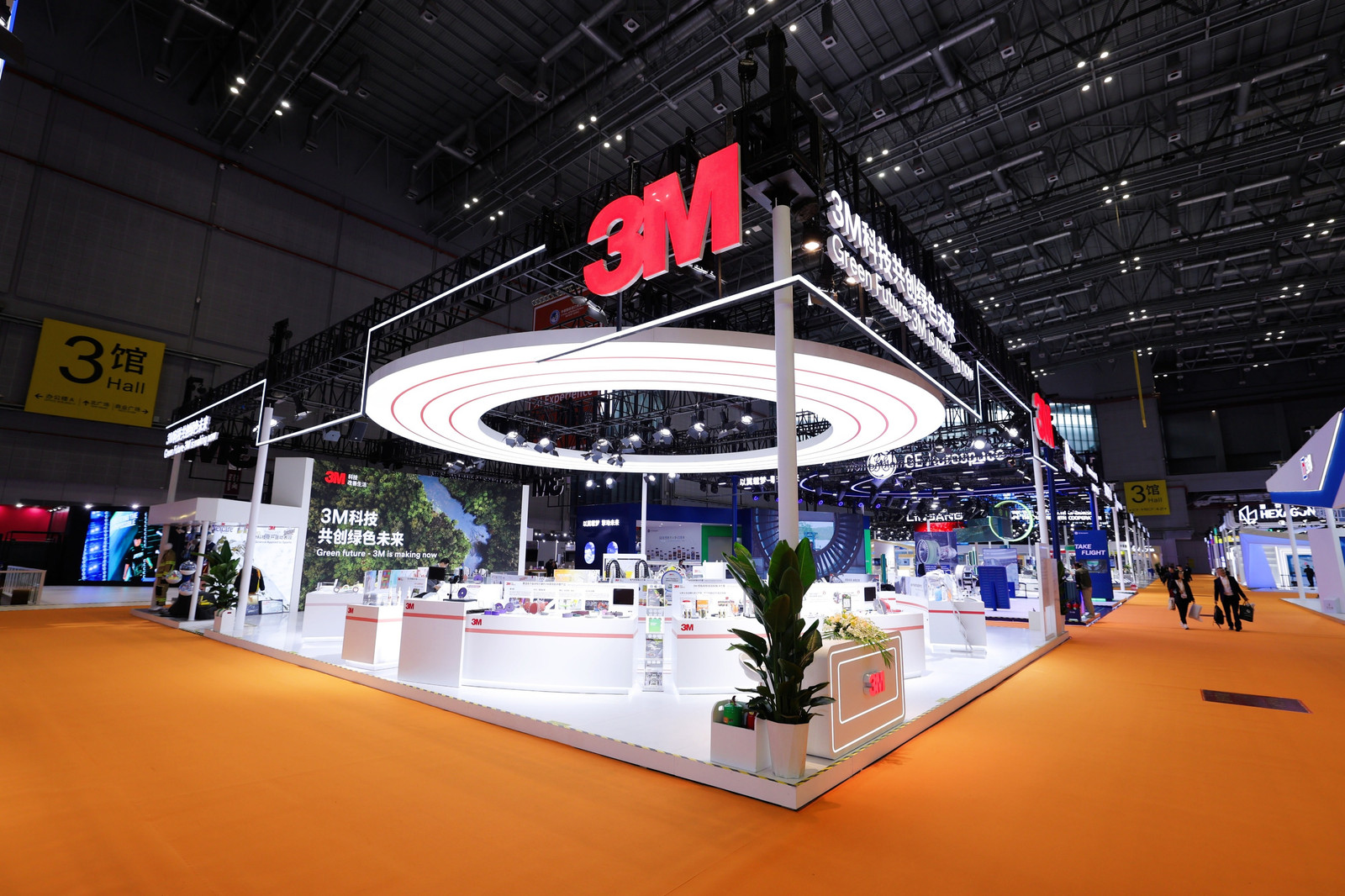
Core Insights - 3M is participating in the China International Import Expo (CIIE) for the eighth consecutive year, showcasing its commitment to innovation and local collaboration with the theme "3M Technology Co-creating a Green Future" [1] - The company emphasizes its focus on five key markets: industrial, safety, automotive, electronics, and consumer, demonstrating its dedication to sustainable development through technological advancements [1][3] Group 1: Innovation and Product Focus - 3M's industrial display area features key solutions aimed at enhancing production efficiency and precision in manufacturing [3] - The safety display area highlights 3M's commitment to protecting the health and safety of professionals [5] - The automotive display showcases multi-dimensional material science solutions that cater to the evolving demands for electrification, intelligence, and personalization in the automotive industry [5] - The electronics display focuses on providing advanced optical solutions to meet the increasing demands for screen durability and optical clarity [5] - The consumer display area addresses the growing demand for environmentally friendly materials, balancing functionality and sustainability [5] Group 2: Strategic Collaborations - During the expo, 3M will sign a strategic cooperation memorandum with Dow, focusing on new materials and environmental technologies to accelerate the transition to low-carbon industries [6] - This collaboration aims to leverage both companies' resources to explore cutting-edge green technologies and enhance the practical application of research outcomes [6] Group 3: Commitment to Local Development - The CIIE has become a significant platform for attracting foreign investment, with 3M recognizing the investment opportunities in the Chinese market [7] - 3M's Shanghai chemical production base, which includes a $50 million smart cutting center, enhances its ability to meet the needs of domestic electronic and industrial clients [7] - A recent expansion project at the Shanghai chemical production base increased production capacity by 50%, aligning with the diverse demands for low-pollution, lightweight, and high-strength products in the consumer electronics and automotive sectors [7] - Upgrades to the optical materials pilot laboratory further strengthen 3M's competitive advantage in research, testing, and production, enabling efficient responses to client needs in the electronic and automotive sectors [7]


美股全线上涨!谷歌创收盘新高
Zhong Guo Zheng Quan Bao· 2025-11-05 23:16
Group 1: US Stock Market Performance - On November 5, US stock indices rose across the board, with the Nasdaq up 0.65%, the Dow Jones up 0.48%, and the S&P 500 up 0.37% [2] - Major tech stocks saw gains, with Alphabet (Google's parent company) rising over 2% to reach a record closing high [2] - Tesla increased by over 4%, while Nvidia fell more than 1% [2] Group 2: AI and Tech Developments - Apple plans to utilize Google's 1.2 trillion parameter AI model to upgrade its Siri voice assistant, with the new version expected to launch in spring next year [2] - AMD's stock rose by 2.5% after reporting third-quarter earnings and revenue that exceeded analyst expectations, despite initial concerns about profit margins [2] - Other AI-related stocks, including Broadcom and Micron Technology, also experienced gains [2] Group 3: Chinese Stocks Performance - The Nasdaq Golden Dragon China Index increased by 0.15%, with notable gains in stocks such as Futu Holdings (over 4%), Vipshop, and TAL Education (over 2%) [3] Group 4: Employment Data - The ADP reported that the US private sector added 42,000 jobs in October, surpassing the expected 22,000, marking the largest increase since July 2025 [4] - The September employment data was revised down from a loss of 29,000 to a loss of 32,000 [4] Group 5: Commodity Market Trends - International precious metals saw an increase, with COMEX gold futures up 0.81% and London spot gold up 1.29% [6] - Crude oil prices declined, with NYMEX crude futures and ICE Brent futures down 1.52% and 1.4%, respectively [6]

[11月5日]指数估值数据(A股低开高走;全球资产出现波动,原因为何)
银行螺丝钉· 2025-11-05 14:03
Market Overview - The market opened lower but closed higher, with overall fluctuations remaining small, maintaining a rating of 4.2 stars [1] - Both large-cap and small-cap stocks experienced slight increases [2] - Value style continues to show strength [3] - Indices related to dividends and free cash flow have seen continuous increases [4] - Growth style opened lower but rebounded significantly in the afternoon [5] - Hong Kong stocks showed minor fluctuations, with no significant changes [6] Global Asset Fluctuations - Recent global assets have experienced some volatility, with gold retreating 10% from previous highs [7] - Cryptocurrencies have seen a 20% decline from their peaks [8] - U.S. stocks reached overvalued levels for the first time this year before correcting back to a normal high valuation [9] - Japanese stocks dropped by 3% and South Korean stocks by 5% on Wednesday [10] - Global stock markets have recently corrected by 2-4% [11] - A-shares have also shown similar volatility to global markets [12] - The CSI All Share Index fell from 5967 points to 5847 points, a decline of approximately 2-3% [13] - Hong Kong stocks have experienced greater volatility, with the Hang Seng Index correcting about 5.2% recently [16] Interest Rate Impact - The recent global asset correction is primarily attributed to events in the last couple of weeks, following a period of overall asset appreciation under the backdrop of U.S. dollar interest rate cuts [17] - Non-U.S. stock markets, gold, and cryptocurrencies have all shown considerable gains in the first three quarters of the year [18] - The relationship between interest rates and asset values is likened to gravity's effect on objects [19] - A decrease in U.S. interest rates is beneficial for asset valuation [20] Federal Reserve Signals - Following interest rate cuts by the Federal Reserve in September and October, the market initially expected further cuts in December [21] - Recent signals from the Federal Reserve indicate that a December rate cut is "far from" a certainty [22] - This has led to a significant reduction in market expectations for a December rate cut [23] - The extent of volatility is also related to the previous valuations of assets [24] - For instance, gold was previously overvalued, leading to a 10% correction, while the A-share market's high-tech board corrected by approximately 12% [26] Long-term Outlook - There is no need for excessive concern regarding these fluctuations, as even in previous bull markets, there have been multiple corrections exceeding 10% [28] - Over the past year, A-shares and Hong Kong stocks have risen by 40-50% since reaching a rating of 5.9 stars [29] - The recent market index fluctuations have only been around 2-3%, which can be considered mere oscillations [31] - A-shares have shown relatively stable fluctuations amid global asset volatility [32] - In the long term, U.S. interest rates are expected to gradually decrease due to the substantial debt burden of approximately $38 trillion, with annual interest payments exceeding $1 trillion [34] - The strategy to alleviate this burden is straightforward: lower interest rates to refinance existing debt [35] - It is anticipated that U.S. interest rates will eventually return to historical averages of 2-3%, although the timing may vary from a few months to over half a year [36] - Delaying interest rate cuts could extend the current market rally [39] - Caution is advised for overvalued assets, while undervalued and fundamentally sound assets are expected to perform well in the future [40]
全球暴跌,A股独涨,这是什么逻辑?
Sou Hu Cai Jing· 2025-11-05 09:55
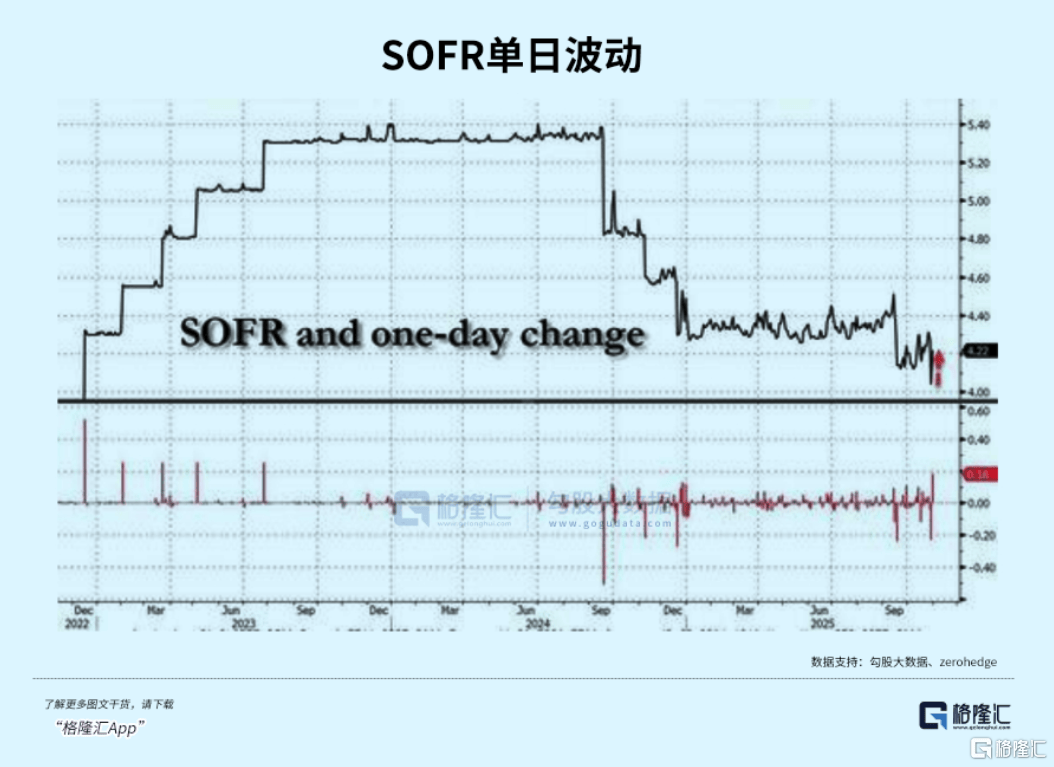
Group 1 - Global markets experienced a significant downturn, with the U.S. market liquidity tightening, as indicated by the surge in the SOFR rate, which rose by 22 basis points to 4.22%, marking the largest increase in a year [2][4] - The spread between SOFR and the federal funds rate increased by 32 basis points, the highest level since March 2020, indicating severe liquidity issues [4] - The U.S. Treasury's cash balance exceeded $1 trillion for the first time in five years, leading to a drop in the Federal Reserve's reserves to $2.85 trillion, the lowest since early 2021 [7][8] Group 2 - The failure of the Senate's funding proposal coincided with the market's accelerated decline, as optimism about a resolution diminished [11] - The A-share market showed resilience, traditionally rebounding after global downturns, with expectations of a low open followed by a recovery [2][15] - The photovoltaic sector led the rebound, supported by underlying trends and a bottoming out, while consumer sectors remained weak [15] Group 3 - The U.S. economy's reliance on the AI industry is a growing concern, with overall economic growth being minimal outside of AI-related spending [16] - Oracle's rising credit default swaps and increasing debt levels highlight the fragility of the current economic situation, with total debt exceeding $100 billion [17] - The potential for an economic downturn similar to the 2000 internet bubble burst is a risk if the AI sector falters, emphasizing the need for vigilance regarding economic dependencies [17]
ETF及指数产品网格策略周报(2025/11/5)
华宝财富魔方· 2025-11-05 09:40
Core Viewpoint - The article discusses investment opportunities in ETFs that align with China's economic and military development plans, particularly focusing on the military, new economy sectors, and Saudi Arabia's economic diversification efforts [3][4][6][8]. Group 1: Military Sector ETF - The Military Leaders ETF (512710.SH) is expected to benefit from China's 2025 defense budget of 1.81 trillion yuan, which represents a 7.2% increase year-on-year, marking a historical high. However, this budget still accounts for less than 1.3% of China's GDP, significantly lower than the U.S. and Russia [3][4]. - The ETF tracks the CSI Military Leaders Index, investing in leading companies in aerospace, missiles, and drones, which are poised to gain from a new round of military procurement cycles [4][5]. Group 2: New Economy ETF - The Hang Seng New Economy ETF (513320.SH) aligns with the "14th Five-Year Plan" that emphasizes high-level technological self-reliance and the capture of opportunities from the new technological revolution [6][7]. - This ETF tracks the Hang Seng Hong Kong Stock Connect New Economy Index, covering sectors such as the internet, semiconductors, innovative pharmaceuticals, and new energy, which are expected to benefit from China's industrial upgrade and technological development [6][7]. Group 3: Saudi Arabia ETF - The Saudi ETF (159329.SZ) is linked to Saudi Arabia's Vision 2030 plan, which aims to reduce oil dependency and diversify the economy [8][9]. - The ETF's holdings reflect this diversification, with over 40% in the financial sector and more than 20% in consumer and technology sectors, while traditional fossil fuels account for only about 10% [8][9].

红利ETF:穿越“十五五”周期的压舱石
Sou Hu Cai Jing· 2025-11-05 09:16
Core Viewpoint - The article emphasizes the growing importance of dividend investment strategies in the current economic environment characterized by low interest rates and a focus on high-quality development, positioning dividend assets as a stable choice for investors seeking reliable returns [1][2]. Economic Environment - The continuous decline in interest rates, with the ten-year government bond yield dropping to 1.76% and bank deposit rates falling below 1%, has diminished the appeal of traditional fixed-income products [2]. - The significant yield difference between government bonds and dividend indices, with the latter offering 6-8% dividend yields, is attracting low-risk capital towards dividend assets [2]. Policy Influence - The "14th Five-Year Plan" encourages the introduction of "patient capital," primarily from insurance funds, which favor dividend assets due to their stable cash flow characteristics [3]. - Regulatory policies, such as the "National Nine Articles," are pushing listed companies to increase dividend payouts, with state-owned enterprises' dividends exceeding 370 billion yuan, enhancing the long-term investment value of dividend assets [3]. Types of Dividend ETFs - The article categorizes various types of dividend ETFs, including the classic CSI Dividend ETF, which focuses on high-dividend stocks primarily in traditional sectors like banking and coal, maintaining a stable dividend yield around 6% [4]. - The low-volatility dividend ETF combines high dividend yields with low volatility, appealing to risk-sensitive investors [4]. - The dividend quality ETF emphasizes sustainable profitability and growth, featuring high-quality companies and sectors like consumer goods and pharmaceuticals, albeit with lower dividend yields [5]. Investment Strategy - Dividend ETFs are positioned as defensive assets rather than aggressive growth investments, suitable for turbulent or declining markets but potentially underperforming in bull markets [6]. - Long-term investors are encouraged to reinvest dividends to accumulate more shares, enhancing wealth through compound growth [6]. - The article advises on the importance of timing and valuation awareness, noting that current valuations for dividend indices are high, suggesting caution for new investors [7]. Conclusion - The article underscores the necessity of patience and strategic planning in investing in dividend ETFs, recommending a long-term holding approach and the use of systematic investment strategies to manage market fluctuations [8][9].

A50直线拉升,海南自贸爆发,A股230万新股民入市
2 1 Shi Ji Jing Ji Bao Dao· 2025-11-05 04:14
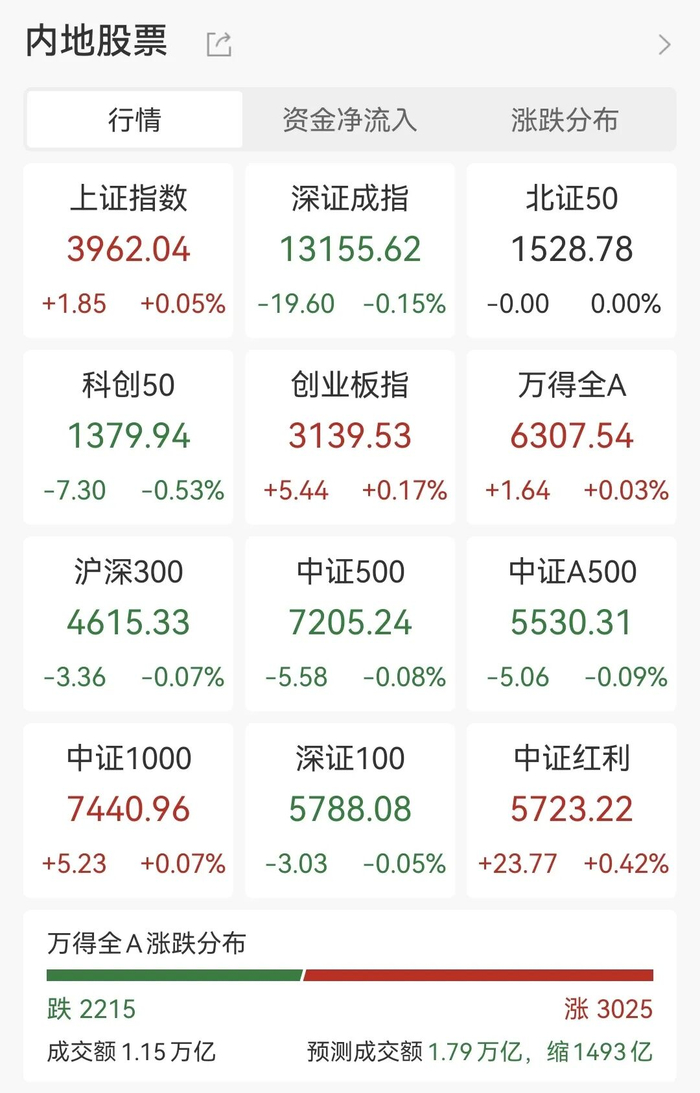
Market Overview - On November 5, A-shares opened lower but rebounded, with the Shanghai Composite Index up 0.05% and the Shenzhen Component down 0.15% at midday. The total trading volume in the Shanghai and Shenzhen markets was 1.14 trillion yuan, a decrease of 79.9 billion yuan compared to the previous trading day [1][2]. Sector Performance - Sectors such as Hainan, electric grid equipment, consumer goods, and coal saw significant gains, while quantum technology, semiconductors, and gaming sectors experienced declines. Notably, electric grid equipment stocks surged, with companies like Moen Electric and China Energy Electric achieving consecutive gains, and TBEA hitting a new high [5]. - The Hainan sector remained active following the implementation of new duty-free policies on November 1, leading to increased shopping activity compared to previous years [5]. New Investor Activity - In October, the Shanghai Stock Exchange reported 2.31 million new A-share accounts, a decrease of 21.36% from September's 2.94 million. Year-to-date, the total number of new accounts reached 22.46 million, reflecting a year-on-year increase of 10.57% [9][10]. Cryptocurrency Market - The cryptocurrency market faced significant downturns, with Bitcoin dropping below $99,000 and over 480,000 traders liquidated, resulting in a loss of $2 billion in the past 24 hours [11][12].
10月出海活动回顾:中东出海机遇在哪些行业?
吴晓波频道· 2025-11-05 00:29
Core Insights - The article emphasizes the importance of Chinese companies accurately capturing growth opportunities in overseas markets, particularly in the Middle East, by avoiding blind expansion and focusing on specific sectors [2][4]. Group 1: Market Opportunities - The Gulf Cooperation Council (GCC) countries, particularly Saudi Arabia and the UAE, are highlighted as key target markets for Chinese enterprises due to their high GDP per capita, exceeding three times the world average, and a young population [4][5]. - In 2024, Saudi Arabia is projected to attract foreign direct investment (FDI) of 119 billion RMB, a 24% increase year-on-year, while the UAE's FDI is expected to grow by 48%, reaching a historical high [6]. - The core opportunities in these markets are concentrated in infrastructure, digitalization, and renewable energy, with Chinese state-owned enterprises actively bidding for local projects [7]. Group 2: Consumer Market Dynamics - The consumer market in the region is described as a pyramid structure, with high-end luxury goods targeting wealthy individuals and low-cost daily necessities aimed at foreign laborers, indicating limited space for middle-class products [8]. - The UAE, particularly Dubai, is characterized as a trade and financial hub, with a significant Chinese business presence, including over 8,000 Chinese companies [8][10]. Group 3: Strategic Considerations for Chinese Enterprises - Chinese companies are advised to conduct thorough country selection and internal/external assessments before entering the Middle Eastern market, ensuring compliance and establishing efficient operational teams [11]. - The article notes that successful Chinese brands like Huawei, OPPO, and BYD have already established a presence in the region, indicating a positive reception for Chinese products [10]. Group 4: Upcoming Events and Focus Areas - The article outlines a series of closed-door meetings organized by the Huashang Outbound Industry Alliance, focusing on various overseas markets, including the U.S., Indonesia, and Mexico, to provide practical guidance for companies looking to expand internationally [15][18][21].

公募基金三季报披露完毕 科技成长主导基金市场 持股集中度回升
Sou Hu Cai Jing· 2025-11-05 00:13
Core Viewpoint - The public fund's third-quarter report indicates a continuous growth in asset scale and an increase in stock positions for actively managed equity funds, driven by a steady rise in the A-share market and a focus on technology growth sectors [1] Group 1: Market Trends - The TMT (Technology, Media, and Telecommunications) sector has seen significant increases in holdings, while sectors such as large finance and large consumption have experienced reductions in holdings [1] - The concentration of holdings in leading companies has increased during the third quarter [1] Group 2: Future Outlook - Several institutions suggest that while individual stock prices have risen significantly, short-term market volatility may increase; however, the long-term trend for the equity market remains upward and certain [1] - There is an expectation for a potential return to dividend value styles in the fourth quarter [1]
弱势分化,但整体还是处于一个休整的状态
Ge Long Hui· 2025-11-04 20:23
Market Performance - The Hang Seng Index closed down 0.79% after opening lower and maintaining a weak trend throughout the day [1] - The healthcare sector experienced significant declines, with the index dropping 2.19% [3] - The banking sector, in contrast, saw a rise of 0.67%, with several banks showing gains above 2% [3] Sector Analysis - The healthcare sector faced a notable downturn, with stocks like Kangfang Biotech falling by 6%, and 3SBio down by 5.85% [3] - The consumer sector also struggled, with a decline of 2.04%, highlighted by Smoore International's drop of 6% and Pop Mart's decrease of 4.06% [3] - The banking sector showed resilience, with Everbright Bank increasing by 3.09% and Minsheng Bank by 2.96% [3]