
潮玩

Search documents
浙商证券:维持泡泡玛特“买入”评级 回购显信心 基本面夯实
Zhi Tong Cai Jing· 2026-01-22 01:27
Group 1 - The core viewpoint of the report is that Pop Mart (09992) maintains a "buy" rating due to its long-term IP creation and operation mechanism being a core competitive advantage, with the company entering a layout period [1] - The company has a well-established domestic IP tier system and brand recognition, with expected continued growth overseas driven by store openings; expanding product categories, IPs, and business formats remain key growth drivers [1] - The adjusted net profit forecasts for the company from 2025 to 2027 are projected to be 134 billion, 170 billion, and 212 billion yuan, representing year-on-year growth of 294%, 27%, and 25%, with corresponding current P/E ratios of 17.7, 14.0, and 11.2X [1] Group 2 - The domestic market is expected to continue outperforming expectations, driven by brand awareness, healthy IP structure, and a well-developed membership system; the core plush products remain in short supply since the large restock in Q4 2025 [2] - The sales on Douyin have maintained a high growth rate of 239% year-on-year, with the plush toy "Little Horse" becoming the top seller, indicating strong platform capabilities and successful new product launches [2] - New business formats such as jewelry, desserts, and amusement parks are expected to contribute additional growth, solidifying the basic market in China [2] Group 3 - In North America, despite weak consumer spending and a period of adjustment, Q4 performance exceeded previous expectations; new markets in the Middle East and South America are anticipated to follow suit with accelerated store openings [3] - The rapid expansion of new market stores is expected in 2026, supported by a large population base, consumer purchasing power, and potential for store openings, continuing the trend seen in China and Southeast Asia [3]


浙商证券:维持泡泡玛特(09992)“买入”评级 回购显信心 基本面夯实
智通财经网· 2026-01-22 01:24
Group 1 - The core competitive advantage of the company lies in its long-term IP creation and operation mechanism, which has entered a layout phase [1] - The company has a well-established domestic IP tier system and brand recognition, with expected growth in overseas markets driven by store openings [1] - The company is projected to expand its product categories, IPs, and business formats as key growth drivers in the medium term [1] Group 2 - The Chinese market is expected to continue outperforming expectations, supported by brand awareness, a healthy IP structure, and a well-developed membership system [2] - The retail performance of large stores is steadily improving, with core plush products experiencing stock shortages since Q4 2025 [2] - New business formats such as jewelry, desserts, and amusement parks are anticipated to contribute additional growth in the Chinese market [2] Group 3 - North America is showing better-than-expected performance despite weaker consumer spending and a period of product gaps [3] - Emerging markets in the Middle East and South America are expected to exceed expectations, with rapid expansion of new stores planned for 2026 [3] - The large population base and consumer spending potential in these regions are likely to sustain growth trends similar to those seen in China and Southeast Asia [3]
为情绪买单~小包挂给消费市场注入新活力
Sou Hu Cai Jing· 2026-01-21 17:37
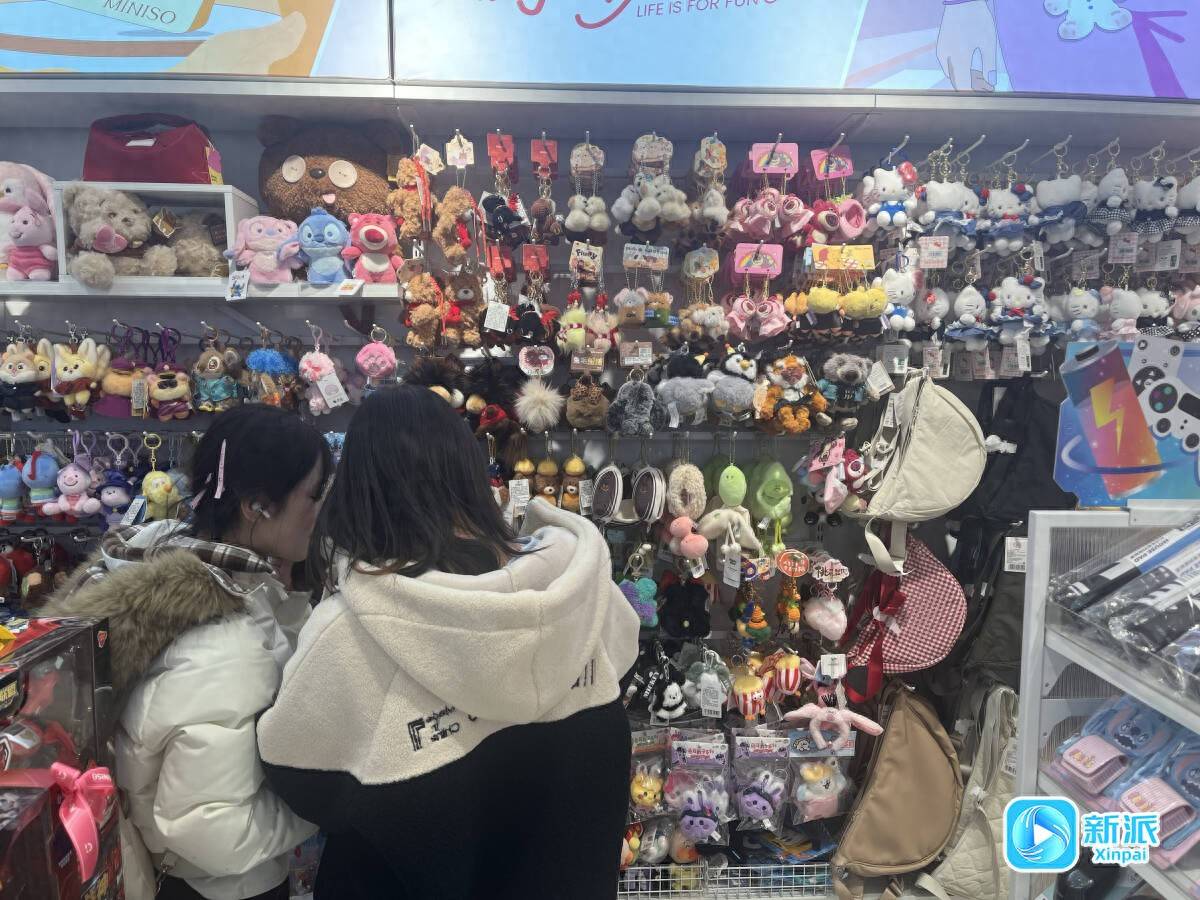
Group 1 - The core viewpoint of the article highlights the rising popularity of small and aesthetically pleasing accessories, referred to as "bag hangers," among consumers in Weifang [1] - Various types of bag hangers, including IP toys and cultural creative pendants, are prominently displayed in shopping malls, supermarkets, and cultural venues, indicating a trend towards colorful and diverse designs [1] - Sales of bag hangers are thriving not primarily due to practicality but are more closely associated with the "self-pleasing" consumerism, enhancing the vibrancy of the market with these small "joy factors" [7] Group 2 - A specific store in Weifang reported high customer traffic, especially on weekends, with a new "star person" bag hanger generating significant interest even before its official release [5] - A plush bag hanger inspired by the Weifang elephant has become a favorite among young consumers, with one customer expressing enthusiasm for its quality and design, leading to multiple purchases [5] - The trend reflects a shift in consumer behavior where decorative items are valued for their aesthetic appeal and emotional connection rather than just their functional use [7]

中国经济年报丨舌尖美味与创意潮玩 中国消费文化吸引泰国年轻群体
Sou Hu Cai Jing· 2026-01-21 15:35
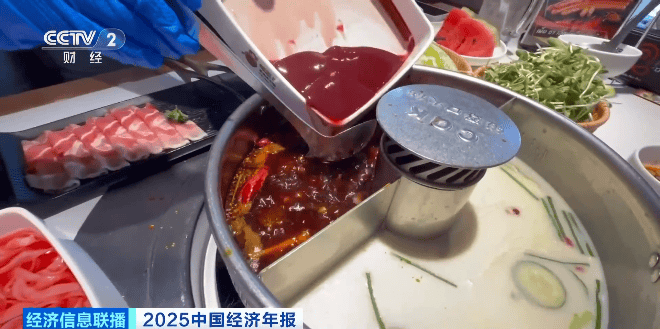
Group 1 - The core viewpoint of the article highlights the rising popularity of Chinese hot pot and trendy products in Thailand, particularly among young consumers, driven by diverse cultural expressions and emotional connections [1][3][9] Group 2 - Chinese-style hot pot has experienced explosive growth in Thailand since 2023, with a reported annual growth rate of over 40% in takeaway orders for spicy food, including hot pot [3] - A local hot pot chain's sales have surged from 20 million to over 1 billion Thai Baht (approximately 2.2 million to over 220 million RMB) annually, indicating a significant market expansion [5] - The influx of multiple Chinese hot pot brands into the Thai market has further popularized hot pot culture, especially among young consumers seeking new flavors and dining experiences [7] Group 3 - The trend of emotional consumption is emerging, with Chinese cuisine's "soft power" helping young people find joy and emotional comfort in their daily lives [9] - In addition to hot pot, trendy products from China, such as those from Pop Mart, are also gaining traction in Thailand, with plans to open the largest flagship store in Southeast Asia by 2025 [11] Group 4 - The success of Chinese consumer products in Thailand is attributed to the innovative capabilities of Chinese companies, which effectively meet the emotional needs of young consumers, supported by China's mature manufacturing and supply chain systems [13]
赌狗被干爆了
表舅是养基大户· 2026-01-21 13:32
Core Viewpoint - The article discusses the recent market trends, particularly focusing on the volatility of stocks related to AI applications and the implications for investors. It emphasizes the importance of cautious investment strategies amidst market fluctuations. Group 1: Market Trends - The stock "Leo Holdings" experienced a significant surge, with its price increasing over 100% in just ten trading days, and a single-day trading volume exceeding 250 billion, which is nearly half of its total market capitalization of around 548 billion [2][4]. - Following a three-day suspension, Leo Holdings resumed trading and immediately hit the daily limit down, with sell orders exceeding 100 billion, indicating a strong reaction from investors who had previously bought in during the price surge [4]. - Another stock, "Guosheng Technology," saw a cumulative increase of over 650% since last September but has faced five consecutive limit downs recently, highlighting the risks associated with speculative trading in the current market environment [4][6]. Group 2: Investment Strategies - Investors are advised to maintain a balanced portfolio and avoid chasing hot stocks, as the likelihood of incurring losses increases significantly in a volatile market [7]. - The article stresses the importance of understanding investments and suggests that most market participants will ultimately earn returns that align with their level of knowledge [7]. - It is recommended to focus on quality equity investments for the long term while remaining cautious and avoiding frequent trading to minimize costs [7]. Group 3: Financing and ETF Trends - There has been a notable net sell-off in margin financing, exceeding 100 billion over two consecutive days, indicating a shift in market sentiment [9]. - Broad-based ETFs have also seen significant selling, with over 650 billion sold recently, reflecting a broader trend of investors pulling back from the market [11]. - The article highlights the increased trading volumes in certain ETFs, particularly those representing mid-cap stocks, suggesting a potential shift in investor focus [11]. Group 4: Commodity Trends - Gold prices continue to reach historical highs, with a recent increase of over 2% in a single day, driven by geopolitical tensions and a decline in risk assets [13][14]. - The performance of gold-related stocks has been strong, with a notable ETF rising over 5.7%, indicating a growing interest in safe-haven assets amidst market uncertainty [16]. - The article provides specific data on the performance of gold and copper prices, showing significant increases of 138% and 50%, respectively, since early 2024 [16].

泡泡玛特(09992)连续回购股份 累计金额近3.5亿港元
智通财经网· 2026-01-21 11:21
Core Viewpoint - Pop Mart (09992) announced a share buyback plan totaling HKD 96.49 million to repurchase 500,000 shares at a price range of HKD 191.1 to 194.9 per share [1] Group 1 - On January 19, Pop Mart previously announced a buyback plan of HKD 251 million to repurchase 1.4 million shares, which led to a more than 10% increase in stock price the following day [1] - This week, Pop Mart's total buyback amount has reached nearly HKD 350 million [1]
泡泡玛特:发布股份回购公告,经营高景气度持续
Xinda Securities· 2026-01-21 10:30
Investment Rating - The investment rating for the company is "Buy" [1] Core Insights - The company has announced a share buyback plan, spending HKD 251 million to repurchase 1.4 million shares at a price range of HKD 177.7 to 181.2 per share [1] - The domestic market is experiencing upward momentum, with a large and sticky user base, and a diversified IP matrix maintaining its popularity [2] - The company is actively adjusting its supply and production to stabilize the second-hand market prices, which is beneficial for long-term brand value and user base expansion [2] - The overseas market presents significant potential, with many global markets still in the early stages of development and a strong certainty for future channel expansion [2] - The company is focusing on resolving supply chain and logistics issues before prioritizing IP product layout for better long-term overseas development [2] Financial Projections - The projected net profit for the company from 2025 to 2027 is expected to be CNY 135.1 billion, CNY 179.0 billion, and CNY 216.1 billion respectively, with corresponding P/E ratios of 18.0X, 13.6X, and 11.3X [3] - The company's revenue is forecasted to grow significantly, with expected revenues of CNY 38.891 billion in 2025, CNY 50.835 billion in 2026, and CNY 61.142 billion in 2027, reflecting growth rates of 198%, 31%, and 20% respectively [5] - The earnings per share (EPS) are projected to increase from CNY 10.07 in 2025 to CNY 16.11 in 2027 [5] Key Financial Metrics - The company's operating income is expected to reach CNY 13,038 million in 2024, with a growth rate of 107% [5] - The gross margin is projected to be 66.79% in 2024, increasing to 78.24% by 2027 [8] - The return on equity (ROE) is expected to be 29.26% in 2024, decreasing to 41.85% by 2027 [8]
泡泡玛特1月21日斥资9648.96万港元回购50万股
Zhi Tong Cai Jing· 2026-01-21 10:00
Core Viewpoint - Pop Mart (09992) announced a share buyback plan, indicating confidence in its stock value and future prospects [1] Group 1: Share Buyback Details - The company will repurchase 500,000 shares at a total cost of HKD 96.4896 million [1] - The buyback price per share ranges from HKD 191.1 to HKD 194.9 [1] - The buyback is scheduled for January 21, 2026 [1]
泡泡玛特反击「空头」
3 6 Ke· 2026-01-21 09:39
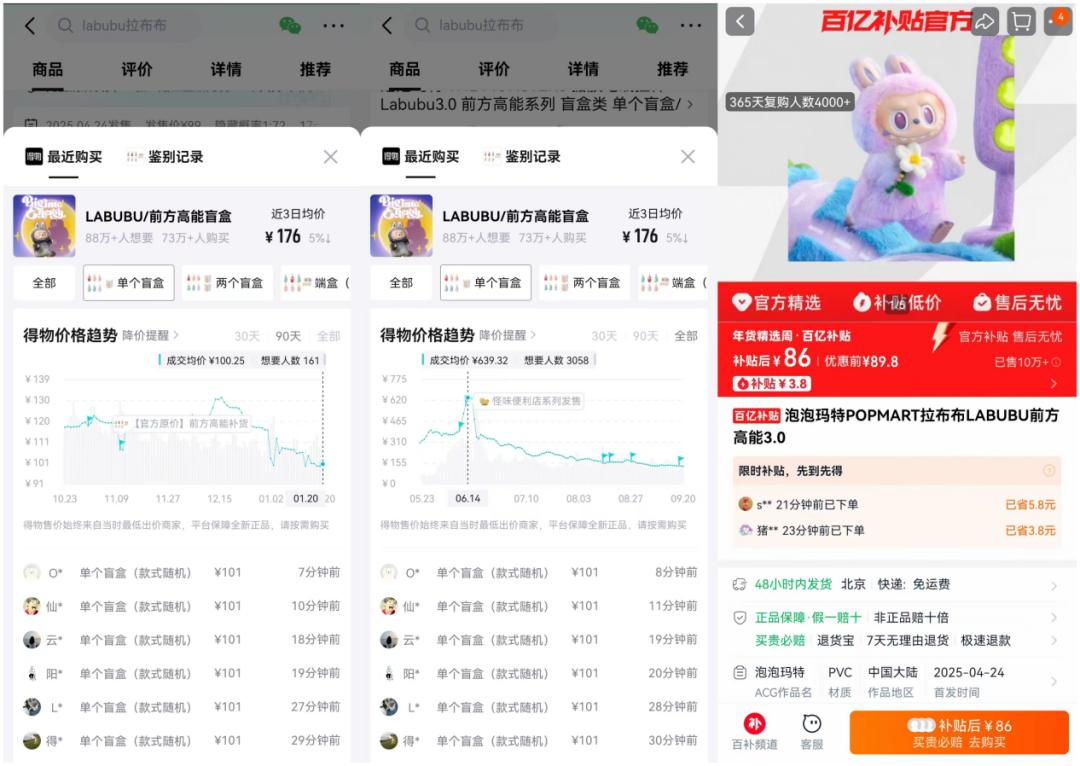
Core Viewpoint - The stock price of Pop Mart has dropped over 40% since reaching a peak of HKD 339.80 per share on August 26, 2022, primarily due to the decline in the premium of its phenomenon and IP LABUBU [1][3]. Group 1: Stock Performance and Market Sentiment - Pop Mart's stock has seen a significant decline, with the average transaction price of a single LABUBU blind box dropping by 23% compared to its highest price in the last 90 days [1]. - The number of short-sold shares of Pop Mart has sharply increased, nearing 10,000 shares since August 2025, indicating market anxiety [3]. - Following a share buyback announcement, Pop Mart's stock price increased by 7.96% since January 19, 2026, when the buyback was announced [12]. Group 2: Company Strategy and Product Management - Pop Mart has initiated a share buyback of 1.4 million shares for HKD 2.51 billion, signaling management's confidence to investors [3]. - The company has actively worked to combat scalpers and increase product availability, with LABUBU's sales potentially reaching 10 million units monthly [6]. - Pop Mart has successfully regained pricing power, allowing consumers to purchase regular products at near official prices while maintaining the scarcity of limited editions [6]. Group 3: Financial Performance and Future Outlook - LABUBU's revenue in the first half of 2025 reached CNY 4.81 billion, accounting for nearly one-third of Pop Mart's total revenue [5]. - Deutsche Bank reported that LABUBU's production capacity increased from 10 million units in the first half of 2025 to an average of 50 million units per month by the end of the year, potentially generating an adjusted net profit of approximately CNY 14.5 billion in 2025 [7]. - Analysts predict that Pop Mart's net profit will reach CNY 12.6 billion in 2025, supported by the recent share buyback [11].
AI“链”动广东造:从粤家电到机器人,广东万亿集群加速跑
2 1 Shi Ji Jing Ji Bao Dao· 2026-01-21 09:08
Core Viewpoint - The resurgence of traditional industries in Guangdong, exemplified by the success of the 45-year-old Weili washing machine brand, highlights the province's transformation through digital innovation and product development, with projected revenues exceeding 5 billion yuan last year [1]. Group 1: Traditional Industry Transformation - Weili washing machine, a 45-year-old brand, showcases the potential of traditional industries to thrive through digital transformation and new product development [1]. - Guangdong's industrial economy is under pressure due to global economic changes and national adjustments, with challenges expected to persist into 2026 [1]. - The province aims to optimize traditional industries by focusing on high-end, brand-oriented, intelligent, green, and integrated development [4]. Group 2: Emerging Industries and Technological Innovation - Guangdong is prioritizing the development of artificial intelligence, robotics, solid-state batteries, and biomedicine, which are expected to become trillion-yuan industry clusters driving economic growth [2][8]. - The solid-state battery market, driven by the dual demand from the electric vehicle and energy storage sectors, is projected to reach a market scale of hundreds of billions [8]. - The province is establishing a global AI industry cooperation center and aims to enhance the production capacity of embodied intelligent robots [9]. Group 3: Investment and Economic Growth - Over the past five years, Guangdong's industrial enterprises have seen revenues exceed 19 trillion yuan, with industrial investment growing approximately 47% [5]. - The province plans to accelerate investment in new projects while also enhancing the quality of traditional industry upgrades [5]. - Guangdong's strategy includes integrating resources from leading enterprises, research institutions, and service providers to support key industries and products [5]. Group 4: Cultural and Creative Industries - The collaboration between Dongguan's trendy toy industry and the 2026 CCTV Spring Festival is set to introduce innovative cultural products to households [2]. - The "AI + trendy toys" initiative represents a shift towards high-end, brand-oriented, and intelligent products in Dongguan's toy sector [2].
