
有色金属冶炼及压延加工业

Search documents
有色金属基础周报:中东战事再起,避险情绪推动有色金属趋强-20260302
Chang Jiang Qi Huo· 2026-03-02 06:06
Report Industry Investment Ratings - Not provided in the given content Core Views of the Report - The copper price is expected to remain strong at a high level, but the continuous upward momentum may be insufficient due to the lack of resonance between the macro and fundamental aspects and the slow progress of inventory reduction in the short term [2]. - The aluminum price is likely to experience shock adjustments. The supply expectation is improving, but the inventory pressure is relatively large. The escalation of the Middle - East situation will support the aluminum price [2]. - The zinc price may show a shock - adjustment trend. Although the fundamentals have weak support, the closure of the Strait of Hormuz may lead to a short - term strengthening of the zinc price [2]. - The lead price is expected to rise steadily after the Lantern Festival. It is advisable to buy on dips within the range of 16,600 - 17,600 [2]. - The nickel price is predicted to maintain a strong shock. It is recommended to buy on dips, while for stainless steel, it is advisable to wait and see [3]. - The tin price is likely to continue the shock - strengthening trend. It is recommended to conduct range trading and pay attention to the supply resumption and downstream demand recovery [3]. - The industrial silicon and polysilicon fundamentals are still weak. It is recommended to moderately over - allocate polysilicon and wait and see for industrial silicon [3]. - The lithium carbonate price is expected to continue the shock trend due to supply disruptions [3]. Summary According to Relevant Catalogs Copper - During the Spring Festival, LME copper was pressured initially and then rebounded. The escalation of the war between the US - Israel and Iran will push up the copper price in the short term, but the continuous upward momentum may be insufficient. Next week, the copper price may remain strong at a high level [2]. - The 2025 January - October copper production in Iran was about 320,000 tons, accounting for 1.7% of the global production [2]. Aluminum - The domestic bauxite price was stable compared with before the festival. The alumina operating capacity decreased by 200,000 tons, and the electrolytic aluminum operating capacity increased by 24,000 tons [2]. - New investment projects are in progress, and overseas projects are also being put into production. The downstream processing enterprise start - up rate increased by 4.2% to 57% [2]. - The inventory of aluminum ingots and aluminum rods increased significantly during the Spring Festival, and the inventory pressure of recycled aluminum is relatively large. The escalation of the Middle - East situation is beneficial to electrolytic aluminum and aluminum alloy but negative for alumina [2]. Zinc - Last week, the zinc price showed a strong shock. The macro uncertainty is still high. The zinc concentrate processing fee is at a low level, and the downstream enterprises' actual consumption is limited [2]. - The zinc ingot inventory increased significantly during the Spring Festival, and the closure of the Strait of Hormuz may lead to a short - term strengthening of the zinc price [2]. Lead - Last week, the Shanghai lead main contract rebounded. The inventory is at a high level, and the price of lead concentrate and lead ingot increased after the festival [2]. - After the Lantern Festival, the lead price may rise steadily. It is advisable to buy on dips within the range of 16,600 - 17,600 [2]. Nickel - Last week, Shanghai nickel showed a strong operation. The tailings dam incident in Indonesia drove the nickel price. The nickel ore price rose, and the nickel iron price is expected to increase [3]. - The short - term supply - demand of refined nickel is still weak, and the stainless steel price increased slightly. The sulfuric acid nickel price decreased weakly [3]. - The nickel price is expected to maintain a strong shock, and it is recommended to buy on dips. For stainless steel, it is advisable to wait and see [3]. Tin - The refined tin production in January decreased by 8.1% month - on - month and increased by 4.7% year - on - year. The tin concentrate import in December increased [3]. - The semiconductor industry is expected to continue to recover. The tin supply is tight, and the price is expected to continue the shock - strengthening trend. It is recommended to conduct range trading [3]. Industrial Silicon and Polysilicon - The weekly output of industrial silicon increased by 270 tons, and the plant inventory increased. The production of polysilicon decreased, and the plant inventory increased [3]. - The demand for polysilicon is poor after the festival, and the price decreased. The industrial silicon price is at the bottom and fluctuating. It is recommended to moderately over - allocate polysilicon and wait and see for industrial silicon [3]. Lithium Carbonate - The production of lithium carbonate in January decreased by 3% month - on - month. The import of lithium concentrate and lithium carbonate increased in December [3]. - The downstream demand is strong, and the inventory is decreasing. The supply disruption may cause the lithium carbonate price to continue the shock trend [3]. Macro - economic Data - In the week of 2/23 - 3/1, important economic data included the US durable goods orders, China's LPR, and the euro - zone CPI [10]. - In the week of 3/2 - 3/8, important economic data included the euro - zone manufacturing PMI and the US employment data [22].
有色金属日报-20260302
Wu Kuang Qi Huo· 2026-03-02 02:34
Group 1: Report Industry Investment Rating - No relevant content found Group 2: Core Views of the Report - In the short term, copper prices have strong support but increased volatility risks. Aluminum prices also have strong support, and geopolitical risks will amplify price fluctuations. Lead prices may be supported by strategic stockpiling by battery manufacturers, but the recovery of downstream demand after the holiday needs to be observed. Zinc prices may follow the rise of copper and aluminum based on relative valuation in the short term but will return to the weak industrial reality after the macro - disturbance subsides. Tin prices are expected to fluctuate widely, and it is recommended to wait and see. Nickel prices are expected to rise slowly and oscillate in the medium term and oscillate in the short term. Carbonate lithium spot supply may remain tight, but attention should be paid to the risk of price correction. Alumina futures prices may maintain wide - range oscillations. Stainless steel is expected to maintain an oscillating upward pattern. Cast aluminum alloy prices are expected to rise in the short term [3][5][8][11][13][16][19][22][26][29] Group 3: Summary by Related Catalogs Copper - **Market Information**: On Friday, copper prices rose first and then fell. LME copper 3M contract closed up 0.28% to $13,296/ton, and SHFE copper main contract closed at 103,280 yuan/ton. LME inventory increased by 100 to 253,700 tons, and the domestic SHFE weekly inventory increased by 119,000 tons compared with before the Spring Festival. The spot discount in the East China region expanded, while that in the Guangdong region narrowed [2] - **Strategic Views**: Geopolitical disturbances strengthen the attributes of key mineral resources and increase the risk of supply interruption, providing strong support for copper prices. The short - term probability of interest rate cuts in the US is low, and the sentiment in China is positive. The TC of copper mines is running at a low level, the supply of copper mines is tight, and the downstream start - up rate has slightly recovered. The short - term copper price has strong support, but the volatility risk increases. The reference range for the SHFE copper main contract is 102,000 - 106,000 yuan/ton, and that for the LME copper 3M contract is $13,200 - 13,800/ton [3] Aluminum - **Market Information**: On Friday, aluminum prices oscillated. LME aluminum 3M contract remained stable at $3,141/ton, and SHFE aluminum main contract closed at 23,730 yuan/ton. The SHFE weighted contract position increased by 11,000 tons to 664,000 tons, and the futures warehouse receipt increased by 1,000 tons to 289,000 tons. The inventory of aluminum ingots in three regions increased, and the inventory of aluminum rods increased slightly. The processing fee of aluminum rods fluctuated, and the trading atmosphere was still relatively flat. The spot discount in the East China region narrowed, and the LME inventory decreased by 2,000 tons to 466,000 tons [4] - **Strategic Views**: The domestic aluminum ingot inventory has increased to a relatively high level, but it is expected to peak earlier than in previous years. Geopolitical conflicts increase the risk of aluminum supply in the Middle East, and a South African aluminum plant is expected to shut down for maintenance in March. With the high premium of North American aluminum spot and the relatively low LME inventory, aluminum prices have strong support, and geopolitical risks will amplify price fluctuations. The reference range for the SHFE aluminum main contract is 23,400 - 24,500 yuan/ton, and that for the LME aluminum 3M contract is $3,100 - 3,300/ton [5][6] Lead - **Market Information**: Before the Spring Festival, the SHFE lead index closed down 1.39% to 16,700 yuan/ton. During the Spring Festival, the LME lead 3M contract closed down 0.51% to $1,966.5/ton. The LME lead inventory increased by 54,200 tons to 287,100 tons, and the domestic lead inventory also increased. The domestic - foreign price ratio and import profit and loss were also reported [7] - **Strategic Views**: The visible inventory of lead ore has declined slightly but is still higher than the same period in previous years, and the processing fee of lead concentrate remains at a low level. The inventory of waste batteries continues to rise. During the Spring Festival, geopolitical and trade factors affected the market. The current lead price is close to the lower edge of the long - term oscillation range. The strategic stockpiling expectation of battery manufacturers may support the short - term stabilization of lead prices, and the recovery of downstream demand after the holiday needs to be observed [8] Zinc - **Market Information**: Before the Spring Festival, the SHFE zinc index closed down 5.53% to 24,255 yuan/ton. During the Spring Festival, the LME zinc 3M contract closed up 0.76% to $3,378/ton. The LME zinc inventory was 101,700 tons, and the domestic zinc inventory increased. The domestic - foreign price ratio and import profit and loss were also reported [9] - **Strategic Views**: The visible inventory of zinc ore has slowed down in accumulation, and the TC of zinc concentrate has stopped falling and stabilized. The domestic zinc ingot social inventory has begun to accumulate, the downstream start - up is average, and the finished product inventory of some enterprises has risen rapidly. The zinc industry is weak. In the short term, zinc prices may follow the rise of copper and aluminum based on relative valuation, but will return to the weak industrial reality after the macro - disturbance subsides [10][11] Tin - **Market Information**: On February 27, tin prices rose sharply. The SHFE tin main contract closed at 453,240 yuan/ton, up 9.22% from the previous day. The SHFE and LME inventories decreased. On the supply side, the situation in northern Myanmar was tense, but there was no impact on production for the time being. The start - up rate of smelters in Yunnan decreased during the Spring Festival and recovered slowly after the festival, and the supply of refined tin was tight in Jiangxi. On the demand side, the actual demand has not yet effectively emerged, and the downstream purchasing intention has weakened after the price rise [12] - **Strategic Views**: Under the background of macro - easing and rising semiconductor prices, the market sentiment for buying tin is strong, but attention should be paid to the current situation of marginal relaxation of tin ingot supply and demand and steady recovery of inventory. It is not advisable to blindly chase the high. In the short term, the intensification of the US - Iran conflict may put pressure on risk assets, and tin prices are expected to fluctuate widely. It is recommended to wait and see. The reference range for the domestic main contract is 390,000 - 480,000 yuan/ton, and that for the overseas LME tin is $48,000 - 55,000/ton [13] Nickel - **Market Information**: On February 27, the SHFE nickel main contract closed at 138,660 yuan/ton, down 0.37% from the previous day. The spot premium of each brand remained stable. The price of nickel ore remained unchanged, and the price of nickel iron continued to rise [14] - **Strategic Views**: In the medium term, the implementation of Indonesia's RKAB quota reduction policy will raise the price center of nickel ore, and nickel prices are expected to rise slowly and oscillate. In the short term, the contradiction between spot supply and demand is limited, and the inventory is still slightly increasing. It is expected that the price will oscillate to digest the inventory pressure. The short - term reference range for SHFE nickel prices is 120,000 - 160,000 yuan/ton, and that for the LME nickel 3M contract is $16,000 - 20,000/ton. It is recommended to buy on dips [16] Carbonate Lithium - **Market Information**: On February 27, the MMLC spot index of carbonate lithium closed down 0.81% from the previous working day, but up 19.72% within the week. The prices of battery - grade and industrial - grade carbonate lithium decreased, and the price of the LC2605 contract increased. The price of imported lithium concentrate decreased slightly but increased within the week [18] - **Strategic Views**: During the Spring Festival, the domestic carbonate lithium inventory decreased, and the downstream demand in the off - season was resilient. The third - party survey shows that the downstream production schedule in March is expected to increase more significantly than that of salt factories, and the spot supply is expected to remain tight. The recent export ban in Zimbabwe has boosted market sentiment, but if the export of concentrates is resumed within a month, the impact on the domestic lithium salt supply will be limited. After continuous rises, attention should be paid to the risk of price correction. The reference range for the main contract of carbonate lithium on the GZFE is 168,000 - 184,000 yuan/ton [19] Alumina - **Market Information**: On February 27, 2026, the alumina index fell 2.54% to 2,758 yuan/ton, and the unilateral trading position increased. The spot price in Shandong rose, and the import window was close to opening. The futures warehouse receipt decreased, and the price of ore in Guinea remained stable while that in Australia decreased [21] - **Strategic Views**: The increase in maintenance and delay in production have led to a contraction in the inventory accumulation rate. The ore supply surplus continues, and the high - level registration of warehouse receipts due to the premium on the disk suppresses the upward movement of the disk price. It is recommended to wait and see in the short term, and the futures price may maintain wide - range oscillations. Attention should be paid to potential driving factors such as the production reduction of Guinea's mines or the government's price - support actions and the implementation of supply - contraction policies in the smelting end. The reference range for the domestic main contract A02605 is 2,650 - 2,850 yuan/ton [22][23] Stainless Steel - **Market Information**: On Friday, the stainless - steel main contract closed at 14,205 yuan/ton, down 0.42%. The spot prices in Foshan and Wuxi remained stable, and the raw material prices increased. The futures inventory decreased, and the social inventory increased significantly [25] - **Strategic Views**: After the festival, the arrival of steel mill resources and the stagnation of sales during the Spring Festival have led to a rapid accumulation of social inventory, increasing the supply - side pressure. The market purchasing atmosphere has improved, but the actual purchase by downstream users is still small, and most are still in the stage of resuming work. It is expected that stainless steel will maintain an oscillating upward pattern, and the reference range for the main contract is 13,900 - 14,500 yuan/ton [26] Cast Aluminum Alloy - **Market Information**: On Friday, the cast aluminum alloy price oscillated. The main AD2604 contract closed slightly up 0.09% to 22,730 yuan/ton. The weighted contract position increased slightly, the trading volume decreased, and the warehouse receipt decreased. The domestic mainstream ADC12 price oscillated and declined, and the import price remained stable. The inventory decreased [28] - **Strategic Views**: The cost - side price of cast aluminum alloy is strong. With the resumption of work and production of downstream enterprises after the festival, the demand is expected to continue to improve. Coupled with supply - side disturbances and seasonal tightness of raw material supply, the short - term price is expected to rise [29]
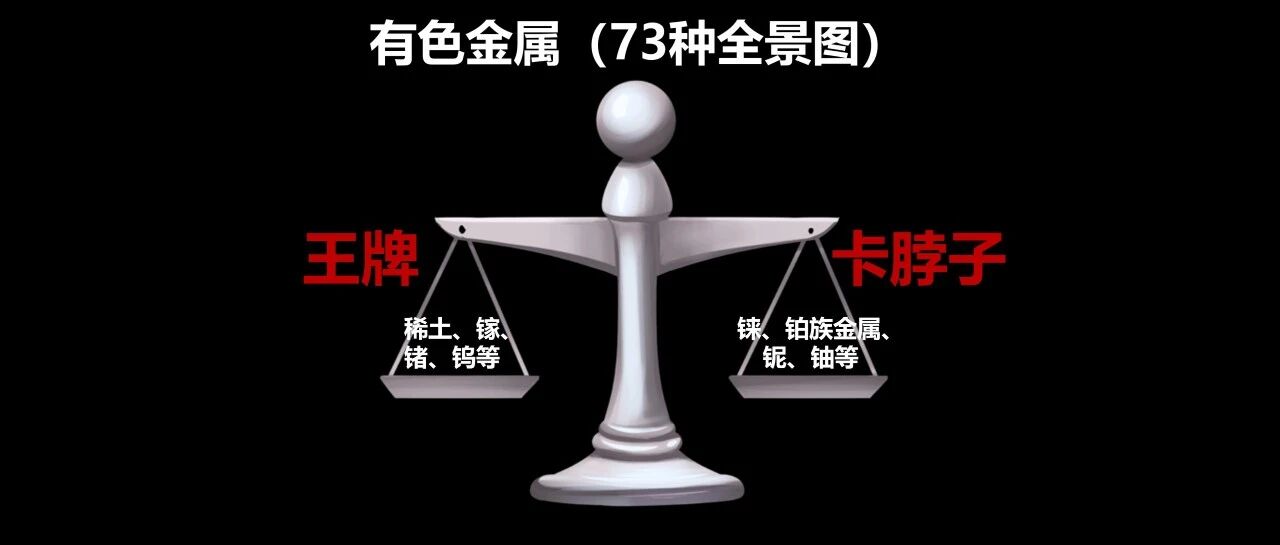
冰与火!中国有色金属的王牌VS卡脖子(部分高度依赖进口):73种有色金属全景图、战略价值与未来机遇梳理
材料汇· 2026-03-01 15:46
Core Viewpoint - The article emphasizes the strategic importance of non-ferrous metals in modern industry, highlighting their role in various sectors such as new energy vehicles, aerospace, and semiconductor manufacturing, and outlines the complete value chain of these metals in supporting China's manufacturing upgrades and technological advancements [3][15]. Summary by Sections 1. Definition and Value of Non-Ferrous Metals - Non-ferrous metals are defined as all metals excluding iron, manganese, and chromium, categorized into five main types based on their industrial applications and properties [5]. - The article proposes a redefinition of these metals using industry labels to better reflect their core value and relevance in modern manufacturing [4]. 2. Types of Non-Ferrous Metals - **Light Metals**: Includes aluminum and magnesium, crucial for lightweight applications in manufacturing, with aluminum projected to reach over 40 million tons in China by 2025, accounting for over 60% of global production [7]. - **Heavy Metals**: Comprises copper, nickel, and cobalt, essential for electrical applications and the backbone of the economy, with copper demand in the new energy sector expected to exceed 25% by 2025 [8]. - **Precious Metals**: Includes gold and silver, recognized as hard currencies and vital for high-end manufacturing, with central banks expected to increase gold reserves by over 1,200 tons in 2025 [9]. - **Rare Metals**: This category includes lithium and rare earth elements, which are critical for high-end manufacturing and military applications, with China holding nearly 50% of global rare earth reserves [10][12]. - **Metalloids**: Such as silicon, which is foundational for the semiconductor and photovoltaic industries, with over 95% of semiconductor chips based on silicon [13]. 3. Role in New Energy and Semiconductor Industries - Non-ferrous metals are identified as essential for the new energy revolution, with lithium, cobalt, and nickel being key materials for batteries, and demand for lithium expected to grow by 25% by 2025 due to the surge in electric vehicle sales [17][19]. - In the semiconductor sector, metals like gallium and germanium are crucial for chip manufacturing, with China controlling over 90% of global gallium and germanium production [27]. 4. Strategic Importance in Aerospace and Military - Non-ferrous metals define the performance limits of aerospace and military equipment, with titanium alloys being essential for aircraft and high-temperature alloys being critical for jet engines [29][30]. - Rare earth elements are vital for military applications, with China dominating the supply of these materials [30]. 5. Economic and Financial Security - Non-ferrous metals are fundamental to national economic stability, with copper being a key material in the electrical system, and gold serving as a hedge against geopolitical risks [34][32]. - The article highlights the importance of uranium and thorium for nuclear energy, which is crucial for achieving carbon neutrality goals [34]. 6. Global Competitive Landscape - China holds significant advantages in the non-ferrous metals sector, including leading positions in rare earths and critical materials for semiconductors, but faces challenges in high-end processing technologies and resource dependencies [36][44]. - The article identifies both strengths, such as the complete supply chain for rare earths, and weaknesses, including high import dependencies for certain critical metals like platinum and cobalt [37][44].

罗平锌电:拟投资建设重点行业环保绩效等级提升项目
Ge Long Hui· 2026-02-27 11:11
Core Viewpoint - The company, Luoping Zinc Electric (002114.SZ), aims to enhance environmental standards by phasing out outdated production capacity and processes, transitioning towards a development model characterized by high technical content, low resource consumption, and minimal environmental pollution [1] Group 1 - The company plans to invest in key industry environmental performance improvement projects [1] - The total estimated investment for this project is 9.4474 million yuan [1] - The initiative is expected to strengthen internal management, adopt advanced technologies, improve energy efficiency, and enhance resource utilization [1]

锡3月报-20260227
Yin He Qi Huo· 2026-02-27 09:38
1. Report Industry Investment Rating - No relevant information provided 2. Core View of the Report - The tin price is experiencing wide - range fluctuations due to the tug - of - war between macro sentiment and demand expectations [3] 3. Summary According to the Directory 3.1 Preface Summary - The tin price is affected by the interaction between macro sentiment and demand expectations, resulting in wide - range fluctuations [3] 3.2 Fundamental Situation 3.2.1 Production - In January, tin production declined, and it is expected that production will remain at a low level in February due to the Spring Festival holiday [29] 3.2.2 Terminal Consumption - **Consumer Electronics**: Consumer electronics are expected to have moderate growth. The report presents data on global smartphone shipments, China's 5G mobile phone shipments, China's integrated circuit production, and global semiconductor sales to illustrate the situation [38][41][43] - **Photovoltaic**: After the end of the photovoltaic rush - installation period, orders have declined rapidly. The report shows data on new photovoltaic installed capacity and China's monthly photovoltaic module production [44][47] - **Tin Chemistry**: In the long - term, tin chemical consumption may be affected. The consumption of tin chemicals is closely related to housing completion. The report presents data on commercial housing sales area, housing new construction area, housing completion area, and domestic PVC production [48][50][54] 3.3 Future Outlook and Strategy Recommendation - No relevant information provided
有色金属日度策略-20260227
Fang Zheng Zhong Qi Qi Huo· 2026-02-27 02:41
1. Report Industry Investment Rating No relevant information provided. 2. Core Views of the Report - The overall trend of non - ferrous metals is oscillating. Factors such as geopolitical uncertainties, fluctuations in the Fed's interest - rate cut expectations, and the impact of AI on the economy and employment may cause fluctuations in the relevant chains. The market sentiment may shift from a previous general rise to a stage of cooling and differentiation. Attention should be paid to the fundamental support factors of each variety, and varieties with geopolitical supply disturbances are relatively stronger. Recently, the continuous appreciation of the RMB tends to result in a pattern of stronger overseas and weaker domestic markets [13][16]. - The non - ferrous metal market after the Spring Festival shows a differentiated trend. Some varieties such as tin and nickel show relatively high elasticity, but the sustainability of their upward trends is changing. The domestic market is in a stage of supply - demand mismatch after the festival, with inventory accumulation and incomplete demand recovery coexisting [16]. 3. Summary According to the Directory 3.1 First Part: Non - ferrous Metals Operating Logic and Investment Recommendations - **Macro Logic**: The overall trend of non - ferrous metals is oscillating. AI's impact on employment and the resurgence of tariff war risks have dampened the optimistic expectations brought by the recovery of European and American economic data during the holiday. In the future, attention should be paid to the changes in the AI narrative. Geopolitical supply - disturbed varieties are relatively stronger, and the continuous appreciation of the RMB leads to an external - strong and internal - weak pattern [13]. - **Policy and Event Impact**: Zimbabwe suspends the export of all raw ores and lithium concentrates. The US has complex tariff changes, and various parties have made responses. The Fed's interest - rate cut expectations are fluctuating, and there are uncertainties in geopolitics. China's February LPR remains unchanged for the ninth consecutive month [14][15]. - **Investment Strategies for Each Variety** - **Copper**: The current fundamentals are in a stage of weakness, with limited upward price drive. The main driving factors are macro - logic and the valuation - repair logic compared with gold and silver. It is recommended that downstream demand parties conduct long - hedging operations in the far - month contracts. Option strategies can consider selling slightly out - of - the - money put options or constructing short - straddle strategies. The short - term support range of the main Shanghai copper contract is expected to be 98,000 - 99,000 yuan/ton, and the pressure range is 108,000 - 110,000 yuan/ton [3][4]. - **Zinc**: The probability of the Fed's interest - rate cut in June has declined, and the geopolitical negotiation continues. The inventory of LME zinc has decreased, and the external market is expected to be stronger than the domestic market. It is recommended to consider the rotation operation of bull spreads and bear spreads. The upper pressure is temporarily focused on 24,800 - 25,000, and the short - term lower support is 23,800 - 24,000 [5]. - **Aluminum Industry Chain**: For aluminum, it is recommended to temporarily observe or adopt a bullish approach, with the upper pressure range of 24,000 - 26,000 and the lower support range of 22,000 - 23,000. For alumina, it is recommended to temporarily observe or adopt a bearish approach, with the upper pressure range of 2,900 - 3,000 and the lower support range of 2,300 - 2,600. For recycled aluminum alloy, it is recommended to temporarily observe or adopt a bullish approach, with the upper pressure range of 23,000 - 24,000 and the lower support range of 21,000 - 21,500 [6][7]. - **Tin**: It is recommended to temporarily observe or adopt a bullish approach, pay attention to changes in capital sentiment, as well as the situation of the ore end and macro - factors. The upper pressure range is 430,000 - 450,000, and the lower support range is 330,000 - 350,000. Options can consider buying out - of - the - money put options for protection [8]. - **Lead**: The lead market is expected to be in an oscillating trend, with the upper pressure temporarily at 16,800 - 17,000 and the lower support at 16,200 - 16,400. It is recommended to operate according to the upper and lower limits of the range and pay attention to inventory changes [9]. - **Nickel and Stainless Steel**: Nickel prices continue to be strong. The upper pressure of Shanghai nickel is temporarily focused on 140,000 - 145,000 yuan, and the lower support is 130,000 - 134,000 yuan. It is recommended to hold long positions without chasing the rise. Stainless steel prices have slowed down in their upward trend. The lower support is 13,000 - 13,400, and the upper pressure is 14,200 - 14,500. It is recommended to hold long positions or be cautious [10]. 3.2 Second Part: Non - ferrous Metals Market Review - The closing prices and price changes of various non - ferrous metal futures are provided. For example, the closing price of copper is 102,670 with a 0.20% increase, and the closing price of zinc is 24,570 with a 0.30% decrease [21]. 3.3 Third Part: Non - ferrous Metals Position Analysis - The latest position analysis of the non - ferrous metal sector shows the net long - short strength comparison, net long - short position differences, changes in net long and net short positions, and influencing factors of each variety. For example, the hard acid type (LC2605) has a 3.47% increase, with a strong short - position of the main force and a net short - position difference of - 97,754 [24]. 3.4 Fourth Part: Non - ferrous Metals Spot Market - The spot prices and price changes of various non - ferrous metals are presented. For example, the Yangtze River non - ferrous copper spot price is 102,100 yuan/ton with a 0.03% decrease, and the Yangtze River non - ferrous 0 zinc spot average price is 24,460 yuan/ton with a 0.33% decrease [25]. 3.5 Fifth Part: Non - ferrous Metals Industry Chain - Multiple charts are provided to show the inventory changes, processing fees, price trends, and other information of various non - ferrous metals, including copper, zinc, aluminum, alumina, tin, lead, nickel, and stainless steel [27][28][31][37][41][44][46][50]. 3.6 Sixth Part: Non - ferrous Metals Arbitrage - Multiple charts are provided to show the arbitrage - related information of various non - ferrous metals, such as the Shanghai - London ratio changes, basis, and spread trends of copper, zinc, aluminum, alumina, tin, lead, nickel, and stainless steel [52][54][56][60][62][64][65]. 3.7 Seventh Part: Non - ferrous Metals Options - Multiple charts are provided to show the historical volatility, weighted implied volatility, trading volume, and position changes, as well as the ratio of call to put positions of options for various non - ferrous metals, including copper, zinc, and aluminum [67][69][70].
有色早报-20260227
Yong An Qi Huo· 2026-02-27 01:50
Group 1: Report Industry Investment Rating - No relevant content Group 2: Core Viewpoints of the Report - The report maintains a bullish outlook on copper prices in the medium term, as the copper fundamentals feature limited supply and increasing demand. For the short - to - medium term, the stabilization of copper prices depends on the stabilization of precious metals, and attention should be paid to the support levels of 97,000 and 99,000 for Shanghai copper [1]. - For aluminum, after the price increase, there is an unexpected increase in supply and weak terminal demand. One can wait for the supply - demand negative factors to materialize and then go long. If the situation in Iran deteriorates, it may cause the aluminum price to rise [1]. - Regarding zinc, although the domestic fundamentals are average, due to limited long - term capital expenditure and about 100,000 tons of supply disturbances from Iranian zinc mines, the market is optimistic about the allocation elasticity of zinc. Attention should be paid to reverse arbitrage opportunities [2]. - For nickel, the short - term real - world fundamentals are weak, with a slight decline in pure nickel production, weak overall demand, and continuous domestic warehousing. The reduction of the Indonesian nickel ore quota has a disturbing effect, and the overall sentiment of non - ferrous metals dominates in the short term [5]. - In the case of stainless steel, the fundamentals are generally weak, with a slight decline in steel mill production, downstream entering the off - season, and seasonal inventory accumulation. The Indonesian quota news continues to cause disturbances, and the overall sentiment of non - ferrous metals dominates in the short term [9]. - For lead, the supply - demand contradiction is alleviated, and there is an expectation of looser spot supply. It is recommended to try short positions at high prices in the short term, and the lead price is expected to fluctuate within a narrow range next week [10][12]. - For tin, in the short term, it is recommended to wait and see due to large macro - sentiment fluctuations. In the long term, 2026 is a year with a large - scale supply recovery, and if there is a macro inflection point, the price may fluctuate downward significantly in the second half of the year [14]. - For industrial silicon, in the short term, the supply and demand are close to balance, and the price is expected to fluctuate with costs. In the long term, the price is expected to fluctuate at the bottom of the cycle, anchored by the seasonal marginal cost [18]. - For lithium carbonate, the short - term fundamentals are strong, and it maintains a de - stocking trend in the off - season. If the inventory in the intermediate link is further reduced to a low level, there is a large space for calendar spread arbitrage [20]. Group 3: Summary by Metal Copper - **Price and Inventory**: The copper price fluctuated significantly this week. The Shanghai copper spot price, premium and discount, waste - refined copper price difference, and inventory data showed certain changes. For example, from February 12 to February 26, the Shanghai copper spot premium and discount changed from - 170 to - 410, and the LME inventory increased from 196,650 to 253,600 [1]. - **Market Analysis**: The US's ability to siphon inventory is gradually disappearing, causing concerns in the market. However, global consumption performance is good, and there is still strong rigid demand support for copper. The industrial end still provides support, and the copper price is expected to rise in the medium term [1]. Aluminum - **Price and Inventory**: The aluminum price fluctuated, and the spot premium and discount strengthened. The Shanghai aluminum social inventory and LME inventory data showed certain changes. For example, from February 12 to February 26, the Shanghai aluminum price increased by 110, and the LME inventory decreased by 2,000 [1]. - **Market Analysis**: After the price increase, there is an unexpected increase in supply and weak terminal demand. The situation in Iran may affect the aluminum price [1]. Zinc - **Price and Inventory**: The zinc price slightly decreased, and the inventory data remained relatively stable. The spot premium and discount remained at - 40, and the social inventory remained at 14,610 tons [2]. - **Supply and Demand**: On the supply side, the domestic and imported TC is accelerating its decline, and it is expected to ease after the resumption of production of northern mines after the Spring Festival. On the demand side, domestic demand is seasonally weak, and overseas demand is average [2]. - **Strategy**: The market is optimistic about the allocation elasticity of zinc, and attention should be paid to reverse arbitrage opportunities [2]. Nickel - **Price and Inventory**: The price of nickel ore and nickel products changed. For example, from February 12 to February 26, the price of 1.5% Philippine nickel ore increased from 64.5 to 70.5, and the LME inventory increased from 286,386 to 289,506 [5]. - **Supply and Demand**: The pure nickel production decreased slightly, the demand was weak, and the domestic inventory continued to be warehoused [5]. Stainless Steel - **Price and Inventory**: The prices of 304 cold - rolled coils, 304 hot - rolled coils, etc. increased to varying degrees. The inventory increased seasonally, and the warehouse receipts increased slightly [9]. - **Supply and Demand**: The steel mill production decreased slightly, and the downstream entered the off - season [9]. Lead - **Price and Inventory**: The spot premium and discount and inventory data changed. For example, from February 12 to February 26, the spot premium and discount changed from - 130 to - 145, and the social inventory increased from 6,000 to 7,000 [10]. - **Supply and Demand**: On the supply side, the production of primary lead decreased seasonally, and the production of recycled lead was affected by environmental protection and losses. On the demand side, the battery production rate declined, and the demand was weak [10][12]. Tin - **Price and Inventory**: The tin price fluctuated downward, and the inventory data changed. For example, from February 12 to February 26, the LME inventory decreased from 7,490 to 7,575 [13][14]. - **Supply and Demand**: There are differences in the expectation of the resumption of production in Wa State. The downstream replenishment willingness is divided, and the overseas consumption is flat [14]. Industrial Silicon - **Price and Inventory**: The basis of 421 grade in Yunnan, Sichuan and 553 grade in East China, Tianjin changed, and the warehouse receipt quantity remained unchanged [18]. - **Supply and Demand**: The production in the southwest region decreased, and a large factory in Xinjiang reduced production. The supply and demand are expected to decrease in February, and the inventory is expected to decrease [18]. Lithium Carbonate - **Price and Inventory**: The SMM electric carbon price and SMM industrial carbon price increased, and the inventory data changed. For example, from February 12 to February 26, the SMM electric carbon price increased from 142,500 to 173,000, and the warehouse receipt quantity decreased by 74 [20]. - **Supply and Demand**: In the short term, the upstream maintenance intensity exceeded expectations, and the downstream cathode enterprise maintenance was less than expected. The fundamentals are strong, and the inventory is decreasing [20].
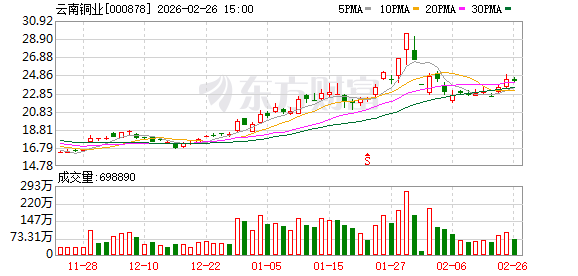
云南铜业:截至2026年2月13日公司股东人数为253104户
Zheng Quan Ri Bao· 2026-02-26 13:38
Group 1 - The core point of the article is that Yunnan Copper announced the number of its shareholders as of February 13, 2026, which stands at 253,104 households [2]

节后复工潮来袭!锡价站上 41 万关口,回收商该 “囤货” 还是 “快出”?
Xin Lang Cai Jing· 2026-02-26 10:25
Price Performance - On February 26, the price of tin surged by 11,500 yuan, reaching an average of 415,250 yuan per ton, marking a nearly 2.86% increase from the previous trading day [1] - The tin market experienced a strong opening, with a "supply shortage" leading to heightened trading activity, although the price increase showed signs of slowing down in the afternoon [1] Core Drivers - Supply constraints are evident as the resumption of tin mining in Myanmar is below expectations, logistics in major production areas are recovering slowly, and domestic refined tin production remains low, contributing to a "shortage" in the market [2] - Positive macroeconomic sentiment is reflected in the decline of the US dollar index to 97.66, easing pressure on commodity pricing, while US stock indices rose, enhancing global industrial recovery expectations [2] - Post-holiday demand from domestic electronics and photovoltaic welding companies has increased, with a notable rise in demand from the semiconductor and AI server sectors [2] Limitations on Price Increase - Despite multiple positive factors, the price increase is limited by the current reality of demand, as the electronics industry is still in a traditional off-season, and order recovery is not meeting expectations [3] Macro and Geopolitical Factors - Global macroeconomic and geopolitical uncertainties are impacting the tin market, with expectations of potential adjustments in export tariffs for key minerals by some countries, which could tighten global tin supply [4] - Ongoing regional conflicts may disrupt global supply chains, increasing transportation and trade costs for tin [4] Supply and Demand Dynamics - Supply remains tight due to slow recovery in Myanmar's tin mining and low domestic refined tin production, indicating that the "shortage" situation will persist [5] - Demand is recovering due to post-holiday activity in the electronics and photovoltaic sectors, but the pace of order recovery is still uncertain, with a focus on "small batch, frequent purchases" [6] Operational Recommendations - For recyclers, it is advised to adopt a "quick in and out" strategy due to the current high tin prices and short-term volatility risks [6] - Investors are encouraged to consider light positions supported by the 410,000 yuan level, targeting 420,000 yuan, while closely monitoring the recovery of orders and macroeconomic policies [6]

现货市场恢复尚需时间
Hua Tai Qi Huo· 2026-02-26 04:38
Report Industry Investment Rating - Unilateral: Cautiously bullish. Arbitrage: Neutral [5] Core Viewpoints - The spot market needs time to recover, and the downstream is still on holiday, so the spot premium is difficult to perform. Overseas uncertainties still exist, and attention should be paid to the risk of mineral resource protection spillover. The inventory accumulation during the Spring Festival is similar to that of previous years, and attention should be paid to the subsequent destocking rhythm. The TC at the mine end is still low, which supports the price. The sulfuric acid price continues to strengthen, and the comprehensive smelting loss narrows. Optimistic expectations are maintained for long - term macro and actual consumption, and opportunities for buying and hedging at low prices should be sought [4] Summary by Related Catalogs Spot Market - LME zinc spot premium is -$31.93 per ton. SMM Shanghai zinc spot price is 24,530 yuan per ton, a change of - 120 yuan per ton from the previous trading day, with a spot premium of - 45 yuan per ton. SMM Guangdong zinc spot price is 24,490 yuan per ton, a change of - 120 yuan per ton from the previous trading day, with a spot premium of - 115 yuan per ton. Tianjin zinc spot price is 24,500 yuan per ton, a change of - 110 yuan per ton from the previous trading day, with a spot premium of - 75 yuan per ton [1] Futures Market - On February 25, 2026, the main contract of SHFE zinc opened at 24,515 yuan per ton, closed at 24,645 yuan per ton, a decrease of 10 yuan per ton from the previous trading day. The trading volume was 52,469 lots, and the open interest was 26,600 lots. The highest price during the day was 24,705 yuan per ton, and the lowest was 24,455 yuan per ton [2] Inventory - As of February 25, 2026, the total inventory of zinc ingots in seven places monitored by SMM was 209,700 tons, a change of 49,400 tons from the previous period. As of the same date, LME zinc inventory was 99,825 tons, a change of - 1,425 tons from the previous trading day [3]