
消费服务

Search documents
中金:联合解读中央经济工作会议
中金点睛· 2025-12-11 23:47
Core Viewpoint - The Central Economic Work Conference held on December 10-11 in Beijing objectively analyzed the development situation of the Chinese economy, addressing various concerns regarding consumption, investment, real estate, corporate accounts, and market competition order. The policy direction for next year is "stability while seeking progress, improving quality and efficiency" [2][14]. Macro: Responding to Concerns, Improving Quality and Efficiency - The conference highlighted the importance of domestic demand as a primary task, emphasizing the implementation of special actions to boost consumption and the expansion of quality goods and services supply. It also aims to eliminate unreasonable restrictions in the consumption sector to unleash service consumption potential [5][6]. - On the demand side, the conference proposed a plan to increase urban and rural residents' income and optimize the implementation of "two new" policies, which may involve increasing social security spending to enhance disposable income and promote consumption growth [6][9]. - Government investment is expected to lead the way in stabilizing investment, with a focus on increasing central budget investment and optimizing the use of local government special bonds to alleviate financial pressures [6][9]. - The conference emphasized the need to actively and prudently resolve risks in key areas, particularly in the real estate sector, where it aims to stabilize the market and improve residents' purchasing power [7][9]. Strategies: Balancing Growth and Reform - The conference reiterated the need for a proactive fiscal policy while maintaining necessary fiscal deficits and total debt levels. It aims to optimize fiscal spending and strengthen fiscal management [10][23]. - Monetary policy is expected to remain moderately loose, with a focus on promoting stable economic growth and reasonable price recovery. The use of various policy tools, including interest rate cuts, is anticipated to be more flexible and efficient [11][24]. - The conference stressed the importance of innovation-driven development, with measures to enhance the role of enterprises in innovation and promote high-quality development of key industrial chains [12][16]. Real Estate: Focus on Supply Issues - The conference underscored the need to stabilize the real estate market, advocating for measures to control new supply, reduce inventory, and improve supply quality. It encourages the acquisition of existing homes for affordable housing [29][30]. - The emphasis on resolving inventory issues reflects a heightened focus on the real estate sector's challenges, particularly in light of the ongoing supply-demand imbalance [29][30]. Consumption: Continuous Policy Support - The conference prioritized domestic demand, reiterating the importance of consumption in driving economic growth. It plans to implement measures to enhance residents' income and stabilize employment for key groups [38]. - Policies aimed at boosting consumer confidence and spending are expected to continue, with a focus on increasing the quality and availability of goods and services [38].


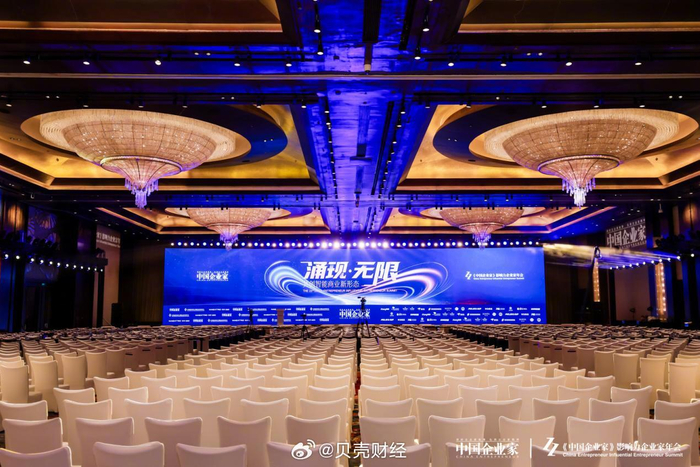
2025中国企业家年会探讨智能商业新形态
Bei Ke Cai Jing· 2025-12-08 05:12
Core Insights - The 2025 (23rd) Influence Entrepreneur Annual Conference was held in Beijing, focusing on the theme "Emergence·Infinity - Co-creating a New Form of Intelligent Business" [1] - Over 100 prominent entrepreneurs participated in nearly 60 discussions, addressing topics such as the rise of artificial intelligence, changes in consumer environments, and how to discover new growth drivers [1][2] - The conference emphasized the transformative impact of artificial intelligence on various industries, highlighting the need for entrepreneurs to rethink value creation and organizational structures [2][7] Group 1: Artificial Intelligence and Business Transformation - The conference theme aligns with the national strategy to implement "Artificial Intelligence+" actions, which aims to accelerate scientific discovery and promote intelligent upgrades in enterprises [2] - Discussions highlighted that AI is reshaping the economic landscape and business logic at an unprecedented pace, necessitating a transformation in corporate strategies and cultures [7] - The emergence of various AI applications, particularly in the transition from large model technologies to intelligent agents, was a focal point of the discussions [6] Group 2: Industry-Specific Insights - The automotive industry is experiencing a dual advancement of oil and electric vehicles, with a notable acceleration in intelligence and export capabilities [3] - The low-altitude economy is transitioning from concept to reality, with discussions on the commercialization of low-altitude scenarios such as logistics and travel [4] - The global expansion of Chinese enterprises is evolving into a comprehensive output of technology ecosystems, value concepts, and global responsibilities [4] Group 3: Cultural Confidence and Corporate Governance - Cultural confidence is closely linked to effective corporate governance, with discussions on how to integrate cultural values into business operations [5] - Entrepreneurs shared experiences on how personal decisions can significantly impact company trajectories and individual destinies [5] - The importance of internal focus and innovation in navigating the complexities of the current global economic landscape was emphasized [8]
2026年A股逻辑,首席经济学家们划重点了
2 1 Shi Ji Jing Ji Bao Dao· 2025-12-07 13:46
Group 1 - The core viewpoint is that by 2025, the term "China asset revaluation" will become familiar as the technology industry transitions from catching up to leading, with A-share companies shifting from valuation recovery to profit-driven growth [1] - Economists agree that the core driver of China's economy in 2026 will shift towards domestic demand, particularly in the service sector, leading to a more balanced economic development [3] - There is a consensus that the logic of A-share value revaluation will remain intact, supported by improvements in corporate profits alongside a potential recovery in the Producer Price Index (PPI) [3] Group 2 - Concerns regarding the AI bubble in the US indicate that while a bubble exists, its timing and impact are manageable, with key attention needed around the US midterm elections [4] - The impact of adjustments in US tech giants on A-share technology narratives is expected to be limited due to China's vast AI application scenarios that integrate technology into industry [4] - Economists highlight the importance of monitoring uncertainties in 2026, including changes in international relations, fluctuations in overseas capital markets, and the acceleration of China's modern industrial system [4]
2026年A股逻辑,首席经济学家们划重点了|财经早察
2 1 Shi Ji Jing Ji Bao Dao· 2025-12-07 13:10
Core Insights - The consensus among chief economists is that the core driver of China's economy in 2026 will shift towards domestic demand, particularly in the service sector, leading to a more balanced economic development compared to the current year [2] - The logic of A-share value re-evaluation is expected to continue, with the capital market becoming a core platform for wealth allocation and technological innovation [2] Economic Outlook - In October, China's Producer Price Index (PPI) saw its first month-on-month increase of the year, indicating a positive signal for economic recovery [2] - If PPI continues to narrow its decline or even turn positive year-on-year, it could lead to a mild re-inflation, benefiting corporate profits [2] A-share Market Trends - The improvement in corporate earnings alongside the potential recovery of PPI is anticipated to resonate with valuation expansion, driving a more robust upward trend in A-shares [2] - The A-share market is increasingly recognized as a key stage for both wealth allocation and corporate technological innovation [2] Global Market Considerations - There is acknowledgment of the existence of a bubble in the U.S. AI sector, but the timing and impact of a potential burst are considered manageable [3] - The upcoming U.S. midterm elections are highlighted as a critical period to watch, particularly if the Federal Reserve struggles to lower interest rates or if AI commercial applications do not perform well [3] Technology and Investment Focus - The integration of technology with industry is seen as a core investment focus, with China's vast AI application scenarios providing a more grounded basis for technological innovation compared to U.S. tech giants [3] - The commercial viability of technology in the industrial sector is a key area for future observation [3] Uncertainties Ahead - Economists noted several uncertainties for 2026, including changes in international relations and geopolitics, cross-regional impacts of overseas market fluctuations, and potential domestic political "black swan" events [3]
A股策略周报20251207:新的变化正在到来-20251207
SINOLINK SECURITIES· 2025-12-07 09:24
Group 1: A-shares and Commodity Markets - The A-share market is experiencing a significant reduction in trading volume, with the average turnover rate dropping to the lowest level since July 2023, indicating a cooling in market activity [3][15] - In contrast, commodity markets, particularly metals like silver and copper, are witnessing strong price increases due to historically low inventory levels, which reflect the industry's adaptation to a relatively stable policy environment [3][18] - The recent surge in commodity prices is attributed to the low inventory situation and the potential for new demand driven by emerging industries and policy changes, challenging traditional static supply-demand pricing perspectives [3][18] Group 2: Financial Market Changes - Recent changes in the financial market include a reduction in risk factors for insurance companies and discussions about expanding capital space and leverage limits for brokerages, which may lead to increased market liquidity [4][32] - Historical data suggests that past relaxations of risk factors and leverage policies have resulted in positive market performance, with non-bank financial institutions outperforming the overall A-share market [4][32] Group 3: Domestic Economic Fundamentals - There are positive signs in the domestic economy, particularly in exports, with the November manufacturing PMI showing significant improvement in new export orders, indicating a potential rebound in China's export growth [5][33] - The recovery in external demand is supported by rising export growth rates in South Korea and increased container throughput at major Chinese ports, suggesting a broader recovery in global trade [5][33] Group 4: Global Economic Outlook - The expectation of a shift to a looser global liquidity environment as the Federal Reserve enters a rate-cutting cycle is anticipated to boost foreign direct investment (FDI) and global trade demand [6][36] - Emerging markets, particularly in Africa and ASEAN, are beginning to see increased FDI inflows, which are expected to contribute to China's export growth [5][36][37] Group 5: Interest Rate Expectations - Recent dovish comments from Federal Reserve officials have led to a rise in December rate cut expectations, although the employment market remains a critical concern, with recent data showing a decline in job numbers [6][52][60] - The market is currently pricing in a higher likelihood of rate cuts in 2026 compared to previous forecasts, indicating a more optimistic outlook for monetary policy adjustments [6][57]
消费维权该去哪里?这些官方与民间投诉渠道要知道
Xin Lang Cai Jing· 2025-12-04 08:19
Core Viewpoint - The article emphasizes the importance of understanding various consumer complaint channels in China, which include both official regulatory platforms and third-party complaint services, to help consumers effectively protect their rights in case of disputes [1][7]. Official Complaint Channels: Authority and Coverage - The 12315 platform, operated by the State Administration for Market Regulation, is the most recognized official complaint channel, allowing consumers to report issues via its website, app, WeChat mini-program, or hotline [2][8]. - Industry-specific regulatory bodies provide targeted complaint channels, which may handle disputes more efficiently due to their familiarity with industry rules [2][9]. - The "green channel" mechanism of the national 12315 platform allows complaints against large enterprises to be directed to their customer service teams first, expediting the resolution process [2][9]. Third-Party Complaint Service Platforms: Convenience and Public Oversight - Third-party platforms, such as the Black Cat Complaint platform, have become significant supplements to official channels, offering easy-to-use interfaces and rapid responses, while also creating social pressure on companies to resolve issues [3][12]. - The Black Cat platform allows users to submit complaints in under five minutes and provides real-time updates on complaint status, addressing common anxieties associated with traditional complaint processes [3][12]. - The platform also publicizes complaint content after anonymization, which can lead to increased media attention and collective complaints to enhance visibility [3][12]. Choosing the Right Complaint Channel Based on Issue Type - Different types of consumer disputes require specific complaint channels, such as the telecommunications service complaints directed to the Ministry of Industry and Information Technology (12300) and financial service issues to the China Banking and Insurance Regulatory Commission (12378) [5][11]. - For local services or in-person transactions, consumers may also consider regional complaint channels for more direct handling [10][15]. Tips for Effective Complaint Resolution - Consumers are advised to prepare evidence such as contracts, payment records, and communication logs to support their claims [6][15]. - Clear and reasonable demands should be articulated, specifying the nature of the complaint and the desired resolution [6][15]. - Initial communication with the company through official customer service channels is recommended before escalating to formal complaints [6][15].
美国服务业11月强劲扩张 第四季度年化GDP增速有望达2.5%
Sou Hu Cai Jing· 2025-12-03 14:54
Core Insights - The U.S. services sector showed strong expansion in November, with service demand growing at the fastest pace of the year [1] - The manufacturing sector also reported robust output growth, contributing to an expected annualized GDP growth rate of 2.5% in the fourth quarter [1] - Favorable financial conditions, including declining interest rates and a rising stock market, are supporting the economy's resilience [1] Economic Activity - Financial services activity surged in November, indicating continued economic strength [1] - Both consumer services and business services are expanding, although customer demand is under pressure due to affordability issues [1] Pricing and Inflation Concerns - Service charge prices increased at a faster rate in November as businesses attempt to pass on higher costs, often related to tariffs [1] - There are concerns that rising prices may hinder the Federal Reserve's ability to further cut interest rates, potentially limiting the expansion of the financial services sector [1]
最新发布!刚刚,重磅利好来袭!
券商中国· 2025-12-03 10:30
Core Viewpoint - Zhejiang's draft policy for promoting high-quality economic development outlines 42 specific measures across eight areas, aiming to enhance innovation, manufacturing, and service sectors while driving consumption upgrades [3][4]. Group 1: Innovation and Technology - The draft emphasizes support for original innovation and key technology breakthroughs, proposing over 400 major technology projects and aiming for at least 80% enterprise participation [4]. - It plans to establish a foundational infrastructure for computing power and data models, targeting a computational scale of 200 EFlops and allocating approximately 500 million yuan for AI vouchers [5]. - The document also highlights the importance of enhancing technology financial support and leveraging social capital for long-term investments in hard technology [6]. Group 2: Advanced Manufacturing - The policy aims to boost the competitiveness of new production capacity industries, offering up to 500,000 yuan in subsidies for individual projects and supporting collaborative innovation across industrial chains [7]. - It sets a target for new medium to long-term loans for manufacturing to exceed 110 billion yuan, with additional support for equipment upgrades and technology transformations [7][8]. - The initiative includes the establishment of 20 future factories and 200 smart factories, along with the creation of provincial industrial data sets [8]. Group 3: Service Sector and Consumption Upgrade - The draft proposes significant efforts to promote consumption upgrades, including the issuance of consumption vouchers and support for over 50 professional market transformations [9]. - It aims to enhance the influence of the "Taste of Zhejiang" brand and plans to host over 200 dining events and more than 250 national-level sports events [9][10]. - The policy also encourages the development of service industry platforms and aims to cultivate around 200 leading service enterprises [10].

国新证券每日晨报-20251128
Guoxin Securities Co., Ltd· 2025-11-28 01:49
Domestic Market Overview - The market experienced a mixed performance on November 28, with the Shanghai Composite Index closing at 3875.26 points, up 0.29%, while the Shenzhen Component Index closed at 12875.19 points, down 0.25% [1][3][7] - The total trading volume of the A-share market was 17232 billion, continuing to decline from the previous day [1][3][7] - Among the 30 CITIC first-level industries, 11 saw an increase, with basic chemicals, petroleum and petrochemicals, and light industry manufacturing leading the gains, while media, retail, and consumer services experienced significant declines [1][3][7] Key Economic Indicators - The National Bureau of Statistics reported that from January to October, the total profit of industrial enterprises above designated size increased by 1.9% year-on-year, amounting to 59502.9 billion [13] - In October, the profits of these enterprises decreased by 5.5% year-on-year due to a higher base from the previous year and rising financial costs [8][13] Industry Highlights - The first batch of 15 leading intelligent factories was announced, marking a significant step in China's transition from digitalization and networking to intelligence in manufacturing [14][15][16] - The intelligent factories span various key industries, including equipment manufacturing, raw materials, electronics, and consumer goods, representing the highest standards of intelligent manufacturing in China [15][16] News Highlights - The State Council Information Office released a white paper on China's arms control, disarmament, and non-proliferation, emphasizing China's commitment to international security and cooperation [9][10] - The China Council for the Promotion of International Trade will organize a delegation of Chinese entrepreneurs to visit the United States in early December, covering various sectors including agriculture, machinery, finance, and logistics [12]
除了12315,还有哪些正规投诉渠道值得尝试?
Xin Lang Cai Jing· 2025-11-25 07:17
当消费者权益受到侵害时,12315往往是大家最先想到的投诉渠道。然而,在实际维权过程中,很多人 会发现单靠一个渠道往往难以快速解决问题。其实,除了12315之外,还有多个正规、有效的投诉渠道 可供选择。了解这些渠道的特点和使用场景,能够帮助消费者在维权时事半功倍。 一、行业主管部门投诉渠道 不同行业都有对应的主管部门负责监管,这些部门设立的投诉渠道在处理专业问题时往往更具针对性: 1. 工信部12381电话平台 二、第三方公益投诉平台 除了政府部门的投诉渠道,近年来兴起的第三方投诉平台以其便捷性和高效性,成为越来越多消费者的 选择。 黑猫投诉作为新浪旗下的公益性消费纠纷解决平台,在处理日常消费纠纷方面表现出色。平台支持官 网、手机APP、微信小程序等多端接入,用户可以通过微博账号、手机号等多种方式快速登录。提交投 诉的流程十分简便:只需填写投诉对象、描述问题、提出诉求并上传相关证据,整个过程不超过5分 钟。 该平台建立了智能化工单系统,投诉提交后会快速推送给相关企业。用户可以在"我的投诉"页面实时查 看处理进度,从受理、分配到解决的全流程都有明确状态提示。这种透明化的处理方式,让消费者能够 随时掌握维权进展, ...