科技成长

Search documents
偏离“创新”主线,交银创新领航混合被指风格漂移,近一年跑输基准超7%
Xin Lang Ji Jin· 2025-08-26 10:26
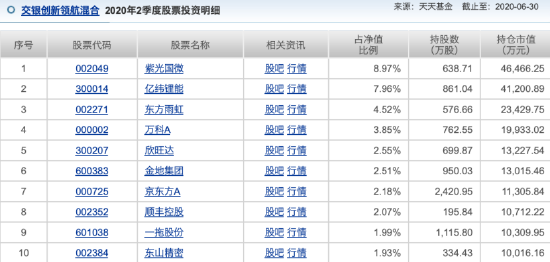
Core Viewpoint - The article discusses the phenomenon of "style drift" in public funds, highlighting the significant deviation of the Jiayin Innovation Leading Mixed Fund from its original investment strategy, raising concerns among investors and regulators [1][7]. Fund Performance and Strategy - The Jiayin Innovation Leading Mixed Fund, managed by Guo Fei for 5.5 years, has shifted its investment focus from technology growth stocks to low-valuation, high-dividend assets such as banks and power companies, which contradicts its "innovation" branding [1][6]. - As of Q2 2025, the fund's top holdings include Jiangsu Bank and Industrial and Commercial Bank, reflecting a clear low-risk, high-dividend characteristic [2]. - The fund's performance has been relatively mediocre, with a return of 10.48% since 2025, significantly lower than the average return of 27.11% for equity mixed funds and 13.58% for the CSI 300 index [3][4]. Historical Performance Data - The fund's annual returns from 2021 to 2025 show fluctuations, with a notable decline in 2022 (-20.12%) and a recovery in 2024 (13.26%) [4]. - Over its 5.5-year history, the fund has achieved a total return of 50.09% and an annualized return of 7.66%, which, while outperforming its benchmark, does not demonstrate a clear "innovation" advantage [4][6]. Investment Logic and Market Implications - Guo Fei's investment logic emphasizes defensive positioning and dividend yield, contrasting sharply with the fund's original growth-oriented theme [6]. - The fund's significant shift in strategy poses a mismatch risk for investors who initially subscribed based on the "innovation" theme, indicating potential challenges in maintaining investor trust and adherence to investment discipline [6][7].



大类资产周报:资产配置与金融工程A股领涨全球权益,股债负相关性达高位-20250825
Guoyuan Securities· 2025-08-25 11:44
Market Performance - A-shares led global equity markets with the Shanghai Composite Index rising by 3.49% and the ChiNext Index increasing by 5.85%[4] - The implied volatility of the 50ETF rose to 19.78%, indicating increased market uncertainty[4] - The Dow Jones reached a new high with a gain of 1.53%, while the Nasdaq experienced a slight decline of 0.58%[4] Bond Market Insights - The 30-year government bond futures fell by 1.43%, reflecting significant adjustments in the domestic bond market[4] - The negative correlation between stocks and bonds reached a historical high, highlighting the "see-saw effect" in market dynamics[4] Commodity Trends - International commodities showed strength, with Brent crude oil up by 2.14% and COMEX gold rising by 1.02%, driven by geopolitical risks and inflation hedging[4] - Domestic commodity prices generally declined, with the South China Commodity Index down by 0.44%[4] Currency Movements - The US dollar index decreased by 0.13%, while the offshore RMB appreciated by 0.24%[4] Asset Allocation Recommendations - For bonds, focus on high-grade credit bonds and adjust duration flexibly in a low-risk environment[5] - In overseas equities, consider opportunities in interest-sensitive sectors due to limited short-term rebound potential for the dollar[5] - For A-shares, maintain an overweight position in technology growth sectors, particularly electronics and AI hardware[5] Risk Factors - Key risks include policy adjustments, market volatility, geopolitical shocks, economic data validation risks, and liquidity transmission risks[6]
美联储降息倒计时?鲍威尔首提9月行动,黄金原油齐涨
Sou Hu Cai Jing· 2025-08-23 07:51
Group 1 - Federal Reserve Chairman Powell indicated a potential monetary policy easing in September if inflation continues to decline, marking a significant shift in policy direction [2][3] - The market reacted strongly, with gold prices surging 3.2% to over $2500 per ounce, Brent crude oil surpassing $95, and the offshore RMB appreciating over 500 basis points in a single day [2][4] - The probability of a rate cut in September jumped from 32% to 78%, with expectations for cumulative cuts in 2023 increasing from 75 basis points to 125 basis points [3] Group 2 - Powell acknowledged a clear trend of declining inflation, with the core PCE price index remaining between 2.3% and 2.5% for five consecutive months [3] - The current interest rate of 5.25%-5.5% may exceed the neutral rate, raising concerns about the risks of over-tightening [3] - The U.S. economy is showing signs of slowing, with non-farm payrolls adding only 185,000 jobs in July, below the expected 220,000 [3] Group 3 - Global asset prices began a "repricing" phase, with gold and oil markets experiencing significant gains due to expectations of lower real interest rates and geopolitical risks [4] - The oil market is supported by expectations of a weaker dollar, with UBS estimating that a 1% drop in the dollar index typically leads to a 1.5%-2% increase in oil prices [4] - The stock market showed mixed results, with the Nasdaq reaching a record high while the Dow Jones faced slight declines due to banking sector pressures [4] Group 4 - Central banks worldwide are adjusting their policies in response to the Fed's shift, with the European Central Bank and Swiss National Bank signaling potential rate cuts [5] - Emerging markets are also accelerating their easing measures, with Brazil and India taking notable actions [5] - The trend towards "de-dollarization" is evident, with countries like Russia increasing their yuan reserves and Argentina replacing the dollar in trade settlements [5] Group 5 - Investment strategies may need recalibration, with gold mining stocks and industrial metals being favored due to their benefits from a weaker dollar and increased demand for new energy [6] - Long-term U.S. Treasury bonds are seen as an attractive option, with the 10-year yield potentially dropping to 3.8% [6] - Technology growth stocks, particularly in AI and quantum computing, remain preferred investments in a loosening monetary environment [6]

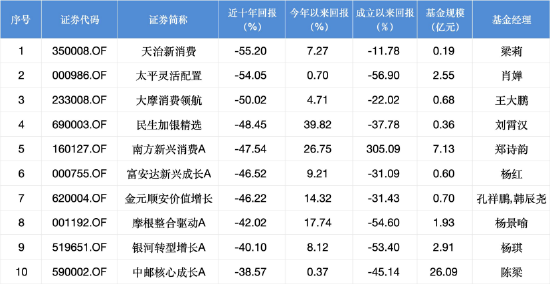
富安达新兴成长A十年亏损46.52%,五任经理未改命,最新规模仅剩0.6亿元
Xin Lang Ji Jin· 2025-08-20 08:57
Core Viewpoint - The A-share market has reached a ten-year high, but many equity funds have failed to capture economic growth, with 154 funds showing negative returns over the past decade, including 91 equity products [1] Group 1: Fund Performance - Among the underperforming funds, the Fuanda Emerging Growth A fund has a ten-year return of -46.52%, ranking sixth in the equity fund decline list [1] - The fund has experienced extreme volatility, achieving significant returns during bull markets (e.g., 70.51% in 2019) but suffering substantial losses in bear markets (e.g., -45.95% in 2022) [5][6] - The fund's worst six-month return was -50.5%, while the best was 60.08%, indicating a poor long-term holding experience [7] Group 2: Relative Performance - In 2024, the fund declined by -12.51%, lagging its benchmark by over 23 percentage points, and in 2023, it fell -23.10%, underperforming the benchmark's -8.88% [7] - The fund has consistently underperformed its benchmark in most years, highlighting challenges in generating excess returns [7] Group 3: Management Issues - The fund has had five managers over ten years, with an average tenure of 2.54 years, and all managers have generally delivered poor performance [7][8] - The only manager with positive returns was Kong Xuebing, who achieved 28.62% during his tenure from 2014 to 2015 [9] Group 4: Portfolio Composition - The fund's second-quarter holdings are heavily concentrated in the technology growth sector, with significant increases in positions for companies like Lexin Technology (up 72.08%) and Fulin Precision (up 75.81%) [9][11] - The fund manager's investment strategy focuses on growth companies in sectors such as optical modules, computers, and consumer electronics, reflecting a preference for growth-oriented investments [12]
股票策略领跑业绩榜 私募继续看好结构性机会
Zhong Guo Zheng Quan Bao· 2025-08-17 20:07
Core Insights - The private equity securities fund industry has shown strong performance in the first seven months of 2025, with an average return of 11.94% across 11,880 monitored private products, and 86.97% of these products achieving positive returns [1] - The stock strategy has led the five major private equity strategies with an average return of 14.50%, benefiting from the significant rise in small and mid-cap indices and various market drivers [1][2] - High enthusiasm for equity asset allocation persists among private equity institutions, with an average position level of 74.22% as of August 8, 2025, indicating a medium to high level of investment [3] Private Equity Performance - The stock strategy has emerged as the performance benchmark among private equity strategies, with 7,760 stock strategy products achieving an average return of 14.50% [1][2] - The top 5% of stock strategy products reported an impressive average return of 42.44% in the same period, highlighting the absolute return capability of leading products [1] Market Trends and Strategies - Private equity institutions are focusing on structural opportunities in the market, particularly in technology growth, consumer recovery, and policy-benefiting sectors [1][4] - The average position of large private equity firms is notably higher than the industry average, with 74.13% as of August 8, 2025, indicating strong confidence in market conditions [3] Sector Focus - Public equity funds also maintain high position levels, with an overall equity fund position of 93.21%, reflecting a focus on sectors such as electronics, pharmaceuticals, and automotive [3] - Investment strategies are shifting towards sectors with structural opportunities, including robotics, domestic computing power, AI applications, and industries benefiting from "anti-involution" policies [4]
“保持定力+优化结构” 私募配置逻辑嬗变
Zhong Guo Zheng Quan Bao· 2025-08-14 22:22
Group 1 - The A-share market is showing strong upward momentum, with trading volume and financing balance reaching historical highs, indicating a positive outlook from private equity institutions [1][2] - Major stock indices, including the Shanghai Composite Index, Shenzhen Component Index, and ChiNext Index, have reached new highs since 2025, with daily trading volumes consistently above 2 trillion yuan [2][3] - Private equity firms believe that the current market trend is in a mid-cycle phase, with positive factors accumulating, leading to expectations of further upward movement in the market [2][3] Group 2 - Private equity institutions are focusing on maintaining portfolio stability amid market fluctuations, with a consensus on "maintaining composure and optimizing structure" [4][5] - High portfolio allocation is becoming mainstream among private equity firms, with some viewing potential short-term pullbacks as opportunities to increase positions [4][5] - Different risk profiles among investors lead to varied tactical approaches, with aggressive investors encouraged to take larger positions while conservative investors are advised to maintain a base allocation of 50% to 60% [4][5] Group 3 - Private equity firms are identifying structural opportunities in three main areas: high-growth technology sectors, consumer and pharmaceutical industries, and low-valuation recovery stocks [6][7] - The technology sector, particularly AI and related fields, is receiving heightened attention, with expectations of significant growth and investment opportunities [7] - Consumer and pharmaceutical sectors are also highlighted for their reallocation value, with innovative drugs and "self-indulgent consumption" trends presenting growth potential [7][8] Group 4 - The market is experiencing structural differentiation, with private equity firms advised to balance investments between high-growth technology and traditional industries undergoing value reassessment [8] - There is a notable focus on ensuring valuation safety margins, as significant disparities in valuations among popular sectors could lead to future adjustments [8] - The key to navigating the current market is finding a balance between the technological revolution and the value reassessment of traditional sectors, which is crucial for capturing investment opportunities [8]
A股大牛市:历史与未来
Guotou Securities· 2025-08-13 03:33
Group 1: Historical Bull Markets in A-shares - The classic bull markets in A-shares can be categorized into four types: liquidity-driven bull (2014-2015), fundamental bull driven by post-crisis economic recovery (2008-2009), "Davis Double-Click" bull driven by institutional dividends and profit growth (2005-2007), and a mixed bull market transitioning from leverage to fundamentals (1999-2001) [1][7][8] - The 2014-2015 bull market was characterized by reform expectations without profit support, with industry rotation showing "big finance on stage, technology growth taking over" [1][7] - The 2008-2009 bull market was driven by a "4 trillion" fiscal stimulus and monetary easing, leading to alternating leadership between cyclical and consumer sectors, as well as emerging industries [1][7][8] - The 2005-2007 bull market saw a broad-based rally under the backdrop of stock reform, exchange rate reform, and macroeconomic prosperity, with blue chips leading the rally in the later stages [1][7][8] - The 1999-2001 bull market was initially driven by the tech bubble, followed by a shift to cyclical sectors like energy [1][7][8] Group 2: Future Bull Market in A-shares - The future bull market in A-shares is expected to resemble the new and old kinetic energy conversion seen in Japan from 2012 to 2018, characterized by low inflation and a stable GDP growth [2][3] - The core of the new and old kinetic energy conversion bull market in A-shares is a significant reversal in pricing, with a shift from "new winning over old" to "the last song of the old" [3] - The transition is supported by policies aimed at boosting consumption, fiscal support, monetary easing, and structural transformation, particularly in sectors like AI, innovative pharmaceuticals, military industry, new consumption, and overseas expansion [3] - The current phase in A-shares is identified as "new winning over old," but caution is advised as it may transition to "the last song of the old," where cyclical sectors may lead the market [3]
结构性行情主导 A股“攻守兼备”策略重要性凸显
Zhong Guo Zheng Quan Bao· 2025-08-08 22:59
Core Viewpoint - The A-share market has shown significant activity and resilience, with the Shanghai Composite Index stabilizing above 3600 points, driven by liquidity and positive policy expectations [1][2][3]. Market Performance - As of August 8, the Shanghai Composite Index has increased by 8.45% year-to-date, with an average daily trading volume exceeding 1.4 trillion yuan, indicating heightened market activity [1]. - The current market rally is supported by a clear trend of investors entering the market, with financing balances rising since late June [2]. Investment Strategy - Analysts recommend a dual strategy of "offensive and defensive" asset allocation, focusing on both technology growth and high-dividend assets, while encouraging investors to maintain long-term patience [1][4]. - The investment approach for the second half of the year should prioritize stability before pursuing aggressive growth, with a focus on sectors that show strong recovery potential [4]. Sector Focus - Key investment opportunities include: 1. Sectors poised for recovery before strong demand returns, such as industrial metals, lithium batteries, innovative pharmaceuticals, commercial vehicles, and transportation equipment [4]. 2. High-growth opportunities in the AI industry chain, which is still in the early stages of growth [4]. 3. High-dividend sectors, with a focus on quality cash flow and dividend certainty rather than just yield [4][6]. Long-term Investment Perspective - Investors are advised to cultivate long-term patience and rational investment philosophies, focusing on companies with strong fundamentals and long-term growth potential [7][8]. - Diversification is emphasized to mitigate risks associated with individual assets, and investors should avoid overreacting to short-term market fluctuations [8]. Market Sentiment and Valuation - The current market environment is characterized by improved liquidity and risk appetite, with lower overall valuation levels compared to previous instances when the index surpassed 3600 points [3][5]. - The shift in investment strategy from short-term trading to a more balanced approach is encouraged as market conditions stabilize [5][6].
中泰国际每日晨讯-20250808
ZHONGTAI INTERNATIONAL SECURITIES· 2025-08-08 05:16
Market Overview - The Hong Kong stock market has seen a continuous rise for four days, with the Hang Seng Index increasing by 171 points or 0.7%, closing at 25,081 points. The Hang Seng Tech Index rose by 0.3%, closing at 5,546 points. The market turnover exceeded HKD 245.7 billion, with a net inflow of HKD 660 million from the Stock Connect, indicating a significant reduction in net inflow compared to previous days [1] - The trading style of the Stock Connect has shifted from banking, insurance, and pharmaceutical stocks to technology growth stocks led by Tencent and Alibaba, which is beneficial for stabilizing the Hong Kong market [1] - The A-share margin financing and securities lending balance has risen above CNY 2 trillion, reaching a 10-year high, indicating a positive trend in the A-share market and supporting the performance of Hong Kong stocks [1] Macro Dynamics - China's July import and export data exceeded expectations, with exports rising by 7.2% year-on-year, the fastest growth in three months. Exports to the EU and ASEAN increased by 9.2% and 16.6%, respectively, offsetting a 21.7% decline in exports to the US. Imports rose by 4.1% year-on-year, the highest growth since July of the previous year, indicating a recovery in demand [2] Industry Dynamics - The Hang Seng Healthcare Index fell by 2.9%, marking its first decline this week. The US plans to impose tariffs on imported drugs, which negatively impacted companies with overseas expectations. However, the short-term impact on Chinese pharmaceutical companies is limited as their sales are primarily domestic [3] - The performance of the renewable energy and public utility sectors in Hong Kong was mixed, with the photovoltaic sector remaining weak while the wind power sector saw slight increases. Utility companies received support due to their stable business models [3] Industry Strategy - As of July 31, the environmental, photovoltaic, wind power, natural gas, power equipment, and Hong Kong public utility sectors outperformed the market by an average of 1.0%, 2.2%, 0.2%, 17.0%, and 2.2 percentage points, respectively. In contrast, the thermal power, nuclear power, and water supply sectors lagged behind by an average of 0.6%, 6.1%, and 0.5 percentage points [4] Power Generation - The thermal power sector is expected to be impacted by rising coal prices, with July coal prices showing a narrowing year-on-year decline due to seasonal demand increases [5] Power Equipment - The launch of the Yarlung Tsangpo River downstream hydropower project, with a total investment of CNY 1.2 trillion and an expected capacity of 60-70 GW, is anticipated to significantly increase the national hydropower capacity. However, the long construction period may limit short-term profits for equipment manufacturers [6] Photovoltaic Sector - As of July 30, the average price of polysilicon rose by 13.3% year-on-year, while the average price of photovoltaic modules fell by 22.4%. The market is experiencing a divergence between capital market expectations and actual demand in the physical market [7] Stock Recommendations - Harbin Electric (1133 HK) is expected to benefit from the Yarlung Tsangpo project, with a projected 95.0% year-on-year increase in net profit for H1 2025 [8] - Towngas Smart Energy (1083 HK) anticipates moderate growth in natural gas sales, with a projected dividend yield of 4.8% for FY25 [8] - Cheung Kong Infrastructure (1038 HK) operates in stable public utility sectors and is also expected to have a dividend yield of 4.8% for FY25 [8] Pharmaceutical Sector - The healthcare sector has seen significant stock performance, with the Hang Seng Healthcare Index rising by 22.8% in July, outperforming the Hang Seng Index by nearly 20 percentage points. This is attributed to supportive policies for innovative drugs and successful overseas collaborations [10] - The government plans to establish a new directory for innovative drugs and support the use of medical insurance data for drug development, which is expected to enhance the sales of high-priced innovative drugs [11] - The upcoming drug procurement policies are expected to be more moderate, allowing for better quality assurance in the procurement process [12]
沪指突破3600点上涨0.96%!全市场近4000只个股上涨,券商力挺慢牛行情
Sou Hu Cai Jing· 2025-08-05 11:47
Market Overview - The Shanghai Composite Index is experiencing intense fluctuations around the 3600-point mark, indicating a fierce tug-of-war between bulls and bears [1][3] - On August 5, the index broke through the 3600-point barrier again, closing at 3617.6 points with a daily increase of 0.96% [1] - The total trading volume in the Shanghai, Shenzhen, and Beijing markets reached 16,160.56 billion yuan, with nearly 4,000 stocks rising across the market [1] Investor Sentiment - The market is showing signs of structural capital inflow, with the broker ETF fund seeing a cumulative net subscription of 19.24 million yuan over the past four days [3] - In July, the number of new A-share accounts reached 1.9636 million, a month-on-month increase of nearly 20% and a year-on-year increase of over 70% [3] - The total number of new accounts in the first seven months of the year reached 14.5613 million, a year-on-year increase of 36.88% [3] Sector Performance - The market's bullish sentiment is gradually spreading, although the trend of more stocks rising than falling continues, indicating a clear structural rotation [3] - Financial stocks, particularly banks and brokerages, are the main drivers of the index's rise, while the technology growth sector is also beginning to gain momentum, with the ChiNext Index rising by 0.39% on the same day [3] Future Outlook - Many brokerage firms maintain an optimistic outlook for the market, believing that a slow bull market is likely to continue [3][4] - The current A-share market conditions are seen as conducive to initiating a comprehensive slow bull phase, supported by improving economic and profit fundamentals [3] - Institutions generally expect the market to seek direction amid fluctuations in August, with the earnings disclosure period potentially causing short-term volatility, but the long-term positive trend is expected to remain unchanged [4]