
农产品加工

Search documents
北京顺义打造农产品产销协同示范
Zhong Guo Jing Ji Wang· 2025-12-30 08:10
Core Viewpoint - Beijing Shunxin Holdings Group Co., Ltd. has signed a strategic framework cooperation agreement with Beijing Shunyi Commercial Group Co., Ltd., establishing a partnership where Shunxin's Pengcheng Food Division will become the exclusive supplier of pork products for all Shunyi Commercial's stores [1] Group 1: Partnership Details - The agreement allows for the integration of Pengcheng Food's pork products into all stores operated by Shunyi Commercial, enhancing the supply chain efficiency [1] - Pengcheng Food has a 60-year history in the pork industry, establishing a closed-loop management system across the entire industry chain, ensuring stable supply and quality traceability [1] Group 2: Strategic Implications - The collaboration represents a deep integration of agricultural industry leaders and local supermarket chains, aiming for mutual benefits and breaking down barriers in agricultural product sales [1] - This partnership is expected to serve as a model for regional agricultural and commercial trade integration, promoting the upgrade of the agricultural industry in Beijing Shunyi [1] Group 3: Future Plans - Following this cooperation, Pengcheng Food plans to further develop its meat product supply chain, optimize product offerings, and expand its service coverage [1] - The company aims to establish a large-scale direct sales network in Beijing, achieving a grid-like coverage within 1.5 kilometers of the terminal [1]


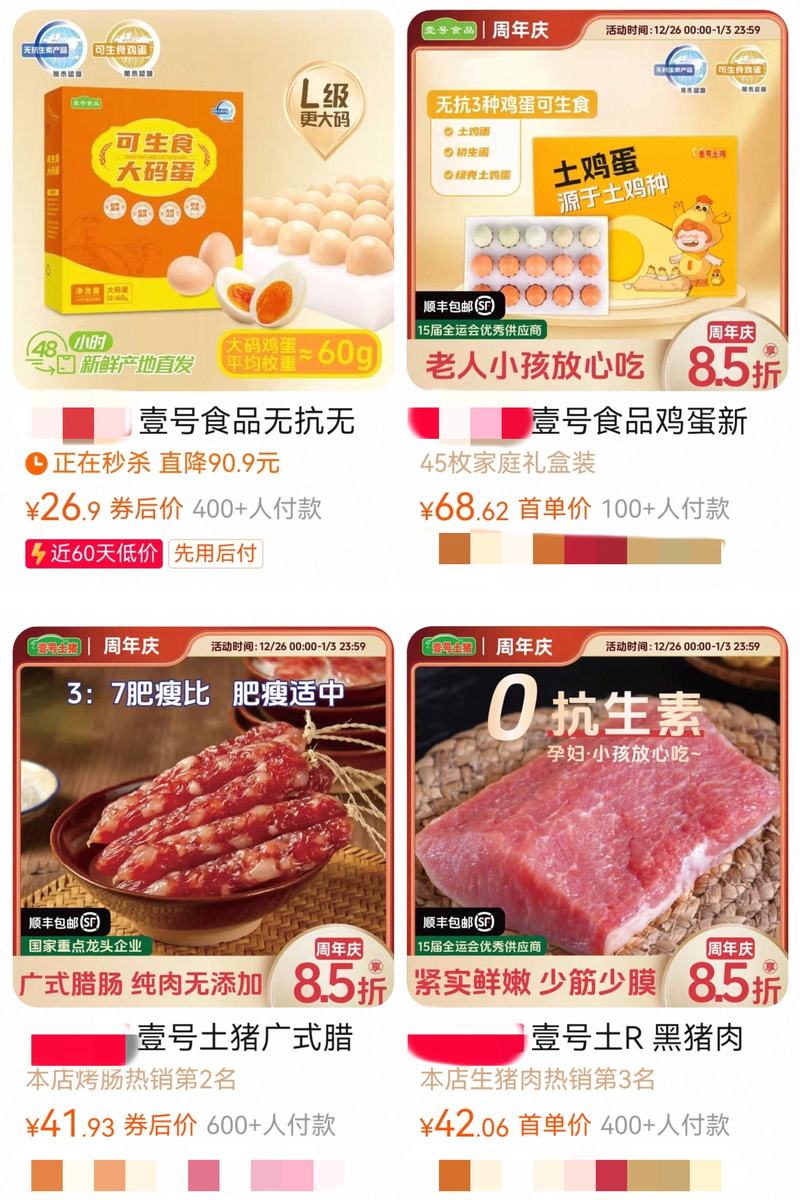
“壹号土”商标引混淆,企业更改标注
Xin Jing Bao· 2025-12-30 07:46
Core Viewpoint - The rise of "local specialty" products, such as "local pigs" and "local chickens," has led to consumer confusion due to the ambiguous boundaries between brand trademarks and product characteristics, prompting regulatory scrutiny and adjustments by companies like Yihua Food [1][2][3] Group 1: Trademark Issues - Yihua Food faced criticism for combining its registered trademark "Yihua Tu" with terms like "pig" and "chicken," leading consumers to mistakenly associate these products with traditional "local" concepts [2][3] - Legal experts indicated that the way Yihua Food used its trademarks deviated from the core function of trademarks, which is to identify the source of goods, potentially misleading consumers about the product's characteristics [2][8] - Yihua Food has made systematic changes to its branding, removing controversial terms from product listings and packaging to avoid further confusion [3][6] Group 2: Regulatory Actions and Consumer Awareness - The company has faced multiple rejections for trademark applications related to "Yihua Tu Chicken" and "Yihua Tu Egg," with reasons citing potential consumer misinterpretation and lack of distinctiveness [7] - Despite challenges, Yihua Food has successfully registered the "Yihua Tu Pig" trademark, which is valid until June 2032, and continues to apply for various related trademarks [7] - Consumer protection organizations have advised consumers to be cautious of misleading trademarks and to verify product details beyond just the prominent branding [9][10]

大豆到港回落,豆粕库存仍高
Hong Ye Qi Huo· 2025-12-30 07:36
1. Industry Investment Rating - No information provided regarding the report's industry investment rating 2. Core Viewpoints - The domestic soybean sales are regionally differentiated, with accelerated sales in the Northeast and supplemented by state - reserve soybean auctions, and the price is firm. The import of soybeans in China has slowed down, the port inventory has declined, and there is import and auction activity. The oil mill's operating rate has slightly decreased, but the soybean meal inventory remains high, while the demand is strong. The soybean No.1 futures are expected to fluctuate strongly, and soybean meal futures will fluctuate and adjust [6] 3. Summary by Related Content 3.1 Futures and Spot Prices - The main contract of soybean No.1 2605 rebounded significantly. The spot price continued to rise, with the market price of Fuyin soybeans increasing from 4,120 yuan/ton to around 4,200 yuan/ton. The basis of soybean No.1 strengthened in oscillation, and the futures price was slightly at a discount. The main contract of soybean meal 2605 rebounded but then fell back, continuing to oscillate. The spot price of soybean meal increased slightly, with the price of 43% protein soybean meal in Zhangjiagang rising from 3,030 yuan/ton to around 3,060 yuan/ton. The basis strengthened in oscillation, and the futures discount widened [4] 3.2 Domestic Soybean Sales - The sales of domestic soybeans are regionally differentiated. As of December 26, the remaining soybean inventory in Heilongjiang accounted for 50%, a month - on - month decrease of 8%; in Anhui, it was 55%, a month - on - month decrease of 1%; in Henan, it was 60%, unchanged; and in Shandong, it was 62%, a decrease of 2%. Recently, a large amount of state - reserve soybeans have been continuously auctioned. From December 23, about 600,000 tons have been put up for auction, and 480,000 tons have been sold, supplementing the market [4] 3.3 Soybean Import and Inventory - China's soybean procurement has slowed down. In November, the domestic import of soybeans was 8.11 million tons, a further month - on - month decline but still a year - on - year increase of 13.3%. It is reported that the purchase of US soybeans may also be delayed, and the port soybean inventory has been continuously decreasing. As of December 26, the arrival of soybeans at oil mills was 1.443 million tons, a significant month - on - month decline; the port soybean inventory was 8.251 million tons, with a continuous month - on - month decline [4] 3.4 US Soybean Market - The US soybean market continued to oscillate and adjust. The USDA's December supply - demand report made few adjustments, being neutral. The US is worried about China's subsequent soybean purchases and the production increase pressure of the new - season soybeans in South America [4] 3.5 Oil Mill Operations and Soybean Meal Inventory - The cost of Brazilian soybeans has dropped significantly, and the crushing margin has increased, but the operating rate of oil mills has not increased. As of December 26, the operating rate of oil mills was 56.79%, a slight month - on - month decrease; the soybean crushing volume was 2.0644 million tons; the soybean inventory of oil mills was 6.5444 million tons, a significant decline. The soybean meal production was 1.631 million tons, a slight month - on - month decrease; the soybean meal inventory of oil mills was 1.1676 million tons, a month - on - month increase, remaining at a high level in recent years; the unexecuted contracts for soybean meal were 3.816 million tons, a month - on - month decline. The inventory days of soybean meal in feed mills was 9.45 days, a continuous month - on - month increase and at a high level in recent years [5] 3.6 Feed Demand - In the livestock farming sector, the pig price rebounded, and the farming losses narrowed. As of December 26, the profit from purchasing piglets for farming was - 162.8 yuan per head, narrowing; the self - breeding and self - raising profit was - 130.11 yuan per head, also narrowing. The productive sow capacity has been continuously reduced. In October, the national inventory of productive sows was 39.9 million, a decrease of 450,000 from the previous month. The inventory of large - scale farms also decreased in November. The birth and sales volume of piglets both decreased, reflecting weak restocking sentiment, while the inventory of commercial pigs still increased. It is difficult for the national pig inventory to decrease in the fourth quarter. In the poultry sector, the egg price is low, and the poultry farming has been in continuous losses, with an increase in culling. The inventory decreased slightly again in November and may continue to decline in the fourth quarter. In the short term, the rigid demand for feed is still strong, but there are concerns about capacity reduction in the long term [6]
数读中国 1.43万亿斤背后的“三农”新丰景
Ren Min Wang· 2025-12-30 05:59
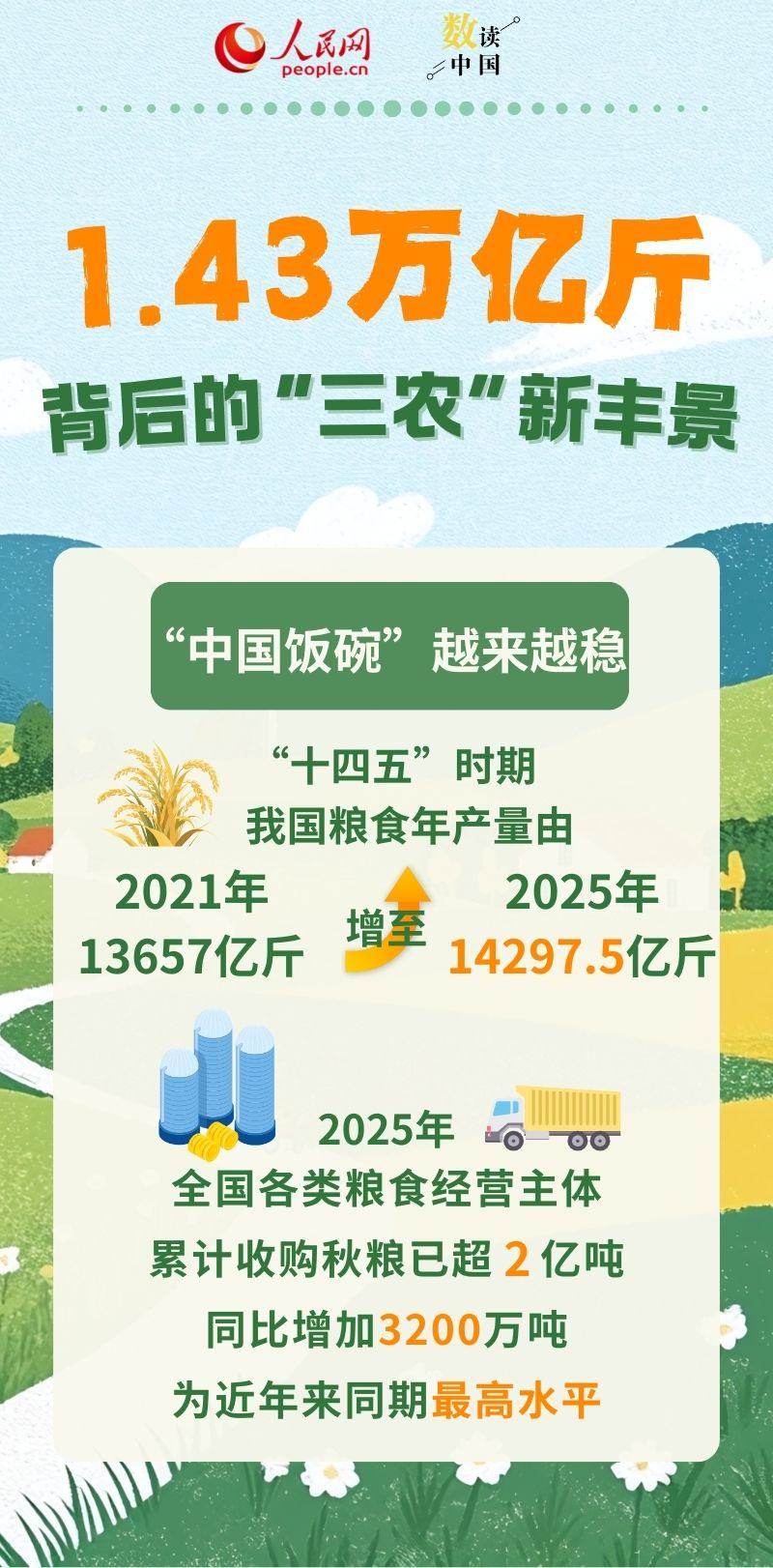
农业农村现代化关系中国式现代化全局和成色。"十四五"时期,我国农业农村现代化建设扎实推进,乡村全面振 兴迈出坚实步伐。让我们通过一组新数据,共同见证"三农"工作的新成效,感受广袤乡村的新"丰"景。 A 903 900 每年带动19万户花农 户均增收5万元以上 试 中国 和美乡村越来越好 当前 全国农村自来水普及率达94% 2025年 6 - 全国各类粮食经营主体 累计收购秋粮已超2亿吨 同比增加3200万吨 为近年来同期最高水平 BT 背后的"三农"新 现代农业越来越强 当前 载国农业科技进步贡献率超过64% 累计建成超10亿亩 农作物良种覆盖率 高标准农田 1 496% 全国农作物耕种收综合机械化率超过75% 小麦、水稻、玉米三大主粮基本实现机械化 读 中国 .43万亿元 背后的"三农"新 乡村产业越来越旺 载 2024年底 全国已建设140个优势特色产业集群 辐射带动1000多万农户从事相关产业 全国规上农产品加工企业超10万家 实现营业收入约18万亿元 (0) / fram 鲜花产业( n 农村公路总里程超过460万公里 农村工结厕所普及率达76%左右 fill (5G) 行政村5G通达率超95% oo ...
潮退的寂静,于暮色中等待风起
Dong Zheng Qi Huo· 2025-12-30 03:45
年度报告-油脂 潮退的寂静,于暮色中等待风起 [T走ab势le_评R级ank:] 菜油:震荡,豆油:看涨,棕榈油:看涨 报告日期: 2025 年 12 月 30 日 [Table_Summary] ★行情回顾 油脂市场在今年年初回调后,全年始终维持偏高位运行。上半 年,棕榈油冲高回落后走弱,豆油以跟随为主,波动较小,菜 油则受到政策影响走势偏强。6 月中旬,受到美国生物燃料政策 的利多影响,国内油脂市场跟随美豆油与马棕油走强,菜油也 在持续震荡后再度受到政策影响走高,一度突破 10000 元。四季 度产地供应压力激增,叠加生物燃料政策的不确定性增加,油 脂市场在棕榈油的领跌下全线回调。 农 ★行情展望 产 品 2026 年,油脂市场的核心驱动力依旧在国际贸易关系与生物燃 料政策,伴随美国生物燃料政策逐步确定,我们仍倾向于油脂 市场整体价格中枢有望上移。 棕榈油:2026 年产量预计小幅下滑,印尼的生物柴油政策格外 重要。在节省巨额外汇情况下,印尼政府有动力持续推进生柴 政策,而基金问题也可通过上调税率解决,关注点在于 NPSO 部门的政策调整,我们对印尼生柴政策持中性偏乐观的态度。 豆油:后续美国生物燃料政策 ...
广东“三农”记者的2025|南岭东风
Nan Fang Nong Cun Bao· 2025-12-30 02:00
Core Viewpoint - The article discusses the significant advancements and achievements in Guangdong's agricultural sector as it approaches 2025, highlighting the importance of agricultural development and rural revitalization in the region [9][10][56]. Group 1: Agricultural Achievements - Guangdong's primary industry value has risen to the second highest in the country, with agricultural product import and export values maintaining the top position nationally [10]. - Agricultural technology contribution rate has reached 74.02%, and grain yield per unit has achieved a record high [10]. - The province has built 4.905 million acres of high-standard farmland during the "14th Five-Year Plan" period [52]. Group 2: Local Agricultural Products - The article emphasizes the success of local products such as the "Yunfu sweet potato," which has a weight of 26.23 pounds, and the "Meizhou golden pomelo," valued at 11.327 billion yuan [29][54]. - The "Ningming star oil vine" industry in Guangxi is highlighted for its annual production value exceeding 20,000 yuan per acre, providing over 60,000 job opportunities [45][56]. Group 3: Market Strategies and Initiatives - The Guangdong government has organized various initiatives to promote local agricultural products, including the "2025 Guangdong Lychee Procurement Map" and the "Southern Rural Report" focusing on agricultural media [79][80]. - The article mentions the successful "Guangdong Rural Singer Competition," which attracted over 50,000 participants and garnered over 1.5 billion views online, showcasing the cultural aspect of agricultural development [125][126]. Group 4: Collaborative Efforts - The collaboration between Guangdong and neighboring provinces like Guangxi and Guizhou is emphasized, with initiatives to introduce advanced agricultural techniques and improve local farming practices [95][98]. - The article notes the efforts to enhance the visibility of local products in major markets, such as the promotion of "Tianyang mango" in Shenzhen and Guangzhou [95][96]. Group 5: Future Outlook - The article concludes with a forward-looking perspective, indicating that the agricultural sector in Guangdong is poised for further growth and innovation as it moves towards 2026, with ongoing efforts in rural revitalization and agricultural modernization [148].

广发早知道:汇总版-20251230
Guang Fa Qi Huo· 2025-12-30 01:33
1. Report Industry Investment Ratings - Not provided in the given content 2. Core Views of the Report - The market situation is complex, with different sectors showing various trends. Some sectors are affected by strong macro - expectations and weak fundamental realities, such as aluminum. Others are influenced by supply - demand imbalances, policy changes, and external events [2][25]. - In general, many sectors are in a state of volatility, and investors need to pay attention to specific factors in each sector, such as inventory changes, downstream consumption, and policy adjustments [2][70][84]. 3. Summaries by Relevant Catalogs 3.1 Daily Selections - **Aluminum**: The market is dominated by the game between strong macro - expectations and weak fundamentals. It is expected to maintain high - level wide - range oscillations, with the Shanghai Aluminum main contract operating between 21800 - 22800 yuan/ton. Long positions can be arranged at low prices [2]. - **Methanol**: Due to device disruptions, the price has strengthened. The port may face inventory accumulation in December, but the supply - demand balance sheet is expected to turn to inventory reduction in the first quarter of the next year. Pay attention to inventory reduction after the actual arrival at the port decreases [3]. - **Iron Ore**: Supported by the steel mill's restocking expectation, the price is expected to oscillate strongly. It will transition from a supply - demand surplus to a supply - demand double - weak situation. Pay attention to iron water trends, steel mill restocking rhythms, and negotiation situations [3][55]. - **Pig**: The demand supports the market, and the macro and the futures market resonate. The spot price is expected to be strong in the short term, and the futures market is expected to oscillate strongly [4][72]. 3.2 Financial Derivatives 3.2.1 Financial Futures - **Stock Index Futures**: Short - term negative factors are exhausted. It is recommended to continue holding bull spread combinations and sell a small amount of near - month out - of - the - money call options for hedging [7]. - **Treasury Bond Futures**: In the short term, it is expected to be in a wide - range oscillation. After the New Year, pay attention to the capital situation. It is recommended to wait and see for the time being [10]. 3.2.2 Precious Metals - The price dropped sharply after a high - level rise. In the short term, it is recommended to wait and see. In the medium - to - long - term, the price has an upward space. Long positions can be arranged after the callback [13][14]. 3.2.3 Container Shipping Index (European Line) - The main contract is in a consolidation stage, lacking obvious driving forces. It is expected to present an oscillatory pattern in the short term [16]. 3.3 Commodity Futures 3.3.1 Non - ferrous Metals - **Copper**: The short - term price may enter an oscillatory adjustment stage. It is recommended to take profits on long positions at high prices [20]. - **Alumina**: The policy is difficult to reverse the short - term supply - demand situation. It is recommended to wait and see in the short term and short at high prices in the medium term [22]. - **Aluminum**: It is expected to maintain high - level wide - range oscillations. Long positions can be arranged at low prices [25]. - **Aluminum Alloy**: It is expected to continue high - level range oscillations. An arbitrage strategy of going long AD03 and short AL03 can be considered [28]. - **Zinc**: The short - term price may oscillate. It is recommended to hold cross - market reverse arbitrage positions [31]. - **Tin**: It is expected to be in high - level oscillations. It is recommended to wait and see [36]. - **Nickel**: It is expected to maintain a relatively strong oscillation. Pay attention to the possibility of a callback [39]. - **Stainless Steel**: It is expected to oscillate and adjust in the short term. Pay attention to nickel ore news and steel mill production reduction implementation [42]. - **Lithium Carbonate**: It is expected to maintain wide - range oscillations before the New Year. It is recommended to wait and see [46]. - **Polysilicon**: It is in high - level oscillations. It is recommended to wait and see and pay attention to production reduction and price adjustment acceptance [49]. - **Industrial Silicon**: It is in low - level oscillations. Pay attention to the implementation of production reduction [51]. 3.3.2 Ferrous Metals - **Steel**: It continues to reduce production and inventory. The price is expected to oscillate. It is recommended to wait and see for unilateral operations [53]. - **Iron Ore**: It is expected to oscillate strongly. It is recommended to cautiously go long for short - term operations [55]. - **Coking Coal**: It is recommended to short at high prices unilaterally and consider an arbitrage strategy of going long coking coal and short coke [59]. - **Coke**: It is recommended to short the 2605 contract at high prices unilaterally and consider an arbitrage strategy of going long coking coal and short coke [61]. - **Silicon Ferrosilicon**: It is expected to oscillate in the range of 5500 - 5700. Pay attention to coal price changes [64]. - **Silicon Manganese**: It is expected to be weak in the short term. It is recommended to short when the price rebounds above the Ningxia spot cost [67]. 3.3.3 Agricultural Products - **Meal**: The US soybeans maintain a bottom - oscillating pattern. The domestic spot is loose. It is recommended to operate cautiously [70]. - **Pig**: The demand supports the market. The short - term price is expected to be strong [72]. - **Corn**: The short - term price may rise due to the resonance of futures and cash, but the sustainability of the rise is limited. Pay attention to farmers' selling attitudes and policy releases [75]. - **Sugar**: The international sugar price is in a low - level oscillating platform. The domestic market should pay attention to the actual demand after the spot price rises. It is recommended to maintain a rebound - shorting idea [76]. - **Cotton**: The short - term cotton price may oscillate steadily and strongly [78]. - **Egg**: It is expected to maintain a low - level oscillating pattern [81]. - **Oils and Fats**: Palm oil may oscillate weakly; soybean oil may oscillate in a narrow range; rapeseed oil may test the pressure level of 9200 yuan [84][85]. - **Jujube**: The market sentiment is weak, and the rebound momentum is insufficient. It is recommended to short on rebounds [86]. - **Apple**: The short - term market is in a game between the scarcity of delivery fruits and the inventory pressure of ordinary fruits. Pay attention to the actual inventory reduction progress [88]. 3.3.4 Energy Chemicals - **PX**: It is under short - term pressure. It is recommended to exit long positions, short aggressively in the short term, and go long at low prices in the medium term [90]. - **PTA**: It is under short - term pressure. It is recommended to exit long positions, short aggressively in the short term, and go long at low prices in the medium term [92]. - **Short - fiber**: It follows the raw material fluctuations. It is recommended to short when the processing fee is high [93]. - **Bottle Chips**: The short - term processing fee will be compressed. It is recommended to follow the PTA strategy and short the processing fee at high prices [96]. - **Ethylene Glycol**: The price increase has resistance. It is recommended to conduct a reverse arbitrage on EG5 - 9 at high prices [97]. - **Pure Benzene**: It is in low - level oscillations. It is expected to oscillate in the range of 5300 - 5600 [98]. - **Styrene**: The rebound space is limited. It is recommended to short at 6800 and short the processing fee at high prices [100]. - **LLDPE**: It is recommended to go long the 2605 contract in the short term [101]. - **PP**: It is recommended to pay attention to the expansion of PDH profits [102]. - **Methanol**: Pay attention to the reduction of MTO05 [103]. - **Caustic Soda**: The price may continue to decline. It is in a weak supply - demand pattern [104]. - **PVC**: It is expected to rebound and then weaken. The supply - demand is in an excess pattern [106]. - **Soda Ash**: It is recommended to short on rebounds [108]. - **Glass**: It is recommended to wait and see [109]. - **Natural Rubber**: It is recommended to hold short positions at 15700 [113]. - **Synthetic Rubber**: It is in wide - range oscillations. It is expected to oscillate between 11200 - 12000 in the short term [115].
贵金属集体回调:申万期货早间评论-20251230
申银万国期货研究· 2025-12-30 00:42
Core Viewpoint - Precious metals are experiencing significant volatility, with silver undergoing substantial adjustments due to profit-taking and market sentiment shifts, despite long-term supportive factors such as central bank gold purchases and weakening dollar credibility [2][18]. Group 1: Precious Metals - Precious metals are facing increased volatility, particularly silver, which has seen a significant adjustment [2][18]. - The U.S. November CPI increased by 2.7% year-on-year, lower than the expected 3.1%, while core CPI rose by 2.6%, below the anticipated 3% [2][18]. - The overall downward trend in CPI provides room for potential interest rate cuts, supporting precious metal prices [2][18]. - Recent profit-taking and margin adjustments by exchanges have led to sharp fluctuations in precious metal prices, but the long-term upward trend remains intact [2][18]. Group 2: Stock Indices - The U.S. three major indices declined, with the oil and petrochemical sectors leading gains while the non-ferrous metals sector lagged [3][11]. - The market turnover reached 2.16 trillion yuan, with financing balances decreasing by 2.037 billion yuan to 25,264.62 billion yuan [3][11]. - The appreciation of the RMB against the USD is accelerating, with the offshore RMB exchange rate briefly surpassing the 7.0 mark, driven by expectations of U.S. interest rate cuts [3][11]. - The anticipated return of overseas capital and the revaluation of Chinese assets are supported by improved policies and funding expansion [3][11]. Group 3: Copper - Night trading saw copper prices drop by 2.8% due to profit-taking, despite ongoing tight supply conditions for concentrates [4][19]. - The smelting profit margins are at breakeven, with overall smelting output continuing to grow [4][19]. - Market sentiment is influencing short-term copper prices, with a focus on changes in the dollar, smelting output, and downstream demand [4][19]. Group 4: Industry News - Several lithium iron phosphate companies announced maintenance and production cuts scheduled for January 2026, with reductions ranging from 35% to 50% [8].

佛冈与连南首款共研农特产品香菇面上市
Xin Lang Cai Jing· 2025-12-30 00:29
Core Viewpoint - The successful launch of mushroom noodles represents a significant achievement in the collaborative efforts between Qingyuan City's Fogang County and the Lianan Yao Autonomous County, marking a step forward in their "complementary advantages and shared development" model of assistance [1][2]. Group 1: Product Development - The mushroom noodles are the first product developed collaboratively since the establishment of the partnership in August 2024, showcasing the effective integration of local resources [1]. - Lianan provides high-quality, naturally grown mushrooms, while Fogang specializes in traditional noodle production, combining these strengths to create a product that highlights both flavor and regional characteristics [1]. Group 2: Cultural Integration - The packaging design of the mushroom noodles incorporates cultural elements from both regions, featuring Lianan's Yao embroidery patterns alongside Fogang's scenic motifs, emphasizing the unique cultural charm of the areas [1]. Group 3: Economic Impact - The collaboration aims to create a win-win effect, with the successful development of mushroom noodles opening stable sales channels for Lianan's mushrooms and revitalizing Fogang's traditional noodle industry [1]. - The project is seen as a key outcome of a "blood-making" assistance model, with plans to establish a long-term stable industrial cooperation mechanism to further develop agricultural specialty products [2].
加快农业农村现代化 扎实推进乡村全面振兴——访农业农村部党组书记、部长韩俊
Jing Ji Ri Bao· 2025-12-29 22:36
Core Viewpoint - The article emphasizes the strategic importance of accelerating agricultural and rural modernization as a key component of China's overall modernization efforts, particularly during the 14th Five-Year Plan period [2][3]. Group 1: Significance of Agricultural and Rural Modernization - Agricultural and rural modernization is a major task for building a modern socialist country, as it directly impacts the overall progress and quality of China's modernization goals [2]. - It serves as a foundational support to address various risks and challenges, stabilizing the agricultural sector to ensure food security and economic stability amid external uncertainties [2]. - The modernization of agriculture and rural areas is essential for meeting the people's needs for a better life, as it relates to both economic and political stability [3]. Group 2: Current Conditions and Achievements - Since the 18th National Congress, significant progress has been made in agricultural modernization and rural revitalization, including stable grain production at over 1.3 trillion jin (approximately 650 million tons) annually, with a record high of 14,298 billion jin this year [4]. - The achievements in poverty alleviation have been consolidated, with over 30 million people employed in poverty-stricken areas, and the establishment of a monitoring and support system to prevent a return to poverty [4][5]. - Agricultural modernization has advanced significantly, with a contribution rate of agricultural science and technology exceeding 64%, and a mechanization rate of 76.7% for major crops [5]. Group 3: Strategic Tasks for Implementation - The 14th Five-Year Plan outlines several strategic tasks to ensure the implementation of agricultural and rural modernization, including enhancing agricultural production capacity and quality, and establishing a robust food security framework [8]. - A mechanism for preventing poverty and ensuring sustainable development is to be established, focusing on targeted support for underdeveloped areas and maintaining stability in post-poverty alleviation policies [9]. - Efforts will be made to improve rural living conditions and infrastructure, ensuring that rural areas are equipped with modern amenities and services [10]. Group 4: Policy and Support Mechanisms - The article highlights the need for a multi-faceted investment approach to support rural revitalization, including financial, social, and governmental participation [11]. - Policies will be strengthened to ensure the stability of land contracts and support the development of new agricultural business entities, enhancing the overall agricultural operating system [11]. - The importance of agricultural support policies, including price, subsidy, and insurance mechanisms, is emphasized to maintain reasonable prices for key agricultural products and incentivize farmers [11].