
珠宝

Search documents
面对美国50%高关税,最“受伤”的不是印度经济,挨了特朗普的关税闷棍,莫迪转头赴华参会
Sou Hu Cai Jing· 2025-09-01 02:31
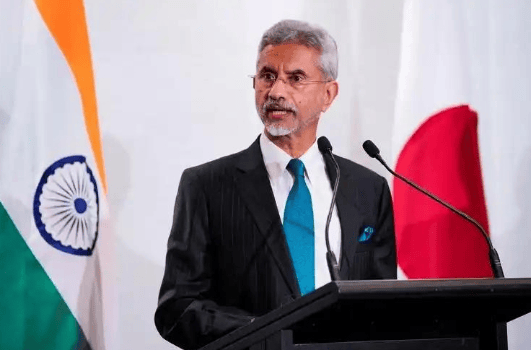
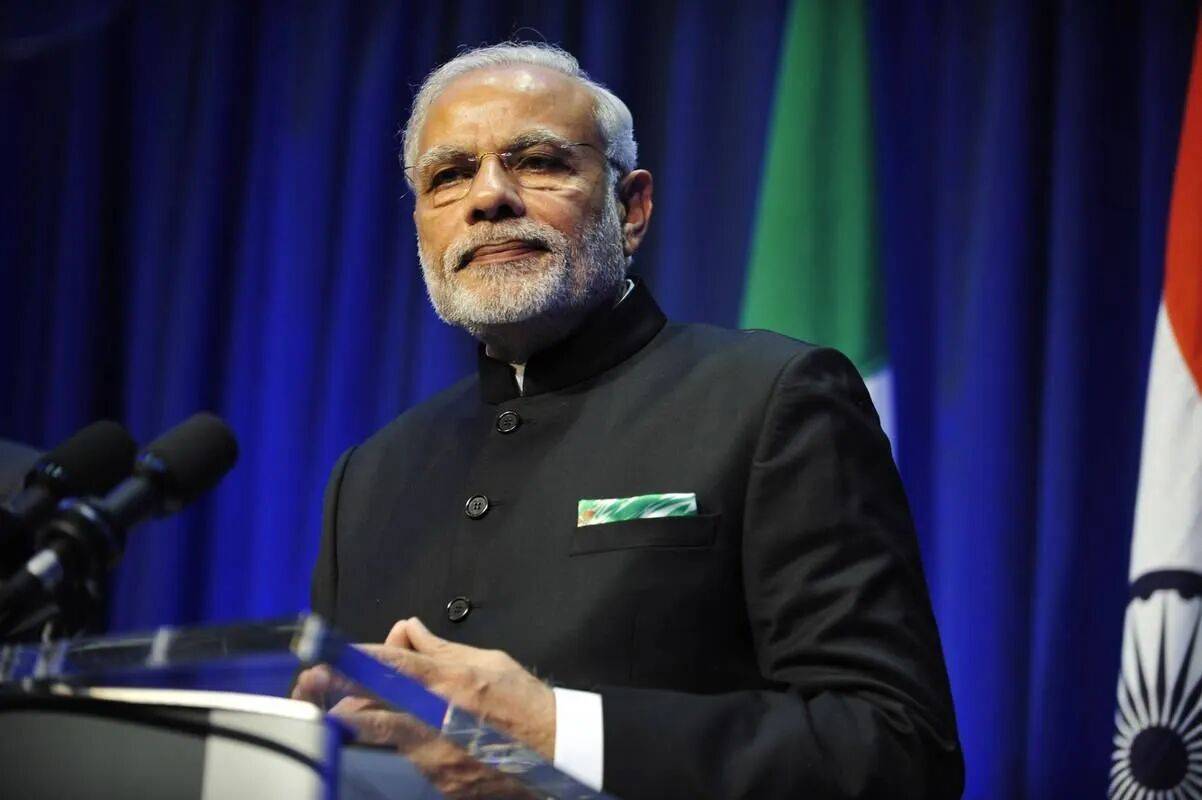
Core Viewpoint - The trade conflict between the US and India, particularly the imposition of a 50% tariff by the US, is not just a straightforward trade issue but is deeply rooted in complex geopolitical dynamics, with India adopting a flexible diplomatic stance while facing pressure from the US [1][3]. Group 1: Economic Impact - Indian exporters are projected to lose between $25 billion to $30 billion due to the new tariffs, significantly affecting labor-intensive sectors such as textiles, jewelry, shrimp, furniture, and carpets, with export volumes potentially slashed by 70% [3]. - Despite the tariff impacts, India's economy is not as vulnerable as perceived; the GDP growth rate may drop by 1 percentage point, but this is not catastrophic for the Modi administration, which has implemented various supportive policies like tax reforms and export subsidies [3][8]. - Key sectors such as pharmaceuticals, energy, and electronics remain unaffected by the tariffs, indicating that India still has strategic advantages and reserves [3]. Group 2: Geopolitical Dynamics - Modi's upcoming visit to China for the Shanghai Cooperation Organization summit is strategically timed amidst escalating US-India trade tensions, signaling a potential shift in India's diplomatic focus [4][6]. - The recent thaw in Sino-Indian relations, marked by small diplomatic gestures and a mutual understanding of the need to resolve border issues, suggests that India is looking for opportunities rather than choosing sides in the US-China rivalry [6]. - The narrative of Modi's close relationship with Trump has been undermined, leading to political challenges domestically as opposition parties and even factions within Modi's party question his judgment and approach to US relations [7][8]. Group 3: Trust and Future Outlook - The most significant damage from the tariff situation may not be economic but rather the erosion of trust between India and the US, as well as the disillusionment of Indian elites regarding the benefits of aligning closely with the US [8]. - Modi's response to the crisis indicates a shift towards a more autonomous foreign policy, suggesting that India is willing to explore new partnerships and opportunities beyond its traditional alliances [8].

曼卡龙20250829
2025-08-31 16:21
Summary of the Conference Call for Mankalon Company Overview - **Company**: Mankalon - **Industry**: Jewelry Key Points and Arguments 1. **Revenue Growth**: Mankalon achieved a revenue of 1.556 billion yuan in the first half of 2025, representing a year-on-year growth of 26.79% [4] 2. **Net Profit Increase**: The net profit attributable to shareholders reached 76.7 million yuan, up 35% year-on-year, with a second-quarter net profit of 33.68 million yuan, reflecting a 37% increase [4] 3. **Gross Margin Improvement**: The gross margin improved by 0.68 percentage points year-on-year, driven by product structure optimization and channel strategy adjustments [4] 4. **Channel Expansion Strategy**: Mankalon plans to cover all provinces in China within one to two years, focusing on optimizing the product structure in domestic markets while accelerating expansion in external markets, where revenue grew by 62% year-on-year [2][5] 5. **Online Operations Shift**: The company is transitioning its online operations from a traffic-driven model to a brand-driven model, utilizing cross-industry collaborations and IP partnerships to create a differentiated brand positioning [2][6] 6. **Store Opening Plans**: Mankalon expects to accelerate the opening of new stores in the second half of 2025, with a projected net increase of 40 to 50 stores for the year [10][16] 7. **Product Development Focus**: The company has increased the proportion of R&D products, launching successful series such as Fenghua 2.0 and Traditional Chinese Medicine wellness series, with future strategies focusing on high-frequency online launches and appealing to younger aesthetics offline [2][8] 8. **Profitability of New Stores**: New stores opened in external markets have shown profitability, with no closures reported, indicating strong potential for nationwide expansion [3][14] 9. **IP Collaboration Plans**: Mankalon plans to expand its IP collaborations, focusing on both youth-oriented IPs and high-quality partnerships with museums and artists to enhance brand perception [11] 10. **Market Competition Dynamics**: The jewelry industry is experiencing a shift towards meeting the aesthetic and emotional values of younger consumers, with brands that adapt to these changes performing well [12] Additional Important Insights 1. **E-commerce Performance**: Mankalon's e-commerce channels have seen rapid growth, particularly on the Kuaishou platform, while the Taobao platform has experienced a decline due to the removal of promotional subsidies [23][24] 2. **Gross Margin Sources**: The increase in gross margin is attributed to rising gold prices and adjustments in product structure, with infrastructure products now accounting for 20% of sales [15] 3. **Franchise vs. Direct Store Growth**: Franchise growth has lagged behind direct store growth due to structural adjustments, but expectations for improved performance in the second half of 2025 remain positive [26] 4. **Cultural and Emotional Value in Products**: Mankalon aims to enhance the cultural and emotional value of its products to meet the demands of younger consumers, which is crucial for maintaining competitiveness in the market [12][21] 5. **Fenghua Series Performance**: The Fenghua series currently accounts for about 20% of Mankalon's revenue, with its growth rate exceeding the company's average, indicating strong market performance [22] This summary encapsulates the key insights and strategic directions discussed during the conference call, highlighting Mankalon's growth trajectory and market positioning within the jewelry industry.
特朗普50%关税将至,关键时刻中国大使力挺印度,莫迪敢对美强硬吗?
Sou Hu Cai Jing· 2025-08-31 10:13
Group 1 - The core issue revolves around the potential increase of tariffs on Indian goods to 50% by the US, primarily due to India's purchase of Russian oil, which could significantly impact India's labor-intensive export sectors such as textiles, jewelry, and footwear [1][3] - The Indian government faces a dilemma: raising prices could lead to a loss of orders, while absorbing costs could strain cash flow and affect workers' wages [1][5] - China's support for India against US tariff actions is highlighted, with Chinese officials emphasizing the importance of adhering to WTO rules and maintaining cooperative relations [3][7] Group 2 - India is strategically positioned to leverage its relationship with China, as evidenced by recent high-level visits and increased trade, indicating a shift towards partnership rather than rivalry [3][5] - The Indian government is cautious in its response to the US, balancing a strong stance with the need for strategic autonomy, as seen in Modi's participation in the Shanghai Cooperation Organization summit [5][7] - The ongoing military cooperation between the US and India suggests that a complete decoupling is unlikely, with both sides likely to find a compromise to mitigate the impact of the tariff increase [7]
套餐、鲜花、金饰迎来热销 传统节日七夕催热“浪漫经济”
Yang Shi Wang· 2025-08-29 06:55
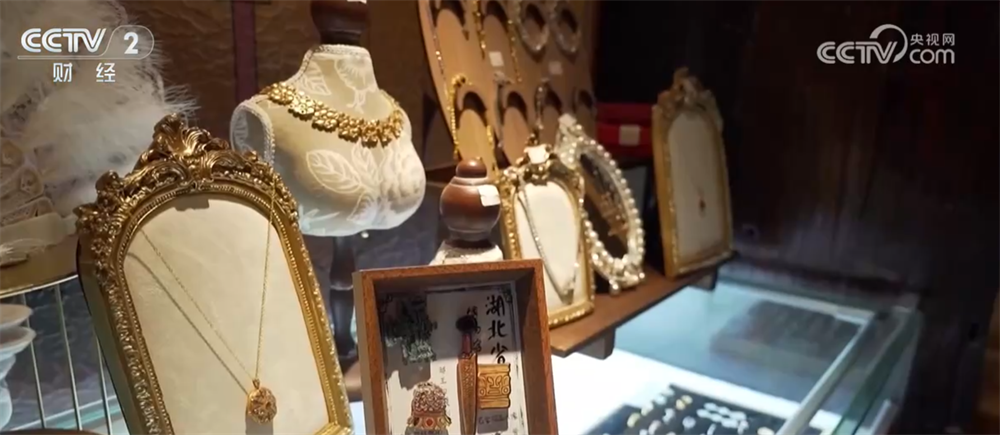
Group 1: Restaurant Industry - The restaurant industry in Wuhan is experiencing a surge in popularity for romantic dining experiences, particularly around the Qixi Festival, with special events and decorations attracting young couples [1][3] - There has been a 240% week-on-week increase in search volume for "Qixi restaurant" keywords, indicating a growing demand for unique dining experiences, with preferences for "window-side," "scenic," "quiet," and "private" settings [3] - Many restaurants are reporting a 50% increase in reservations for private rooms compared to previous years, prompting upgrades in restaurant designs to meet consumer expectations [3][5] Group 2: Floral and Jewelry Industry - The floral and jewelry sectors are also benefiting from the "romantic economy," with high sales of flowers and gold jewelry leading up to the Qixi Festival [6] - In Ningbo, consumers are favoring smaller weight jewelry pieces priced between 3,000 to 8,000 yuan due to high gold prices, with necklaces, bracelets, and couple rings being the most popular items [6] - Personalized flower arrangements are gaining popularity among young consumers, allowing them to customize their bouquets based on personal preferences [8]
特朗普50%新关税生效,自己将引火上身!美联储三把手加入鸽派!
Sou Hu Cai Jing· 2025-08-29 05:29
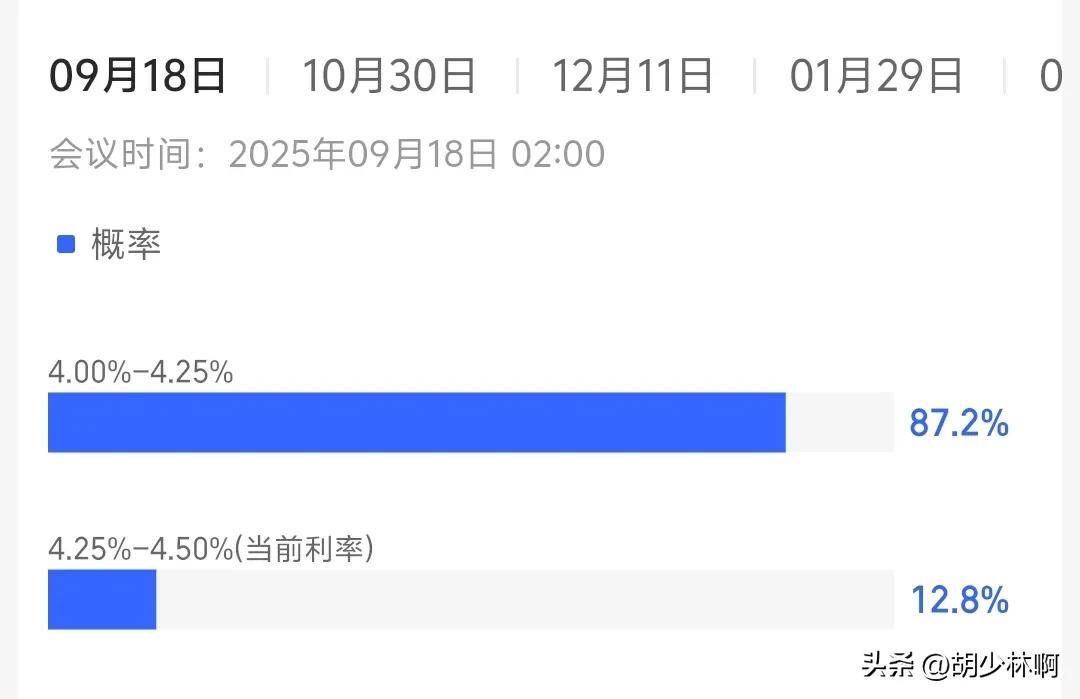
Group 1 - The Trump administration has imposed an additional 25% tariff on imports from India, doubling the existing tariff to 50%, marking the highest level of tariffs on Indian goods [1] - The primary objective of this tariff increase is to pressure India into ceasing its imports of Russian crude oil, which India considers vital for its energy security [3] - Despite the high tariffs, India continues to pursue its energy import strategy, indicating that the costs of compliance may be less than the risks faced by the U.S. [3] Group 2 - India, as the world's third-largest crude oil importer, heavily relies on oil imports from Russia and the Middle East, with Russia accounting for 35% of India's total crude oil imports by 2024 [5] - Following the tariff implementation, trade between the U.S. and India has nearly stalled, significantly impacting labor-intensive industries such as textiles and jewelry [5] - The ongoing tariff conflict has exacerbated U.S.-India relations, increasing uncertainty about future cooperation [5] Group 3 - The tensions between Trump and the Federal Reserve have raised concerns about the independence of the Fed, particularly regarding Trump's potential dismissal of Fed officials [7] - Former Fed Vice Chair warned that Trump's actions could undermine the Fed's independence, leading to higher inflation and decreased market confidence [9] - Current expectations suggest a high probability of interest rate cuts by the Fed, influenced by the prevailing dovish sentiment among several board members [11]
50%关税生效!印度将损失370亿美元,买俄油省的钱全搭进去都不够
Sou Hu Cai Jing· 2025-08-28 10:09
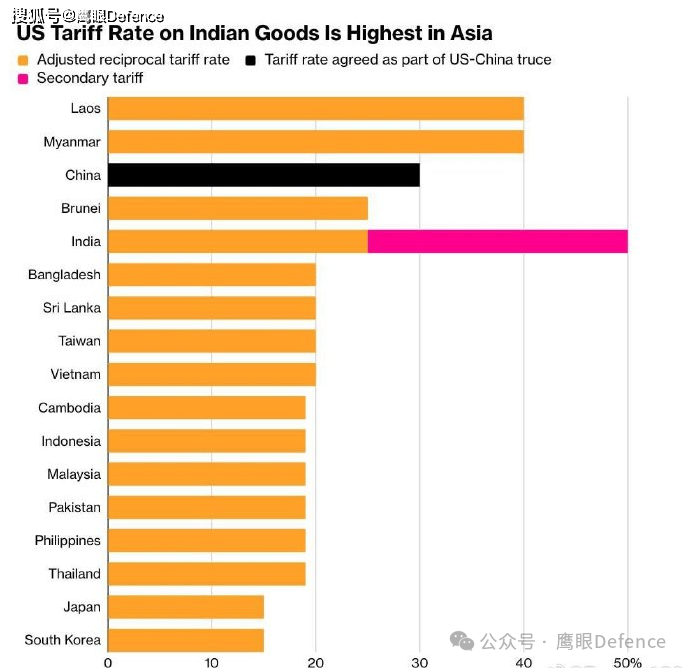
Group 1 - The United States has imposed a new 25% tariff on India, resulting in a total tariff of 50% on nearly all goods and services exported from India to the U.S., making India the country with the highest tariffs from the U.S. [1] - In 2024, India exported over $80 billion worth of goods and services to the U.S., including pharmaceuticals, telecommunications equipment, jewelry, fertilizers, cotton textiles, electronics, and seafood. The new tariffs are expected to significantly impact India's "Make in India" initiative, leading to industry shrinkage and layoffs [3]. - Following the imposition of the 50% tariff, India's exports are projected to suffer a loss of up to $37 billion, which is insufficiently offset by the $17 billion saved from purchasing cheap Russian oil since the outbreak of the Russia-Ukraine war in 2022 [3]. Group 2 - India has become the second-largest buyer of Russian oil, with its share of Russian oil exports rising from 1% in 2020 to 36% in 2025, while China's share increased from 34% to 46% [6]. - U.S. officials have criticized India's substantial purchases of Russian oil, claiming it provides funding for the Kremlin and undermines U.S.-India relations [8]. - The Indian refining industry has begun to adapt under U.S. pressure, with state-owned refineries starting to purchase non-Russian oil from the U.S., Brazil, and the Middle East [13]. Group 3 - Despite U.S. pressure, the Indian government maintains a firm stance, with reports indicating that former President Trump attempted to contact Prime Minister Modi regarding tariff issues but was unsuccessful [16]. - Indian Prime Minister Modi has engaged in discussions with Ukrainian President Zelensky about bilateral cooperation, but has not made concessions regarding limiting Russian energy exports [19]. - Indian state-owned oil companies have resumed purchasing Russian oil, indicating that as long as prices remain low, India is unlikely to abandon Russian oil [22].
50%关税开征!莫迪4次拒接特朗普电话!印官员直言“特朗普搞砸了”!
Guo Ji Jin Rong Bao· 2025-08-28 09:57
Group 1 - The U.S. government has imposed a 50% tariff on most goods imported from India, which is expected to significantly impact Indian exports and reshape U.S.-India relations [1][2] - The tariff increase follows a previous 25% tariff and is primarily motivated by India's purchase of Russian oil, which the U.S. claims indirectly funds Russia's war in Ukraine [1][2] - India has expressed strong opposition to the tariffs, with Prime Minister Modi urging citizens to support "Make in India" initiatives and Foreign Minister Jaishankar criticizing the U.S. for its double standards regarding oil imports [2][3] Group 2 - Approximately 30% of Indian exports (valued at $27.6 billion) are temporarily exempt from the tariffs, but sectors like textiles, jewelry, and seafood are severely affected [3] - The imposition of tariffs could lead to a decline in India's GDP growth from an estimated 6.5% to below 6% [3] - Indian exporters are facing increased competition from countries like Thailand, Turkey, Vietnam, and Cambodia, which are attracting U.S. buyers with lower prices [3][4] Group 3 - The geopolitical context includes failed negotiations for a trade agreement with a 15% tariff cap, primarily due to India's reluctance to open its agricultural market [5] - India is actively pursuing multilateral diplomacy, including meetings with Russia and plans for Modi's first visit to China in seven years [5] - Despite tensions, communication between the U.S. and India continues, although analysts believe trust may have been irreparably damaged [5][6]
白宫顾问纳瓦罗再爆惊人言论:俄乌冲突是“莫迪的战争”!
Jin Shi Shu Ju· 2025-08-28 09:27
Group 1 - The White House trade advisor Navarro increased pressure on India to stop purchasing Russian oil, accusing New Delhi of funding the Kremlin's military actions in Ukraine and labeling the conflict as "Modi's war" [2][3] - Navarro stated that India's discounted purchases of Russian oil are harming the U.S. and that American consumers, businesses, and workers are suffering due to India's high tariffs, which he claims lead to job losses and reduced wages [2][3] - The proposed 50% tariff on Indian goods is the highest among Asian countries and would impact over 55% of goods exported to the U.S., with labor-intensive industries like textiles and jewelry being particularly affected [2][3] Group 2 - The decision to raise tariffs on India followed months of negotiations between New Delhi and Washington, with U.S. officials expressing disappointment over India's high tariffs and protectionist policies in key sectors like agriculture [3] - Despite India's historical reliance on Middle Eastern oil, it has seized the opportunity to control domestic energy costs by increasing imports of Russian oil, defending its relationship with Russia against U.S. criticism [3] - The U.S. has previously encouraged countries to purchase Russian oil to maintain market supply while controlling revenue flow back to the Kremlin, especially after the G7 imposed a price cap on Russian oil [3]
复星国际(00656) - 2025 Q2 - 业绩电话会
2025-08-28 03:00
Financial Data and Key Metrics Changes - In the first half of 2025, the total revenue reached RMB87.3 billion, slightly down from the same period last year, with overseas revenue increasing from 43% to 53% of total revenue [3][4] - The industrial operating profit remained stable at RMB3.15 billion, and profit attributable to the owner of the parent was RMB0.66 billion [3] - The adjusted NAV reached HKD18 per share, reflecting continuous improvement [4] - Cash and cash equivalents reached RMB67.83 billion, remaining stable compared to last year, with a decrease in the average cost of borrowing from 5.6% to 5.3% [5][6] Business Line Data and Key Metrics Changes - The Health segment recorded RMB22.57 billion in total revenues, with net profit to parents increasing by 48.3% year on year, driven by growth in Fosun Pharma's profit [22] - Fosun Pharma's revenue was RMB19.43 billion, with innovative drug revenue rising by 14% year on year [24][25] - The Wealth segment's total revenue was RMB27.83 billion, up by 3.3% year on year, primarily driven by growth in insurance revenue [38] - The Intelligent Manufacturing segment recorded RMB4 billion in revenue, a decrease of 24.6% year on year, primarily due to the consolidation scope [41] Market Data and Key Metrics Changes - Overseas revenue accounted for 53% of total revenue, indicating a significant shift towards global operations [49] - Club Med reported record high revenue during the reporting period, with international visitors increasing by 71% year on year [54] - The tourism business saw improvements, with occupancy rates reaching 99% and sales volume increasing by 55% year on year [36] Company Strategy and Development Direction - The company aims to create a global happiness ecosystem focusing on health, happiness, and wealth [46] - Strategic focus includes business streamlining, transitioning to asset-light operations, and enhancing technological innovation [48] - The company is committed to globalization, with a significant increase in overseas revenue and partnerships with international capital [49][50] Management's Comments on Operating Environment and Future Outlook - Management expressed confidence in the recovery of the consumption sector and the potential for innovative drugs [65] - The company is focusing on existing sectors where it has established strengths rather than entering new sectors [70] - There is a strong belief in the potential of the pharmaceutical pipeline, with products expected to have significant market potential [66] Other Important Information - The company has been recognized for its strong ESG performance, aiming for peak carbon emissions by 2028 and carbon neutrality by 2050 [59][61] - The company is actively reducing debt levels and divesting non-core assets, generating cash inflow of over RMB8 billion [12] Q&A Session Summary Question: What sectors will the company focus on in the second half? - The company will continue to focus on the recovery in the consumption sector and innovations in drugs, expressing confidence in future growth [65] Question: What is the company's strategy regarding innovative drugs? - The company aims to build its own global R&D and sales capabilities while being patient with its pipeline products, which have significant potential [66][67] Question: How does the company view technological advancements? - The company sees great potential in combining advancements in gene development and AI for future innovations [68]


复星国际(00656) - 2025 H1 - 电话会议演示
2025-08-28 02:00
Financial Highlights - Total revenue reached RMB 873 billion, down by 108% year-on-year, mainly impacted by Yuyuan revenue declining[8] - Overseas revenue accounted for 53% of total revenue, up by 7 percentage points year-on-year, reaching RMB 4667 billion[8] - Industrial operating profit slightly increased to RMB 315 billion, excluding the impact of Happiness Business[8] - Investment in Technology and Innovation was RMB 636 billion, with a stable share of total revenue at 73%[8] - Adjusted NAV was HKD 180 per share, totaling HKD 258 billion[8] - Public markets financing reached RMB 1362 billion, excluding consolidated subsidiaries[14] Business Segment Performance - Health segment revenue was RMB 2257 billion[50] - Happiness segment revenue was RMB 3372 billion, a decrease of 219% year-on-year[10, 95] - Intelligent Manufacturing segment revenue was RMB 402 billion[143] - Wealth segment revenue was RMB 2783 billion, up by 33% year-on-year[10, 134] Strategic Development and Globalization - Fosun Insurance Portugal's international business recorded premiums of EUR 924 million, nearly 30% of total[21] - Henlius' overseas product profits grew over 200% year-on-year[26] - Shede Spirits' overseas sales exceeded RMB 10 million, up by 35% year-on-year[26]
