
食品饮料

Search documents
华泰证券:港股春节前后或依然有较多科技和消费主线催化,建议均衡配置、持股过节
Xin Lang Cai Jing· 2026-02-09 00:08
Core Viewpoint - The report from Huatai Securities indicates that the Hong Kong stock market experienced increased volatility due to global risk asset fluctuations, a pullback in the global software industry, controversies surrounding subsidies for Hong Kong tech giants, a rebound in the US dollar, and ongoing impacts from the commodity market [1] Group 1: Market Dynamics - Despite the volatility, the liquidity in the market remains relatively abundant, with significant inflows from foreign and southbound investors driving strength in traditional sectors such as agriculture, food and beverage, and transportation [1] - The upcoming peak earnings season for US tech stocks and a potential decrease in precious metal volatility are anticipated, along with several catalysts in technology and consumer sectors around the Chinese New Year [1] Group 2: Investment Strategy - The recommendation is to maintain a balanced portfolio and hold stocks through the holiday period, with a focus on sectors that have seen concentrated negative pricing, such as semiconductors, and those with improving trends in consumer goods, real estate chains, and innovative pharmaceuticals [1] - The mid-term investment strategy remains unchanged, with a suggestion to accumulate resource stocks after stabilization and to overweight insurance and local Hong Kong stocks [1]

华泰证券:港股春节前后或依然有较多科技和消费主线催化 建议均衡配置、持股过节
Di Yi Cai Jing· 2026-02-09 00:06
Group 1 - The core viewpoint of the report indicates that the Hong Kong stock market experienced increased volatility due to global risk asset fluctuations, a pullback in the global software industry, and controversies surrounding subsidies for tech giants [1] - Despite the volatility, the liquidity remains relatively abundant, with significant inflows from foreign and southbound investors driving strength in traditional sectors such as agriculture, food and beverage, and transportation [1] - Looking ahead, the peak earnings season for US tech stocks is nearing its end, and a decrease in precious metal volatility is anticipated, with potential catalysts in technology and consumer sectors around the Chinese New Year [1] Group 2 - The report suggests a balanced allocation strategy, recommending holding stocks through the holiday period while focusing on semiconductor stocks, specialty consumer sectors with improving trends, real estate chains, and innovative pharmaceuticals [1] - The mid-term allocation view remains unchanged, with a recommendation to accumulate resource stocks after stabilization and to overweight insurance and local Hong Kong stocks [1]
十大券商一周策略:持股过节成共识,海外波动不改春季攻势,聚焦资源制造与消费修复
Jin Rong Jie· 2026-02-09 00:06
Core Viewpoint - The market outlook around the Spring Festival shows a consensus among major institutions that the pre-holiday adjustment has been sufficient, fostering confidence in the spring market and the strategy of "holding stocks over the holiday" [1][4][13]. However, there are differing opinions on whether to continue focusing on high-growth technology sectors or shift towards stable growth and high-dividend defensive stocks [1]. Group 1: Market Trends and Adjustments - Recent overseas market volatility has heightened the contradiction between short-term gains and long-term value, with a notable shift in risk appetite and liquidity [2]. - The A-share market has experienced a phase of adjustment, primarily driven by internal factors, with external disturbances having limited impact on China's industrial fundamentals [4]. - Historical data suggests that the period from February to the Spring Festival typically sees strong market performance, particularly for small-cap stocks [5]. Group 2: Investment Strategies - Recommended investment strategies include maintaining a base in "resources + traditional manufacturing," while increasing allocations to consumer and real estate chains, particularly in sectors like duty-free, aviation, hotels, and quality real estate developers [3][9]. - Focus on high-growth technology sectors such as AI computing, robotics, and semiconductors remains strong, despite recent adjustments [4][10]. - Emphasis on physical assets and sectors with global comparative advantages, such as energy and equipment exports, is advised, alongside a focus on consumer recovery channels [7][10]. Group 3: Sector-Specific Insights - Key sectors to watch include AI computing, high-end manufacturing, and cyclical industries like chemicals and materials, which are expected to benefit from policy signals and market recovery [4][8][10]. - The high-dividend sector is anticipated to gain traction as market conditions stabilize, with a focus on stable cash flow and dividend-paying stocks such as banks and consumer goods [10][12]. - The technology sector, particularly AI applications and semiconductor equipment, is expected to remain active in the short term, with potential for recovery post-holiday [10][14]. Group 4: External Influences and Market Sentiment - External factors, including geopolitical tensions and changes in U.S. monetary policy, are influencing market sentiment but are not expected to have a substantial impact on China's economic fundamentals [2][4]. - The market is likely to experience a rebound following the Spring Festival, driven by improved risk appetite and the return of capital [9][15]. - The current market environment suggests a transition from high-risk trading to more stable, value-oriented investments as policy expectations evolve [12][16].
A股公司2025年度现金分红2.6万亿 真金白银构筑良性资本市场生态
Chang Jiang Shang Bao· 2026-02-08 23:52
Group 1 - The core viewpoint of the articles highlights the significant increase in cash dividends among A-share listed companies, driven by regulatory guidance and improved corporate governance, with a total dividend amount reaching 2.6 trillion yuan in 2025, a historical high [1][2] - A total of 37 listed companies are projected to distribute dividends exceeding 10 billion yuan, with the Shanghai Stock Exchange, Shenzhen Stock Exchange, and Beijing Stock Exchange contributing 2.06 trillion yuan, 547.56 billion yuan, and 6.39 billion yuan respectively [1] - The banking, oil and petrochemical, telecommunications, food and beverage, and non-bank financial sectors are expected to lead in dividend payouts, with amounts of 280.4 billion yuan, 83.4 billion yuan, 76.7 billion yuan, 51.2 billion yuan, and 48.8 billion yuan respectively [1] Group 2 - As of December 31, 2025, nine listed companies are expected to have a dividend yield exceeding 10%, with several companies implementing multiple dividend distributions within a year [2] - The increase in cash dividend enthusiasm among listed companies is attributed to a combination of regulatory policies and internal motivations, with the China Securities Regulatory Commission linking dividend performance to refinancing and share reduction policies [2] - The establishment of clear and sustainable dividend policies is recognized as beneficial for attracting long-term investors and optimizing shareholder structure, contributing to a virtuous cycle of stable dividends, long-term capital accumulation, and high-quality development [2][3] Group 3 - The shift from a focus on financing to a focus on returns signifies that the A-share market is maturing and becoming more resilient, with a stable and transparent cash dividend mechanism being crucial for protecting investor rights and promoting high-quality economic development [3] - There is an expectation for future dividend behaviors of listed companies to become more standardized and institutionalized, providing stronger momentum for the long-term healthy development of the capital market [3]
A股市场大势研判:市场震荡反复,三大指数延续跌势
Dongguan Securities· 2026-02-08 23:30
Market Overview - The A-share market is experiencing fluctuations, with the three major indices continuing their downward trend [1] - The Shanghai Composite Index closed at 4065.58, down 0.25%, while the Shenzhen Component Index fell 0.33% to 13906.73 [2] Sector Performance - The top-performing sectors include: - Oil and Petrochemicals: +2.55% - Basic Chemicals: +2.05% - Electric Equipment: +1.27% - Textiles and Apparel: +0.88% - Light Industry Manufacturing: +0.66% [3] - The underperforming sectors are: - Food and Beverage: -1.86% - Defense and Military: -1.66% - Social Services: -1.37% - Communication: -1.26% - Beauty and Personal Care: -1.20% [3] Future Outlook - The market showed volatility with a low opening followed by a brief recovery, but ultimately closed lower, with the ChiNext Index leading the decline [4] - Chemical sectors showed strength, while consumer sectors like liquor and tourism faced significant declines [4] - The report indicates a shift in investment focus towards a dual-driven model of manufacturing and consumption, with manufacturing sectors entering a profit realization phase and consumer sectors poised for potential recovery as valuations are at historical lows [6]
本土好物成消费新宠
Sou Hu Cai Jing· 2026-02-08 23:10
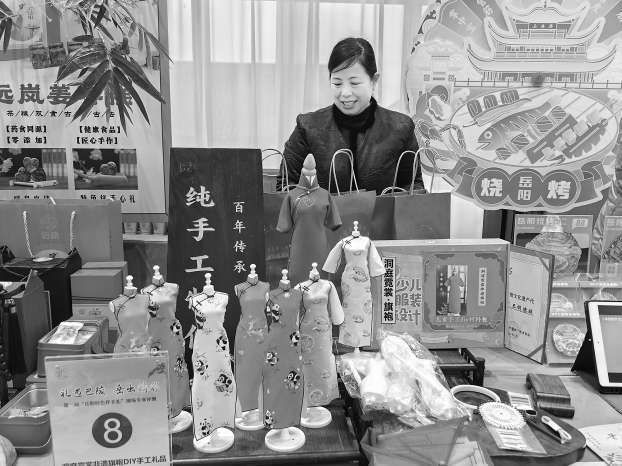
Core Viewpoint - The first "Yueyang Specialty Souvenir" evaluation event was successfully concluded, aiming to boost consumer confidence and market vitality through the selection of high-quality local products [4][8]. Group 1: Event Overview - The event was organized by the Yueyang Consumer Rights Protection Committee and involved months of preparation, selection, and final evaluation [4]. - The initiative addresses issues in the tourism souvenir market, such as poor quality and excessive packaging, aiming to ensure consumers can purchase reliable and representative local products [5][6]. Group 2: Selection Process - The evaluation process was rigorous, requiring products to have legal certifications and unique "Yueyang genes" [5]. - A combination of online voting and expert reviews was used to ensure both market opinion and professional quality control were respected [5][6]. Group 3: Product Transformation - The event highlighted a transformation of Yueyang's souvenirs from mere local specialties to branded and culturally infused products [7]. - Companies are encouraged to enhance packaging and cultural storytelling, moving from selling products to selling the "Yueyang story" [7]. Group 4: Consumer Confidence and Market Impact - The release of the "Yueyang Specialty Souvenir" list is expected to stimulate the holiday consumption market, acting as a guide for consumers and enhancing their purchasing confidence [8][9]. - The event recognized 30 out of 50 participating products as "Yueyang Specialty Souvenirs," promising to improve the local consumption environment and elevate consumer experience [9].

【金工】市场小市值风格显著,大宗交易组合再创新高——量化组合跟踪周报20260207(祁嫣然/张威)
光大证券研究· 2026-02-08 23:02
Core Viewpoint - The article provides a comprehensive analysis of market performance, highlighting the varying returns of different factors and strategies within the stock market [4][5][9]. Group 1: Market Factor Performance - The overall market showed a positive return of 0.38% for the leverage factor, while the market capitalization factor, Beta factor, and non-linear market capitalization factor recorded negative returns of -0.83%, -0.45%, and -0.43% respectively [4]. - The momentum factor yielded a negative return of -0.32%, indicating a reversal effect in the market, while other style factors performed generally [4]. Group 2: Single Factor Performance - In the CSI 300 stock pool, the best-performing factors included operating cash flow ratio (2.56%), large net inflow (2.23%), and momentum-adjusted large orders (2.21%) [5]. - Conversely, the worst-performing factors were net profit gap (-2.15%), year-on-year growth rate of quarterly net profit (-2.12%), and year-on-year ROA (-1.81%) [5]. - In the CSI 500 stock pool, the top factors were price-to-book ratio (2.38%), EPTTM quantile (1.96%), and ROA stability (1.95%), while the bottom factors included net profit gap (-0.76%), year-on-year growth rate of quarterly operating revenue (-0.58%), and TTM gross margin (-0.32%) [5]. - For the liquidity 1500 stock pool, the leading factors were logarithmic market capitalization (3.14%), price-to-earnings ratio (2.64%), and 5-day reversal (2.28%), with the lagging factors being year-on-year growth rate of quarterly operating revenue (-1.34%), TTM gross margin (-1.31%), and total asset growth rate (-1.09%) [5]. Group 3: Industry Factor Performance - Fundamental factors showed varied performance across industries, with net asset per share and TTM operating profit factors yielding consistent positive returns in the home appliance and beauty care sectors [6]. - Valuation factors like BP showed significant positive returns in the banking sector, while EP factors performed well in the home appliance and food & beverage industries [6]. - Residual volatility and liquidity factors also demonstrated consistent positive returns in the oil and petrochemical industry, with large-cap styles being prominent in the food & beverage, coal, beauty care, and banking sectors [6]. Group 4: Strategy Performance - The PB-ROE-50 combination in the CSI 500 and CSI 800 stock pools recorded negative excess returns of -0.98% and -1.43% respectively, with an overall market excess return of -2.11% [7]. - Public fund research stock selection strategies and private fund research tracking strategies achieved positive excess returns, with public strategies outperforming the CSI 800 by 0.18% and private strategies outperforming by 4.25% [9]. - The block trading combination achieved a positive excess return of 0.84% relative to the CSI All Index [10]. - The targeted issuance combination also gained a positive excess return of 0.83% compared to the CSI All Index [11].

【金工】静待市场情绪提振——金融工程市场跟踪周报20260208(祁嫣然/张威)
光大证券研究· 2026-02-08 23:02
Market Overview - The A-share market experienced a volatile decline during the week of February 2 to February 6, 2026, with major indices showing reduced trading volume. As of February 6, 2026, the major indices maintained a cautious signal on timing indicators. [4] - The overall performance of the market was negative, with the Shanghai Composite Index down by 1.27%, the Shanghai 50 down by 0.93%, the CSI 300 down by 1.33%, the CSI 500 down by 2.68%, the CSI 1000 down by 2.46%, the ChiNext Index down by 3.28%, and the North Star 50 Index down by 0.70%. [4] Sector Performance - Resource-related sectors underperformed due to a decline in prices of key commodities like gold, while sectors such as consumption and finance performed relatively better. The TMT sector was also negatively impacted. [4] - The valuation levels of the CSI 300, CSI 500, CSI 1000, and ChiNext Index are categorized as "moderate," while the Shanghai Composite Index and Shanghai 50 are classified as "dangerous." [4] Investment Sentiment - The sentiment in the market remains subdued, with short-term trading emotions not showing signs of improvement. The outlook suggests a continuation of a volatile upward trend, with a medium to long-term positive view on the "dividend + technology" allocation strategy, favoring "dividend" in the short term. [4] Fund Flow Analysis - The stock ETF saw a median return of -1.64% with a net outflow of 7.801 billion yuan. In contrast, cross-border ETFs had a median return of -2.51% with a net inflow of 3.210 billion yuan, while Hong Kong stock ETFs recorded a median return of -2.08% with a net inflow of 18.493 billion yuan. Commodity ETFs had a median return of -6.07% with a net outflow of 2.887 billion yuan. [7] - The top five stocks attracting institutional attention this week were Ying Tang Zhi Kong (195 institutions), Hua Qin Technology (186), Jinko Solar (158), Zhong Ji Xu Chuang (137), and Huan Xu Electronics (113). [6] Volatility and Alpha Environment - The cross-sectional volatility of the CSI 300, CSI 500, and CSI 1000 index constituents decreased compared to the previous week, indicating a deterioration in the short-term Alpha environment. However, the time series volatility for these indices increased, suggesting an improvement in the Alpha environment. [5]

业绩分化显韧性 多元布局谋增长
Zhong Guo Zheng Quan Bao· 2026-02-08 20:22
Core Insights - A total of 123 companies listed on the Beijing Stock Exchange have disclosed their 2025 annual performance forecasts, showing significant performance differentiation [1] - 40 companies are expected to report positive performance, with 24 forecasting growth, 13 turning losses into profits, and 3 showing slight increases [1] - Companies demonstrating strong resilience have implemented strategies such as technological innovation, market expansion, and operational optimization [1] Performance Highlights - Twelve companies, including Hongyu Packaging, Huiwei Intelligent, and Haineng Technology, are expected to see net profit growth exceeding 100% in 2025, driven by enhanced core competitiveness and industry development benefits [2] - Hongyu Packaging anticipates a net profit of 17 million to 22 million, representing a year-on-year increase of 357.91% to 492.59%, attributed to optimized customer and product structures and improved operational efficiency [2] - Haineng Technology expects a net profit of 41 million to 44 million, with a growth of 213.65% to 236.61%, benefiting from industry demand recovery and continuous investment in high-end product development [2] Turnaround Companies - Among the 13 companies that have turned losses into profits, Lierda, Chunguang Intelligent, and Zhongcheng Technology have successfully adjusted their operational strategies [3] - Lierda forecasts a net profit of 35 million to 50 million, recovering from a loss of 109 million the previous year, driven by R&D investments and improved cash flow management [4] - Shibibai expects a net profit of 50 million to 60 million, turning around from a loss of 367,500, supported by growing market demand and operational efficiency improvements [4] Companies Preparing for Recovery - Some companies are facing performance pressure due to external factors like raw material price fluctuations and internal factors such as increased R&D investments [5] - Weibo Hydraulic and Kerun Intelligent are actively seeking to expand sales markets and enhance internal management to counteract performance declines [5] - Nacronor and Beiyikang are adjusting their strategies to address challenges related to industry cycles and sales model changes, focusing on cost reduction and new product commercialization [6]
大消费行业周报:进入春节备货旺季,食品饮料板块表现佳-20260208
Ping An Securities· 2026-02-08 14:49
Investment Rating - The industry investment rating is "stronger than the market," indicating that the industry index is expected to outperform the market by more than 5% over the next six months [25]. Core Insights - The food and beverage sector has shown strong performance, with a notable recovery in sales for Moutai and stable price increases as the restaurant supply chain enters the peak season for the Spring Festival. The current market liquidity is ample, and macro consumption policies are expected to support a continued recovery in consumer demand [3][4]. - The tourism sector is experiencing a release of pent-up demand, with leading companies in travel and retail expected to benefit from improved sales as the Spring Festival approaches. Companies that can quickly adapt to changing consumer needs are recommended for investment [3]. - The beauty industry is growing steadily, with a focus on companies that can respond rapidly to market dynamics and integrate products, brands, and channels effectively [3]. - In the jewelry sector, there are promising investment opportunities in gold and jewelry brands that have the potential for market share growth and improving operational performance [3]. - The food and beverage sector is divided into high-end liquor, mid-range liquor, and local wines, with leading companies expected to gain market share due to their superior brand management and market strategies [3][17]. Summary by Sections Market Review - During the week of February 2-6, 2026, the CSI 300 index fell by 1.33%. The food and beverage sector rose by 4.44%, outperforming other sectors such as textiles and apparel (+2.23%) and home appliances (+1.15%) [4][5]. Social Services - The hotel market in first-tier cities shows structural differences, with Shenzhen experiencing significant growth in both occupancy rates and average room prices, while Beijing and Guangzhou face declines [9]. - Hainan's duty-free shopping reached 4.53 billion yuan in January 2026, with a 44.8% year-on-year increase in shopping amounts [9]. - The beauty category on Tmall saw a 24% year-on-year increase in sales in January 2026, indicating strong consumer interest [9]. Food and Beverage - Alcohol - Moutai's prices have increased, with the 2022 whole box price at 1,930 yuan per bottle, up 10 yuan from the previous week, and the 2022 bulk price at 1,880 yuan, up 40 yuan [17]. - The overall performance of liquor companies is expected to improve, with a focus on high-end and mid-range products [3][17]. Food and Beverage - Consumer Goods - The at-home dining market, represented by companies like Guoquan, is expanding, with a focus on product, channel, and supply chain integration [3]. - The dairy sector is seeing improvements in supply-demand relationships, with leading companies entering a recovery phase [3]. - The restaurant supply chain is entering the Spring Festival stocking season, with a stabilization in industry conditions [3].