
家电

Search documents
“新国补”落地首月全国家电、数码 和智能产品补贴超1500万台
Xin Lang Cai Jing· 2026-02-03 19:46
Core Insights - The implementation of the appliance trade-in and digital product subsidy policy has shown positive effects, with significant sales figures reported in January 2023 [1] Group 1: Sales Performance - In January, sales of six categories of home appliances and four categories of digital and smart products exceeded 15 million units, generating nearly 59 billion yuan in sales [1] - The trade-in program for home appliances resulted in 6.813 million units sold, driving sales of 29.71 billion yuan, while the purchase of new digital and smart products reached 9.115 million units, contributing 29.21 billion yuan in sales [1] - Offline sales from the trade-in program and new purchases accounted for nearly 80% of total sales, showing a year-on-year growth of approximately 20% [1] Group 2: Consumer Trends - The trade-in program has led to increased foot traffic and sales in physical retail stores, positively impacting cross-scenario consumption in leisure, transportation, and specialty dining [1] - There is a growing preference for green and smart products, with the subsidy standards for the trade-in program raised to first-level energy efficiency, resulting in rapid growth in high-performance appliances [1] - Online sales of first-level energy-efficient water heaters and televisions increased by 35.7% and 28.9% year-on-year, respectively, while mid-to-high-end smartphone models accounted for over 70% of sales [1] - Smart glasses were included in the subsidy program for the first time, achieving sales of 7.197 million yuan [1] Group 3: Future Initiatives - The Ministry of Commerce plans to continue supporting the implementation of the trade-in and subsidy policies, focusing on enhancing offline retail support and promoting the introduction of new products and production capabilities [2]
市场热门的出海公司有哪些
Sou Hu Cai Jing· 2026-02-03 19:31
Group 1: Technology and Internet - Huawei is a global leader in telecommunications equipment and smartphone manufacturing, with products and services available in multiple countries and regions [3] - Xiaomi started with high-cost performance smartphones and has expanded into smart home devices and TVs, holding a strong market share in India and Southeast Asia [3] - ByteDance owns popular applications like TikTok (international version of Douyin) and Helo, which are widely popular globally [4] Group 2: E-commerce - Alibaba operates AliExpress, conducting e-commerce business globally, with notable performance in markets like Russia and Brazil [5] - JD.com expands overseas through its JD Worldwide platform, providing cross-border e-commerce services [6] - SHEIN is a fast-fashion e-commerce platform that has rapidly risen in the European and American markets due to its quick-response supply chain and low-price strategy [7] Group 3: Gaming - Tencent has secured a significant position in the global gaming market through acquisitions of companies like Supercell and Riot Games, and by launching self-developed games such as Arena of Valor [8] - NetEase has achieved success in overseas markets with self-developed games like Onmyoji and is expanding its influence through investments and partnerships [8] - miHoYo has gained immense success in overseas markets with high-quality games like Genshin Impact, becoming one of the most successful Chinese gaming companies in recent years [9] Group 4: Consumer Brands - Anker focuses on the research and sales of smart charging and peripheral products, with strong sales across multiple countries and regions [10] - Haier, a home appliance giant, has established a strong market network globally through acquisitions and localization strategies [11] - Midea has become a globally recognized home appliance brand through technological innovation and international expansion [12] Group 5: Emerging Brands - Perfect Diary, a beauty brand, has rapidly risen in overseas markets through social media marketing and high-quality products [13] - Pop Mart, a trendy toy brand, attracts a large number of young consumers in overseas markets through innovative formats like blind boxes [14]

近九成投顾看涨全年 市场风格显现均衡迹象
Shang Hai Zheng Quan Bao· 2026-02-03 18:19
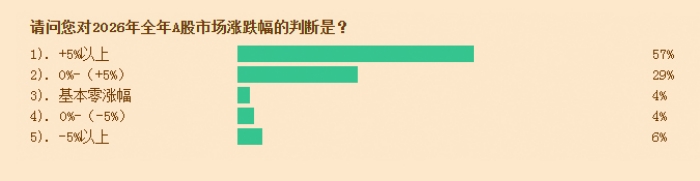
Core Viewpoint - Investment advisors are optimistic about the A-share market in 2026, with nearly 90% expecting an upward trend, and a consensus forming around economic recovery and increased capital inflow [6][7][13]. Group 1: Market Outlook - 88% of investment advisors are bullish on the A-share market for 2026, with 58% expecting an index increase of over 5% [6][14]. - Advisors predict a structural market characterized by fluctuations, with 46% expecting repeated index oscillations and significant gains in certain sectors [14][16]. - The consensus on macroeconomic recovery is strengthening, with 80% of advisors holding optimistic or neutral views on the economy [10][33]. Group 2: Asset Allocation - 67% of advisors recommend increasing allocations to equities, with 68% favoring stocks in the first quarter of 2026 [21][19]. - Advisors are shifting from a focus on growth stocks to a more balanced approach, with 42% expecting growth and dividend styles to converge [16][19]. - High dividend stocks are gaining attention, with 37% of advisors considering them reasonably valued, reflecting a shift in market sentiment [18][19]. Group 3: Investment Strategies - The predominant strategy remains flexible thematic investment, with 47% of advisors advocating for this approach, while 29% are focusing on value investing [22][33]. - Advisors suggest maintaining a higher equity position, with 80% recommending a minimum of 50% equity allocation for clients [22][33]. - The preference for direct stock investments is increasing, with 47% of advisors suggesting this method [21][19]. Group 4: Client Performance and Sentiment - 82% of advisors reported that their clients achieved profits in 2025, a significant increase of 23 percentage points from 2024 [29][27]. - High-net-worth clients are showing increased confidence, with 19% planning to increase their investments, indicating a rising risk appetite [31][27]. - The sentiment towards gold investments is also positive, with 57% of advisors expecting gold prices to continue rising [25][26].
与澳网“碰杯” 中国品牌“借赛出海”尚需三重角色转变
Mei Ri Jing Ji Xin Wen· 2026-02-03 14:29
Group 1 - The core viewpoint of the articles emphasizes the importance of Chinese brands leveraging international sports events to enhance their global presence and brand recognition [1][2][4] - The Australian Open serves as a significant platform for brand exposure, reaching over 2 billion viewers globally and allowing brands like "Guojiao 1573" to align with high-end international brands [1] - The trend of Chinese brands "borrowing events to go global" is gaining momentum, with examples including Haier at the French Open and Wuliangye at the FIFA World Cup, showcasing a shift towards participating in global brand competition [2] Group 2 - Chinese brands need to transition from being "traffic harvesters" to "cultural narrators," focusing on deeper brand storytelling that resonates with the core values of the events they sponsor [3][4] - There is a need for brands to evolve from "resource purchasers" to "ecosystem builders," actively engaging with the event's ecosystem to create mutual value rather than merely purchasing sponsorship rights [3] - The shift from "contract partners" to "value cultivators" is essential, as brands must adopt a long-term perspective to build sustainable brand assets through ongoing event collaborations [3][4]

Stifel Reviews A. O. Smith (AOS) After Q4 Beat and Mixed 2026 Outlook
Yahoo Finance· 2026-02-03 13:52
Core Viewpoint - A. O. Smith Corporation (NYSE:AOS) has shown resilience with a fourth-quarter earnings beat, although the 2026 revenue outlook is weaker than expected, leading to a mixed market reaction [2][3]. Financial Performance - The company reported an adjusted net income of $125.4 million, or $0.90 per share, for the fourth quarter, up from $109.7 million, or $0.75 per share, a year earlier [4]. - North American sales increased by 3.5% to $713.7 million, driven by pricing strategies and improved profitability in water treatment, which offset higher input costs [4]. - Total revenue for the quarter ended December 31 was $912.5 million, remaining essentially flat compared to the previous year [4]. - A. O. Smith expects full-year earnings per share to range between $3.85 and $4.15 [4]. Market Reaction - Following the earnings report, shares of A. O. Smith rose approximately 5%, attributed to short covering despite the mixed results [2]. Strategic Insights - The company continues to face challenges in China, yet it reported improved margins in that market, indicating potential for strategic partnerships and other options to enhance its business there [3][5].

超4.6万亿元!江苏社零总额首次跃居全国第一
Xin Hua Ri Bao· 2026-02-03 13:47
Core Insights - Jiangsu Province achieved a GDP of 14.23515 trillion yuan in 2025, marking a 5.3% year-on-year growth, becoming the second province in China to surpass the 14 trillion yuan mark [1] - The province's total retail sales of consumer goods reached 4.63942 trillion yuan, with a year-on-year increase of 3.3%, ranking first in the nation for the first time in 45 years [1] Group 1: Economic Growth and Consumer Trends - The "Su Super" event significantly boosted local consumption, with over 2.43 million attendees and online viewership exceeding 2.2 billion, demonstrating a strong economic impact [2] - The event generated over 2.6 billion yuan in retail, dining, and accommodation transactions in Nanjing, reflecting a 20% increase [2] - Jiangsu's initiatives to enhance service quality and create consumption opportunities have led to a 10.4% increase in tourist numbers and a 10.2% rise in total spending [2] Group 2: Innovative Consumption Strategies - Jiangsu has launched various brand activities like "Su Products" and "Three Up" actions to cater to diverse consumer needs, enhancing the night economy with 50 designated night consumption hubs [3][4] - The introduction of new stores has proven effective, with over 800 new stores established in 2025, including 17 national first stores and 245 restaurant first stores [5] - The Nanjing Deji Plaza achieved sales of 26.24 billion yuan in 2025, averaging over 71.78 million yuan in daily sales [5] Group 3: Green and Quality Consumption - The "trade-in for new" policy has stimulated consumer spending, with significant growth in retail sales of green and smart products, including a 21.2% increase in new energy vehicles [8] - Jiangsu's innovative policies have led to over 1.96 billion yuan in government subsidies, driving sales of 1.52 billion yuan through trade-in programs [8][9] - The province aims to enhance its consumption policies further in 2026, focusing on optimizing trade-in programs and promoting cultural and sports-related consumption [9]
南非官员:中国企业助力南非制造业转型升级
Xin Hua She· 2026-02-03 13:41
Core Insights - Chinese enterprises are significantly driving the industrialization and manufacturing transformation in South Africa, particularly through investments in Gauteng province [1] Group 1: Investment Impact - Haier Group's subsidiary, Haier Smart Home, has officially entered the South African market, marking one of the most important industrial investment projects in Gauteng province in recent years [1] - Since 2014, Gauteng has attracted substantial direct investment from China across various sectors, including telecommunications, energy, manufacturing, logistics, and advanced industrial equipment, creating thousands of jobs [1] Group 2: Economic Context - Gauteng province accounts for approximately 55% of South Africa's GDP and serves as the economic and industrial center of the country [1] - The provincial government has established a favorable investment promotion system, economic zones, and industrial parks to provide a predictable and responsive cooperation environment for businesses [1] Group 3: Trade Relations - China is South Africa's largest trading partner, with ongoing development in economic and trade cooperation between the two countries [1] - South Africa exports industrial raw materials like coal to China while importing advanced industrial products such as machinery, electronics, and home appliances, which modernize South Africa's manufacturing, logistics, and consumer sectors [1]

每日投行/机构观点梳理(2026-02-03)
Jin Shi Shu Ju· 2026-02-03 12:53
Group 1: Federal Reserve and Monetary Policy - Morgan Stanley reports that under Kevin Warsh's leadership, changes in the Federal Reserve are likely to manifest through balance sheet policies rather than interest rates, indicating a gradual reduction in the Fed's balance sheet will lower banks' demand for reserves [1] - The report suggests that a Federal Reserve with a smaller "presence" in communication and balance sheet size could lead to a steeper yield curve [1] - Capital Economics highlights that Warsh's primary challenge will be convincing the Federal Open Market Committee (FOMC) members to accept his view on lower interest rates, as he only holds one vote among twelve [5] Group 2: Gold Market Analysis - JPMorgan Private Bank views the recent decline in gold prices as a healthy technical correction, with a year-end price target raised to $6,150 per ounce, reflecting a range of $6,000 to $6,300 [2] - Deutsche Bank maintains a bullish outlook on gold, expecting prices to reach $6,000 per ounce, citing ongoing positive factors such as central bank buying [3] - Sucden Financial analysts assert that despite recent price drops due to speculative position liquidations, the long-term structural support for precious metals remains intact, predicting a mild rebound in the near term [4] Group 3: Market Reactions and Economic Indicators - Following the announcement of Warsh's nomination, U.S. Treasury yields fell, with the 2-year yield down 1.3 basis points to 3.512% and the 10-year yield down 2.5 basis points to 4.215% [6] - The market's risk sentiment has deteriorated significantly, contributing to a flight to safe-haven assets, including U.S. Treasuries [6] Group 4: Industry Insights and Future Projections - Morgan Stanley projects that the South Korean composite index (Kospi) could reach 7,500 points by 2026, driven by rising chip prices and ongoing reforms in corporate governance and taxation [8] - Citic Securities anticipates rapid growth in domestic energy storage installations, supported by new national pricing mechanisms, and sees investment value in leading firms within the energy storage industry [9] - Zhongtai Securities forecasts a continued recovery in the TMT sector, driven by supportive policies and strong market interest in technology stocks, particularly in AI [12]
京东开启2026年全国首个乡村国补活动 激活乡村线下消费烟火气
Jin Rong Jie Zi Xun· 2026-02-03 12:52
Core Viewpoint - The "National Subsidy to Rural Areas - Jiyang Station" event, guided by the Jinan Municipal Bureau of Commerce and hosted by JD.com, marks the first rural national subsidy activity in 2026, aiming to stimulate offline consumption in rural areas through direct engagement and substantial discounts [1][7]. Group 1: Event Overview - The event attracted a large number of rural consumers, showcasing over a hundred products from more than 30 mainstream brands, including Haier, Midea, and Huawei, across various categories such as TVs, air conditioners, washing machines, and smartphones [1][3]. - Consumers were able to enjoy significant discounts, including a "200 yuan rebate for every 3000 yuan spent" offer, with some products available at exclusive 50% off prices [3]. Group 2: Consumer Engagement - The event featured a vibrant atmosphere with many villagers consulting subsidy policies and experiencing product performances, indicating a strong consumer interest in purchasing large appliances [3]. - The presence of local JD.com appliance stores and 3C digital stores also contributed to the overall consumer enthusiasm, enhancing the shopping experience [3]. Group 3: Product Selection and Services - Products tailored to rural family needs, such as energy-efficient air conditioners and integrated washing machines, were particularly popular, aligning with national green consumption initiatives and villagers' aspirations for quality living [5]. - JD.com provided comprehensive services, including delivery, installation, and old appliance trade-in, addressing common concerns about purchasing and setting up new appliances [5]. Group 4: Long-term Strategy - JD.com established a permanent "National Subsidy Exchange Station" in Jiyang District to continuously invigorate rural offline consumption, reflecting the company's commitment to the rural market [5]. - The company plans to invest nearly 30 billion yuan in rural areas by 2025, focusing on product subsidies, logistics, and enhancing offline service capabilities to strengthen the foundation for rural consumption [5].

“新国补”落地首月全国家电、数码和智能产品补贴超1500万台
Sou Hu Cai Jing· 2026-02-03 12:37
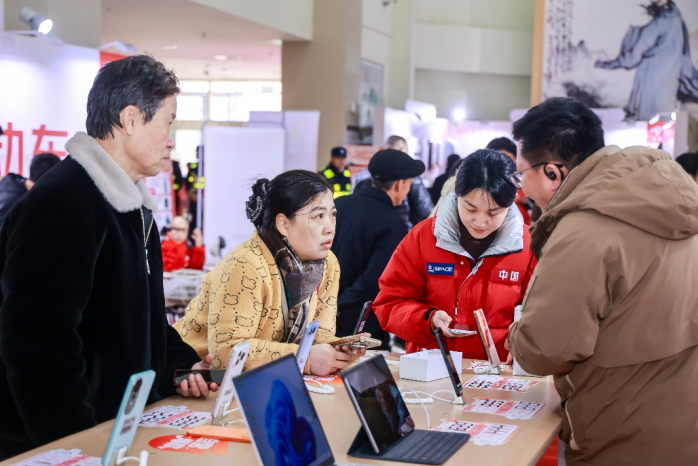
Core Insights - The implementation of the appliance trade-in and digital product subsidy policy has shown positive effects, with sales of 6 categories of home appliances and 4 categories of digital and smart products exceeding 15 million units and generating nearly 59 billion yuan in sales in January [1] Group 1: Sales Performance - In January, 6.813 million home appliances were traded in, driving sales of 29.71 billion yuan, while 9.115 million digital and smart products were purchased, leading to sales of 29.21 billion yuan [1] - Offline sales of home appliances and digital products accounted for nearly 80% of total sales, with a year-on-year growth of approximately 20% [1] Group 2: Consumer Trends - The trade-in program has attracted consumers to offline retail, enhancing foot traffic and boosting sales in various sectors such as leisure, transportation, and specialty dining [1] - There is a growing preference for green and smart products, with the subsidy standard for home appliances upgraded to first-level energy efficiency, resulting in significant growth in high-performance appliances [1] Group 3: Product Specifics - Online sales of first-level energy-efficient water heaters and televisions increased by 35.7% and 28.9% year-on-year, respectively [1] - Mid-to-high-end smartphone models accounted for over 70% of sales, and smart glasses were included in the subsidy program for the first time, achieving sales of 7.197 million yuan [1] Group 4: Future Initiatives - The Ministry of Commerce plans to continue supporting the implementation of the trade-in and subsidy policies, focusing on enhancing offline retail support and promoting the replacement of old products with new ones [2]