咖啡

Search documents
中国咖啡地图:“咖啡浓度”最高的城市,竟不是上海
3 6 Ke· 2025-10-30 01:36
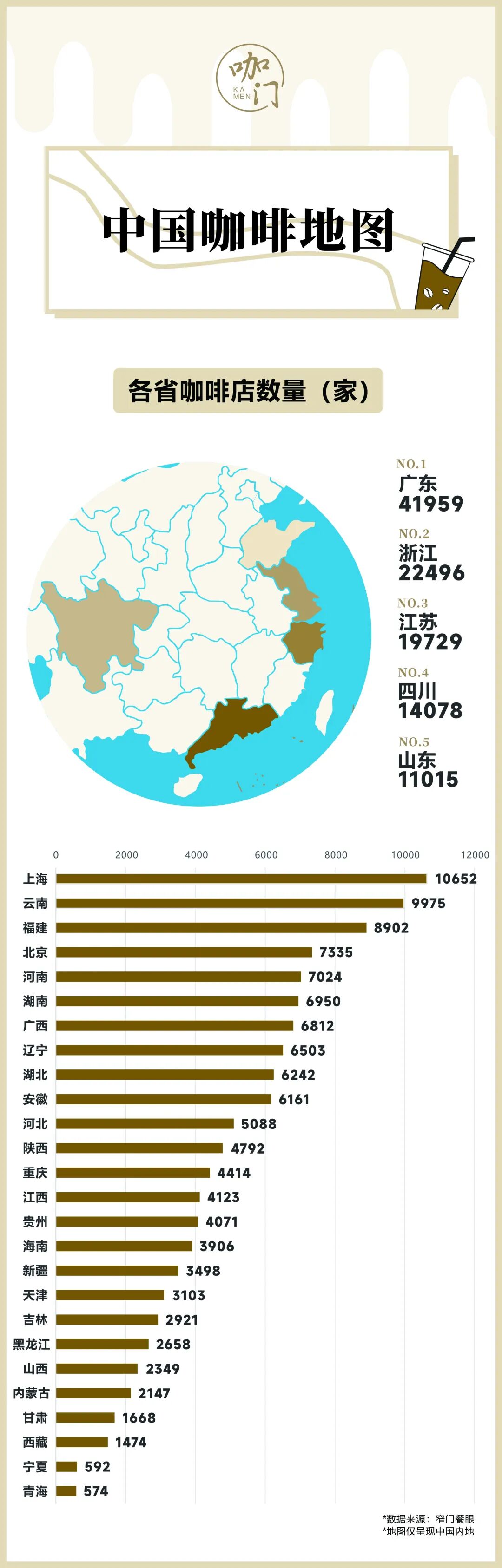
Core Insights - The coffee market in China has experienced rapid growth, with the annual consumption per capita increasing from 9 cups in 2016 to 22.24 cups in 2024, indicating a significant integration of coffee into daily life [1][38] - As of October 15, 2025, there are over 254,730 coffee shops across China, with Guangdong, Zhejiang, and Jiangsu leading in the number of stores [1][38] Summary by Sections Coffee Shop Distribution - The total number of coffee shops in China has reached 254,730, with Guangdong, Zhejiang, and Jiangsu having 41,959, 22,496, and 19,729 shops respectively [1][3] - Shanghai is the only city with over 10,000 coffee shops, totaling 10,652, followed by Guangzhou and Beijing with 8,452 and 7,335 shops respectively [6][10] Coffee Density in Cities - Shanghai has a coffee shop density of 4.29 per 10,000 people, with Tibet and Hainan following at 3.98 and 3.73 respectively [12][13] - Smaller cities have developed unique coffee ecosystems, with high per capita densities indicating strong local consumption potential [17] Emerging Coffee Cities - Lhasa has the highest coffee shop density in China, with 830 shops for approximately 870,000 residents, showcasing a shift in local beverage culture [18][21] - Lijiang, a tourist city, has 851 coffee shops, leveraging its cultural and scenic resources to promote coffee consumption [24][26] - Jiangmen, known as "China's first overseas Chinese hometown," has 2,718 coffee shops, benefiting from a robust coffee equipment industry [28][29] - Huzhou has 1,907 coffee shops, focusing on rural tourism and unique coffee experiences [30][32] - Yanbian, with 952 coffee shops, has a strong coffee culture influenced by its proximity to international markets [34][37] Market Growth - The coffee industry in China is projected to reach a market size of 313.3 billion yuan in 2024, with an annual growth rate of 18.1% [38]

贵阳“新三样”添文旅活力
Ren Min Wang· 2025-10-30 00:08
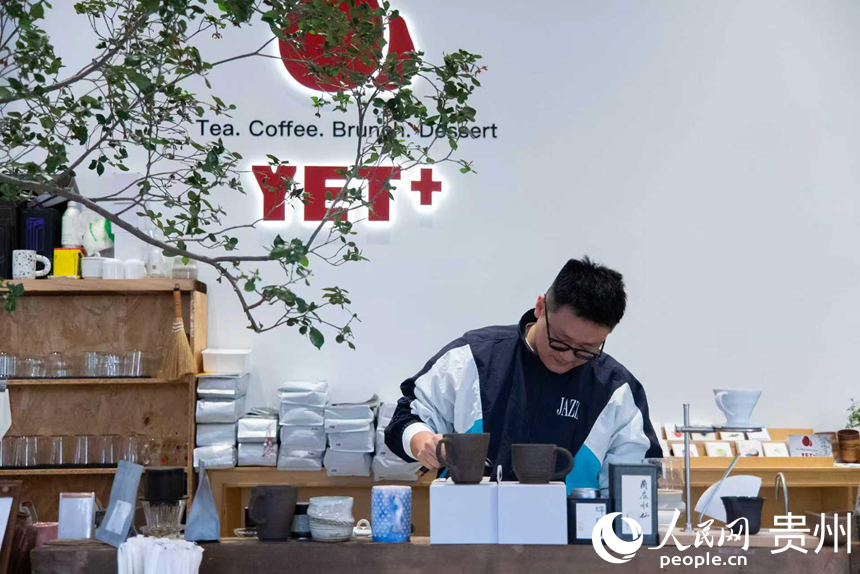
Core Insights - The article highlights the emergence of a vibrant beverage culture in Guiyang, with coffee, new tea drinks, and craft beer becoming essential experiences for both domestic and international tourists [3][4][8] - Guiyang has over 3,000 coffee shops and more than 1,200 craft beer bars, showcasing a significant growth in the beverage industry [3][4] Coffee Industry - Guiyang has developed a strong coffee culture despite not producing coffee beans locally, achieving a coffee shop density of 1 shop per 2,000 residents, ranking among the top in China [4] - The city has produced multiple national and international coffee competition champions, enhancing its reputation in the coffee sector [4] - Coffee consumption in Guiyang has grown at an annual rate of 18%, making it one of the fastest-growing cities for coffee consumption in the country [4] Craft Beer Sector - The craft beer scene in Guiyang includes over 1,200 bars, with local brands like TripSmith producing over 2,000 tons of craft beer annually, distributed across more than 200 cities in China [6] - Local flavors such as sour soup and wood ginger have been integrated into craft beer offerings, receiving international awards [6] New Tea Drinks - The new tea drink market in Guiyang features local ingredients, with brands like "Guizhou Jing Tea" and "Quchashan" creating unique beverages that incorporate local flavors [6] - "Quchashan" has expanded to 58 locations nationwide, with a significant presence in major cities like Shanghai and Shenzhen [6] Tourism Impact - From January to August this year, Guiyang saw a 9.6% increase in domestic tourist arrivals and a 9.8% rise in total tourism spending, driven by the popularity of the "new three items" [8] - The beverage culture has become a key component of Guiyang's tourism identity, contributing to the city's appeal as a travel destination [8]
48小时卖30万杯!“冬天第一杯热奶茶”杀疯了
东京烘焙职业人· 2025-10-29 08:32
Core Insights - The article highlights the surge in demand for hot beverages as temperatures drop, with significant sales figures reported for various popular drinks [4][6][10]. Group 1: Market Trends - The topic "First Cup of Milk Tea in Winter" has garnered over 20 million views on Xiaohongshu, indicating a strong consumer interest in hot drinks [6]. - Major brands like Cha Bai Dao and Xi Tea have reported impressive sales, with Cha Bai Dao's "Super Thick Taro" selling nearly 200,000 cups on its first day and Xi Tea's "Snowy Yak Milk" selling out in multiple locations within 10 days [10][12]. - The trend of hot drink consumption is reflected in increased order volumes at physical stores, with some locations reporting that over half of the orders are for hot beverages [8][9]. Group 2: Product Innovations - Many brands are reintroducing popular products from previous years, such as Cha Bai Dao's "Super Thick Taro" and Xi Tea's "Snowy Yak Milk," which have proven to be successful in driving sales [14][17]. - New flavor combinations are emerging, with brands experimenting with unconventional ingredients like sweet soy sauce and salted egg yolk, pushing the boundaries of traditional sweet beverages [21][23]. - Seasonal ingredients like pumpkin, sweet potato, and rice are becoming popular in beverage menus, with pumpkin being particularly prominent [24][26]. Group 3: Consumer Preferences - The article notes a shift towards using familiar, homey ingredients in drinks, which resonate well with consumers and provide a sense of nostalgia [29]. - Hot fruit teas made with ingredients like pear and orange are gaining popularity, offering a refreshing option during the colder months [30][32]. - Brands are encouraged to innovate while maintaining a balance between classic flavors and new combinations to attract a broader customer base [19][35].




咖啡豆价格创历史新高,云南咖啡豆的机遇要来了吗?
Tai Mei Ti A P P· 2025-10-29 04:27
Core Insights - The price of Yunnan coffee has reached historical highs, with fresh fruit procurement prices peaking at 10 yuan per kilogram, and coffee bean prices surpassing 60 yuan per kilogram by February 2025, driven by global market dynamics and domestic consumption growth [2][3][6]. Price Trends - Yunnan coffee prices have seen a significant increase, with prices rising from 14.78 yuan per kilogram in 2018 to approximately 66 yuan per kilogram in 2025 [6]. - The price of Arabica coffee futures in New York has reached a record high of 4.36 USD per pound, influenced by adverse weather in Brazil, which is the world's largest coffee producer [3]. Market Dynamics - The Chinese coffee market is expanding rapidly, with the industry scale projected to reach 313.3 billion yuan in 2024, reflecting an 18.1% year-on-year growth [3]. - Yunnan coffee accounts for 98% of China's total coffee production, benefiting from a growing domestic market and geopolitical trade fluctuations [3][6]. Quality Improvement Initiatives - Starbucks has implemented a "quality for price" strategy in Yunnan, which has significantly improved the quality of coffee beans and increased farmers' incomes [5][6]. - By 2024, the area planted with coffee in Yunnan reached 1.1931 million acres, with a total production of 150,200 tons, marking a 4% increase in planting area and a 3% increase in production year-on-year [6]. Future Prospects - Starbucks plans to incorporate high-quality Yunnan coffee beans into every cup of classic espresso sold in mainland China, indicating strong future demand [7]. - The Yunnan coffee industry is at a turning point, focusing on not just increasing production but also enhancing the quality and variety of coffee beans [10].

特朗普赚大了,中美刚谈完,巴西、印度传来大消息,有望达成协议
Sou Hu Cai Jing· 2025-10-28 09:39
Core Insights - The latest round of US-China trade talks in Kuala Lumpur concluded early with a "substantial framework agreement," and the US announced it would no longer consider imposing a 100% tariff on Chinese goods [1][3][20] Group 1: US-China Trade Negotiations - The negotiations, initially planned for three days, wrapped up in two, indicating a significant breakthrough in discussions [1] - Key topics included rare earth exports, agricultural tariffs, and fentanyl control, with China maintaining a firm stance during the talks [3][5] - The US Treasury Secretary's announcement to abandon the 100% tariff plan reflects a retreat in response to China's strong position [3][16] Group 2: Impact on Commodities - Rare earth elements and soybeans emerged as critical issues, with China controlling over 90% of global rare earth processing capabilities, leading to soaring prices for US metals [5][6] - The US soybean market faced severe disruptions, with imports from China plummeting by 97% in a week, causing protests among American farmers [6][12] Group 3: Broader Geopolitical Implications - Following the US-China talks, India announced it would cease purchasing oil from sanctioned Russian companies, signaling a shift towards the US [8] - Brazil's President Lula met with Trump to initiate tariff negotiations, aiming to resolve trade tensions that have cost Brazil over $1 billion annually due to high tariffs on key exports [10][12] - The interconnected nature of these negotiations suggests a ripple effect, with each country's actions influencing the others, highlighting the complexity of global trade dynamics [20]

Z世代重塑消费规则!理性节俭与感性豪掷共存!
Sou Hu Cai Jing· 2025-10-27 15:00
Core Insights - The Chinese consumer market in 2025 presents a paradox with both low-priced coffee and high-priced collectibles coexisting, indicating a potential "K-shaped" consumption pattern where high-end and low-end consumption grow simultaneously while the mid-tier market shrinks [3][4][6] Consumption Trends - The simultaneous rise of low-cost coffee and high-priced collectibles suggests a profound restructuring of consumer value systems rather than a simple decline in purchasing power or blind pursuit of quality [4][6] - Consumers are redefining what is considered "worth it" and "wasteful," indicating a shift towards service and developmental consumption [6] Emotional Economy - The phenomenon of the collectible toy "Labubu" illustrates how emotional value drives consumer behavior, with limited editions fetching high prices in the secondary market [6][8] - The brand has positioned itself as a cultural symbol rather than just a toy, appealing to identity and social belonging [8] Practical Consumption - In contrast to the collectible market, daily consumer goods are experiencing intense price competition, with brands like Luckin Coffee and Meituan engaging in aggressive pricing strategies [8][9] - Consumers are becoming increasingly rational and discerning, focusing on the real value of products rather than brand premiums [11][12] Value Reallocation - Consumers are segmenting their spending into practical and emotional categories, with practical consumption focused on functionality and cost-effectiveness, while emotional consumption prioritizes experiences and identity [14][16] - This reallocation reflects a deeper self-awareness among consumers regarding what is truly important to them [14][16] Generational Shift - The primary drivers of this consumption transformation are younger consumers, particularly Generation Z, who prioritize alignment with personal values and seek unique, personalized experiences [16] - Social media amplifies this trend, allowing consumers to actively shape their identities through their purchasing choices [16] Market Response - Companies are adapting their strategies to cater to both practical and emotional consumption, with retailers offering hard discounts for price-sensitive consumers while also building brand narratives for emotional engagement [17][19] - Successful brands recognize that in the emotional consumption space, they are selling not just products but also cultural significance and social capital [19] Global Perspective - The transformation of the Chinese consumer market is unique in its scale and speed, influencing global brand strategies and prompting international brands to adapt to local preferences [20][21] - Chinese brands like "Labubu" are beginning to leverage their understanding of local consumer needs to explore opportunities in global markets [21][23]
山姆中国换帅;京东折扣超市加速拓店
Sou Hu Cai Jing· 2025-10-27 13:58
Group 1 - Walmart China appoints Liu Peng as the president of Sam's Club, effective immediately, as part of its strategy to increase investment in China and upgrade its business operations [1] - 7-ELEVEn Japan will launch hydrogen-roasted coffee nationwide, developed in collaboration with UCC, priced at 149 yen, approximately 20 yen more than regular hot coffee [3] - Hema has officially launched its hot pot season, with sales increasing by 50% week-on-week, introducing new regional specialties and microwaveable hot pot cup series [5] Group 2 - Tmall Supermarket has initiated its Double 11 self-operated festival, offering over 10,000 products with a total subsidy of 1 billion yuan in coupons [5] - CR Vanguard in Xi'an will undergo a complete upgrade starting November 15, with a clearance sale offering discounts of 50% or more from October 28 to November 14 [6] - Miniso founder Ye Guofu stated that the company is investing heavily in developing its own IP, indicating a shift from retail to cultural creative business [7] Group 3 - Pinduoduo Live has announced support plans for new and quality streamers during the Double 11 event, offering advertising bonuses for completing tasks [8] - Zong Fuli has returned to work at Wahaha as the president of Hongsheng Beverage Group after resigning from her previous roles [9] - Yanzhu Co. reported a decline in revenue and profit for the first three quarters, with revenue at 1.548 billion yuan and net profit at 131 million yuan, down 18.62% and 48.28% year-on-year respectively [12] Group 4 - Miniso opened its first MINISO LAND in Bangkok, focusing on IP collection and experiential retail, featuring over 80 IPs and more than 8,000 SKUs [13] - Starbucks China and China Eastern Airlines launched a "Yunnan Coffee Theme Flight," showcasing the journey of Yunnan coffee from bean to cup [15] - JD Discount Supermarket plans to open new stores in Suqian and Hefei in November, continuing its strategy of offering low prices [16] Group 5 - JD Logistics announced plans to purchase 3 million robots, 1 million unmanned vehicles, and 100,000 drones over the next five years to enhance its logistics capabilities [18] - Patek Philippe's sales in the UK increased by 12.4% year-on-year to 360 million pounds, surpassing Rolex and Audemars Piguet [19] - TaTa Le's brand IP "Lele Chicken" made its debut at the 34th China Chef Festival, showcasing a full range of products from basic seasonings to complex flavors [20]

Keurig Dr Pepper(KDP) - 2025 Q3 - Earnings Call Transcript
2025-10-27 13:47
Financial Data and Key Metrics Changes - The company reported a 6% revenue CAGR and an 11% EPS CAGR since its formation, placing it in the top tier of consumer packaged goods (CPG) peers [7][25] - The company expects year one EPS accretion of approximately 10% from the JDE Peet's acquisition [38] Business Line Data and Key Metrics Changes - The Refreshment Beverage segment has achieved a high single-digit net sales CAGR since 2018, driven by flagship brands like Dr Pepper [23] - The U.S. Coffee segment has maintained a steady low single-digit sales CAGR in recent years, with Keurig reinforcing its position as the number one North American single-serve system [24][25] Market Data and Key Metrics Changes - The global coffee category has experienced a post-COVID slowdown but is beginning to show signs of recovery, with a historical volume growth of 2% CAGR over 40 years [11][29] - The company anticipates that the acquisition of JDE Peet's will more than triple its coffee net sales to $16 billion, making it the second-largest global coffee player [31] Company Strategy and Development Direction - The company aims to create two focused pure-play entities: Beverage Co, a growth-oriented player, and Global Coffee Co, a steady grower with strong cash flow [34] - The acquisition of JDE Peet's is seen as a strategic move to maximize the value of the coffee business, leveraging economies of scale and enhancing global reach [30][31] Management's Comments on Operating Environment and Future Outlook - Management acknowledges the need for a refreshed approach to the coffee category, emphasizing the importance of structural tailwinds supporting future growth [27][30] - The company is committed to executing the integration and separation plans effectively, with a focus on maintaining business momentum and achieving synergy capture [40][41] Other Important Information - The company has established a transformation management office to oversee the integration and ensure successful execution of the acquisition and separation [36] - Recent actions have been taken to address investor concerns regarding capital structure, including minority investments to shore up the balance sheet [37] Q&A Session Summary Question: Why is JDE Peet's the right acquisition? - Management believes JDE Peet's represents the most attractive path for maximizing the value of the coffee business due to its scale and capabilities [19][30] Question: How will the separation into Beverage Co and Global Coffee Co uniquely enable growth? - The separation allows each entity to tailor its strategy and capital allocation priorities to align with distinct category and geographic exposures [34] Question: How will the company optimize its capital structure post-acquisition? - The company plans to target initial leverage ranges for Beverage Co and Global Coffee Co to ensure financial stability and attractive returns [37]

广东举办残疾人毕业生专场招聘 66家企业现场提供150个岗位
Nan Fang Ri Bao Wang Luo Ban· 2025-10-27 09:24
Group 1 - The event held on October 26 in Guangdong Province aimed to connect employers with disabled graduates, featuring 66 companies offering 150 job positions across various sectors including intelligent manufacturing, high-tech, healthcare, and large supermarkets, with over 590 recruitment opportunities available [1] - The recruitment event included specialized services such as career ability assessments, policy consultations, and sign language translation to support disabled graduates and employers [1] - High demand for positions such as baristas and software engineers was noted, with many candidates actively engaging with company representatives [1][2] Group 2 - Shenzhen Can-You Group, a high-tech company with over 90% of its employees being disabled, emphasized that disabled individuals can excel in high-tech fields, not just manual labor [2] - The recruitment fair utilized a hybrid approach, combining online and offline recruitment, with 147 companies offering 320 positions online, aiming to recruit over 2000 individuals [2] - The event also included training programs focused on career development, workplace mindset shifts, skills enhancement, interview techniques, and resume optimization [2] Group 3 - The Guangdong Provincial Disabled Persons' Federation highlighted the importance of providing tailored employment services for disabled graduates, implementing a "100%" service model that includes comprehensive tracking and support [3] - The initiative aims to assist disabled graduates in achieving higher quality employment through personalized career guidance [3]
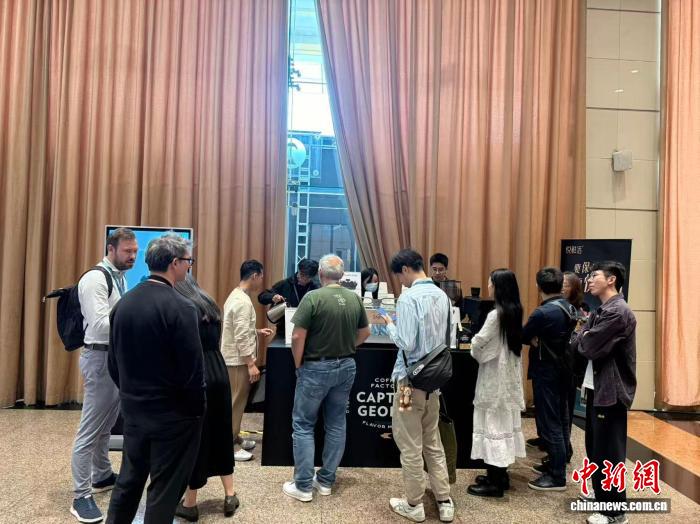
多领域资深专家“共筑风味未来” 2025陆家嘴国际咖啡论坛启幕
Zhong Guo Xin Wen Wang· 2025-10-27 08:07
Core Insights - The 2025 Lujiazui International Coffee Forum opened in Shanghai, focusing on the theme "Building a Flavorful Future" and aims to explore new trends, technologies, and opportunities in the coffee industry [1][4] Industry Overview - The forum is organized by the Lujiazui Coffee Culture Industry Association and INNOVATION IN ORIGINS (IO), gathering top experts from the global coffee supply chain to promote high-quality development in China's coffee industry [1][4] - The event marks a shift from general consumer experiences to professional insights, emphasizing the importance of expert knowledge in the coffee sector [1] Key Topics and Discussions - The two-day agenda includes in-depth discussions on four core topics: "Coffee Chemistry and Sensory," "Scientific Fermentation and Processing," "Modern Extraction and Technological Innovation," and "Coffee Brand Building and Consumer Scene Innovation" [2] - These topics are designed to address critical points in the upgrade of China's coffee industry, providing practitioners with both international perspectives and local insights [2] Innovative Format - The forum features a diverse activity matrix, including expert presentations, interactive workshops, and roundtable discussions, creating a comprehensive learning environment that combines theory and practice [2][4] - This unique setup allows for immediate feedback and validation of cutting-edge technologies and business models discussed at the forum [4] Market Potential - China is recognized as one of the fastest-growing coffee consumption markets globally, showcasing significant development potential [4] - A special segment focusing on the Chinese market will explore how technological innovation, process improvement, and business model innovation can drive the transformation and value enhancement of the specialty coffee industry [4] Expert Participation - The forum brings together industry leaders and experts from various countries, including Brazil, Denmark, Switzerland, Indonesia, Panama, and China, fostering collaboration and knowledge exchange [5] - Participants will have the opportunity to engage in practical experiences, such as observing world champions' creative interpretations and participating in tasting sessions [5]