纺织

Search documents
高关税令美印关系紧张 印度多行业受冲击
Yang Shi Wang· 2025-08-29 06:28
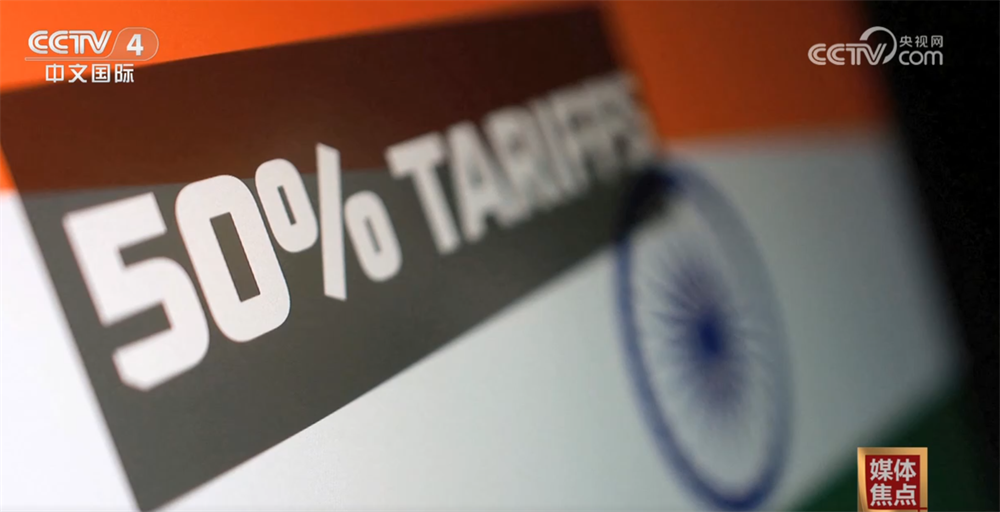
Group 1 - The cumulative tariff rate imposed by the US on Indian products has reached 50%, one of the highest rates faced by US trade partners, aimed at punishing India for purchasing Russian oil, leading to strained US-India relations [1] - Indian Foreign Minister S. Jaishankar stated that importing oil from Russia aligns with India's national interests and helps stabilize international oil prices, emphasizing India's commitment to independent decision-making in oil imports [3] - The high tariffs are expected to put over half of India's exports to the US at a competitive disadvantage compared to products from other countries, affecting multiple labor-intensive sectors such as textiles, leather goods, chemicals, handicrafts, carpets, and seafood [5] Group 2 - The Indian government has announced several policies to assist farmers and small business owners in coping with the impact of tariffs, including financial subsidies for affected exporters and encouragement to diversify export markets towards Latin America and the Middle East [6] - Despite the challenges in trade, there remains room for negotiation between the US and India, with five rounds of trade talks conducted without reaching an agreement, and the next round of negotiations postponed [8] - The strategic value of India has diminished since the Trump administration focused on economic development and manufacturing return, yet mutual interests in military cooperation and the Indo-Pacific strategy persist [8]

特朗普50%新关税生效,自己将引火上身!美联储三把手加入鸽派!
Sou Hu Cai Jing· 2025-08-29 05:29
Group 1 - The Trump administration has imposed an additional 25% tariff on imports from India, doubling the existing tariff to 50%, marking the highest level of tariffs on Indian goods [1] - The primary objective of this tariff increase is to pressure India into ceasing its imports of Russian crude oil, which India considers vital for its energy security [3] - Despite the high tariffs, India continues to pursue its energy import strategy, indicating that the costs of compliance may be less than the risks faced by the U.S. [3] Group 2 - India, as the world's third-largest crude oil importer, heavily relies on oil imports from Russia and the Middle East, with Russia accounting for 35% of India's total crude oil imports by 2024 [5] - Following the tariff implementation, trade between the U.S. and India has nearly stalled, significantly impacting labor-intensive industries such as textiles and jewelry [5] - The ongoing tariff conflict has exacerbated U.S.-India relations, increasing uncertainty about future cooperation [5] Group 3 - The tensions between Trump and the Federal Reserve have raised concerns about the independence of the Fed, particularly regarding Trump's potential dismissal of Fed officials [7] - Former Fed Vice Chair warned that Trump's actions could undermine the Fed's independence, leading to higher inflation and decreased market confidence [9] - Current expectations suggest a high probability of interest rate cuts by the Fed, influenced by the prevailing dovish sentiment among several board members [11]
马来西亚代表团通过亚洲商学院全球领导力项目 深入洞察中国科技创新与可持续发展
Zhong Guo Jin Rong Xin Xi Wang· 2025-08-29 02:52
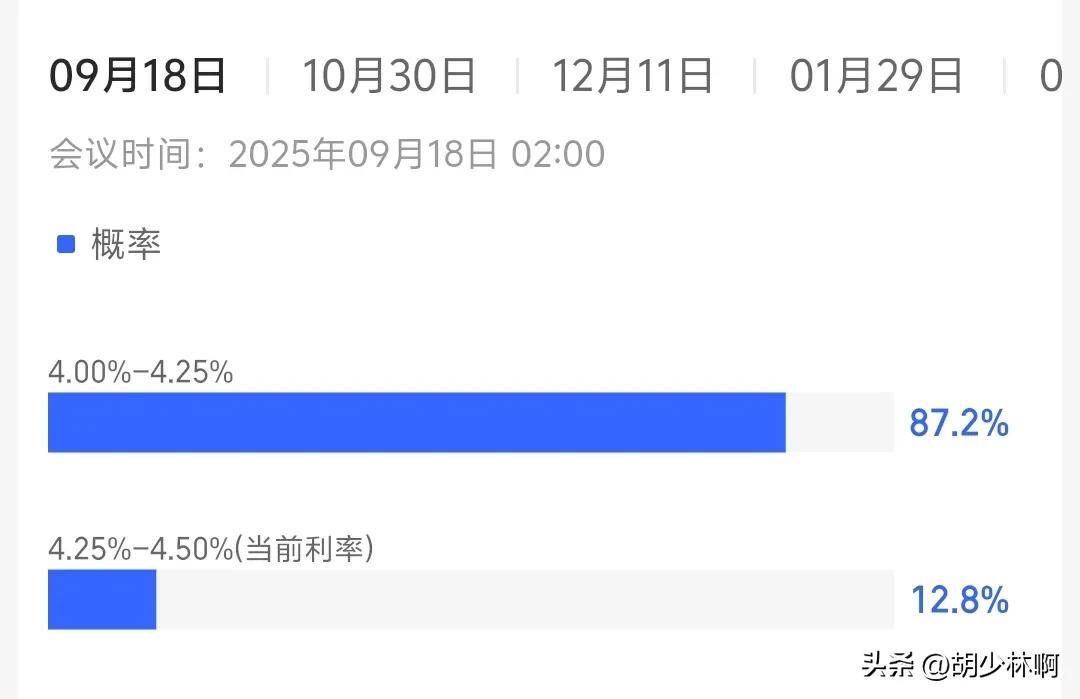
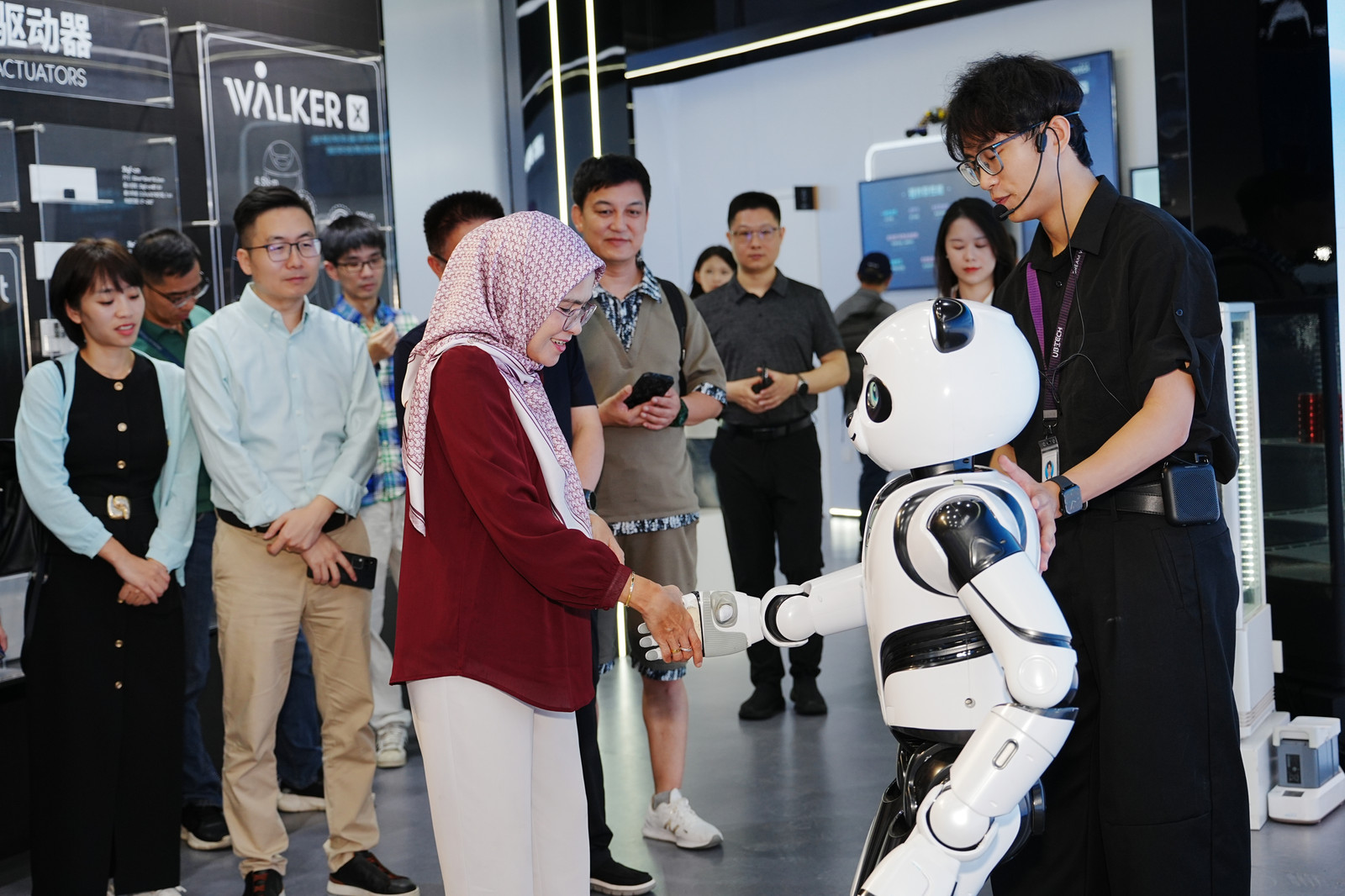
Group 1: Event Overview - The Asia School of Business successfully hosted the Global Leadership Program in China from August 25 to 28, focusing on deep learning experiences for senior executives from Malaysian government and financial institutions [1] - The program included visits to leading companies in China, providing insights into technological advancements and sustainable practices [1][8] Group 2: Company Insights - At Tencent, the delegation explored innovations in IoT, big data, 5G, and AI, learning how digital innovation empowers agriculture, remote education, and telemedicine [3] - The visit to BYD highlighted the company's "blade battery" technology and its journey to becoming a leader in the global new energy vehicle industry through long-term strategy and continuous innovation [3] - UBTech showcased its humanoid robots and their applications in manufacturing, hazardous work, and public services, emphasizing solutions for labor shortages and work safety [5] - The delegation learned about smart medical solutions and digital patient management systems at the Qianhai Taikang International Hospital, focusing on how digitalization enhances operational efficiency and patient experience [5] - At Esquel Group, insights were gained on sustainable development strategies and technological upgrades in textile manufacturing, including innovations in waterless dyeing technology [5] Group 3: Economic and Cultural Insights - The delegation attended a lecture by economist Rong Sen on China's economic landscape and green finance development, gaining understanding of trends in economic transformation and industrial upgrading [7] - Cultural experiences included traditional tie-dyeing and a boat tour of the Li River, enriching the participants' appreciation of Chinese culture [8] Group 4: Collaborative Opportunities - The program facilitated deep exchanges between Malaysian executives and Chinese entrepreneurs, enhancing understanding of China's innovation ecosystem and laying a foundation for future cross-border cooperation [8]


美媒称墨西哥拟上调对华关税,中方:坚决反对在他人胁迫下以各种名目对华设限
Huan Qiu Shi Bao· 2025-08-28 22:41
Core Viewpoint - Mexico plans to increase tariffs on certain Chinese products to protect local businesses and respond to pressure from the U.S. government, particularly from President Trump [1][2] Group 1: Tariff Increase - The Mexican government intends to propose higher tariffs on imports from China, including automobiles, textiles, and plastic products, in its 2026 budget [1] - The specific tariff rates are currently unclear and may change before the proposal is submitted to Congress by September 8 [1] Group 2: U.S. Influence - The U.S. has pressured Mexico to limit the entry of Chinese products, with Trump claiming these products could enter the U.S. via Mexico [2] - Following a conversation between Trump and Mexican President López Obrador, the U.S. agreed to delay imposing higher tariffs on Mexico to allow for further trade negotiations [2] Group 3: Trade Relations - Mexico is China's second-largest trading partner in Latin America, while China is Mexico's third-largest export destination [2] - China advocates for inclusive economic globalization and opposes unilateralism and protectionist measures [2]
50%关税生效!印度将损失370亿美元,买俄油省的钱全搭进去都不够
Sou Hu Cai Jing· 2025-08-28 10:09
Group 1 - The United States has imposed a new 25% tariff on India, resulting in a total tariff of 50% on nearly all goods and services exported from India to the U.S., making India the country with the highest tariffs from the U.S. [1] - In 2024, India exported over $80 billion worth of goods and services to the U.S., including pharmaceuticals, telecommunications equipment, jewelry, fertilizers, cotton textiles, electronics, and seafood. The new tariffs are expected to significantly impact India's "Make in India" initiative, leading to industry shrinkage and layoffs [3]. - Following the imposition of the 50% tariff, India's exports are projected to suffer a loss of up to $37 billion, which is insufficiently offset by the $17 billion saved from purchasing cheap Russian oil since the outbreak of the Russia-Ukraine war in 2022 [3]. Group 2 - India has become the second-largest buyer of Russian oil, with its share of Russian oil exports rising from 1% in 2020 to 36% in 2025, while China's share increased from 34% to 46% [6]. - U.S. officials have criticized India's substantial purchases of Russian oil, claiming it provides funding for the Kremlin and undermines U.S.-India relations [8]. - The Indian refining industry has begun to adapt under U.S. pressure, with state-owned refineries starting to purchase non-Russian oil from the U.S., Brazil, and the Middle East [13]. Group 3 - Despite U.S. pressure, the Indian government maintains a firm stance, with reports indicating that former President Trump attempted to contact Prime Minister Modi regarding tariff issues but was unsuccessful [16]. - Indian Prime Minister Modi has engaged in discussions with Ukrainian President Zelensky about bilateral cooperation, but has not made concessions regarding limiting Russian energy exports [19]. - Indian state-owned oil companies have resumed purchasing Russian oil, indicating that as long as prices remain low, India is unlikely to abandon Russian oil [22].
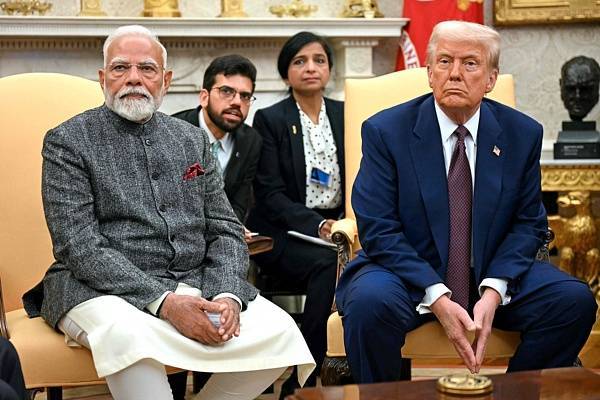
50%关税开征!莫迪4次拒接特朗普电话!印官员直言“特朗普搞砸了”!
Guo Ji Jin Rong Bao· 2025-08-28 09:57
Group 1 - The U.S. government has imposed a 50% tariff on most goods imported from India, which is expected to significantly impact Indian exports and reshape U.S.-India relations [1][2] - The tariff increase follows a previous 25% tariff and is primarily motivated by India's purchase of Russian oil, which the U.S. claims indirectly funds Russia's war in Ukraine [1][2] - India has expressed strong opposition to the tariffs, with Prime Minister Modi urging citizens to support "Make in India" initiatives and Foreign Minister Jaishankar criticizing the U.S. for its double standards regarding oil imports [2][3] Group 2 - Approximately 30% of Indian exports (valued at $27.6 billion) are temporarily exempt from the tariffs, but sectors like textiles, jewelry, and seafood are severely affected [3] - The imposition of tariffs could lead to a decline in India's GDP growth from an estimated 6.5% to below 6% [3] - Indian exporters are facing increased competition from countries like Thailand, Turkey, Vietnam, and Cambodia, which are attracting U.S. buyers with lower prices [3][4] Group 3 - The geopolitical context includes failed negotiations for a trade agreement with a 15% tariff cap, primarily due to India's reluctance to open its agricultural market [5] - India is actively pursuing multilateral diplomacy, including meetings with Russia and plans for Modi's first visit to China in seven years [5] - Despite tensions, communication between the U.S. and India continues, although analysts believe trust may have been irreparably damaged [5][6]
白宫顾问纳瓦罗再爆惊人言论:俄乌冲突是“莫迪的战争”!
Jin Shi Shu Ju· 2025-08-28 09:27
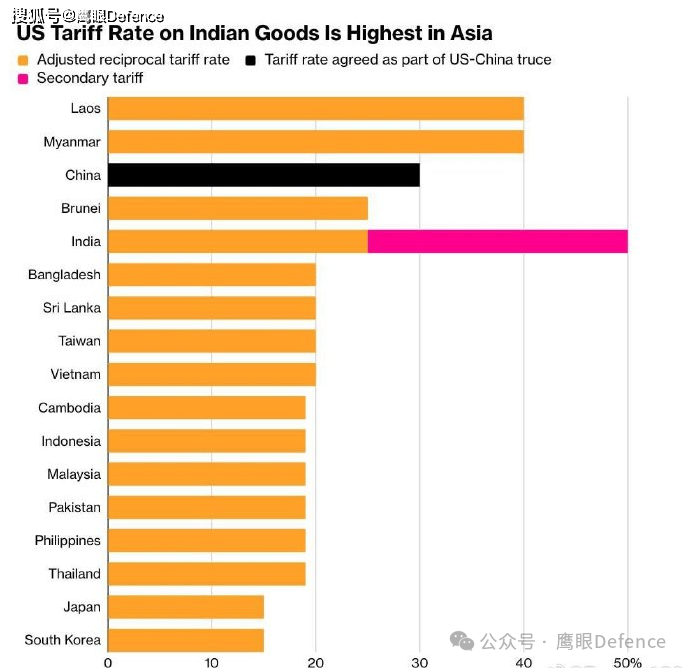
Group 1 - The White House trade advisor Navarro increased pressure on India to stop purchasing Russian oil, accusing New Delhi of funding the Kremlin's military actions in Ukraine and labeling the conflict as "Modi's war" [2][3] - Navarro stated that India's discounted purchases of Russian oil are harming the U.S. and that American consumers, businesses, and workers are suffering due to India's high tariffs, which he claims lead to job losses and reduced wages [2][3] - The proposed 50% tariff on Indian goods is the highest among Asian countries and would impact over 55% of goods exported to the U.S., with labor-intensive industries like textiles and jewelry being particularly affected [2][3] Group 2 - The decision to raise tariffs on India followed months of negotiations between New Delhi and Washington, with U.S. officials expressing disappointment over India's high tariffs and protectionist policies in key sectors like agriculture [3] - Despite India's historical reliance on Middle Eastern oil, it has seized the opportunity to control domestic energy costs by increasing imports of Russian oil, defending its relationship with Russia against U.S. criticism [3] - The U.S. has previously encouraged countries to purchase Russian oil to maintain market supply while controlling revenue flow back to the Kremlin, especially after the G7 imposed a price cap on Russian oil [3]
“看着印度,其他国家意识到,可以找中国啊”
Sou Hu Cai Jing· 2025-08-28 03:51
Group 1 - India has significantly increased its oil imports from Russia since the outbreak of the Russia-Ukraine conflict, saving approximately $17 billion since early 2022 [1] - The U.S. imposed punitive tariffs on Indian goods, which could lead to a reduction of over 40% in India's exports, amounting to nearly $37 billion for the fiscal year from April to March [1] - Analysts suggest that other countries may look to India's response to U.S. tariffs as a reference point for their own strategies [1] Group 2 - The new tariffs imposed by the U.S. are expected to have long-term impacts, potentially weakening Prime Minister Modi's political standing due to job risks in labor-intensive sectors like textiles and jewelry [3] - Despite challenges in U.S.-India relations under Trump's administration, the U.S. remains India's most important strategic partner, indicating that India cannot afford to choose between the U.S. and Russia [4] - Reports indicate that India plans to reduce its oil imports from Russia as a moderate concession to the U.S., while still maintaining its relationship with Russia [4] Group 3 - Russian crude oil currently accounts for nearly 40% of India's total oil imports, a significant increase from almost zero before the Russia-Ukraine conflict [5] - The procurement of Russian oil is primarily led by Mukesh Ambani's Reliance Industries, which operates the world's largest refinery complex in Gujarat [5]
2025年6月中国棉纱线进口数量和进口金额分别为11万吨和2.44亿美元
Chan Ye Xin Xi Wang· 2025-08-28 03:34
Core Insights - The report by Zhiyan Consulting provides a comprehensive assessment of the cotton yarn industry in China from 2025 to 2031, highlighting market trends and investment potential [1] Import Data Summary - In June 2025, China's cotton yarn imports reached 110,000 tons, reflecting a year-on-year increase of 0.1% [1] - The import value for the same period was $24.4 million, which represents a year-on-year decrease of 8.1% [1] Company Profile - Zhiyan Consulting is recognized as a leading industry consulting firm in China, specializing in in-depth industry research and providing a range of services including feasibility studies and customized consulting [1] - The company emphasizes its commitment to delivering high-quality services and market insights to empower investment decisions [1]

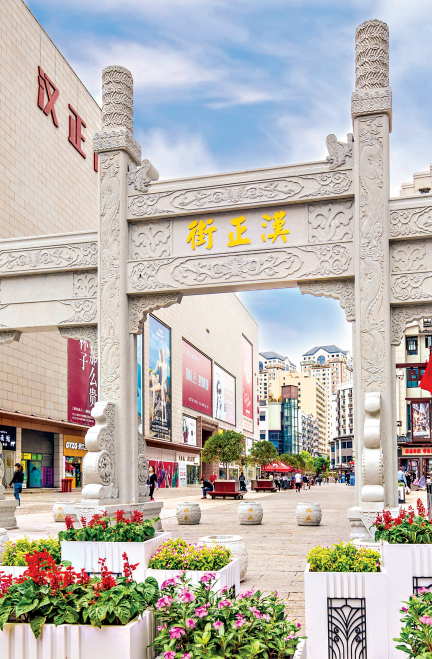
500年商脉续写“货到汉口活”
Chang Jiang Ri Bao· 2025-08-28 00:50
Core Insights - The opening of the Yangtze Commercial Civilization Exhibition Hall on August 28 showcases the 500-year commercial history of Hanzheng Street, highlighting its evolution and significance in Chinese commerce [1][5]. Historical Development - Hanzheng Street has experienced three historical peaks: its rise as a commercial hub after the diversion of the Han River in the Ming Dynasty, its establishment as a key trading port after the opening of Hankou in 1861, and its role in the reform and opening-up era starting in 1979 [2][3][8]. - The street became a vital commercial center, with the tea market in Hankou accounting for 80% of China's tea exports by 1881, marking its second period of prosperity [7]. Exhibition Highlights - The exhibition features four main chapters: Ming and Qing Dynasties, Modern Era, Reform and Opening-up, and New Era, with over a hundred historical photographs and artifacts illustrating the commercial legacy of Hanzheng Street [3][6]. - Notable exhibits include a 1982 article from the People's Daily praising Hanzheng Street's role as a model for small commodity markets during China's economic reforms [8]. Modern Transformation - Hanzheng Street is evolving from traditional retail to a model that integrates online and offline commerce, with significant activity in live streaming and e-commerce [10][12]. - The area is set to become a hub for fashion and design, with initiatives like the Wuhan International Fashion Week and various competitions aimed at fostering new talent in the industry [11][12]. Future Development Plans - The Qiaokou District is implementing a three-year action plan for the transformation of Hanzheng Street, with a total investment of 214.84 billion yuan across 106 projects [13]. - The goal is to enhance the area's commercial and cultural services, positioning Hanzheng Street as a model for urban renewal and industrial transformation [14].