铜

Search documents
广发期货日评-20250902
Guang Fa Qi Huo· 2025-09-02 07:59
Report Summary 1. Investment Ratings The document does not provide an overall industry investment rating. 2. Core Views - The direction of monetary policy in the second half of 2025 is crucial for the equity market. After a significant increase in A-shares, they may enter a high-level shock pattern [2]. - In the short term, the 10-year treasury bond interest rate may fluctuate between 1.75% - 1.8%. Gold shows a strong shock trend, and copper prices are rising due to improved interest rate cut expectations [2]. - Many commodities such as steel, iron ore, coking coal, and coke are facing price - related challenges. Some suggest strategies like long steel - to - ore ratio and shorting at high prices [2]. 3. Summary by Categories Financial Futures - **Stock Index Futures**: After a large increase in A - shares, they may enter a high - level shock pattern. It is recommended to wait for the next direction decision [2]. - **Treasury Bond Futures**: The 10 - year treasury bond interest rate may fluctuate between 1.75% - 1.8%. It is recommended to use range - bound operations for unilateral strategies and pay attention to the basis convergence strategy of TL contracts for spot - futures strategies [2]. - **Precious Metals**: Gold is strongly fluctuating. It is advisable to be cautious when chasing long positions unilaterally. Buying at - the - money or in - the - money call options can be considered. Silver is affected by news and shows an upward shock [2][3]. Industrial Metals - **Copper**: Due to the improvement of interest rate cut expectations, the center of copper prices has risen, with the main contract reference range of 78500 - 80500 [2]. - **Aluminum and Related Products**: Aluminum oxide has a surplus pressure, and the disk is in a weak shock. Aluminum is in a high - level shock, and attention should be paid to whether the peak - season demand can be fulfilled. Aluminum alloy has a firm spot price [2]. - **Other Metals**: Nickel has an upward shock trend, and stainless steel has a strong disk due to improved spot trading, with cost support and weak demand in a game [3]. Energy and Chemicals - **Crude Oil**: Supported by geopolitical and supply risks, oil prices have rebounded. It is recommended to wait and see unilaterally in the short term and use a positive - spread strategy for arbitrage [2]. - **Other Chemicals**: Many chemicals have different market situations. For example, ethylene glycol is expected to have limited downward space, while PVC is in a weakening trend [2]. Agricultural Products - **Grains and Oils**: Corn futures are in a rebound adjustment, and palm oil may rise in the short term [2]. - **Other Agricultural Products**: Sugar has a relatively loose overseas supply outlook, and eggs have a weak peak - season performance [2]. Special and New Energy Commodities - **Special Commodities**: Glass has a high inventory, and it is recommended to short at high prices. Rubber has a strong fundamental situation and is in a high - level shock [2]. - **New Energy Commodities**: Polysilicon has risen significantly due to news stimulation, and lithium carbonate is in a wait - and - see state [2].
金融期货早评-20250902
Nan Hua Qi Huo· 2025-09-02 06:17
Group 1: Report Industry Investment Ratings - No industry investment ratings are provided in the report. Group 2: Report Core Views Macro and Financial Futures - Domestic supportive policies are gradually taking effect. In September, policies to promote service consumption will be the focus, which will support the growth of total retail sales of consumer goods to some extent, but the actual effect remains to be seen. Policies in the real - estate sector are advancing, but their impact on the overall market may be limited. The profitability of industrial enterprises has not been fundamentally improved. Overseas, the US economy and employment have shown resilience, and key economic data next week should be closely monitored [2]. - The core issue of the RMB exchange rate is the timing and pace of appreciation. In the short - term, the RMB is likely to appreciate, and the market may reach a "triple - price integration" pattern around 7.10. In the medium - term, the RMB needs a clear downward trend of the US dollar index and substantial positive changes in the domestic economy to achieve a trend - strengthening [4][5]. - As the 9.3 parade approaches, the stock index is expected to have increased volatility. The stock market is expected to be volatile and bullish in the short - term, while the bond market may expand its rebound space if the stock market experiences a high - level adjustment after September 3 [7][8]. Commodities Metals - Gold and silver are expected to be bullish in the medium - to - long - term and strong in the short - term. The focus should be on US economic data this week, and the strategy is to buy on dips [12][15]. - Copper is expected to oscillate before the Fed's next interest - rate decision on September 19, with a mid - term strategy of low - level procurement [16][17]. - Aluminum is expected to be volatile and bullish in the short - term, with a price range of 20,500 - 21,000. Alumina is expected to be weakly volatile, and cast aluminum alloy is expected to be volatile and bullish [20][21]. - Zinc is expected to be strongly oscillating at the bottom in the short - term [23][24]. - Nickel and stainless steel prices rose under the influence of the Indonesian riot and strike. The short - term trend remains to be seen, depending on the development of the situation in Indonesia [24][25]. - Tin is expected to be slightly bullish in the short - term due to tight supply [26]. - The lithium carbonate market is in an adjustment phase. If downstream demand is released, prices may be supported; otherwise, it may remain weakly volatile [26][28]. - Industrial silicon and polysilicon are expected to rise in an oscillatory manner. The rise of polysilicon is mainly affected by macro - sentiment and the expectation of a possible storage platform in September [29]. - Lead is expected to oscillate within a narrow range, with limited upside and downside [30]. Black Metals - Steel products continue to accumulate inventory beyond the seasonal norm. If demand does not improve, the downward space of the steel futures market depends on the tolerance of steel mills for profit shrinkage. Short - sellers can consider reducing positions to take profits [32][33]. - Iron ore prices have released risks. After the short - term risk release, short - sellers are advised to take phased profits [34][35]. - Coking coal may maintain a high - level wide - range oscillatory pattern in the short - term. Coke may face a price cut cycle after the parade. Unilateral speculation on short - selling coking coal is not recommended for now [37]. - Silicon iron and silicon manganese are expected to oscillate at the bottom. It is advisable to go long on the spread between the two when the spread reaches - 400 [38][40]. Energy and Chemicals - Crude oil is currently oscillating weakly. In September, the demand decline is a definite negative factor, and the market needs to wait for key events to clarify the direction. The overall outlook is bearish [42][43]. - Propylene's spot market is strong, and the futures market is oscillating. The northern market is tighter than the southern market [44][45]. - PX - TA's market is mainly characterized by structural contradictions. The overall pattern is "tight at the top and loose at the bottom," and the processing fee of PTA01 is recommended to be compressed when it is above 350 [46][49]. - Ethylene glycol is expected to oscillate between 4330 - 4550, and it is advisable to go long on dips [53]. - PP's supply is increasing, and the demand situation is unclear. Its future trend depends on whether downstream demand can maintain high - speed growth [54][55]. - PE is in a pattern of decreasing supply and increasing demand, but the demand recovery is not strong enough to drive the price up significantly. It is expected to oscillate for now [56][57]. - PVC's price has returned to the industrial fundamentals. With high inventory and weak demand, it is advisable to short - allocate it [58][59]. - Pure benzene is expected to be weakly oscillating, and for benzene - styrene, short - selling on the short - term single - side is not recommended. Wait for the end of the decline and then consider low - buying [60][61]. - Fuel oil has a weak rebound driven by cost, but the downward pressure remains. Low - sulfur fuel oil follows cost fluctuations, and it is recommended to wait for long - allocation opportunities [63][64]. - Asphalt is expected to oscillate and strengthen, mainly following cost fluctuations. The short - term peak season has no super - expected performance [65][66]. - Urea is in a stalemate. It is advisable to pay attention to the 1 - 5 reverse spread [67]. Group 3: Summaries by Relevant Catalogs Macro and Financial Futures Market Information - China's September 3 parade will last about 70 minutes. The Shanghai Cooperation Organization's Tianjin Summit has achieved eight results. There are various tariff - related news, including Trump's remarks on India's tariffs and possible US housing policies. There are also speculations about Fed officials' appointments [1]. RMB Exchange Rate - The previous trading day, the on - shore RMB against the US dollar closed at 7.1332, down 2 basis points, and the night - session was at 7.1375. The central parity rate was 7.1072, down 42 basis points. The eurozone's manufacturing PMI in August showed expansion [3]. Stock Index - The stock index rose with reduced volume yesterday. The Shanghai and Shenzhen 300 Index closed up 0.60%. The trading volume of the two markets decreased by 483.37 billion yuan. The futures of stock index also rose with reduced volume. The 9.3 parade is approaching, and key economic data have been released [7]. Bond - Bond futures opened low and closed high on Monday. The yields of medium - and long - term bonds declined. The funding situation was loose, and DR001 dropped to 1.31%. Relevant policies and the end of the summer travel season have been reported [8]. Container Shipping - The futures prices of the container shipping index (European line) opened high and then oscillated. Spot prices of some shipping companies have changed. The Houthi armed forces' remarks have affected the market sentiment. The current market is in the off - season, and the SCFIS European line index has continued to decline [10][11]. Commodities Metals Gold and Silver - On Monday, the precious metals market continued to be strong. COMEX gold closed up 0.84% at 3545.8 dollars per ounce, and silver closed up 2.46% at 41.725 dollars per ounce. The Fed's interest - rate cut expectations and fund positions are stable. Key US economic data and events this week should be monitored [12][15]. Copper - The Shanghai copper index was slightly bullish on Monday. Chile's copper production in July increased slightly. The collapse of a copper mine in July and the reduction of production guidance in August have affected the market. The key factors affecting copper prices are complex, with both bullish and bearish factors in the short - to - medium - term [16][17]. Aluminum and Related Products - The prices of aluminum, alumina, and cast aluminum alloy have changed. The macro - environment is favorable for aluminum prices. The fundamentals of alumina are weak, and the supply of cast aluminum alloy may be affected by tax policies [19][22]. Zinc - The zinc price opened high and closed low. The supply is in an oversupply state, and the demand is stable. The LME inventory is decreasing, and the trading strategy of selling the outer market and buying the inner market can be considered [23][24]. Nickel and Stainless Steel - The price of nickel rose, and stainless steel fell slightly. The spot prices of nickel - related products have changed. The market was affected by the Indonesian riot and strike, and the supply uncertainty has increased [24][25]. Tin - The Shanghai tin index slightly declined on Monday. Yunnan Tin's equipment maintenance and the decrease in refined tin production in August have affected the market. The short - term price may rise slightly due to tight supply [26]. Lithium Carbonate - The futures price of lithium carbonate fell on Monday. The prices of lithium - related products in the spot market have declined. The supply has no new news, and the demand has marginal improvement expectations, but the increase in warehouse receipts may suppress the short - term price [26]. Industrial Silicon and Polysilicon - The prices of industrial silicon and polysilicon rose on Monday. The prices of related products in the spot market are stable. The rise of polysilicon is affected by macro - sentiment and the expectation of a storage platform [26][29]. Lead - The lead price oscillated narrowly. The supply side is weak, and the demand is in a "peak - season not prosperous" situation. The domestic inventory is oscillating, and the LME inventory is high [30]. Black Metals Steel - The prices of rebar and hot - rolled coil decreased. The production of Tangshan's blast furnaces has been affected by inspections, and most are expected to resume production on September 4. The steel market is in a state of over - seasonal inventory accumulation, and the demand has not shown significant seasonal strength [32][33]. Iron Ore - The price of iron ore fell and then rebounded. The global iron ore shipment volume in late August increased. The market is worried about the insufficient demand in the peak season, and short - sellers are advised to take phased profits [34][35]. Coking Coal and Coke - The prices of coking coal and coke declined. The prices of coking coal in some regions have decreased. The downstream's replenishment of raw materials has slowed down, and the supply of coking coal and coke is relatively loose. Coke may face a price cut cycle after the parade [36][37]. Silicon Iron and Silicon Manganese - The production and demand of silicon iron and silicon manganese have changed. The market was affected by the pre - parade steel mill restrictions and the decline of the "anti - involution" hype. The prices have fallen back, and the bottom support exists, but the upside is also under pressure [38][40]. Energy and Chemicals Crude Oil - The prices of US and Brent crude oil rose. There are news about the suspension of oil sales to an Indian refinery, the change in Shandong refineries' crude oil arrivals, and the expectation of OPEC+ to maintain production. The oil market is currently oscillating weakly, and the September demand decline is a negative factor [41][43]. Propylene - The futures prices of propylene rose slightly. The spot prices in different regions have changed. The supply and demand of propylene and its downstream products have changed. The spot market is tight, and the price is affected by multiple factors [44][45]. PTA - PX - The load of PX and PTA plants has changed. The supply of PX in September is expected to increase, and the PTA supply has decreased. The polyester demand has a marginal improvement, but the peak - season performance is not super - expected [46][48]. MEG - Bottle Chip - The inventory of ethylene glycol in East China ports decreased. The supply and demand of ethylene glycol and related products have changed. The market is currently in a state of limited drive, and the price is expected to oscillate [50][53]. PP - The futures price of polypropylene decreased. The supply has increased, and the demand has shown a recovery trend. The inventory has decreased. The market is affected by new device production and the uncertainty of demand [54][55]. PE - The futures price of polyethylene decreased. The supply has decreased slightly, and the demand has increased. The inventory has decreased. The current demand recovery is not strong enough to drive the price up significantly [56][57]. PVC - The production of PVC in August and September is estimated. The demand is weak, and the export has changed. The inventory is accumulating, and the price has returned to the industrial fundamentals [58][59]. Pure Benzene and Styrene - The prices of pure benzene and styrene futures decreased. The inventory of pure benzene and styrene in ports has increased. The supply and demand of both have changed, and the prices are expected to be volatile [60][61]. Fuel Oil - The price of fuel oil rebounded weakly. The supply and demand of fuel oil have changed. The export in August decreased, and the demand is mixed. The market is still under pressure [62][63]. Low - Sulfur Fuel Oil - The price of low - sulfur fuel oil is mainly following cost fluctuations. The supply and demand and inventory of low - sulfur fuel oil have changed. The valuation is low, and it is advisable to wait for long - allocation opportunities [64]. Asphalt - The price of asphalt rose. The supply and demand and inventory of asphalt have changed. The short - term peak season has no super - expected performance, and it mainly follows cost fluctuations [65][66]. Urea - The futures price of urea is in a stalemate. The spot price is stable, and the demand is weak. The inventory has increased. It is advisable to pay attention to the 1 - 5 reverse spread [67].
贵金属突破上行,持续推荐 | 投研报告
Zhong Guo Neng Yuan Wang· 2025-09-02 02:47
Group 1 - The report from Zhongyou Securities indicates a potential breakout for gold, driven by inflation pressures following the release of PCE data, with COMEX gold rising by 2.89% and silver by 4.81% this week [1][2] - The copper market is experiencing high volatility, with prices up by 0.99% this week, influenced by China's waste copper policy leading to a supply disruption, with an estimated 30% reduction in recycled copper rod production [2][3] - Aluminum prices continue to rise, with a 0.53% increase this week, as the focus remains on inventory depletion during the peak consumption season, with limited impact from U.S. aluminum tariffs [3] Group 2 - The rare earth sector is seeing a significant increase in processing fees for heavy rare earths, with fees rising from 1,000-2,000 yuan/ton to 18,000-20,000 yuan/ton due to regulatory changes affecting small enterprises [3][4] - Cobalt prices are stabilizing and rebounding, with supply constraints and a potential policy shift in the Democratic Republic of Congo in September that could impact future pricing dynamics [4][5] - Investment recommendations include companies such as Zhaojin Mining, Xinyi Silver Tin, Chifeng Gold, Shenhuo Co., and Zijin Mining [5]
首席点评:金银涨势持续
Shen Yin Wan Guo Qi Huo· 2025-09-02 02:29
Report Summary 1. Report Industry Investment Ratings The report does not explicitly provide industry investment ratings. 2. Core Views - **Market Overview**: The A - share market showed a strong oscillation on Monday, with the Shanghai Composite Index rising 0.46% to 3875.53 points, the Shenzhen Component Index rising 1.05%, and the ChiNext Index rising 2.29%. The trading volume in the market was 2.78 trillion yuan. The non - ferrous industry strengthened across the board, and gold stocks soared. The CPO giants led the AI hardware segment to strengthen again, while the satellite Internet concept weakened and the large - finance sector declined generally [1]. - **Key Products Analysis** - **Precious Metals**: Gold and silver showed a strong upward trend. Factors such as Trump's attempt to interfere with the Fed, the proposed inclusion of silver in the key minerals list, and the increased expectation of a September interest rate cut were positive for precious metals. However, factors like the rebound of US inflation data and the easing of geopolitical risks restricted the upward space of gold. In the long - term, the continuous increase of gold reserves by the People's Bank of China provided support for gold [2]. - **Stock Index Futures**: The stock index rose in the previous trading session, with the communication sector leading the gain and the non - bank financial sector leading the decline. The trading volume was 2.78 trillion yuan. In 2025, domestic liquidity is expected to remain loose, and more incremental policies may be introduced in the second half of the year. The probability of a Fed interest rate cut in September increases the attractiveness of RMB assets. The market is in a resonance period of "policy bottom + capital bottom + valuation bottom", but sector rotation is accelerating [3]. - **Lithium Carbonate**: The short - term trend is affected by sentiment and has high volatility. The supply is increasing, and the demand for lithium in cathode materials is also rising. The inventory situation is complex, with upstream de - stocking and downstream restocking. There is a risk of correction after the previous rapid increase, but if the inventory starts to decline, the lithium price may rise [4]. 3. Summary by Directory a. Daily Main News Concerns - **International News**: Fed理事提名人米兰很可能在9月美联储会议前就职,几位美联储主席人选也有望担任理事 [6]. - **Domestic News**: President Xi Jinping stated at the "Shanghai Cooperation Organization +" meeting that China is willing to jointly build an AI application cooperation center with all parties to share the dividends of AI development [7]. - **Industry News**: In the first half of this year, the total net profit attributable to the parent company of A - share listed companies was 2.99 trillion yuan, a year - on - year increase of 2.45%. Nearly 77% of the stocks achieved profitability, and the proportion of stocks with a year - on - year positive growth in net profit attributable to the parent company was nearly 46%. Wanchen Group had a 504 - fold increase in performance in the first half of the year [8]. b. Overseas Market Daily Returns | Variety | Unit | 8/31 | 9/1 | Change | Change Rate | | --- | --- | --- | --- | --- | --- | | FTSE China A50 Futures | Points | 14,965.58 | 14,904.15 | - 61.43 | - 0.41% | | London Gold Spot | US dollars/ounce | 3,447.57 | 3,478.96 | 31.39 | 0.91% | | London Silver | US dollars/ounce | 39.67 | 40.65 | 0.98 | 2.47% | [9] c. Morning Comments on Major Products - **Financial Products** - **Stock Index Futures**: The stock index rose in the previous trading session, with the communication sector leading the gain and the non - bank financial sector leading the decline. The trading volume was 2.78 trillion yuan. The market is in a favorable situation, but sector rotation needs attention [3][10]. - **Treasury Bonds**: Treasury bonds rose slightly, with the yield of the 10 - year active treasury bond falling to 1.77%. The central bank's open - market reverse repurchase had a net withdrawal of 1057 billion yuan. The Fed's possible interest rate cut and the domestic economic situation affect the bond market, and the stock - bond seesaw effect continues [11][12]. - **Energy and Chemical Products** - **Crude Oil**: SC crude oil rose 1.1% at night. Tensions between Russia and Ukraine affect oil exports, and OPEC and its allies will discuss production policies. The market is concerned about OPEC's production increase [13]. - **Methanol**: Methanol rose 0.68% at night. The domestic methanol plant operating rate decreased slightly, and the inventory in coastal areas increased. The short - term trend is mainly bullish [14]. - **Rubber**: Rubber had a narrow - range oscillation on Monday. The price is mainly supported by the supply side, but the demand side is weak. The short - term trend is expected to continue to correct [15]. - **Polyolefins**: Polyolefin futures rebounded after hitting the bottom. The spot market is mainly affected by supply and demand, and the inventory is slowly being digested. It remains to be seen whether the futures can drive the spot price to stop falling [16]. - **Glass and Soda Ash**: Glass futures mainly declined, and soda ash futures continued to be weak. Both are in a process of inventory digestion, and the market focuses on supply - side contraction and future consumption [17]. - **Metals** - **Precious Metals**: Gold and silver are strongly bullish. Multiple factors affect the price, and the market focuses on this week's non - farm payrolls data [2][18]. - **Copper**: The copper price rose at night. The concentrate supply is tight, and the downstream demand has both positive and negative factors. The price may fluctuate within a range [19]. - **Zinc**: The zinc price rose at night. The zinc concentrate processing fee has increased, and the supply - demand situation may turn to surplus. The price may fluctuate weakly within a range [20]. - **Lithium Carbonate**: The short - term trend is affected by sentiment. The supply is increasing, and the demand is also rising. There is a risk of correction, but if the inventory decreases, the price may rise [4][21]. - **Black Metals** - **Iron Ore**: The demand for iron ore is supported by steel mills' production. The global iron ore shipment has decreased recently, and the inventory is being depleted. The market expects an increase in shipments in the second half of the year. The price is expected to be volatile and bullish [23]. - **Steel**: The supply pressure of steel is gradually emerging, and the inventory is accumulating. The export situation is complex, and the market has a weak supply - demand balance. The short - term trend is a correction [24]. - **Coking Coal and Coke**: The prices of coking coal and coke are in a high - level oscillation. The high - level iron - water production boosts the demand, but factors such as inventory changes and price cut expectations put pressure on the prices [25]. - **Agricultural Products** - **Protein Meals**: The prices of soybean and rapeseed meals oscillated and rose at night. The US soybean production outlook is optimistic, but the decrease in planting area and strong bio - fuel demand provide support. The domestic market is expected to oscillate narrowly [26]. - **Oils and Fats**: The prices of oils and fats oscillated at night. The production of Malaysian palm oil decreased slightly in August, and the export increased. The market is expected to continue to oscillate [27]. - **Sugar**: The international sugar market is entering a stock - building stage, and the domestic market is affected by supply and demand factors. The sugar price is expected to oscillate [28]. - **Cotton**: The price of US cotton decreased. The domestic cotton supply is relatively tight, and the demand is in the off - season. The short - term trend of Zhengzhou cotton is expected to be oscillating and slightly bullish [29]. - **Shipping Index** - **Container Shipping to Europe**: The EC index rebounded, rising 1.53%. The market is mainly gambling on the off - season freight rate space. The price may be weakly volatile in September and may be supported at the end of September and early October [30].
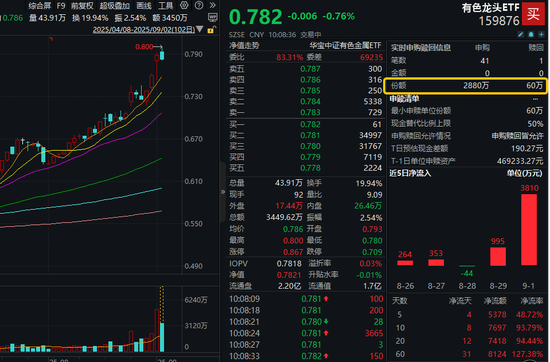
COMEX黄金6连涨,再创新高!资金逆行加仓,有色龙头ETF(159876)随市回调,获资金实时净申购2820万份!
Xin Lang Ji Jin· 2025-09-02 02:20
Core Viewpoint - The article highlights the ongoing bullish trend in the precious metals market, particularly gold, driven by factors such as the Federal Reserve's interest rate cuts and increasing investments in the non-ferrous metals sector, indicating a positive outlook for related ETFs and stocks [1][4][10]. Group 1: Market Performance - COMEX gold has achieved a six-day consecutive rise, reaching a historical high of $3,578.4 per ounce [1]. - The non-ferrous metal leader ETF (159876) experienced a market pullback, with a decrease of 0.76%, yet saw a net subscription of 28.2 million units, indicating strong investor interest [1]. - The ETF recorded a net inflow of 38.1 million yuan the previous day, reflecting positive sentiment towards the sector [1]. Group 2: Stock Performance - Key stocks in the sector, such as Baiyin Nonferrous, Western Gold, and Jinmoly, have seen significant gains, with some reaching the daily limit [3]. - Other notable performers include Tianshan Aluminum, which rose over 5%, and China Gold, which increased by more than 4% [3]. Group 3: Sector Analysis - **Gold**: Analysts predict that the Federal Reserve's rate cuts will lead to lower real interest rates, driving funds into gold, which is expected to maintain its upward trend unless the U.S. economy shows strong growth with low inflation [4]. - **Copper**: The macroeconomic environment remains supportive, with expectations of further rate cuts and a favorable supply-demand balance, particularly in sectors like electric power infrastructure and new energy vehicles [4]. - **Aluminum**: The sector is experiencing a tightening supply situation, with ongoing policy support and stable demand from industries such as new energy vehicles and power [4]. - **Rare Earths**: Recent regulatory measures indicate increased control over supply, which is expected to drive prices higher, supported by the strategic importance of rare earths [6]. Group 4: Investment Strategy - The non-ferrous metal leader ETF (159876) and its linked funds provide a diversified investment approach, with significant weightings in copper, aluminum, rare earths, gold, and lithium, which helps mitigate risks associated with investing in single metal sectors [7].


美联储降息叠加国内需求旺季将临,看好贵金属加铜铝 | 投研报告
Zhong Guo Neng Yuan Wang· 2025-09-02 02:01
Economic Data Summary - The core Personal Consumption Expenditures (PCE) price index for the US in Q2 was revised to 2.5%, matching expectations and previous values [1][2] - The annualized quarter-on-quarter revision of the actual GDP for Q2 was 3.3%, exceeding the expected 3.1% [1][2] - The July core PCE year-on-year growth was 2.9%, in line with expectations, while the overall PCE index also matched expectations at 2.6% [1][2] Precious Metals Outlook - The London gold price increased to $3429.15 per ounce, up $90.85 from August 21, reflecting a 2.72% rise [2] - The London silver price rose to $38.80 per ounce, up $1.24 from August 21, with a 3.29% increase [2] - The outlook for gold prices remains positive due to the moderate PCE data and dovish comments from Federal Reserve officials, alongside expectations for a rate cut in September [3] Copper and Aluminum Market Insights - The LME copper closing price was $9875 per ton, up $150 from August 22, a 1.54% increase [5] - Domestic aluminum prices were reported at 20720 yuan per ton, slightly down by 30 yuan [7] - Anticipation of a demand peak in September is expected to strengthen copper and aluminum prices [4][7] Tin and Antimony Market Analysis - Domestic refined tin prices rose to 273580 yuan per ton, an increase of 7640 yuan, or 2.87% [8] - The supply of refined tin is tightening, with operational rates in key provinces remaining low [9] - Antimony prices decreased to 178500 yuan per ton, reflecting a 1.08% drop due to weak demand [10] Investment Recommendations - The gold sector is recommended for investment due to the ongoing rate cut cycle by the Federal Reserve [11] - The copper sector is also recommended, supported by a shortage of scrap copper and an approaching demand peak [12] - The aluminum sector is recommended, with expectations of tight supply in the medium to long term [13] - Tin and antimony sectors are recommended based on supply constraints and long-term demand support [13] Stock Recommendations - Recommended stocks in the gold sector include Zhongjin Gold, Shandong Gold, and China National Gold [14] - In the copper sector, recommended stocks include Zijin Mining and Western Mining [14] - For aluminum, recommended stocks are Shenhuo Co. and Yunnan Aluminum [14] - In the tin sector, recommended stocks include Tin Industry Co. and Huaxi Nonferrous [14]
有色金属行业周报:美联储降息叠加国内需求旺季将临,看好贵金属加铜铝-20250901
Huaxin Securities· 2025-09-01 12:31
Investment Rating - The report maintains a "Buy" investment rating for the gold, copper, aluminum, tin, and antimony sectors, indicating a positive outlook for these industries [12]. Core Views - The report highlights that the Federal Reserve's interest rate cuts and the upcoming domestic demand peak are expected to support the prices of precious metals, particularly gold and silver [4][5]. - It anticipates a strong demand season for copper and aluminum, with prices expected to rise due to supply constraints and seasonal demand [5][9]. - The report notes that tin prices are likely to show resilience due to tight supply conditions, while antimony prices are under pressure from weak demand [10][11]. Summary by Sections 1. Market Performance - The non-ferrous metals sector (Shenwan) saw a 3.37% increase in the week from August 25 to August 29, outperforming the broader market [21]. - The top-performing sub-sectors included rare earths (+17.19%), tungsten (+14.70%), and silver (+12.45%) [21]. 2. Macroeconomic and Industry News - China's industrial profits for July showed a year-on-year decline of 1.5%, an improvement from the previous month's decline of 4.3% [27]. - The U.S. second-quarter core PCE price index was reported at 2.5%, aligning with expectations, indicating stable inflation [27]. 3. Precious Metals Market Data - London gold prices rose to $3,429.15 per ounce, an increase of $90.85 (2.72%) from August 21 [30]. - Silver prices also increased to $38.80 per ounce, up $1.24 (3.29%) [30]. 4. Industrial Metals Data - Copper prices on the LME closed at $9,875 per ton, up $150 (1.54%) from August 22 [41]. - Aluminum prices in China were reported at 20,720 yuan per ton, a slight decrease of 30 yuan [42]. 5. Industry Ratings and Investment Strategies - The report maintains a "Buy" rating for gold, copper, aluminum, tin, and antimony sectors, reflecting a favorable investment outlook [12]. - Specific stocks recommended include Zijin Mining, Zhongjin Gold, and Huaxi Securities among others [13].





360个项目“加速跑”!包头市工业重点项目建设稳中有进
Zhong Guo Jin Rong Xin Xi Wang· 2025-09-01 12:27
Group 1 - The core industrial projects in Baotou City have shown significant progress, with a total investment of 439.4 billion yuan across 411 key projects, and 360 projects have resumed work, contributing to a strong momentum in industrial growth [1] - The "3+5" key industrial clusters are demonstrating a matrix effect, particularly the crystalline silicon photovoltaic industry, which has 40 out of 42 projects resumed, achieving an investment completion rate of 66.1% [1] - The rare earth industry has 63 out of 67 projects resumed, with an investment completion of 86 billion yuan, accounting for 53.6% of the annual planned investment [1] Group 2 - Five emerging industries are making steady progress, with the new energy heavy truck and supporting industries achieving a 65.8% investment completion rate across six projects [2] - The energy storage industry has 32 resumed projects with a total investment of 16 billion yuan, while the fluorine materials industry has two ongoing projects with 700 million yuan completed [2] - Traditional industries are also advancing, with 43 out of 54 projects in mining, consumer goods, and infrastructure resumed, achieving an investment completion rate of 54.2% [2] Group 3 - Industrial technological transformation projects have shown promising results, with 73 out of 87 projects above 5 million yuan resumed, achieving an investment completion of 3.25 billion yuan [3] - The investment completion rate for technological transformation projects in Qingshan District reached 78.7%, while Donghe District achieved an impressive 157.2% [3] Group 4 - Despite the progress, 51 projects have not resumed due to challenges such as funding shortages and insufficient orders [5] - Baotou City plans to focus on large projects with investments over 1 billion yuan and projects scheduled for completion in the second half of the year to enhance industrial economic development [5]
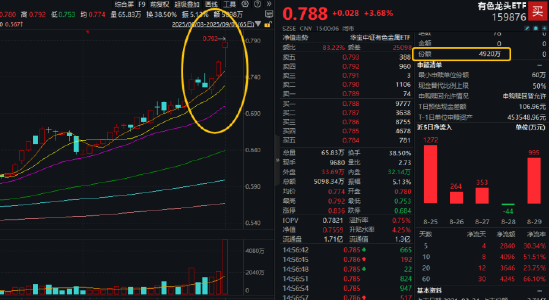
有色金属持续走高,中金黄金等6股涨停!有色龙头ETF(159876)猛拉3.68%,获资金净申购4920万份!
Xin Lang Ji Jin· 2025-09-01 12:02
Core Viewpoint - The non-ferrous metal sector continues to experience a strong upward trend, with significant inflows into related ETFs and rising prices for key metals like gold and industrial metals [1][2][3]. Group 1: Market Performance - The non-ferrous metal ETF (159876) surged by 3.68%, reaching its highest point since September 2021, with a trading volume of 50.98 million yuan, a 133% increase from the previous period, marking the third-highest in history [1]. - The ETF saw a net subscription of 49.2 million units, with a total net inflow of 28.4 million yuan over the past five days and 40.96 million yuan over the past ten days, indicating strong market confidence in the sector [1]. Group 2: Price Drivers - COMEX gold prices reached a historical high of $3,557.1 per ounce, driven by concerns over the independence of the Federal Reserve and expectations of interest rate cuts, which are anticipated to exceed 80% in September [1][2]. - Analysts suggest that the Federal Reserve's rate cuts will lead to a depreciation of the dollar, making dollar-denominated metals cheaper and boosting global demand [2]. Group 3: Stock Performance - Leading gold stocks such as Zhongjin Gold, Hunan Gold, and Western Gold hit their daily limit, with other companies like Huayu Mining and Jinchuan Group also experiencing significant gains [3]. Group 4: Sector Composition - As of the end of August, the non-ferrous metal ETF and its linked funds track the Zhongzheng Non-Ferrous Metal Index, with copper, aluminum, rare earths, gold, and lithium accounting for 25.3%, 14.2%, 13.8%, 13.6%, and 7.6% of the index, respectively, providing a diversified investment opportunity [4]. Group 5: Future Outlook - Analysts remain optimistic about precious and industrial metals, citing ongoing monetary easing and favorable trends in the fundamentals of certain metals, which are expected to elevate price levels [2].
“死守”钢铝和汽车产业!加拿大缘何调整对美关税谈判重点?
Di Yi Cai Jing· 2025-09-01 11:46
Group 1 - Canada will no longer impose retaliatory tariffs on most U.S. imports starting September 1, affecting approximately $21 billion in U.S. exports, including products like orange juice, peanut butter, and motorcycles [1] - Canada remains firm on tariffs related to the automotive, steel, and aluminum industries, which are critical to the manufacturing employment landscape in Mexico and Canada [1][3] - The Canadian government is under pressure due to domestic inflation and currency impacts from retaliatory tariffs, with GDP declining by 0.4% in Q2 2023 after a 0.5% growth in Q1 [3][4] Group 2 - Canadian exports of passenger cars and light trucks fell by 24.7%, while industrial machinery and equipment exports dropped by 18.5% in Q2 2023, indicating significant economic strain [4] - The Canadian government is discussing five strategic areas for cooperation with the U.S., including steel, aluminum, and automotive sectors, amidst ongoing tariff disputes [5] - The U.S. has imposed a 50% tariff on non-compliant Canadian automotive products and has increased duties on Canadian softwood lumber to 35.19%, affecting construction costs in the U.S. [5][6] Group 3 - The uncertainty surrounding negotiations has led to a decrease in foreign investment in Canada, with expectations that the U.S. may push for higher localization ratios in the automotive sector and align labor wages with U.S. standards [6] - The upcoming review of the USMCA may introduce changes that could affect trade dynamics, with potential shifts towards more protectionist policies in North America [6]