
银行

Search documents
每日债市速递 | 银行间市场资金面维持宽松局面
Wind万得· 2026-03-18 23:09
Group 1: Monetary Policy and Market Operations - The central bank conducted a 205 billion yuan reverse repo operation on March 18, with a fixed rate of 1.40%, resulting in a net withdrawal of 60 billion yuan for the day [3] - The interbank market remains loose, with the DR001 weighted average interest rate slightly decreasing to around 1.32% [5] - The latest transaction rate for one-year interbank certificates of deposit is approximately 1.53%, showing a slight decline from the previous day [9] Group 2: Regulatory Developments - The China Securities Regulatory Commission (CSRC) emphasized the need for stricter governance and oversight in the capital market, particularly targeting corruption and protecting the interests of small investors [16] - A new mechanism for managing negative lists of fiscal subsidies is expected to be introduced, aimed at promoting fair competition and enhancing local economic growth [16] Group 3: Bond Market Updates - Hebei Province plans to issue general and special bonds totaling 24.739 billion yuan on March 25 [21] - Several local banks have announced reductions in fixed deposit rates, with rates for two-year, three-year, and five-year products generally falling below 2%, entering the "1" digit era [16] - Negative events related to bond issuers have been reported, including rating downgrades and issuer observations, indicating potential risks in the bond market [22]


申万宏源证券首席经济学家赵伟:打造强大的金融机构将夯实金融强国微观基础
赵伟宏观探索· 2026-03-18 16:03
Core Viewpoint - The recent "14th Five-Year Plan" emphasizes the importance of building a strong financial nation, focusing on optimizing the financial institution system and enhancing the capabilities of large state-owned financial institutions to support high-quality economic development [2]. Group 1: Current State of Financial Institutions - Chinese financial institutions are characterized by a "large but not strong" structure, with significant asset sizes but lacking core competitiveness and risk resilience compared to international peers [3]. - Major state-owned banks in China rank high globally in asset size, but their business diversification and global allocation capabilities still lag behind leading international financial groups like JPMorgan, HSBC, and Goldman Sachs [3]. Group 2: Importance of Internationalization - The internationalization of financial institutions is crucial for overcoming structural challenges and enhancing their global competitiveness, aligning with national strategic goals [4]. - Current international operations of Chinese financial institutions are still in the early stages, facing issues such as concentrated overseas layouts and insufficient comprehensive service capabilities [4]. Group 3: Transformation into Comprehensive Financial Service Providers - Chinese financial institutions are transitioning from being mere "fund providers" to "comprehensive financial service providers," driven by the increasing demand for diversified financial services as Chinese enterprises expand into emerging markets [6]. - The new "industrial chain going abroad" model, where leading enterprises collaborate with supporting firms, creates significant financial service opportunities [6]. Group 4: Enhancing Global Risk Pricing and Resource Integration - To transition from being important participants to leaders in the global financial market, Chinese financial institutions must enhance their global risk pricing and financial resource integration capabilities [7]. - The lack of alignment with international management and incentive mechanisms has hindered the development of a "banking mindset" and comprehensive service capabilities in overseas operations [7]. Group 5: Strategic Directions for Global Development - Large financial institutions should focus on deepening their presence in regions closely linked to China's industrial chain, such as Southeast Asia and the Middle East, to gradually increase market share [8]. - There is a need to shift from a "commercial bank-led" model to an integrated "commercial and investment banking" approach, enhancing high-value investment banking services and reducing reliance on traditional interest income [8]. Group 6: Infrastructure and Currency Ecosystem - Building a cross-border ecosystem for the Renminbi (RMB) is essential, including promoting the global adoption of the Cross-Border Interbank Payment System (CIPS) and expanding the offshore RMB bond market [9]. - Strengthening the RMB's role in global financial transactions will enhance China's influence in the global financial landscape [9].

中国银行理财发展历程与存款迁徙研究:流水不腐,户枢不蠹
Huachuang Securities· 2026-03-18 15:25
Investment Rating - The report indicates a strong investment rating for the banking wealth management sector, highlighting its significant growth and market dominance by wealth management subsidiaries [3][34][35]. Core Insights - The banking wealth management business in China has evolved through four distinct phases: initial growth (2004-2008), rapid expansion (2009-2012), regulatory tightening (2013-2017), and the current phase of net value transformation post-asset management regulations [7][11][25]. - By the end of 2025, the total scale of banking wealth management is projected to reach 33.29 trillion yuan, making it a crucial component of the asset management market and a foundational element for household financial management [11][34]. - The market share of wealth management subsidiaries has surged, accounting for over 90% of the market by 2025, reflecting a significant shift in the industry structure towards these entities [34][35]. Summary by Sections Overview of Banking Wealth Management - The banking wealth management sector has grown from its inception in 2004, with a market size surpassing 33.29 trillion yuan by 2025, establishing itself as a key player in the asset management landscape [11][12][25]. Evolution of Banking Wealth Management - The sector has undergone four phases: 1. Initial phase (2004-2008) marked by the launch of the first RMB wealth management products and gradual market expansion [12]. 2. Rapid expansion phase (2009-2012) driven by the "Four Trillion" stimulus plan, leading to explosive growth in product offerings and market size [15][16]. 3. Regulatory tightening phase (2013-2017) where significant growth was observed but accompanied by increased regulatory scrutiny [21][24]. 4. Current phase (2018-present) characterized by the introduction of asset management regulations, leading to a transformation towards net value products [25][30]. Changes in Institutional Structure - The transition from bank departments to independent wealth management subsidiaries began in 2019, with 32 subsidiaries expected to be operational by the end of 2025, indicating a more mature industry structure [30][32]. Market Share Dynamics - Wealth management subsidiaries have seen explosive growth in market share, reaching 91.94% by 2025, with a notable increase from 63.66% in 2021 [34][35]. Drivers of Banking Wealth Management - The core drivers of the banking wealth management business have shifted from asset-driven to demand-driven models, particularly after the implementation of asset management regulations, which have redefined the competitive landscape [36][48].
三大指数冲高回落,创指跌逾2%
Datong Securities· 2026-03-18 15:18
Market Overview - The three major indices experienced a brief rise in the morning but fell back throughout the day, with the ChiNext index dropping over 2%[1] - The Shanghai Composite Index closed down by 0.85% at 4049.91 points, the Shenzhen Component Index fell by 1.87% to 14039.73 points, and the ChiNext Index decreased by 2.29% to 3280.06 points[2] - The total trading volume in the two markets remained at 2.2 trillion yuan[2] Sector Performance - Most sectors declined, with non-bank financials, banks, and food & beverage leading the gains, while communication, electronics, and defense industries faced the largest losses[2] - Non-bank financials rose by 1.28%, banks increased by 0.85%, and food & beverage gained 0.55%[8] - The communication sector fell by 4.69%, electronics dropped by 2.97%, and defense industries decreased by 2.57%[8] Market Statistics - A total of 867 stocks rose, 81 remained flat, and 4,541 stocks declined, indicating a market breadth heavily favoring declines[6] - The number of stocks hitting the daily limit up was 52, while 15 stocks hit the limit down[6] - The total trading volume was 1.43 billion shares, with a total turnover of 22,078.61 billion yuan[6]
沪农商行(601825):稀缺的稳健型分红标杆
Changjiang Securities· 2026-03-18 14:59
Investment Rating - The report assigns an "Accumulate" rating to the company, indicating a positive outlook for investment [12]. Core Insights - The company, Hu Nong Commercial Bank, is characterized as a large rural commercial bank with a governance mechanism that combines market-oriented traits of rural banks with the efficiency and stability of large urban commercial banks. The management team has a strong professional background and has consistently increased their stock holdings since the company's IPO in 2021 [2][6]. - The bank is expected to accelerate its asset expansion and performance growth over the next three years, maintaining a low non-performing loan generation rate due to its prudent long-term management approach. It is recognized for its robust dividend resources, making it an attractive option for long-term investors [2][10]. Summary by Sections Governance and Strategic Advantages - Hu Nong Commercial Bank has a clear and independent governance structure, with a significant portion of its top ten shareholders being state-owned enterprises, which enhances its stability and efficiency [22]. - The bank's branch network is extensive, with 78% of its outlets located in suburban areas, allowing it to effectively cover the Shanghai metropolitan area and focus on emerging industries in the "Five New Towns" [7][26]. Financial Performance and Projections - The bank's loan growth is projected to rebound to around 6% in 2026, with a focus on corporate loans, particularly in technology and stable state-owned enterprises. Retail mortgage loans are also expected to grow, outperforming peers [8][59]. - The net interest margin is anticipated to narrow to single-digit basis points by 2026, with interest income growth expected to reverse due to accelerated asset expansion [8][10]. Asset Quality and Risk Management - The bank has maintained a non-performing loan generation rate below 1%, with expectations to keep it around 0.50% in 2025. The focus on stable corporate loans and the reduction of internet loan risks have contributed to this performance [9][10]. - The bank's provisioning coverage ratio is under pressure, but it has effectively managed credit costs to support profitability [9][10]. Investment Recommendations - Hu Nong Commercial Bank is viewed as a value bank with a solid operating philosophy and substantial dividend resources. The dividend payout ratio is expected to increase to 33.91% in 2024, with further increases anticipated in 2025 [10]. - The bank's price-to-book (PB) and price-to-earnings (PE) ratios are projected to be favorable, with expected dividend yields rising above 5%, indicating potential for a revaluation of its dividend value [10].
[3月18日]指数估值数据(A股港股反弹;现在A股还算在牛市么?)
银行螺丝钉· 2026-03-18 14:01
Core Viewpoint - The article discusses the current state of the A-share market, indicating that it is in a technical bull market despite recent fluctuations and emphasizing the importance of understanding market dynamics and investment strategies. Group 1: Market Overview - The overall market has shown slight increases, with large-cap stocks rising marginally more than small-cap stocks [2] - Growth styles, such as those represented by the ChiNext and STAR Market, have seen increases, while value styles have been relatively weak [3][4] - Global markets have experienced some volatility, but Chinese assets have remained resilient [6][7] Group 2: Bull Market Definition - The definition of a bull market varies among investors, but a technical bull market is generally recognized when there is a rebound of over 20% from a bear market low [8][9] - Since September 2024, A-shares and Hong Kong stocks have risen by 40-50%, confirming the presence of a technical bull market [11][12] - The CSI All Share Index has experienced a correction of approximately 4.4% from its peak [13] Group 3: Characteristics of the Current Bull Market - The current bull market is characterized by rapid increases rather than a steady climb, with significant returns coming from a few quick surges [17] - The A-share market has seen three major rapid increases contributing to most of the returns, with the last two weeks of September 2024 witnessing a rise of over 40% [18] - The majority of trading days have not experienced significant gains, with only about 7% of trading days accounting for most of the market's returns [21][22] Group 4: Investment Strategy - Investors are advised to control their capital and consider gradual investments in undervalued assets rather than making large, one-time purchases [34] - It is suggested to explore low-volatility fixed-income assets to mitigate risk during market fluctuations [35] - The article highlights that indices with low valuations and strong earnings growth potential will likely see further appreciation [35] Group 5: Market Sentiment and Future Outlook - The current market is not at an end but remains structurally driven rather than experiencing broad-based increases [38] - As the market has reached a higher star rating, the opportunities for undervalued investments have significantly decreased compared to when the rating was lower [38]
调查|3000亿港元中东资本涌入香港?
证券时报· 2026-03-18 13:55
Core Viewpoint - The influx of capital from the Middle East into Hong Kong is significant but the reported figure of 300 billion HKD may be exaggerated, with actual inflows being difficult to quantify accurately [1][3][4]. Group 1: Capital Inflow Trends - Following the outbreak of conflict in the Middle East, there has been a notable increase in foreign capital inflow into the Hong Kong market, with the average daily trading volume on the Hong Kong Stock Exchange rising to approximately 341.5 billion HKD, an increase of about 99.7 billion HKD compared to the week before the conflict [3]. - Analysts suggest that while some of this increased trading volume may include Middle Eastern funds, it is challenging to determine the exact source of these funds in the short term [3][4]. - Financial institutions in Hong Kong have observed a significant uptick in inquiries from Middle Eastern clients regarding investments in Hong Kong, with some reporting a more than 50% increase in such queries [4][10]. Group 2: Investment Preferences - Middle Eastern capital is primarily interested in high-dividend blue-chip stocks and core technology assets, focusing on long-term cash flow, growth dividends, and valuation recovery [10][12]. - Notable Middle Eastern sovereign wealth funds, such as the Abu Dhabi Investment Authority and Qatar Investment Authority, have been actively participating in Hong Kong IPOs, with their stake in cornerstone investments increasing from less than 20% in early 2024 to 38-39% by early 2026 [6][7]. Group 3: Market Dynamics and Valuation - The Hong Kong market is perceived as a "valuation pit," especially after the decline of the Hang Seng Technology Index, which has been viewed as significantly undervalued despite steady revenue and profit growth among its constituent companies [13][14]. - The geopolitical instability in the Middle East has led to a reassessment of risk, with Hong Kong emerging as a safer investment destination compared to Dubai, which has lost some of its appeal as a stable haven [12][14]. - The ongoing capital flow from the Middle East may lead to a revaluation of core assets in the Hong Kong market, as foreign capital increasingly favors these investments [14].

中东冲突下,美联储“按兵不动”?黄金后市如何?
第一财经· 2026-03-18 12:36
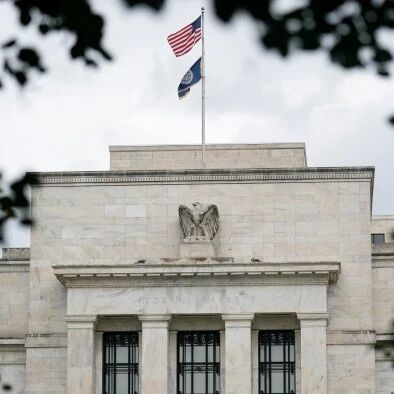
2026.03. 18 本文字数:2711,阅读时长大约4分钟 作者 | 第一财经 冯迪凡 高雅 为期两天的美国联邦公开市场委员会(FOMC)会议正在召开之中。 中东局势引发油价飙升,加之美国劳动力市场走软,市场已经将美联储本次会议将选择"按兵不 动"进行计价,最新联邦基金利率期货定价也显示,市场对今年降息预期已降至1次。 不过,在预期此次美联储将维持基准隔夜利率在3.50%—3.75%区间的同时,各方关注FOMC会议 对未来利率走向发出的信号。 桑坦德银行首席美国经济学家斯坦利(Stephen Stanley)表示,在上次会议后,美联储就已排除了 3月份降息的可能性。中东冲突让美联储进一步陷入观望之中。 瑞银财富管理投资总监办公室宏观策略师李慧琪在接受第一财经记者采访时表示,虽然美联储通常倾 向于过滤短期能源价格波动,但如果高通胀持续时间过长,市场将担忧重演2022年俄乌冲突后的通 胀失控风险。一旦消费者通胀预期全面上升,市场将不得不对降息路径进行重新定价,甚至转而预期 加息。 投资管理咨询公司美世(Mercer)亚太地区多资产主管西斯特曼斯(Cameron Systermans)则对 第一财经记者表示,除 ...
刚刚,全线大涨!美联储,重磅来袭!
券商中国· 2026-03-18 12:27
Core Viewpoint - The global financial markets are experiencing a significant rebound, with major stock indices in Europe and Asia showing strong gains, driven by a slight easing of concerns over oil supply disruptions and anticipation of the upcoming Federal Reserve interest rate decision [1][2][3]. Group 1: Market Performance - European stock markets opened with collective gains, with Spain's IBEX35 index rising over 1%, France's CAC40 up 0.9%, and Italy's FTSE MIB increasing by 0.72% [2] - In the Asian trading session, the MSCI Asia Emerging Markets Index surged over 2%, with China's A-share market seeing the Shanghai Composite Index up 0.32% and the ChiNext Index rising 2.02% [2] - The KOSPI index in South Korea experienced a significant increase of 5.04% [2] Group 2: Oil Market Dynamics - Analysts noted that the adjustment in international oil prices has alleviated market fears regarding potential disruptions in Middle Eastern oil supply [3] - The American Petroleum Institute (API) reported a significant weekly increase in U.S. crude oil inventories, which helped to ease market panic [3] - Optimism in the oil market was further bolstered by U.S. military actions against Iranian missile sites, suggesting a potential return to safer shipping conditions in the region [3] Group 3: Federal Reserve Focus - The global market is closely watching the Federal Reserve's upcoming interest rate decision, with expectations that the federal funds rate will remain unchanged between 3.5% and 3.75% [5][6] - Analysts predict that the Fed may address the geopolitical tensions stemming from the Iran conflict in their statements, highlighting the increased uncertainty for the U.S. economy [5] - The upcoming press conference by Fed Chair Jerome Powell is anticipated to provide critical insights into how the Fed plans to respond to the pressures on the labor market and inflation due to the ongoing conflict [6]

“HALO”交易是否能带来价值红利回归:美日欧篇
Changjiang Securities· 2026-03-18 11:25
Group 1: Global Market Overview - In 2025, global capital markets experienced significant differentiation and restructuring, driven by macroeconomic narratives and strong profitability in the AI industry[4] - The "HALO" trading strategy emerged, indicating a return to value amidst strong growth expectations in certain regions[4] Group 2: European Market Performance - In Europe, the dividend value style outperformed growth style for 11 out of 12 months in 2025, with a notable absolute return in the dividend index exceeding double digits[7] - The MSCI Europe high dividend index recorded a remarkable increase of 35.91%, significantly outperforming the MSCI Europe growth index[25] - The European Central Bank implemented eight interest rate cuts from mid-2024 to mid-2025, reducing the deposit facility rate from 4.00% to 2.00%, alleviating pressure on high-leverage traditional enterprises[8] Group 3: Japanese Market Dynamics - Japan's stock market reached historical highs in 2025, with the Nikkei 225 index rising by 26.18% and the MSCI Japan high dividend index increasing by 23.79%[22] - The Japanese market exhibited a balanced performance between growth and dividend styles, with both achieving double-digit increases[22] - Significant share buybacks in Japan reached approximately 12 trillion yen in the first five months of 2025, marking a 20% increase year-on-year[22] Group 4: U.S. Market Insights - In the U.S., despite the long-term effectiveness of dividend aristocrat strategies, growth expectations driven by major tech companies posed challenges for dividend value strategies[23] - The "HALO" assets, including sectors like energy and utilities, saw a substantial increase in relative returns, particularly in early 2026[23] - The S&P 500 growth index rose by 22.18%, driven by strong earnings from the "Magnificent 7" tech giants, contributing significantly to the overall market gains[25]




