光伏

Search documents
光伏行业"反内卷"成效进一步显现
Zheng Quan Ri Bao· 2026-02-12 09:29
Core Viewpoint - The photovoltaic industry is experiencing a significant cost gradient differentiation due to fluctuations in silver prices and technological upgrades, leading to a visible "anti-involution" effect within the industry [1]. Cost Pressure - The global silver investment demand is expected to remain strong through 2026, supported by geopolitical tensions and U.S. policy uncertainties, with silver prices having risen by 11% this year after surpassing $100 per ounce for the first time in January [2]. - Despite high prices leading to a projected 17% reduction in global jewelry and silverware demand, industrial demand remains resilient [2]. - A supply shortage of approximately 67 million ounces is anticipated in the global silver market by 2026, marking the sixth consecutive year of deficit, which is expected to keep silver prices strong [2]. - The photovoltaic sector, as a major consumer of silver, will continue to face cost pressures due to high silver prices, accelerating the development of silver paste substitution technologies among leading companies [2][3]. Technological Breakthroughs - Leading companies are rapidly advancing silver paste substitution technologies, with some planning large-scale production of alternative materials in the near future [4]. - Longi Green Energy has announced plans to start large-scale production of non-silver solutions, which could further reduce component costs [4]. - Other major players like JinkoSolar and Aiko are also actively pursuing silver paste alternatives, with significant collaborations aimed at industrializing low-silver technologies by 2026 [4][5]. Industry Restructuring - The shift towards high-efficiency and reliable components is expected to create a competitive landscape where companies with technological advantages can command price premiums, while less efficient capacities face dual pressures from price and demand declines [5][6]. - The Chinese photovoltaic industry is projected to see a significant change in 2026, with new installations expected to range between 180GW and 240GW, following a record high of 315GW in 2025 [5][6]. - The core theme of the industry's "anti-involution" in 2026 will be driven by upgraded end-user demand, pushing manufacturers towards high-quality development through technological iterations and improved market mechanisms [6].




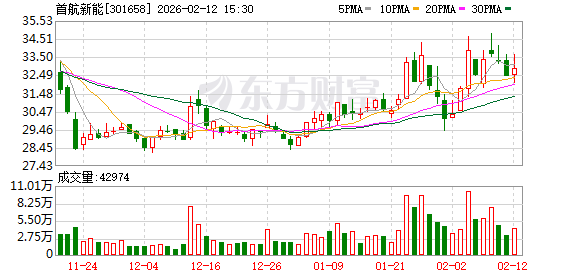
首航新能:公司在北美市场尚未形成规模化收入
Mei Ri Jing Ji Xin Wen· 2026-02-12 09:21
Core Viewpoint - The company has not yet established significant revenue in the North American market for its photovoltaic business, despite its global operations spanning over 100 countries and regions [2]. Group 1 - The company maintains a global business layout, covering over 100 countries and regions [2]. - The company has accumulated numerous high-quality customer resources in various regions, including Europe, Asia-Pacific, Latin America, Australia, the Middle East, and Africa [2]. - Currently, the company has not formed scaled revenue in the North American market [2].

一季度《中国经济观察》发布:经济韧性与分化并存,政策蓄力构建再平衡
Sou Hu Cai Jing· 2026-02-12 09:18
Group 1 - The core viewpoint of the articles indicates that China's economy is projected to reach 140 trillion yuan in 2025, with a real GDP growth of 5.0%, meeting the initial target growth rate [2] - In 2025, the industrial production showed steady improvement, with the manufacturing value-added growing by 6.1% year-on-year, supported by strong export demand and domestic equipment renewal policies [5] - The retail sales of consumer goods in 2025 increased by 3.7% year-on-year, although the fourth quarter saw a decline of 1.8%, marking the first quarterly negative growth since 2023 [9] - Fixed asset investment in 2025 experienced a decline of 3.8%, marking the first annual negative growth since records began, with significant contractions in real estate and infrastructure investments [12] - Exports in 2025 grew by 5.5%, with a trade surplus reaching nearly 1.2 trillion USD, the highest on record, driven by high-end manufacturing categories like integrated circuits and new energy products [15] Group 2 - Looking ahead to 2026, the central economic work conference emphasizes higher quality requirements for economic growth, with macro policies expected to maintain a steady expansion [3] - The government plans to support domestic demand and optimize supply, with a focus on increasing investment in human capital and lowering financing barriers for private enterprises [3] - The manufacturing PMI for January 2026 was reported at 49.8%, indicating a contraction in manufacturing activity, primarily due to insufficient domestic demand recovery [18] - The non-manufacturing business activity index for January 2026 was at 49.4%, with the construction sector returning to contraction territory, influenced by adverse weather and the upcoming holiday [19] - Public fiscal revenue in 2025 saw a year-on-year decline of 1.7%, with expenditures also falling short of budgeted growth, reflecting a cautious fiscal environment [22]

光伏周价格 | 白银硅片双跌引发连锁反应,电池组件价格2月下旬承压
TrendForce集邦· 2026-02-12 09:00
Core Viewpoint - The article discusses the current state of the photovoltaic industry, highlighting the supply-demand imbalance, price trends, and the impact of inventory levels on various segments including polysilicon, wafers, battery cells, and modules [4][5][6][7][9][10][11][13][14]. Polysilicon - Supply side: The total inventory of polysilicon remains above 510,000 tons, with a slight accumulation trend. Major upstream manufacturers have begun significant production cuts, with Tongwei expected to reduce output to below 85,000 tons in January [4]. - Demand side: Downstream demand continues to weaken, with crystal pulling factories focusing on consuming their own inventory, leading to a significant reduction in new procurement demand for polysilicon [5]. - Price trend: The market is experiencing a stalemate, with prices around RMB 50/kg lacking upward momentum due to weak downstream demand and falling wafer prices [6]. Wafers - Supply and demand: Inventory levels in the wafer segment have risen to approximately 25 GW, indicating an oversupply situation. Manufacturers face significant shipping pressure, and the market's primary task is to digest existing inventory [7]. - Price trend: Actual transaction prices for wafers have continued to decline, with mainstream specifications hitting historical lows. The price for 183N wafers has dropped to RMB 1.1 per piece, reflecting extreme market weakness [8]. Battery Cells - Supply side: Inventory levels for battery cells have slightly increased, with current stock at 8-9 days. Despite ongoing production cuts, there is strong anticipation for production resumption post-holiday, which may intensify price competition [9]. - Demand side: The terminal market shows weak demand, with downstream component manufacturers adopting a cautious procurement strategy and a strong willingness to press prices down [10]. - Price trend: Battery prices are at risk of declining due to falling costs from silver and wafer prices, with expectations of a potential price drop following the holiday [11]. Modules - Supply and demand: The module market exhibits a significant "hot outside, cold inside" dichotomy, with domestic demand weak while overseas markets show strong order activity due to export tax rebate policies [13]. - Price trend: Current spot prices vary significantly, with leading manufacturers quoting between RMB 0.8-0.85/W, while second and third-tier manufacturers are around RMB 0.78/W. Despite intense low-price competition, recent bidding prices for domestic projects have shown some recovery [14].
下一个光伏大风口:不是地面,而是太空!
格隆汇APP· 2026-02-12 08:47
Core Viewpoint - The global commercial space industry is experiencing rapid growth, driven by the explosive demand for AI computing power, with space photovoltaic technology emerging as a promising investment opportunity due to its cost-effectiveness and advantages over terrestrial solar power [5][10]. Group 1: Industry Growth and Policy Support - The commercial space sector is entering a high-growth phase, with the number of satellites in orbit expected to exceed 11,605 by the end of 2024, dominated by the US at 76% and China at around 9% [6]. - In the first half of 2025, China's satellite launches are projected to increase by 92% year-on-year, significantly outpacing the global average, supported by government policies that emphasize the importance of commercial space [8]. - The Chinese government has included commercial space in its "new quality productivity" category and has committed to developing space energy technologies, providing clear policy support for space photovoltaic technology [8][10]. Group 2: Advantages of Space Photovoltaics - Space photovoltaics have significant advantages over terrestrial solar power, including better sunlight conditions, with solar intensity in space being 36% higher, and the ability to generate power continuously without the need for energy storage systems [12]. - The technology for space photovoltaics is evolving, with three main types of solar cells: gallium arsenide, crystalline silicon, and perovskite, each with distinct advantages and challenges [14]. Group 3: Market Potential and Economic Viability - The current market for space photovoltaics is limited due to high launch costs, but it is expected to grow steadily, with projections indicating a market space of approximately 3 billion yuan from 2026 to 2030, increasing to 12 billion yuan from 2030 to 2035, and further to 25 billion yuan from 2035 to 2040 [17]. - A significant factor for the future market potential of space photovoltaics is the reduction in launch costs, which currently stand at $3,600 per kilogram. If costs can be reduced to $200-$300 per kilogram, the demand for space photovoltaics could see explosive growth, potentially reaching a market size of 500 billion yuan annually [19]. Group 4: Investment Opportunities - The growth of space photovoltaics is directly linked to the high demand in the commercial space sector, with photovoltaic equipment manufacturers, particularly those specializing in HJT and perovskite technologies, expected to be the biggest beneficiaries [21]. - Companies involved in the production of HJT and perovskite battery equipment, as well as ultra-thin silicon wafer cutting, are recommended for investment as the industry demand continues to rise [21].
特变电工(600089.SH):暂无太空光伏的技术预研布局
Ge Long Hui· 2026-02-12 08:41
Group 1 - The company is currently not engaged in any preliminary research and development for space photovoltaic technology [1]

明冠新材:拟终止50亿合肥项目,2.9亿新项目已启动
Xin Lang Cai Jing· 2026-02-12 08:20
Core Viewpoint - The company has decided to terminate the investment in the solar backsheet and functional film production base project in Feidong County due to industry overcapacity and intensified price competition in the photovoltaic sector [1] Group 1: Project Termination - The project was signed in 2023 with an estimated total investment of 5 billion yuan [1] - Cumulative investment to date is 1.6341 million yuan (excluding tax), with outstanding payments of 871,600 yuan (including tax) [1] - The decision to terminate was made in agreement with the Feidong County government to avoid increased operational costs [1] Group 2: New Project Development - The company plans to transfer the first phase of production capacity from the Hefei project to Yichun, Jiangxi [1] - The new project will focus on producing 350 million square meters of special functional films, with a total investment of 290 million yuan [1] - Construction of the new project has already commenced and is subject to approval by the shareholders' meeting [1]

白银市值骤减千亿!巨头疯狂吸纳金属,背后操盘信号曝光
Sou Hu Cai Jing· 2026-02-12 07:46
Core Viewpoint - The silver market experienced a dramatic collapse on January 30, 2026, which was merely a surface-level event, as the underlying financial storm had been brewing since 2025 [1] Group 1: Silver Price Surge - In 2025, silver prices surged by an astonishing 175%, reaching a peak of $121.64 on January 29, 2026, up from $45 at the beginning of the year [3] - This unprecedented increase was driven by strong industrial demand, particularly from the photovoltaic industry, electric vehicles, and AI data centers [5] Group 2: Industrial Demand - The photovoltaic sector saw a doubling in silver paste consumption due to advancements in technology, with silver paste accounting for over half of the non-silicon costs in solar cells [5] - In the electric vehicle sector, the silver requirement for a single electric vehicle is two to three times that of a traditional gasoline vehicle, with major players like BYD potentially needing thousands of tons annually [5] Group 3: Supply Constraints - Global silver supply has been constrained, primarily sourced as a byproduct from copper, lead, and zinc mining, making it difficult to quickly increase production despite rising prices [7] - In 2025, the silver market faced a significant shortfall, with global inventories only able to sustain one to two months of consumption [9] Group 4: Market Dynamics and Speculation - Speculators entered the market amid rumors of mysterious buyers in London purchasing silver, leading to a "short squeeze" atmosphere that attracted retail investors [9] - JPMorgan Chase, previously known for manipulating silver prices, transitioned to a bullish stance, accumulating over 750 million ounces of physical silver, surpassing the holdings of the largest silver ETF [9] Group 5: Margin Changes and Retail Impact - At the end of 2025, the Chicago Mercantile Exchange raised margin requirements three times in two weeks, severely impacting retail investors who had leveraged their positions [10] - Large banks benefited from liquidity support through the Federal Reserve, creating a disparity in treatment between institutional and retail investors [10] Group 6: Aftermath and Market Realities - Following the price collapse, silver prices plummeted from over $120 to the $70 range, with highly leveraged investors facing immediate liquidation [14] - Despite the ongoing industrial demand for silver, the market's pricing logic has shifted, emphasizing silver's dual role as both a financial asset and an industrial commodity [14] Group 7: Lessons from the Market - The events highlight the harsh realities of financial markets, where high expectations and excessive leverage can lead to rapid downturns [16] - Understanding the underlying rules and dynamics of the market is crucial for investors to avoid being exploited in such competitive environments [16]

A股三大指数收涨,算力产业集体爆发,有新股狂飙244%触发临停
21世纪经济报道· 2026-02-12 07:29
Market Overview - On February 12, the three major indices collectively rose, with the ChiNext Index and the Sci-Tech Innovation 50 Index both increasing by over 1% [1] - The total trading volume in the Shanghai and Shenzhen markets reached 2.16 trillion yuan, an increase of 159.7 billion yuan compared to the previous trading day [1] Index Performance - Shanghai Composite Index: 4134.02 (+2.03, +0.05%) [2] - Shenzhen Component Index: 14283.00 (+122.06, +0.86%) [2] - ChiNext Index: 1816.15 (+27.93, +1.56%) [2] - CSI 300: 4719.58 (+5.76, +0.12%) [2] - CSI 500: 8423.57 (+97.76, +1.17%) [2] Industry Developments - The Ministry of Industry and Information Technology announced plans to develop national computing power interconnection nodes, aiming to enhance the efficiency and service level of public computing resources [3] - Major domestic internet companies, including Tencent, Alibaba, and Baidu, are increasing efforts to attract users to AI applications, which is expected to significantly boost active user numbers in AI applications [3] - The demand for AI applications is driving growth in the domestic computing power industry chain, presenting key development opportunities [3] Stock Highlights - Tianfu Communication, a leader in the CPO concept, saw its stock rise by 11.61% to 322 yuan per share, reaching a market capitalization of 250.33 billion yuan [3] - Chip companies related to computing power also experienced gains, with Chipone Technology rising over 10% [3] - The liquid cooling server concept showed strong performance, with Chuanrun Co. achieving two consecutive trading limits in four days [3] - The electric grid equipment sector saw collective strength, with companies like Siyuan Electric and Sifang Co. reaching new highs [3] Individual Stock Movements - Double Good Energy, a solar energy company, saw its stock price hit the limit up within 10 minutes, with a total market value of 20.1 billion yuan, following the announcement of three overseas orders for high-efficiency heat exchangers [4] - Newly listed company N Haisheng experienced a maximum increase of 244.94%, triggering a trading halt, with over 300 million yuan in transactions [4]

从卖方到买方“无缝衔接”!华富基金沈成:产业框架之下,大胆假设、小心求证
聪明投资者· 2026-02-12 07:26
Core Insights - The article emphasizes the importance of a structured research framework in analyzing industries and companies, particularly in understanding supply and demand dynamics and technological advancements [2][4][12]. Group 1: Research Framework and Methodology - The research methodology involves building a framework, making bold hypotheses, and continuously validating and adjusting these assumptions based on ongoing data [20][21]. - Supply-side research is highlighted as a critical area for generating differentiated insights, as it is often more challenging and time-consuming than demand-side analysis [4][19]. - Understanding industry cycles is deemed essential, with a focus on the cyclical nature of growth industries, which are often misclassified as non-cyclical [11][12]. Group 2: Industry Analysis and Investment Strategy - The investment strategy is categorized into core and satellite positions, where core positions focus on mainstream growth opportunities, while satellite positions seek out undervalued stocks with significant upside potential [30][31]. - The article outlines different stages of industry development, emphasizing that investment focus shifts from growth potential in early stages to valuation and competitive dynamics in later stages [22][25]. - The importance of management capabilities varies by industry, with strategic vision being crucial in early stages and operational efficiency becoming more significant as companies scale [28][29]. Group 3: Sector-Specific Insights - The article discusses the lithium battery supply chain, indicating that price discrepancies will eventually balance out, and there is no need for excessive concern [8][44]. - In the human robotics sector, the focus is on the product capabilities of Tesla's Gen3 robot, with the supply chain's importance ranked from core Tesla-related companies to potential domestic players [49]. - The electric grid equipment sector is divided into domestic-focused companies and those expanding internationally, with the latter expected to benefit significantly from AI advancements [50][53].