外汇

Search documents
贵金属延续强势,化工板块集体大涨
Dong Zheng Qi Huo· 2026-01-26 01:31
1. Report Industry Investment Ratings Not provided in the given content. 2. Core Views of the Report - The dollar index is expected to weaken in the short - term due to increased domestic conflicts over illegal immigration in the US [11][12]. - US stocks are expected to maintain high - level volatility during the earnings season, with increased volatility [16][17]. - Precious metals are likely to see increased short - term volatility, and investors should be aware of the risk of a pullback after a continuous sharp rise [20]. - The bond market is experiencing a short - term rebound, and it is more cost - effective to short after the upward momentum fades [21][22]. - The stock index long - position strategy should be continued [23][24]. - Coking coal is expected to be weak and volatile in the short - term as supply is at a high level and downstream restocking has ended [25][26]. - Steel prices are expected to be volatile before the Spring Festival, and it is recommended to hedge inventory at high prices if there is a price rebound [31]. - Palm oil is likely to be easy to rise and difficult to fall in the short - term, and the price of soybean oil is expected to be supported before the US biofuel policy is released [35]. - The outlook for soybean meal exports is not optimistic, and the 5 - month contract is likely to be weak if there are no major abnormalities in South American production [37][38]. - The domestic sugar market is expected to be weakly volatile in the short - term due to seasonal supply pressure and limited demand [42]. - Zhengzhou cotton is expected to be adjusted in a volatile manner before the Spring Festival, with long - term bullish views unchanged [47]. - Copper prices are likely to be volatile in the short - term, and it is recommended to wait and see in the short - term and look for opportunities to go long at low prices in the medium - term [51]. - Lead prices are expected to be in low - level volatility, and it is recommended to wait and see both unilaterally and in arbitrage [53][54]. - Zinc prices are expected to remain in high - level volatility, and it is recommended to wait and see unilaterally, pay attention to long - position opportunities in the far - month contracts for arbitrage, and wait and see in the domestic - foreign arbitrage [57]. - Lithium carbonate prices are likely to be easy to rise and difficult to fall, and a bullish strategy is recommended with attention to position control and risk management [60][61]. - Tin prices are expected to be in wide - range volatility in the short - term, and attention should be paid to the implementation of supply recovery expectations and consumption recovery [65]. - Nickel prices are expected to be easy to rise and difficult to fall, and it is recommended to look for opportunities to go long at low prices [66][67]. - EU carbon prices are expected to be strong in the short - term [68][69]. - Oil prices are expected to be supported by short - term geopolitical conflicts and supply disruptions [71][72]. - The bottle - chip market is expected to see a mild recovery in processing fees around the Spring Festival [76]. - The container shipping index is expected to be weakly volatile in the short - term [78]. 3. Summary by Directory 3.1 Financial News and Comments 3.1.1 Macro Strategy (Foreign Exchange Futures - US Dollar Index) - Europe is estimated to need $1 trillion to restructure its defense industry. The shooting of a US citizen by ICE has intensified domestic conflicts over illegal immigration, causing the dollar index to weaken. The Trump administration is expected to maintain a tough stance on illegal immigration, and market volatility will remain high. The dollar index is expected to weaken in the short - term [9][11][12]. 3.1.2 Macro Strategy (US Stock Index Futures) - The final value of the University of Michigan Consumer Sentiment Index in the US in January was 56.4, reaching a five - month high. The preliminary value of the US S&P Global Manufacturing PMI in January was 51.9. The US economy shows resilience, and the Fed is unlikely to cut interest rates in the short - term. The market is worried about the Fed's independence, and US stocks are expected to maintain high - level volatility during the earnings season [13][14][16]. 3.1.3 Macro Strategy (Gold) - The US is expected to obtain "sovereignty" over the area where the US military base on Greenland is located. The preliminary value of the US S&P Global Manufacturing PMI in January was 51.9. The New York Federal Reserve Bank conducted a "rate check" on the US dollar/yen exchange rate. Precious metals continued to rise strongly on Friday, reaching a new high. The market is trading on the safe - haven and de - dollarization needs caused by the tense situation between the US and Europe. The sharp rise of the yen and the fall of the dollar after the US and Japan jointly signaled to intervene in the foreign exchange market boosted the precious metals. However, the short - term market is dominated by sentiment and funds, and the risk is increasing. Precious metals are likely to see increased short - term volatility, and investors should be aware of the risk of a pullback [18][19][20]. 3.1.4 Macro Strategy (Treasury Bond Futures) - The central bank conducted a 7 - day reverse repurchase operation of 125 billion yuan, with a net investment of 38.3 billion yuan. The bond market continued to strengthen, mainly due to the alleviation of previous concerns. However, there are still long - term negative factors, and it is more cost - effective to short after the upward momentum fades [21][22]. 3.1.5 Macro Strategy (Stock Index Futures) - The CSRC issued a guidance on the performance comparison benchmark for public funds. Due to strong bullish expectations, funds flowed into small - cap stocks, causing market differentiation. The regulatory authorities are expected to take stricter and more precise measures to limit excessive speculation, and the market is likely to remain in high - level volatility. It is recommended to continue to hold the long - position strategy for the stock index [23][24]. 3.2 Commodity News and Comments 3.2.1 Black Metals (Coking Coal/Coke) - The coking coal price in the Changzhi market remained stable. The supply in some areas increased slightly, while the downstream restocking ended, and the market sentiment declined. Coking coal is expected to be weak and volatile in the short - term [25][26]. 3.2.2 Black Metals (Rebar/Hot - Rolled Coil) - The global crude steel output in 2025 was 1.849 billion tons. In mid - January 2026, the daily output of key steel enterprises decreased slightly, and the inventory increased. Before the Spring Festival, steel prices are expected to be volatile and may rebound slightly. It is recommended to hedge inventory at high prices if there is a price rebound [27][29][31]. 3.2.3 Agricultural Products (Soybean Oil/Rapeseed Oil/Palm Oil) - The EU plans to gradually phase out soybean biofuels. The establishment of the Southeast Asian Sustainable Aviation Fuel Council. The actual soybean crushing volume of domestic oil mills increased, and the estimated volume for the next week is higher. The palm oil market is supported by inventory reduction and Ramadan expectations, and the price of soybean oil is expected to be supported before the US biofuel policy is released [32][34][35]. 3.2.4 Agricultural Products (Soybean Meal) - The US weekly soybean export sales reached the highest level of the year. The domestic oil mill soybean crushing volume increased, and it is expected to remain high. The outlook for soybean meal exports is not optimistic, and the 5 - month contract is likely to be weak if there are no major abnormalities in South American production [36][37][38]. 3.2.5 Agricultural Products (Sugar) - The amount of sugar waiting to be shipped at Brazilian ports increased. The sugar production in the central and southern regions of Brazil decreased in the second half of December. The domestic sugar market is under seasonal supply pressure, and the demand is limited. It is expected to be weakly volatile in the short - term [39][41][42]. 3.2.6 Agricultural Products (Cotton) - The import of Indian cotton yarn decreased, while the import of polyester - cotton blended yarn increased. The EU's clothing import rebounded in November 2025, and the import from China increased. The US cotton export signing reached a new high, but the export progress is still behind. Zhengzhou cotton is expected to be adjusted in a volatile manner before the Spring Festival, with long - term bullish views unchanged [43][44][47]. 3.2.7 Non - ferrous Metals (Copper) - Chilean contractor protests blocked access to mines. Tibet Julong Copper's second - phase project was put into operation. The Chilean Mining Association warned that it will take several years for copper supply to increase. The short - term macro factors support copper prices, but the fundamental factors may suppress price increases. Copper prices are likely to be volatile, and it is recommended to wait and see in the short - term and look for opportunities to go long at low prices in the medium - term [48][50][51]. 3.2.8 Non - ferrous Metals (Lead) - The LME lead spread was at a discount. The production of primary lead was stable, the profit of secondary lead refineries narrowed, and the consumption of lead batteries was weak. The social inventory increased, and lead prices are expected to be in low - level volatility. It is recommended to wait and see both unilaterally and in arbitrage [52][53][54]. 3.2.9 Non - ferrous Metals (Zinc) - A gold mine in Mexico was temporarily shut down. The LME zinc spread was at a discount, and MMG's zinc ore output in the fourth quarter of 2025 increased. The zinc concentrate port inventory increased, the smelting profit improved slightly, and the demand was affected by multiple factors. Zinc prices are expected to remain in high - level volatility. It is recommended to wait and see unilaterally, pay attention to long - position opportunities in the far - month contracts for arbitrage, and wait and see in the domestic - foreign arbitrage [55][56][57]. 3.2.10 Non - ferrous Metals (Lithium Carbonate) - The retail and wholesale volume of new - energy passenger vehicles in the first 18 days of January 2026 decreased year - on - year. Lithium carbonate prices rose sharply last week. The demand is strong, and the inventory is low. It is recommended to take a bullish strategy with attention to position control and risk management [58][60][61]. 3.2.11 Non - ferrous Metals (Tin) - The first domestic satellite computing power module was launched. The LME tin spread was at a discount, and the inventory increased. The import of tin concentrate in December increased year - on - year. The supply is expected to increase in 2026, but there are uncertainties. The demand is weak, and tin prices are expected to be in wide - range volatility in the short - term [62][63][65]. 3.2.12 Non - ferrous Metals (Nickel) - The port logistics of the Indonesian Qing Shan Industrial Park was suspected of monopoly. The nickel ore production quota in Indonesia is expected to be adjusted, and the global primary nickel gap is expected to be more than 100,000 metric tons. The raw material price rose, and the demand for nickel salt increased. Nickel prices are expected to be easy to rise and difficult to fall, and it is recommended to look for opportunities to go long at low prices [66][67]. 3.2.13 Energy Chemicals (Carbon Emissions) - The closing price of the EUA main contract decreased. The EU carbon price remained high and volatile last week. The CoT data helped boost the market. The carbon price is expected to be strong in the short - term [68][69]. 3.2.14 Energy Chemicals (Crude Oil) - The production of a Kazakhstani oil field was delayed due to a power failure and export problems. The number of US oil rigs increased. The oil price rose on Friday, supported by the risk of supply disruptions and the increase in diesel cracking spreads [70][71][72]. 3.2.15 Energy Chemicals (Bottle Chips) - The export quotation of bottle - chip factories continued to rise. The polyester raw material price rose strongly, and the bottle - chip factory quotation increased. The market trading atmosphere was fair, and the downstream was cautious. The industry operating rate decreased, and the inventory pressure was transferred smoothly. The processing fee is expected to recover mildly around the Spring Festival [73][75][76]. 3.2.16 Shipping Index (Container Freight Rates) - Wildfires and rough seas restricted the operation of some ports in Chile. The short - term market is weak, and the European - line futures are expected to be weakly volatile. Attention should be paid to whether the index will be higher due to container dumping and late ship departures [77][78].
日元兑美元走高 日本首相的警告加剧干预风险
Xin Lang Cai Jing· 2026-01-26 00:55
高市早苗周日表示,"作为首相,我不应该对应该由市场决定的事情发表评论,但我们将采取一切必要 措施来应对投机性和高度异常的市场波动。"高市没有具体说明她的评论是否与日本国债收益率或日元 有关 MACD金叉信号形成,这些股涨势不错! MACD金叉信号形成,这些股涨势不错! 日元兑美元周一走强,此前日元近期下跌,交易员本周伊始便高度警惕日本可能干预市场。 日元一度上涨近1%,至1美元兑154.22日元;此前日本首相高市早苗周日对市场发出警告,且上周五有 迹象显示,美国可能与日本联手捍卫日元汇率。日本股市下跌,日经225指数下跌1.9%,基准10年期国 债走高。 日本财务省财务官三村淳周一早上表示,日本政府将与华盛顿同行密切协调,根据需要针对外汇市场的 波动做出适当反应。他拒绝评论有关官员在市场上控制汇率的传闻。 高市早苗周日表示,"作为首相,我不应该对应该由市场决定的事情发表评论,但我们将采取一切必要 措施来应对投机性和高度异常的市场波动。"高市没有具体说明她的评论是否与日本国债收益率或日元 有关 责任编辑:王永生 日元一度上涨近1%,至1美元兑154.22日元;此前日本首相高市早苗周日对市场发出警告,且上周五有 ...
极为罕见!美日联合干预,这对市场意味着什么?
Hua Er Jie Jian Wen· 2026-01-26 00:21
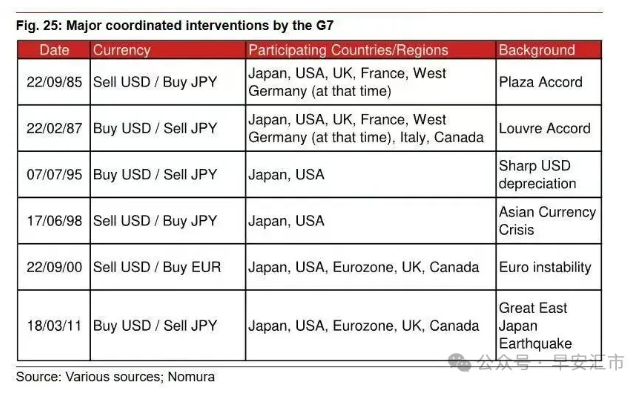
Core Viewpoint - Japan is facing a severe financial dilemma between a potential yen collapse and a bond market crisis, with policymakers seemingly having no way out. The market is closely watching for signals that the U.S. may intervene to assist Japan in stabilizing the yen [1][6]. Group 1: Market Reactions and Speculations - Prime Minister Fumio Kishida issued a stern warning, promising to take "all necessary measures" to address speculative and extreme market volatility, following a significant drop in the dollar-yen exchange rate [1][2]. - The New York Federal Reserve's rare "rate check" action is interpreted as a precursor to potential intervention, suggesting that U.S. and Japanese authorities are prepared to work together to curb the yen's decline [1][3]. - The expectation of a "coordinated intervention" is reshaping investor risk preferences, with analysts drawing parallels to the "Plaza Accord 2.0" scenario, indicating a potential joint effort to stabilize the yen [2][7]. Group 2: Historical Context and Implications - The New York Fed's "rate check" is a rare occurrence, with only three instances of U.S. intervention in the currency market since 1996, the last being in 2011 after the Japanese earthquake [3][4]. - The urgency from Japanese authorities stems from the yen's sharp decline over the past two weeks and the looming threat of a "Japanese bond crisis," which has raised concerns about Japan's fiscal financing capabilities [4][6]. - The current situation presents a dilemma for the Bank of Japan, which is caught between the need to stabilize the currency and the risk of exacerbating the bond market crisis through interest rate hikes [6]. Group 3: Future Scenarios and Market Strategies - Analysts suggest three potential paths for the dollar-yen exchange rate: a likely stabilization action by the Japanese Ministry of Finance, a zero-cost attempt to stabilize the exchange rate without follow-up intervention, or a macro agreement among the U.S., Japan, and South Korea to jointly address currency depreciation [12][13]. - The market is advised to remain vigilant, as the potential for significant yen short-covering exists if the anticipated intervention does not materialize [10][12]. - The involvement of the U.S. Treasury in the currency market indicates that the situation has escalated beyond typical foreign exchange concerns, marking a significant moment in international financial relations [7][8].

今日A股市场重要快讯汇总|2026年1月26日
Xin Lang Cai Jing· 2026-01-26 00:18
Group 1: Macroeconomic and Market Analysis - The national electricity market transaction volume is expected to reach 6.6 trillion kilowatt-hours by 2025, with the largest express delivery network established globally [1][8] - In 2025, 1,139 new national standard substances will be created, representing a year-on-year increase of 61.8% [1][8] - A press conference will be held by the State Council Information Office to discuss the 2025 business work and operational situation [1] Group 2: External Markets and Related Assets - The international commodity market is experiencing significant volatility, with spot gold breaking the historic threshold of $5,000 per ounce, rising 0.89% to $5,030 per ounce [2][9] - New York futures gold also surpassed $5,070 per ounce, with a daily increase of 1.07% [2][9] - The rise in gold prices is attributed to increased purchases by central banks, geopolitical tensions, and economic uncertainties, with the recent surge occurring just over 100 days after first crossing $4,000 [10] - New York silver futures broke $106 per ounce, increasing by 4.61%, while spot silver rose by 2.80% [10] - U.S. natural gas futures surged over 19% due to winter storms, currently priced at $6.288 per million British thermal units [10] - The Japanese yen appreciated approximately 0.8%, with the USD/JPY rate falling to 154.49, strengthening non-U.S. currencies [10] - The euro increased by 0.4% against the dollar to 1.1873, while the USD/CHF rate dropped over 0.6% to 0.7751 [10] - The cryptocurrency market is under pressure, with Bitcoin falling below $87,000, down 2.81%, and Ethereum dropping below $2,800, down 5.20% [5][10] Group 3: Institutional Views and Market Analysis - The U.S. tech sector is facing performance challenges, with five of the "Seven Giants" (Alphabet, Amazon, Apple, Meta, Microsoft, Nvidia, Tesla) underperforming the S&P 500 since October 2025 [6][11] - Market expectations regarding returns on AI investments have turned cautious [6][11] - Wells Fargo indicates that tech stocks have entered a phase where performance will dictate investment flows, with upcoming earnings reports from Microsoft, Apple, and Tesla expected to influence sector capital movement [6][11] Group 4: Company Announcements - Samsung Electronics is set to supply Nvidia with the fourth generation of high-bandwidth memory in February, which may impact the semiconductor supply chain [7][12]
大反转!日本、美国突然联手干预日元
Zhong Guo Ji Jin Bao· 2026-01-25 17:20
(原标题:大反转!日本、美国突然联手干预日元) 随后市场猜测不断升温,认为日本当局可能正准备入市干预外汇,以遏制日元下跌,甚至可能罕见地获 得美国协助。 大家好,简单关注一下美国、日本联手干预日元的消息。 周末,日元汇率大约在159附近徘徊,随后出现剧烈反转大幅走强,涨至四周高点155.7,日内涨超 1.6%。 消息面上,纽约联邦储备银行对美元/日元汇率进行了"汇率询价"(rate check)。 分析人士表示,美国货币当局介入原本被视为"日本方面事务"的情况并不常见,但并非没有先例。 这类询价往往被视为对交易员的警告:当局认为日元交易走势过度,并准备通过直接在市场上买入或卖 出以影响汇率。通常在波动率明显上升、单靠口头喊话难以压制市场时,这类询价更可能出现。 此外,日本首相高市早苗在日元走弱、国债收益率飙升之际,再次向金融市场发出警告,称政府已准备 好采取行动。 她周日在辩论中表示:"作为首相,我不应对本应由市场决定的事项发表评论,但对于投机性与高度异 常的波动,我们将采取一切必要措施予以应对。" 分析人士称,这一举动可能触发美元迅速下跌,并可能表明在美元兑日元持续强势了数周之后,美日两 国货币当局或许正在 ...
外汇市场剧烈波动:美元跌至三个月低点与日本央行干预疑云
Di Yi Cai Jing· 2026-01-25 13:06
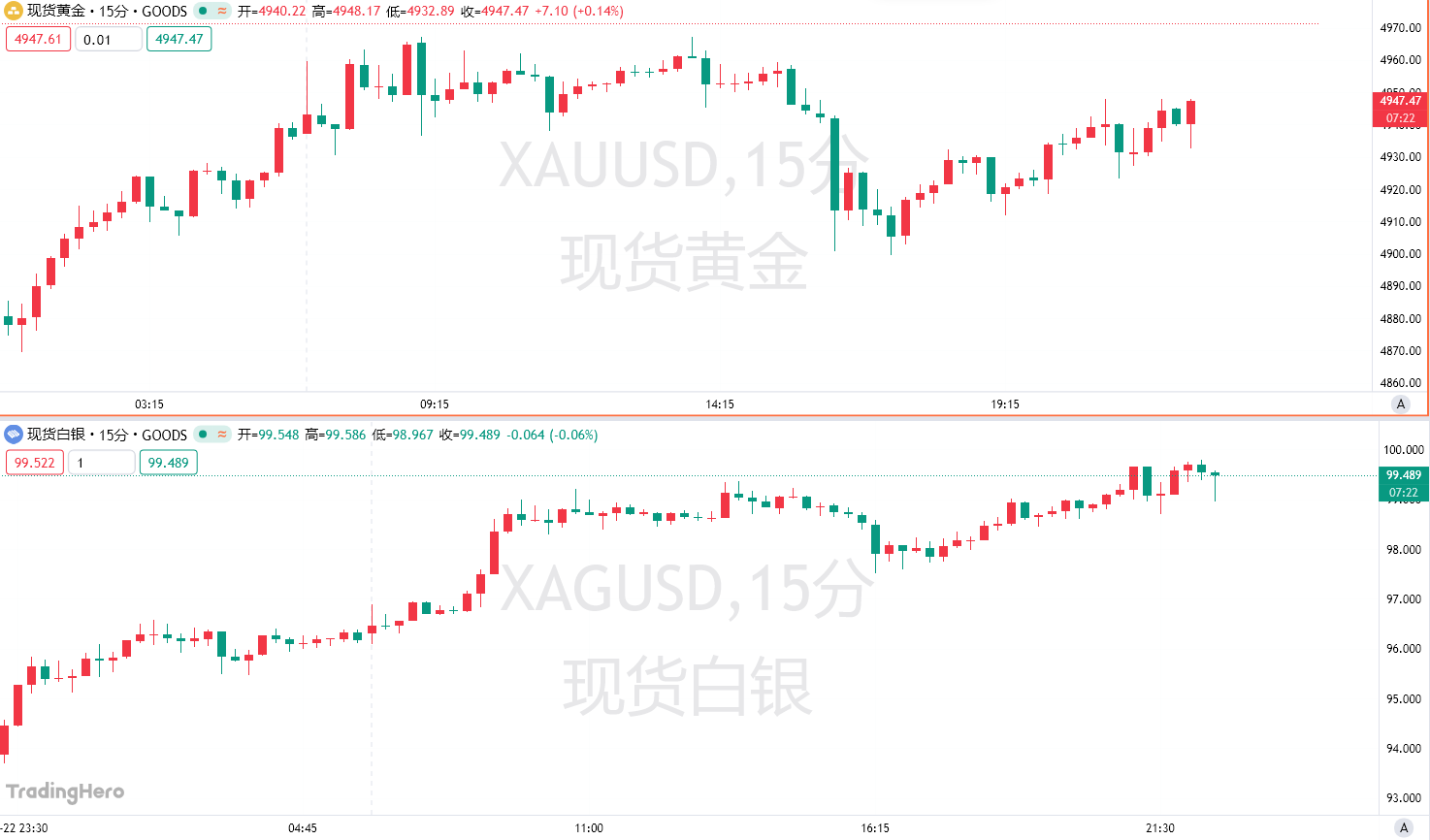
Group 1: Currency Market Dynamics - The US dollar index (DXY) has dropped to around 97.7, marking a three-month low and a decrease of approximately 1.5% since the end of the previous year, influenced by easing geopolitical tensions, adjustments in Federal Reserve policy expectations, and movements in the Bank of Japan's monetary policy [1] - The USD/JPY exchange rate has seen significant fluctuations, falling from a high of 159 to the 156-158 range, raising speculation about potential intervention by Japanese authorities [1][4] - The volatility in the currency market has led to an increase in overall market volatility, with the volatility rate rising to over 8.5%, reflecting policy divergences and geopolitical risks [5] Group 2: Japanese Economic Context - Japan's economy has faced structural challenges for over two decades, with negative GDP growth and deflation, prompting the Bank of Japan to implement negative interest rates and yield curve control to stimulate growth [2] - The GDP growth forecast for Japan has been revised upward to 0.9% for FY2025 and 1.0% for FY2026, supported by overseas economic recovery and government stimulus measures [2] - Following the election of Prime Minister Suga, there are concerns about a shift to dovish policies, despite rising inflation, which has led to increased long-term interest rates [2][3] Group 3: Precious Metals Market - Silver prices have surged past $100 per ounce, a 40% increase since the end of the previous year, while gold prices have approached $5,000 per ounce, reflecting a 79% annual increase due to global uncertainty [6][7] - The Shanghai silver price has reached a record premium of $13 per ounce over COMEX futures, indicating a physical silver shortage in China, with domestic inventories at their lowest since 2016 [7] - The upward trend in precious metals prices is linked to increased demand for safe-haven assets amid geopolitical tensions, which may lead to a re-evaluation of global silver prices [6][7] Group 4: Global Economic Implications - The depreciation of the US dollar is beneficial for emerging markets, alleviating debt pressures, but continued intervention by Japan could lead to rising US Treasury yields, increasing global borrowing costs [8] - The fluctuations in the currency market may trigger adjustments in risk models, leading to widespread deleveraging in the financial system, which is already exhibiting significant leverage levels [8] - The outlook for global growth remains stable at 3.3%, but risks include potential further rate cuts by the Federal Reserve and uncertainties surrounding trade negotiations [8]
日本首相高市早苗警告称 政府已准备好对金融市场异常波动采取行动
Xin Lang Cai Jing· 2026-01-25 06:42
Core Viewpoint - Japanese Prime Minister Kishi Nobuo has issued a warning to financial markets, indicating that the government is prepared to take action in response to speculative and highly abnormal market fluctuations, particularly concerning the yen and bond yields [1][3]. Group 1: Yen and Market Response - The yen has depreciated significantly, with the exchange rate against the US dollar dropping to 159.23 before a notable rebound [1][3]. - There is speculation that Japanese authorities may intervene in the foreign exchange market to prevent further depreciation of the yen, potentially with assistance from the United States [1][3]. - The yen experienced a sharp increase during US trading hours, rising by 1.75% to 155.63, marking the largest single-day gain since August [4]. Group 2: Government and Market Actions - The New York Federal Reserve has contacted several financial institutions to inquire about the yen's exchange rate, which may indicate preparations for intervention by Japan [2][4]. - Japanese officials have repeatedly warned about the volatility in both the yen and government bond markets, signaling a heightened level of concern [1][3].
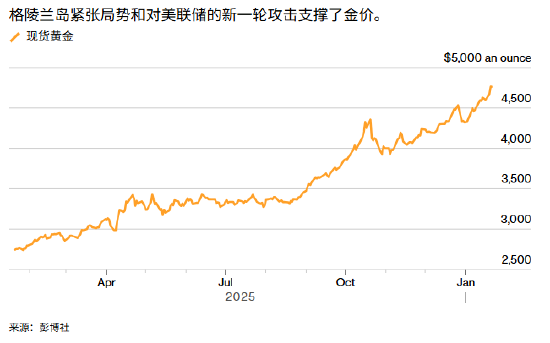
一场“史诗级”避险狂潮:黄金逼近5000美元,白银冲刺3位数!
Jin Shi Shu Ju· 2026-01-23 14:43
Group 1 - Gold is expected to have its best week in nearly six years, reaching nearly $5000 per ounce, while the dollar faces its worst week since June, dropping over 1% [1][4] - Silver is hovering just below its historical high of $100 per ounce, indicating strong demand for precious metals amid geopolitical uncertainties [1] - The crisis over Greenland has reignited concerns about political risks associated with U.S. assets, traditionally seen as a safe haven for global capital [6][8] Group 2 - The recent events have led to a shift in investor sentiment towards the dollar, with a notable increase in the demand for hedging against dollar exposure [5][10] - The Swiss franc and euro have both appreciated against the dollar, with the Swiss franc rising 1.6% and the euro increasing 1.2%, reflecting a search for alternative safe havens [9] - Analysts suggest that the credibility of U.S. policy has diminished, which may strengthen predictions of further dollar depreciation [10]
1月23日人民币对美元中间价调升90基点
Sou Hu Cai Jing· 2026-01-23 05:10
市场汇率方面,在岸离岸人民币对美元汇率走势不一。Wind数据显示,截至10:15,在岸人民币对美元 汇率报6.9640元,较前一交易日下跌12个基点;离岸人民币对美元汇率报6.9610元,较前一交易日上涨 31个基点。 1月23日,人民币对美元汇率中间价大幅调升。中国人民银行授权中国外汇交易中心公布的数据显示, 当日,人民币对美元汇率中间价报6.9929元,较前一交易日调升90个基点。 ...
ATFX:全球市场加速进入防御阶段 黄金今早首次突破4800美元
Xin Lang Cai Jing· 2026-01-22 13:37
专题:ATFX外汇专栏投稿 1月22日,ATFX:昨日随着美国市场从假期中回归,市场的震荡也显著上升,美国股指下跌超过2%, 标普500指数遭遇10月以来最大跌幅,抹去了2026年以来的涨幅。美元兑大多数主要货币走软,美债收 益率飙升触及四个月高位,30年期国债收益率攀升至接近5%。华尔街的回调以及其他金融市场的震 荡,让一些观察人士想起了去年四月,当时特朗普戏剧性的"解放日"贸易声明引发了市场动荡。 黄金作为传统的避险资产,价格也创下历史新高,昨日首次突破4700美元后,今早快马加鞭将新高刷新 自4800美元,等待明日美国公布GDP和PCE物价指数,但是在当前的避险氛围中,数据如果没有太大意 外,则市场仍会继续聚焦于避险买入黄金。 ▲ATFX图 美国总统特朗普没有放弃占领北极岛屿格陵兰岛的意图。格陵兰岛紧张局势升级,引发了人们对外国投 资者可能因贸易摩擦而抛售美国资产的担忧。美国威胁要对包括德国、法国和英国在内的八个反对其吞 并格陵兰岛计划的欧洲国家加征关税,此举引发了破坏性贸易战的担忧。有报道称,欧盟正在考虑对美 国进口商品征收价值930亿欧元的关税作为回应。 格陵兰总理表示,尽管军事入侵的可能性仍然很小 ...