新能源汽车制造

Search documents
促消费稳投资政策有望加快推出
21世纪经济报道· 2025-12-16 02:11
Core Viewpoint - The article highlights the overall stability of China's economy in November, despite some downward pressure on growth, with a focus on the resilience of exports and the recovery of service consumption [1][2][3]. Economic Data Summary - In November, the industrial added value for large-scale enterprises grew by 4.8% year-on-year, while the cumulative growth from January to November was 6.0%, showing a slight decline from the previous month [3]. - The service production index increased by 4.2% year-on-year in November, with a cumulative growth of 5.6% from January to November, indicating stable growth [3]. - Retail sales of consumer goods rose by 1.3% year-on-year in November, with a cumulative increase of 4.0% from January to November, surpassing last year's growth rate [5]. Sector Performance - Emerging industries and modern services are experiencing rapid growth, with specific sectors like electronic materials and integrated circuits seeing increases of 22.9% and 24.6% respectively from January to November [5]. - The production index for information transmission, software, and IT services grew by 12.9% year-on-year in November, reflecting a strong momentum in modern service development [5]. - Fixed asset investment (excluding rural households) decreased by 2.6% year-on-year from January to November, but manufacturing investment grew by 1.9%, indicating a shift towards new productive forces [6]. Export and Trade - In November, the total value of goods imports and exports increased by 4.1% year-on-year, with exports growing by 5.7% and imports by 1.7% [6]. - From January to November, the total value of goods imports and exports rose by 3.6%, with exports increasing by 6.2% and imports by 0.2%, demonstrating resilience in trade [6]. Policy Outlook - The Central Economic Work Conference signaled a commitment to implement policies aimed at boosting consumption and stabilizing investment, with a focus on achieving a growth target of around 5% for the year [1][8]. - Plans for 2026 include a special action to boost consumption and measures to enhance investment, particularly in infrastructure and emerging industries [9][10]. - The government aims to optimize the investment environment and stimulate private investment, recognizing significant potential in urbanization, technological innovation, and infrastructure [10][11].


高基数下11月经济整体稳定 促消费稳投资政策有望加快推出
2 1 Shi Ji Jing Ji Bao Dao· 2025-12-15 23:46
Economic Overview - In November, industrial, service, consumption, and investment data showed a downward trend due to high base effects from the previous year, but exports saw a year-on-year increase, indicating positive price signals [1][10] - The economy grew by 5.2% in the first three quarters, and macro policies are expected to strengthen, achieving a growth target of around 5% for the year [1][15] Industrial and Service Sector Performance - In November, the industrial added value increased by 4.8% year-on-year, while the cumulative growth from January to November was 6.0%, a slight decrease of 0.1 percentage points from the previous period [2][12] - The service production index rose by 4.2% year-on-year in November, with a cumulative growth of 5.6% from January to November, also down by 0.1 percentage points [2][12] - Emerging industries and modern services are growing rapidly, with significant increases in sectors like electronic materials and integrated circuits, which grew by 22.9% and 24.6% respectively [2][12] Consumption Trends - Retail sales of consumer goods increased by 1.3% year-on-year in November, with a cumulative growth of 4.0% from January to November, surpassing last year's annual growth rate [2][12] - The service retail sector saw a year-on-year growth of 5.4% from January to November, indicating strong potential for service consumption [3][13] - The "Double Eleven" shopping festival had a preemptive effect on consumption, leading to a temporary slowdown in November's growth [3][13] Investment Insights - Fixed asset investment (excluding rural households) decreased by 2.6% year-on-year from January to November, while investment excluding real estate development grew by 0.8% [3][13] - Infrastructure investment fell by 1.1%, while manufacturing investment increased by 1.9%, and real estate development investment dropped by 15.9% [3][13] - High growth was observed in manufacturing sectors such as railways, ships, aerospace, and new energy vehicles, indicating a strengthening of new productive forces [3][13] Export Performance - In November, total goods imports and exports increased by 4.1% year-on-year, with exports growing by 5.7% and imports by 1.7% [4][14] - From January to November, total goods imports and exports rose by 3.6%, with exports increasing by 6.2% and imports by 0.2% [4][14] Policy Outlook - The Central Economic Work Conference signaled a proactive approach to boost consumption and stabilize investment, with plans for a special action to enhance consumption in 2026 [11][17] - The National Development and Reform Work Conference emphasized the need for policy coordination to promote investment recovery and ensure a good start for the 14th Five-Year Plan [11][17] - There is a focus on expanding domestic demand and increasing effective investment, with expectations for interest rate cuts and fiscal policy to significantly support consumption and infrastructure investment in early next year [9][18]
11月份规模以上电子专用材料制造、集成电路制造增加值分别增长30.9%、32.4%
Bei Jing Shang Bao· 2025-12-15 04:07
Core Insights - In November, the manufacturing value added of electronic special materials and integrated circuits increased by 30.9% and 32.4% respectively, indicating strong growth in the electronics sector [1] - The production of smart products saw rapid growth, with the manufacturing value added of smart vehicle-mounted equipment and smart unmanned aerial vehicles increasing by 30% and 49.3% respectively, along with a 20.6% increase in industrial robot output [1] - The new energy industry is developing well under the green transition, with production of new energy vehicles and lithium-ion batteries for vehicles increasing by 17% and 32.7% respectively [1] - The production of green materials is also growing rapidly, with high-performance chemical fibers and bio-based chemical fibers seeing production increases of 41.3% and 27.7% respectively [1]
大市场“中”力量丨流量大省演绎“留量故事”——“大市场‘中’力量”系列报道之二
He Nan Ri Bao· 2025-12-14 23:41
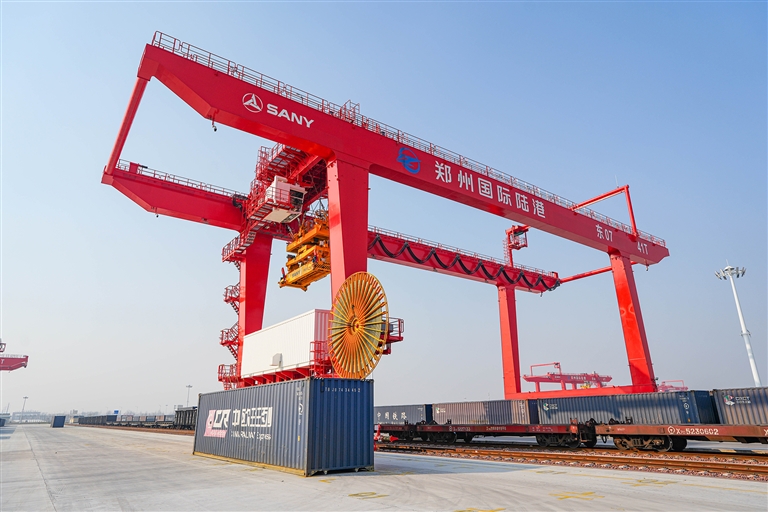
Core Viewpoint - Zhengzhou is establishing itself as a significant logistics hub in China, enhancing its role in both domestic and international markets through improved infrastructure and operational efficiency [4][6][9]. Group 1: Logistics and Infrastructure Development - Zhengzhou International Land Port has achieved regular operations, with the China-Europe Railway Express running 1-2 trains daily and special trains for new energy vehicles operating 4-5 times a day [6]. - The Zhengzhou Airport has seen a cargo volume of 825,200 tons by November 3, 2023, representing a year-on-year increase of 24.76%, surpassing the total volume of the previous year by 58 days [5]. - The Zhengzhou multi-modal transport data service center integrates data from over 450 companies, significantly reducing operational costs and improving efficiency [5]. Group 2: Economic Impact and Business Attraction - Foxconn's investment in Zhengzhou has led to a significant increase in the province's export-import volume, accounting for approximately 60% of the total [7][14]. - The expansion of air cargo routes from 51 to 70, covering 32 countries, has established a "72-hour delivery" network, enhancing Zhengzhou's global logistics capabilities [7]. - The establishment of global spare parts centers by companies like Super Fusion Digital Technology demonstrates the competitive advantage gained from Zhengzhou's logistics flow [8]. Group 3: Future Prospects and Strategic Initiatives - The provincial government is focusing on enhancing transportation networks, including high-speed rail and cargo rail, to strengthen Zhengzhou's position as a comprehensive transportation hub [9][10]. - The launch of the China Post Aviation Hub project aims to support the Belt and Road Initiative and enhance Zhengzhou's role in international trade [9]. - The establishment of the Luxembourg SolarCleano company's Asia-Pacific headquarters in Zhengzhou signifies the growing interest of international companies in the region [10].
东大出手专治不服!欧盟27国收加税通知,比利时表态释放重要信号
Sou Hu Cai Jing· 2025-12-13 08:22
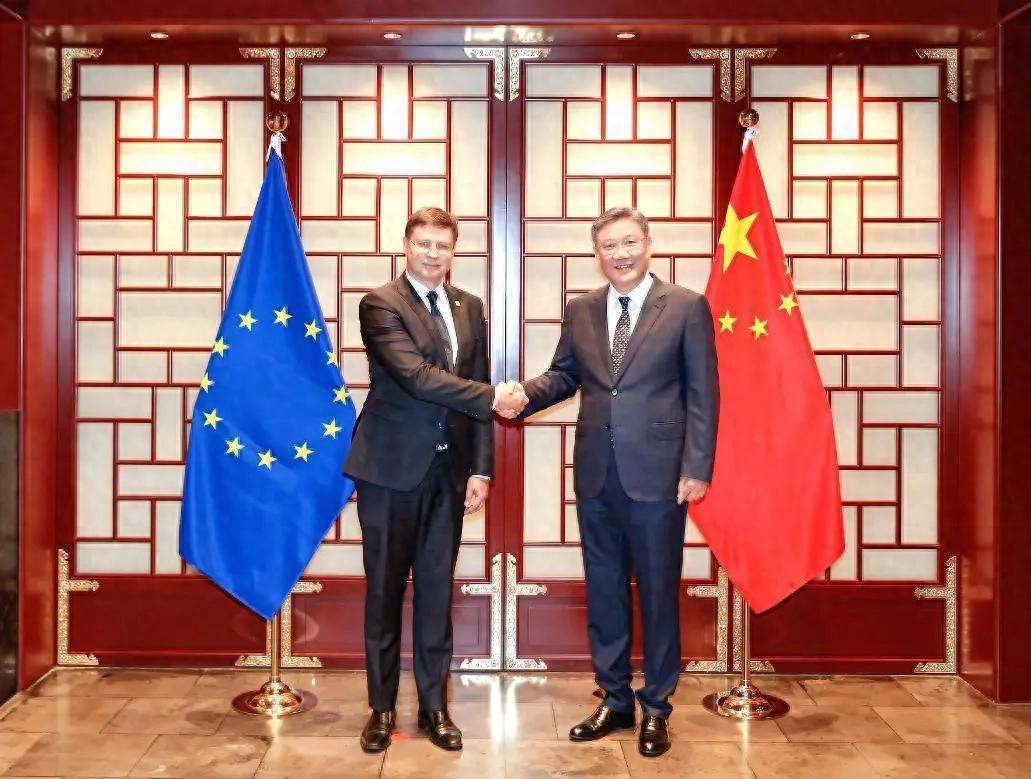
今年是中欧建交50周年,但欧盟在这一特殊时刻,却频繁采取伤害中欧友好关系的举动。例如,欧盟不仅对中国新能源汽车征收临时性反补贴税,还限制进 口中国医疗器械,并在G7集团峰会上联合美国,提出所谓的中国稀土威胁论。虽然中方一直将欧盟视为友好的合作伙伴,但欧盟的这一系列行为却严重影 响了中欧关系的发展。 商务部宣布,从12月1日起,对欧盟所有成员国出口到中国的不锈钢产品加征43%的反倾销税,且此项措施将持续五年。这次加税是中方对欧盟的一次警 告,同时也是向世界传递中国反制贸易保护主义的决心。那么,为什么中国要针对欧盟钢铁行业加征关税呢? | English Francais | 首页 > 政务公司 > 政策发布 | | --- | --- | | Русский Español | | | Deutsch | 2025-06-30 15:45 来源:贸易救济局 类型:原创 | | 无障碍浏览 | | | 首 页 | 商务部公告2025年第33号 公布对原产于欧盟、 車 | | 唱 机构设置 | 国、韩国和印度后可以的进口不锈钢钢坯和不锈钢 | | 目 新闻发布 | 热轧板/卷所适用反倾销措施的期终复审裁定 | | ...
“零跑现象”获央视点赞:中国车企出海2.0时代的破局者
Zhong Guo Qi Che Bao Wang· 2025-12-10 03:42
Core Insights - Leap Motor, defined as an "industry dark horse," has achieved significant milestones in the Chinese electric vehicle market, including being the top-selling new energy vehicle brand for nine consecutive months and doubling its sales year-on-year in Q3 [2][3] - The company's success is attributed to its comprehensive self-research strategy and innovative overseas expansion model, providing a new template for high-quality internationalization of Chinese car manufacturers [2][3] Group 1: Market Position and Strategy - The Chinese electric vehicle market is entering a "淘汰赛" (elimination round) phase, with leading brands engaging in price wars and new entrants facing funding and technology challenges [3] - Leap Motor's breakthrough is not merely due to sales growth but is a result of its long-term commitment to a comprehensive self-research strategy and a healthy business model [3][5] - Unlike many new entrants that focus on supply chain integration for quick monetization, Leap Motor's self-research approach creates a unique core barrier, covering essential hardware and software systems [5] Group 2: Financial Performance - In Q3, Leap Motor achieved a net profit of 150 million yuan and a gross margin of 14.5%, demonstrating that its growth is based on sound business logic rather than merely "burning cash" for volume [5] - The company has 33.92 billion yuan in available funds, indicating a robust financial position that supports its growth strategy [5] Group 3: Product and Technology Validation - The popularity of multiple models, including the C10, T03, and B10, serves as market validation of Leap Motor's technological capabilities, with the B10 recognized as a benchmark in the smart SUV segment [7] - Leap Motor has exceeded its annual target of 500,000 units and aims for one million units by 2026, showcasing its sustainable growth potential [7] Group 4: Overseas Expansion - Leap Motor's rapid overseas expansion is characterized by innovative cooperation models and high-quality channel layouts, differentiating it from traditional Chinese car manufacturers [8][10] - The company has established over 800 stores in 35 countries within just over a year, leveraging a strategic partnership with Stellantis to integrate resources across the supply chain [10] - Leap Motor's overseas outlets serve as comprehensive service centers, enhancing customer trust and market penetration, particularly in Europe [11] Group 5: Global Recognition and Market Entry - In November 2025, Leap Motor received 15,000 export orders, marking a significant milestone in the global recognition of Chinese automotive brands [14][16] - The B10 model has achieved Euro NCAP five-star certification, surpassing EU standards in key safety metrics, which has facilitated its entry into the competitive European market [16] - Leap Motor's user base in Europe consists primarily of mid-to-high-end consumers, indicating a shift in the brand's market perception and positioning [17] Group 6: Future Outlook - With plans for localized production in Malaysia and Europe by 2026, Leap Motor aims to reduce costs and respond quickly to regional market demands [13][22] - The company's experience highlights the importance of a technology-driven approach, user-centric focus, and innovative business models for Chinese car manufacturers to establish a foothold in the global market [22]

蔚小理2025年第三季度财报解析:小鹏交付量领跑 蔚来冲刺四季度盈利
Zhong Guo Zhi Liang Xin Wen Wang· 2025-12-09 07:28
Core Insights - The Chinese electric vehicle market is entering a critical phase of stock competition, with distinct performance differences among NIO, Xpeng, and Li Auto, reflecting a shift from single-dimensional competition to comprehensive strength comparison in the industry [1] NIO - NIO's multi-brand strategy has begun to yield results, achieving record delivery and revenue figures, with 87,071 vehicles delivered in Q3, a year-on-year increase of 40.8% and a quarter-on-quarter increase of 20.8% [3] - Q3 revenue reached 21.79 billion yuan, up 16.7% year-on-year and 14.7% quarter-on-quarter, with a significant improvement in profitability as automotive gross margin rose to 14.7%, the highest in three years [3][5] - Cost optimization has been a key factor in profitability improvement, with R&D expenses down 28% to 2.39 billion yuan, and cash reserves increased to 36.7 billion yuan, providing a solid foundation for future operations [5] - NIO aims for aggressive profitability targets, projecting Q4 deliveries of 120,000 to 125,000 vehicles, a year-on-year increase of 65.1% to 72.0%, and revenue of 32.76 billion to 34.04 billion yuan, a year-on-year increase of 66.3% to 72.8% [5] Xpeng - Xpeng experienced explosive growth in Q3, achieving record delivery of approximately 116,000 vehicles, a year-on-year increase of 149.3% and a quarter-on-quarter increase of 12.4% [10] - Total revenue reached 20.38 billion yuan, up 101.8% year-on-year, with a gross margin of 20.1%, marking a significant milestone [10][12] - R&D expenses reached a historical high of 2.43 billion yuan, reflecting a long-term commitment to technology development, while Q4 delivery guidance indicates a cautious approach with expected deliveries of 125,000 to 132,000 vehicles [12][14] Li Auto - Li Auto ended a streak of 11 consecutive profitable quarters, with Q3 revenue down 36.2% to 27.4 billion yuan and a net loss of 624 million yuan, marking its first quarterly loss in three years [15][17] - Q3 delivery volume was approximately 93,200 vehicles, a year-on-year decline of 39.0%, primarily due to weak demand for range-extended vehicles and slow ramp-up of pure electric models [17] - Despite the challenges, Li Auto maintains a strong cash reserve of 98.9 billion yuan and plans to return to a startup management model to focus on user value and efficiency improvements [19][21] Industry Trends - The competition logic in the electric vehicle market has fundamentally changed, with a focus on technological innovation as the new core competitive advantage, moving away from reliance on single blockbuster models or price wars [21] - The year 2026 is anticipated to be pivotal for reshaping the landscape of new forces in the industry, with the success of NIO, Xpeng, and Li Auto hinging on their strategic execution and responsiveness to market changes [21]



今日新闻丨特斯拉上海工厂第400万辆新车下线!地平线宣布城区辅助驾驶将普惠10万元车型!
电动车公社· 2025-12-08 16:02
Group 1 - Tesla's Shanghai Gigafactory has produced its 4 millionth vehicle, a golden Model Y L, marking a significant milestone in its production history [1][7] - The Shanghai Gigafactory has contributed nearly half of Tesla's global vehicle deliveries, establishing itself as a core pillar of Tesla's global production capacity [5][7] - The time taken to produce the last million vehicles (from 3 million to 4 million) was less than 14 months, indicating a stable ramp-up in production capacity [7] Group 2 - Horizon Robotics announced that its urban assisted driving technology will be available for vehicles priced at 100,000 yuan, expanding accessibility to advanced driving features [8][11] - The HSD product from Horizon Robotics has seen over 12,000 activations within just two weeks of its launch [9][10] - The latest smart driving chip, the fourth-generation Riemann architecture, boasts a tenfold increase in computing power, surpassing Moore's Law [10] - Horizon Robotics aims to achieve mass production of urban assisted driving systems in partnership with ecosystem partners over the next 3-5 years [11][14]


新能源“烂尾车”逆袭二手车市场
Zhong Guo Qi Che Bao Wang· 2025-12-08 14:32
Core Insights - The second-hand electric vehicle market is witnessing a surge in demand for "abandoned cars" from young consumers, who are attracted by their high cost-performance ratio despite potential safety risks [2][4][11] - The emergence of a grassroots ecosystem around these "abandoned cars" is helping to alleviate concerns regarding maintenance and repair, as consumers adopt a digital product mindset [5][12] Group 1: Consumer Behavior - Young consumers view purchasing "abandoned cars" as a practical decision, focusing on the durability of the battery and the stability of the chassis rather than brand reputation [3][4] - The significant price reduction, with vehicles that once cost 200,000-300,000 yuan now available for 50,000-60,000 yuan, is a major factor driving interest among budget-conscious buyers [5][11] - Social media discussions around topics like "picking up abandoned electric vehicles" have gained immense traction, indicating a shift in consumer perception towards these vehicles [5][12] Group 2: Market Dynamics - The number of electric vehicle brands in China has drastically decreased from over 400 in 2018 to about 40, with many brands like Weima and Neta going bankrupt, resulting in approximately 1 million "abandoned cars" in circulation [11][12] - The rise of specialized repair shops and online communities for "abandoned cars" reflects a growing acceptance and adaptation among consumers, who are willing to engage in DIY repairs and modifications [8][10] - Despite the active consumer engagement, the lack of official after-sales service and insurance challenges remains a significant concern that needs to be addressed by regulatory bodies [11][12] Group 3: Regulatory Considerations - The need for enhanced regulatory oversight is emphasized, particularly regarding after-sales service for the large number of "abandoned cars" currently in use, to protect consumer rights [11][12] - Industry experts stress the importance of ensuring that the management of electric vehicles keeps pace with rapid technological advancements and market changes [11]

150欧免税取消,中国电商如何应战?
Sou Hu Cai Jing· 2025-12-05 02:51
Core Viewpoint - The European cross-border e-commerce market is undergoing significant changes due to new tax policies and increasing scrutiny on Chinese e-commerce platforms like SHEIN and Temu, which face challenges in expanding their market presence in Europe [1][5][19]. Group 1: Regulatory Changes - The European Council has announced the implementation of a small package tax policy, which will take effect in early 2026, eliminating the previous exemption for goods under €150 [1]. - All incoming packages will now incur customs duties, VAT, and a customs inspection fee of approximately €2, which will complicate the logistics for e-commerce platforms [1][5]. - Experts suggest that these changes will shift consumer purchasing decisions from price-driven to value and trust-oriented, increasing the operational costs for sellers due to the need for more detailed customs data [5][21]. Group 2: Market Dynamics - In 2024, the EU is expected to receive 4.6 billion low-value e-commerce packages, with 91% originating from China, equating to approximately 4.186 billion packages [7][8]. - Despite regulatory challenges, Temu and SHEIN have seen substantial user growth in Europe, with Temu's monthly active users reaching 115.7 million in the first half of 2025, a 12.5% increase from the previous year [9]. - The economic downturn in Europe, exacerbated by the Russia-Ukraine conflict, has led consumers to seek more affordable options, benefiting discount retailers and platforms like Temu and SHEIN [10][11][14]. Group 3: Consumer Behavior - European consumers are increasingly turning to discount stores and e-commerce platforms for essential goods, reflecting a shift in spending habits due to inflation and economic uncertainty [10][14]. - The disparity between wealth and poverty in Europe is growing, with many middle-class consumers feeling the pinch and opting for cheaper alternatives like SHEIN [15][16]. - The demand for affordable products is evident, as consumers express a preference for low-cost options over locally produced goods, highlighting a significant market opportunity for Chinese e-commerce [15][16]. Group 4: Strategic Responses - Some sellers are considering shifting to local e-commerce platforms to navigate the new regulatory landscape, but experts argue that this strategy may be outdated due to declining marketing budgets on these platforms [19][21]. - Sellers are still required to pay customs duties regardless of whether they ship directly from China or use local warehouses, complicating the logistics further [21]. - Temu and SHEIN are viewed as the best options for sellers due to their traffic advantages and lower commission rates compared to other platforms [21][22]. Group 5: Brand Development - The long-term solution for sellers lies in building brands rather than relying solely on low-price strategies, which are unsustainable in the European market [28][31]. - Successful brand development requires a focus on product positioning, uniqueness, and alignment with market needs, as demonstrated by the success of brands like Avril Paris [31][33]. - The rise of the Print on Demand (POD) model has shown that Chinese sellers can effectively respond to market trends and consumer demands for personalized products [29][30].