消费零售

Search documents
国际投行上调中国经济增速预期 “中国资产”成下一个投资风口
Shang Hai Zheng Quan Bao· 2025-07-16 23:39
Group 1 - China's GDP grew by 5.3% year-on-year in the first half of the year, exceeding expectations and prompting several international investment banks to raise their economic growth forecasts for China [1][2] - Key reasons for the upward revision include "export resilience" and "policy support," which have been frequently mentioned by foreign institutions [1] - Wellington Management, a major investment firm, highlighted China as a significant investment target, indicating a growing optimism towards the Chinese stock market [1][4] Group 2 - Nomura and Morgan Stanley have both adjusted their 2025 GDP growth forecasts for China upwards, reflecting stronger-than-expected second-quarter performance [2] - UBS noted that the second-quarter GDP growth was supported by consumer spending improvements and robust export performance, leading to an overall positive outlook for 2025 [2] - The anticipated government policies, including subsidies and monetary easing, are expected to further support economic growth in the second half of 2025 [3] Group 3 - Market expectations are leaning towards additional incremental policy support to boost household consumption and stabilize the real estate market [3] - The strong export activity has been a key driver of China's economic growth, with diversification efforts in the export market helping to maintain resilience amid global trade uncertainties [3] - The Chinese capital market is viewed as having significant investment potential, with optimistic sentiment driven by domestic policy support and advancements in technology sectors like AI and electric vehicles [4][5] Group 4 - Investors are increasingly optimistic about Chinese stocks, with attractive valuations compared to global markets, suggesting potential for further upward movement [4][5] - Wellington Investment provided ten key reasons for the positive outlook on Chinese assets, including improving fundamentals, resilient economic models, and reduced reliance on the US capital market [5]


专访淡马锡吴亦兵:继续重仓中国,看好新兴消费和AI应用前景
Di Yi Cai Jing· 2025-07-16 12:52
Core Insights - The net asset value of Temasek's investment portfolio increased by 4 billion SGD compared to the previous fiscal year [1] - Temasek's investment portfolio reached a historical high of 434 billion SGD, with an increase of 45 billion SGD from the previous fiscal year [4] - Temasek's investment activities in the past fiscal year were notably active, with investments totaling 52 billion SGD and divestments reaching 42 billion SGD [5] Investment Focus - Temasek's investment strategy remains focused on China, with a slight decrease in the proportion of its investment portfolio in China to 18% [6] - The company continues to emphasize technology innovation, particularly in AI, as a key investment theme in China [9][10] - Temasek's new private equity fund, established to attract potential RMB limited partners, aims to invest in high-quality assets in China [1][9] Market Dynamics - The investment portfolio is divided into three main segments: Singapore-based investments (41%), global direct investments (36%), and cooperative investment projects (23%) [5] - The company has observed a shift in the investment landscape, with a growing focus on resilient assets and cash flow due to increasing market uncertainties [8] - Temasek's long-term confidence in the Chinese market remains unchanged, despite fluctuations in the investment portfolio's exposure [6][11] Consumer Market Insights - The Chinese consumer market is maturing, with a shift towards service-oriented consumption and the rise of local brands [12][13] - Temasek identifies the potential for growth in service consumption, which has a high multiplier effect, supported by comprehensive consumption promotion policies [13] - The company believes that stabilizing the real estate market is crucial for boosting consumer confidence and overall economic growth [12][13]

海南勇立潮头奋楫向前
Jing Ji Ri Bao· 2025-07-11 22:14
Group 1 - The core viewpoint of the article emphasizes the rapid development and establishment of Hainan's Free Trade Port during the "14th Five-Year Plan" period, showcasing a more open Hainan to the world [1] - Hainan's Free Trade Port policies are being implemented effectively, with numerous "firsts" emerging since the beginning of the "14th Five-Year Plan," indicating accelerated progress in the construction of the Free Trade Port [2][3] - The processing value-added policy, which exempts tariffs for processing value-added over 30%, is a key feature of Hainan's Free Trade Port, benefiting various industries and promoting high-quality development [3] Group 2 - The "Investment in Hainan Links the World" event attracted global enterprises, including representatives from Fortune 500 companies, indicating strong international interest in Hainan's Free Trade Port [4] - The fifth China International Consumer Products Expo held in Hainan showcased a record number of exhibitors and brands, highlighting Hainan's growing influence in the international market [5][6] - Hainan's total import and export value reached 2776.5 billion in 2024, with exports surpassing 1000 billion for the first time, reflecting robust trade growth [6] Group 3 - The introduction of electronic bills of lading has significantly improved the efficiency of international trade, demonstrating Hainan's commitment to integrating innovative systems and enhancing trade facilitation [7] - Hainan has implemented a new model for special approval of imported plant breeding materials, which has opened new channels for resource introduction and stimulated technological innovation [8][9] - The provincial government is focusing on institutional innovation to support reform implementation, aiming to create a conducive environment for further deepening reforms [9]
“IPO潮”来了
FOFWEEKLY· 2025-07-01 09:59
Core Viewpoint - The article emphasizes the significant increase in IPO activities in the A-share market during the first half of the year, driven by favorable policies and a renewed interest in technology and consumption sectors [2][3][20]. Summary by Sections IPO Surge - In the first half of the year, 177 companies were accepted for IPOs in the A-share market, a 4.5-fold increase compared to the same period last year [3][9]. - June was particularly notable, with 150 companies accepted for IPOs, accounting for 85% of the total for the first half [3][9]. - On June 30 alone, 41 IPO applications were accepted, marking the highest single-day record for the year [10]. Policy Support - Recent policy changes have positively impacted the IPO market, including the resumption of the fifth set of standards for unprofitable companies on the Sci-Tech Innovation Board [8][15]. - A joint document from six departments supports quality enterprises in the consumption industry to raise funds through IPOs and other means [8][15]. Market Dynamics - The first half of the year saw a notable increase in IPO applications, particularly in June, with a month-on-month growth exceeding four times [9][10]. - The majority of new applications were concentrated in the North Exchange, with 115 companies applying [9]. Investment Opportunities - The article highlights a revival in the investment landscape, particularly in the medical and consumer sectors, with several unprofitable companies recently receiving IPO approvals [15][16]. - The positive momentum in the IPO market is expected to create richer investment opportunities for the industry [16]. Hong Kong Market Performance - The Hong Kong IPO market has also shown significant growth, with 43 IPOs completed in the first half of the year, a 43.33% increase year-on-year [17]. - The total fundraising amount reached 1,067.13 billion HKD, a substantial increase compared to the previous year [17]. Future Outlook - The article suggests that 2025 will be a promising year for the venture capital industry, with both A-share and Hong Kong IPO markets showing signs of recovery [20][21]. - The need for diversified exit strategies, particularly in mergers and acquisitions, is emphasized for venture capital firms to adapt to the evolving market [20][21].

赴港上市热折射市场信心足
Jing Ji Ri Bao· 2025-06-26 21:52
Core Insights - Hong Kong's capital market has shown a strong recovery in the first half of the year, with approximately 40 companies completing IPOs and raising a total of about 78 billion HKD, representing a 33% and 565% increase compared to the same period last year [1] Group 1: IPO Trends - The IPO market in Hong Kong is characterized by three main themes: hard technology, new consumption, and biomedicine [2] - Notable IPOs include CATL's H-share listing, which is the largest IPO globally in 2023, and Jiangsu Hengrui Medicine's IPO, marking the largest in the Hong Kong pharmaceutical sector in five years [2][3] - The listing of MiRXES, a Singapore-based biotech unicorn, attracted significant international interest, with over 40% of the shares allocated to international investors [2] Group 2: Sector Analysis - The fundraising amounts are primarily directed towards high-end manufacturing, followed by the pharmaceutical and retail sectors, indicating that technology, medicine, and consumption are becoming the pillars of Hong Kong's IPO market [3] - Mainland Chinese enterprises dominate the IPO landscape, with many well-known companies opting for dual listings or spin-offs in Hong Kong [3] Group 3: Market Dynamics - There is a noticeable polarization in the market, with large IPOs like CATL and Hengrui Medicine raising the average fundraising amount significantly, while smaller companies also enter the market with offerings between 10 million and 50 million HKD [4] - The average first-day price increase and turnover rate for new stocks have risen compared to last year, reflecting strong investor interest in high-quality leading companies [4] Group 4: Regulatory Environment - Recent reforms by the Hong Kong Stock Exchange and regulatory bodies have injected vitality into the IPO market, including the introduction of a new settlement platform that reduces the IPO fund freeze period from five days to two [6][7] - The "Specialized Technology Company" system allows unprofitable biotech companies to list, lowering the barriers for innovative firms [6] Group 5: International Investment - Global funds are increasingly interested in Chinese assets, with many IPOs attracting oversubscription from international long-term investors during the offering phase [8] - The unique position of Hong Kong as an offshore market for China is appealing to investors, contributing to strong pricing and performance of new listings [8]



从 5 次投资 Manus 肖弘聊起:一场仍在进行时的创业长跑
Sou Hu Cai Jing· 2025-06-24 01:33
Core Insights - The article discusses the investment journey of Liu Yuan in the startup Manus, founded by Xiao Hong, highlighting the evolution of their relationship over five rounds of investment since 2016 [1][2][5]. Investment Journey - Liu Yuan's confidence in Xiao Hong has grown with each investment round, indicating a belief in the company's trajectory and potential [2][21]. - The first investment was in "Nightingale Technology," where the team gained initial traction but faced funding challenges, leading to a successful acquisition in 2022 [5][7]. - The second investment was in a project inspired by Benchling, marking a transition for Xiao Hong into a more mature entrepreneurial phase [8][12]. - The third investment was pivotal, as Xiao Hong recognized the potential of AGI and pivoted from "Jianji" to "Monica," seizing a significant market opportunity [11][20]. Product Development and Market Response - Manus, initially a plugin, evolved into a standalone product, demonstrating the team's ability to adapt and innovate in response to market trends [11][12]. - The growth of Monica's user base from 3,000 to over 1 million and its recognition in the industry reflects its increasing market penetration and acceptance [13][14]. - Despite challenges in securing higher valuations during funding rounds, the product's user engagement and recognition have been strong indicators of its potential [14][15]. Strategic Decisions - Xiao Hong's decision to delay product launches until they met his standards showcases a commitment to quality and long-term vision [15][21]. - The strategic choice to keep Monica and Manus as independent products allowed for focused growth and development, avoiding potential dilution of brand identity [12][21]. Industry Context - The current investment climate in AI startups is characterized by heightened interest and competition, with many investors eager to capitalize on emerging opportunities [3][4]. - Liu Yuan's reflections on the evolution of venture capital highlight a shift from a focus on market size to a deeper understanding of the entrepreneur's vision and execution capabilities [30][51].


总量双周报:扰动增加,趋势依旧-20250619
Dongxing Securities· 2025-06-19 09:29
Macroeconomic Insights - Consumption has exceeded expectations, showing a moderate recovery in economic activity, with May's data indicating a further rebound in consumption and a slight increase in production[4] - The Consumer Price Index (CPI) remains negative year-on-year, but core inflation has stabilized above 0.5%[4] - Industrial added value growth rate fell to 5.8% year-on-year in May, indicating a relatively mild production environment[4] Market Strategy - The market is experiencing increased disturbances, particularly due to geopolitical tensions affecting oil prices, which has led to a rise in gold prices[6] - Despite market adjustments, the overall trend remains a stable upward trajectory, with expectations for a structural bull market starting in the third quarter[6] - The A-share market is transitioning from quantitative to qualitative changes, with a significant focus on sectors like innovative pharmaceuticals and new consumption[6] Fixed Income Outlook - Recent weeks have seen a general decline in interest rates across various maturities, with short-term rates dropping significantly, indicating a supportive monetary policy environment[28] - The average rates for DR001 and DR007 have decreased by over 10 basis points, reflecting a downward trend in funding costs[28] - The current environment presents opportunities for investment in time deposits as rates are expected to continue declining[29] Banking Sector Analysis - The banking sector shows stable profitability, with credit growth slightly slowing but deposit growth rebounding[36] - The price adjustments following interest rate cuts are expected to alleviate pressure on net interest income, with a controlled decline in net interest margins anticipated[36] - The banking index has outperformed the broader market, indicating strong relative performance[35] Real Estate Market Trends - New home sales have seen a narrowing decline, with a year-to-date cumulative sales area growth rate of -0.3% across 33 cities[38] - The government is emphasizing a multi-faceted approach to stabilize the real estate market, aiming to activate demand and optimize supply[38] - Policies are expected to support a gradual recovery in the real estate sector, with a focus on leading companies with strong market capabilities[40] Non-Banking Financial Institutions - The securities market remains stable, with daily trading volumes in major exchanges ranging from 1.1 to 1.5 trillion yuan[42] - The impact of U.S. tariffs on global trade is significant, but domestic policies aimed at boosting consumption may mitigate some adverse effects[42] - The upcoming Lujiazui Forum is anticipated to introduce significant policies that could enhance market confidence and investment value[43]
午后跳水!3倍大牛股,突然20%闪崩跌停!两市超4600只个股下跌!港股也大跌,泡泡玛特跌6%...
雪球· 2025-06-19 08:01
Market Overview - The market experienced a decline, with the Shanghai Composite Index falling by 0.79%, the Shenzhen Component Index down by 1.21%, and the ChiNext Index decreasing by 1.36% [1] - Over 4,600 stocks in the market saw declines, indicating a broad-based sell-off [2] Sector Performance - Oil and gas stocks surged against the trend, with companies like Junyou Co. hitting the daily limit up [2][17] - The solid-state battery concept stocks showed significant activity, with multiple stocks reaching their daily limit up [22] - The pharmaceutical sector faced a collective pullback, highlighted by Changshan Pharmaceutical's 20% limit down, following a substantial increase of nearly 300% from its low in April [5][11] Hong Kong Market - The Hong Kong market also adjusted, with the Hang Seng Index and Hang Seng Tech Index both dropping over 2% [3] - New consumption concept stocks in Hong Kong, such as Pop Mart, saw declines exceeding 5% [12][13] Oil and Gas Sector Insights - The oil and gas sector's rise is attributed to ongoing tensions in the Middle East and fluctuations in international oil prices [20] - Companies like Junyou Co. have seen consecutive gains, reflecting investor confidence amid geopolitical uncertainties [17] Solid-State Battery Industry - The solid-state battery industry is accelerating its commercialization, with major automotive companies like BMW and Mercedes-Benz testing new technologies [25] - Morgan Stanley predicts that the global solid-state battery market will reach $120 billion by 2030, with a compound annual growth rate of 45%, and China expected to capture 40% of this market [26]

央行与土耳其续签350亿元货币互换协议 南向资金成交创九周新高
Sou Hu Cai Jing· 2025-06-15 02:11
Group 1 - The People's Bank of China and the Central Bank of Turkey have renewed a bilateral currency swap agreement worth 35 billion RMB, equivalent to 189 billion Turkish Lira, with a validity of three years [1] - This agreement marks a new phase in financial cooperation between China and Turkey, facilitating cross-border settlements in local currencies and promoting bilateral trade and investment [3] - As of May 31, 2025, the People's Bank of China has signed bilateral currency swap agreements with 32 central banks, with an outstanding balance of 81.8 billion RMB utilized by foreign central banks [3] Group 2 - Southbound capital transactions reached a record high of 640.38 billion HKD this week, marking a 56.36% increase from the previous week [4] - Notable stocks with high trading volumes include Xiaomi Group-W, Alibaba-W, Meituan-W, and Pop Mart, each exceeding 20 billion HKD in total transactions [4] - Meituan-W saw the highest net buy of 3.605 billion HKD despite a 2.47% decline in stock price, indicating sustained interest from southbound capital [4] Group 3 - Three stocks experienced significant increases in holdings, with Yimai Sunshine, BYD Company, and China National Nuclear Power leading the growth at 116.02%, 40.38%, and 37.05% respectively [5] - Yimai Sunshine's holdings doubled to 40.776 million shares, despite a 17.21% drop in stock price, following the acquisition of 100% equity in Zhongya Diagnostics [5] - BYD Company reported a record weekly increase in holdings of 20.188 million shares, with a total of 70.1799 million shares held, as the company aims to standardize supplier payment terms to within 60 days [5]


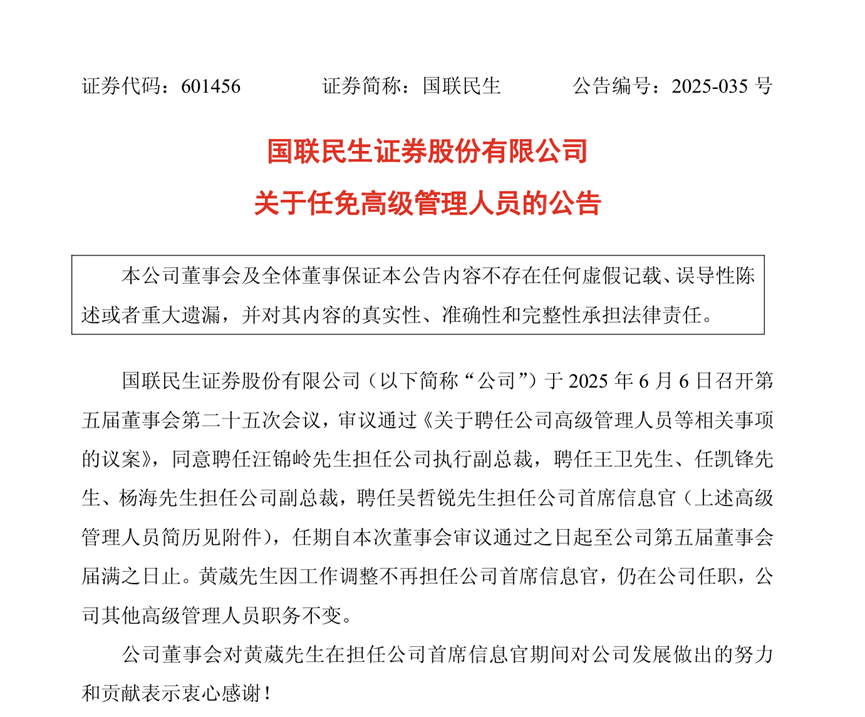
107家私募狂买ETF!新消费分歧:百亿私募喊话泡沫明显公募持续布局,该信谁?国联民生五名高管集体任命,洪灏“闪辞”华福国际CEO| 私募透视镜
Sou Hu Cai Jing· 2025-06-09 11:20
热点聚焦 107家私募狂买ETF,招商利安新兴亚洲精选ETF份额暴增! 私募排排网数据显示,截至6月8日,今年来已有107家私募旗下产品现身年内上市的252只ETF前十大持有人,总持有份额 达18.61亿份。 年内买上市ETF数量在10只以上的私募分别是:铸锋资产(21只)、景弘基金(16只)、众壹资产(14只)、上海秉昊私募(10只)、 思勰投资(10只)。 数据显示,在所有年内上市的ETF中,私募持有份额超3000万份的ETF有24只,合计10.66亿份。其中,"招商利安新兴亚洲 精选ETF(QDII)"的持有份额位居第1,达8653.23亿份,占场内总份额比例的8.66%。另外,"大成中证全指自由现金流 ETF"被恒泰融安、上海秉昊私募、上海鹤禧私募、科瑞菲亚4家私募持有,合计持有份额为6800.29万份,占场内总份额比 例的6.26%,位居第2。 明显的泡沫?新消费分歧:百亿私募喊话泡沫明显,公募持续布局,该信谁? 尽管新消费板块带来了亮眼的收益,但股价接连新高下,市场分歧也来了。"港股三朵金花"两涨一跌:泡泡玛特今天的股 价从新高走向新高;同样是股价飙升的蜜雪冰城新进港股通标的;老铺黄金则失守900 ...