
航运

Search documents
红利资产逆市活跃,现金流ETF嘉实(159221)聚焦内生增长能力的“现金牛”组合
Xin Lang Cai Jing· 2026-01-15 03:52
Group 1 - The core viewpoint of the articles highlights the active performance of the dividend assets in the A-share market, with a focus on the "new and old coexistence" structural feature, where technology and overseas expansion are central to the profit pattern reshaping [1] - The National Securities report indicates that the technology and overseas expansion sectors currently account for 36% of A-share profits, with expectations to rise to 60%, establishing a dual mainline in fundamentals [1] - The PPI stabilization is driving profit recovery in upstream resource products, with notable performance in globally priced commodities like non-ferrous metals [1] Group 2 - The top ten weighted stocks in the National Securities Free Cash Flow Index as of December 31, 2025, include China National Offshore Oil Corporation, SAIC Motor, Gree Electric Appliances, and others, collectively accounting for 51.95% of the index [2] - The cash flow ETF, Jia Shi (159221), closely tracks the National Securities Free Cash Flow Index, aiming to create a combination of profitability quality and dividend potential [2] - Investors can also access opportunities through the cash flow ETF Jia Shi's off-market connection (024574) [3]
现货价格有所松动,02合约估值逐步清晰
Hua Tai Qi Huo· 2026-01-15 03:00
航运日报 | 2026-01-15 Gemini Cooperation:马士基上海-鹿特丹WEEK4价格1695/2730,WEEK5价格1510/2420;HPL 1月下半月船期报 价1585/2535,2月上半月船期报价1585/2535. MSC+Premier Alliance:MSC 1月下半月船期报价1580/2640;ONE 1月下半月船期报价1680/2635,2月上半月船期 报价1680/2635;HMM上海-鹿特丹1月下半月船期报价1733/3036. Ocean Alliance:CMA 上海-鹿特丹1月下半月船期报价1859/3293,2月份船期价格1859/3293;EMC1月下半月船 期报价3030-3130美元/FEU;OOCL 1月上半月份船期报价2633-2730美元/FEU。 地缘端:美国特使威特科夫表示,我们正式宣布启动特朗普关于结束加沙冲突"二十点计划"的第二阶段。第二阶 段将在加沙建立一个过渡性的巴勒斯坦技术官僚政府,并开启加沙地带的全面去军事化与重建工作。美国期望哈 马斯完全履行其义务。美国期望哈马斯立即归还最后一名遇难人质,否则将面临严重后果。 静态供给:交付现 ...
集运早报-20260115
Yong An Qi Huo· 2026-01-15 01:22
Report Summary 1. Report Industry Investment Rating No information provided. 2. Core Views - For the EC2602 contract, it is moving towards the delivery logic, and its subsequent performance will be affected by the spot market. With a neutral valuation currently, it is not recommended to enter the market [3]. - For the EC2604 contract, attention should be paid to the spot market and actual rush - shipping situations. The expected decline in the Week 5 MSK opening price may suppress the market, but the increasing rush - shipping scale due to falling freight rates may weaken the price decline slope in March. The valuation fluctuates widely within a reasonable range, and it is advisable to watch for potential correction opportunities [3]. - The adjustment of export tax rebates is negative for the far - month contracts. Considering significant geopolitical disturbances in the far - month contracts, it is generally recommended to short the 10 - contract on rallies [3]. 3. Summary by Relevant Content Market Data - **Contract Prices and Changes**: On January 15, 2026, the closing prices of EC2602, EC2604, EC2606, EC2608, and EC2610 were 1718.0 (down 0.14%), 1230.5 (up 2.57%), 1424.1 (up 0.75%), 1532.6 (up 0.18%), and 1118.0 (up 0.96%) respectively. The trading volumes were 5642, 45075, 1903, 212, and 1822, and the open interests were 10461 (down 1401), 40044 (up 1274), 3130 (down 134), 1306 (down 53), and 7625 (up 179) [2]. - **Month - spread**: The month - spreads of EC2502 - 2604 and EC2504 - 2606 were 487.5 and - 193.6 respectively, with day - on - day changes of - 33.2 and 20.2 [2]. - **Shipping Indexes**: The SCFIS (European Line) on January 12, 2026, was 1956.39 points, up 8.94% from the previous period; the SCFI (European Line) on January 9, 2026, was 1719 dollars/TEU, up 1.72% [2]. Spot Market Conditions - **Week 3**: MSK opened at 2600 dollars, other alliances had small declines. The central price was 2750 dollars, equivalent to about 1930 points [4]. - **Week 4**: MSK opened at 2700 dollars, other alliances remained stable. The central price was 2750 dollars, equivalent to about 1930 points [4]. - **Week 5**: MSK opened at 2400 dollars (down 300 dollars from the previous week), YML quoted 2650 dollars, MSC quoted 2640 dollars. The overall central price was 2650 dollars (equivalent to 1855 points). On Wednesday, YML offered special prices of 2250 dollars for two routes [4]. News - **Palestinian Cease - fire Agreement**: On January 15, Palestinian factions reached a consensus on the second - stage requirements of the Gaza cease - fire agreement and on establishing an independent committee to manage Gaza [5]. - **US and Iran Situation**: The US special envoy launched the second stage of the "ten - point plan" to end the Gaza conflict; Iran closed its airspace; Trump hinted at postponing military action against Iran, causing international oil prices to drop by 4% [6].
中信期货晨报:贵金属延续涨势,央行加量续作呵护资金面-20260115
Zhong Xin Qi Huo· 2026-01-15 00:30
1. Report Industry Investment Rating - Not provided in the report 2. Core Viewpoints of the Report - Overseas macro: US economic data shows a continued slowdown, with concerns about the Fed's independence increasing. Key events such as the Supreme Court's ruling on Trump's tariffs, US CPI data, new Fed chair nomination, and Q4 GDP data should be closely monitored [7]. - Domestic macro: The domestic macro - environment is expected to improve moderately, with a focus on the investment side. Policies are being implemented, and the central bank is increasing liquidity through a 300 - billion - yuan net injection of 6 - month repos [7]. - Asset views: Recommend long positions in stock indices, non - ferrous metals (copper, aluminum, tin), and gold on a monthly basis. Treat silver as a short - term standard allocation and consider overweighting it after volatility stabilizes [7]. 3. Summary by Relevant Catalogs 3.1 Market Data Summary 3.1.1 Index Futures and Related Financial Instruments - Stock index futures: CSI 300 futures closed at 4740 with a daily decline of 0.44%, SSE 50 futures at 3114 with a daily decline of 0.57%, CSI 500 futures at 8197.8 with a daily increase of 0.66%, and CSI 1000 futures at 8156 with a daily increase of 0.09% [2]. - Bond futures: 2 - year bond futures closed at 102.334 with no daily change, 5 - year at 105.655 with a daily increase of 0.04%, 10 - year at 107.93 with a daily increase of 0.07%, and 30 - year at 111.27 with a daily decline of 0.03% [2]. - Foreign exchange: The US dollar index was at 99.1842 with a daily increase of 0.29%, and the US dollar mid - price was 6.9777 with a 46 - pip increase [2]. - Interest rates: The 7 - day inter - bank pledged repo rate was 1.5668% with a 1.94 - bp increase, the 10 - year Chinese government bond yield was 1.8494% with a 0.25 - bp decrease, and the 10 - year US government bond yield was 4.18% with a 1 - bp decrease [2]. 3.1.2 Industry Indexes - Computer, comprehensive finance, and media industries showed significant monthly increases of 17.81%, 6.64%, and 25.84% respectively, while banking and real estate industries had monthly decreases of 2.68% and 2.91% respectively [4]. 3.1.3 Domestic Commodities - Precious metals: Gold had a daily increase of 1.29% and a monthly increase of 6.51%, silver had a daily increase of 1.53% and a monthly increase of 2.54% [5]. - Energy and chemicals: Fuel oil had a daily increase of 5.1%, low - sulfur fuel oil had a daily increase of 6.15%, and crude oil had a daily increase of 0.38% [5]. - Non - ferrous metals: Stainless steel had a daily increase of 0.93%, tin had a daily increase of 8.84% [5]. 3.1.4 Overseas Commodities - Crude oil: NYMEX WTI crude oil was at 61.1 with a daily increase of 2.69%, and ICE Brent crude oil was at 65.46 with a daily increase of 2.49% [6]. - Precious metals: COMEX gold was at 4594.4 with a daily decline of 0.44%, and COMEX silver was at 86.86 with a daily increase of 2.08% [6]. - Agricultural products: CBOT soybeans were at 1039 with a daily decline of 0.95%, and CBOT corn was at 420.25 with a daily decline of 0.3% [6]. 3.2 Sector - Specific Views 3.2.1 Financial Sector - Stock index futures are expected to fluctuate upward, awaiting incremental funds. Stock index options are expected to fluctuate, and treasury bond futures are also expected to fluctuate, with long - end sentiment remaining weak [9]. 3.2.2 Precious Metals Sector - Both gold and silver are expected to fluctuate upward, influenced by factors such as US fundamentals, Fed policy, and geopolitical conflicts [9]. 3.2.3 Shipping Sector - The container shipping route to Europe is expected to fluctuate, with attention on 2026 shipping company resumption plans, year - end long - term contract freight rates, and pre - Spring Festival cargo volume [9]. 3.2.4 Black Building Materials Sector - Steel products, iron ore, and other related products are expected to fluctuate, with attention on factors such as special bond issuance, steel exports, and iron ore production and transportation [9]. 3.2.5 Non - Ferrous Metals and New Materials Sector - Copper, aluminum, tin, and other non - ferrous metals are expected to fluctuate, with different influencing factors for each metal, such as supply disruptions and policy changes [9]. 3.2.6 Energy and Chemical Sector - Most energy and chemical products are expected to fluctuate, with geopolitical factors and raw material prices being important influencing factors. Asphalt is expected to decline [11]. 3.2.7 Agricultural Sector - Some agricultural products such as natural rubber, synthetic rubber, and cotton are expected to fluctuate upward, while sugar is expected to fluctuate downward [11].
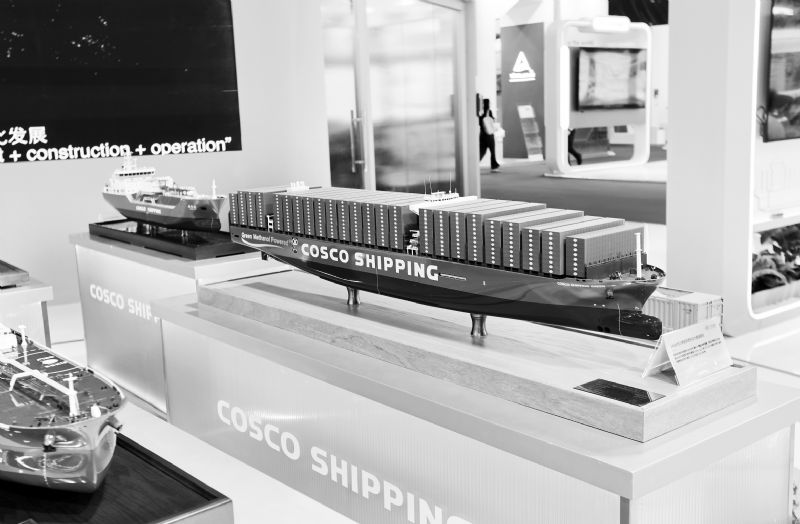
中远海控188亿订造18艘集装箱船 一年两轮A股回购提振信心
Chang Jiang Shang Bao· 2026-01-14 23:42
Core Viewpoint - COSCO Shipping Holdings is steadily enhancing its fleet capacity by signing multiple shipbuilding agreements, which will significantly increase its operational capabilities and strengthen its market position [2][3][7]. Group 1: Shipbuilding Agreements - COSCO Shipping Holdings' wholly-owned subsidiary has signed a total of twelve shipbuilding agreements for twelve 18,000 TEU LNG dual-fuel container ships, with a total transaction value of RMB 16.788 billion [2][5][6]. - Additionally, the company has signed six agreements for six 3,000 TEU container ships, amounting to a total of RMB 1.98 billion [2][7]. - In total, COSCO Shipping Holdings announced the construction of 18 vessels in one day, with a combined cost of nearly RMB 18.8 billion [3][9]. Group 2: Fleet Capacity and Market Strategy - As of the end of the reporting period, COSCO Shipping Holdings operates a fleet of 557 self-owned container ships, with a total capacity exceeding 3.4 million TEUs, maintaining a leading position in the industry [5]. - The new vessels are expected to be delivered between 2028 and 2029, with plans to deploy them on major east-west trade routes to enhance service quality and optimize cost structures [6][7]. - The 3,000 TEU ships will be utilized for regional feeder operations, providing stable capacity and improving customer service capabilities in emerging and regional markets [8]. Group 3: Share Buyback and Dividend Distribution - COSCO Shipping Holdings has conducted two rounds of A-share buybacks in 2025, with a total expenditure of RMB 1.567 billion, reflecting the company's commitment to maintaining shareholder value [4][13]. - The company plans to repurchase between 50 million to 100 million A-shares at a maximum price of RMB 14.98 per share, with a total budget of up to RMB 1.498 billion for this buyback [11]. - In 2025, COSCO Shipping Holdings announced a mid-year cash dividend distribution of approximately RMB 8.674 billion, continuing its trend of high dividend payouts [14].


原油油轮年度展望
Zhong Xin Qi Huo· 2026-01-14 23:30
1. Report Industry Investment Rating No relevant information provided. 2. Core Viewpoints - The crude - tanker market in 2025 was strong but recently had a sharp correction. The Middle - East–Far East TD3C route's daily rent averaged $57,500, up 64.7% YoY, and seaborne crude demand grew solidly. The supply of the tanker fleet was tight, and sanctions and floating storage were short - term swing factors. The global crude - tanker capacity rose only 0.7%. Mid - term supply is expected to remain tight, with sanctions and storage adding near - term tension. The Venezuelan affair is a short - term negative, but geopolitical risk premium underpins freight fundamentals [1][3]. - The 2026 outlook for the crude - tanker market is volatile but still tilted to the upside. Although freight rates have corrected sharply, global liftings should rebound after the Middle - East Ramadan, and tonnage scarcity due to sanctions will persist. Geopolitical flare - ups can increase market volatility [2][3]. 3. Summary by Directory 3.1 Market Review - The crude - tanker market soared in 2025H2 and then quickly retreated. The average annual daily hire rate still showed a sharp year - on - year increase. Since September 2025, the market was exceptionally strong, with daily rates peaking at $141,300/day. In 2025, the average VLCC daily charter rate on the Middle East–Far East TD3C route reached $57,491, up 64.7% year - on - year. Since Q4, the market was robust but has fallen rapidly lately. In early January, the VLCC downtrend continued, sliding 36.5% week - on - week, and Suezmax and Aframax rates also turned lower [9][34]. 3.2 Demand - Seaborne crude demand in 2026 is expected to be slightly stronger than in 2025, with global volumes reaching a high - level plateau. In 2025, global crude shipped by sea reached 2.17 billion tonnes, up 4.2% year - on - year. OPEC+ indicated that Q1 2026 output will be flat. The Ukraine conflict has had a limited net impact on Russian crude exports. South American shipments grew 6.1% in 2025, while North America and Africa had modest gains. China's crude - import demand picked up in H2 2025 [12][37]. - Venezuelan exports may face short - term disruptions. In the first eleven months of 2025, Venezuela's crude output stood at 0.93 mb/d, about 0.9% of global supply. Average seaborne exports in 2025 were roughly 0.75 mb/d, equal to 1.7% of world crude trade. China and the US are the main destinations, taking about 50% and 15% respectively. Since Q4 2025, the US has tightened sanctions on Venezuelan oil [13][37]. 3.3 Supply 3.3.1 Fleet Growth and Aging - In 2025, the global crude - tanker fleet grew only 0.7%, and the average age of VLCC reached 13.29 years old. Owners are cautious about ordering new ships due to the net - zero timetable. There are currently 909 VLCCs, totaling 280 million dwt, with 156 on order (17.2% of existing capacity), but near - term deliveries are limited. About one - third of VLCC tonnage is over 15 years old, and the average age will keep rising, reducing fleet productivity [14][38]. 3.3.2 Sanctioned Tanker Fleet and Floating - Storage Tonnage - The share of sanctioned tonnage is approaching 20%. In 2025, the US and EU tightened measures on ships carrying Russian, Venezuelan, or Iranian oil. As of 15 Dec 2025, 1,746 ships were on sanctions lists, with tankers being the dominant segment. The US has shifted from corporate to individual/entity designations, making penalties more precise [18][40]. - Floating storage has fluctuated. A build - up in October lifted spot rates in November, but the total has since fallen back. The global floating - storage count peaked around Week 50, declined into year - end, and edged up again in early January. Far - East floating stocks remain elevated, but the support to freight from stored barrels is waning. Part of Venezuela's output is held afloat, and floating - storage levels should be closely watched in 2026. If crude prices retreat, more tankers could be used for storage, boosting freight rates [19][20][40]. 3.3.3 Ship Speed and Canal Transit - The fleet sailed faster in Q4. The average VLCC speed reached 11.86 kn in December, rising steadily since mid - year, while Aframax speed averaged 10.82 kn, remaining flat. Higher rates encouraged owners to turn ships faster, releasing extra supply, but speeds have edged back recently [23][45]. - Ship volumes passing through the Suez Canal remain low, while Panama Canal traffic is normal. In 2025, the Panama Canal had an average of 85 tanker transits (8.92 million dwt) per month, back to 2023 levels but below 2022. Crude - tanker passages in the Suez Canal totaled 1,950 ships in 2025, down 9.7% vs 2024 and 35.1% vs 2023. If tankers return to the Suez Canal in 2026, it could weigh on freight and cut overall tonne - mile demand [24][45]. 3.4 Venezuela Situation 3.4.1 Shipping Pattern - Venezuelan exports are mainly transported by VLCCs, and 120 tankers regularly call at the country's ports. State - owned PDVSA is the major exporter, shipping from the northern and eastern terminals. These 120 vessels represent 6.3% of the world VLCC fleet, 1.0% of Suezmaxes, 2.0% of Aframaxes, and 2.6% of Panamaxes. Most cargoes go to the Far East, so VLCCs dominate the trade [25][26][46]. 3.4.2 Market Impact - The tanker market will suffer in the short term, but there is uncertainty about the floating capacity and volume. The immediate fall in Venezuelan liftings cuts long - haul VLCC demand, which is a short - term negative. Replacement barrels will come from the Middle East, West Africa, or South America, slightly shortening average hauls. However, the effective shortage of tonnage due to sanctions remains, and the market's risk premium and tight supply fundamentals are intact [30][49]. 3.5 Outlook - Seaborne crude demand is expected to grow steadily. In 2026, global volumes should remain at a high level. OPEC+ output is flat in the near term, and Russian flows are only marginally affected. West - African and North - American liftings have eased seasonally, causing a short lull. The pace of Venezuela's crude/fuel - oil comeback is unclear. High onshore stocks in China and a weaker products crack are slowing import appetite, leading to less spot cargo and downward pressure on freight. Global seaborne - crude growth in 2026 is projected at 1–2%. - Supply is likely to stay tight. The share of sanctioned tonnage is rising, floating storage is increasing, and Ukraine has stepped up strikes on Russian tankers. Fleet growth is minimal, and ageing is reducing operating efficiency. Even if the Russia–Ukraine war ends in 2026, trade - flow shifts will largely persist. A sharper oil - price retreat would increase storage demand and tighten tanker availability further. - In summary, the market will dip in the near term, but 2026 fundamentals remain strong. The Venezuelan affair has reduced long - haul VLCC demand for now, but the timing of volume rebound and its impact on floating storage are uncertain, leaving a geopolitical risk premium. The crude - tanker market is expected to regain strength around March after the current correction [31][32][50].
两艘油轮遭无人机袭击 黑海航运战争险费率飙升
Qi Huo Ri Bao Wang· 2026-01-14 18:17
据新华社电两艘油轮13日在黑海遭无人机袭击,虽然无人伤亡,也没有船舶遭严重损坏,但与在这片水 域航运相关的战争险费率当天几乎翻番。 (文章来源:期货日报网) 海事战争险专家芒罗·安德森说:"风险在几乎没有迹象和警告的情况下就迅速升级,这已成为黑海海域 的一大显著特征。" 按路透社说法,所有驶往俄罗斯或乌克兰黑海港口,或亚速海周边码头的船舶,均需额外投保战争险。 该险种保障周期通常为7天,保险条款每24小时审核一次。上个月,这一审核周期还是48小时。 英国保险经纪公司麦吉尔合伙公司海事业务主管戴维·史密斯表示,黑海地区战争险保费波动剧烈,正 处于每天一变的状态。 据路透社报道,这两艘油轮为"德尔塔和谐"号和"玛蒂尔达"号,由希腊两家公司分别运营。遇袭时,它 们正在前往俄罗斯位于黑海的南奥泽列耶夫卡码头,装运产自哈萨克斯坦的原油。该码头是哈萨克斯坦 约80%出口国际市场原油的装运地,同时也承担部分俄罗斯原油的装运业务。 哈萨克斯坦能源部13日晚证实了这两艘油轮遭无人机袭击的情况。无人机来源尚不清楚。运营油轮的德 尔塔油轮公司和塞纳马里斯公司均表示,两艘船上的船员安然无恙,船上一度起火,但随后被扑灭。初 步评估显示 ...
“东营-洋浦”内外贸同船航线首航 深化南北物流协同
Zhong Guo Xin Wen Wang· 2026-01-14 17:23
中远海运集运表示,东营—洋浦直达路径,适配更多内外贸大箱需求。纸制品、工业设备、化工原料农 化物资等货源运到海南,支持当地加工制造,同时还能满足出口东南亚及中东的玻璃纤维等生产型企业 通过该路径至洋浦出海,大幅缩短了全程运输时效,是推动山东和海南两地产业联动,深化南北物流协 同的关键一环。(完) (文章来源:中国新闻网) 中新网儋州1月14日电 (邓晓龙)中远海运集装箱运输有限公司(简称中远海运集运)14日发布消息称,随 着近日"东海之源"轮在山东港口渤海湾港东营港区一突堤集装箱码头靠泊并完成装卸作业,标志着渤海 湾港"东营-洋浦"内外贸同船航线正式开通。 该航线是中远海运集运布局南北物流通道的重要航线,采用"内外贸同船"运输模式,为东营及周边地区 化工、装备制造等产业提供多元便捷、低碳环保的综合物流服务,借力海南洋浦港作为西部陆海新通道 国际航运枢纽的优势,拓宽服务南方市场、辐射东南亚的战略覆盖范围,搭建起贯通南北、联通内外的 高效物流桥梁。 ...
助力“船港城”一体化治理!徐州航务中心率先出台船舶水污染物接收转运规范
Yang Zi Wan Bao Wang· 2026-01-14 13:00
近日,徐州航务中心在绿色航运与生态治理领域迈出关键一步,即将正式实施《徐州航务中心船舶水污 染物接收转运工作规范》。该规范在苏北运河尚属首创,标志着徐州段运河船舶污染防治工作迈入制度 化、精细化、闭环化管理新阶段,为推动"船港城"一体化治理提供了坚实制度保障。 作为苏北运河的重要节点,徐州航务中心始终坚持以绿色发展为导向,深入贯彻《京杭大运河苏北段船 舶水污染物"船港城"一体化治理"一河一策"》要求,积极探索船舶水污染物全链条治理模式。此次出台 的《工作规范》系统明确了污染物接收、转运、处置各环节职责,强化设备维护与在线监管,实现从源 头投送到末端处置的全过程闭环管理,有力提升了船舶污染物治理的规范化、智能化水平。 在规范引领与多方协同推动下,徐州段"船港城"一体化治理成效显著。2025年,徐州地区进港船舶垃 圾、污水送交比例基本实现100%,全年累计接收船舶生活垃圾33322艘次、194.3吨,生活污水30023艘 次、5530.5吨,含油污水4343艘次、33.7吨,接收、转运及处置率位居全省首位。港口码头扬尘治理、 污水处理、固体废物处置等环保设施配置达标率亦达到100%,基本实现"船舶污染物不上岸、港 ...
华源晨会精粹20260114-20260114
Hua Yuan Zheng Quan· 2026-01-14 12:16
Group 1: Transportation Industry - The geopolitical situation may usher in an "oil transportation era," driven by U.S. sanctions on Venezuela and Iran, which have significantly reduced oil exports from these countries [2][7][10] - In the short term, Venezuela's oil exports are expected to be limited due to transportation blockades, translating to a demand equivalent to 19 VLCCs (Very Large Crude Carriers) [8] - If U.S. sanctions are lifted, Venezuela's oil exports could reach a historical peak of 2.4 million barrels per day, requiring 141 VLCCs [8] - For Iran, if domestic unrest escalates, oil trade demand may shift to compliant suppliers, equating to a need for 38 VLCCs [9] - The shadow fleet has allowed Russia to maintain oil exports despite sanctions, with potential increases in demand for VLCCs depending on geopolitical developments [10] Group 2: Agriculture and Livestock Industry - The pig farming sector is experiencing a slight recovery, with prices stabilizing around 12.7 yuan/kg, although production capacity is still under pressure [12][13] - The industry is seeing a shift towards protecting farmers' rights and encouraging innovation, which may lead to a more favorable pricing environment for pigs [13] - The chicken industry faces ongoing challenges with high production and weak consumption, but leading companies may gain market share [14] - The feed sector is witnessing price increases, particularly for special water fish, indicating potential growth opportunities for companies like Haida Group [15][16] Group 3: Real Estate Industry - The real estate sector has seen a 5.1% increase, with new housing transactions in 42 key cities totaling 137 million square meters, a 46.7% decrease from the previous period [23][24] - The government is expanding public rental housing and relaxing housing fund policies to stimulate demand [25] - The market sentiment is improving, with potential for a new wave of value reassessment among Hong Kong developers [27]
