
机械

Search documents
策略深度报告:A股主升初期调整后的应对策略
Huaxin Securities· 2025-09-17 06:42
Group 1 - The report highlights that the initial adjustments during the main upward phases of A-shares in 2015, 2017, and 2020 typically saw an average adjustment period of 11 trading days, with an average decline of nearly 5% for the overall market and a 20% pullback in popular sectors [5][28][32] - The report indicates that the current adjustment has lasted for 6 trading days with a decline of 2.35%, and popular sectors have experienced a pullback of 28.5%, suggesting that the adjustment is nearing completion and a consolidation phase is beginning [5][8][66] - The report suggests that the main upward phase of A-shares is characterized by a significant influx of household deposits into the market, which has been a driving force behind the current upward trend [15][17] Group 2 - The report outlines that the adjustment in 2015 was primarily driven by regulatory warnings and weak earnings reports, leading to a decline in market sentiment [33][36] - In 2017, the adjustment was influenced by disappointing macroeconomic data and external shocks, such as credit rating downgrades, which affected investor confidence [51][52] - The 2020 adjustment was marked by a significant outflow of northbound capital and the IPO of a major company, which created short-term liquidity pressure on the market [64][66] Group 3 - The report identifies key sectors to focus on during the current market phase, including interest rate-sensitive sectors (TMT, non-bank financials, and metals), sectors benefiting from a potential PPI recovery (chemicals, machinery, and consumer goods), and growth sectors that may see rotation (AI hardware, innovative pharmaceuticals, and defense) [8][66] - The report emphasizes that the style rotation in the market is contingent on fundamental performance, with growth sectors expected to continue leading, while a shift towards consumer and cyclical sectors may occur if earnings improve [7][8][66]
上交所副理事长霍瑞戎发声!
Zheng Quan Shi Bao· 2025-09-17 03:55
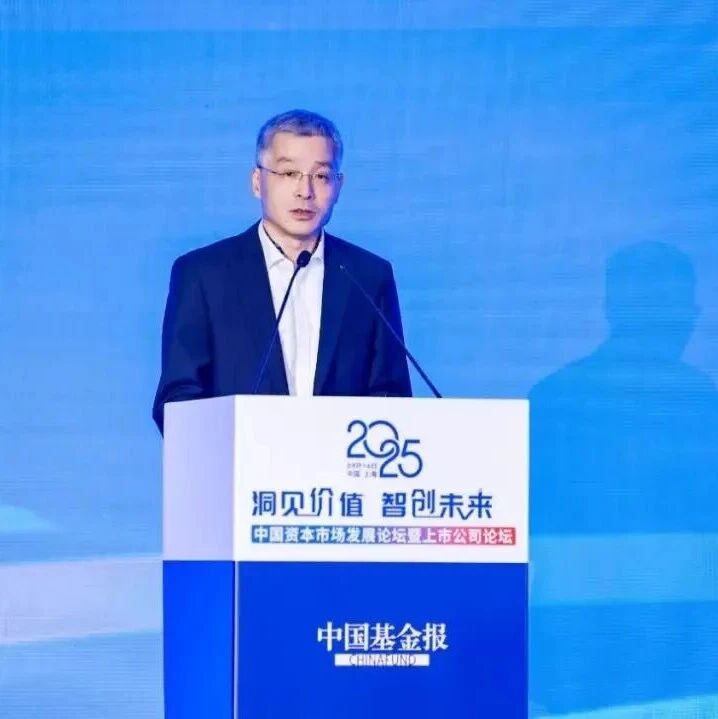
霍瑞戎履新上交所副理事长后,首次公开发声! 9月16日,上交所副理事长霍瑞戎在"2025中国资本市场发展论坛暨上市公司论坛"上透露,上交所已与 多家商业航天、人工智能、低空经济企业开展预沟通,推动第五套标准扩围至相关行业领域。加强投资 者适当性管理方面,目前已有475万户投资者开通科创成长层交易权限。 霍瑞戎表示,上交所持续推进"科创板八条""并购六条"等政策落地见效,今年6月以来进一步围绕科创 板"1+6"改革政策,全面加强政策宣贯,积极推动典型案例落地,系统性引导上市公司高质量发展。 据介绍,科创板"1+6"改革政策发布以来,科创板新增受理15家企业IPO申请,其中4家系未盈利企业; 在适用第五套标准方面,1家企业获受理,2家前期已申报企业获注册生效;政策发布至今已有3家未盈 利企业注册生效,为首批新注册科创成长层企业上市奠定了基础。资深专业机构投资者制度启动试水, 新受理企业泰诺麦博披露了资深专业机构投资者相关信息。预先审阅有序推进,已与多家意向企业开展 预沟通,积极推动首家项目提请预先审阅。 霍瑞戎表示,上交所还统筹推进制度、技术、投资端建设等相关工作。制度技术依次就绪,目前各项配 套制度规则已全部发 ...
九部门重磅发文,政策组合拳出击!大消费逆市拉升,低位布局正当时?
Xin Lang Ji Jin· 2025-09-17 02:45
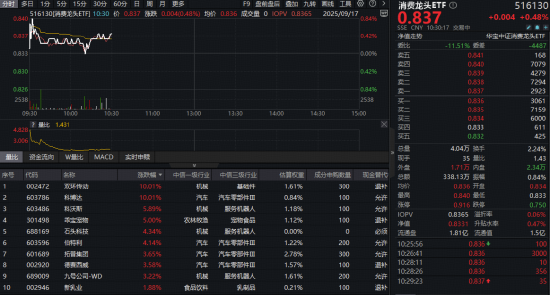
Group 1 - The consumer sector showed strong performance on September 17, with the Consumer Leader ETF (516130) rising by 0.48% [1][3] - Key stocks in the mechanical, automotive, and agricultural sectors saw significant gains, with companies like Shuanghuan Transmission and Kobot achieving daily limits, and others like Ecovacs and Guibao Pet rising over 5% [1][3] - The Ministry of Commerce and other departments announced new policies to boost service consumption, including 19 measures aimed at enhancing consumer experiences and increasing service supply [1][4] Group 2 - Analysts suggest that ongoing policy measures may further unleash consumer potential, leading to increased investment demand in related industries [3] - The Consumer Leader ETF's underlying index has a price-to-earnings ratio of 18.59, indicating a favorable long-term investment opportunity [3] - The upcoming Mid-Autumn Festival and National Day are expected to boost consumption, with local governments initiating consumption voucher programs to stimulate spending [4] Group 3 - The Consumer Leader ETF tracks a strategy index that selects leading companies from various consumer sub-sectors, focusing on high-quality firms like Kweichow Moutai and Gree Electric [4] - The ETF's top ten holdings account for approximately 70% of its total weight, highlighting its focus on large-cap stocks while also considering emerging consumer leaders [4]

上交所副理事长霍瑞戎,最新发声!
中国基金报· 2025-09-17 02:11
Core Viewpoint - The Shanghai Stock Exchange (SSE) aims to deepen comprehensive reforms in investment and financing, accelerating a new round of capital market reforms to enhance market attractiveness and inclusivity, thereby better serving technological innovation and the development of new productive forces [2][3]. Group 1: Capital Market Development - As of September 11, the number of Science and Technology Innovation Board (STAR Market) ETFs reached 97, with a total scale of 280 billion yuan [3]. - The STAR Market has become the A-share sector with the highest proportion of index investment, playing a significant role in attracting funds towards new productive forces and guiding long-term capital into the market [3][6]. Group 2: Policy Implementation - The SSE has been actively promoting the "STAR Market Eight Articles" and "M&A Six Articles" policies since June, focusing on the "1+6" reform policies to enhance the quality of listed companies [6][8]. - Over 1,000 enterprises and institutions have been covered in policy promotion activities, with training sessions conducted for 200 market entities, including sponsors and law firms [6]. Group 3: Case Studies and Standards - The SSE has restarted the fifth set of listing standards for the STAR Market, receiving 15 new IPO applications, including four from unprofitable companies [7]. - The introduction of a system for seasoned professional institutional investors has been initiated, with companies like Tianomai Bo disclosing relevant information [7]. Group 4: Institutional Development - All supporting institutional rules have been published and implemented, with 320,000 unprofitable companies included in the STAR Growth Layer [8]. - As of now, 4.75 million investors have opened trading permissions for the growth layer, indicating a robust investor engagement [8]. Group 5: Industry Growth and Innovation - Traditional industries are actively exploring new technologies for transformation, with significant profit growth reported in the steel (235% YoY) and machinery (21% YoY) sectors in the first half of 2025 [10]. - The total R&D investment by real enterprises reached 432.6 billion yuan in the first half of the year, with STAR Market companies investing 84.1 billion yuan, which is 2.8 times their net profit, leading the A-share market [10].
8月经济总体平稳,四季度稳增长政策需提前谋划
2 1 Shi Ji Jing Ji Bao Dao· 2025-09-16 13:30
Group 1 - The core task remains to boost effective demand, highlighting the increasing necessity for stable growth policies in the fourth quarter [1][8] - The economic growth rate for China in the first half of the year was 5.3%, achieved amidst challenges such as global trade uncertainties and the transition of economic drivers [1][2] - The August data from the National Bureau of Statistics indicates a narrowing decline in various economic indicators compared to July, suggesting a potential for policy intervention [2][3] Group 2 - The social financing scale increased by 25,693 billion yuan in August, but this represents a year-on-year decrease of 4,630 billion yuan, indicating weak credit demand [3][4] - Government bond financing has decreased, and the effectiveness of proactive fiscal policies needs to be supported in key quarters and months [5][6] - Fixed asset investment growth was only 0.5% year-on-year from January to August, with infrastructure investment growing by 2% and real estate investment declining by 12.9% [6][7] Group 3 - The investment sentiment among enterprises remains subdued, correlating with the slow growth in fixed asset investment observed this year [4][6] - The retail sales of consumer goods in August reached 39,668 billion yuan, growing by 3.4% year-on-year, with certain sectors like sports and home appliances performing well [7][8] - The necessity for structural monetary policies is increasing, with potential measures including the restart of government bond purchases to inject medium to long-term liquidity [8]
8月经济总体平稳,四季度稳增长政策需提前谋划 | 宏观月报
2 1 Shi Ji Jing Ji Bao Dao· 2025-09-16 13:28
Economic Overview - China's economy achieved a growth rate of 5.3% in the first half of the year, despite challenges from global trade uncertainties and the transition of economic drivers [1] - The necessity for stable growth policies in the fourth quarter is increasing, as indicated by the recent economic data [2] Financing and Credit - The growth rate of social financing decreased in August, with a total increment of 25,693 billion yuan, which is a year-on-year decrease of 4,630 billion yuan [3] - The demand for credit remains weak, with new loans amounting to 6,233 billion yuan in August, down by 4,178 billion yuan year-on-year [3][4] - Government bond financing has also seen a decline, indicating that the effectiveness of active fiscal policies needs to be supported in key quarters [5] Investment Trends - Fixed asset investment growth was only 0.5% year-on-year from January to August, with infrastructure investment growing by 2% and manufacturing investment by 5.1%, while real estate investment fell by 12.9% [6][7] - The government is focusing on stabilizing investment in key industries, particularly manufacturing, to support economic recovery [7] Consumption Patterns - In August, the total retail sales of consumer goods reached 39,668 billion yuan, with a year-on-year growth of 3.4%, although certain sectors like dining faced challenges [7][8] - The recovery in consumption is expected to take time, and effective demand needs to be stimulated [8] Policy Recommendations - There is a growing need for the introduction of stable growth policies in the fourth quarter, with potential measures including the issuance of special government bonds and the use of policy financial tools [2][8] - Structural policy tools may be accelerated to support key industries and foreign trade, while fiscal policies may need to be intensified [8]
稳住70%工业基本盘!十大行业放大招
21世纪经济报道· 2025-09-16 13:19
Core Viewpoint - The article discusses the introduction of a new round of policies aimed at stabilizing economic growth in ten key industries, which are expected to support 70% of the industrial base and pave the way for future industrial upgrades [1][2]. Summary by Sections Key Industries Benefiting - The ten key industries identified include steel, non-ferrous metals, petrochemicals, chemicals, building materials, machinery, automobiles, power equipment, light industry, and electronic information manufacturing, collectively representing 70% of the industrial economy [1]. Rationale for Policy Introduction - The timing of the new policies is significant as it coincides with the conclusion of the 14th Five-Year Plan and the tenth anniversary of supply-side structural reforms. Despite exceeding growth expectations in the first half of the year, the third quarter has seen increased uncertainties, prompting the need for measures to stabilize the economy and allow for growth in the fourth quarter [2]. Policy Focus and Implementation - The policies are designed to be precise rather than broad, addressing both supply and demand, as well as technology and market needs. Key initiatives include promoting innovation, improving quality, and integrating artificial intelligence into traditional industries [2]. Demand and Supply Alignment - The policies aim to stimulate consumption and expand market scenarios, with a focus on major engineering projects and large-scale equipment updates. This dual approach is intended to align supply and demand effectively [2]. Guidance for Enterprises - The policies serve as a guide for enterprises, emphasizing the importance of avoiding irrational competition and instead focusing on technology, brand differentiation, and quality. Support for XR equipment, smart grids, and first-of-a-kind equipment trials is also highlighted [2]. Market Order and Fair Competition - The government is placing a strong emphasis on regulating market order and combating low-price competition to ensure a fair environment for all businesses to thrive [2].

稳住70%工业基本盘!十大行业放大招
2 1 Shi Ji Jing Ji Bao Dao· 2025-09-16 09:48
Core Viewpoint - The government is launching a new round of "stabilizing growth" policies targeting ten key industries to support economic stability and future industrial upgrades, which collectively account for 70% of the industrial economy [1][2]. Group 1: Key Industries Benefiting - The ten key industries identified include steel, non-ferrous metals, petrochemicals, chemicals, building materials, machinery, automobiles, power equipment, light industry, and electronic information manufacturing [1]. - These industries are crucial as they not only stabilize the industrial economy but also serve as a foundation for new productive forces and technological innovations [1]. Group 2: Rationale for Policy Implementation - The timing of the new policies is strategic, coinciding with the end of the "14th Five-Year Plan" and the tenth anniversary of supply-side structural reforms, amidst increasing economic pressures in the third quarter [2]. - The government aims to counter potential economic downturns while ensuring both growth and quality improvements, emphasizing a dual focus on quantity and quality for genuine growth [2]. Group 3: Policy Focus and Implementation - The policies are designed to be precise, addressing supply and demand, technology, and market needs, with a strong emphasis on innovation, quality enhancement, and the integration of artificial intelligence in traditional industries [2]. - On the demand side, the policies promote consumption, expand application scenarios, and encourage major engineering projects to stimulate investment and consumption [2]. Group 4: Market Environment and Competition - The policies signal a rejection of irrational competition, urging industries to focus on technology, brand differentiation, and quality rather than price wars [2]. - Support is provided for XR equipment, smart grids, and pilot projects for first-time equipment, creating opportunities for businesses of all sizes [2].
指数应用系列研究一:行业指数池构建、景气期限对比与三维组合策略
ZHONGTAI SECURITIES· 2025-09-16 06:36
Group 1: Industry Index Pool Construction - The report outlines the construction of an industry index pool that combines investability and representativeness, focusing on passive products tracking strong industry attributes [10][12]. - Since 2020, the scale of industry ETFs has experienced explosive growth, increasing from 85.8 billion yuan at the end of 2019 to over 310 billion yuan by the end of 2020, and approaching 900 billion yuan by August 2025 [10]. - The report categorizes various industry ETFs, highlighting that TMT, financial real estate, and pharmaceutical sectors have surpassed 100 billion yuan in ETF scale [10]. Group 2: Economic Prosperity Investment Practices - The report discusses the calculation of expected ROE growth for industries based on analysts' profit forecasts, comparing two fiscal years (FY1 and FY2) [20][21]. - It emphasizes that the FY2 grouping shows stronger monotonicity in performance compared to FY1, indicating better returns for the former [23][24]. - The backtesting period for the economic prosperity factor spans from January 1, 2018, to September 12, 2025, with a focus on marginal changes in industry index prosperity [27]. Group 3: Economic Trend Resonance Strategy - The economic trend resonance strategy combines fundamental marginal improvements with capital consensus, utilizing trend factors to quantify market sentiment [36][38]. - The constructed economic trend resonance portfolio has achieved an annualized return of 12.33% since 2018, outperforming the CSI 800 index by 11.13% [40][42]. - The portfolio's monthly excess return rate stands at 64%, with a profit-loss ratio of 1.30 [45]. Group 4: Economic Trend and Crowding Avoidance Strategy - The strategy integrates economic trend analysis with crowding avoidance to mitigate risks associated with overheated trading [49]. - The three-dimensional strategy has yielded an annualized return of 12.80% since 2018, exceeding the CSI 800 index by 11.60% [52][54]. - The portfolio's monthly excess return rate is 62%, with a profit-loss ratio of 1.47 [57]. Group 5: Current Industry Characteristics - As of August 2025, the report identifies industries that align with the economic trend resonance and crowding avoidance strategy, including the transportation index, home appliances, livestock, media, and oil and gas sectors [60]. - The expected growth rates for these sectors range from 1.1% to 9.6%, with varying levels of crowding and valuation metrics [60].
泉果基金首只公募产品将赎回
Shen Zhen Shang Bao· 2025-09-15 17:01
Group 1 - The fund "Quanguo Xuyuan Three-Year Holding Period Mixed Fund" is set to welcome its first redemption date next month, after three years of operation, during which it has remained in a loss state, underperforming its peers by approximately 14 percentage points [1] - As of September 12, the fund's A share net value has decreased by 1.87% from October 18, 2022, while the average return of similar funds during the same period was 12.52% [1] - The fund is the first public offering launched by Quanguo Fund and is currently the largest product under the company's management [1] Group 2 - Since the second half of this year, the net value of the fund has shown a rebound, with a cumulative increase of 27.87% from July 1 to September 12, outperforming the benchmark return by nearly 18 percentage points and also surpassing the average return of similar funds by 21.23% [2] - The top holdings of the fund have performed well, with the largest holding, Keda Li, increasing nearly 35% in price, and the second largest holding, Ningde Times, rising by 41% [2] - Many investors are expressing their anticipation for the redemption, with some stating they have been waiting for three years to break even, while others feel that they would have been better off investing in an index three years ago [2]