
证券业

Search documents
中金:预期9-10月中美流动性环境延续共振 继续超配A股、港股、黄金
智通财经网· 2025-10-10 00:33
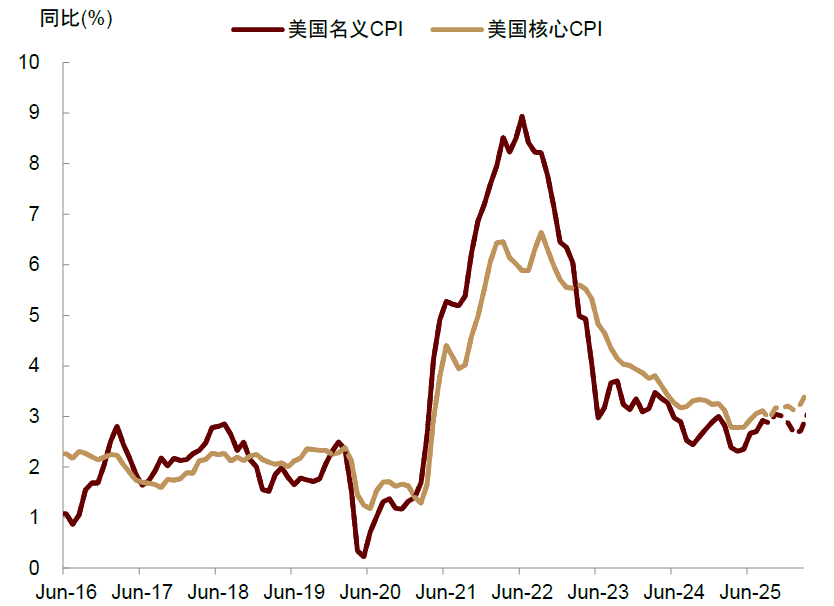
Core Viewpoint - The report from CICC anticipates that the liquidity environment between China and the U.S. will continue to resonate from September to October, with the dollar in a downward cycle, benefiting various asset classes including stocks, bonds, gold, and commodities [1][28]. Group 1: Market Outlook - October is expected to remain a favorable macroeconomic period, similar to September, suggesting a high risk appetite and an overweight position in Chinese stocks [1][28]. - The dynamic price-to-earnings ratio of the CSI 300 index is close to historical averages, indicating potential for further expansion compared to previous bull market peaks [1][28]. - A-shares and Hong Kong stocks offer better relative value compared to U.S. stocks due to the easing macro liquidity environment and the diminished independence and credibility of the U.S. dollar [1][35]. Group 2: Federal Reserve's Interest Rate Outlook - The Federal Reserve's interest rate cut cycle is expected to switch between "fast-slow-fast" phases, with the first phase starting in Q4 2025 characterized by rapid rate cuts due to rising inflation and employment risks [4][28]. - The second phase in H1 2026 will see a slowdown in rate cuts as inflation continues to rise, requiring a balance between growth and inflation risks [4][28]. - The third phase in H2 2026 may see accelerated rate cuts again, particularly if a more dovish Fed chair is appointed, and tariff impacts on inflation diminish [4][28]. Group 3: Economic Indicators and Asset Allocation - The U.S. economy is currently trending towards stagflation or recession, with stagflation being more likely, but the Fed's reintroduction of easing measures may eventually lead to growth recovery [8][28]. - Key economic indicators should be monitored to predict turning points in the economy, with a focus on consumption and employment data as leading indicators [16][21]. - The report suggests maintaining a focus on A-shares and Hong Kong stocks, while also being cautious of potential volatility in the market due to previous significant price increases [28][30]. Group 4: Gold and Other Assets - Despite a rapid increase in gold prices since the beginning of the year, the report advises to downplay short-term trading value and focus on long-term allocation opportunities, suggesting to accumulate on dips [1][35]. - The report highlights that during the dollar's down cycle, gold, commodities, and non-U.S. stocks tend to outperform U.S. stocks [5][35]. - The recommendation is to maintain an overweight position in gold due to the ongoing macro liquidity easing, despite short-term risks of price corrections [1][35].

每日债市速递 | 央行公开市场单日净回笼1.45万亿
Wind万得· 2025-10-09 22:39
Group 1: Open Market Operations - The central bank announced a 7-day reverse repurchase operation on October 9, with a fixed rate and quantity tendering of 612 billion yuan at an interest rate of 1.40%, with the same amount being the bid and awarded [1] - On the same day, 2,063.3 billion yuan of reverse repos matured, resulting in a net withdrawal of 1,451.3 billion yuan [1] Group 2: Funding Conditions - The interbank market showed a relatively loose funding condition on the first trading day after the holiday, with overnight repo rates for deposit-taking institutions dropping about 6 basis points to around 1.32% [3] - The overnight quotes for non-bank institutions borrowing against credit bonds also decreased but remained above 1.5%, not returning to the particularly loose liquidity levels seen previously [3] - The central bank's operation of over 1 trillion yuan in reverse repos alleviated the pressure from the large amount of reverse repos maturing [3] Group 3: Interbank Certificates of Deposit - The latest transaction for one-year interbank certificates of deposit among major banks was around 1.66%, down more than 1 basis point from the previous day [8] Group 4: Government Bond Futures - The closing prices for government bond futures showed an increase, with the 30-year main contract rising by 0.46%, the 10-year by 0.15%, the 5-year by 0.07%, and the 2-year by 0.02% [14] Group 5: Key News - The Ministry of Commerce announced export controls on specific rare earth items, requiring exporters to obtain licenses for exports to countries outside China, particularly for military users and certain semiconductor manufacturing applications [15] - The Ministry of Industry and Information Technology announced adjustments to the technical requirements for new energy vehicles eligible for vehicle purchase tax exemptions starting January 1, 2026 [15] - During the recent holiday, domestic travel reached 888 million person-times, an increase of 123 million compared to the previous year, with total spending of 809 billion yuan, up 108.2 billion yuan [16]

“凭空多出一大笔开销”与“没想到成了投资收益最好的部分” 金价狂飙下的市场众生相
Zhong Guo Zheng Quan Bao· 2025-10-09 21:48
Core Insights - The rising gold prices have created a divide among consumers, with some feeling pressured by the increased costs of gold jewelry while others have benefited from their investments in gold [1][2][3] Consumer Behavior - Many consumers, like Mr. Wang, are postponing their purchases of gold jewelry due to high prices, which have exceeded 900 RMB per gram earlier this year and are now around 1160 RMB per gram [2][3] - Consumers are increasingly considering alternatives, such as purchasing gold bars from banks, which are cheaper than retail jewelry prices, leading to significant savings [3][4] Investment Trends - Investors who bought gold earlier, like Ms. Jia, have seen substantial returns, with some reporting profits exceeding 13,000 RMB from their investments in gold accumulation products [1][3] - The demand for gold-related financial products, such as gold accumulation and structured deposits, has surged as consumers seek to capitalize on rising gold prices [5][6] Market Dynamics - The gold market is characterized by two main participant types: financial investors who drive price movements and non-financial investors who provide market support [6][7] - Analysts suggest that while gold prices may experience short-term fluctuations, the long-term outlook remains positive due to ongoing geopolitical risks and sustained investment demand [6][7]
【招银研究】海外主权债务隐忧,国内市场情绪偏强——宏观与策略周度前瞻(2025.10.09-10.12)
招商银行研究· 2025-10-09 09:52
Group 1: US Economic Expansion - The US economy continues to expand, with the Atlanta Fed's GDPNOW model predicting a Q3 growth rate of 3.8%, driven by strong private consumption and investment in technology [2] - Private consumption is robust at 3.2%, with goods consumption at 4.3% and services at 2.7%, while private investment shows mixed results, with technology-driven investments remaining strong [2] - The government shutdown is expected to have a limited impact on the economy and employment, with necessary government activities continuing, although it may slightly raise the unemployment rate in October [2] Group 2: Sovereign Debt Concerns - There are rising risks related to sovereign debt issues, with political instability in Japan and France contributing to global economic uncertainties [3] - The US stock market has shown slight gains, driven by continued interest in AI stocks and strong corporate earnings, although valuations remain high [3] Group 3: US Treasury Market - The US Treasury market is experiencing weak fluctuations, with short-term rates expected to decline as the rate-cutting cycle resumes, while long-term rates face constraints due to economic resilience and inflation [4] - The 10-year Treasury yield is projected to remain high, with an annual average around 4.3% and a fluctuation range of 3.5%-5% [4] Group 4: Currency Market Dynamics - The US dollar initially weakened due to the government shutdown but later strengthened as the Japanese yen depreciated and the French political situation affected the euro [5] - The Chinese yuan has slightly depreciated against the dollar, facing short-term pressure but expected to maintain a two-way fluctuation trend in the medium term [5] Group 5: Gold Market Outlook - Gold prices have surged, breaking the $4000 per ounce mark, supported by the Fed's rate-cutting cycle and increased demand from global central banks [6] - Investors are advised to adopt a dollar-cost averaging strategy for gold investments due to its high valuation [6] Group 6: Domestic Economic Indicators - During the recent holiday period, domestic travel and consumption showed strong growth, with a significant increase in cross-regional travel compared to previous years [8] - Real estate transactions in first-tier cities improved, while second and third-tier cities faced declines, indicating a mixed recovery in the housing market [8] Group 7: External Demand and Trade - China's export growth remains strong, with significant increases in port container and cargo throughput, indicating resilience in external demand despite ongoing trade tensions [9] Group 8: Monetary Policy Adjustments - The central bank's recent monetary policy meeting indicated a shift in outlook, reflecting a more cautious stance on economic recovery and potential challenges ahead [10] - New policy financial tools are being introduced to support effective investment, with a total scale of 500 billion yuan aimed at enhancing project capital [10] Group 9: Market Sentiment and Stock Performance - The A-share market has shown stability with a slight increase, driven by liquidity easing, while the Hong Kong stock market has experienced minor fluctuations [12] - The overall market sentiment remains positive, with a focus on growth sectors and a balanced approach to investment strategies [12][13]
3600亿龙头,尾盘涨停,创历史新高
Zhong Guo Zheng Quan Bao· 2025-10-09 08:27
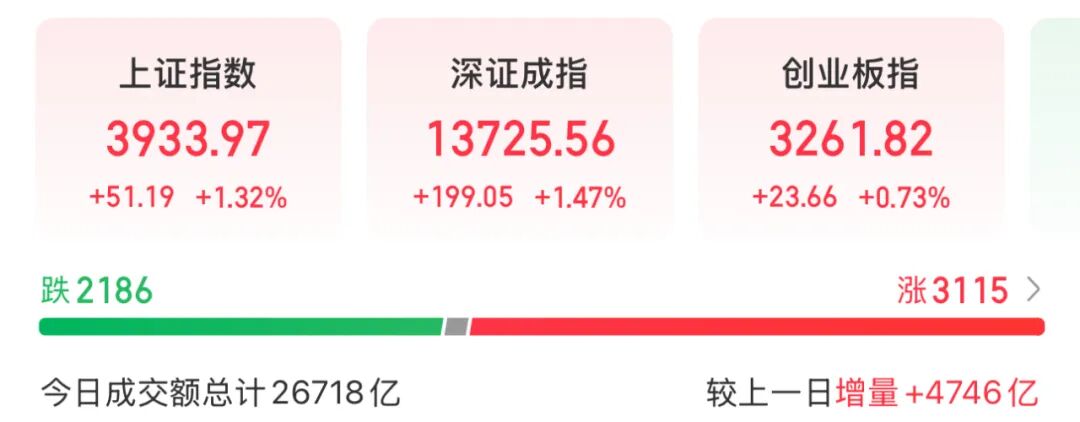
Market Overview - On the first trading day of October, A-shares experienced a "red opening," with all three major indices closing higher. The Shanghai Composite Index rose by 1.32%, the Shenzhen Component Index increased by 1.47%, and the ChiNext Index gained 0.73%. The market turnover was approximately 2.67 trillion yuan, an increase of 474.6 billion yuan compared to the previous trading day [1]. Sector Performance - The non-ferrous metals sector showed strong performance, with significant gains in precious metals, controllable nuclear fusion, rare earth permanent magnets, energy metals, and wind power equipment. Conversely, sectors such as film and theater, tourism and hotels, and liquor experienced adjustments [4]. - Notable stocks in the non-ferrous metals and precious metals sectors included Xinyi Silver Tin (000426), Yunnan Copper (000878), Shandong Gold (600547), and Sichuan Gold (001337), all of which hit the daily limit. Leading stock Luoyang Molybdenum (603993) also reached its daily limit and achieved a historical high [4]. Luoyang Molybdenum Company Insights - Luoyang Molybdenum's stock closed at 17.27 yuan per share, marking a historical high with a total market capitalization of 369.48 billion yuan [5]. - The company reported a copper production of 353,600 tons in the first half of 2025, a year-on-year increase of 12.68%. The net profit attributable to shareholders was 8.671 billion yuan, up 60.07% year-on-year, primarily driven by rising copper and cobalt prices and increased copper metal output [8]. - Luoyang Molybdenum recently received the Copper Mark certification for its TFM copper-cobalt mine in the Democratic Republic of Congo, becoming the first mine in Africa to fully meet all Copper Mark standards. This certification is expected to enhance product recognition and achieve premium pricing [8]. Controllable Nuclear Fusion Sector - The controllable nuclear fusion sector saw significant gains, with leading stock Western Superconducting Technologies (301137) hitting the daily limit. The commercialization path for nuclear fusion technology is becoming clearer, with global investments expected to exceed $7.1 billion in 2024 [10][14]. Wind Power Sector - The wind power sector showed strength, with leading stocks such as Goldwind Technology (002202) reaching their daily limit. The International Energy Agency's report predicts that global renewable energy capacity will double in the next five years, with wind energy expected to see substantial growth, particularly in China, Europe, and India [15][18].

金价上涨的秘密
投资界· 2025-10-09 06:36
Core Viewpoint - The article discusses the significant rise of gold prices and the implications for the global monetary order, particularly focusing on the increasing role of the Chinese yuan as a potential alternative to the US dollar in international trade and finance [3][4][5]. Group 1: Gold Price Surge - On October 7, 2025, gold prices reached a historic high of $4000 per ounce, marking an increase of over 50% within the year [3]. - This surge is attributed to the Federal Reserve's decision to restart interest rate cuts and a notable decline in the US dollar index, which has dropped nearly 10% this year [3]. - The rise in gold prices reflects a broader market sentiment seeking alternatives to the dollar amid geopolitical tensions and economic uncertainties [3][4]. Group 2: Yuan's Internationalization - As of Q1 2025, the yuan accounted for 2.12% of global foreign reserves, ranking sixth, significantly lower than the dollar (57.74%) and euro (20.06) [4]. - Despite China's growing economic influence, the yuan's international status does not yet match this influence, indicating a need for a multi-faceted approach to enhance its global role [4][5]. - A notable shift is occurring, with an increasing number of enterprises opting for yuan settlements in cross-border transactions, surpassing dollar settlements for the first time in Q2 2025 [5][6]. Group 3: Market Dynamics - A survey conducted by Renmin University revealed that 68% of enterprises used yuan for cross-border trade settlements in Q4 2024, with 71% citing asset security as the primary reason [6][9]. - The yuan's appeal is growing due to its perceived stability and usability, as companies seek to avoid reliance on the dollar [9][10]. - The influx of foreign capital into Chinese assets, particularly after the Fed's interest rate cuts, indicates a shift in investor sentiment towards the yuan [9][10]. Group 4: Infrastructure Development - The establishment of the Digital Yuan International Operation Center in Shanghai aims to enhance the yuan's usability in cross-border transactions, supporting a more integrated financial infrastructure [12][14]. - The center's launch is part of a broader strategy to create a transaction-driven infrastructure for the yuan, moving from policy-driven to market-driven adoption [12][15]. - The digital yuan's infrastructure is designed to facilitate seamless transactions, ensuring compatibility with existing systems while enhancing liquidity and efficiency [14][15]. Group 5: Future Prospects - The article emphasizes the need for a dual-driven model of "yuan + digital currency" to enhance the yuan's role in global trade and finance [18]. - The transition of the yuan from a "optional" asset to a "must-have" currency in global markets requires comprehensive financial reforms and international collaboration [18][19]. - The evolving global monetary landscape suggests that the yuan is positioned to play a significant role in reshaping future financial systems, driven by market choices rather than mere policy directives [19].

建信期货宏观市场月报-20251009
Jian Xin Qi Huo· 2025-10-09 02:05
1. Report Industry Investment Rating - Overweight gold and blue - chip stocks, moderately allocate interest - rate bonds and growth stocks, and underweight credit bonds, crude oil, and currency [5][60] 2. Core Viewpoints of the Report - From mid - January to March 2025, due to Trump's aggressive reforms, the US dollar exchange rate and US Treasury yields weakened, and funds chased overseas assets. In early April, Trump's high - tariff measures triggered a global financial tsunami. After that, the Fed's rate - cut process benefits global stocks and precious metals, while the bond yields of various countries are suppressed. The commodity market remains stable overall but shows significant differentiation. Looking forward, the macro - environment is still relatively favorable for precious metals and stocks, slightly favorable for industrial commodities, but unfavorable for bonds. It is recommended to increase bond allocation while being bullish on stocks [5] 3. Summary by Directory 3.1 2025 1 - 9 Months Macro - market Review - From November 2024 to mid - January 2025, the "Trump trade" made the US dollar, US Treasury yields, and US stocks rise, while overseas assets were under pressure. From mid - January to March, the US dollar and US Treasury yields weakened, and funds flowed overseas. In early April, Trump's tariff measures caused a global financial shock. After that, the international trade situation eased, and the Fed's rate - cut benefited global stocks and precious metals. The commodity market was stable with differentiation [7] 3.2 Macro - environment Review 3.2.1 China's Domestic Demand Continues to Weaken - In August 2025, China's domestic demand weakened due to the diminishing effect of fiscal and monetary stimulus and international trade disputes. The full - year economic growth target of about 5% is expected to be achieved. In terms of investment, from January to August, fixed - asset investment growth slowed, especially in real estate. Consumption growth also declined. Industrial output growth slowed, and there was a large deflationary pressure. The real - estate market showed supply - demand deterioration and price decline, but the overall situation was slightly better than in Q3 2024. Inflation showed a decline in overall CPI and a narrowing of PPI decline. Exports were affected by the US and other factors, but still showed resilience. Fiscal expenditure showed a marginal weakening, and financial data showed that new social financing was mainly supported by fiscal means. The manufacturing PMI improved slightly, and new policy - based financial tools were launched [8][10][15] 3.2.2 US Economic Recovery but Weak Employment - In the first half of 2025, the US economy fluctuated due to Trump's reforms. In the second half, the growth momentum recovered. Employment data showed a shortage of new non - farm jobs, a low growth rate of salaries, and a slight increase in the unemployment rate, but no recession risk. Inflation showed a stable recovery, and the manufacturing and non - manufacturing PMIs showed different trends [27][29][33] 3.2.3 The Fed Restarts the Rate - cut Process - On September 16 - 17, the Fed cut interest rates by 25BP. The decision was due to the weakening of US economic growth momentum, the slowdown of employment growth, and the balance between employment and inflation risks. The Fed's economic outlook is more optimistic, and it is expected to cut interest rates two more times in 2025 and less frequently in 2026 and 2027. The Fed's rate - cut is a risk - management measure, and the second - stage rate - cut process will be step - by - step [37][40][45] 3.3 Asset Market Analysis - China's Treasury yields showed a downward - rebound - downward - rebound trend. It is expected to run weakly in the second half of 2025. US Treasury yields were high - fluctuating, and it is predicted to continue high - running. The US dollar index is expected to be weak first and then strong. The RMB exchange rate is expected to be volatile and slightly strong. Global stock indices have risen, and the A - share market is expected to be strong, but the contradiction between high risk - appetite and weak corporate profits is increasing. The commodity market is expected to maintain a high - level wide - range shock [47][49][54] 3.4 Medium - term Asset Allocation - From January to September 2025, stocks rose, bonds fell, and commodities were under pressure. The international trade situation and domestic policies affected asset performance. It is recommended to underweight currency, moderately allocate interest - rate bonds, underweight credit bonds, overweight blue - chip stocks, moderately allocate growth stocks, underweight crude oil, and overweight gold [58][60]
国际金价首破4000美元;美联邦政府继续“停摆”……盘前重要消息还有这些
Sou Hu Cai Jing· 2025-10-09 00:10
Group 1: Economic and Market Updates - The U.S. Senate voted on October 8 against both the Republican short-term funding bill and the Democratic alternative, resulting in the continuation of the federal government shutdown [2] - As of the end of September, China's foreign exchange reserves increased by $16.5 billion to $333.87 billion, while the central bank's gold reserves rose by 40,000 ounces to 7.406 million ounces, marking the 11th consecutive month of gold accumulation [2] - The Federal Reserve's meeting minutes indicated that most officials believe further easing of policies may be appropriate this year, with some officials potentially supporting no rate cuts in September [2] Group 2: Company News - AMD and OpenAI announced a 6 GW computing power agreement to support OpenAI's next-generation AI infrastructure, with the first 1 GW of AMD Instinct MI450 GPUs set to be deployed in the second half of 2026 [3] - Xilinx's CEO confirmed an investment in Elon Musk's startup xAI, expressing excitement about the deal and a desire for more involvement in Musk's ventures [3] - Xinyang Silver and Tin reported significant fluctuations in market prices for their main products, leading to stock price volatility [5] - Chipone Technology expects Q3 revenue to reach 1.284 billion yuan, marking a historical high for the company [6] - Great Wall Motors reported a 23.29% year-on-year increase in total sales for September, while BYD's new energy vehicle sales decreased by 5.52% [7] - Seres reported an 8.33% year-on-year increase in sales for September [8] - BAIC Blue Valley's subsidiary saw a 30.15% year-on-year increase in sales for September [9] - Yonghe shares projected a net profit increase of 211.59% to 225.25% year-on-year for the first three quarters [9] - Huaxing Cement terminated plans for a spin-off listing of its overseas subsidiary [14] - *ST Jianyi plans to sign an agreement to terminate the investment cooperation for a single crystal silicon project [15] Group 3: Market Outlook - Guotai Junan forecasts that the Hong Kong stock market may reach new highs in Q4, with the Hang Seng Technology Index being particularly prominent, benefiting from current industry trends and potential foreign capital inflows due to a dovish Fed [16] - The report suggests that if the Fed continues to lower rates, it could enhance liquidity and stabilize U.S.-China trade relations, further encouraging foreign capital to flow into the Hong Kong market [16] - The report anticipates that the Hang Seng Technology Index could rise by approximately 15% if undervalued tech stocks are corrected to their average valuation levels [16]

为高质量发展创造良好货币金融环境
Sou Hu Cai Jing· 2025-10-08 22:50
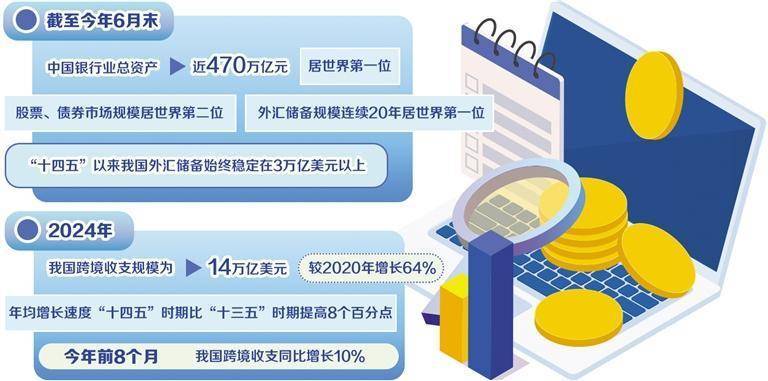
Core Viewpoint - The article highlights the significant achievements of China's financial sector during the "14th Five-Year Plan" period, emphasizing the deepening of financial reforms and the enhancement of international competitiveness and influence [2][5]. Monetary Policy - The People's Bank of China (PBOC) maintains a supportive monetary policy stance, focusing on internal and external balance while implementing moderately loose monetary policies to foster economic recovery and stabilize financial markets [3][4]. - The PBOC's monetary policy committee emphasizes the importance of counter-cyclical adjustments and the dual function of monetary policy tools to support stable economic growth and maintain reasonable price levels [3][4]. Financial Market Development - As of June 2023, China's banking sector total assets reached nearly 470 trillion yuan, ranking first globally, with stock and bond markets also holding significant positions [5]. - The international status of the Renminbi (RMB) has been steadily rising, with RMB becoming the largest settlement currency for China's external payments and the third-largest trade financing currency globally [6]. Cross-Border Financial Integration - The establishment of a diversified cross-border payment system has significantly improved the convenience of cross-border trade and investment, with ongoing reforms in cross-border RMB and foreign exchange management [7][8]. - The PBOC has signed bilateral currency swap agreements with 32 countries and regions, enhancing the RMB's international usage and promoting offshore RMB market development [6][7]. Risk Management and Financial Stability - The PBOC is focused on balancing economic growth, structural adjustments, and financial risk prevention, with significant progress made in reducing risks associated with local government financing platforms [9][10]. - Measures have been taken to support the real estate sector and mitigate risks in small and medium-sized financial institutions, with a notable reduction in the number of high-risk small banks [10][11]. Regulatory Enhancements - The regulatory framework for the foreign exchange market has been strengthened, with a dual management approach that combines macro-prudential and micro-regulatory measures to enhance resilience against external shocks [11][12].
国庆前后,需着重关注的三件事
GUOTAI HAITONG SECURITIES· 2025-10-08 10:01
Group 1: Government Bond Issuance - The Ministry of Finance announced changes to the Q4 2025 government bond issuance plan, shifting from 30-year bonds to 20-year and 50-year bonds[6] - The outstanding scale of the 30-year special government bond will stop at 247 billion yuan, significantly lower than the 35.5 billion yuan of the 30-year active bond[6] - The 25-year coupon bond is expected to have a total outstanding amount exceeding 300 billion yuan after two renewals in November and December[8] Group 2: Manufacturing PMI and Economic Recovery - The September manufacturing PMI recorded 49.8%, a month-on-month increase of 0.4 percentage points, primarily driven by seasonal factors[9] - Production expansion continues to outpace demand, with the production index at 51.9% and new orders index at 49.7%[13] - The downward transmission of prices remains slow, indicating significant constraints on terminal demand[14] Group 3: Overseas Asset Performance - Major overseas stock indices showed strong performance, with the Nikkei 225 up 5.7% and the S&P 500 up 1.5% during the holiday period[18] - The global bond market mostly rose, with the 10-year U.S. Treasury yield down 2.0 basis points to 4.18%[18] - Commodity prices exhibited mixed results, with gold rising 5.1% to $3,984 per ounce, while WTI crude oil fell 5.3%[19]