
铝业

Search documents
欧盟“碳关税”真的来了!钢铝产业影响几何?
2 1 Shi Ji Jing Ji Bao Dao· 2025-12-31 04:33
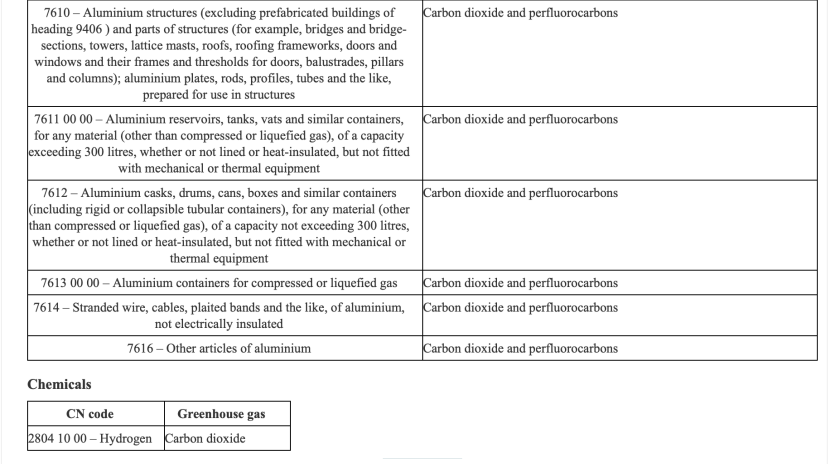
Core Viewpoint - The European Union's Carbon Border Adjustment Mechanism (CBAM) will officially enter its charging phase on January 1, 2026, initially covering six product categories: steel, cement, aluminum, fertilizers, electricity, and hydrogen. By 2028, the scope is expected to expand to approximately 180 downstream products, including washing machines and automotive parts [1][5]. Group 1: CBAM Implementation and Scope - CBAM will begin charging for carbon emissions on January 1, 2026, with a phased approach to implementation [1]. - The initial product coverage includes steel, cement, aluminum, fertilizers, electricity, and hydrogen, with specific customs codes provided for clarity [1][4]. - By 2028, the coverage will expand to include around 180 additional products, particularly in the steel and aluminum-intensive downstream sectors [5][6]. Group 2: Impact on Chinese Enterprises - Chinese companies exporting to the EU need to establish differentiated carbon emission data management systems to comply with CBAM [1][9]. - The actual payment obligations under CBAM will primarily affect large Chinese exporters working with major EU importers, while many small and medium-sized enterprises may be exempt due to a 50-ton annual import threshold [6][7]. - The impact on major Chinese aluminum companies is expected to be limited, as they can track their production data and often have lower actual emissions than the default values set by CBAM [8]. Group 3: Compliance Strategies - Chinese enterprises are advised to develop targeted data management strategies to meet CBAM requirements, focusing on direct and indirect emissions based on product categories [9]. - The establishment of a sustainable support alliance is underway to assist companies in understanding and managing their carbon footprints effectively [9]. - Companies should prioritize high carbon intensity products for compliance management and prepare for potential future regulatory changes [9]. Group 4: Broader Regulatory Context - In addition to CBAM, the EU has introduced new battery regulations that emphasize carbon footprint labeling, which will also affect exports [10][11]. - The carbon footprint labeling will require detailed disclosures about the lifecycle carbon footprint of batteries, further complicating compliance for exporters [11][12]. - The evolving regulatory landscape indicates a trend towards stricter green trade barriers, which may impact global trade dynamics [12][13]. Group 5: Competitive Advantages for China - China has made significant progress in low-carbon transitions, which may provide a competitive edge in adapting to EU regulations compared to other countries [13]. - The country's proactive measures in low-carbon transformation and compliance capabilities position it favorably in the face of stringent EU regulations [13].

长江有色:低库存及AI爆燃助推 31日铝价或上涨
Xin Lang Cai Jing· 2025-12-31 03:25
【铝期货市场】:锡镍强势领涨,铝价随板块起伏,隔夜伦铝偏强上扬,最新收盘报价2987美元/吨, 收涨36美元,涨幅1.22%,成交量17912手减少10078手,持仓量684135手减少199手。晚间沪铝高开后 偏强运行,主力月2602合约最新收盘价报22615元/吨,涨195元,涨幅0.87%。 伦敦金属交易所(LME)12月30日伦铝最新库存量报514250公吨,较上个交易日减少5000吨,跌幅 0.96%。 基本面,供应端,国内电解铝运行产能变化不大,供应维持稳定。需求端,季节性消费淡季与铝价高企 叠加,抑制下游需求,铝加工企业开工率持续下滑。库存方面,近期铝锭社库持续累积,因下游畏高、 刚需采购,且新疆发运改善使在途库存上升,后续社库或继续累库,需关注需求与库存变化。然沪铝社 库低位且AI需求带来利好。2025年AI行业持续狂欢,风险投资与科研人才涌入,算力融资活跃。尽管 数据中心建设延期消息增多,但企业仍斥巨资搭建算力设施,AI崛起将大幅拉动工业金属消费,利好 铝价。此外,临近跨年,铜锡镍强势领涨,铝价随板块波动。 综合来看,今现铝或上涨。 长江铝价alu.ccmn.cn短评:锡镍强势领涨,铝价随板 ...

建信期货铝日报-20251231
Jian Xin Qi Huo· 2025-12-31 01:45
Group 1: Report Information - Report Name: Aluminum Daily Report [1] - Date: December 31, 2025 [2] - Research Team: Non-ferrous Metals Research Team [3] - Researchers: Yu Feifei, Zhang Ping, Peng Jinglin [3] Group 2: Market Review and Operation Suggestions - Aluminum Price: On the 30th, Shanghai aluminum fluctuated at a high level. The main contract 2602 closed at 22,565, a slight increase of 0.13% from the previous day. The total position decreased by more than 22,000 lots to 655,000 lots [7]. - Spot Premium: Affected by the year - end settlement of enterprises, the trading sentiment in East China weakened, and the market liquidity was generally low. The spot premium was still under pressure. The discount in East China was - 310, in Central China was - 330, and in South China was - 320 [7]. - Supply: The domestic aluminum industry maintained a high - profit level, and the domestic operating capacity increased steadily but slightly under the stimulation of high profits. The supply pressure was generally limited due to the production capacity ceiling. Overseas, attention should be paid to the production reduction risk of Mozambique aluminum plants and the progress of Indonesia's capacity expansion [7]. - Demand: The operating rate of aluminum processing enterprises was further weakened by environmental protection restrictions and high aluminum prices, and the inventory showed an inflection point of accumulation [7]. - Price Outlook: In the medium term, aluminum prices are likely to rise due to loose liquidity and the strong performance of the gold and copper sectors. In the short term, the probability of high - level adjustment increases due to the fluctuating macro - atmosphere and limited fundamental drivers. It is advisable to control risks with light positions during the holiday [7]. Group 3: Industry News - Aluminum Substitution for Copper: 19 air - conditioning enterprises and research institutions, including Midea, Haier, and Xiaomi, jointly launched the implementation of the "aluminum substitution for copper" series of standards. Some brands plan to launch aluminum - made household air - conditioning products as early as 2026, while others have no such plan [10]. - Company Capacity Expansion: Lizhong Group's second - phase project of 1.8 million ultra - lightweight aluminum alloy wheels in its Mexican factory has been initially put into production. The third factory in Thailand with an annual production capacity of 3 million cast - spun aluminum alloy wheels is expected to be put into production next year. New high - performance aluminum alloy material projects in Chongqing, Huaian, Changchun, and Thailand will be put into production from the fourth quarter of this year to next year [10][11]. - Mining Plan: India's state - owned National Aluminium Company (Nalco) plans to start mining the Pottangi bauxite mine in Odisha in June 2026. It is expanding the fifth production line at its Damanjodi alumina refinery, increasing the annual production capacity by 1 million tons to 3.275 million tons [11]. - Automobile Industry: In the first 11 months, China's automobile production and sales exceeded 31 million, with a year - on - year increase of over 10%. The production and sales of new energy vehicles were close to 15 million, with a year - on - year increase of over 30%. New energy vehicle exports reached 2.315 million, doubling year - on - year [11]
中金:北美原铝供需缺口或在未来5年内持续放大 而美国当地铝将维持高溢价
Xin Lang Cai Jing· 2025-12-31 00:19
格隆汇12月31日|中金研报称,北美铝行业正面临美国加码铝进口贸易壁垒带来的机遇,以及数据中心 抢占有限电力资源构成的挑战。我们认为北美原铝供需缺口或在未来5年内持续放大,而美国当地铝将 维持高溢价。 ...
中金:北美铝需求有望维持较快增长,区域供需缺口或将进一步放大
Xin Lang Cai Jing· 2025-12-31 00:15
Core Viewpoint - The North American aluminum industry is facing opportunities from increased U.S. import trade barriers and challenges from data centers competing for limited power resources [1] Group 1: Demand and Supply Dynamics - North American aluminum demand is expected to maintain rapid growth, with a widening regional supply-demand gap anticipated [1] - The transportation sector is likely to see a rebound in automotive manufacturing capacity utilization due to U.S. tariff barriers [1] - Strong orders in the aerospace sector are expected to support aircraft manufacturing demand [1] Group 2: Residential and Industrial Demand - Aluminum demand in residential construction may stabilize and rebound after new housing starts reach a bottom [1] - The return of manufacturing and data centers may tighten U.S. power supply and demand, sustaining high investment in the power sector, which will further drive aluminum demand [1] Group 3: Future Outlook - The supply-demand gap in North America is projected to continue widening from 2025 to 2030 [1] - The Midwest premium is expected to remain at a high level [1]
中金 • 全球研究 | 北美铝行业:当贸易壁垒遇上电力紧张
中金点睛· 2025-12-30 23:56
Core Viewpoint - The North American aluminum industry is facing opportunities from increased U.S. trade barriers on aluminum imports and challenges from data centers competing for limited power resources. The supply-demand gap for primary aluminum in North America is expected to widen over the next five years, with local U.S. aluminum maintaining a high premium [2]. Supply Overview - The supply of primary aluminum in North America is limited due to power constraints and uncertainties in trade policies. Since 2011, new primary aluminum capacity has stagnated, and cost pressures from aging power and equipment have led to many U.S. projects being idled or shut down. The U.S. local Mt Holly project has announced a restart of idle capacity, while new projects by Emirates Global Aluminum and Century Aluminum depend heavily on policy support. Canada currently has no expansion projects with net capacity increases planned. It is expected that North American primary aluminum production will slightly increase from 3.99 million tons in 2024 to 4.16 million tons by 2030, mainly from the restart of idle capacity [5][11][18]. Demand Overview - North American aluminum demand is expected to maintain rapid growth, with the regional supply-demand gap likely to widen further. The transportation sector is anticipated to see a recovery in automotive manufacturing capacity utilization under U.S. tariff protection, while strong orders in aerospace will support aircraft manufacturing demand. Residential construction aluminum demand may stabilize and rebound after new housing starts bottom out. The high investment in the power sector may continue to drive related aluminum demand [5][11][43]. Key Companies - The North American aluminum industry is dominated by three major companies: Alcoa, Century Aluminum, and Rio Tinto. Rio Tinto maintains a relatively stronger profitability due to its low-cost hydroelectric power and integrated bauxite resources. Century Aluminum benefits more from U.S. tariff protections due to its high domestic production ratio. Alcoa, with a higher proportion of alumina revenue, can better withstand cost pressures related to alumina prices, while its higher cash cost per ton of aluminum provides greater profit elasticity [6][45]. Trade and Policy Impact - U.S. aluminum net imports reached a historical high in 2017 but have since declined due to tariff policies. The U.S. aluminum dependency ratio rose from 3% in 2011 to 59% in 2017, then fell to 38% in 2020 due to tariff protections. However, the dependency ratio is expected to rise again to around 50% from 2021 to 2024. The recent increase in tariffs to 25% and 50% will significantly elevate trade barriers [25][26][30]. Price Dynamics - The Midwest premium for aluminum in the U.S. has been expanding due to tariff impacts. The premium has risen from below $0.10 per pound before 2012 to around $0.20 per pound after the introduction of tariffs in 2018, and further to $0.80-$0.90 per pound with the recent tariff increases, effectively covering additional costs imposed by tariffs [35][36]. Future Outlook - The supply of primary aluminum in North America is expected to remain limited due to power resource constraints and uncertainties in trade policies. The demand for aluminum is projected to grow rapidly, particularly in the transportation and packaging sectors. The supply-demand gap is likely to widen from 2025 to 2030, with the Midwest premium expected to remain at a high level sufficient to cover tariff costs [38][43].



魏桥创业集团2025年工作总结表彰大会召开
Xin Lang Cai Jing· 2025-12-30 17:07
Group 1 - The core message of the article highlights the achievements of Weiqiao Chuangye Group in 2025 and the emphasis on its role as a leader in industrial upgrading, innovation, and reform, contributing significantly to the economic and social development of Binzhou [1][2] - The company is encouraged to continue its growth by focusing on high-end, intelligent, and green development in its aluminum and textile industries, aiming for global leadership [1] - Weiqiao Chuangye Group is urged to deepen the integration of technological and industrial innovation to create new productive forces and gain competitive advantages for future development [1] Group 2 - The local government emphasizes a supportive environment for entrepreneurs, implementing initiatives to enhance the comfort and convenience for businesses and their employees in Binzhou [2] - The meeting included the presentation of awards to outstanding collectives and individuals, recognizing their contributions to the company and the community [2]

中国又放大招,造福76亿人!炼铁技术迎来突破,改变全球钢铁格局
Sou Hu Cai Jing· 2025-12-30 14:46
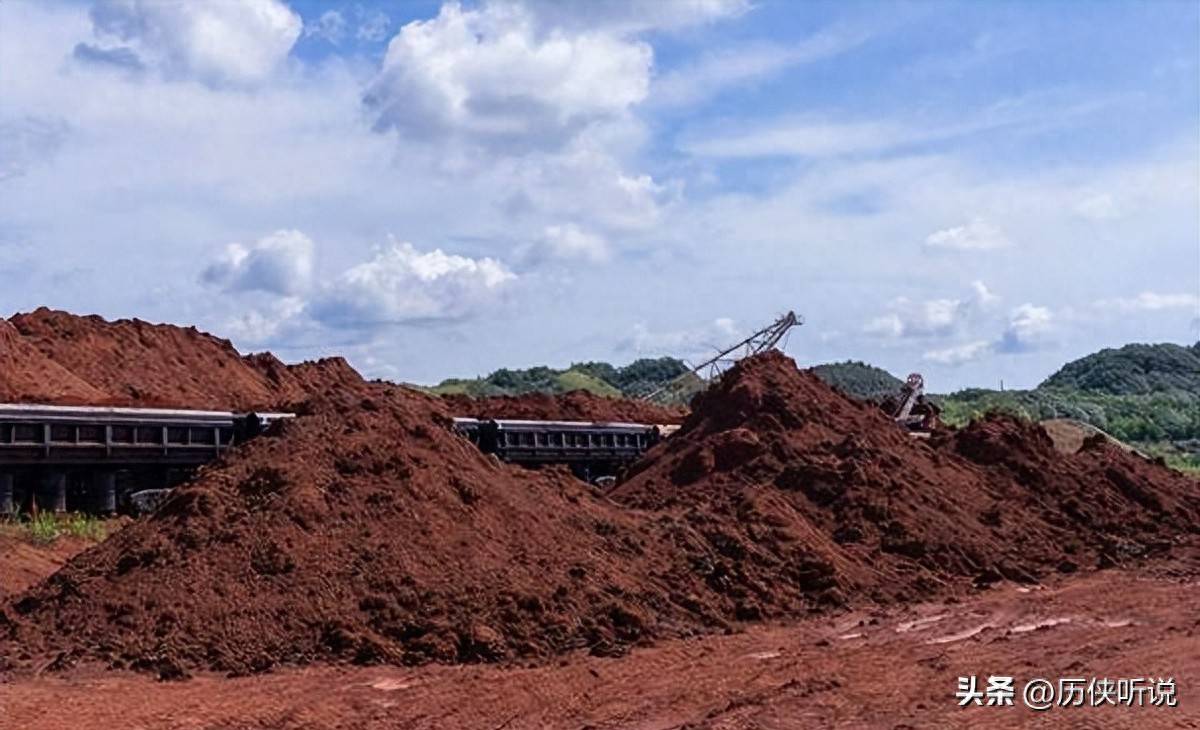
Core Viewpoint - The development of "Green Hydrogen Ironmaking" technology by Chinese scientists represents a significant breakthrough in efficiently extracting high-quality iron from aluminum industry waste, known as red mud, addressing both resource scarcity and environmental concerns globally [1][3][44]. Group 1: Technology Overview - "Green Hydrogen Ironmaking" technology can double the iron extraction rate compared to traditional methods, significantly reducing energy consumption and carbon emissions [1][26][27]. - The technology utilizes hydrogen plasma technology to precisely separate iron from red mud, achieving an iron extraction rate of 88.1% and a high iron grade of 71% [22][26]. - The process operates at a lower temperature of around 900°C, compared to over 1200°C required by traditional methods, leading to reduced production costs and time [24][35]. Group 2: Environmental Impact - Traditional ironmaking methods produce significant CO2 emissions and harmful gases, while the new technology primarily generates water as a byproduct, aligning with global carbon neutrality goals [27][40]. - The technology addresses the environmental hazards posed by red mud, which has a high pH and can contaminate soil and water sources [9][12]. Group 3: Economic Potential - The technology not only enhances the economic value of red mud by extracting iron but also has the potential to recover rare earth elements, aluminum, and titanium, further increasing its value [29][38]. - Although initial costs are slightly higher than imported iron ore, the overall economic benefits, including reduced transportation costs and potential for cost reduction through optimization, make it competitive [35][36]. Group 4: Industry and Market Implications - The technology is expected to drive the development of upstream renewable energy sectors, as the production of green hydrogen requires substantial clean energy [38]. - It creates a circular economy by allowing the use of extracted resources in various industries, including steel, renewable energy, and high-end manufacturing [38]. - The technology has garnered international interest, with countries facing similar red mud challenges looking to collaborate with China for its implementation [40][42].
中国铝业(02600)拟2.64亿元收购云铝物流51%股权
智通财经网· 2025-12-30 11:09
Core Viewpoint - China Aluminum Corporation (China Aluminum) announced a proposed acquisition of 51% equity in Yunnan Yun Aluminum Logistics Investment Co., Ltd. (Yun Aluminum Logistics) from Yunnan Aluminum Co., Ltd. (Yun Aluminum) for approximately RMB 264 million, which will be finalized by December 30, 2025 [1]. Group 1 - The acquisition will result in China Aluminum Logistics Group Co., Ltd. (China Aluminum Logistics) holding 51% and Yun Aluminum holding 49% of Yun Aluminum Logistics [1]. - Following the completion of the acquisition, Yun Aluminum Logistics will be included in the consolidated financial statements of China Aluminum Logistics [1]. - As of the announcement date, China Aluminum Group Co., Ltd. is the controlling shareholder of China Aluminum, and Yun Aluminum is a 30% controlled subsidiary of China Aluminum Group [1].


中国铝业拟2.64亿元收购云铝物流51%股权
Zhi Tong Cai Jing· 2025-12-30 11:09
Core Viewpoint - China Aluminum Corporation (601600) announced a proposed acquisition of 51% equity in Yunnan Yun Aluminum Logistics Investment Co., Ltd. for approximately RMB 264 million, which will be consolidated into the financial statements of China Aluminum Logistics Group after completion [1] Group 1 - The acquisition is to be executed through a non-public agreement and is subject to final valuation [1] - After the acquisition, China Aluminum Logistics will hold 51% and Yunnan Aluminum Co., Ltd. will hold 49% of the equity in Yunnan Yun Aluminum Logistics [1] - China Aluminum Group is the controlling shareholder of China Aluminum Corporation, and Yunnan Aluminum Co., Ltd. is a 30% controlled subsidiary of China Aluminum Group [1]