
电商

Search documents
行业周报:千问打通阿里生态,拼多多内测“百亿超市”-20260118
SINOLINK SECURITIES· 2026-01-18 11:50
Investment Rating - The report does not explicitly state an investment rating for the industry Core Insights - The coffee industry remains highly prosperous, with brands actively opening new stores despite the onset of the off-peak season, which may lead to short-term data fluctuations [4] - The tea beverage sector is experiencing slight pressure, with platforms focusing on immediate retail market share and a gradual reduction in subsidies, although the data still shows resilience [4] - The e-commerce sector continues to face challenges due to the domestic consumption environment, with Alibaba integrating its ecosystem with the Qianwen app for AI shopping, while Pinduoduo is testing a new "Billion Supermarket" feature [4][12] - The music streaming platform is highlighted as a quality internet asset driven by domestic demand, suggesting continued interest in music subscription platforms due to their profitability potential [4] - The automotive service market is projected to see a year-over-year decline of 6% by December 2025, with a quarter-over-quarter increase of 9% [4] - The AI and cloud sector is expected to grow, with Qianwen app integrating AI capabilities and significant investments in AI applications anticipated from both domestic and international tech giants [4] Summary by Sections 1.1 Consumer & Internet - The non-essential consumer sector index increased by 5.67%, outperforming the Hang Seng Index by 3.33 percentage points, with notable stock performances from Haidilao (+10.65%) and Luckin Coffee (+2.51%) [9][10] - The e-commerce index rose by 3.73%, with Alibaba's stock increasing by 13.45% and Pinduoduo declining by 11.44% [11][15] 1.2 Platform & Technology 1.2.1 Streaming Platforms - The Nasdaq Internet index fell by 3.59%, while the Hang Seng Media Index rose by 5.99%, with Netflix and Tencent Music experiencing declines [16][38] 1.2.2 Virtual Assets & Trading Platforms - The global cryptocurrency market cap reached $332.23 billion, with Bitcoin and Ethereum prices increasing by 5.5% and 6.9% respectively [22][24] 1.2.3 Automotive Services - The automotive aftermarket is projected to decline by 6% year-over-year by December 2025, with a quarter-over-quarter increase of 9% [34] 1.2.4 O2O - The internet technology index rose by 3.73%, with significant stock movements in companies like Didi and JD Health [35][40] 1.2.5 AI & Cloud - The Nasdaq Internet index fell by 3.59%, with Alibaba and TSMC showing positive stock performance [38][44] 1.3 Media - The media index increased by 2.04%, with the advertising sector performing well while the film and television sector faced declines [45][46]


电商分销渠道体系深度解析:构建多元化、高效率与可持续增长的渠道网络
Sou Hu Cai Jing· 2026-01-18 10:15
Group 1: Core Value and Strategic Positioning of E-commerce Distribution - The essence of modern e-commerce distribution has undergone significant transformation, focusing on efficiency and user experience [2] - The strategic value matrix of the distribution system highlights the importance of integrating various channels and technologies to enhance operational effectiveness [2] Group 2: Analysis of Mainstream E-commerce Distribution Channels - Social e-commerce distribution systems are deeply analyzed, particularly within the WeChat ecosystem, which serves as a distribution matrix [2] - The evolution of channel functions has shifted from mere sales pathways to brand experience touchpoints and user relationship hubs [4] - The trend towards ecological development emphasizes the deep integration of distribution systems with supply chains, marketing, and services [4] Group 3: Distribution Partner Recruitment and Management - The analysis of distributor profiles and stratification strategies is crucial for effective recruitment [5] - A detailed design of the recruitment process is necessary to ensure a streamlined approach [5] Group 4: Core Support Systems for Distribution Operations - The establishment of intelligent distribution management systems is essential for operational support [6] - Optimizing supply chain and fulfillment systems is critical for enhancing efficiency [6] Group 5: Data-Driven Fine-Tuning Operations and Growth Strategies - Building a core indicator system to assess channel health is vital for ongoing performance evaluation [9] - Implementing layered and refined operational strategies can lead to improved outcomes [9] Group 6: Future Development Trends and Innovation Directions - Technological advancements are driving innovations in distribution, necessitating continuous adaptation [11] - Innovations in models and ecosystems are essential for maintaining competitive advantages [12] Group 7: Conclusion on Future Resilient Distribution Networks - The competition in e-commerce distribution channels has evolved from mere scale expansion to a multidimensional contest of efficiency, experience, and ecosystem [13] - Successful distribution systems must possess strategic adaptability, active distributor engagement, and robust sales effectiveness metrics [13][15]


中国企业出海的新特点、新趋势|国际
清华金融评论· 2026-01-18 09:09
Core Viewpoint - The article discusses the new characteristics and trends of Chinese enterprises going global, highlighting the significant impact this phenomenon may have on the global economic landscape and the competitive dynamics between developing and developed countries [4][5][14]. Group 1: Characteristics of Chinese Enterprises Going Global - Since 2018, the trend of Chinese enterprises going global has shown unprecedented diversity in terms of participants and destinations, with a wide range of industries involved and a significant scale of operations [4][5]. - The motivations for Chinese enterprises to go global have evolved, including market expansion, resource acquisition, strategic investments, technology transfer, and cost reduction due to rising domestic labor costs [7][10]. - A notable characteristic is the large number of enterprises, including small and medium-sized enterprises and individual entrepreneurs, participating in this global expansion, which is unprecedented in history [10]. - Chinese enterprises are venturing into various industries, from low-end manufacturing to high-tech sectors like electric vehicles and fintech, showcasing a comprehensive approach to globalization [11]. - The phenomenon of cluster-based industrial chain expansion is emerging, where enterprises leverage domestic supply chains to enhance efficiency and cost-effectiveness in foreign markets [12]. - The scale of Chinese enterprises going global is substantial, impacting local economies and elevating their industrial levels [12]. Group 2: Impact and Trends of Chinese Enterprises Going Global - The global presence of Chinese enterprises is likely to reshape the world economic structure, potentially leading to rapid industrial upgrades in developing countries and creating competitive relationships with developed nations [14]. - A new industrial chain and supply chain dominated by Chinese enterprises may emerge, with local businesses gradually adopting Chinese standards and practices, particularly in sectors where China leads technologically [15]. - The trend of Chinese enterprises going global is expected to become a major force in international industrial transfer and cross-border investment, as traditional patterns of labor-intensive manufacturing relocation are unlikely to recur [16]. - Challenges may arise due to varying national systems, cultures, and legal frameworks, which could lead to friction between China and other countries [16]. - The article emphasizes the need for strategic government support to facilitate the global expansion of Chinese enterprises, ensuring their rights and interests are protected while promoting sustainable international operations [23][24]. Group 3: Financial Services for Outbound Enterprises - The demand for comprehensive financial services is critical as Chinese enterprises expand globally, necessitating a strategic approach to cross-border capital flow management [31][32]. - Shanghai is proposed to be developed as a service center for outbound enterprises, providing a range of financial products and services tailored to their unique needs [34]. - Collaboration between large financial institutions and smaller ones is encouraged to create a robust financial service chain that supports the diverse needs of enterprises going global [39].

中国公司全球化周报|TikTok Shop在欧洲四国推出本地托管模式/创想三维携手阿里云优化3D打印云服务
3 6 Ke· 2026-01-18 05:49
Group 1: Events and Forums - The "Dubai Business Forum - China" will take place in Shenzhen on May 14, 2026, focusing on economic collaboration and investment opportunities between China and Dubai [2] Group 2: Company Developments - TikTok Shop has launched a local hosting model in four European countries, allowing merchants to stock goods in local warehouses while TikTok handles logistics [3] - Temu has introduced a local seller program in the UAE to enhance delivery efficiency and expand product offerings [3] - WeChat mini-programs are projected to surpass 5 billion uses by 2025, with significant growth in cross-border transactions [4] - ZhiYuan Robotics has opened its first overseas robot experience center in Malaysia, aligning with the country's "Industry 4.0" strategy [4] - Creality has launched a new sub-brand SPARKX at CES, integrating with Alibaba Cloud for enhanced 3D printing services [5] - Xpeng Motors plans to establish a localized supply chain team in Europe and ASEAN by 2026 to improve operational efficiency [6][7] - WeRide has deployed over 1,000 Robotaxis globally, with operations in Guangzhou, Beijing, and Abu Dhabi [7] - BYD has achieved a record high in exporting new energy buses, leading the industry for three consecutive years [7] - CATL has launched the largest overseas service center for new energy in Riyadh, providing comprehensive lifecycle services [8] - VortexInfo showcased an autonomous road cleaning robot at the Abu Dhabi Sustainability Week, focusing on smart city applications [8] Group 3: Investment and Financing - Gongye Technology has secured hundreds of millions in financing to enhance overseas sales channels [9] - Bay Measurement has completed over 100 million A+ round financing to strengthen its overseas business layout [9] - Huaxuan Sensor has completed a new round of strategic financing to accelerate global market expansion [9] - OMOWAY has raised tens of millions in Pre-A and Pre-A+ rounds to support the production and development of self-balancing electric motorcycles [10] - Haiwei Co. has received a 300 million yuan strategic investment to support lightweight component manufacturing [10] Group 4: Policies and Market Trends - Kickstarter's 2025 data shows that Chinese brands dominate the top ten popular projects, raising nearly $140 million [11] - China's high-tech product exports grew by 13.2% in 2025, with industrial robots becoming a net export product for the country [12] - The trade of AI-related products in China is expected to grow significantly, aligning with global trends [12]





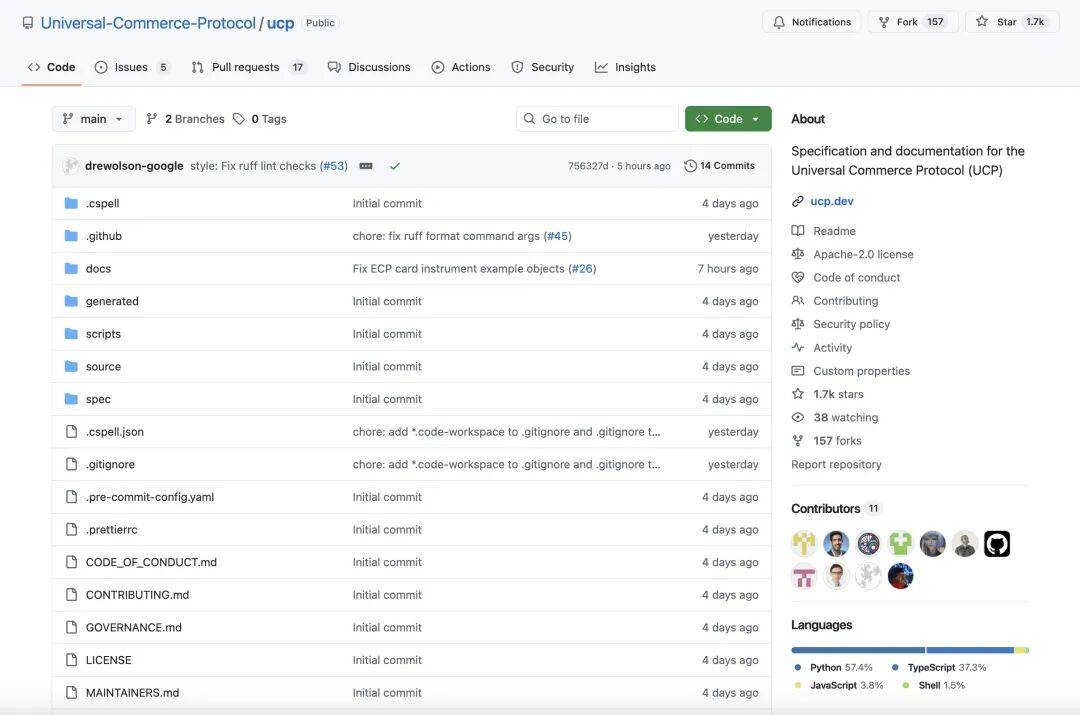
“商业的HTTP”来了:谷歌CEO劈柴官宣 UCP,Agent 直接“剁手”下单,将倒逼淘宝京东“拆家式重构”?
Sou Hu Cai Jing· 2026-01-17 16:02
Core Insights - Google has introduced the Universal Commerce Protocol (UCP), aiming to standardize online shopping through agents, allowing for a seamless end-to-end shopping experience [1][2][4] - UCP is designed to enable interoperability among various agents and merchants, facilitating direct communication and transactions without the need for traditional web navigation [2][4] - The protocol is released under the Apache 2.0 open-source license, indicating a commitment to community collaboration and development [3] Group 1: UCP Overview - UCP aims to streamline the entire shopping process, from product discovery to post-purchase support, under a unified standard [6][12] - The protocol includes six core capabilities: product discovery, shopping cart, identity binding, checkout, order management, and other vertical capabilities [8][10] - UCP is not an isolated protocol; it is designed to work alongside other agent protocols like Agent Payments Protocol (AP2) and Agent2Agent (A2A) [9][12] Group 2: Market Impact - The introduction of UCP is seen as a transformative move in e-commerce, potentially reshaping the traditional sales funnel into a more efficient process [4][12] - Major retailers and payment systems, including Shopify, Walmart, and Visa, have already joined the UCP initiative, indicating strong industry support [17] - The protocol's focus on discoverability aims to change how products are accessed and purchased, moving away from traditional web pages to data-driven interactions [12][14] Group 3: Future Implications - The evolution of UCP suggests a significant shift in the retail landscape, where AI-driven agents may redefine the roles of traditional e-commerce platforms [18][20] - As agents become more integrated into commerce, the potential for a new business model emerges, combining social, e-commerce, and service elements [18][20] - The ongoing development of UCP and its adoption by major players signals a trend towards a more automated and efficient retail environment [17][19]
海外策略周报:本周美股市场震荡,港股市场反弹-20260117
HUAXI Securities· 2026-01-17 14:47
Global Market Overview - The US stock market experienced a pullback this week, with the S&P 500, Nasdaq, and Dow Jones Industrial Average declining by 0.38%, 0.66%, and 0.29% respectively [2][12]. - The TAMAMA Technology Index has a P/E ratio of 36.67, while the Philadelphia Semiconductor Index stands at 45.3, indicating high valuation levels for US tech assets [12][17]. - The Shiller P/E ratio for the S&P 500 is currently at 40.8, marking one of the longest periods above 40 outside of the internet bubble peak [12][17]. US Market Performance - The S&P 500's real estate sector saw the largest increase this week, rising by 4.07%, while the financial sector experienced the most significant decline, dropping by 2.33% [12][16]. - The top-performing stocks in the S&P 500 included AMD, KLA Corporation, and Corning, with weekly gains of 14.11%, 11.99%, and 10.52% respectively [16][17]. Hong Kong Market Performance - The Hong Kong stock market rebounded this week, with the Hang Seng Index, Hang Seng China Enterprises Index, and Hang Seng Hong Kong Chinese Enterprises Index increasing by 2.34%, 1.9%, and 0.93% respectively [25][31]. - The Hang Seng Technology Index rose by 2.37%, with the non-essential consumer sector showing the largest increase of 5.67% [29][31]. - The top-performing stocks in the Hang Seng Index included New World Development, Alibaba Health, and Alibaba Group, with gains of 26.6%, 17.85%, and 13.45% respectively [31][32]. Economic Data - In November 2025, the Eurozone industrial production index grew by 2.5% year-on-year, surpassing the previous value of 1.7% [39]. - The US CPI year-on-year growth rate for December 2025 remained stable at 2.7%, while the core CPI also held steady at 2.6% [41]. - The German Sentix investor confidence index for January 2026 improved to -16.4 from -22.7 [39]. Emerging Markets - The South Korean Composite Index saw a significant increase of 5.55% this week, while the Ho Chi Minh Index rose by 0.60% [11]. - The performance of emerging markets is expected to be volatile due to economic fundamentals and potential impacts from US trade policies [12][17]. Investment Opportunities - The report suggests that there are structural opportunities in the Hong Kong market, particularly in assets with low valuations and strong fundamentals that are less affected by external market influences [12][39]. - The report anticipates a shift in market style in Hong Kong, with a focus on assets that are resilient in fundamentals and less impacted by external factors [12][39].
股神巴菲特的「护城河」理论,如何帮企业摆脱内卷、长期赚钱 | 螺丝钉带你读书
银行螺丝钉· 2026-01-17 13:37
Core Viewpoint - The article discusses the concept of "economic moats" as proposed by Warren Buffett, emphasizing the importance of competitive advantages for companies to achieve long-term profitability and returns for investors [4][5]. Summary by Sections Introduction to Economic Moats - The article introduces a new investment book titled "Investment Moats," which elaborates on Buffett's investment philosophy regarding economic moats [2]. Definition and Importance of Economic Moats - Economic moats are defined as competitive advantages that allow companies to maintain profitability over time, thus providing returns to investors [4]. Characteristics of Companies with Economic Moats - Companies that possess economic moats typically have stable and significant profits, distinguishing them from early-stage or startup companies [5]. Avoiding Market Saturation - Economic moats help companies avoid "involution," where excessive competition leads to homogenization and price wars, ultimately resulting in losses [6][7]. Types of Economic Moats 1. **Scale Advantage**: Companies like BlackRock and Vanguard dominate the index fund market, controlling over 80% of the global market share, benefiting from lower management fees due to their scale [10][12][14]. 2. **Network Effects**: The value of networks increases with the number of users, making it difficult for new entrants to compete against established players like the Hong Kong Stock Exchange [16][20]. 3. **Brand Advantage**: Strong brands in consumer and pharmaceutical sectors create recognition and loyalty, making it hard for new brands to penetrate the market [22][27]. 4. **Switching Costs**: High switching costs, as seen with integrated product ecosystems like Apple's, make it challenging for customers to change to competitors [28][32]. 5. **Resource Advantage**: Companies with access to low-cost resources, such as mining operations, have a competitive edge in their industries [33]. Conclusion - Companies need unique advantages that are not easily replicable to protect their profits and ensure sustained revenue generation. Financially, companies with economic moats often exhibit high gross margins and long-term return on equity (ROE) levels of 15% or higher [36][37].

西贝宣布将关停102家门店,涉及约4000员工
Xin Lang Cai Jing· 2026-01-17 09:29
Core Viewpoint - The public feud between Xibei's founder Jia Guolong and Luo Yonghao has ended with both parties being silenced on social media, following a series of controversies regarding Xibei's use of pre-prepared dishes and the company's operational struggles, culminating in the closure of 102 stores and significant financial losses [1][2][3]. Group 1: Company Situation - Xibei plans to close 102 stores, affecting approximately 4,000 employees, with the closures concentrated in major cities like Shanghai, where 18 stores will shut down [1]. - The company anticipates a cumulative loss exceeding 600 million yuan from September 2025 to March 2026 [1]. - Xibei currently operates 357 stores across 26 provinces and 61 cities, meaning the closures represent nearly 30% of its total outlets [1]. Group 2: Crisis Management - Despite implementing self-rescue measures such as adjusting menu processes and issuing vouchers, Xibei has been unable to reverse its declining fortunes [2]. - The public discourse has shifted from whether Xibei uses pre-prepared dishes to broader questions about how companies manage public relations and respond to crises [3][4]. - The resignation of Xibei's public relations vice president indicates internal turmoil amid the ongoing crisis [3]. Group 3: Industry Insights - The situation with Xibei serves as a cautionary tale for the restaurant industry and other customer-facing businesses regarding the importance of public relations [6][7]. - Many business leaders fail to recognize the significance of public relations, which can directly impact consumer choices and company operations [7]. - The case of Xibei highlights the need for companies to develop systematic capabilities for public dialogue, especially during crises [7][8].
京东集团-SW(9618.HK):带电品类受国补基数掣肘 日百品类维持高景气
Ge Long Hui· 2026-01-17 06:29
Core Viewpoint - JD.com is expected to see a revenue growth of 1.2% year-on-year in Q4 2025, reaching 351.014 billion yuan, with a Non-GAAP net profit of 1.501 billion yuan, resulting in a net profit margin of 0.43%, down from 3.25% in the same period last year [1][2] Revenue and Profit Forecast - For Q4 2025, JD.com’s revenue is projected to grow by 1.2% year-on-year, while JD Retail's revenue is expected to decline by 2.7% [1] - The company anticipates a significant recovery in profits for 2026, influenced by the reduction of losses in the takeaway business and increased investments in overseas and other new businesses [2] Business Segment Performance - The daily necessities category continues to show strong performance with double-digit growth, although the growth rate has slightly decreased due to the timing of the Spring Festival [1] - The electric products category is experiencing a significant decline, with double-digit negative growth attributed to high base effects from government subsidies [1] New Business Developments - The takeaway business has notably reduced its losses, while losses from JD's other businesses, including JD X and international operations, have slightly increased [2] - The adjusted operating profit for JD Retail is expected to be around 8 billion yuan for the quarter, with a profit margin of approximately 2.7%, down from 3.3% in the previous year [2] Long-term Projections - Revenue forecasts for JD.com are 1.3078 trillion yuan and 1.3881 trillion yuan for 2025 and 2026, respectively, representing year-on-year growth rates of 12.86% and 6.14% [2] - Non-GAAP net profits are projected to be 27.449 billion yuan and 36.761 billion yuan for 2025 and 2026, with year-on-year changes of -42.61% and 33.93% [2]

企业如何定位AI营销的发力点
Jing Ji Guan Cha Wang· 2026-01-17 06:28
Core Insights - Marketing serves as the frontline for AI application, with generative AI rapidly penetrating various marketing processes since the launch of ChatGPT, including copywriting, proposal planning, and visual design [1] - The value of AI in marketing is highly context-dependent, necessitating a systematic approach to determine the conditions and methods for effective AI integration [1] - An analytical framework is proposed, intersecting "internal/external" and "technical/strategic" perspectives, to help businesses accurately identify the focal points for AI marketing [1] Internal Perspective + Technical Perspective - The foundation for AI marketing lies not in the algorithms but in the enterprise's readiness to implement AI, which includes having the necessary data, systems, and processes [2] - Data assets are crucial; for instance, Luckin Coffee's success in personalized marketing stems from its early investment in a digital infrastructure that accumulated over 200 million user behavior and transaction data [2] - Technical integration capabilities are essential, as AI marketing requires seamless connectivity with systems like CRM and CDP; without this, AI efforts remain isolated and ineffective [3] External Perspective + Technical Perspective - Even with technical capabilities, the effectiveness of AI depends on its ability to address specific industry marketing pain points, which vary across sectors [4] - The fast fashion industry, for example, faces challenges in using advanced AI applications due to high demands for authenticity and compliance, necessitating a focus on simpler functionalities [4][5] - Conversely, in the fast-moving consumer goods sector, AI tools can significantly enhance marketing efficiency by processing large volumes of unstructured data and automating content production [5] Internal Perspective + Strategic Perspective - The adoption of AI marketing is fundamentally a strategic choice, with some companies embracing it as a core competitive advantage while others rely on unique strengths to avoid dependence on AI [6] - Strategic priorities dictate resource allocation; for example, China Resources Sanjiu employs AI to enhance marketing efficiency in a competitive OTC drug market, while Tesla leverages its unique brand identity and direct sales model, minimizing reliance on traditional advertising [6][7] - Companies may exhibit caution in AI marketing due to concerns about disrupting existing sales channels, indicating that willingness to adopt AI is as crucial as technical capability [7] External Perspective + Strategic Perspective - AI marketing strategies are shaped by external factors such as industry structure, regulatory frameworks, and consumer behavior [8] - Consumer attributes, such as purchase frequency and price sensitivity, influence how AI is utilized in marketing across different sectors [8][9] - Regulatory environments, particularly in finance and healthcare, impose restrictions that can limit AI's application in marketing, necessitating innovative approaches to comply with regulations while achieving marketing goals [10] Conclusion - The application of AI in marketing is a complex, systemic issue that requires a holistic view of internal capabilities, external environments, technical feasibility, and strategic intent [11] - Companies must prioritize strengthening their data and systems if their technical foundation is weak, reassess investment priorities if industry and AI are misaligned, and ensure that marketing is viewed as a core battleground for strategic success [11]
