债券市场

Search documents
政策互通、资源互补 琴澳债券市场创新发展论坛聚焦跨境金融
Xin Hua Cai Jing· 2025-11-28 07:15
Core Insights - The "Qin-Ao Bond Market Innovation Development Forum" was held in the Hengqin Guangdong-Macao Deep Cooperation Zone, emphasizing the importance of the bond market for financial development in the region [1] - Hengqin has introduced special support measures for enterprises to issue bonds in Macau, resulting in the issuance of 500 million RMB offshore bonds by Hengqin enterprises [1] - The Macau bond market is characterized by a dual focus on connecting with the mainland and international markets, aiming to build a sustainable financial ecosystem [2] Group 1 - The bond market is a key focus for financial development in the Hengqin region, with significant progress made in building the Macau bond market [1] - Hengqin's unique advantage lies in its offshore and onshore integration, which will continue to support cross-border financial innovation [1] - The MOX has issued 1,044 bonds with a total scale of 10,443 million MOP, of which RMB-denominated bonds account for 44% [1] Group 2 - The Macau bond market is developing diversely, with a focus on sustainable financial practices [2] - The former Deputy Governor of the People's Bank of China highlighted the rapid development of China's bond market, which is expected to reach 192 trillion RMB by August 2025 [2] - Four key recommendations were made for enhancing the bond market, including product innovation and digital transformation [2] Group 3 - Cross-border credit recognition is essential for the collaborative development of the Qin-Ao bond market [3] - Hengqin serves as a strategic link between the mainland and Macau, facilitating efficient flow of resources [3] - The forum gathered nearly 200 participants from various sectors to discuss innovative paths for bond tools and promote the ecological development of the Qin-Ao bond market [3]
美债遭大规模抛售,美联储将做出最后一个决定,中美是否能回到过去?
Sou Hu Cai Jing· 2025-11-28 04:35
Group 1: U.S. National Debt Situation - The total U.S. federal debt has surpassed $38 trillion as of November 2025, with annual interest payments nearing $1.5 trillion, exceeding the GDP of many medium-sized countries [1] - The U.S. debt-to-GDP ratio is projected to rise to 143% by 2030, significantly higher than 122% in 2024 [5] - The U.S. government is expected to allocate 26.5% of its fiscal revenue to interest payments in the fiscal year 2025, meaning over $1 out of every $4 in tax revenue will go towards interest [5] Group 2: Foreign Holdings of U.S. Debt - China has reduced its holdings of U.S. Treasury bonds to $700.5 billion, the lowest level since 2008, having sold off nearly $300 billion since 2022 [2] - The structure of U.S. debt ownership is changing, with foreign investors' share dropping from around 50% in 2015 to approximately 30% currently, while domestic investors' share is increasing [17] - As of November 2025, Japan remains the largest foreign holder of U.S. debt at approximately $1.19 trillion, followed by the UK at about $865 billion, and China at $700.5 billion [21] Group 3: U.S. Treasury Yield Trends - Despite the Federal Reserve's interest rate cuts, long-term U.S. Treasury yields have risen, with the 10-year yield surpassing 5%, marking a nearly 20-year high [3] - A significant sell-off in the U.S. Treasury market occurred in early April 2025, with the 10-year yield increasing by 50 to 60 basis points in a short period [7] Group 4: Economic and Trade Relations - The U.S. and China maintain a high level of trade interdependence, with bilateral trade reaching $688.28 billion in 2024, making the U.S. China's largest goods export destination [13] - The Chinese yuan's exchange rate has become a focal point in U.S.-China economic competition, with a 15% depreciation in 2023 followed by a 5% appreciation in late 2024 [13] Group 5: Federal Reserve Challenges - The Federal Reserve faces a dilemma with core inflation remaining above 2.5%, while the volatility in the Treasury market necessitates intervention [11] - There are concerns regarding the independence of the Federal Reserve, as political pressures from the Trump administration may lead to changes in leadership that could affect monetary policy [15] Group 6: Global Financial System Changes - The dollar's share in global foreign exchange reserves fell to 55% in Q1 2025, the lowest since 1999, indicating a shift towards a "de-dollarization" trend [9] - The development of alternative payment systems, such as China's CIPS, and the increasing use of local currencies for trade settlements are contributing to the erosion of dollar dominance [23]

2026年度债市策略 - “慢熊”与“分岔”中的“相对价值”
2025-11-28 01:42
Summary of Key Points from Conference Call Industry Overview - The focus is on the bond market strategy for 2026, characterized by a "slow bear" and "divergence" in "relative value" [1] - The real estate industry is expected to bottom out in Q2 2026, with sales, inventory, and new construction growth rates having reached their lowest points [1][6] Core Insights and Arguments - The projected upper limit for interest rates in 2026 is 2.25%, driven primarily by nominal GDP recovery, which is expected to exceed 5% [1][3] - The current policy framework emphasizes stability to address uncertainties and structural challenges, avoiding large-scale stimulus while supporting emerging industries [1][7] - The CPI is forecasted to center around 0.8% next year, while PPI is expected to recover to above -1%, influenced by monetary activation and the bottoming out of real estate investment [1][8] - The market's focus on the lower limit of interest rates is determined by the cost of bank liabilities, which is currently stable at around 1.6% [1][9] Important but Overlooked Content - The phenomenon of monetary activation is reflected in the M1-M2 differential, which has decreased from over 8% to 1%-2% recently, indicating a shift from time deposits to demand deposits [4][5] - The real estate sector is currently experiencing negative growth across all metrics, but improvements are expected as investment growth bottoms out [6] - The sales regulations are aimed at protecting investors and promoting long-term holding, which has led to behavioral changes in the market [21][22] - Non-bank institutions are facing challenges due to new sales regulations and valuation adjustments, leading to potential liquidity opportunities [14] - The macro trading strategy for 2026 will focus on the expected recovery of fundamentals and the panic caused by new redemption fee regulations [15] Market Dynamics - The bond market in 2026 will be characterized by "trading," with structural gaming opportunities arising from the rotation between interest rates and credit [20] - The current monetary policy is expected to have limited room for rate cuts, with only 1-2 potential cuts anticipated [11] - The anticipated rise in funding prices for 2026 is expected to be around 1.5%, slightly higher than the current levels [12] Conclusion - The bond market strategy for 2026 will require a focus on trading and structural opportunities, with an emphasis on liquidity and the impact of regulatory changes on market behavior [20][21]
债市早报:六部门联合印发《关于增强消费品供需适配性进一步促进消费的实施方案》;资金面依然宽松,债市承压走弱
Sou Hu Cai Jing· 2025-11-27 03:20
Group 1: Domestic News - The National Development and Reform Commission announced the implementation of the "Credit Repair Management Measures" starting April 1, 2026, allowing credit subjects to apply for credit repair under certain conditions [2] - Six departments, including the Ministry of Industry and Information Technology, released a plan to enhance the adaptability of supply and demand in consumer goods, aiming to form three trillion-level consumption sectors and ten billion-level consumption hotspots by 2027 [3] - The People's Bank of China conducted a 7-day reverse repurchase operation of 213.3 billion yuan at a fixed rate of 1.40%, resulting in a net withdrawal of funds of 97.2 billion yuan for the day [8] Group 2: International News - In the U.S., September durable goods orders increased by 0.5%, while core capital goods orders rose by 0.9%, indicating stronger-than-expected resilience in manufacturing demand [5] - International crude oil futures prices rose, with WTI crude oil up by 1.21% to $58.65 per barrel, and Brent crude oil up by 1.04% to $63.13 per barrel [6] Group 3: Bond Market Dynamics - The bond market showed weakness, with the yield on the 10-year government bond rising by 1.45 basis points to 1.8340% [10] - In the secondary market, seven industrial bonds experienced price deviations exceeding 10%, with "22 Vanke 02" dropping over 35% [11] - The convertible bond market saw a collective decline, with major indices down by approximately 0.85% [21]

债券市场“科技板”促进信用评级行业高质量发展的路径研究
Xin Lang Cai Jing· 2025-11-26 23:35
Core Viewpoint - The launch of the "Technology Board" in the bond market enhances the financing channels for small and medium-sized technology enterprises, optimizes the investment environment, and provides opportunities for the credit rating industry to innovate and upgrade its rating methods [1][2]. Group 1: Development of the Bond Market - The "Technology Board" aims to support the financing of small and medium-sized technology enterprises and enhance the bond market's service capabilities for the real economy [3][4]. - Since the announcement of the "Technology Board," the number of issued technology innovation bonds has reached 1,006, with a total issuance scale of 11,945 billion yuan, involving 342 technology enterprises [3]. Group 2: Opportunities for the Credit Rating Industry - The establishment of the "Technology Board" presents significant opportunities for the credit rating industry to expand its business and innovate its rating methods [6][7]. - The credit rating industry is encouraged to develop new rating methodologies that consider the unique characteristics of technology enterprises, such as their reliance on intellectual property and innovation potential [7][11]. Group 3: Enhancing Rating Distinction - The announcement requires rating agencies to design a forward-looking and distinctive rating symbol system for technology bonds, which will improve the differentiation of credit ratings [8][9]. - The introduction of a suffix "sti" to traditional rating symbols will highlight the uniqueness of technology bonds and enhance the clarity of credit ratings [9][14]. Group 4: Risk Management and Information Security - The credit rating agencies are advised to strengthen data security management to protect sensitive information related to technology enterprises during the rating process [15].
银行间科创债发行活跃 今年支持276家企业融资超5300亿元
2 1 Shi Ji Jing Ji Bao Dao· 2025-11-25 11:01
(原标题:银行间科创债发行活跃 今年支持276家企业融资超5300亿元) 21世纪经济报道记者 叶麦穗 自5月7日交易商协会正式面向金融市场推出科创债以来,市场活力持续激发。 根据银行间市场交易商协会的统计,截至11月21日,银行间市场今年累计支持276家企业发行科创债超 5300亿元,涵盖230家科技型企业和46家股权投资机构。 在银行间科创债的发行中,民营企业参与度显著提升,融资活力持续释放。市场认为未来科创债的发展 趋势或向三个方向发展,一是民企发行规模有望提升;二是完善风险分散分担机制;三是丰富投资者类 型,产品流动性有望提升,市场活力有望增强。 民营股权投资机构加入 风险分担工具运用增多 科技创新债券风险分担工具运用的广度和深度正稳步拓展。继6月5家民营股权投资机构获风险分担工具 增信成功发行科创债后,近日基石资本、同创伟业、盛景嘉成和道禾长期四家民营股权投资机构拟发行 科创债合计9.3亿元,标志着更多民营股权投资机构在政策支持下通过银行间债券市场融资。 在增信支持方面,杜海均介绍,3家由科创债风险分担工具提供增信,1家由中债信用增进投资股份公司 提供市场化增信;此外,风险分担工具还将积极参与全部4 ...
大公国际:“十五五”时期债券市场支持金融“五篇大文章”的路径探析
大公国际资信· 2025-11-25 05:57
Group 1: Report Industry Investment Rating - No relevant information provided Group 2: Core Viewpoints of the Report - The "15th Five-Year Plan" proposes to develop science and technology finance, green finance, inclusive finance, pension finance, and digital finance, and the bond market will play a key foundational role in promoting the implementation of these "five major articles" [1][2] - The bond market has achieved significant progress in the areas guided by the "five major articles," but there are still problems such as insufficient funds, structural imbalance, and imperfect mechanisms in some areas [3][16] - Through mechanism, product, and technology innovation, the bond market has broken through inherent bottlenecks and provided precise impetus for the real economy [17] - During the "15th Five-Year Plan" period, the bond market will play a more systematic and strategic role in serving the "five major articles" [26] Group 3: Summary by Relevant Catalogs I. Significant Progress in the Bond Field under the Guidance of the "Five Major Articles" (A) Science and Technology Innovation Bonds - Since 2024, the total issuance of science and technology innovation bonds in the market has reached approximately 2.72 trillion yuan, with 2,567 bonds issued [7] - Features include longer financing terms, a high proportion of high-credit ratings, cost advantages in issuance interest rates, and a high proportion of central and state-owned enterprises among financing entities [7][8] (B) Green Finance - As of the end of 2024, the cumulative issuance of green bonds in China reached 4.1 trillion yuan, and in 2025, the issuance of labeled and non-labeled green bonds totaled 936.765 billion yuan [9] - The average issuance interest rate of green bonds has steadily declined, and the main issuers are commercial banks and traditional green industries such as public utilities and transportation [12][13] (C) Inclusive, Pension, and Digital Finance Bonds - The bond market has enhanced financial support for the grass-roots economy and key regions through diversified bond varieties, with a cumulative issuance scale of nearly 2.47 trillion yuan, and the "Three Rural Issues" special financial bonds have reached 1.21 trillion yuan [14] - The bond market is relatively weak in pension and digital finance, facing problems such as single bond varieties and difficulties in bond financing for digital enterprises [16] II. Three Major Innovation Points for the Bond Market to Support Key Areas (A) Mechanism Innovation - In the green finance field, the trading association optimized the green bond rules, allowing the replacement of self-owned funds in advance and implementing hierarchical and classified information disclosure management [18] - In the inclusive finance field, counter bond repurchase business and other measures have enhanced the liquidity of small and medium-sized institutions [20] - In the science and technology finance field, the establishment of the bond market's "science and technology board" has solved the problem of patient capital sources and built a comprehensive support system [20] (B) Product Innovation - Science and technology innovation bills have expanded the use of raised funds to equity investment and fund contributions, effectively introducing long-term and low-cost funds into early-stage scientific research [21] - In the green finance field, the issuance of carbon-linked and carbon asset - pledged debt financing instruments has been encouraged, exploring the integration of green finance and the carbon market [21] - In the inclusive and pension finance fields, there have been product innovations such as small and medium - sized enterprise support bonds and pension - specific financial bonds [22] (C) Technology Innovation - The application of digital RMB in bond issuance has improved settlement efficiency, ensured the special use of funds, and enhanced transaction traceability and regulatory penetration [24] - The application of artificial intelligence technology in bond investment research and risk control has been continuously deepened, showing significant value [24] III. New Trends for the Bond Market to Empower the "Five Major Articles" during the "15th Five-Year Plan" Period - Science and technology finance will be the key direction for the bond market to support the layout of new productive forces, providing stable capital guarantee for key core technology research [26] - Green finance will assume a more core function of green capital supply, guiding social funds to flow to key green fields [27] - In the inclusive finance field, the role will shift from making up for shortcomings to deeply integrating into the industrial chain and supply chain system, providing long - term and low - cost funds for small and medium - sized enterprises [27] - Pension finance will become an important growth area for expanding long - term funds and securitizable assets, with the potential for the expansion of special pension bonds [28] - Digital finance will lead the systematic digital upgrade of infrastructure and factor allocation, promoting the formation of a new ecosystem covering "frontier technology - digital industry - bond financing" [28]
马勇:通过六大子市场指数,系统衡量中国金融整体形势
Sou Hu Cai Jing· 2025-11-24 03:01
Core Insights - The China Financial Situation Index (CAFI) indicates a gradual recovery in China's financial landscape, moving away from a cold phase, although the foreign exchange and bond markets remain constraints [1][10] - The report suggests maintaining a loose monetary policy and leveraging the Federal Reserve's interest rate cuts to attract international capital back to China, providing new momentum for economic recovery [1][10] Index Construction Methodology - The CAFI is based on the intrinsic relationship between financial activities and the real economy, comprising six sub-market indices: Money Supply Index (MSI), Credit Situation Index (CSI), Stock Market Index (SSI), Bond Market Index (BSI), Exchange Rate Pressure Index (EPI), and Real Estate Situation Index (RSI) [3][4] - The index is designed to provide a quantifiable assessment of China's overall financial situation, reflecting the operational status and structural changes within the financial system [3][4] Current Financial Situation Analysis - As of Q3 2025, the MSI and CSI are in a moderately positive state, indicating a mild recovery in the banking credit market [7][8] - The SSI is also in a positive state, while the BSI shows a slight cooling, reflecting a "see-saw" effect between the stock and bond markets [7][8] - The EPI is currently the lowest among the indices, indicating moderate cooling, primarily due to the impact of the Federal Reserve's interest rate hikes [8] Future Outlook and Policy Predictions - The CAFI index for Q3 2025 shows signs of recovery, with values indicating a shift from a moderately cold state to a warming trend, although the recovery is not yet solidified [10] - Monetary policy is expected to remain moderately loose to support economic recovery and counter deflationary pressures, while credit policies will focus on key economic areas [10][11] - The opening of the Federal Reserve's interest rate cut cycle presents an opportunity to alleviate pressure on the RMB exchange rate and attract international capital, which could be crucial for the financial situation's improvement [11]
同科技创新相适应的科技金融体制加快构建
Jin Rong Shi Bao· 2025-11-24 00:37
Group 1 - The core viewpoint of the articles emphasizes the importance of innovative financing mechanisms, particularly the issuance of technology innovation bonds, to support technological advancements and address financing challenges faced by tech enterprises [1][2]. - The issuance of technology innovation bonds has seen significant growth, with nearly 1.5 trillion yuan issued in the first half of the year, accounting for nearly 80% of the total issuance of innovation-related bonds [2]. - The financial resource allocation logic is shifting, allowing equity investment institutions to issue bonds, transforming short-term debt into long-term capital for hard tech companies in critical R&D phases [2]. Group 2 - The banking credit system is undergoing a transformation, with the loan approval rate for tech SMEs exceeding 50%, reflecting a 2.8 percentage point increase year-on-year [3]. - Banks are innovating their lending mechanisms, moving away from traditional collateral requirements to focus on the technological value and growth potential of enterprises [3]. - The establishment of specialized technology finance departments in major banks and the creation of over 2,000 technology branches nationwide are enhancing the support for tech innovation [3]. Group 3 - The multi-tiered equity market is being strengthened to better serve technological innovation, with ongoing reforms in the Sci-Tech Innovation Board and the establishment of the Beijing Stock Exchange [4]. - There are still deep-rooted contradictions in the financial system's support for tech innovation, particularly the tendency to favor mature high-tech enterprises over seed and startup companies that face financing difficulties [4]. - The lack of government risk compensation funds is a significant barrier to improving the financing accessibility for tech enterprises, leading to higher costs due to increased risk management measures by investors and banks [4]. Group 4 - Future development of a financial system that aligns with technological innovation requires patience, breakthroughs, and innovation [5]. - Recommendations include enhancing the foundational systems of multi-tiered capital markets, exploring high-yield bond markets for riskier tech enterprises, and strengthening the linkage between equity, debt, and loans [5][6]. - There is a call for the cultivation of patient and long-term capital, including the establishment of large-scale industrial mother funds to guide social capital towards strategic emerging industries [6].
中方抛售美债后,特朗普开始报复,美联储主席或换人,一个时代即将告终
Sou Hu Cai Jing· 2025-11-22 07:50
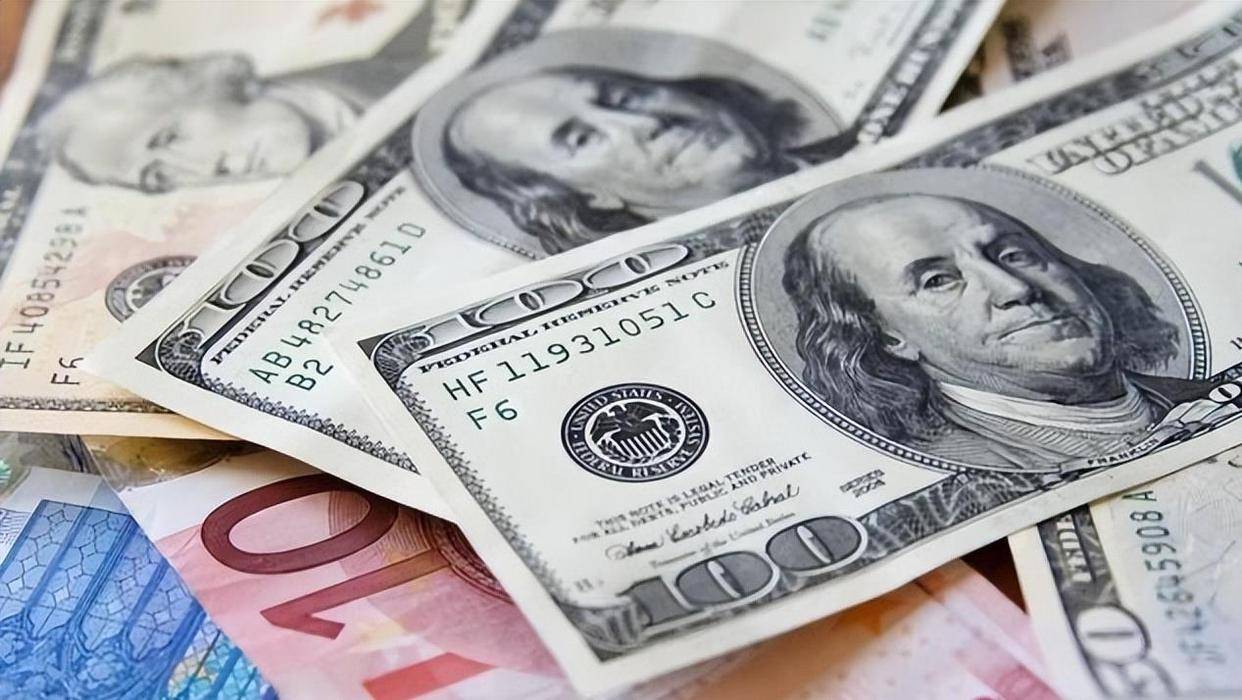
近期,中国再次采取行动,减持了5亿美元的美国国债,这一数据根据美国财政部的披露而得知。如今,中国在美国国债上的总持仓量已降至 7400亿美元左右。而这并非偶然,而是中国在经历了一系列深思熟虑的战略调整后,从2022年至今,累计抛售了近3000亿美元的美债。在这一过 程中,中国在海外持有美国国债的排名也悄然滑落,从长期第二的位置跌至了第三,为日本和英国所超越。 美国国债的规模如滚雪球般不断膨胀,现在已经逼近40万亿美元。这不仅让我们看到经济实力的幻影,更让诸多国家对美国未来的偿还能力心存 疑虑。美国每年为其国债支付的利息高达1.5万亿美元,这一数字甚至超过了不少国家的年度GDP,令人咂舌。如此巨额的债务,无疑加剧了国 际间对美元信用的担忧,也让各国不得不重新考虑与美国的金融关系。 随着美国国债的不断增大,金融市场的稳定性正受到严重威胁。倘若这种情况持续发展,谁又能保证美国一定会如约偿还?美国政府的减税政策 和对外国商品的加税,无形中加重了全球市场对美元的疑虑。此时,没有哪个国家愿意再把自己的财富系在一个越来越不稳定的货币上。 对于中国的这一系列操作,特朗普的态度无疑是引人注目的。他并没有选择认真审视美国的财政问 ...