
能源业

Search documents
【港股红利周报】港股红利前期回调较充分,外部扰动下或迎风格切换
Xin Lang Cai Jing· 2025-10-13 11:00
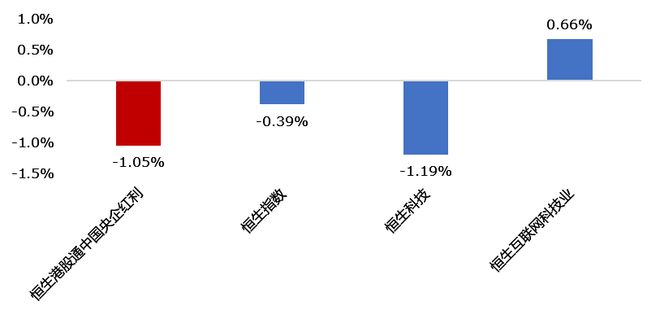
Group 1 - The core viewpoint indicates that the Hong Kong dividend sector has shown resilience, with the Hang Seng Hong Kong Stock Connect China Central State-Owned Enterprises Dividend Total Return Index rising by 1.08% while the Hang Seng Index and Hang Seng Technology Index fell by 3.11% and 5.48% respectively [1][2] - The dividend style has experienced a significant correction, making it an attractive investment opportunity as the market shifts from growth stocks to dividend stocks, which have shown a notable lag in performance over the past two months [1][2] - Insurance capital is expected to be a significant source of incremental funds in the stock market, with the dividend sector being a key allocation direction due to its low volatility and high dividend yield characteristics [1][2] Group 2 - The banking sector within the Hong Kong dividend weight sector is anticipated to see fundamental improvements due to supportive monetary policies and stabilized interest margins, which will enhance net interest income growth [2] - The dividend yield of the Hang Seng Hong Kong Stock Connect China Central State-Owned Enterprises Dividend Index is 6.10%, compared to 4.62% for the CSI Dividend Index, with a price-to-book ratio of 0.59 and a price-to-earnings ratio of 6.67 [2] - The low interest rate environment and weak economic recovery in China are favorable for dividend strategies, with state-owned enterprises showing strong willingness and capability for dividend distribution [2] Group 3 - The performance of the Hong Kong dividend assets has significantly outperformed mainstream broad-based indices in recent years, indicating a strong trend in favor of dividend strategies [8] - The top ten weighted stocks in the Hong Kong Stock Connect China Central State-Owned Enterprises Dividend Index include companies from various sectors, with notable dividend yields and recent performance metrics [25][23] - The recent performance of the Hong Kong Stock Connect China Central State-Owned Enterprises Dividend ETF shows a net value of 1.5934 and a scale of 33.94 billion, with a weekly trading volume of 3.84 billion [23]

港股红利资产或具备长期配置价值,关注恒生红利低波ETF(159545)等产品布局机会
Mei Ri Jing Ji Xin Wen· 2025-10-13 07:21
Core Viewpoint - The Hong Kong dividend sector is experiencing a recovery, with the Hang Seng High Dividend Low Volatility Index showing a reduced decline of 0.4% as of 14:50, indicating a potential investment opportunity in stable dividend assets amidst global economic uncertainties [1] Group 1: Market Performance - The Hang Seng High Dividend Low Volatility Index consists of 50 stocks with good liquidity, continuous dividends, moderate payout ratios, and low volatility, with the top three sectors being energy, finance, and utilities, collectively accounting for over 55% of the index [1] - Notable stocks in the index include Luk Fook Holdings, China Gas, China Everbright Environment, and Hengan International, all of which have seen gains of over 1% [1] Group 2: Investment Insights - According to China Merchants Securities, there is a demand for absolute return funds due to global economic uncertainties, making Hong Kong dividend assets attractive for their lower volatility and stronger stability, suggesting long-term allocation value [1] - Analysts suggest that attention should be given to cyclical dividend stocks in the medium term, focusing on the potential recovery of domestic profit cycles, which may favor resource stocks [1] Group 3: Index and ETF Details - The current dividend yield of the Hang Seng High Dividend Low Volatility Index is approximately 6.1% [1] - The Hang Seng Low Dividend ETF (159545) offers a low management fee rate of 0.15% per year, facilitating low-cost investment in the Hong Kong high dividend sector [1]
资讯早班车-2025-10-13-20251013
Bao Cheng Qi Huo· 2025-10-13 02:25
投资咨询业务资格:证监许可【2011】1778 号 资讯早班车 专业研究·创造价值 1 / 13 请务必阅读文末免责条款 资讯早班车 二、商品投资参考 资讯早班车-2025-10-13 一、 宏观数据速览 | 发布日期 | 指标日期 | 指标名称 | 单位 | 当期值 | 上期值 | 去年同期值 | | --- | --- | --- | --- | --- | --- | --- | | 20250715 | 2025/06 | GDP:不变价:当季同比 | % | 5.20 | 5.40 | 4.70 | | 20250930 | 2025/09 | 制造业 PMI | % | 49.80 | 49.40 | 49.80 | | 20250930 | 2025/09 | 非制造业 PMI:商务活 动 | % | 50.00 | 50.30 | 50.00 | | 20250915 | 2025/08 | 社会融资规模增量:当 | 亿元 | | 25668.00 11307.00 | 30323.00 | | | | 月值 | | | | | | 20250912 | 2025/08 | M0(流通中的现金 ...
欧洲担忧“珍珠港”!立陶宛前外长:我们是否会冒险阻止三战?
Sou Hu Cai Jing· 2025-10-10 04:08
Group 1 - The article discusses the increasing tensions between Russia and NATO, highlighting concerns over potential military escalation in Europe, with some political figures suggesting that Russia's actions could lead to a "Pearl Harbor" scenario [1] - The Institute for the Study of War (ISW) indicates that Russia has entered the first phase of preparing for war against NATO, which includes military restructuring near NATO borders and ongoing drone provocations [1] - NATO has taken precautionary measures, such as stopping the use of public transponders for aircraft in European airspace, to conceal flight paths and potentially deter Russian incursions [1] Group 2 - The European Union is leveraging economic power against Russia, planning to sanction a major cryptocurrency used for cross-border payments that supports approximately $68 billion in transactions [6] - Hungary's Prime Minister Viktor Orbán has criticized the West's reluctance to negotiate with Russia, despite Hungary's recent significant liquefied natural gas contracts, indicating a complex stance on energy supply diversification [8] - Turkey is also reducing its dependence on Iranian and Russian gas by increasing domestic production and importing more liquefied natural gas from the United States, with expectations that this shift will meet over half of its gas demand by 2028 [10]

降息潮来了!2025年这3样东西越买越贵,普通人早准备早省钱
Sou Hu Cai Jing· 2025-10-04 05:14
Core Viewpoint - The recent interest rate cuts by the Federal Reserve and other global central banks are leading to rising prices for essential goods, including energy and agricultural products, while making bank savings less valuable [1][3][5]. Group 1: Impact of Interest Rate Cuts - The Federal Reserve's recent decision to cut interest rates by 25 basis points is the first since 2025, prompting a global trend of monetary easing [1]. - Lower interest rates decrease the returns on bank deposits, leading individuals to seek alternative investments like gold, which has seen a price increase from 680 yuan to 912 yuan per gram [3]. - Predictions indicate that further interest rate cuts may occur by the end of 2025, potentially driving gold prices even higher [3]. Group 2: Rising Energy Prices - Electricity prices have increased by 20% over three months, with charging costs rising from 1.5 yuan to 1.8 yuan per kilowatt-hour [5]. - The rise in energy prices is attributed to lower financing costs for businesses due to interest rate cuts, leading to increased demand while supply remains constrained [5]. - Natural gas prices are also rising, with heating costs expected to increase by 10% due to higher transportation costs for liquefied natural gas [5]. Group 3: Agricultural Product Price Increases - The price of rice has risen from 3.8 yuan to 4.3 yuan per jin, reflecting a broader trend of agricultural price increases driven by both extreme weather and rising production costs [5][8]. - Global wheat production has decreased by 10% in India, and rice production has dropped by 8% in Thailand, contributing to higher prices [5]. - The cost of essential food items like flour and soybean oil has also increased, with flour prices rising by 6% and soybean oil by 9% [8]. Group 4: Strategic Recommendations - Individuals are advised to stock up on essential goods like rice and flour during promotions, while maintaining a balanced investment in gold to hedge against inflation [8]. - A recommendation is made to allocate 10% of household assets to gold and to store a three-month supply of energy and agricultural products to avoid waste [8]. - The emphasis is on prudent spending during the interest rate cut period, focusing on essential needs rather than being overly concerned with low bank interest rates [8].

宝城期货资讯早班车-20250922
Bao Cheng Qi Huo· 2025-09-22 03:11
1. Report Industry Investment Rating No relevant content provided. 2. Core Viewpoints of the Report - The global financial and commodity markets are experiencing various changes. In the commodity market, precious metals are rising due to factors like Fed rate - cut expectations and geopolitical risks, while basic metals face a complex situation with supply - demand imbalances. In the financial market, the stock market shows positive trends, and the bond market is in a state of low - interest - rate and complex trading strategies. The currency market also has fluctuations influenced by multiple factors [4][32][24]. - The Chinese economy has both positive and negative aspects. The GDP maintains a certain growth rate, but there are also challenges in areas such as inflation and fixed - asset investment. The government is taking measures to promote economic development and environmental protection, and the financial sector is actively adjusting policies and structures [1]. 3. Summary by Directory 3.1 Macro Data - GDP in Q2 2025 had a 5.2% year - on - year growth at constant prices, slightly lower than the previous quarter [1]. - In August 2025, the manufacturing PMI was 49.4%, the non - manufacturing PMI for business activities was 50.3%, and the CPI had a - 0.4% year - on - year change [1]. - M1 and M2 money supply had year - on - year growth in August 2025, with M1 at 6% and M2 at 8.8% [1]. 3.2 Commodity Investment 3.2.1 Metals - International precious metals are rising due to Fed rate - cut expectations, a weak dollar, and geopolitical risks. London basic metals mostly fell, with supply disturbances and weak demand in a complex situation [4]. - As of September 18, tin, zinc, lead, copper, and nickel inventories decreased, while aluminum, cobalt, and alloy inventories remained stable [5]. - Platinum futures prices have risen over 50% this year, outperforming gold futures, and global platinum demand in Q1 2025 increased by 10% year - on - year [5]. 3.2.2 Coal, Coke, Steel, and Minerals - Shanxi's coalbed methane production in the first 8 months of this year reached 9.81 billion cubic meters, a record high [6]. - Congo (Kinshasa) will lift the cobalt export ban on October 16 and set export quotas. If the ban is extended, cobalt prices may rise [6][7]. 3.2.3 Energy and Chemicals - China's Jintan salt - cavern gas storage expanded its capacity, with a 60% increase in daily gas injection and a 2 - fold increase in daily peak - shaving gas extraction [8]. - The EU proposed new sanctions on Russia, including a ban on Russian LNG imports and a $47.6 per - barrel oil price cap [8]. - As OPEC+ voluntary production cuts end, Iraq increased oil exports and earned additional revenue [8]. 3.2.4 Agricultural Products - China's irrigated farmland area has reached 1.086 billion mu, and water - saving irrigation projects have expanded [10]. - The US will cancel the annual food insecurity survey, but the 2024 results will still be released [10]. 3.3 Financial News 3.3.1 Open Market - On September 19, the central bank conducted 354.3 billion yuan of 7 - day reverse repurchase operations, with a net investment of 124.3 billion yuan [12]. - This week, 1.8268 trillion yuan of reverse repurchases and 300 billion yuan of MLF are due. The central bank adjusted the 14 - day reverse repurchase operation method [12]. 3.3.2 Key News - China and the US leaders had a phone call, emphasizing the importance of stable bilateral relations and a good business environment for Chinese companies in the US [15]. - On September 22, the LPR will be announced, and the market expects it to remain unchanged [17]. - 8 - month foreign exchange market data shows stable operation, with increased cross - border receipts and payments and net capital inflows [18]. 3.3.3 Bond Market Summary - Bank - to - bank bond yields generally rose, and bond futures prices fell. The money market improved, and the DR001 weighted average rate dropped to around 1.46% [24]. - In the exchange bond market, some bonds rose and some fell. The convertible bond index also declined [24][25]. 3.3.4 Foreign Exchange Market - The on - shore RMB against the US dollar closed down 46 points at 7.1125, and the RMB central parity rate was down 43 points [28]. - The US dollar index rose 0.30%, and most non - US currencies fell [28]. 3.4 Research Report Highlights - Yangtze River Fixed Income believes that bond funds will maintain a medium - to - high duration level [29]. - Guosheng Fixed Income points out that fiscal revenue and expenditure declined in August, and the sustainability of fiscal stimulus is uncertain [29]. 3.5 Stock Market - Since the implementation of "9·24" policies, China's capital market has become more stable, with increased trading volume and new accounts [32]. - Institutions have been actively researching A - share companies, especially in "hard - tech" sectors. High - profile institutions are optimistic about the sustainable rise of the Chinese stock market [33]. - After the Fed's rate cut, foreign institutions expect more capital to flow back to A - shares and Hong Kong stocks [34]. - Private equity institutions' positions have reached a new high this year [34].
金融赋能 绘绿成卷——“双碳”行动实施五周年记
Zheng Quan Ri Bao· 2025-09-21 15:43
Core Viewpoint - China aims to peak carbon dioxide emissions before 2030 and achieve carbon neutrality by 2060, marking a significant commitment to green transformation and sustainable development [1][2]. Financial Sector's Role - The financial sector is crucial in facilitating resource allocation and addressing financing challenges for green projects, with green credit surpassing 42 trillion yuan and green bond issuance ranking among the highest globally [1][3]. - Financial innovations and policies have been implemented to support the "dual carbon" goals, including the establishment of a comprehensive financial support framework [3][5]. Funding Requirements - From 2024 to 2030, China's total funding requirement for climate change mitigation and adaptation is approximately 25.2 trillion yuan, averaging about 3.6 trillion yuan annually; from 2031 to 2060, the requirement is around 243 trillion yuan, averaging about 8.1 trillion yuan annually [2]. Policy Framework - A robust policy framework has been established, including key documents that outline financial support for green development, providing clear strategic guidance for market participants [3][4]. - The introduction of standards and guidelines has enhanced transparency and accountability in green finance, preventing greenwashing practices [4][5]. Market Practices - Green credit has become a vital tool for financing energy efficiency and renewable energy projects, with a reported balance of 42.39 trillion yuan in green loans as of mid-2025, reflecting a 14.4% increase from the beginning of the year [6][7]. - The issuance of green bonds and sustainable development-linked bonds has enabled companies to raise funds specifically for low-carbon projects, linking financial incentives to emission reduction targets [7][8]. Carbon Market Development - China's carbon trading market has rapidly expanded since its launch, becoming the largest in the world by greenhouse gas emissions coverage, with a cumulative trading volume of 715 million tons and a transaction value of 49.04 billion yuan [9]. - The integration of carbon markets with other financial instruments is essential for maximizing the effectiveness of green finance and ensuring that emission reductions are economically viable [9][10]. Future Challenges and Directions - Despite progress, challenges remain in matching funding supply with project demand, developing risk pricing mechanisms, and enhancing collaboration across financial tools [10][11]. - Future efforts should focus on innovating financial products, improving resource matching, and fostering international cooperation to strengthen the green finance ecosystem [11][12].
深夜,中国资产爆发
财联社· 2025-09-18 00:23
Core Viewpoint - The Federal Reserve's decision to cut interest rates by 25 basis points does not indicate the start of a long-term easing cycle, which dampens market bullish sentiment [1][3]. Market Dynamics - The Dow Jones increased by 260.42 points (0.57%) to 46018.32, while the Nasdaq fell by 72.63 points (0.33%) to 22261.33, and the S&P 500 decreased by 6.41 points (0.10%) to 6600.35 [4]. - Among the 11 sectors of the S&P 500, the financial sector rose by 0.96%, and the energy sector increased by 0.28%, while the industrial sector fell by 0.47% and the information technology sector declined by 0.7% [4]. - In the ETF market, the semiconductor ETF dropped by 0.64%, while the energy ETF rose by 0.23% and the financial ETF increased by 0.97% [4]. Stock Performance - Major tech stocks showed mixed results, with Nvidia down 2.62%, Amazon down 1.04%, and Google A down 0.65%, while Microsoft rose by 0.19% and Apple increased by 0.35% [5]. - Lyft's stock surged by 13% following the announcement of a partnership with Waymo for autonomous taxi services in Nashville, while competitor Uber fell by 5% [6]. - Workday's shares rose by 7.25% after reports of Elliott Management acquiring over $2 billion in shares [7]. - StubHub's stock fell over 6% on its first day of trading, marking a reversal in the hot IPO market [8]. - Chinese concept stocks mostly rose, with the Nasdaq Golden Dragon China Index up 2.85%, including Baidu up over 11% and NIO up over 6% [8].
北京昌平区推介74个优质项目,总投资513.5亿元
Zhong Guo Xin Wen Wang· 2025-09-17 03:14
Group 1 - The "Pingyuan New City Venture Capital" series of activities was launched in Beijing on September 16, 2025, with a focus on promoting key enterprises and projects in Changping District [1] - A total of 74 quality projects were promoted during the event, with a total investment of 51.35 billion yuan and a financing demand of 7.08 billion yuan [1] - The projects cover key sectors such as healthcare, advanced manufacturing, advanced energy, and future industries, indicating a strategic focus on innovation and development in these areas [1] Group 2 - In the healthcare sector, there are 25 projects with a total investment of 19.43 billion yuan and a financing demand of 3.26 billion yuan [1] - The advanced manufacturing sector includes 13 projects with a total investment of 11.17 billion yuan and a financing demand of 0.99 billion yuan [1] - The advanced energy sector features 19 projects with a total investment of 8.55 billion yuan and a financing demand of 1.32 billion yuan [1] - The future industries sector consists of 17 projects with a total investment of 12.20 billion yuan and a financing demand of 1.51 billion yuan [1]
俄罗斯提高对非友好国家的啤酒进口关税
Feng Huang Wang· 2025-09-14 02:46
Group 1 - The Russian government has increased import tariffs on malt beer and cider from non-friendly countries, with beer tariffs rising from €1 per liter to €1.5 per liter [1] - The tariff on cider, perry, and other sparkling beverages has been raised from 22.5% to 30% [1] - This decision is part of a broader context where the EU is preparing its 19th round of sanctions against Russia, targeting six Russian banks and energy companies, as well as payment systems, credit card networks, and cryptocurrency platforms [1] Group 2 - President Putin has requested a list of individuals from non-friendly countries who have suspended or reduced their business activities in Russia since February 22, 2022, to be compiled and updated quarterly [1]