
公用事业

Search documents
20家公司前三季度业绩预增
Zheng Quan Shi Bao Wang· 2025-10-09 02:09
Core Insights - A total of 23 companies have announced their performance forecasts for the first three quarters, with 20 companies expecting profit increases, representing 86.96% of the total [1] - Among the profit-increasing companies, four are expected to see net profit growth exceeding 100%, while another four are projected to have growth between 50% and 100% [1] Company Performance - Yinglian Co., Ltd. is expected to have the highest net profit growth, with a median increase of 1602.05% for the first three quarters [1] - Brother Technology and Yonghe Co., Ltd. are projected to have median net profit growth of 230.37% and 218.42%, ranking second and third respectively [1] Industry Analysis - The companies expecting to double their profits are primarily concentrated in the basic chemicals, electronics, and light manufacturing sectors, with 2, 1, and 1 companies respectively [1] - In terms of market segments, three companies are listed in the main board and one in the ChiNext board among those expected to double their profits [1] Stock Performance - Since July, the average increase for companies expecting to double their profits is 47.86%, outperforming the Shanghai Composite Index [1] - Changchuan Technology has seen the largest increase since July, with a cumulative rise of 122.32%, followed by Brother Technology and Yonghe Co., Ltd. with increases of 48.77% and 23.18% respectively [1]



两融余额缩水345.97亿元 杠杆资金大幅加仓166股
Zheng Quan Shi Bao Wang· 2025-10-09 02:07
Market Overview - On September 30, the Shanghai Composite Index rose by 0.52%, while the total margin balance in the market decreased to 239.42 billion yuan, a reduction of 34.60 billion yuan from the previous trading day [1] - The margin balance in the Shanghai Stock Exchange was 121.94 billion yuan, down by 15.11 billion yuan; in the Shenzhen Stock Exchange, it was 116.73 billion yuan, down by 19.29 billion yuan; and in the Beijing Stock Exchange, it was 7.42 billion yuan, down by 0.21 billion yuan [1] Industry Analysis - All industries under the Shenwan classification saw a decrease in margin balances, with the largest reductions in non-bank financials, telecommunications, and electrical equipment, which saw decreases of 3.74 billion yuan, 3.70 billion yuan, and 3.39 billion yuan respectively [1] Individual Stock Performance - Among the stocks with increased margin balances, 884 stocks saw growth, accounting for 23.74% of the total, with 166 stocks having an increase of over 5% [1] - The stock with the highest increase in margin balance was Fuan Energy, which had a latest margin balance of 257.41 million yuan, reflecting a 106.79% increase from the previous trading day, and its stock price rose by 4.59% [1] - Other notable stocks with significant margin balance increases included Wuxi Dingbang and Xun'an Technology, with increases of 60.10% and 58.60% respectively [1] Top Gainers and Losers - The top 20 stocks by margin balance increase averaged a rise of 3.95%, with notable gainers including Songyuan Safety, Pinming Technology, and Hezhuan Intelligent, which rose by 20.00%, 18.60%, and 10.02% respectively [2] - Conversely, the top losers included Jingyi Equipment, Donghua Technology, and Chengfa Environment, which fell by 6.21%, 5.19%, and 4.96% respectively [2] Margin Balance Decrease - A total of 2839 stocks experienced a decrease in margin balances, with 485 stocks seeing declines of over 5% [4] - The stock with the largest decrease in margin balance was C Haocreat, which saw a reduction of 33.54%, bringing its latest margin balance to 47.07 million yuan [5] - Other significant declines were noted in stocks such as Boxun Biology and Taipeng Intelligent, with decreases of 32.09% and 28.87% respectively [5]
鲁政委:美联储降息周期下的港股再审视
Sou Hu Cai Jing· 2025-10-08 05:30
Core Viewpoint - The current macroeconomic backdrop, including stagflation risks in the U.S. and the misalignment of economic cycles between China and the U.S., suggests that the Hong Kong stock market (HK stock market) is unlikely to replicate historical trends during the Federal Reserve's (Fed) interest rate cut cycle, leading to significant structural differentiation instead [1][3]. Summary by Sections 1. Impact of Fed Rate Cuts on HK Stock Market - Historical experience indicates that during Fed rate cut cycles, the HK stock market typically exhibits "preventive rate cut rallies" and "recessionary rate cut declines" [1]. - The performance of the HK stock market during these cycles shows distinct characteristics: preventive rate cuts generally lead to positive market performance, while recessionary cuts result in market pressure [7][11]. 2. Differentiation in Market Performance - The analysis reveals that aside from the Hang Seng Technology Index, other styles (such as large-cap and small-cap stocks, as well as dividend styles) have not shown independent trends during past rate cut cycles, indicating a high correlation with the Hang Seng Index [10]. - In recessionary rate cuts, defensive sectors like utilities and consumer staples tend to perform better due to reduced market risk appetite, while in preventive cuts, high-growth sectors like technology and pharmaceuticals are favored [11]. 3. Current Rate Cut Context - The current rate cut cycle is characterized by greater uncertainty regarding the Fed's path, influenced by political pressures and the ongoing AI revolution reshaping capital expenditure in the tech sector [2][49]. - The performance of the HK stock market in the coming quarters will be closely tied to the recovery of the Chinese economy, with a focus on liquidity-sensitive growth sectors as a core strategy under optimistic scenarios [2][50]. 4. Historical Rate Cut Analysis - The analysis categorizes Fed rate cut cycles since 1970 into "preventive" and "recessionary" based on whether the economy entered a recession during the cut period [4]. - Preventive rate cuts are generally shorter and involve smaller cuts, while recessionary cuts tend to last longer and involve larger reductions [4]. 5. Future Scenarios for HK Stock Market - Three potential scenarios for the HK stock market are outlined: 1. **Baseline Scenario**: Gradual Fed rate cuts with moderate recovery in the Chinese economy, leading to a valuation-driven market with growth sectors outperforming [51]. 2. **Optimistic Scenario**: More aggressive Fed cuts without triggering recession fears, resulting in a favorable liquidity environment for growth stocks [53]. 3. **Pessimistic Scenario**: Fed pauses or slows rate cuts due to persistent inflation, leading to a return to fundamentals driven by the Chinese economy's recovery [54]. 6. Strategic Focus - The strategic focus should be on liquidity-sensitive growth sectors in baseline and optimistic scenarios, while in pessimistic scenarios, the emphasis should shift to defensive assets and closely monitoring Chinese macroeconomic data [55].

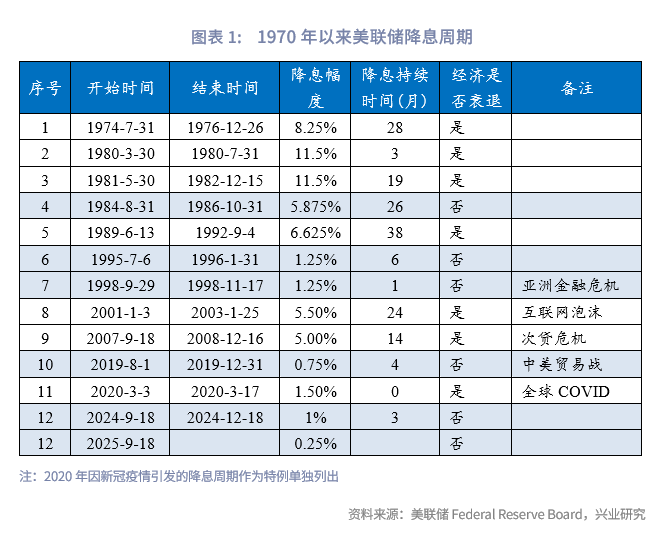
东南亚研究 | 美联储降息周期下的港股再审视
Sou Hu Cai Jing· 2025-10-08 02:25
Core Viewpoint - The recent Federal Reserve interest rate cut on September 18, 2024, is set against a complex macroeconomic backdrop, including risks of stagflation in the U.S. and misalignment in the economic cycles of China and the U.S., suggesting that the Hong Kong stock market may not replicate historical trends but instead exhibit significant structural differentiation [1][2]. Group 1: Historical Context and Market Behavior - Historical experience indicates that during Fed rate cut cycles, the Hong Kong stock market typically shows a "preventive rate cut rally" or a "recessionary rate cut decline" pattern [1]. - In terms of market style, the Hang Seng Technology Index has demonstrated a "high win rate and high return" characteristic during preventive rate cut cycles, while other styles have not shown independent trends [1][2]. - Industry-wise, defensive sectors like utilities and consumer staples tend to perform better during recessionary rate cuts, while high-growth sectors such as technology and pharmaceuticals excel during preventive rate cuts [1][2][3]. Group 2: Current Economic Landscape - The current macroeconomic environment is more complex than historical experiences, with the U.S. economy facing stagflation risks and ongoing misalignment with China's economic cycle, making it difficult for the Hong Kong market to follow a straightforward trend [2][3]. - The upcoming October monetary policy meeting is crucial for assessing the future pace and intensity of rate cuts, influenced by various structural variables, including political pressures and the ongoing AI industry revolution [3][4]. Group 3: Future Outlook and Scenarios - The performance of the Hong Kong stock market in the next one to two quarters will depend not only on the Fed's rate cut path but also on the recovery process of the Chinese economy [2][52]. - Three potential scenarios are outlined: 1. **Baseline Scenario**: Gradual Fed rate cuts with a moderate recovery in the Chinese economy, favoring growth-sensitive sectors [52][53]. 2. **Optimistic Scenario**: More aggressive Fed cuts without triggering recession fears, leading to a favorable liquidity environment for growth stocks [55]. 3. **Pessimistic Scenario**: Fed pauses or slows rate cuts due to persistent inflation, putting pressure on the Hong Kong market, which will depend heavily on the recovery of the Chinese economy [56]. Group 4: Structural Opportunities - The analysis indicates that different types of rate cut cycles lead to distinct long-term performances in the Hong Kong market, with preventive rate cuts generally resulting in positive returns for the Hang Seng Index [9][10]. - The Hang Seng Technology Index has shown superior performance during preventive rate cuts, benefiting from lower discount rates and improved financing conditions [12][13]. - Defensive sectors tend to outperform during recessionary rate cuts, while growth sectors thrive in preventive cut environments, highlighting the importance of sector selection in investment strategies [13][14].
外媒:摩根大通称人工智能相关债券规模上升
Huan Qiu Wang· 2025-10-08 00:43
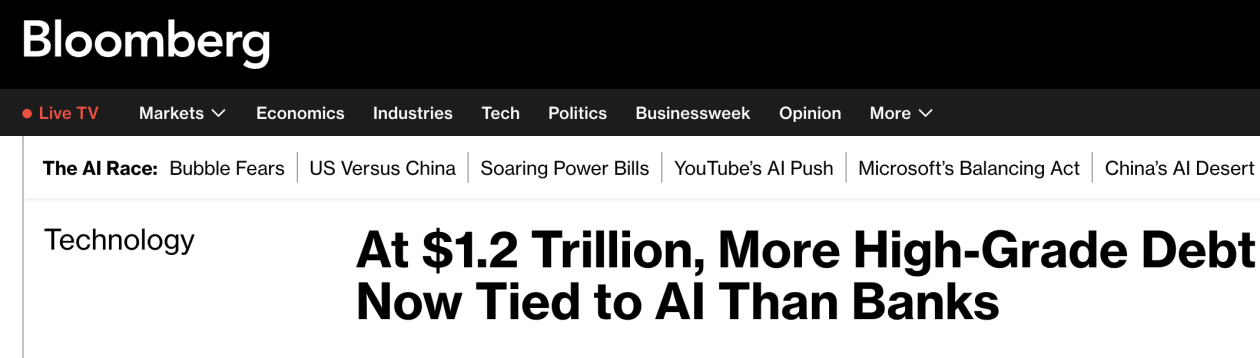
Group 1 - The size of bonds related to artificial intelligence has reached $1.2 trillion, making it the largest segment in the investment-grade bond market [1] - The share of AI companies in the high-rated bond market has increased from 11.5% in 2020 to 14%, surpassing the largest segment in JPMorgan's U.S. Liquidity Index, which is the U.S. banking sector at 11.7% [1] - Analysts identified 75 companies closely related to AI across technology, utilities, and capital goods sectors, including Oracle Corp., Apple Inc., and Duke Energy Corp. [2] Group 2 - Many of these identified companies are significant bond issuers, particularly in the technology sector, characterized by ample cash and low net debt [2] - The trading spread of these companies' bonds is 74 basis points, which is 10 basis points tighter than the spread of JPMorgan's U.S. Liquidity Index [2] - Concerns among credit investors arise from the rapid rise of AI stocks, with fears that any potential downturn in the AI sector could impact the credit market [2]

特朗普政府再挥刀 拟砍掉120亿美元新能源项目资金
智通财经网· 2025-10-07 23:35
Core Viewpoint - The Trump administration is considering the cancellation of approximately $12 billion in energy project funding, including support for hydrogen projects backed by major U.S. oil companies [1] Group 1: Hydrogen Projects - Several multi-billion dollar hydrogen projects are included in the proposed cuts, such as the Texas hydrogen center project supported by ExxonMobil (XOM.US) and Chevron (CVX.US) [1] - Another hydrogen project involves a collaboration between utility company Exelon (EXC.US) and reactor operator Constellation Energy Corp. (CEG.US) [1] Group 2: Automotive Funding - The funding list also includes a total of $1 billion allocated to automotive manufacturers Stellantis (STLA.US) and General Motors (GM.US) [1] Group 3: Recent Funding Cuts - This potential reduction follows recent announcements where the government canceled $7.6 billion in project funding, which also included hydrogen projects [1] - In May, the administration announced the termination of $3.7 billion in projects, including a direct air carbon capture project by Occidental Petroleum (OXY.US) [1] Group 4: Review of Previous Approvals - The Trump administration previously indicated it is reviewing approximately $15 billion in project funding approved during Biden's presidency [1]
交银国际:港股“慢牛”行情有望持续演绎 延续“高弹性”+“高股息”哑铃型策略
Zhi Tong Cai Jing· 2025-10-07 11:24
Group 1 - The Hong Kong stock market continued its upward trend in September, driven by the resumption of US-China trade negotiations and expectations of overseas interest rate cuts, along with a rotation in the technology sector [1][2] - The external environment is showing marginal improvement, with increased market risk appetite supported by ongoing US-China trade talks and stable macro policies in mainland China [2][3] Group 2 - Liquidity pressure in Hong Kong has eased with the resumption of overseas interest rate cuts, leading to accelerated inflows of southbound capital, with a net inflow exceeding 1.1 trillion HKD this year, setting a new historical high [3] - The market is expected to enter a "quiet season" due to the National Day and Mid-Autumn Festival holidays, alongside uncertainties related to the US government's short-term financing plan, which may amplify overseas disturbances [4] Group 3 - The investment strategy continues to focus on a "high elasticity" and "high dividend" approach, with adjustments based on policy catalysts [5] - In the technology growth sector, the valuation recovery logic for tech stocks is further strengthened under the interest rate cut environment, with strong demand from southbound capital for high-growth sectors like AI [5] - The biopharmaceutical sector is expected to see valuation recovery, with Chinese innovative drug companies accelerating their global expansion [5] - High dividend yielding sectors such as banks, insurance, and utilities are highlighted as stable components in investment portfolios, providing consistent dividend income amid market volatility [5]
浙商国际10月港股策略:港股市场资金面环境进一步改善 看好相对景气的创新药等行业
Zhi Tong Cai Jing· 2025-10-07 09:42
Core Viewpoint - The Hong Kong stock market has shown a strong upward trend, with a continuous rise for five months, despite underlying economic weaknesses [1][2]. Market Performance Review - In September, the Hong Kong stock market experienced a slight decline at the beginning, followed by a sustained rebound due to favorable factors such as the U.S. interest rate cut and significant inflows from the south. The Hang Seng Index reached a peak of over 27,000 points [2]. - The monthly performance of major indices as of the end of September was as follows: Hang Seng Composite Index +8.11%, Hang Seng Index +7.09%, and Hang Seng Tech Index +13.95% [2]. Macro Environment Analysis - **Fundamentals**: Economic data in August showed further weakening, indicating that the domestic economy is still in a bottoming phase [3]. - **Policy**: The policy stance has become more proactive to support economic stability and growth [3]. - **Capital**: There has been a significant acceleration of southbound capital inflows, and the external funding environment has improved, leading to increased investment in Hong Kong stocks [3]. - **Sentiment**: The strong market performance has driven bullish sentiment, although concerns about the fundamentals remain [3]. Market Outlook and Strategy - The Hong Kong stock market's fundamentals remain weak, but the capital environment is improving, and there is strong short-term bullish sentiment. The market trend has entered a right-side phase, and a cautious optimism is maintained for the short to medium term [4]. - Preferred sectors for investment include automobiles, new consumption, innovative pharmaceuticals, and technology, which are relatively prosperous and benefit from policy support [4]. - Additionally, low-valuation state-owned enterprises with stable performance and dividends, as well as local Hong Kong banks, telecommunications, and utility stocks that benefit from the interest rate cut cycle, are also favored [4]. - Attention should be paid to potential impacts from the U.S.-China trade disputes, with a recommendation to avoid sectors and companies with significant exposure to U.S. business [4].
所有人都在存钱时,聪明钱正抄底这2个领域,3年后差距拉开
Sou Hu Cai Jing· 2025-10-07 05:23
Core Insights - The decline in 10-year government bond yields to 1.6% and the breaking of 2% in 3-year fixed deposit rates by state-owned banks indicate a low-interest-rate environment, prompting a shift in investment strategies towards higher-yielding assets [1][3] - The influx of 1.8 trillion yuan in new household deposits suggests a trend of individuals moving their money to banks, while northbound capital saw a net inflow of 23 billion yuan, indicating institutional interest in high-dividend stocks and long-duration growth assets [1][3] High Dividend Assets - High dividend assets are becoming attractive alternatives to traditional savings, with the CSI Dividend Index offering a yield of 5.16%, significantly higher than the 3-year fixed deposit rate [3] - Stable earnings from leading sectors such as banking, utilities, and telecommunications provide a reliable income stream, supported by government policies encouraging dividends [3] - Public REITs, particularly those focused on affordable housing, offer yields of 3%-4%, providing a flexible and higher return compared to traditional savings [3] Long-Duration Growth Sectors - Long-duration growth assets are expected to benefit significantly from declining interest rates, with 10-year bonds rising 2% and 30-year bonds potentially increasing by 6% with a 0.2% drop in yields [5] - The AI industry is highlighted as a key growth area, with expected annual growth of 30%, making it a prime target for investment as interest rates decline [5] - The current economic environment, characterized by monetary easing, suggests that long-term growth sectors will attract capital as traditional sectors struggle to absorb liquidity [5] Investment Strategy Recommendations - Investors are advised to prioritize high dividend stocks with yields above 5% and a history of consistent dividends over the past five years, or to invest in the CSI Dividend ETF for easier access [7] - For growth assets, it is recommended to limit exposure to 30% of total household assets due to their volatility, with a preference for mutual funds managed by professionals [7] - A balanced approach is suggested, allocating 70% to high dividend assets and 30% to long-duration growth sectors to mitigate risks while capitalizing on potential returns [7]
什么是上海国企改革概念,涵盖哪些产业链
Sou Hu Cai Jing· 2025-10-07 01:23
Core Insights - The ongoing reform of state-owned enterprises (SOEs) in Shanghai is a focal point for capital markets, driven by the national push for SOE reform, which enhances operational efficiency and competitiveness [1][2] - The "Shanghai SOE Reform Concept" refers to the optimization and adjustment of Shanghai's municipal or district SOEs in areas such as institutional mechanisms, asset integration, and mixed-ownership reform, attracting market attention and investment opportunities [1] Summary by Categories Reform Objectives - The reform aims to improve the operational efficiency of state assets, enhance corporate vitality, and increase competitiveness through measures such as overall asset listings, strategic investor introductions, governance structure optimization, and management incentive mechanisms [1] Key Sectors Involved - The reform encompasses several critical sectors, including: - Industrial manufacturing and high-end equipment, focusing on the transformation of traditional manufacturing and smart manufacturing layouts [1] - Financial services, where state-owned financial platforms enhance their ability to serve the real economy [1] - Urban infrastructure and public utilities, including transportation, energy, and water services, aimed at improving operational efficiency and public service levels [1] - Trade and retail, healthcare, and technology innovation sectors, which are actively restructuring and integrating resources [1] Investment Considerations - Investors should focus on Shanghai's SOE reform to identify structural opportunities aligned with policy directions and to understand the growth potential during governance improvements and asset optimization [2] - Continuous monitoring of the reform process is essential due to inherent uncertainties, and investors are advised to analyze macro policies, industry trends, and actual business conditions for prudent decision-making [2]