
采矿业

Search documents
【数据发布】2025年1—6月份全国规模以上工业企业利润下降1.8%
中汽协会数据· 2025-08-04 08:23
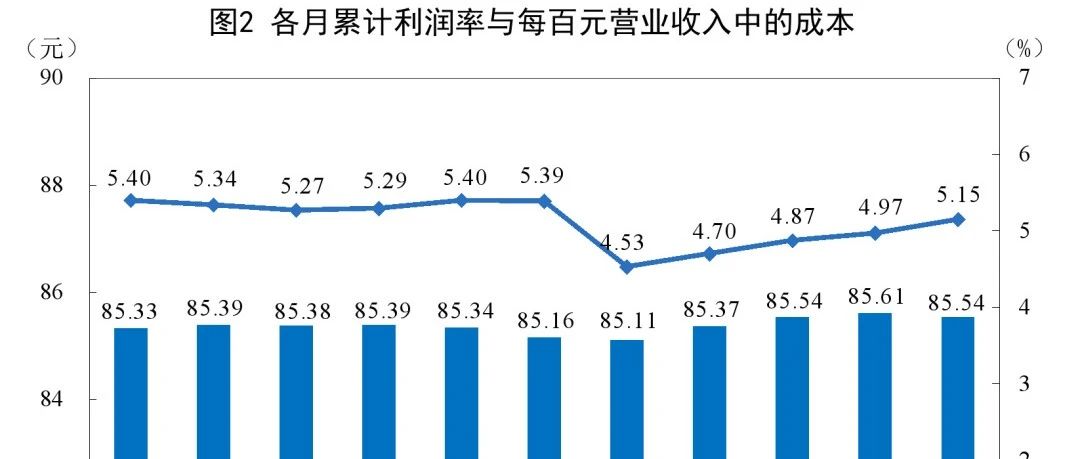
Core Viewpoint - In the first half of the year, the total profit of industrial enterprises above designated size in China decreased by 1.8% year-on-year, indicating a challenging economic environment for the industrial sector [1][4]. Group 1: Profit Performance - In the first half of the year, state-controlled enterprises reported a profit of 1,109.12 billion yuan, down 7.6% year-on-year, while joint-stock enterprises saw profits of 2,533.04 billion yuan, a decline of 3.1% [1]. - Foreign and Hong Kong, Macao, and Taiwan-invested enterprises achieved a profit of 882.31 billion yuan, an increase of 2.5%, and private enterprises reported a profit of 938.97 billion yuan, up 1.7% [1]. - The mining industry experienced a significant profit drop of 30.3%, while the manufacturing sector saw a profit increase of 4.5% [1]. Group 2: Revenue and Cost Analysis - In the first half of the year, industrial enterprises above designated size achieved operating revenue of 66.78 trillion yuan, a year-on-year increase of 2.5%, with operating costs rising by 2.8% to 57.12 trillion yuan [2]. - The operating profit margin was recorded at 5.15%, a decrease of 0.22 percentage points compared to the previous year [2]. Group 3: Financial Health Indicators - As of the end of June, total assets of industrial enterprises above designated size reached 183.17 trillion yuan, a year-on-year growth of 5.1%, while total liabilities increased by 5.4% to 105.98 trillion yuan [3]. - The asset-liability ratio stood at 57.9%, reflecting a slight increase of 0.2 percentage points year-on-year [3]. - Accounts receivable amounted to 26.69 trillion yuan, up 7.8%, and finished goods inventory was 6.60 trillion yuan, an increase of 3.1% [3].

宏观深度:我们如何理解,国内“低通胀”?
Bank of China Securities· 2025-08-04 06:31
Group 1: Economic Overview - China's retail sales of consumer goods in the first half of 2025 showed a cumulative year-on-year growth rate of 5.0%, consistent with the growth rate from January to May[18] - The average year-on-year growth rate of retail sales from June 2024 to June 2025 was 4.1%, indicating an overall upward trend[18] - The Consumer Price Index (CPI) year-on-year growth rate during the same period was only 0.1%, highlighting a divergence between the volume and price of consumer spending[18] Group 2: Low Inflation Factors - Low inflation is primarily influenced by weak domestic demand, external input factors, and "involutionary competition" in the market[1] - The correlation coefficient between the year-on-year growth rates of production materials and living materials, after shifting the production materials curve back by 10 months, is 0.7, indicating a strong relationship[22] - The year-on-year decline in profits for coal mining, oil and gas extraction, and black metal mining industries was 53.0%, 11.5%, and 36.2% respectively, contributing to a 5.5 percentage point drag on industrial profits in the first half of 2025[3] Group 3: Impact of Low Inflation - As of June 2025, the average yield on ten-year government bonds was 1.66%, down 44 basis points from September 2024, while the actual interest rate rose slightly to 2.84%, up 12 basis points[3] - The weak inflation level has interfered with the downward path of actual interest rates, limiting the reduction in financing costs for the real economy[46] - The correlation coefficient between urban residents' future income confidence index and the year-on-year growth rate of industrial profits from 2020 to 2024 is 0.5, indicating a positive correlation[3] Group 4: Risks and Challenges - Risks include persistent inflation in developed economies, complex geopolitical situations, and slow recovery of expectations in the real estate sector[4] - The significant decline in real estate investment has negatively impacted construction industry investment growth, further affecting demand in the building materials sector[37]
粤桂股份:聘任简轶为公司证券事务代表
Mei Ri Jing Ji Xin Wen· 2025-08-04 05:03
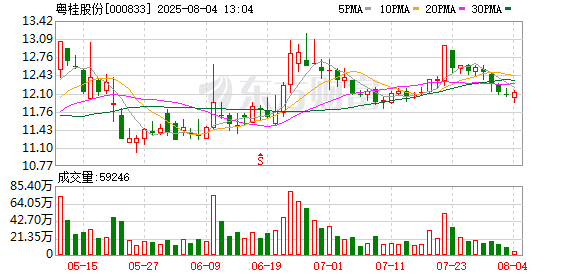
Group 1 - The company, Yuegui Co., Ltd. (SZ 000833), announced the appointment of Mr. Jian Yi as the securities affairs representative to assist the board secretary in fulfilling responsibilities [2] - For the fiscal year 2024, the revenue composition of Yuegui Co., Ltd. is as follows: mining industry accounts for 31.79%, sugar manufacturing for 19.37%, paper industry for 18.11%, chemical industry for 12.03%, trading for 10.7%, and other industries for 8.02% [2]

全体中企和人员,立即停工停产撤离!中使馆紧急提醒:当地针对外企和人员的绑架、袭击频发,造成严重后果
Mei Ri Jing Ji Xin Wen· 2025-08-03 04:54
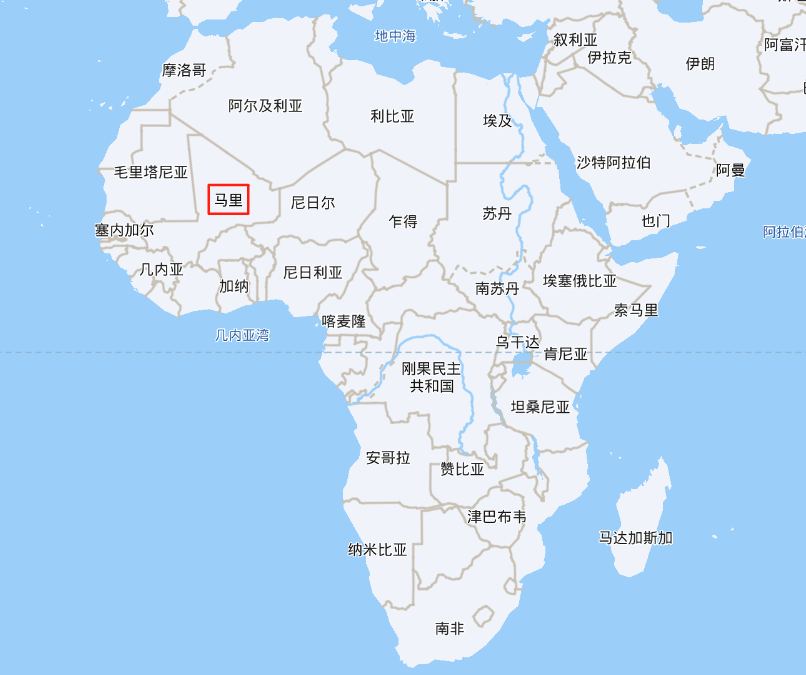
每经编辑|金冥羽 8月2日晚,驻马里使馆再次提醒全体在马中国公民加强安全防护、采金企业和人员立即停工撤离并报备信息。 近期,马里首都巴马科以外针对外国企业和人员的绑架、袭击等恶性事件频发,造成严重后果,安全风险进一步升高。 驻马里使馆再次郑重提醒: 一、全体在马中国公民采取一切必要措施加强安全防护。避免去往郊区、独自出行或夜间出行。如条件允许,尽快撤离至巴马科等相对安全地区。 如遇绑架、抢劫等危急情况,应保持冷静,避免过激行为,务必将确保人身安全放在首位,在保证自身安全前提下择机逃离,及时报警并与中国驻马里使 馆取得联系。 马里报警电话:17、80333、80001115 外交部全球领事保护与服务应急呼叫中心电话:+86-10-12308或+86-10-65612308 驻马里使馆领保电话:+223-78110040 驻马里使馆 2025年8月2日 据中国驻马里使馆7月24日消息,根据马里政府要求,在今年9月30日之前暂停一切采金活动。中方采金企业须立即停工停产,采金人员应立即撤离矿区。 据商务部网站,马里共和国(La République du Mali),简称马里,是西部非洲内陆国家,国土面积在西非排名第 ...
2025年7月美国非农数据点评:为什么美国非农就业大幅下修?
EBSCN· 2025-08-02 12:01
Employment Data Summary - In July 2025, the U.S. non-farm payrolls increased by 73,000, significantly below the expected 110,000, and the previous value was revised down from 147,000 to 14,000[1][11]. - The unemployment rate in July 2025 was 4.2%, matching expectations but up from the previous 4.1%[1][14]. - Average hourly earnings rose by 3.9% year-on-year, exceeding the expected 3.8% and revised from a previous increase of 3.7%[1][14]. Data Revision Insights - The June non-farm payrolls were revised down by a total of 258,000, with significant downward adjustments in government, leisure, and construction sectors, accounting for 90,000 of the total revision[2][12]. - The downward revision reflects the impact of tariffs on the U.S. economy, indicating a decline in the accuracy of the "birth-death model" used for employment predictions[2][5]. Sector Performance - In July, the financial activities, education, and healthcare sectors added 15,000, 79,000, and 16,000 jobs respectively, showing stability in service sector demand[3][27]. - The goods-producing sector continued to show negative job growth for three consecutive months, indicating weak production intentions among businesses[3][28]. Labor Market Dynamics - The labor force participation rate fell to 62.2% in July, down from 62.3% in June, with a notable decline in employment willingness among younger demographics[4][35]. - The number of unemployed individuals increased by 221,000 in July, contributing to the rise in the U3 unemployment rate to 4.2%[4][35]. Economic Outlook - The Federal Reserve is expected to initiate rate cuts, with market predictions indicating three rate cuts in 2025, starting in September with an 83.4% probability[5][26]. - The overall economic environment remains challenging, with the second quarter GDP growth at 3.0%, driven by a "import rush" effect, but core GDP growth showing signs of decline[5][23].
格林大华期货中国宏观经济7月报:观察变化、相机决策-20250802
Ge Lin Qi Huo· 2025-08-02 08:17
Report Industry Investment Rating No relevant content provided. Core Viewpoints of the Report - The GDP growth in Q2 2025 met market expectations, but the fixed - asset investment, social consumption, and real estate sectors faced challenges. The export and industrial added - value in June exceeded expectations. The domestic real estate market continued to decline, and the Chinese economy may face challenges in maintaining rapid growth in the second half of the year, requiring continuous efforts to expand domestic demand. The "anti - involution" policies may have a more moderate and long - term impact. Policy decisions may be made based on economic changes, and new policies may be introduced at the end of the third quarter or the beginning of the fourth quarter [84]. Summary by Related Content GDP and Industry Contribution - In Q2 2025, China's GDP grew 5.2% year - on - year, meeting market expectations. The GDP grew 5.3% year - on - year in the first half of the year. The primary, secondary, and tertiary industries grew 3.8%, 4.8%, and 5.7% year - on - year respectively in Q2. The contributions of the three industries to GDP in Q2 were 4.6%, 34.2%, and 61.2% respectively [4][6]. GDP Growth Contribution Factors - In Q2 2025, the contributions of final consumption expenditure, capital formation, and net exports of goods and services to GDP growth were 52.3%, 24.7%, and 23.0% respectively [9]. GDP Deflator - The GDP deflator in Q2 2025 decreased 1.20% year - on - year, showing a negative growth for nine consecutive quarters since Q2 2023 [12]. Fixed - Asset Investment - In the first half of 2025, the national fixed - asset investment grew 2.8% year - on - year, lower than the market expectation of 3.7%. General infrastructure investment (including power) grew 8.9% year - on - year, while narrow infrastructure investment (excluding power) grew 4.6% year - on - year. Manufacturing investment grew 7.5% year - on - year, and real estate development investment decreased 11.2% year - on - year [15]. Real Estate Market - In the first half of 2025, the sales area of new commercial housing decreased 3.5% year - on - year, and the sales volume decreased 5.5% year - on - year. In June, the second - hand housing prices in first - tier cities decreased 0.7% month - on - month, and those in second - and third - tier cities decreased 0.6% month - on - month. In July, the decline rate of national new housing sales area accelerated [18][21][23]. Social Consumption - In June 2025, the total retail sales of consumer goods grew 4.8% year - on - year, lower than the market expectation of 5.6%. The growth rates of most categories of consumer goods in units above the designated size decreased compared with May [26][28]. Service Industry - In June 2025, the service industry production index grew 6.0% year - on - year. The growth rates of information transmission, software and information technology services, leasing and business services, and wholesale and retail industries were relatively high [30]. Foreign Trade - In June 2025, China's exports in US dollars grew 5.8% year - on - year, and imports grew 1.1% year - on - year. Exports to ASEAN and the EU increased, while exports to the US decreased. In July, the China Containerized Freight Index (CCFI) declined slightly, and the decline of the US - West route was faster [33][36][38]. Industrial Sector - In June 2025, the added - value of industrial enterprises above the designated size grew 6.8% year - on - year, exceeding the market expectation. The product sales rate was 94.3%, and the industrial capacity utilization rate in Q2 was 74.0% [41][43][45]. Employment and Prices - In June 2025, the national urban surveyed unemployment rate was 5.0%. The CPI increased 0.1% year - on - year, and the PPI decreased 3.6% year - on - year. In July, agricultural product prices hovered at a low level, and the average domestic gasoline price was higher than that in June [47][49][57]. Manufacturing and Non - Manufacturing PMI - In July 2025, the official manufacturing PMI was 49.3%, remaining below the boom - bust line for four consecutive months. The non - manufacturing business activity index was 50.1%. The manufacturing production continued to expand, while the demand re - entered the contraction range. The service industry activity expectation index increased slightly [68][71][81].
2025年一季度科特迪瓦贸易盈余25.5亿美元
Shang Wu Bu Wang Zhan· 2025-08-01 15:42
Group 1 - The trade surplus of Côte d'Ivoire in Q1 2025 is approximately 1.5 trillion West African francs (about 25.5 billion USD), an increase of 423 billion West African francs (about 7.4 billion USD) compared to the same period last year, indicating a positive trend in foreign trade [1] - Agricultural exports are mixed, with coffee and cocoa exports reduced due to adverse weather conditions, while cashew production has recovered due to new plant inspection measures [1] - The secondary sector, driven by mining and manufacturing, saw industrial output grow by 3.7% in the first three months [1] Group 2 - The tertiary sector significantly contributed to foreign trade growth, with shipping volume increasing by 18.2% and overall foreign trade growing by 10% [1]
部署与储备并举,联储内部仍有分歧
Southwest Securities· 2025-08-01 09:02
Domestic Developments - In the first half of 2025, profits of industrial enterprises above designated size in China totaled CNY 3.44 trillion, a year-on-year decrease of 1.8%, with the decline rate widening by 0.7 percentage points compared to the first five months[9] - The newly announced childcare subsidy scheme will provide CNY 3,600 per child per year for children under three years old starting January 1, 2025, aiming to alleviate childcare costs and enhance birth rates[11] - The National Development and Reform Commission emphasized the need for policy preparation focusing on employment and domestic demand, with a target of stabilizing investment and promoting consumption[15] International Developments - The U.S. Treasury Department projected a net borrowing of USD 1.007 trillion from July to September 2025, an increase of nearly 82% from earlier estimates[21] - The Bank of Japan maintained its interest rate at 0.5%, aligning with market expectations, while raising its inflation forecast for the fiscal year 2025 from 2.2% to 2.7%[23] - The U.S. Federal Reserve voted 9-2 to keep interest rates unchanged in the range of 4.25%-4.50%, with Chairman Powell indicating that it is too early to conclude on a rate cut in September[25] Market Trends - Brent crude oil prices increased by 2.73% week-on-week, while iron ore and copper prices decreased by 2.15% and 0.89%, respectively[27] - Real estate sales in 30 major cities rose by 34.72% week-on-week, with first-tier cities seeing a 64.47% increase in transaction volume[42]
加拿大5月份国内生产总值下降0.1%
news flash· 2025-07-31 17:19
Economic Performance - In May, Canada's real GDP decreased by 0.1%, marking a second consecutive month of contraction, consistent with the decline observed in April [1] - The economic downturn in May is primarily attributed to the goods-producing sector, particularly in mining, quarrying, and oil and gas extraction [1] Sector Analysis - The services sector remained stable in May, while the manufacturing sector experienced a growth of 0.7%, partially offsetting the 1.8% decline from April when U.S. tariffs came into full effect [1] - Despite the growth in manufacturing, it is still 1.1% lower compared to March [1]
海南矿业: 海南矿业股份有限公司关于以集中竞价交易方式首次回购股份暨回购进展公告
Zheng Quan Zhi Xing· 2025-07-31 16:27
证券代码:601969 证券简称:海南矿业 公告编号:2025-092 海南矿业股份有限公司 关于以集中竞价交易方式首次回购股份暨回购进展公告 本公司董事会及全体董事保证本公告内容不存在任何虚假记载、误导性陈述 或者重大遗漏,并对其内容的真实性、准确性和完整性承担法律责任。 重要内容提示: 回购方案首次披露日 2025/2/25 回购方案实施期限 股东大会审议通过后 12 个月 预计回购金额 7,500万元~15,000万元 √减少注册资本 □用于员工持股计划或股权激励 回购用途 □用于转换公司可转债 一、 回购股份的基本情况 海南矿业股份有限公司(以下简称"公司")于 2025 年 3 月 12 日召开 2025 年第二次临时股东大会,审议通过了《关于以集中竞价交易方式回购股份方案的 议案》,同意公司以自有资金和股票回购专项贷款通过集中竞价交易方式回购公 司发行的人民币普通股(A 股)股票,回购价格上限为人民币 10.12 元/股,回购 资金总额不低于人民币 7,500 万元(含)且不超过人民币 15,000 万元(含)。回 购期限为自公司 2025 年第二次临时股东大会审议通过回购方案之日起不超过 12 ...
