农产品加工

Search documents
粤桂协作 助力广西农产品对接大湾区市场
Zhong Guo Xin Wen Wang· 2025-11-30 00:25
Core Insights - The event "壮美广西·桂品入湾" aims to enhance the connection between Guangxi agricultural products and the Guangdong-Hong Kong-Macao Greater Bay Area market [1] - The signing ceremony resulted in record-high cooperation agreements between Guangxi exhibitors and Bay Area buyers, covering various product categories [3] Group 1: Event Overview - The event took place from November 28 to 29 at the Guangdong Regional Cooperation Consumption Assistance Product Trading Center [1] - Activities included production and sales matching, on-site exhibitions, and cultural performances to promote Guangxi agricultural products [1] Group 2: Product Promotion - Exhibitors from five cities in Guangxi showcased their competitive products, including葛制品 (kudzu products),海产加工品 (marine processed products),特色干货 (specialty dried goods), and金花茶系列 (golden flower tea series) [3] - Specific highlights included: - Wuzhou's focus on high-quality kudzu products emphasizing ecological planting and deep processing advantages [3] - Beihai's promotion of standardized marine processed products leveraging marine resources [3] - Qinzhou's emphasis on traditional lychee combined with modern technology in production [3] - Fangchenggang's introduction of golden flower tea products and their health benefits [3] - Yulin's presentation of local high-quality tea with a standardized production and processing system [3] Group 3: On-site Sales - The on-site exhibition attracted significant attention, featuring high-quality specialty agricultural products such as lychee vinegar, Xingye red tea, Liubao tea, sea duck eggs, and kudzu powder [4] - The display included green foods, organic agricultural products, and geographical indication products, ensuring consumer confidence in their purchases [4]


去年在老旧设备更新等方面投资超8000亿元—— 央企提质增效拓蓝海
Jing Ji Ri Bao· 2025-11-29 23:02
Group 1: Core Insights - The State-owned Assets Supervision and Administration Commission (SASAC) released the "Central Enterprises High-Quality Development Report (2025)", highlighting major initiatives and achievements in enhancing core functions and competitiveness of central enterprises [1] - Central enterprises invested over 800 billion yuan in upgrading old equipment and digital and green transformations, significantly supporting domestic demand [1] - The report emphasizes breakthroughs in critical technologies in fields like integrated circuits and industrial mother machines, addressing key technological bottlenecks [1] Group 2: Industry Upgrading - During the 14th Five-Year Plan period, central enterprises are encouraged to collaborate with various enterprises to promote industrial upgrading and explore new growth areas for high-quality development [2] - The focus is on intelligent, green, and integrated development, optimizing traditional industries while nurturing emerging industries [2] - The National Energy Investment Group is advancing the high-end, diversified, and low-carbon development of coal chemical industries to enhance the green and intelligent aspects of the industry [2] Group 3: Innovation and Development - Central enterprises prioritize technological innovation, with R&D expenditure averaging a 6.5% annual growth since the 14th Five-Year Plan, exceeding 1 trillion yuan for three consecutive years [4] - The establishment of 97 original technology sources and 23 innovation alliances aims to enhance collaboration with universities and research institutions [4] - The focus is on integrating technology and industry innovation to boost self-reliance in technology and develop new productive forces [4] Group 4: Collaborative Development - The 20th National Congress emphasizes building a modern industrial system and strengthening the foundation of the real economy through collaboration among large, medium, and small enterprises [6] - The SASAC highlights the importance of innovation and collaboration to enhance the resilience of industrial and supply chains [7] - The Ministry of Industry and Information Technology reports over 140,000 specialized and innovative small and medium-sized enterprises, playing a crucial role in supporting the industrial chain [7][8] Group 5: Action Initiatives - Starting from September 2023, SASAC and the Ministry of Industry and Information Technology initiated the "Central Enterprises Industry Chain Collaborative Development Action", organizing over 40 matching activities in key areas [8] - The action aims to create an open and shared industrial ecosystem, enhancing the resilience and safety of supply chains [8]
前10个月乡村产业保持良好发展势头
Yang Shi Wang· 2025-11-29 12:27
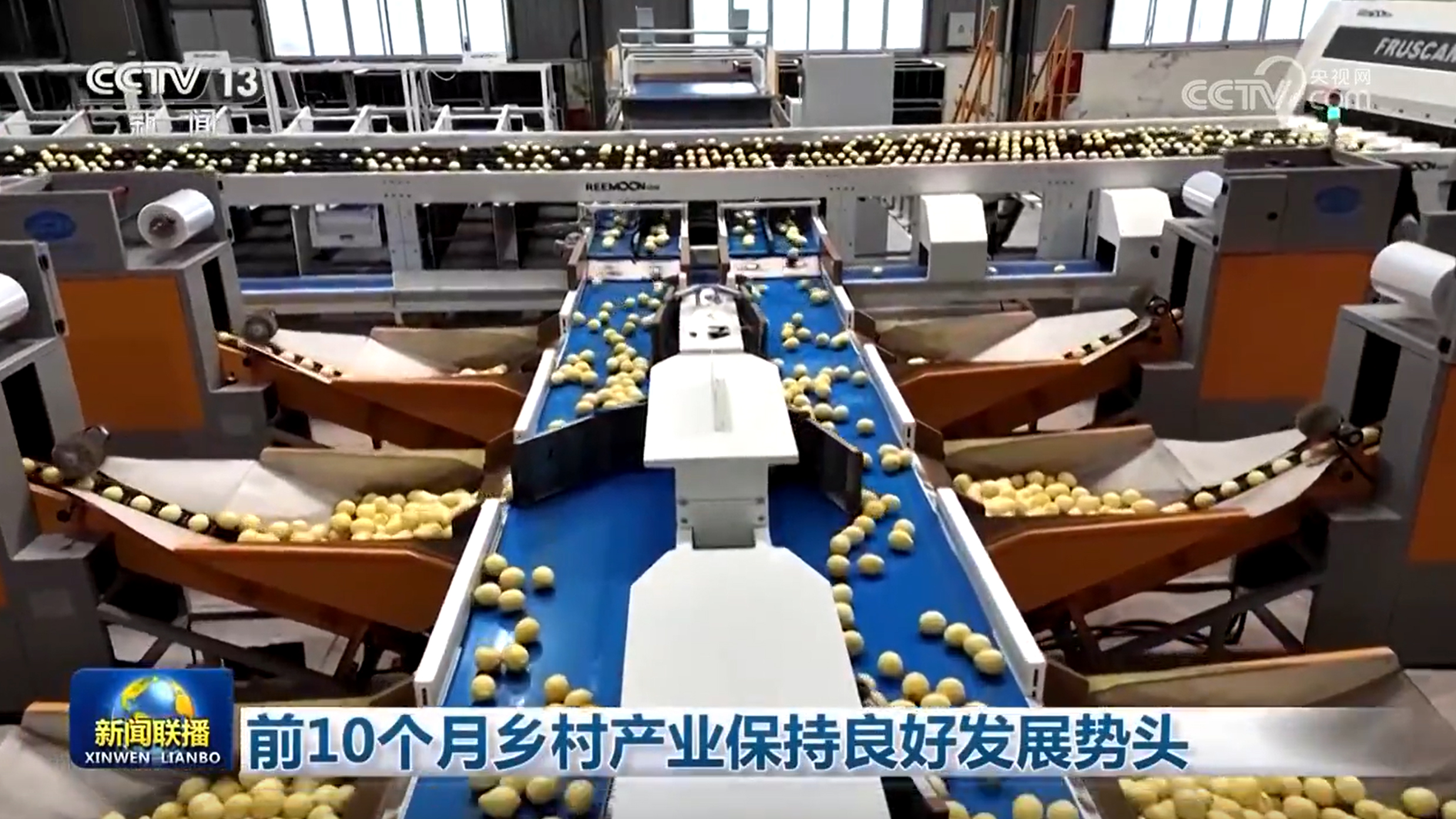
Core Insights - The rural industry revitalization in China has shown a positive development trend in 2023, with significant growth in agricultural processing and new business models emerging in rural areas [1][3][4] Group 1: Agricultural Processing Industry - From January to October, the value added of the above-scale agricultural and sideline food processing industry increased by 6.3% year-on-year [1] Group 2: New Business Models - The integration of agriculture with tourism, culture, sports, and e-commerce has led to the vigorous development of new business models such as rural leisure tourism and rural e-commerce, contributing to new growth points for the industry and increasing farmers' income [3] - Rural retail sales of consumer goods reached 5.5 trillion yuan, with a year-on-year growth of 4.6%, outpacing urban growth by 0.4 percentage points [3] - Online retail sales in rural areas and for agricultural products increased by 7.5% and 9.5% year-on-year, respectively [3] Group 3: Development of Specialty Industries - The development of rural specialty industries is accelerating, with support for the establishment of 40 advantageous specialty industry clusters, 50 modern agricultural parks, and 200 strong agricultural towns this year [4] - A total of 398 strong industrial villages have been cultivated, promoting the growth of "small but exquisite" and "special but beautiful" products, enhancing the resilience of the industry [4]
广西五市粤桂协作农产品进广州展销
Nan Fang Nong Cun Bao· 2025-11-29 04:02
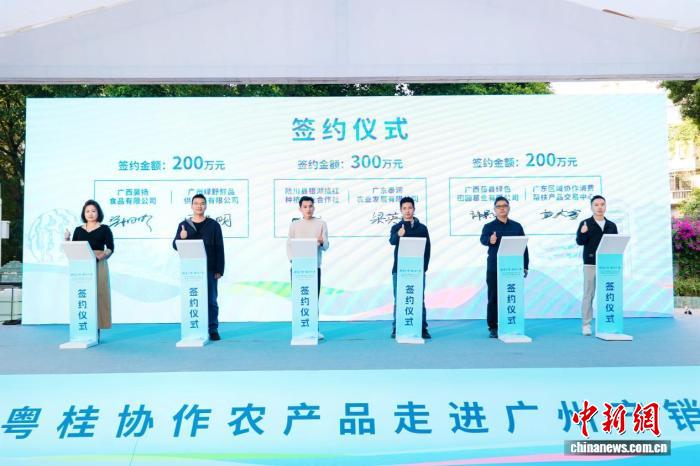
Core Viewpoint - The event "Beautiful Guangxi · Guangxi Products Enter the Bay" aims to promote Guangxi agricultural products in the Guangdong-Hong Kong-Macao Greater Bay Area, enhancing cooperation and supporting rural revitalization and farmers' income [2][4][16]. Group 1: Event Overview - The event took place on November 28, 2025, at the Guangdong Regional Cooperation Consumption Assistance Product Trading Center [2]. - It featured various activities such as production and sales matching, on-site exhibitions, and cultural performances to build a cooperation bridge between Guangxi and the Greater Bay Area [3][4]. - Over 300 guests, including representatives from Guangxi exhibiting companies and Greater Bay Area buyers, attended the event [5][6]. Group 2: Product Promotion - Enterprises from five cities in Guangxi—Wuzhou, Beihai, Qinzhou, Fangchenggang, and Yulin—showcased their specialty products [8]. - Wuzhou focused on high-quality kudzu products, emphasizing ecological planting and deep processing advantages [9]. - Beihai promoted standardized seafood processing products, while Qinzhou highlighted its unique lychee production combining traditional and modern techniques [10]. - Fangchenggang introduced its rare golden flower tea, discussing product development and health benefits, and Yulin showcased its high-quality local tea with a standardized production and processing system [11]. Group 3: Market Engagement - The detailed presentations and quality samples generated significant interest among Greater Bay Area buyers, leading to exchanges of contact information for future negotiations [12][14]. - A formal signing ceremony took place, covering various product categories such as kudzu products, seafood processing, specialty dried goods, golden flower tea, and tea, with the signing amount reaching new heights [15][16]. Group 4: Consumer Response - The event attracted a large crowd, showcasing high-quality specialty agricultural products like lychee vinegar, Xingye red tea, Liu Bao tea, sea duck eggs, and kudzu powder [25]. - Products were displayed with "Commitment to Standards Certification" labels, ensuring consumer confidence in purchasing [26]. - Local residents expressed satisfaction with the nutritional value of Guangxi's golden flower tea, indicating a positive reception and intent to purchase [27][28].

粤桂山水甜 满口芋香浓
Guang Xi Ri Bao· 2025-11-29 02:21
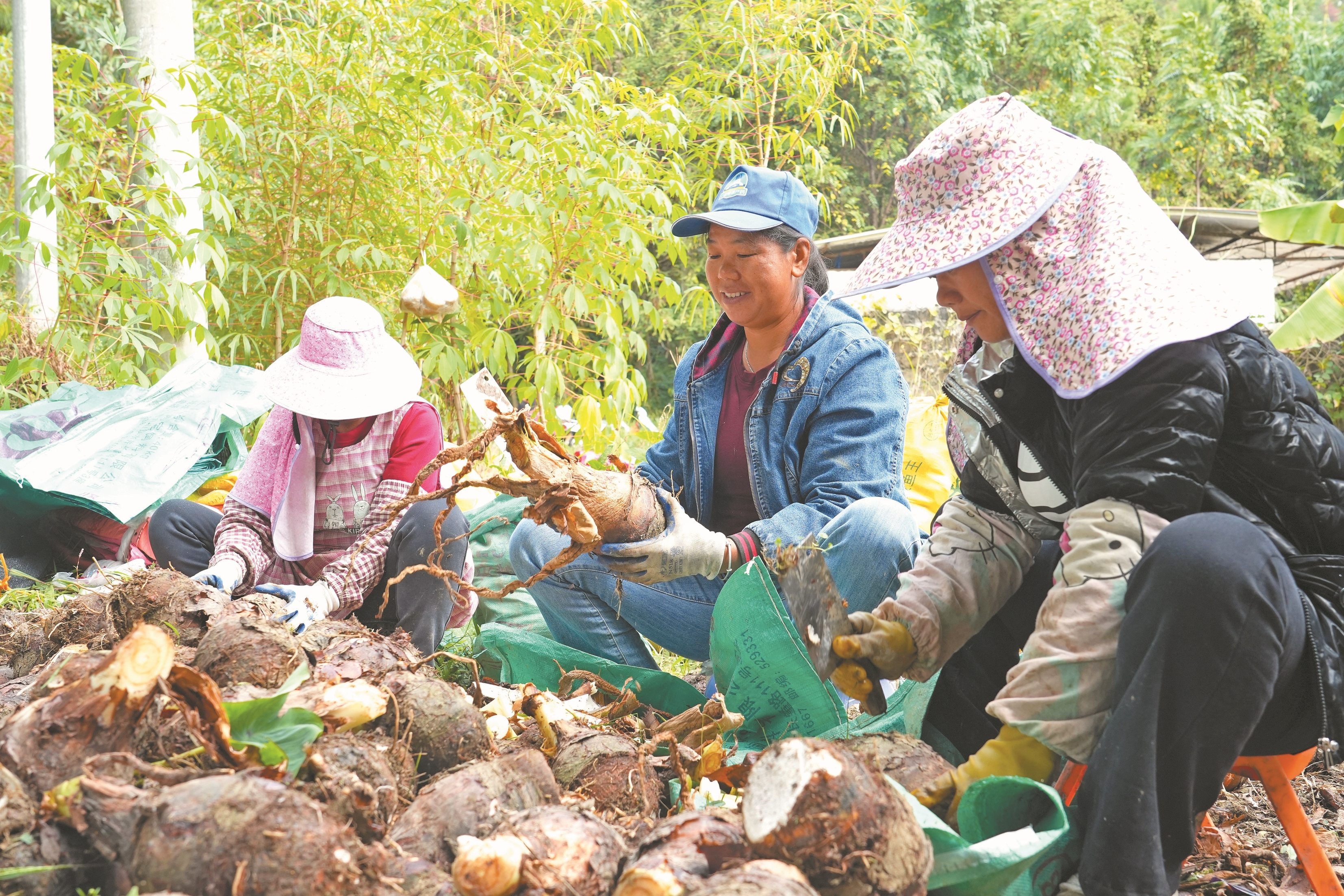
Core Insights - The article highlights the successful harvest and processing of taro in Hezhou, which has become the largest contiguous taro planting area in China, with an area of 171,600 acres and an expected annual output of over 350,000 tons, accounting for 40% of Guangxi's total output [2][4] Group 1: Taro Production - The new taro varieties "HY-1" and "GY-3" developed through collaboration between Hezhou and agricultural research institutes have improved both yield and quality, with stable yields of over 2,500 kg per acre and a purchase price of around 7 yuan per kg [2][3] - Hezhou's "Party building + industrial chain" model has enabled over 3,000 farmers to participate in land shareholding, resulting in an average annual income increase of 27,800 yuan for 27,200 planting households [2] Group 2: Taro Processing - Guangxi Shunteng Agricultural Products Co., Ltd. operates 15 production lines with a daily capacity of 20 tons, focusing on deep processing of taro into various products such as taro mud, taro balls, and pre-prepared dishes [3][4] - The region has cultivated 35 taro processing enterprises with 93 processing lines, achieving over 70% initial processing rate and over 50% deep processing rate, with an annual processing capacity exceeding 280,000 tons [4] Group 3: Market and Distribution - The majority of processed taro products, about 70%, are sold to the Guangdong-Hong Kong-Macao Greater Bay Area, benefiting from the region's geographical advantages that allow products to reach consumers within 4 hours [4] - The article emphasizes the transformation of Hezhou taro from a raw agricultural product to a diversified food ingredient, integrating into daily diets and contributing to rural revitalization [4]
农加会上买卖全球好物
He Nan Ri Bao· 2025-11-28 23:25
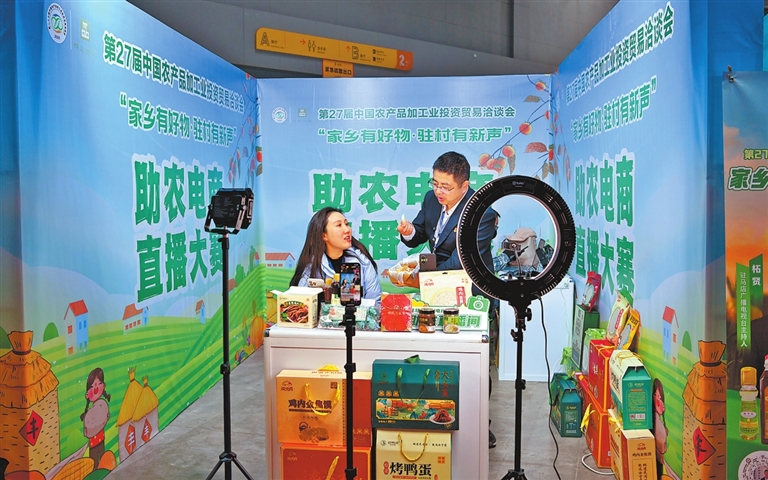
11月28日,第二十七届中国农产品加工业投资贸易洽谈会在驻马店开幕。图为主播在推介农产品。 谭啸 摄 11月28日,第二十七届中国农产品加工业投资贸易洽谈会(以下简称农加会)在驻马店国际会展中心开幕, 作为全国唯一以农产品加工为主题的5A级展会,本届农加会吸引了50多个国家和地区的1100余家企业参会参 展。 "每一幅地毯都在讲述不同的故事。"国际农产品贸易馆,伊朗展商阿伊祖和热用流利的中文向顾客介绍,她 指着一条深蓝色地毯上精美的图案说,"这是波斯神话中的神鸟,这条地毯纯手工编织需要6个月。"几名顾客 仔细询问着价格和工艺,最终以5800元成交了一幅小型挂毯。 今年25岁的阿伊祖和热第一次来驻马店参加农加会:"城市街道很干净,人也很热情,我还品尝了当地小 吃。" 不远处的巴基斯坦展区,玉石商人哈比布带来了家乡特产的青玉和白玉。"刚开幕,我就卖掉了三套茶 具。"他笑着说,"我们是好朋友,中国人对玉有特殊感情,这让我们的合作更容易。" 越南展区的猫屎咖啡成为年轻人追捧的网红产品。24岁的顾客李晓琳在品尝后,立即购买了两盒:"我要发朋 友圈打卡,让朋友们羡慕一下。" 从昔日"马路大集"到如今"国字号"盛会,27载 ...
从“分大小”到“分内涵” 延津花生身价翻番
He Nan Ri Bao· 2025-11-28 23:25
Core Insights - The peanut planting area in Yanjin County remains stable at around 600,000 acres, with a total of 115 purchasing and processing entities, achieving an annual purchasing and processing capacity exceeding 400,000 tons and a processing output value of 2.43 billion yuan [1][3] Group 1: Industry Overview - The local peanut industry is characterized by a significant reduction in daily peanut deliveries, indicating that most of the peanuts have been stored [1] - The Yanjin County peanut cooperative expects to purchase 12,000 tons of peanuts this year, having already completed the shelling and grading of 2,000 tons [1] - The cooperative employs a grading system that categorizes peanuts into six sizes, maximizing their value by supplying high-end food companies with premium peanuts [1] Group 2: Quality and Processing - The unique soil quality in Yanjin, with an average organic matter content of 19%, contributes to the superior quality of Yanjin peanuts [2] - The local peanut grading system has led to a processing transformation, achieving over 75% local processing conversion rate [2] - Major companies, such as Shandong Luhua Group and Suzhou Koushuiwa Food Co., have established operations in Yanjin, further enhancing the local peanut market [2] Group 3: Product Innovation - The classification standards for peanuts are evolving from external size to internal nutritional content, with the launch of the high oleic peanut variety "Yuhua 93" [2] - The average yield of the high oleic peanut variety is reported to be 4,500 kg per acre, which is expected to enhance both nutritional value and flavor [2][3] - Collaboration with companies like Shandong Luhua Group aims to promote the standardized cultivation of high oleic peanuts, potentially increasing farmers' income by approximately 15% [3]
甘肃亚盛实业(集团)股份有限公司关于为全资子公司提供担保的进展公告
Shang Hai Zheng Quan Bao· 2025-11-28 20:29
Core Viewpoint - Gansu Yasheng Industrial (Group) Co., Ltd. has provided guarantees for its wholly-owned subsidiaries to support their financing needs, with a total guarantee amount of up to RMB 140 million approved by the board and shareholders [3][15][16]. Group 1: Guarantee Details - The company has signed a guarantee contract with Lanzhou Bank for Gansu Yasheng Potato Industry Group's subsidiary, Gansu Tianrun Potato Industry Co., Ltd., providing a joint liability guarantee of RMB 10 million [1]. - A similar guarantee of RMB 10 million has been provided for Gansu Dayou Agricultural Technology Co., Ltd., another subsidiary of Gansu Yasheng Potato Industry [2]. - A guarantee of RMB 2.58 million has been established for Shandan County Yuxing Powder Industry Co., Ltd. through Gansu Shandan Rural Commercial Bank [1][2]. Group 2: Additional Guarantees - The company has provided a guarantee of RMB 40 million to Gansu Xingnong Chili Industry Development Co., Ltd. through Bank of Communications and an additional RMB 20 million through the Agricultural Development Bank of China [2]. - A guarantee of RMB 17 million has been signed with China Merchants Bank for Gansu Yasheng Pastoral Song Grass Industry Group [2]. Group 3: Internal Decision Process - The board meetings held on August 26 and September 17, 2025, approved the proposal for providing guarantees, allowing a total guarantee amount not exceeding RMB 140 million for the subsidiaries [3][15]. - The decision was made within the authorized scope of the board and shareholders, ensuring that the subsidiaries are financially stable and the risks are manageable [15][16]. Group 4: Cumulative Guarantee Situation - As of the announcement date, the total external guarantees provided by the company amount to RMB 790.34 million, all of which are for wholly-owned subsidiaries, representing 18.45% of the company's latest audited net assets [17]. - There are no overdue guarantees or guarantees provided to controlling shareholders or related parties [17].

中粮科技:11月28日召开董事会会议
Mei Ri Jing Ji Xin Wen· 2025-11-28 11:43
Group 1 - The core point of the article is that COFCO Technology (SZ 000930) held a temporary board meeting on November 28, 2025, to review various proposals, including the signing of performance agreements by the leadership of COFCO Biotechnology [1] - For the first half of 2025, COFCO Technology's revenue composition was 98.33% from agricultural product processing and sales, with other businesses contributing 1.67% [1] - The current market capitalization of COFCO Technology is 10.8 billion yuan [2]

菜籽类市场周报:菜系消息较为匮乏,菜油粕窄幅波动-20251128
Rui Da Qi Huo· 2025-11-28 10:47
Report Summary 1. Report Industry Investment Rating No information provided. 2. Core Views - **Canola Oil**: This week, canola oil futures fluctuated and closed lower. The 01 contract closed at 9,757 yuan/ton, down 59 yuan/ton from the previous week. Although the export of Canadian canola has declined significantly this year, the Canadian biofuel production incentive plan, which designates canola oil as the core raw material, and the agreement between Canada and Pakistan to promote canola exports to Pakistan provide support. Domestically, the supply of imported canola is structurally tight, and canola oil will continue to be destocked, supporting its price. However, the abundant supply of soybean oil and its good substitution advantage limit the demand for canola oil. The canola oil futures price has been fluctuating narrowly and slightly lower recently, but it may be stronger than other oils due to tight supply. Short - term participation is recommended [8]. - **Canola Meal**: This week, canola meal futures fluctuated narrowly and closed higher. The 01 contract closed at 2,452 yuan/ton, up 21 yuan/ton from the previous week. The US soybean is in the export season with abundant supply, but it faces competition from cheaper Brazilian soybeans. The good domestic crushing consumption in the US and China's purchase of nearly 2 million tons of US soybeans since October 30 support the US soybean price. Domestically, the import of Canadian canola and canola meal is restricted, and the supply is tight. However, the demand for canola meal in aquaculture has weakened due to the temperature drop, and the abundant supply of soybeans and the good substitution advantage of soybean meal reduce the demand for canola meal. The canola meal market is in a situation of weak supply and demand. The canola meal has been generally fluctuating recently, and short - term participation or waiting and seeing is recommended. Attention should be paid to China's soybean purchases and the breakthrough of China - Canada trade policies [10]. 3. Summary by Directory 3.1 Week - to - Week Key Points Summary - **Canola Oil**: The 01 contract of canola oil futures closed at 9,757 yuan/ton, down 59 yuan/ton from the previous week. The export decline of Canadian canola exerts pressure, but policies and new export agreements provide support. Domestically, the supply is tight, and the price is supported, but the demand is limited by soybean oil. The price may be stronger than other oils, and short - term participation is recommended [8]. - **Canola Meal**: The 01 contract of canola meal futures closed at 2,452 yuan/ton, up 21 yuan/ton from the previous week. The US soybean market has both supply and demand factors. Domestically, the supply is tight, but the demand is weak. The market is in a situation of weak supply and demand, and short - term participation or waiting and seeing is recommended [10]. 3.2 Futures and Spot Market - **Futures Price and Position**: Canola oil futures fluctuated and closed down this week, with a total position of 175,955 lots, a decrease of 67,869 lots from last week. Canola meal futures fluctuated narrowly and closed up, with a total position of 319,701 lots, a decrease of 36,483 lots from last week [14]. - **Top 20 Net Positions**: The top 20 net positions of canola oil futures were +2,658 this week, compared with +4,542 last week, with a slight increase in net long positions. The top 20 net positions of canola meal futures were - 11,641 this week, compared with - 10,587 last week, with a slight increase in net short positions [19]. - **Futures Warehouse Receipts**: The registered warehouse receipts of canola oil were 3,965 lots, and those of canola meal were 0 lots [24][25]. - **Spot Price and Basis**: The spot price of canola oil in Jiangsu was 10,700 yuan/ton, slightly lower than last week. The basis between the active contract of canola oil and the spot price in Jiangsu was +313 yuan/ton. The price of canola meal in Nantong, Jiangsu was 2,420 yuan/ton, basically the same as last week. The basis between the spot price in Jiangsu and the active contract of canola meal was - 32 yuan/ton [34][40]. - **Futures Inter - month Spread**: The 1 - 5 spread of canola oil was +256 yuan/ton, at a medium level in the same period in recent years. The 1 - 5 spread of canola meal was +37 yuan/ton, at a medium - high level in the same period in recent years [48]. - **Futures - Spot Ratio**: The ratio of the 01 contract of canola oil and canola meal was 3.979, and the ratio of the average spot price was 3.97 [52]. - **Price Spread between Canola Oil and Other Oils**: The spread between the 01 contract of canola oil and soybean oil was 1,513 yuan/ton, and the spread between the 01 contract of canola oil and palm oil was 1,131 yuan/ton. Both spreads fluctuated narrowly and contracted this week [61]. - **Price Spread between Soybean Meal and Canola Meal**: The spread between the 01 contract of soybean meal and canola meal was 592 yuan/ton, and the spot spread was 560 yuan/ton as of Thursday [67]. 3.3 Industry Situation - **Canola**: As of November 21, 2025, the total inventory of canola in oil mills was 0.1 million tons. The estimated arrival volumes of canola in November, December, and January 2025 were 1, 60, and 36.5 million tons respectively. The spot crushing profit of imported canola was +1,190 yuan/ton as of November 27. The crushing volume of canola in coastal oil mills was 0.0 million tons in the 47th week of 2025, with an operating rate of 0.0%. The import volume of canola in October 2025 was 0 million tons [73][77][81][85]. - **Canola Oil**: As of the end of the 47th week of 2025, the inventory of imported and crushed canola oil was 43.9 million tons, a decrease of 4.4 million tons from last week, a month - on - month decrease of 8.98%. The import volume of canola oil in October 2025 was 14.07 million tons, a year - on - year decrease of 10.11% and a month - on - month decrease of 1.59 million tons. As of October 31, 2025, the monthly output of edible vegetable oil was 4.276 million tons, and the monthly catering revenue was 519.9 billion yuan. The contract volume of imported and crushed canola oil was 3.8 million tons as of the end of the 47th week of 2025, an increase of 0.1 million tons from last week, a month - on - month increase of 4.91% [89][93][97]. - **Canola Meal**: As of the end of the 47th week of 2025, the inventory of imported and crushed canola meal was 0.0 million tons, a decrease of 0.2 million tons from last week, a month - on - month decrease of 100.00%. The import volume of canola meal in October 2025 was 22.06 million tons, a year - on - year decrease of 27.99% and a month - on - month increase of 6.30 million tons. As of October 31, 2025, the monthly output of feed was 29.57 million tons [101][105][109]. 3.4 Option Market Analysis As of November 28, the implied volatility of canola meal options was 17.7%, a decrease of 3.03% from the previous week, and it was slightly lower than the 20 - day, 40 - day, and 60 - day historical volatility of the underlying asset [113].