茶饮

Search documents
3家消费公司拿到新钱;罗永浩开直播回应西贝预制菜争议;古茗4.9元咖啡再掀价格战 | 创投大视野
36氪未来消费· 2025-09-13 14:07
Group 1 - Chasing Car completed its first round of financing and is in the process of selecting a site for a new factory, which is expected to be 1.2 times larger than Tesla's Berlin factory [4] - Magic Creation completed a 6 million yuan angel round financing, focusing on developing courses and upgrading teaching platforms for children's programming and AI education [5] - Ropet, an AI pet company, completed a multi-million A1 round financing, with a focus on emotional companionship through AI [6][7] Group 2 - Controversy arose over Xibei's use of pre-made dishes, with founder Jia Guolong asserting that their dishes are not pre-made, while influencer Luo Yonghao called for transparency in the industry [8][9] - Xibei responded by publishing the preparation processes of dishes and launched a "Luo Yonghao menu" in about 370 stores to demonstrate transparency [9] - Tea Baidao has quietly entered the coffee market, with trial stores showing a 10% increase in sales after introducing freshly brewed coffee products [10] Group 3 - Ulike's anti-corruption efforts led to the transfer of 12 individuals to judicial authorities for criminal offenses, covering various business areas [11][12] - Chasing Technology plans to split multiple business units for IPOs starting from the end of next year [13] - Pop Mart's stock price has seen a significant decline, dropping approximately 20% from its peak, attributed to increased supply and reduced market interest [14][15][16] Group 4 - SHEIN responded to allegations of tax evasion in the UK, claiming compliance with local laws and regulations [17] - Eight Horse Tea Industry has submitted its fourth application for listing on the Hong Kong Stock Exchange [18] - The price of spot gold reached a historical high of $3,674.27 per ounce, reflecting its status as a safe-haven asset amid macroeconomic uncertainties [21] Group 5 - China's short drama industry is expected to reach a market size of $10 billion, with significant growth in overseas markets [22] - Shanghai recorded a historic high in inbound travelers during the summer, with tax refund amounts exceeding 600 million yuan, indicating a strong consumption trend [24]


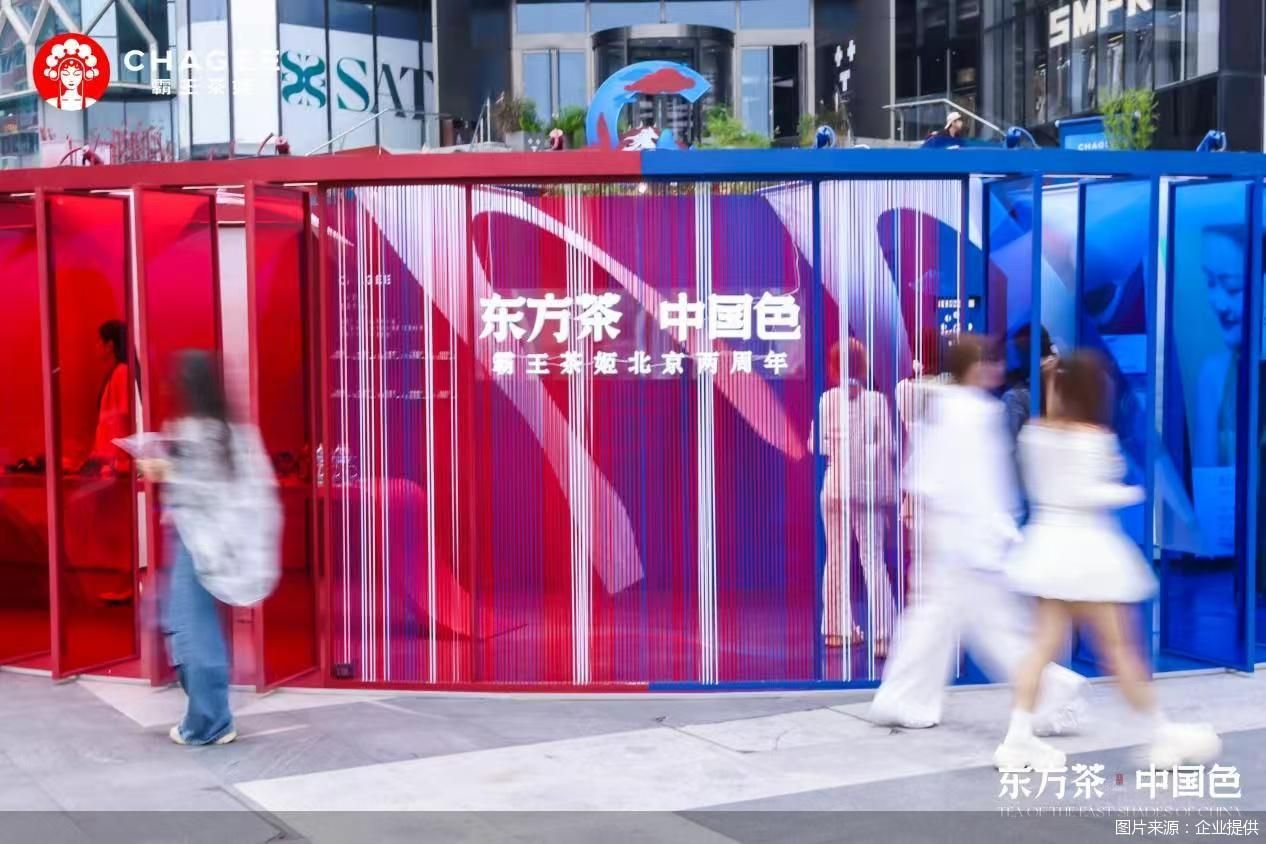
霸王茶姬发力北京市场,打造“CHA・色”艺术展
Bei Ke Cai Jing· 2025-09-13 08:39
Core Insights - Bawang Chaji is celebrating its two-year anniversary in Beijing with an art exhibition titled "CHA・Color" in Sanlitun, showcasing the evolution of tea-making techniques through a vibrant color palette [1] - The company has gained significant recognition among local consumers, having opened its first store in Beijing at Chaoyang He Sheng Hui in August 2023 [1] - Bawang Chaji is actively expanding its presence in Beijing, launching various themed stores, including a flagship store in Wangfujing and a campus store at Tsinghua University [2] Group 1 - The "CHA・Color" art exhibition features a core color theme of red and blue, representing traditional Chinese culture and the evolution of tea-making [1] - Bawang Chaji has partnered with ceramic artist Ran Xiangfei to create a co-branded gift box, enhancing its brand visibility and consumer engagement [1] - The company has initiated offline activities across multiple themed stores, allowing consumers to experience the brand's growth and connect with its story [1] Group 2 - The flagship store in Wangfujing, opened on July 2, 2023, marks a significant milestone in Bawang Chaji's expansion strategy in Beijing [2] - The company is diversifying its offerings by introducing unique themed stores, such as the "Book Fragrance Tea Rhythm" and music-themed stores, to enhance consumer experiences [2] - Bawang Chaji is focused on exploring new consumption scenarios to enrich the offline experience for local consumers [2]
三里屯举办“CHA・色”艺术展 霸王茶姬进入北京两周年
Bei Jing Shang Bao· 2025-09-13 02:15
Core Insights - Bawang Chaji celebrates its two-year anniversary in Beijing with an art exhibition titled "CHA・Color" held in Sanlitun [1] - The brand has been actively expanding in the Beijing market, launching various themed stores, including the first campus store at Tsinghua University and unique concept stores like "Book Fragrance Tea Rhythm" and music-themed stores [1] Group 1 - Bawang Chaji opened its first store in Beijing at Chaoyang He Sheng Hui in August 2023 [1] - The company has introduced different themed stores in Beijing over the past two years, enhancing its market presence [1] - The brand's anniversary event includes collaborations with ceramic artist Ran Xiangfei to launch a co-branded gift box [3] Group 2 - Bawang Chaji is hosting offline activities titled "Seeking Fragrance, Tasting Tea in the East" at various themed stores in Wangfujing Joy, Beiluoguxiang, Sanlitun, Longfu Temple, and Chaoyang He Sheng Hui [3] - The company has set up "CHAGEE Blackboard" displays in 110 stores, allowing consumers to learn about the brand's development, employee stories, and experiences with tea enthusiasts while enjoying their tea [3]
茶咖日报|星巴克中国出售进入倒计时,四家顶级机构进入最后角逐
Guan Cha Zhe Wang· 2025-09-12 14:33
Group 1: Starbucks China Sale - Starbucks China is in the final stages of a sale, with potential buyers including Boyu Capital, Carlyle Group, EQT, and Sequoia China, expected to finalize by the end of October [1] - The sale attracted interest from over 20 institutions, with Starbucks potentially retaining 30% of the equity, ensuring it remains a major shareholder in its Chinese operations [1] - For the third fiscal quarter of 2025, Starbucks reported total revenue of $9.456 billion, a year-on-year increase of 3.8%, while net profit fell by 47.1% to $558 million [1] Group 2: Performance in China - Starbucks China experienced a revenue increase of 8% year-on-year, reaching $790 million, with same-store sales up by 2% [2] - The number of Starbucks stores in China reached 7,828, with 70 new stores opened and expansion into 17 new county-level markets [2] - The company faces challenges from domestic premium coffee brands and has reduced prices on non-coffee products to enhance overall sales performance [2] Group 3: Tea Baidao's Coffee Initiative - Tea Baidao has launched a trial of freshly brewed coffee products in select stores in Guangdong and Sichuan, featuring a menu with 10 coffee options priced between 6.9 yuan and 12.9 yuan [3] - Daily sales of coffee products at trial locations average 40-50 cups, indicating a positive reception despite competition from popular tea drinks [3] - This is not Tea Baidao's first venture into coffee, as it previously introduced a coffee sub-brand called "Kafei" in 2023 [3] Group 4: Alipay and Luckin Coffee Collaboration - Alipay has launched the first AI payment system in mainland China in collaboration with Luckin Coffee, allowing users to place orders and make payments through AI interaction [4][5] - This initiative represents a significant advancement in the commercialization of AI applications in consumer transactions [5] Group 5: Coffee Robotics Investment - Shanghai Heitun COFE+ has announced the global launch of its sixth-generation coffee robot and is initiating a Series B financing round, with the first round led by Da Pu Asset Management [7] - The company, founded in 2018, has developed coffee robots that are now operational in 15 provinces in China and exported to over 50 countries across five continents [7]


星巴克中国出售倒计时,四家顶级机构最后角逐
Guan Cha Zhe Wang· 2025-09-12 14:28
Group 1: Starbucks China Sale - Starbucks China is in the final stages of a sale, with potential buyers including Boyu Capital, Carlyle Group, EQT, and Sequoia China, expected to finalize by the end of October [1] - The sale attracted over 20 interested institutions, with Starbucks potentially retaining 30% of the equity, ensuring it remains the major shareholder in Starbucks China [1] - As of the third fiscal quarter of 2025, Starbucks reported total revenue of $9.456 billion, a year-on-year increase of 3.8%, while net profit dropped by 47.1% to $558 million [1] Group 2: Performance in China - Starbucks China experienced a revenue increase of 8% year-on-year, reaching $790 million, with same-store sales up by 2% [2] - The number of Starbucks stores in China reached 7,828, with 70 new stores opened and expansion into 17 new county-level markets [2] - The company faces challenges from domestic premium coffee brands and has reduced prices on non-coffee products to enhance overall sales performance [2] Group 3: Tea Baidao's Coffee Initiative - Tea Baidao has launched a trial of freshly brewed coffee products in select stores in Guangdong and Sichuan, featuring a menu with 10 coffee options priced between 6.9 yuan and 12.9 yuan [3] - Daily sales of coffee products in trial stores average 40-50 cups, with peak times requiring a wait of about 15 minutes [3] - This is not Tea Baidao's first venture into coffee, as it previously introduced a coffee sub-brand "Kafei" in 2023 [3] Group 4: Alipay and Luckin Coffee Collaboration - Alipay has launched the first AI payment system in mainland China in collaboration with Luckin Coffee, allowing users to place orders and make payments through an AI assistant [4][5] - This initiative represents a significant advancement in the commercialization of AI applications in consumer transactions [5] Group 5: Shanghai Heitun COFE+ Coffee Robot Financing - Shanghai Heitun COFE+ has announced the global launch of its sixth-generation coffee robot and is initiating Series B financing, with the first round led by Da Pu Asset Management [7] - The company, established in 2018, has developed coffee robots that are now operational in 15 provinces in China and exported to over 50 countries across five continents [7]

生态美 文化兴 产业旺 北京市门头沟打造乡村振兴创新样板
Zhong Guo Chan Ye Jing Ji Xin Xi Wang· 2025-09-11 21:27
Core Insights - The article discusses the implementation of the "first release economy" concept in Beijing's Mentougou District, focusing on innovation and the development of a "poetic rural" model that integrates ecological beauty, cultural prosperity, and industrial vitality [1][2][3] Group 1: Economic Development - Mentougou District is promoting a "rural + first release" integration model to transform from single tourism to diversified consumption, from traditional business formats to innovative ones, and from regional resources to brand assets [1] - Wangping Town has introduced various new brands such as "Huanxi Tea" and "Zhi Yuan Family Banquet," successfully activating new economic formats in rural areas and providing diverse consumption options for residents and tourists [1] Group 2: Cultural Initiatives - The district emphasizes the excavation and innovation of cultural resources, exemplified by the immersive cultural experience base in Shuiyu Village, which combines traditional elements with modern experiences [2] - The "first product" initiative has led to the creation of a new "Ancient Road IP" brand, revitalizing traditional culture through innovative cultural consumption scenarios [2] Group 3: Technological Integration - Mentougou District is leveraging digital technology for cultural heritage and experience, developing the "Jingxi Shuiyu Village Cloud Community" app to engage visitors in cultural preservation and experience through digital means [2] - This integration of modern technology with ancient culture is driving industrial upgrades and enhancing the economic capacity of rural areas [2] Group 4: Promotional Activities - The district has launched the first exhibition season for "poetic rural" demonstration villages, showcasing the transformation of 15 villages from ordinary settlements to picturesque rural areas through a series of promotional videos [3] - Future plans include further exploration of rural development potential and enhancing the brand influence of "poetic rural" initiatives [3]
融资要有规划,别总想一口吃个胖子
Sou Hu Cai Jing· 2025-09-11 13:21
Core Insights - The article emphasizes the harsh realities of entrepreneurship, highlighting that many aspiring business owners focus too much on financing without understanding the foundational aspects of running a successful business [4][5][6]. Group 1: Entrepreneurial Challenges - Many entrepreneurs are influenced by successful figures like Jack Ma and Pony Ma, often overlooking the numerous failures that precede success [3][4]. - The concept of "survivorship bias" is discussed, indicating that only successful entrepreneurs are visible, while many others fail without recognition [4]. Group 2: Business Strategy - A case study of a Nantong entrepreneur seeking to open a new tea shop illustrates the importance of having a solid business model before pursuing financing [6][7]. - The entrepreneur's current operations include three stores with a monthly revenue of 200,000, but the focus should be on stabilizing and expanding to ten stores before seeking investment [6][7]. - Successful brands like Gu Ming and Nai Xue's Tea had significant store counts before their first financing rounds, emphasizing the need for a proven business model [7]. Group 3: Financial Management - The article suggests that entrepreneurs should consolidate their financials into a single entity to present a clear and compliant financial picture to banks, which can lead to easier access to loans [9]. - Building a comprehensive financial record, including procurement and customer data, is crucial for securing funding and supporting future expansion [9].

新兴咖啡品牌创始人:外卖补贴下滑明显
2 1 Shi Ji Jing Ji Bao Dao· 2025-09-11 02:42
Core Insights - The takeaway from the articles indicates that the food delivery industry is entering a new phase, with regulatory bodies stepping in to address subsidy disputes among major platforms [1][6]. Industry Overview - The State Administration for Market Regulation has held discussions with major food delivery platforms, emphasizing the need to adhere to laws and regulations, eliminate unfair competition, and reduce excessive subsidies [1]. - The regulatory body will monitor competition closely, urging platforms to enhance service quality, maintain food safety standards, and support merchants while ensuring rider rights [1]. Financial Impact - In Q2, the three major food delivery platforms—Meituan, Alibaba, and JD—experienced significant declines in net profits due to the impact of delivery subsidies, with Meituan's net profit plummeting nearly 90%, JD's dropping by nearly 50%, and Alibaba's decreasing by 18% [1]. - The marketing expenditures of these three platforms during the food delivery battle reached at least 30 billion yuan [2]. Market Dynamics - Despite the decline in absolute subsidy values, the volume of orders has remained relatively stable, indicating that companies still feel the need to offer some level of subsidies to maintain sales [3]. - Emerging coffee brands are also experiencing rapid growth, with companies like Mixue Ice City and Luckin Coffee reporting significant revenue increases of 39.3% and 47.1%, respectively, in the first half of the year [2]. Strategic Developments - Alibaba has launched the "Gao De Street Ranking," which is the first global ranking based on user behavior, along with a substantial distribution of coupons to reduce user costs [4]. - Meituan has announced the relaunch of its quality delivery service through its platform, indicating a shift in strategy amidst the changing competitive landscape [5].


古茗(01364.HK)半年报点评:25H1收入及业绩端高增 单店GMV增长超20%
Ge Long Hui· 2025-09-10 22:12
Investment Highlights - The company reported a revenue of 5.66 billion yuan for H1 2025, representing a year-on-year increase of 41.2% [1] - Gross profit reached 1.79 billion yuan, also up by 41.0% [1] - Adjusted profit was 1.09 billion yuan, marking a 42.4% increase, with a significant adjustment item of 560 million yuan from financial liabilities fair value changes [1] - Adjusted core profit stood at 1.14 billion yuan, reflecting a 49.0% growth [1] Revenue Breakdown - Revenue from product equipment sales, franchise management services, and direct store sales were 450 million, 120 million, and 8 million yuan respectively, with year-on-year growth of 42%, 39%, and 14% [1] - Total GMV for H1 2025 reached 14.1 billion yuan, up 34.4% [1] - Average monthly GMV per store was 228,000 yuan, an increase of 20.6% [1] - Average daily cup sales per store were 439 cups, up 17.4% [1] Profitability Metrics - Gross margin remained stable at 31.5%, with an adjusted profit margin of 19.2%, up by 0.2 percentage points [1] - Sales, management, R&D, and financial expense ratios changed by -0.02, -0.4, -0.65, and +0.3 percentage points respectively [1] Store Expansion and Market Strategy - The total number of stores at the end of H1 2025 was 11,179, a 17.5% increase, with 1,570 new stores opened, up 105.2% [2] - 305 stores were closed, with the acceleration in store openings attributed to the recovery of the tea beverage market and strategic adjustments in store expansion [2] - The proportion of stores in second-tier cities and below was 81%, up 2 percentage points, while stores in townships accounted for 43%, up 4 percentage points [2] - The number of franchisees reached 5,875, a 22% increase, with an average of 1.9 stores per franchisee [2] Product Development and Membership Growth - A total of 52 new products were launched in H1 2025, including 16 new coffee products [2] - Over 8,000 stores are now equipped with coffee machines, and the company announced Wu Yanzu as the "Coffee Quality Partner" in June [2] - The number of registered members on the mini-program reached approximately 178 million, with about 50 million active members in Q2 [2] Logistics and Supply Chain - The company has established a leading self-owned cold chain storage and logistics system, with 22 warehouses and a cold storage capacity exceeding 61,000 cubic meters [2] - The fleet consists of 362 self-owned transport vehicles, with approximately 75% of stores located within a 150 km radius of warehouses [2] - About 98% of stores can receive cold chain delivery within two days, with delivery costs accounting for less than 1% of GMV [2] Future Outlook - The company expects rapid growth in same-store sales and forecasts net profits of 2.6 billion, 2.5 billion, and 3 billion yuan for 2025-2027, corresponding to PE ratios of 18, 19, and 16 times [2] - Adjusted net profits are projected to be 2.1 billion, 2.6 billion, and 3.1 billion yuan, with year-on-year growth rates of 38%, 22%, and 18% respectively [2]
不止避税!腾讯、阿里、百度为何都选择开曼群岛?
Sou Hu Cai Jing· 2025-09-10 16:10
Core Viewpoint - The news discusses the reasons behind Chinese companies, including Evergrande, registering in the Cayman Islands for bankruptcy protection and the broader implications of this trend in corporate strategy [1][2]. Group 1: Reasons for Preference for Cayman Islands - Tax benefits are a significant factor for companies choosing the Cayman Islands, as it does not impose corporate tax, income tax, or capital gains tax, only requiring a minimal annual license fee [4]. - The legal framework in the Cayman Islands is well-established and recognized internationally, making it an attractive location for companies seeking to list overseas [6]. - The "red-chip structure" allows domestic companies to transfer assets to a Cayman-registered entity, facilitating a smoother and quicker listing process on foreign exchanges [8]. Group 2: Advantages of Cayman Islands - The absence of foreign exchange controls in the Cayman Islands allows for free movement of capital, which is appealing for companies engaged in international transactions [9]. - Political stability and a secure business environment are key advantages, as the Cayman Islands is a British Overseas Territory with a good social order [11]. - The strict confidentiality laws in the Cayman Islands protect sensitive information about shareholders and company operations, enhancing privacy for businesses [11]. Group 3: Regulatory Challenges - The Cayman Islands has strengthened regulations in response to global tax transparency initiatives, requiring companies to meet economic substance requirements [12]. - Non-compliance with these new regulations could result in significant penalties or even the removal of companies from the registry, indicating a shift in the ease of offshore registration [12]. Group 4: Strategic Considerations - Registering in the Cayman Islands is part of a broader strategy that includes tax optimization, ease of listing, capital mobility, confidentiality, and global market positioning [13]. - The example of Bawang Tea's "Cayman-Singapore-China" structure illustrates how companies can navigate geopolitical risks while optimizing tax liabilities and maintaining control [13]. - As globalization deepens, the trend of offshore registration may become more common, necessitating careful consideration of the associated risks and benefits [15].