
东证指数

Search documents
高市早苗胜选无济于事?市场警告:赤字空间已尽,日元仍悬利剑
Jin Shi Shu Ju· 2026-02-09 09:51
Core Viewpoint - The recent election victory of Prime Minister Sanna Takashi provides her with significant authority to revitalize Japan's economy, but investors are concerned about the limited room for increasing deficits, which could soon pressure bonds and the yen [1][2]. Group 1: Election Impact - Takashi's Liberal Democratic Party won over two-thirds of the seats in the House of Representatives, allowing her to advance her agenda without needing to negotiate with other parties [1]. - The victory was praised by U.S. President Trump, who noted the electorate's dissatisfaction with high living costs, although her expansionary fiscal agenda has raised market concerns [1][2]. Group 2: Market Reactions - Following the election, the Tokyo stock market surged to historical highs, with the Nikkei index rising by 3.9% and the broader Topix index increasing by 2.3% [2]. - The yen, which had depreciated by 6% since Takashi took over the Liberal Democratic Party in October, showed signs of strengthening, while the benchmark 10-year Japanese government bond yield rose by 5.5 basis points to 2.28% [2]. Group 3: Economic Policy Challenges - Analysts emphasize that the focus is not merely on the election results but on the substance, scale, funding sources, and consistency of economic and fiscal policies [2]. - A key challenge for Takashi will be how to manage the commitment to suspend the 8% food consumption tax, which could create an estimated annual revenue shortfall of 5 trillion yen (approximately $32 billion) [5]. Group 4: Monetary Policy Outlook - There is a slight increase in market bets on a potential interest rate hike by the Bank of Japan, reflecting that political stability may clear the way for action [3]. - However, pressure from the U.S. to support the yen could complicate Takashi's approach to monetary policy, as any signals of maintaining the status quo could lead to further yen depreciation [3][4].
日本大选高市早苗胜出!日股或借势冲新高 日元逼近160关口、国债再临抛售压力
智通财经网· 2026-02-08 23:41
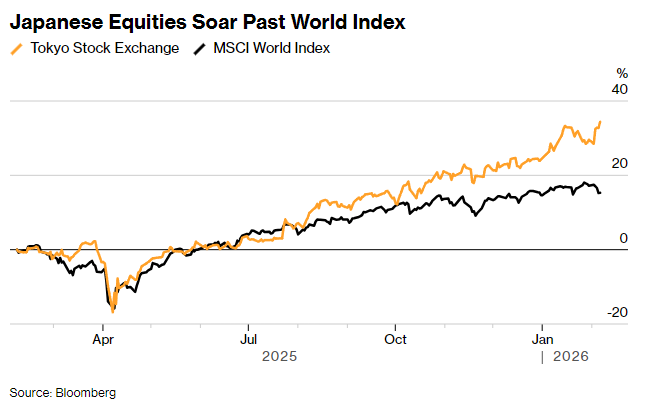
Core Viewpoint - The overwhelming victory of Prime Minister Fumio Kishida's Liberal Democratic Party (LDP) is expected to sustain the upward trend in the Japanese stock market, while putting further downward pressure on the yen and government bonds [1][2]. Economic Impact - The LDP has secured more than two-thirds of the absolute majority in the House of Representatives, significantly exceeding some investors' expectations [1]. - Kishida's economic stimulus policies are anticipated to have a clearer path for implementation, which is seen as positive for the Nikkei index [1]. - The Japanese stock market, particularly the Tokyo Stock Exchange index, reached a historical high last week, with an increase of over 8% this year, compared to a mere 2% rise in global developed market stock indices [1]. Currency and Bond Market - The yen has depreciated, with the exchange rate against the US dollar slightly falling to 157.61, and a cumulative decline of 1.6% last week, nearing the 160 mark that previously triggered intervention by Japanese authorities [1]. - Analysts suggest that the natural trajectory for the yen is further depreciation, with expectations of potential intervention by Japanese officials in the low range [5]. - Concerns about the sustainability of Japan's fiscal policies and temporary tax relief measures are driving the risk of further selling in Japanese government bonds [7]. Sector Focus - The market is expected to focus on sectors such as defense and nuclear energy, which align with Kishida's national investment agenda [4]. - Investment in defense, artificial intelligence, and semiconductors is likely to benefit significantly from Kishida's plans for increased spending [4]. Market Sentiment - Despite existing concerns, Japanese government bonds showed some recovery last week, with upward pressure on yields easing, particularly for long-term bonds [9]. - The overwhelming victory of the LDP may provide Kishida with more political maneuvering space to address the demands of the bond market [9].

日本执政联盟破裂新首相或“难产” 日央行或推迟加息
2 1 Shi Ji Jing Ji Bao Dao· 2025-10-14 15:03
Market Overview - The Japanese stock market experienced significant declines, with the Nikkei 225 index falling by 2.58% and the Topix index dropping by 1.99% as of October 14 [1][2] - The decline was primarily driven by political instability following the announcement of the Komeito party's withdrawal from the ruling coalition with the Liberal Democratic Party, raising concerns about the potential inability of the new LDP president, Sanae Takaichi, to assume the role of Prime Minister [1][2] Currency and Bond Market - The Japanese yen showed volatility, initially declining but later rising due to increased demand for safe-haven assets, although it has depreciated by 2.79% against the US dollar for the month [1][3] - Japanese long-term government bond yields continued to rise, indicating investor disinterest in Japanese bonds, with the 20-year bond yield increasing by 0.15% and the 30-year bond yield rising by 0.81% [3][4] Political Impact on Financial Markets - The political uncertainty in Japan is expected to continue affecting the stock market, with potential for further declines if the political deadlock persists and external negative factors arise [3][6] - Analysts suggest that if political stability is restored and global risk appetite improves, the Japanese stock market may stabilize and rebound [3][6] Government Debt Concerns - Concerns regarding Japan's fiscal sustainability are heightened, with government debt exceeding 260% of GDP, leading to fears of increased bond issuance and potential fiscal deterioration [4][5] - The market anticipates that if the new government opts for fiscal stimulus measures, it could further increase the supply of government bonds, necessitating higher yields as compensation [4][5] Interest Rate Outlook - The likelihood of a rate hike by the Bank of Japan has diminished significantly, with current expectations for an increase in October at only 10%, down from 63% earlier in the month [6] - The political instability may lead the Bank of Japan to adopt a cautious approach regarding monetary policy, delaying any potential rate hikes until the political landscape stabilizes [6]
日本执政联盟破裂新首相或“难产”,日央行或推迟加息
2 1 Shi Ji Jing Ji Bao Dao· 2025-10-14 14:07
Market Overview - The Japanese stock market experienced significant declines, with the Nikkei 225 index falling by 2.58% and the Topix index down by 1.99% as of October 14 [2][3] - The decline is attributed to political instability following the announcement of the Komeito party's exit from the ruling coalition with the Liberal Democratic Party, raising concerns about the potential inability of the new LDP president, Sanae Takaichi, to assume the role of Prime Minister [2][3] Currency and Bond Market - The Japanese yen showed volatility, initially declining but later rising by 0.14% against the US dollar, reflecting increased demand for safe-haven assets amid global market uncertainties [4] - The yield on Japan's 20-year and 30-year government bonds increased by 0.15% and 0.81%, respectively, indicating a cooling interest in Japanese bonds despite the yen's safe-haven status [4] Economic Implications - Analysts suggest that the political turmoil in Japan is causing heightened investor caution, particularly affecting technology and banking stocks, which are sensitive to economic outlook and policy changes [3] - The potential for a new fiscal stimulus from a new government could lead to increased government debt issuance, raising concerns about fiscal sustainability and pushing bond yields higher [5][6] Interest Rate Outlook - The likelihood of a rate hike by the Bank of Japan has decreased significantly, with current market expectations placing the probability of a rate increase this month at only 10%, down from 63% earlier in October [6][7] - The uncertainty surrounding the new government's monetary policy direction, whether dovish or hawkish, adds to the complexity of the interest rate outlook in Japan [7]

“高市早苗交易”席卷全球 市场开始押注日经指数直奔5万点
智通财经网· 2025-10-09 01:28
Core Viewpoint - The financial market is betting on significant fiscal stimulus measures from Japan's new ruling party leader, Sanae Takaichi, which is expected to drive the Nikkei 225 index to historic highs, potentially reaching 50,000 points [1][2][3]. Group 1: Market Reactions - The "Takaichi Trade" has led to a rapid increase in the Japanese stock market, depreciation of the yen, and a resurgence of yen carry trades, reflecting expectations of stronger fiscal stimulus and mild monetary policy [2][3]. - Following Takaichi's election, the Nikkei 225 index surged by 4.8%, with the broader Topix index rising by 3.1% [4]. Group 2: Institutional Predictions - Nomura Securities raised its year-end forecast for the Nikkei 225 from 44,500 to 49,000 points, while Daiwa Securities also increased its forecast to 49,000 points, indicating a high probability of reaching 50,000 points within the year [5][7]. - Other institutions, including Julius Baer and SMBC Nikko Securities, have similarly adjusted their forecasts upward, with Julius Baer predicting a rise to 50,000 points [4][6][7]. Group 3: Economic Implications - Takaichi is expected to continue the "Abenomics" framework, which could create an environment of economic growth outpacing interest rates, benefiting the stock market and attracting foreign investment [6]. - The anticipated policies under Takaichi, including tax cuts and cash subsidies, are likely to favor sectors such as technology, defense, and advanced manufacturing, positioning them as major beneficiaries in the stock market [3][4].
黄金飙升至3920美元,日经225指数首破47000点!
Sou Hu Cai Jing· 2025-10-07 18:42
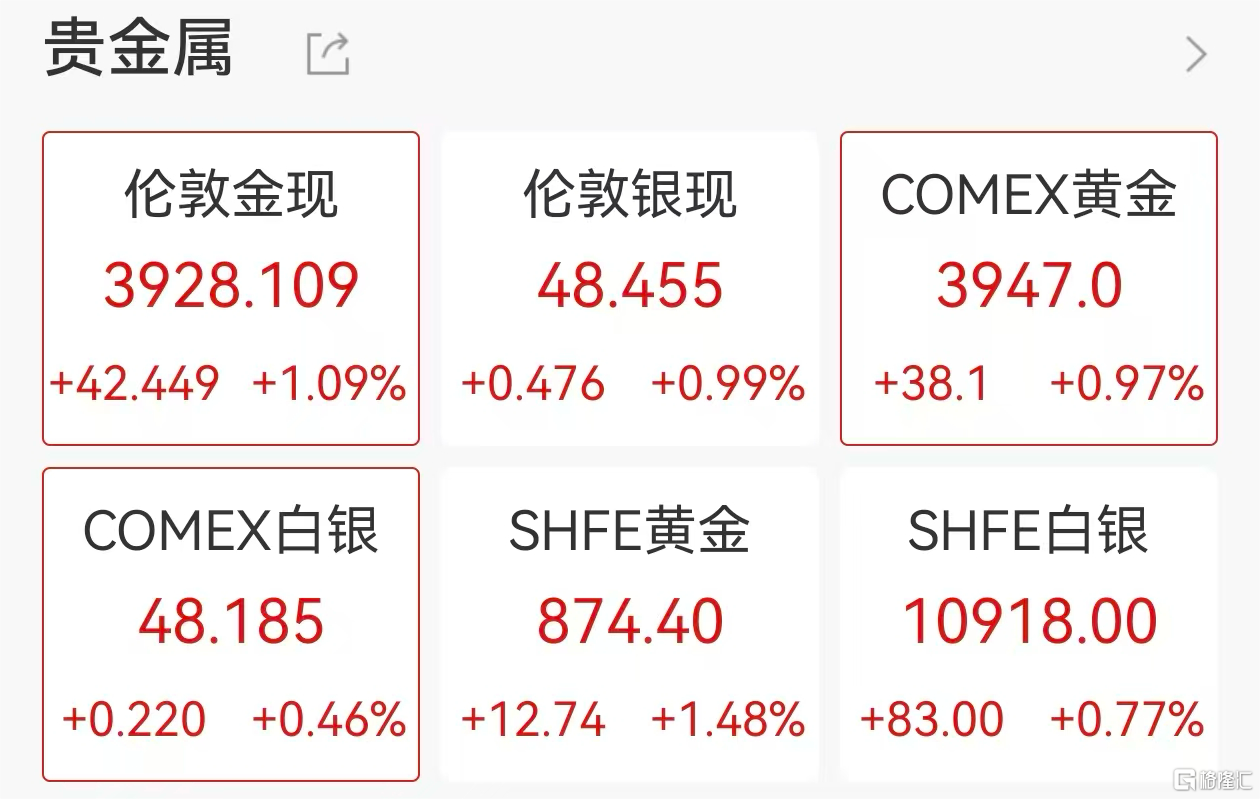
Group 1: Japanese Stock Market Surge - The Nikkei 225 index has surpassed the 47,000-point mark for the first time, rising nearly 2,000 points with an increase of over 4% [3][6] - The index closed at 47,682 points, marking a significant milestone in Japanese stock market history [3] - Major stocks such as Sumitomo Pharma, Yamaha Motor, Nissan, and Panasonic have seen substantial gains, indicating strong bullish sentiment in the market [4] Group 2: Political Influence on Market - The surge in the Japanese stock market is linked to the recent political event where Sanae Takaichi won the ruling Liberal Democratic Party leadership election, expected to become Japan's first female Prime Minister [6] - Takaichi's support for expansionary fiscal policies and "Abenomics" is viewed positively by the market, as she advocates for cash subsidies and tax rebates to assist families affected by inflation [6] Group 3: Currency and Bond Market Reactions - In contrast to the stock market, the Japanese yen has depreciated significantly, with the USD/JPY exchange rate rising by 1.5% to 149.7, nearing the psychological level of 150 [8] - The yield on Japan's 40-year government bonds increased by 14 basis points to 3.52%, while the 10-year bond yield slightly rose by 0.5 basis points to 1.65% [8] Group 4: Gold Market Dynamics - Concurrently, gold prices have surged, reaching a record high of $3,920.77 per ounce, driven by various factors including the Federal Reserve's interest rate cuts and geopolitical tensions [10][12] - The increase in gold prices is also attributed to significant inflows into gold ETFs, with net inflows reaching $13.6 billion over the past four weeks, and over $60 billion year-to-date, marking a historical high [12] Group 5: Future Market Outlook - Analysts suggest that the market reaction to Takaichi's victory may be more tempered and short-lived than expected, with a decreased likelihood of the Bank of Japan raising interest rates again this year [14] - The market anticipates a nearly 95% probability of the Federal Reserve cutting rates in October, with a 99% chance of further cuts by December [14][16]
突然飙升!单日暴涨2000点
Ge Long Hui· 2025-10-06 04:30
Group 1 - The core viewpoint of the articles highlights the contrasting market reactions to the U.S. government shutdown and employment data delays, with risk assets like U.S. stocks and Bitcoin reaching historical highs, while safe-haven assets like gold also surged, breaking the $3900 per ounce mark [1][3][4] - Gold prices have increased nearly 50% this year, driven by geopolitical risks, anticipated interest rate cuts by the Federal Reserve, a weakening dollar, and ongoing global central bank purchases of gold [3][4] - The U.S. government shutdown has entered its fifth day, delaying the release of significant economic data, including the September non-farm payroll report, which has contributed to market optimism despite the lack of concrete economic indicators [4][5] Group 2 - The Japanese stock market experienced a significant surge, with the Nikkei 225 index rising over 4% in a single day, gaining more than 2000 points and reaching a historical high above 47800 [5][7] - The bond and currency markets in Japan also showed volatility, with the 40-year Japanese government bond yield rising by 14 basis points to 3.52%, and the yen depreciating by 1.7% against the dollar, reaching a critical level of 150 [7][11] - The market's reaction is linked to the election of Sanae Takaichi as the new president of the ruling Liberal Democratic Party, who is expected to become Japan's first female prime minister, with her economic policies seen as a continuation of "Abenomics" but with a focus on fiscal expansion [11][12][13] Group 3 - Takaichi's economic policies include significant tax cuts and subsidies, as well as a shift away from strict fiscal discipline, allowing for increased government borrowing to stimulate the economy [13][14] - Analysts predict that Takaichi's fiscal stance will boost market confidence and positively impact the stock market, although there are concerns about the sustainability of this "Takaichi trade" and the need for clarity on policy specifics [14][15]
高盛:对黄金保持看涨 石油看跌 料铜价未来12个月大致持平
智通财经网· 2025-09-23 06:28
Group 1 - Goldman Sachs reports that gold prices have accelerated since August, with a return of 12% over the past month, supported by increased futures positions, ETF inflows, and seasonal central bank demand [1] - The recent dovish policy repricing and a weaker dollar have provided tailwinds for gold, although the recent surge indicates a slight overperformance relative to its implied beta against macro assets [1] - The commodity team at Goldman Sachs sees upside risks to their 2026 forecast of $4,000 per ounce for gold, but notes a significant increase in speculative positions [1] Group 2 - Goldman Sachs maintains a moderately risk-on stance over a 12-month horizon but keeps a "neutral" tactical asset allocation [2] - The firm's equity strategists have adjusted the S&P 500 index targets to 6,800, 7,000, and 7,200 for 3-month, 6-month, and 12-month periods respectively, while the TOPIX index targets are set at 3,300 for both 3-month and 6-month, and 3,400 for 12-month [2] - The interest rate team has revised the 10-year UK government bond yield forecast to 4.4% by the end of 2025 [2] - The commodity strategists remain bullish on gold while bearish on oil, and expect copper prices to remain roughly flat over the next 12 months [2]
中东紧张叠加关税阴云,油价冲高回落,欧股期货下跌,美元触及两年来新低
Hua Er Jie Jian Wen· 2025-06-12 06:45
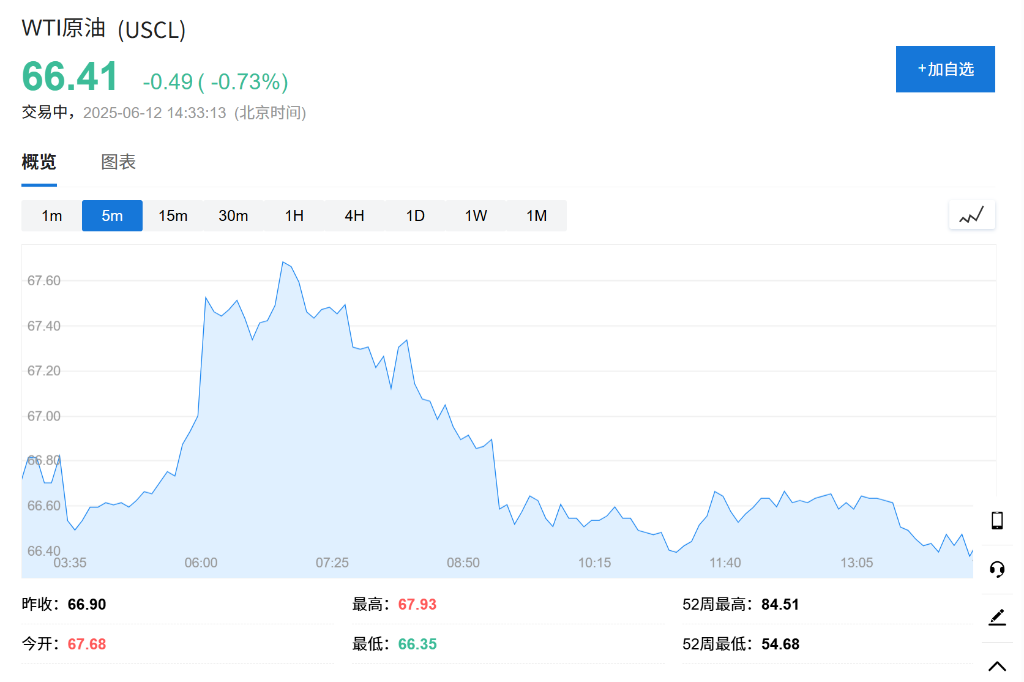
Group 1 - European stock index futures fell by 0.7%, while the US dollar index decreased by 0.4%, reaching its lowest level since July 2023 [1][5] - Brent crude oil futures surged by 5% to $70 per barrel due to escalating tensions between the US and Iran, although they later declined by approximately 1% [1][2] - The geopolitical risks in the Middle East, particularly involving Iran and US military bases in Iraq, are driving oil market volatility [2][5] Group 2 - Brent crude oil has dropped about 7% this year, influenced by US tariff policies and OPEC+ decisions to restart idle production capacity [5] - The European Stoxx 50 index futures and Japan's Nikkei 225 index both experienced declines, with the latter closing down 0.6% [5] - Gold prices increased by 0.6% to $3,374.54 per ounce, benefiting from safe-haven demand amid geopolitical tensions [5]
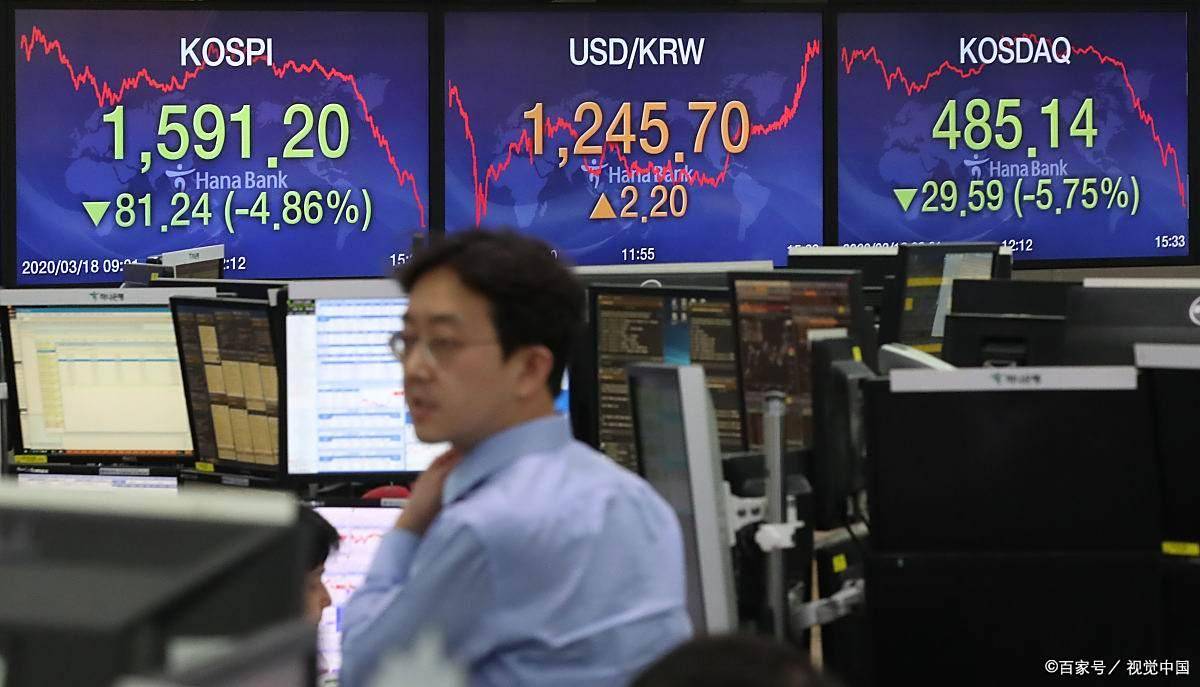
中概股美股盘前多数上涨,韩股逼近牛市,MSCI全球股票指数创新高,黄金、原油几近持平
Hua Er Jie Jian Wen· 2025-06-04 08:15
Core Insights - Optimism in Wall Street has increased due to positive U.S. employment data, while Asian markets have seen a rise in investor risk appetite following clear political outcomes in South Korea [1] - The MSCI global stock index has reached a historic high, supported by gains in European and Asian markets [1][3] - The South Korean stock market is approaching a bull market, with the Kospi index rising 2.7% and over 20% from its April low [1][5] U.S. Market Performance - U.S. stock index futures are mixed, hovering around the flat line, with the Dow Jones slightly up by approximately 0.1% [2][8] - The employment market has exceeded expectations, boosting market optimism as investors await more labor market data, including the upcoming ADP employment data and non-farm payroll report [7] Global Market Trends - European stocks are mostly up, with German stocks rising over 0.7% and French stocks up over 0.3% [6] - The Nikkei 225 index closed up 0.8%, while the Topix index rose 0.5% [4] - The MSCI AC global index has surpassed its historical high reached in February [3] Currency and Commodity Movements - The U.S. dollar index has slightly decreased by 0.1%, while the euro has increased by 0.1% [6] - Gold prices are nearly flat, and oil prices have seen a slight decline of nearly 0.1% [7]
