
技术

Search documents
KBR Inc (KBR) Relased Q4 2025 Earnings
Yahoo Finance· 2026-03-02 14:46
Core Insights - KBR Inc. is identified as one of the 14 most undervalued stocks on the NYSE, with a notable 10% year-over-year increase in adjusted diluted earnings per share for Q4 2025, surpassing the consensus estimate of $0.99 [1] Financial Performance - The margin expansion, particularly from the mission tech segment, was a significant factor in the earnings beat, with strong project execution keeping costs controlled and ensuring new projects were margin accretive [2] - Operating cash flows increased by 24% year-over-year, enabling the company to reduce its net debt to EBITDA ratio below 2.5x, fund organic growth, and return $84 million in dividends and $329 million in share buybacks in FY 2025 [3] Future Outlook - For 2026, management anticipates revenue, EBITDA, earnings, and operating cash flows to grow by approximately 3% to 4%, supported by backlog coverage and margin discipline [4] - The company plans to fully execute the spin-off of its mission tech segment by the second half of 2026, a move initially announced on September 24 of the previous year [4] Company Overview - KBR Inc. provides science, technology, engineering, and logistics support solutions to government and enterprises, operating through two main segments: Sustainable Tech and Mission Tech [5]

重庆九龙坡区加力提升九龙新城发展能级
Zhong Guo Jing Ji Wang· 2026-02-27 04:40
Core Insights - The Chongqing Jiulongpo District is launching a series of nine special actions to enhance the development of the Jiulong New City, focusing on equipment, advanced materials, and modern logistics [1][2] Group 1: Economic Development Goals - Jiulong New City aims for an 8% GDP growth, 8.6% increase in industrial output, 48.5% growth in service revenue, and 62.9% rise in fixed investment by 2025, indicating robust economic prospects [1] - The area has expanded the Chongqing Hub Port Industrial Park from 12.4 square kilometers to 50 square kilometers to support industrial growth [1] Group 2: Key Industry Focus - The complete equipment industry is one of the three main industries in Jiulong New City, with plans to enhance traditional equipment and develop new sectors such as hydrogen energy and semiconductor equipment [1] - The district aims to attract over 35 complete equipment projects this year [1] Group 3: Advanced Materials and Logistics - The "Advanced Materials Strong Chain Quality Improvement" and "Modern Logistics and Supply Chain Service Breakthrough" actions will focus on enhancing the lightweight alloy materials industry and filling gaps in non-alloy materials [2] - The goal is to create a globally influential advanced materials industry cluster worth hundreds of billions and establish a logistics hub in the western urban area [2] Group 4: Transportation and Market Expansion - The "Four-Way Corridor Daily Operation" initiative will enhance transportation links to ASEAN, Europe, and other regions, ensuring efficient logistics for the hub economy [2] - The "Yumao Global" international market development plan will promote local enterprises at international trade fairs, aiming to make Jiulong New City a preferred destination for foreign investment [2]
美国财政部允许美国公司向委内瑞拉提供石油生产所需物资
Xin Lang Cai Jing· 2026-02-11 06:20
Core Viewpoint - The Trump administration has authorized U.S. companies to provide equipment and technology to Venezuela to enhance its oil production capacity [1][2][3] Group 1: Licensing and Business Opportunities - The U.S. Treasury Department has issued a new general license allowing U.S. entities to supply "goods, technology, software, or services" for oil and gas exploration, development, and production activities in Venezuela [2][3] - This license enables U.S. oilfield service companies like Halliburton and SLB to operate in Venezuela [3] - A broader license is expected to be introduced soon, allowing more U.S. oil companies to invest and conduct drilling operations in Venezuela [3] Group 2: Investment Potential - President Trump has urged U.S. oil companies to invest $100 billion to revamp Venezuela's outdated oil industry [3] - U.S. oil companies are optimistic about the oil extraction opportunities in Venezuela but are seeking comprehensive reforms in the country's legal system and enhanced security measures before proceeding [3]
美印贸易谈判终现转机
Xin Lang Cai Jing· 2026-02-03 22:56
Core Viewpoint - The recent trade agreement between the United States and India marks a significant turning point in their long-standing trade negotiations, which have been fraught with tensions over tariffs and trade barriers since 2025 [3][4]. Group 1: Trade Agreement Details - The agreement includes a reduction of the "reciprocal tariff" imposed by the U.S. on Indian goods from 25% to 18%, while India will lower its tariffs and non-tariff barriers to zero [3]. - India has committed to significantly increasing its procurement of U.S. products, including over $500 billion worth of energy, technology, agricultural products, and coal [3]. Group 2: Historical Context and Negotiation Dynamics - Since 2025, U.S.-India trade talks have been overshadowed by U.S. threats to raise tariffs, leading to a breakdown in negotiations and heightened tensions [4][5]. - The U.S. initially imposed a 25% "reciprocal tariff" on Indian goods in July 2025, which was further exacerbated by additional tariffs related to India's oil imports from Russia, resulting in a total tariff rate of 50% on Indian exports to the U.S. [5][6]. Group 3: Economic Impact on India - The high tariffs have significantly impacted India's labor-intensive industries, such as textiles and jewelry, which employ millions and have faced substantial losses due to missed export opportunities [5][6]. - Indian exporters have been forced to establish subsidiaries in the U.S. to circumvent tariffs, and some have relocated production to countries with lower tax rates, such as the UAE [6]. Group 4: Future Considerations - The Indian government, under Prime Minister Modi, is under pressure to deliver economic benefits to the public ahead of the 2026 elections, necessitating a satisfactory agreement with the U.S. [7]. - Both countries must prepare for the finalization of the agreement and consider how the new trade dynamics will influence their respective economies moving forward [7].


印美达成贸易协议,分析人士:5000亿美元应被视为一种“政治信号”
Guan Cha Zhe Wang· 2026-02-03 15:17
Core Insights - The trade agreement between the US and India involves reducing US tariffs on Indian goods from 50% to 18%, while India commits to purchasing over $500 billion worth of US products, including energy, technology, and agricultural goods [1][6][10] - Analysts express skepticism regarding India's ability to fulfill its commitment, particularly the $500 billion purchase, given its current economic scale and the need for energy import diversification [2][4][7] Trade Agreement Details - The agreement aims to enhance geopolitical ties between India and the US, potentially benefiting India's manufacturing sector [1][6] - Indian textile, engineering, and pharmaceutical sectors are expected to be the primary beneficiaries of the tariff reduction [1][6] - The agreement is seen as a political signal rather than a concrete economic plan, with analysts suggesting that the $500 billion figure lacks a specific timeline for implementation [4][7] Energy Import Dynamics - India is expected to continue importing Russian oil despite the agreement, as it prioritizes energy import diversification [4][8] - The Indian government supports a diversified energy import strategy and will not interfere with corporate decisions regarding oil purchases [8][10] - Analysts predict that India's reliance on discounted Russian oil may decrease over time, with increased procurement from the US and the Middle East [4][8] Broader Economic Context - The recent free trade agreement between India and the EU may have influenced the US-India trade negotiations, highlighting India's push for trade diversification [2][7] - The US is India's largest market, accounting for approximately 18% of India's total exports last year [10] - Despite previous high tariffs imposed by the US, India's economy is projected to grow at a rate of 7.4% in the fiscal year 2025-26 [10]
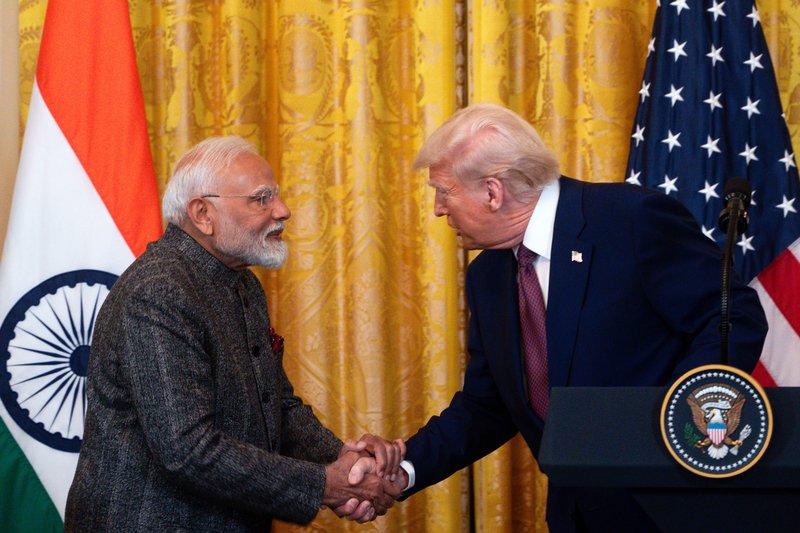
特朗普宣布与印度达成贸易协定互降关税 称印度已承诺停购俄油
Sou Hu Cai Jing· 2026-02-03 09:11
Group 1 - The core point of the article is the trade agreement between the United States and India, where the U.S. will reduce tariffs on Indian goods to 18% in exchange for India lowering tariffs on U.S. goods and potentially ceasing oil purchases from Russia [2] - The agreement includes a commitment from India to purchase $500 billion worth of U.S. energy, technology, and agricultural products [2] - India is heavily reliant on oil imports, with approximately 90% of its demand met through imports, making it the third-largest oil importer globally [3] Group 2 - Following the outbreak of the Russia-Ukraine conflict in 2022, India has significantly increased its imports of cheap oil from Russia [3] - Recent reports indicate that India has begun to slow down its oil purchases from Russia, with imports expected to decrease from about 1.2 million barrels per day in January to approximately 1 million barrels per day in February, and further down to 800,000 barrels per day in March [3]
印度Sensex指数开盘涨4.5% 此前特朗普宣布对印度降低关税
Jin Rong Jie· 2026-02-03 03:48
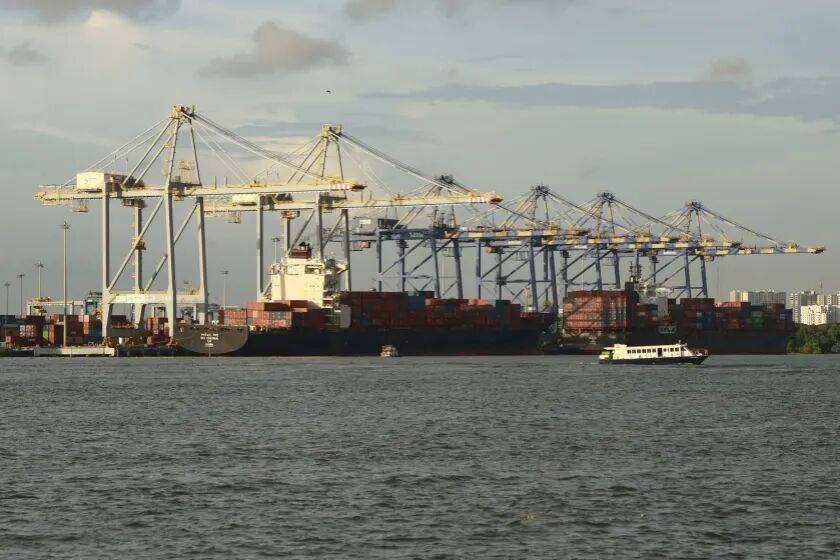
Core Viewpoint - The Indian Sensex index opened up by 4.5%, reaching 85,323.20 points, with all sectors experiencing gains. A trade agreement between the U.S. and India has been reached, which includes a reduction in tariffs and increased oil purchases from the U.S. and potentially Venezuela [1]. Group 1: Trade Agreement - The U.S. has agreed to lower tariffs on India from 25% to 18% as part of a new trade agreement [1]. - India is set to reduce its tariffs and non-tariff barriers on U.S. goods to zero [1]. - The agreement includes a commitment from India to significantly increase its purchases of U.S. goods, including energy, technology, agricultural products, and coal, with a total value exceeding $500 billion [1]. Group 2: Oil Purchases - Indian Prime Minister Modi has agreed to stop purchasing oil from Russia and to increase oil imports from the U.S. and possibly Venezuela [1]. - This shift in oil purchasing strategy is part of the broader trade discussions between the U.S. and India [1]. Group 3: Market Reaction - The positive news regarding the trade agreement and oil purchases has led to a significant increase in the Indian stock market, with the Sensex index reflecting a strong upward trend [1].
凌晨,直线猛拉!特朗普:莫迪同意不买俄罗斯石油,美国将降低对印关税
Hua Xia Shi Bao· 2026-02-03 00:33
Group 1 - The core point of the news is the announcement of a trade agreement between the United States and India, where the U.S. will reduce tariffs on Indian goods from 25% to 18%, effective immediately, while India will lower its tariffs and non-tariff barriers to zero [1][2][4] - The agreement includes a commitment from India to significantly increase its procurement of U.S. products, including over $500 billion worth of energy, technology, agricultural products, and coal [1][4] - The U.S. has requested India to stop purchasing oil from Russia and to increase its oil imports from the U.S., with potential purchases from Venezuela also mentioned [1][2] Group 2 - The reduction in tariffs is expected to provide significant relief for India, which has been seeking to negotiate lower tariffs with Washington, as exports to the U.S. account for about 20% of India's total exports [4] - The high tariffs previously imposed by the U.S. had affected approximately 55% of India's exports to the U.S. and posed challenges to India's ambition of becoming a manufacturing powerhouse [4] - Analysts view this agreement as a major turning point in U.S.-India trade relations, potentially opening a new chapter in their trade relationship and impacting the global energy market [4]
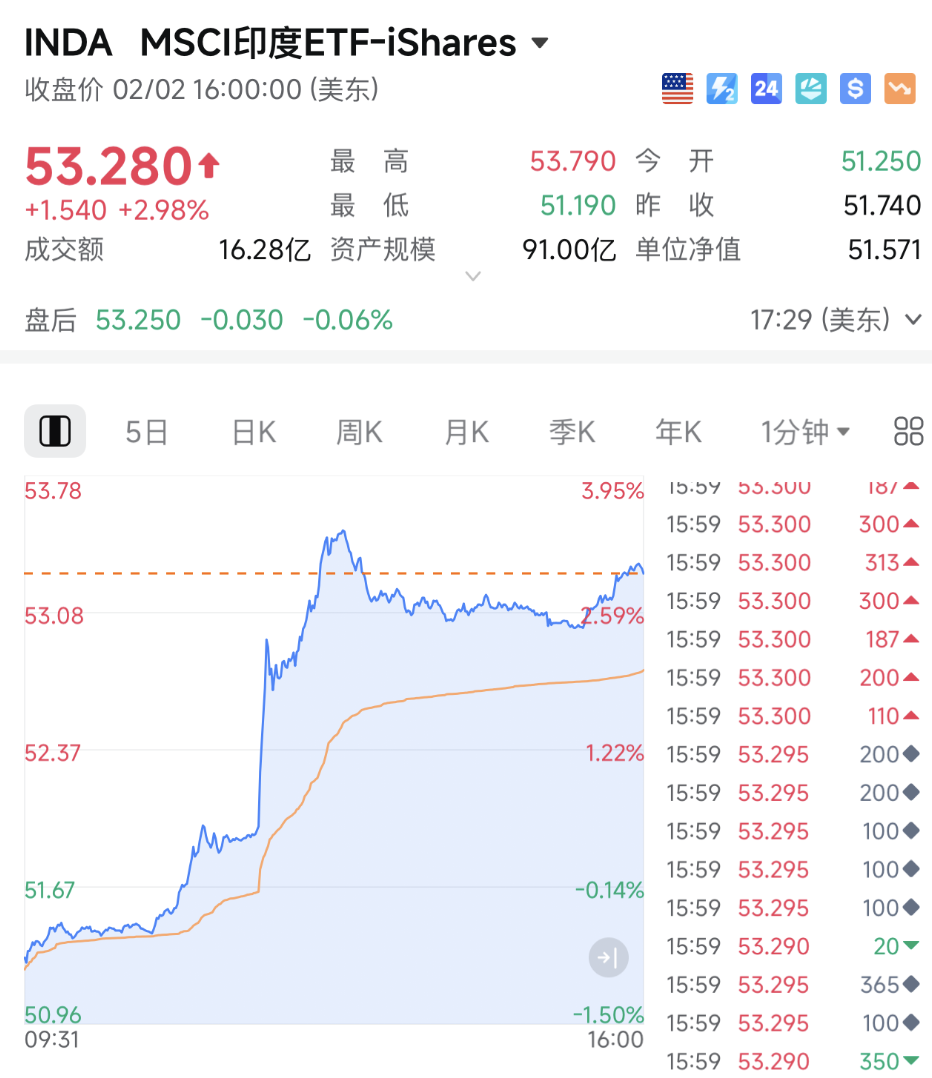
特朗普宣布对印度降低关税
Xin Lang Cai Jing· 2026-02-02 17:14
Core Viewpoint - The article discusses a recent phone call between former President Trump and Indian Prime Minister Modi, focusing on a trade agreement and efforts to end the Russia-Ukraine conflict [1] Trade Agreement - The U.S. and India have reached a trade agreement where the U.S. will reduce tariffs from 25% to 18% [1] - India is expected to lower its tariffs and non-tariff barriers to zero [1] Energy Purchases - Modi has agreed to stop purchasing Russian oil and significantly increase oil purchases from the U.S. and potentially Venezuela [1] - The agreement includes a commitment from India to purchase over $500 billion worth of U.S. energy, technology, agricultural products, coal, and other goods [1]
内需如何破局?答案就在“全国统一大市场”里
Jing Ji Guan Cha Wang· 2026-01-22 03:22
Core Viewpoint - The National Development and Reform Commission (NDRC) is advancing the construction of a unified national market, aiming for a smooth start to the 14th Five-Year Plan and achieving a GDP of 140 trillion yuan by 2025 [1][4]. Group 1: Economic Goals and Market Construction - By 2026, China will focus on policy support and reform innovation to expand domestic demand and develop new productive forces, ensuring a good start for the 14th Five-Year Plan [1]. - The NDRC emphasizes achieving a dynamic balance between supply and demand at a higher level, with a focus on deepening the construction of a unified national market to stimulate market vitality [1][2]. Group 2: Systematic Reform Framework - The NDRC's approach includes "one regulation, two lists, and three systems," which aims to establish a legal foundation for market unity and clarify local administrative boundaries [2][3]. - The focus on empowering high-quality development will prioritize breakthroughs in the unified markets of electricity, transportation, technology, and data [2]. Group 3: Addressing Market Challenges - The NDRC aims to tackle issues such as low-price disorderly competition and unfair government procurement through a mechanism for problem discovery and rectification, responding to the urgent demand for fair competition [3]. - The initiative seeks to shift market competition from price-based to quality-based, benefiting both enterprises and consumers by creating a more equitable competitive environment [3][4]. Group 4: Economic Implications - The construction of a unified national market is seen as a core hub for the dual circulation strategy, enhancing domestic market connectivity and providing greater opportunities for global enterprises [3]. - The deepening of this initiative is not merely about removing barriers but involves institutional innovation to reshape the market ecology and release multiple dividends [3][4].