
消费基金

Search documents
发行节奏突然加速,消费基金开年募集策略大变化!什么信号?
券商中国· 2026-01-19 02:29
2026年开年,消费类主动权益基金发行节奏换了一副新面孔。 券商中国记者注意到,多家公募在拿到消费基金注册批文后迅速启动发售,一改此前行业时常出现的"临期发 行",等待有效期最后时刻的拖沓渐成过去式。 业内人士判断,这一变化的背后,或因消费板块当前处于近十年历史低位的估值支撑,中证主要消费ETF已出 现连续五个年度业绩亏损。不过,发行提速并不等于共识性机会,当前公募对消费赛道的后市走向仍存在明显 分歧,考虑到有半年建仓期缓冲,新基金建仓缓慢仍持择时态度。 消费基金发行提速 开年伊始,消费主动权益基金突然一改往日拿完批文慢点发的节奏。 2026年1月,易方达、中欧、万家等多家公募机构纷纷宣布旗下消费新基金发售的计划,有基金公司短短半个 月内连续布局多只消费主题主动权益产品,而这一品类在2025年全年的发行数量还屈指可数。 值得关注的是,不少消费基金在获批后迅速启动发售,一改此前拖沓许久的"雪藏"常态。以易方达港股通消费 基金为例,该产品于2025年12月26日刚拿到注册批文,便计划在2026年1月下旬正式开售,由易方达国际投资 部总经理李剑锋执掌,拿批文闪电开售的节奏与火热的医疗基金大致相当。 事实上,公募基金 ...


平安证券投教基地携手平安财萌,解锁Z世代理财新视界
Di Yi Cai Jing· 2026-01-13 06:12
Core Insights - The live broadcast titled "Youth 'Money' Journey: Real Financial Perspectives of College Students" successfully concluded, focusing on the financial literacy of Generation Z, with over 4.51 million exposures and more than 310,000 viewers [1][3] - The event emphasized the importance of rational investment and featured interviews with college students who shared their personal financial experiences, making financial knowledge accessible and relatable [3][12] Group 1: Event Overview - The live broadcast was conducted under the guidance of the Shenzhen Securities Association and involved collaboration with Ping An Securities, Ping An Financial Education, and customer service teams [1] - The event was streamed across multiple platforms, including Daily Economic News, Ping An Securities APP, and video accounts, highlighting its broad reach [1] Group 2: Key Themes and Discussions - The core theme of the broadcast was to "refuse blind following and establish a rational investment perspective," encouraging interactive discussions among participants [3] - The host initiated engagement by asking participants about their first awareness of financial management, leading to various responses from students [3] Group 3: Student Experiences - Student participants shared their diverse financial journeys, illustrating the transition from impulsive investment behaviors to more strategic and informed approaches [5][10] - For instance, one student transitioned from a "blind box enthusiast" to a "steady investor," emphasizing the importance of understanding risk before investing [5][6] - Another student highlighted the use of ETFs as a core investment tool, advocating for a balanced and strategic approach to investment [8][10] Group 4: Future Initiatives - The Ping An Securities education team plans to continue developing engaging financial education content tailored for students, aiming to enhance national financial literacy [14] - Future initiatives will include interactive financial literacy courses, educational games, and practical activities to integrate financial education into campus life [14]

基金定投也开始亏钱?大多数人踩了这2个坑,改正立刻见效
Sou Hu Cai Jing· 2025-12-29 23:18
Core Viewpoint - The article discusses the challenges faced by investors using systematic investment plans (SIPs) in mutual funds, highlighting that while SIPs are not inherently flawed, poor operational choices lead to significant losses for many investors since 2025 [1] Group 1: Common Mistakes in SIPs - Many investors mistakenly believe that SIPs are universally effective, leading them to invest in high-volatility thematic funds or new funds without historical performance data, resulting in substantial losses [3] - The article emphasizes that SIPs are best suited for broad index funds, such as the CSI 300 or the CSI 500, and stable mixed funds with a track record of over five years, while single thematic funds and small funds should be avoided [3] Group 2: Misunderstanding of Investment Discipline - Investors often misinterpret the advice to "keep investing more during downturns," leading to increased investments during prolonged market declines, which can exacerbate losses [4] - The article suggests setting clear stop-loss and take-profit levels, recommending a 20%-30% target for profits and a stop-loss if losses exceed 25% or if there are significant changes in fund management or performance [4][5] Group 3: Practical Investment Strategies - It is advised that the investment amount should be calculated based on disposable income, suggesting a range of 30%-50% of the difference between monthly income and expenses to ensure financial stability [5] - The use of "smart investment" features available on major platforms is recommended, which can adjust investment amounts based on market valuations, potentially reducing costs by 8%-12% compared to regular SIPs [5] Group 4: Conclusion on SIP Effectiveness - The core principle of SIPs is to average costs over time and adhere to disciplined investment practices, which are essential for wealth accumulation despite market volatility [5]

基金人必看!止盈卖对是关键,债基消费有方向
Sou Hu Cai Jing· 2025-11-18 05:30
Group 1 - The article discusses a withdrawal strategy for profit-taking, suggesting a method where investors sell portions of their holdings based on specific drawdown thresholds [1][3] - It emphasizes the importance of not being overly greedy and highlights the risks of market corrections that can erase profits [3] - New investors are advised to take profits at a 15% gain, as securing profits is deemed more prudent than holding out for higher returns [5] Group 2 - The article differentiates between short-term and long-term bond funds, noting that short-term bond funds have minimal volatility and are suitable for conservative investors [5] - Long-term bond funds offer higher expected annual returns but require careful timing for investment, particularly in relation to government bond yields [7] - The article warns that long-term bonds may be negatively impacted if stock markets continue to rise, leading to capital flight from bonds [7] Group 3 - The consumer sector experienced volatility, initially rising due to a positive CPI report but later declining after disappointing retail sales data [8][10] - The CPI increase was attributed to seasonal spending during holidays rather than a genuine recovery in consumer demand [10] - The article suggests that the consumer sector has underperformed compared to technology and cyclical sectors, indicating potential for value recovery [10][12] Group 4 - It is recommended to focus on sectors supported by government policies, such as tourism, education, and consumer goods, to identify investment opportunities [12] - The overall investment strategy should prioritize a disciplined approach, including gradual accumulation in the consumer sector rather than aggressive positions [12]
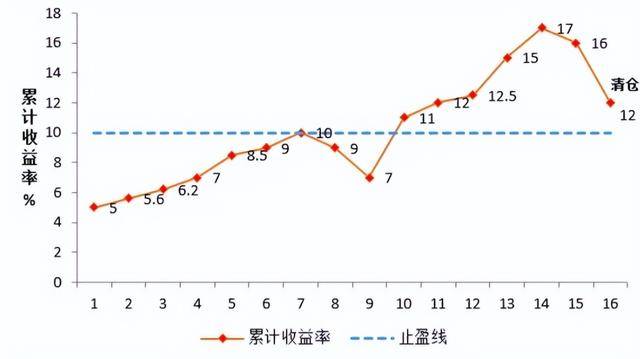
科技基金阶段性顶部,注意控制整体仓位!
Sou Hu Cai Jing· 2025-11-01 14:57
Group 1 - The technology sector indices are currently facing top risks, which will directly impact the performance of the CSI 300 index [1] - Relatively safer assets such as dividend stocks, liquor consumption, and pharmaceuticals are expected to perform better during market adjustments [1] - The Hang Seng Technology index is experiencing increased volatility, but overall support remains, making it suitable for long-term holding [1] Group 2 - A portfolio allocation of 20% in dividend stocks and 10% to 20% in cash can mitigate concerns over market adjustments [2] - Once technology stocks reach a bottom, the plan is to sell low-volatility dividend stocks and cash to invest in technology stock funds [3] Group 3 - High exposure to the Hang Seng Technology, CSI 300, and securities requires careful position management, with recommendations to reduce holdings to manageable levels [4] - Holdings in pharmaceuticals and consumer sectors are expected to perform well in the near future, with a cautionary note on the risks primarily residing in the technology sector [5] Group 4 - The biggest risk currently stems from geopolitical issues, particularly related to Taiwan, suggesting that maintaining 10% to 30% liquidity is advisable to respond to sudden market events [6] - The 5G sector is showing potential head-and-shoulders patterns, indicating possible market reversals [8] - The chip sector has broken below trend lines, which may confirm a top formation [10] - The artificial intelligence sector is also exhibiting potential head-and-shoulders patterns [12]

帮主郑重:普通人买基金总亏?3个“反套路”方法,稳赚不踩坑
Sou Hu Cai Jing· 2025-10-30 03:46
Core Insights - The article emphasizes that ordinary investors should avoid following trends and instead focus on fundamental strategies for investing in mutual funds [1][3] Group 1: Investment Strategies - The first strategy is to avoid chasing popular funds, as they are often launched during market peaks and may not perform well in the long run [4] - The second strategy advises against buying high and selling low; investors should hold onto their funds for 1-2 years unless there are significant issues with the fund or manager [4] - The third strategy recommends diversification, suggesting that even a small investment should be spread across different types of funds to mitigate risk [4] Group 2: Key Considerations - Investors should focus on the fund manager's track record over multiple years, particularly during market downturns, to assess reliability [3] - The investment style of the fund should align with the investor's risk tolerance; for example, those averse to volatility should avoid funds heavily invested in technology stocks [3] - The essence of mutual fund investing is to leverage the expertise of professional managers, emphasizing a long-term perspective rather than seeking quick profits [4]
定投基金3年还是亏?你可能犯了这2个致命错误!现在该还来得及
Sou Hu Cai Jing· 2025-09-30 00:56
Core Insights - The article highlights the significant disparity in investment outcomes among investors who employed a systematic investment strategy in index funds, with over 60% of investors in the CSI 300 index experiencing losses, averaging an 8.7% decline, while a different group achieved a 12% annualized return [1][3]. Group 1: Investment Strategy Errors - Investors commonly made two critical mistakes: selecting the wrong assets and mismanaging investment timing [1][3]. - Many investors fell into the "chasing hot spots" trap, investing in high-volatility sectors like renewable energy and semiconductors, which led to substantial losses [3][4]. - For instance, a renewable energy index fund saw its net value drop from 2.5 yuan in September 2022 to 1.8 yuan in August 2025, resulting in an 11% loss for consistent investors [3][4]. Group 2: Comparison of Investment Outcomes - Broad-based index funds, such as the CSI 300, emerged as the "winners" in systematic investment strategies, yielding a 5.2% annualized return despite market downturns [4][10]. - In contrast, thematic funds averaged a -3.8% return during the same period, underscoring the importance of asset selection [4][10]. Group 3: Valuation Considerations - A common error among investors was neglecting valuation, leading to blind investments without considering price rationality [6][7]. - The CSI 300 index experienced significant valuation fluctuations, with its price-to-earnings ratio ranging from 12 to 15 during the investment period, affecting returns based on timing of investments [6][7]. - An investor who adjusted their investment based on valuation metrics achieved a 14% profit, while another who did not lost 5% [6][10]. Group 4: Recommendations for Improvement - To enhance investment outcomes, investors should prioritize selecting "evergreen" assets and avoid sectors with high cyclicality or rapid technological changes [4][12]. - Implementing a dynamic investment strategy based on valuation metrics can significantly reduce average costs and improve returns [7][10]. - Investors are advised to regularly assess their investment choices and adjust their strategies according to market conditions and asset valuations [12].

消费基金首尾业绩差超80%!传统消费股“春天”何时来?
Guo Ji Jin Rong Bao· 2025-09-06 07:04
Core Viewpoint - The traditional consumer sector, particularly food and beverage stocks, has underperformed in 2023 compared to other sectors, with the food and beverage index showing a year-to-date decline of -1.92%, significantly lagging behind the top-performing communication index by over 60 percentage points [1]. Group 1: Performance of Consumer Funds - There is a significant performance divergence among consumer funds, with a difference of over 80 percentage points between the best and worst performing funds. The top-performing fund has achieved over 70% returns, while the lowest has seen losses exceeding 8% [3]. - As of early September, 71 consumer funds have reported net value increases of over 20%, while 90 funds have seen increases of less than 10% [3]. Group 2: Investment Strategies and Trends - To generate excess returns, funds heavily invested in consumer stocks need to align with new trends. For instance, the Hai Fu Tong Consumer Select Fund has increased its allocation to new consumption sub-sectors while enhancing research on both traditional and tech-driven consumer sectors [4]. - Some funds are capitalizing on overseas consumption growth opportunities, such as the Yongying Emerging Consumer Fund, which has invested in Hong Kong-listed companies in trendy toys and innovative pharmaceuticals, benefiting from "going abroad" dividends [4]. Group 3: Challenges for Traditional Consumer Stocks - Funds that have maintained a focus on traditional consumer stocks have struggled, with some experiencing significant losses. For example, the Guorong Rongxin Consumer Fund has heavily invested in liquor, beverages, and other traditional sectors but has reported a loss of over 8% [5]. - The Pu Yin An Sheng Consumer Upgrade Fund, which also focuses on traditional consumer stocks, has seen a decline of over 5% in net value, reflecting the challenges faced by traditional sectors [5]. Group 4: Future Outlook - The consumer sector is experiencing extreme differentiation, with traditional consumer stocks, particularly those linked to economic cycles like liquor, facing downward pressure, while new consumption companies are thriving [6]. - Fund managers believe that traditional consumption is nearing a bottom, while new consumption continues to present significant growth opportunities. For instance, the Yin Hua Consumer Theme Fund manager noted that traditional industries are giving rise to new development opportunities, such as supply chain integration and the rise of domestic brands [7]. - The manager of the Yongying Emerging Consumer Fund highlighted that leading companies in the trendy toy sector are in the early stages of explosive growth in the European and American markets, indicating high growth potential and certainty [7].
懒人投资必备!基金定投最全攻略:从入门到精通
Sou Hu Cai Jing· 2025-09-02 02:24
Group 1 - The core mechanism of systematic investment plans (SIPs) involves "fixed time + fixed amount + fixed target," achieving two main functions [2] - SIPs are compared to one-time investments, showing that SIPs can accumulate more low-cost shares during market downturns, leading to higher returns during market rebounds [4][5] - A practical example illustrates that a monthly investment of 1,000 yuan over six months can yield a net profit of 2,299.53 yuan, resulting in an actual return rate of 38.33% [6][10] Group 2 - Basic and enhanced strategies for SIPs include valuation strategies that adjust investment amounts based on historical price-to-earnings (PE) ratios, which can improve annualized returns [9] - Common misconceptions about SIPs include the belief that they can operate completely automatically, which is not true; regular performance reviews are necessary [14] - The article emphasizes the importance of selecting quality assets and allowing sufficient time for compound interest to work, aligning with Warren Buffett's investment philosophy [18]

我的5年养基翻身之路:外卖箱里藏着的赚钱密码!
天天基金网· 2025-04-30 08:56
Core Insights - The article narrates a personal investment journey, highlighting the challenges and learning experiences faced while investing in funds and stocks, particularly in the context of a gig economy job like food delivery [1][3][9]. Investment Strategies - The author employs a "buying groceries" approach to investing, indicating a methodical and cautious strategy in selecting funds [7]. - Emphasizes the importance of analyzing fund performance over a three-year period before making investment decisions [8]. - Suggests that high volatility funds should be approached with caution, akin to consuming spicy food in small amounts [8]. Market Observations - The article notes that an increase in food delivery orders can signal a good time to invest in index funds, reflecting a correlation between consumer behavior and market trends [7]. - The author observes that certain stocks, like those in the construction materials sector, can be influenced by external factors such as local events (e.g., moving trucks in the area) [12]. Personal Finance Management - The narrative includes a unique perspective on quantifying investment losses in terms of missed earnings from food delivery, illustrating the emotional and financial impact of investment decisions [12]. - The author maintains a disciplined approach to budgeting, allocating a third of monthly income to investments, which reflects a strategic financial planning mindset [8]. Learning and Adaptation - The article highlights the importance of continuous learning in investment, with references to reading materials and adapting strategies based on market conditions [5][9]. - The author shares insights on recognizing market trends, such as the rise in demand for certain stocks during specific weather conditions, indicating a proactive approach to investment [12].