硬盘驱动器

Search documents
热钱或很快杀向存储板块
3 6 Ke· 2026-02-03 09:15
Core Viewpoint - Investors withdrawing from precious metals and cryptocurrency markets may soon redirect their funds into storage chip and hard drive-related stocks, as indicated by Mizuho Securities technology analyst Jordan Klein [2]. Group 1: Market Trends - Following President Trump's announcement of Kevin Walsh as the next Federal Reserve Chair, market expectations for liquidity tightening surged, leading to significant declines in both precious metals and cryptocurrency markets [2]. - Klein noted that the storage sector's fundamentals are expected to remain robust for the remainder of the year, as stocks in this sector continue to reach new highs [2]. Group 2: Investment Insights - Klein highlighted that recent earnings reports, particularly from SanDisk, have shown a dramatic increase in expected earnings per share, projecting a rise from approximately $3 to $5 to over $60, with potential future earnings reaching $60 to $80 [3]. - Despite the optimistic outlook, Klein warned of risks associated with the sector's rapid price increases, drawing parallels to the recent sell-off in precious metals, where silver prices fell by 31% in a single day [4]. - Klein advised against concentrating investments in popular stocks like NVIDIA and Broadcom, recommending a diversified approach that includes storage chip stocks and semiconductor equipment companies such as Lam Research and Applied Materials [4]. Group 3: Stock Performance - On the day Klein made his comments, major storage stocks experienced significant gains: SanDisk rose by 15.44%, Micron Technology increased by 5.52%, Seagate Technology climbed by 6.2%, and Western Digital surged by 7.99% [4].


今年产能已售罄!美国存储设备制造商业绩和展望均超预期
Zhong Jin Zai Xian· 2026-01-28 01:05
Core Insights - Seagate Technology's stock surged by 8.8% after reporting Q2 earnings and Q3 outlook that exceeded market expectations [1] Financial Performance - For Q2, Seagate reported adjusted earnings per share of $3.11, a 53% increase year-over-year, surpassing analyst expectations of $2.83 [2] - Revenue reached $2.83 billion, a 21.5% year-over-year increase, also exceeding the forecast of $2.74 billion [3] Market Demand - The CEO highlighted strong revenue growth across nearly all end markets, setting new records in exabyte (EB) shipments, gross margin, operating margin, and non-GAAP earnings per share [3] - Demand for high-capacity nearline hard drives is growing, particularly in global cloud data centers, with improvements noted in enterprise edge computing [3] Future Outlook - For Q3, Seagate anticipates a median sales target of $2.9 billion, slightly above analyst predictions of $2.78 billion, with expected adjusted earnings per share of $3.40 [4] - The nearline production capacity is sold out through 2026, with orders for the first half of 2027 expected to be accepted soon [4] - Long-term agreements with major cloud customers, effective until 2027, are enhancing production outlook, with discussions already underway for 2028 forecasts [4] - Seagate's stock has increased over 270% in the past year, driven by surging demand for data storage fueled by artificial intelligence [4]
AI增长盛宴仍在继续!法巴发布2026年AI股首选名单,首推光模块、存储芯片及硬盘供应链龙头
Zhi Tong Cai Jing· 2026-01-22 08:18
Group 1 - BNP Paribas has released a list of preferred stocks in the AI sector for 2026, including Tianhong Technology (CLS.US), Arista Networks (ANET.US), and Credo Technologies (CRDO.US) [1] - Analyst Karl Ackerman stated that the growth of the AI industry continues, with long-term resilience in data center investments, and clearer industry prospects for servers, networks, and storage by 2026 [1] - The bank has raised performance expectations for core companies related to AI infrastructure bottlenecks, focusing on the optical module supply chain, storage chip manufacturers, and hard drive suppliers, leading to an upgrade of Seagate Technology (STX.US) to 'outperform' [1] Group 2 - BNP Paribas is optimistic about the aforementioned three companies, as well as Broadcom (AVGO.US) and Macom Technology Solutions (MTSI.US) [1] - The bank has also raised target prices and performance expectations for Micron Technology (MU.US), SanDisk (SNDK.US), Seagate, and Western Digital (WDC.US), citing a historic upcycle in the storage industry with rising prices for DRAM, NAND flash, and hard disk products [1] - The surge in storage chip prices is putting pressure on other segments of the semiconductor industry, leading to lowered target prices for Ingram Micro (INGM.US), Qorvo (QRVO.US), and Skyworks Solutions (SWKS.US) [2] - The demand for customized and GPU architecture AI servers is expected to drive the data center network market to nearly $120 billion by 2028 [2]
机构预计2026年泰国家用电器出口值将萎缩1.5%
Zhong Guo Xin Wen Wang· 2026-01-20 03:14
Core Insights - The report from the Kasikorn Research Center predicts a 1.2% decline in Thailand's total export value by 2026, primarily due to the potential expansion of U.S. tariff measures and a slowing global trade outlook [1] Group 1: Export Projections - Thailand's exports to major markets are expected to slow down, with key products experiencing declines [1] - Electronic products are projected to see a decrease of approximately 3.1% in export value in 2026, following strong growth in the previous year, mainly due to pressure from the U.S. market, particularly for integrated circuits and semiconductor products facing tariff risks under Section 232 [1] - Household appliances are anticipated to decline by 1.5% in export value, primarily due to a slowdown in air conditioner and refrigerator exports, partly because some production bases for these appliances have shifted from Thailand to Vietnam [1]
你没看错!美光:存储将缺货到2028年!
是说芯语· 2026-01-12 11:53
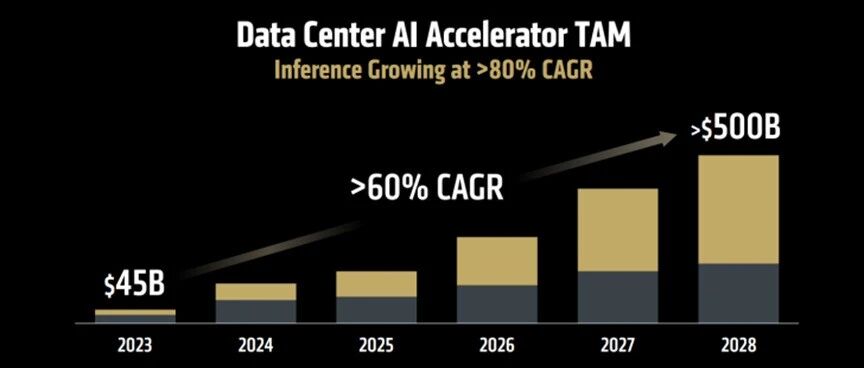
Core Viewpoint - Micron is a leading memory manufacturer facing a significant demand surge in DRAM memory due to the rise of artificial intelligence, which has led to a supply shortage affecting both consumer and data center markets [1][2][3] Group 1: Current Market Situation - The total addressable market (TAM) for data centers is rapidly expanding, with potential market size increasing from 30%-35% to 50%-60%, indicating a substantial demand for memory [2] - Micron's OEM consumer channel constitutes a significant portion of its market share, supplying major PC brands like Dell and Asus, thus maintaining a presence in the consumer market despite the exit from the "Crucial" brand [2][3] - The current supply shortage is not solely a Micron issue but a broader industry challenge, with all manufacturers struggling to meet the heightened demand [3] Group 2: Production Capacity and Challenges - Micron is facing challenges in adjusting production lines to meet varying memory module capacities, which complicates efforts to increase overall DRAM output [5][6] - The company is working to stabilize demand and production to maximize yield, as fluctuations in memory configurations can lead to reduced output [6] - Significant expansions in production capacity will not yield results until 2028 due to the lengthy process of construction and customer certification [7] Group 3: Competitive Landscape - There is increasing speculation about Chinese memory suppliers potentially filling market gaps, with Micron welcoming competition as a means to improve its own offerings [8][9] - The memory industry is experiencing a strong demand driven by AI infrastructure, which is expected to sustain high prices and profitability for manufacturers [10][13] Group 4: Future Outlook - Analysts predict that the demand for NAND flash and DRAM will continue to grow, with capital expenditures from major tech companies expected to rise significantly [14][17] - Despite the current high demand, memory manufacturers are cautious about expanding production capacity due to past experiences with market volatility [17][18]

美光:存储将缺到2028
半导体行业观察· 2026-01-12 01:31
Core Viewpoint - Micron is a leading memory manufacturer facing a significant demand surge in DRAM memory due to the rise of artificial intelligence, which has led to a supply shortage affecting both consumer and data center markets [1][2][3]. Group 1: Market Dynamics - The Total Addressable Market (TAM) for data centers is rapidly expanding, with the potential market size increasing from 30%-35% to 50%-60%, indicating a substantial demand for memory products [2]. - Micron's OEM consumer channel plays a crucial role in its market share, supplying major PC brands like Dell and Asus, which helps maintain its presence in the consumer market despite the exit from the "Crucial" brand [2][3]. - The current supply shortage is not solely a Micron issue but a broader industry challenge, with all manufacturers struggling to meet the increasing demand across various segments [3]. Group 2: Production Challenges - The sudden spike in DRAM demand has made it difficult for Micron to adjust its supply chain effectively, leading to production constraints [5]. - Capacity expansion is complex and involves more than just adding new machines; it requires addressing the differentiation in memory module capacities, which complicates production efficiency [5][6]. - Micron is working to stabilize demand and production by reducing the variety of chips produced, which is essential for maximizing output [6]. Group 3: Future Outlook - Micron's factory expansion plans are expected to yield significant results only by 2028 due to the lengthy process of construction, customer certification, and technology validation [7][8]. - The memory shortage is likely to persist until the demand from the AI sector begins to decline, as manufacturers are cautious about rapidly increasing production capacity due to past market volatility [9][11]. - The competitive landscape is evolving, with Chinese memory suppliers potentially filling market gaps, but Micron welcomes competition as it drives improvement and innovation [8][9]. Group 4: Financial Implications - The current memory shortage has led to increased prices, significantly boosting revenues and profits for memory manufacturers like Micron, which reported record quarterly earnings [11][14]. - Analysts predict that high prices for memory chips and hard drives will continue to support the market's elevated value, although the industry remains wary of cyclical downturns [14][18]. - Major tech companies are driving capital expenditures to unprecedented levels, which could sustain the demand for memory products for several years [15].

机构预测2026年泰国出口总值将萎缩1.2%
Zhong Guo Xin Wen Wang· 2026-01-10 01:12
Group 1: Export Forecasts - Thailand's total export value is expected to shrink by 1.2% in 2026, primarily due to the potential expansion of U.S. tariff measures and a slowing global trade outlook [1] - The export growth to major markets is projected to slow down, with key products experiencing declines [1] Group 2: Electronic Products - The export value of Thailand's electronic products is anticipated to decrease by approximately 3.1% in 2026, mainly due to pressures in the U.S. market, particularly for integrated circuits and semiconductor products facing tariff risks under Section 232 [1] - Other electronic products, such as hard disk drives and mobile phone components, are also expected to see a slowdown after previous export acceleration [1] Group 3: Home Appliances - Thailand's home appliance export value is forecasted to decline by 1.5% in 2026, primarily due to a slowdown in air conditioner and refrigerator exports, partly because some production bases have shifted from Thailand to Vietnam [1] Group 4: Automotive and Parts - The export value of Thailand's automotive sector is expected to shrink by 3.0% in 2026, driven by increasing competition from Chinese products [1] - Additionally, stricter carbon emission and safety standards in Australia, a key export market, pose further challenges for Thai automotive exports [1] - The automotive parts exports to the U.S. are predicted to be significantly impacted by Section 232 import tariffs [1] Group 5: Agricultural Products - Thailand's agricultural product export value is projected to decrease by 1.4% in 2026, mainly due to stable prices and intensified global market competition, particularly with rice exports facing pressure from India's expanding exports [2] - Agricultural production is also expected to decline due to a shift from favorable La Niña conditions in 2025 to a neutral state, potentially leading to water shortages for agriculture [2] Group 6: Agro-Industrial Products - The export value of Thailand's agro-industrial products is expected to maintain growth, but the growth rate will slow to 1.0% in 2026 [3]
经济日报:日本多行业陷入稀土焦虑
Bei Jing Ri Bao Ke Hu Duan· 2025-12-10 00:11
Core Viewpoint - Japan is increasingly concerned about China's export controls on rare earth elements, prompting efforts to diversify supply sources and reduce dependency on China [1] Group 1: Dependency on China - Japan's reliance on China for rare earth imports has decreased from approximately 90% to 60% [1] - Despite the reduction, Japan remains highly dependent on China for critical rare earth elements used in electric vehicle motors, with elements like Dysprosium (Dy) and Terbium (Tb) being nearly 100% sourced from China [1] Group 2: Economic Impact - If China implements export controls for three months, Japan's economic loss is estimated at about 660 billion yen, equating to a 0.11% decline in nominal and real GDP [1] - Should the restrictions last for one year, the economic loss could escalate to approximately 2.6 trillion yen, resulting in a GDP decline of 0.43% [1] Group 3: Affected Industries - The automotive industry, particularly electric and hybrid vehicles, relies heavily on rare earth magnets, with past shortages leading to production halts [1] - The electronics sector, including smartphones and semiconductor manufacturing, heavily utilizes rare earths, especially in fluorescent and magnetic materials, where alternatives are limited [1] - Wind power generation equipment also shows high dependency on rare earth magnets, facing challenges in efficiency and cost with alternative technologies [1] - Medical devices, such as MRI machines, require strong magnets that are irreplaceable with current technologies [1] - The aerospace and defense sectors extensively use rare earth alloys and magnets, with limited substitution options available [1]
日本多行业陷入稀土焦虑
Zhong Guo Jing Ji Wang· 2025-12-09 22:27
Core Viewpoint - Japan is increasingly concerned about its reliance on Chinese rare earth exports and is taking measures to diversify supply sources and develop alternative materials [1][2] Group 1: Japan's Dependence on Rare Earths - Japan's dependence on Chinese rare earth imports has decreased from approximately 90% to around 60% [1] - Despite the reduction, Japan remains highly dependent on critical rare earth elements like Dysprosium (Dy) and Terbium (Tb), which are essential for electric vehicle drive motors [1] Group 2: Economic Impact of Potential Export Controls - If China implements export controls, five key sectors in Japan—automotive, electronics, wind power, medical devices, and aerospace—will be significantly affected [2] - The automotive industry, particularly electric and hybrid vehicles, relies heavily on rare earth magnets, and past shortages have led to production halts [2] - In the electronics sector, rare earths are crucial for smartphones, semiconductor manufacturing, and hard drives, with China dominating the refining process [2] - Wind power equipment and medical devices, such as MRI machines, also have high dependencies on rare earths, with limited alternatives available [2] - The aerospace sector uses rare earth alloys and magnets extensively, with minimal room for substitution [2] Group 3: Estimated Economic Losses - If Chinese rare earth export restrictions last for three months, Japan's economic loss is estimated at approximately 660 billion yen, equating to a 0.11% decline in nominal and real GDP [2] - Should the restrictions persist for one year, the economic loss could escalate to about 2.6 trillion yen, resulting in a GDP decline of 0.43% [2]
内存短缺,服务器价格上涨
半导体行业观察· 2025-12-07 02:33
Core Insights - The article discusses the significant impact of memory shortages on server and PC prices, with manufacturers facing rising component costs due to a shift in production focus towards AI servers [3][4]. Group 1: Price Increases - DRAM prices are projected to rise by 8% to 13%, with some forecasts suggesting even higher increases [3]. - Major OEMs, including Dell, Lenovo, HP, and HPE, plan to raise server prices by approximately 15%, while PC prices are expected to increase by about 5% [4][5]. - Samsung has reportedly raised memory prices by up to 60% as wafer production capacity shifts towards AI workloads [4]. Group 2: Industry Response - Manufacturers are reevaluating their product lines, with some brands halting consumer-oriented memory production to meet enterprise demands [4]. - The COO of Dell described the current memory shortage as "unprecedented," indicating that supply is struggling to keep pace with growing demand [4]. - Lenovo's COO highlighted the immense cost pressure from memory and solid-state drives, complicating mitigation efforts [5]. Group 3: Market Dynamics - The shift towards AI-centric production is affecting the supply and cost of general hardware components [4][6]. - IDC analysts noted that the current market volatility is unusually high compared to past fluctuations, driven by increasing demand for servers, CPUs, and GPUs [5].