
美元兑加元

Search documents
美元指数涨0.23%,报97.08
Sou Hu Cai Jing· 2026-02-16 23:03
Core Viewpoint - The US dollar index increased by 0.23% to 97.08, indicating a strengthening of the dollar against most non-US currencies [1] Currency Movements - The euro declined by 0.15% against the dollar, trading at 1.1851 [1] - The British pound fell by 0.20% against the dollar, with a rate of 1.3628 [1] - The Australian dollar remained stable against the dollar, holding at 0.7072 [1] - The Japanese yen depreciated by 0.54% against the dollar, with a rate of 153.5205 [1] - The Canadian dollar weakened by 0.14% against the dollar, trading at 1.3637 [1] - The Swiss franc decreased by 0.26% against the dollar, with a rate of 0.7697 [1]
央行政策分化 加元震荡回升
Jin Tou Wang· 2026-02-12 02:27
Group 1 - The core viewpoint of the articles highlights the recent fluctuations in the USD/CAD exchange rate, which has shown a recovery trend after a period of decline, influenced by the divergence in monetary policies of the two countries and commodity price volatility [1][2]. - The USD/CAD exchange rate has experienced a "first suppress then rise" pattern since the beginning of the year, with significant movements noted in January and February, indicating a cautious market sentiment amid ongoing fluctuations [1][2]. - The Bank of Canada has maintained its benchmark interest rate at 2.25%, indicating potential for future rate cuts, while the Federal Reserve has not yet clarified its rate cut timing, creating a disparity that supports the USD and pressures the CAD [2][3]. Group 2 - The global trade environment remains uncertain, contributing to fluctuations in the USD/CAD exchange rate, with market risk aversion occasionally driving funds towards the USD, indirectly supporting its rise against the CAD [2]. - As a commodity currency, the CAD's performance is closely tied to global commodity prices, with potential price recoveries supporting the CAD and limiting the USD/CAD exchange rate's upward movement [3]. - There is a significant divergence in institutional views regarding the medium to long-term outlook for the USD/CAD exchange rate, with some analysts suggesting that a rate cut by the Bank of Canada could lead to further increases in the exchange rate, while others believe that rising expectations for Fed rate cuts may weaken USD support [3].
加元政策分化 油价扰动共振偏强
Jin Tou Wang· 2026-02-05 02:44
Core Viewpoint - The USD/CAD exchange rate is influenced by the divergence in monetary policies between the US and Canada, alongside commodity price movements and technical patterns in the market [1]. Group 1: Monetary Policy and Economic Indicators - The Bank of Canada maintained its benchmark interest rate at 2.25% in January, citing stagnation in domestic economic growth and slowing inflation, leading to market expectations for easing this year [1]. - Canada's GDP growth forecast for 2026 is only 1.1%, with weak domestic demand and high unemployment further suppressing the Canadian dollar [1]. - The Federal Reserve's January meeting minutes indicated a delay in interest rate cuts, emphasizing that inflation has not yet met targets, which continues to favor the US dollar [1]. Group 2: Market Dynamics and Technical Analysis - The USD/CAD exchange rate is currently stable above the strong support level of 1.3600, with a clear upward channel formed by short-term moving averages [1]. - Key resistance is identified at 1.3680, with a potential upward move towards the 1.3710 peak if this level is breached; core support is at 1.3640, with 1.3600 as secondary support [1]. - Technical indicators show a continuation of bullish momentum, with MACD above the zero line and RSI in a neutral to strong range, indicating no overbought conditions [1]. Group 3: Short-term Outlook - Focus is on the upcoming US initial jobless claims data, which, if strong, could boost the dollar and push the exchange rate towards the 1.3680 resistance [2]. - A rebound in oil prices could support the Canadian dollar, potentially leading to a correction in the exchange rate [2]. - The short-term outlook remains bullish for the USD/CAD exchange rate, given the ongoing divergence in monetary policies and favorable technical conditions [2].
国际金融市场早知道:2月4日
Xin Lang Cai Jing· 2026-02-03 23:53
Group 1: Government and Monetary Policy - The U.S. Congress passed a funding bill to resolve the partial government shutdown that began on January 31 [1] - Federal Reserve Governor Milan stated that the Fed needs to lower interest rates by more than 100 basis points this year, while Richmond Fed President Barkin emphasized the need for cautious monetary policy until inflation returns to target [1] - The Reserve Bank of Australia raised interest rates by 25 basis points to 3.85%, marking its first rate hike in 2023 and becoming the first major developed economy to raise rates since 2026 [1] Group 2: Real Estate and Economic Measures - South Korean President Lee Jae-myung announced that the government will take all necessary measures to curb real estate speculation, urging multiple property owners to sell before the expiration of a high capital gains tax exemption policy in May [1] Group 3: Market Dynamics - U.S. stock indices closed lower, with the Dow Jones down 0.34% at 49,240.99 points, the S&P 500 down 0.84% at 6,917.81 points, and the Nasdaq down 1.43% at 23,255.19 points [3] - International precious metal futures saw gains, with COMEX gold futures up 6.83% at $4,970.50 per ounce and COMEX silver futures up 10.27% at $84.92 per ounce [3] Group 4: Oil and Bond Market - U.S. oil futures rose by 2.83% to $63.90 per barrel, while Brent oil futures increased by 2.55% to $67.99 per barrel [4] - U.S. Treasury yields showed mixed results, with the 2-year yield up 0.01 basis points at 3.570% and the 10-year yield down 0.59 basis points at 4.266% [4] - The U.S. dollar index fell by 0.22% to 97.39, with most non-U.S. currencies appreciating against the dollar [4]
国际金融市场早知道:2月2日
Sou Hu Cai Jing· 2026-02-01 23:56
Group 1 - The U.S. government has entered a technical partial "shutdown" due to the inability to complete the legislative process before the budget authorization deadline on January 31, despite the Senate passing a $1.2 trillion funding bill [1] - The Indian government plans to borrow a record ₹17.2 trillion for the fiscal year 2026-27, with a projected reduction in the fiscal deficit from 4.4% to 4.3% and a decrease in debt-to-GDP ratio from 56.1% to 55.6% [2] - South Korea's semiconductor exports surged by 102.7% year-on-year in January, reaching $20.5 billion, contributing to an overall export growth of 33.9% to $65.85 billion, setting a record for January [4] Group 2 - The U.S. Securities and Exchange Commission (SEC) has initiated an emergency operational plan due to the partial government shutdown, retaining only essential personnel to maintain basic functions until funding is restored [2] - The U.S. Senate Agriculture Committee is advancing a cryptocurrency federal regulatory framework bill, highlighting partisan divisions that may hinder its passage in the full Senate [1][2] - Japan's core CPI rose by 2% year-on-year in January, lower than the expected 2.2%, indicating a slowdown in inflation and reducing expectations for recent interest rate hikes by the Bank of Japan [3]
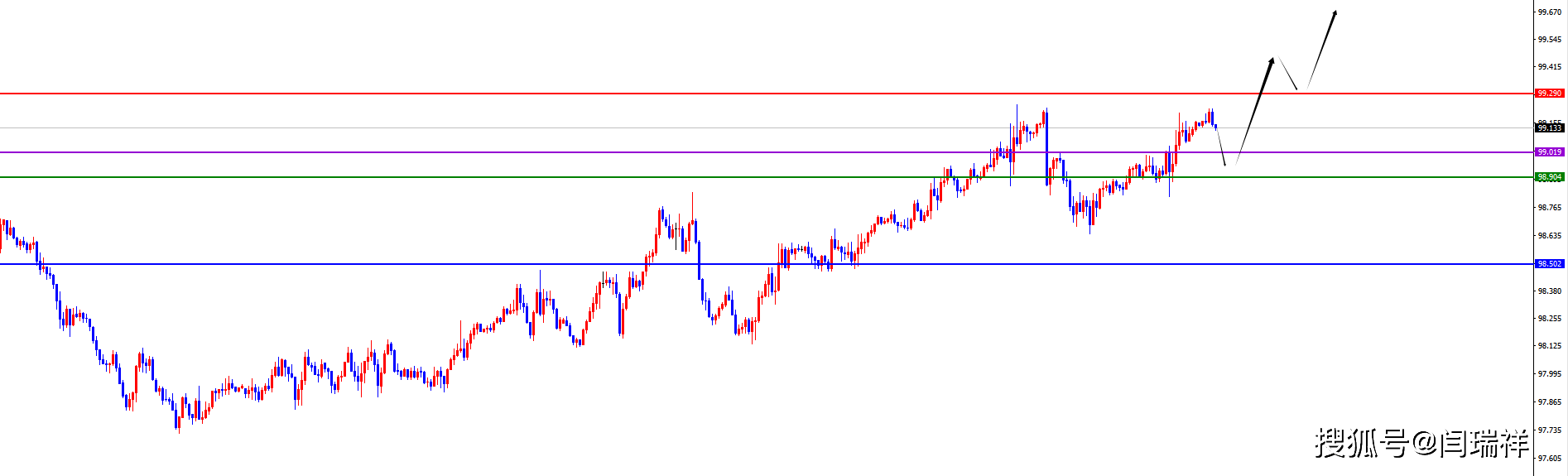
闫瑞祥:美系及非美趋势不变,短线震荡后再延续
Sou Hu Cai Jing· 2026-01-14 06:20
Group 1 - The article discusses various currency pairs and their respective support and resistance levels across different time frames, indicating potential trading strategies based on these levels [1][2][3][5][7][9][11]. Group 2 - Key economic data and events to watch include China's December trade balance, OPEC's monthly oil report, and various U.S. economic indicators such as retail sales and PPI [13][14].

国际金融市场早知道:1月14日
Zhong Guo Jin Rong Xin Xi Wang· 2026-01-14 00:56
Global Economic Outlook - The World Bank has raised its global economic growth forecast for 2026 to 2.6%, an increase of 0.2 percentage points. The U.S. is expected to grow by 2.2%, while the Eurozone and Japan are projected to slow to 0.9% and 0.8%, respectively [1][8] U.S. Economic Policy and Market Reactions - Former President Trump has called for the Federal Reserve to lower interest rates as the economy improves, denying any plans for another government shutdown and indicating upcoming policies aimed at reducing the cost of living [7][8] - Trump has accused Fed Chair Powell of overspending by billions, labeling him as "incompetent or corrupt," and has indicated plans to nominate a new Fed chair soon. This has drawn support for Powell from former Treasury Secretaries and central bank leaders, who criticized political interference in central bank independence [8] U.S. Fiscal Situation - The U.S. Treasury reported a record budget deficit of $145 billion for December 2025, the highest for that month historically. The deficit for the fiscal year 2026 so far stands at $602 billion, down from $711 billion in the same period last year [8] Labor Market and Inflation - The New York Fed President Williams stated that the current U.S. economic conditions are "quite favorable," with no signs of rapid deterioration in the labor market, and expects stabilization and gradual improvement this year. He noted that monetary policy is close to neutral, with no strong pressure for rate cuts or hikes in the short term [2][8] - The U.S. Consumer Price Index (CPI) for December 2025 rose by 2.7% year-on-year, with core CPI increasing by 2.6%, both unchanged from previous values. Due to prior government shutdowns, the data's reference value is limited, and the market anticipates a 95% probability that the Fed will maintain interest rates in January [8] Market Dynamics - The Dow Jones Industrial Average fell by 0.8% to 49,191.99 points, the S&P 500 decreased by 0.19% to 6,963.74 points, and the Nasdaq Composite dropped by 0.1% to 23,709.87 points [3][9] - COMEX gold futures declined by 0.44% to $4,594.40 per ounce, while COMEX silver futures rose by 2.08% to $86.86 per ounce [4][10] - U.S. oil futures increased by 2.69% to $61.1 per barrel, and Brent crude rose by 2.43% to $65.42 per barrel [5][11]
美加政策油价博弈与加元震荡
Jin Tou Wang· 2026-01-13 02:41
Core Viewpoint - The USD/CAD exchange rate is experiencing narrow fluctuations, currently trading around 1.3873, with market participants awaiting key economic data for direction [1]. Group 1: Central Bank Policies - The Bank of Canada has cut its benchmark interest rate to 3% as of January 2025, marking six consecutive rate cuts, focusing on economic recovery and inflation stability [2]. - The market interprets the end of the rate-cutting cycle for the Bank of Canada, which is expected to provide support for the Canadian dollar and limit the upside potential of the USD/CAD pair [2]. - The Federal Reserve has reduced rates by a total of 75 basis points to a range of 3.5%-3.75% in 2025, with increasing uncertainty regarding future policy direction [2]. Group 2: Economic Fundamentals and Commodity Influence - The Canadian economy is characterized by a mix of resilience and pressure, with gold exports failing to reverse the trade deficit, and consumer and investment momentum remaining insufficient [3]. - As a commodity currency, the Canadian dollar's performance is closely tied to oil prices, which are expected to face downward pressure due to forecasts of oversupply in the global oil market [3]. - Market sentiment indicates limited bullish momentum for the USD/CAD pair, with institutions like CIBC identifying 1.35 as a strong support level, while bearish expectations regarding oil prices and Fed policy uncertainty complicate the outlook [3]. Group 3: Technical Analysis and Key Data Indicators - The technical outlook for USD/CAD shows a clear short-term consolidation pattern around the 1.3870 level, with key support levels at 1.3850 and 1.3800, and strong support at 1.3500 [4]. - Key resistance levels are identified at 1.3910 and 1.3950, with the exchange rate expected to be influenced by upcoming economic data releases, including the US NFIB Small Business Confidence Index and the December CPI [4]. - The focus remains on the US CPI and EIA energy report, as stronger inflation combined with weak oil prices could drive the exchange rate higher, while weak inflation and a rebound in oil prices may test lower support levels [4].
闫瑞祥:美系货币多头延续,非美空头表现
Xin Lang Cai Jing· 2026-01-05 09:59
Summary of Key Points Core Viewpoint - The article provides a detailed analysis of various currency pairs, highlighting key support and resistance levels across different time frames, indicating potential trading strategies based on market signals. Currency Analysis US Dollar Index (DXY) - Monthly outlook is bearish with resistance at 101.70 - Weekly focus on closing resistance at 99 - Daily resistance noted at 98.25 - Short-term critical level between 98.40-50, maintaining a bullish stance until reversal signals appear [1][9] USD/JPY - Monthly outlook is bullish with support at 151 - Weekly support at 154.90 - Daily resistance at 156.30 - Short-term critical level between 156.70-80, maintaining a bullish stance until reversal signals appear [1][9] USD/CAD - Monthly outlook is bearish with resistance at 1.3990 - Weekly resistance at 1.3900 - Daily support at 1.3730 - Short-term critical level between 1.3720-30, maintaining a bullish stance until reversal signals appear [3][9] USD/CHF - Monthly outlook is bearish with support at 0.8320 - Weekly resistance at 0.7980 - Daily support at 0.7920 - Short-term critical level between 0.7920-30, maintaining a bullish stance until reversal signals appear [10][11] EUR/USD - Monthly outlook is bullish with support at 1.1270 - Weekly support at 1.1640 - Daily resistance at 1.1745 - Short-term critical level between 1.1720-30, maintaining a bearish stance until reversal signals appear [11] GBP/USD - Monthly outlook is bullish with support at 1.3170 - Weekly support at 1.3310 - Daily resistance at 1.3345 - Short-term critical level between 1.3345-55, maintaining a bearish stance until reversal signals appear [11][12] AUD/USD - Monthly outlook is bullish with support at 0.6450 - Weekly resistance at 0.6570 - Daily resistance at 0.6660 - Short-term critical level at 0.6690, maintaining a bearish stance until reversal signals appear [12][13] NZD/USD - Monthly outlook is bullish with support at 0.6450 - Short-term critical level at 0.6690, maintaining a bearish stance until reversal signals appear [13] Economic Data and Events - Key economic data to be monitored on January 5, 2026, includes: 1. China's December RatingDog Services PMI at 09:45 2. Switzerland's November Actual Retail Sales Year-on-Year at 15:30 3. Eurozone's January Sentix Investor Confidence Index at 17:30 4. UK's November Bank of England Mortgage Approvals at 17:30 5. US's December ISM Manufacturing PMI at 23:00 6. Emergency meeting of the United Nations Security Council at 23:00 [16][17]
美加政策分化加元拉锯
Jin Tou Wang· 2025-12-23 02:32
Group 1 - The core logic of the USD/CAD exchange rate is focused on the divergence in monetary policy between the Bank of Canada and the Federal Reserve, with the former pausing interest rate cuts while the latter continues its accommodative stance [1][3] - The Bank of Canada has maintained its interest rate at 2.25% after a total of 100 basis points of cuts throughout the year, signaling a neutral to hawkish stance, which has led the market to price in potential rate hikes by 2026 [1][2] - In contrast, the Federal Reserve completed its third rate cut of the year in December, lowering the rate to a range of 3.5%-3.75%, with expectations of only one more cut next year, but internal dissent among officials indicates significant divisions [1][2] Group 2 - Canada's economy shows resilience with a 2.6% annualized GDP growth in Q3 and a drop in unemployment to 6.5%, supporting the central bank's policy stance [2] - However, as a resource-exporting economy, the Canadian dollar is still pressured by falling oil prices, which are projected to decline by 15.2% by 2025, affecting export revenues [2] - Geopolitical tensions, particularly between the U.S. and Venezuela/Russia, have increased volatility and boosted demand for the dollar as a safe haven, further suppressing the Canadian dollar [2] Group 3 - The USD/CAD exchange rate is expected to remain in a range-bound fluctuation due to the interplay of monetary policy divergence, oil price volatility, and economic fundamentals [3] - Key future indicators to watch include guidance on potential rate hikes from the Bank of Canada, OPEC+ production policies, U.S. inflation data, and developments in U.S.-Canada trade negotiations [3]